2 1 Shi Ji Jing Ji Bao Dao

Search documents
用好优势抓住机遇,促进广东制造业与服务业协同发展
2 1 Shi Ji Jing Ji Bao Dao· 2026-02-24 22:40
Group 1 - The core theme of the Guangdong conference is the collaborative development of manufacturing and service industries to explore new paths for high-quality development [1] - Guangdong's manufacturing sector accounts for 1/8 of the national manufacturing value added and approximately 1/3 of the province's GDP, establishing it as a global manufacturing hub [1] - The manufacturing industry in Guangdong is transitioning towards intelligent, green, and integrated development, aiming to move from low-value assembly to high-value design and sales [1] Group 2 - The historical evolution of developed economies shows that manufacturing and service industries have always evolved dynamically and collaboratively, leading to deeper industrial division and tighter integration [2] - The rapid development of information technology since the 1990s has empowered manufacturing through service-oriented manufacturing and the integration of digital and physical economies [2] - The current technological revolution and industrial transformation necessitate a strong collaboration between manufacturing and services, leveraging advancements in AI, bio-manufacturing, and quantum communication [2] Group 3 - Guangdong has unique advantages in the global technological revolution, with the Guangdong-Hong Kong-Macao Greater Bay Area being a leading region in both mechanical and AI technologies [3] - The manufacturing sector in Guangdong includes leading industries such as home appliances, mobile phones, and automobiles, which need to collaborate with intelligent technologies to enhance their competitive edge [3] - A supportive market environment is essential for the collaborative innovation of manufacturing and services, requiring regulatory frameworks that facilitate new products, business models, and technological innovations [3]
县城游火了,“家门口”的情绪经济如何可持续
2 1 Shi Ji Jing Ji Bao Dao· 2026-02-24 22:18
Core Insights - The recent 9-day Spring Festival holiday in China has led to a significant increase in hotel bookings in over a thousand counties, with non-scenic county accommodations seeing over 60% growth and some cultural counties experiencing over 400% growth in reservations [2][3] - The rise of "home" emotional economy reflects a shift towards local tourism, driven by a combination of factors including extended holiday duration, consumption vouchers, immersive experiences, and improved transportation accessibility [2][3] Group 1 - The "home" emotional economy is characterized by a surge in local tourism, with many opting for nearby cultural and traditional experiences, indicating a strong emotional connection to local heritage [2][3] - The trend is influenced by urbanization patterns, with increasing demand for rural and community experiences as people seek relief from urban congestion and a return to local roots [3] - The emotional economy is seen as a response to changing consumer preferences, moving from standardized to differentiated and localized experiences, thus transforming nostalgia into consumable products [3] Group 2 - The sustainability of the "home" emotional economy post-holiday is questioned due to its reliance on the festive atmosphere, with concerns about the lack of ongoing consumer spending power and the challenges faced by less populated areas in maintaining visitor interest [4][5] - Recommendations for sustaining this emotional economy include optimizing holiday structures, implementing continuous support policies, and enhancing infrastructure to improve consumer experiences [5][6] - The emotional economy is viewed as a reflection of urban-rural integration and a means to enhance local vitality, with the potential for long-term benefits if supported by effective resource allocation and policy reforms [6]


“炮轰”硅谷就能解决问题吗?
2 1 Shi Ji Jing Ji Bao Dao· 2026-02-24 16:15
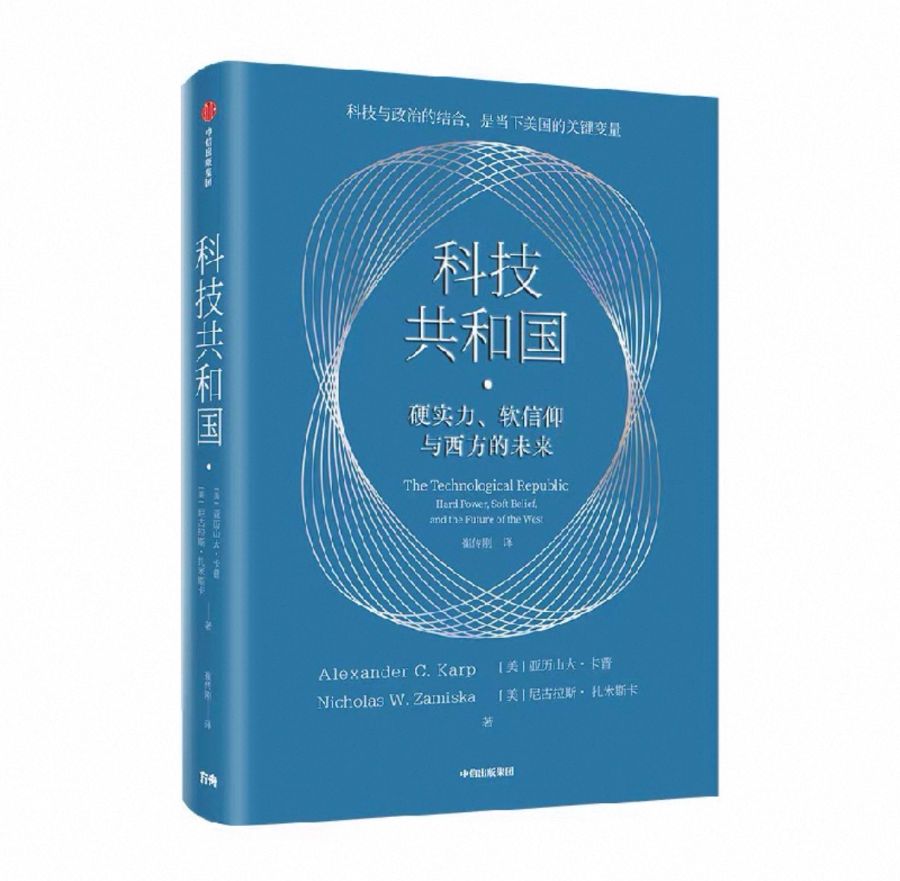
Core Argument - The book "Tech Republic: Hard Power, Soft Beliefs, and the Future of the West" critiques the long-standing technological libertarianism of Silicon Valley, arguing that technology should serve national interests and civilization rather than merely pursuing commercial gains and user engagement [2][3]. Group 1: Technology and National Strategy - The author advocates for embedding technology within the national political framework, suggesting that technology should be driven by national power and strategy [3]. - The concept of "Tech Republic" is introduced, calling for tech companies, particularly those in Silicon Valley, to assume public responsibilities and collaborate with the government [3]. - The book emphasizes the need for a mission-driven innovation approach, focusing on national strategy rather than short-term returns and user growth [4]. Group 2: Critique of Current Trends - The book criticizes the shift of the U.S. tech industry from national security to consumer internet and social media, highlighting a perceived political neutrality among Silicon Valley companies [2][4]. - It reflects a critique of globalization and technological neutrality, resonating with rising anti-globalization sentiments in the U.S. and elsewhere [2]. - The authors argue that critical markets, such as data and AI, should not be left solely to market forces but require strategic national planning [4]. Group 3: Author Background and Controversy - The authors, Alexander C. Karp and Nicholas W. Zamiska, have backgrounds that influence their perspectives, with Karp being a CEO of a data analytics company serving government and military clients [4]. - The book has faced criticism for potentially reflecting the interests of its authors, who are closely tied to the U.S. government [4]. - The book raises concerns about the practicality of its proposals in a historically liberal economic environment in the U.S. [4][5]. Group 4: Innovation and Globalization - The transition from "technological globalization" to "technological sovereignty" is questioned, as it may not necessarily enhance U.S. technological strength [5]. - The innovation ecosystem in the U.S. is primarily driven by vibrant enterprises, and losing this focus could lead to unintended consequences [5]. - The book's critique of Silicon Valley may spark discussions, but it does not present a comprehensive solution, emphasizing the need for a supportive environment for innovation and collaboration among nations [5].
华科博士联手清华教授 跑出100亿机器人黑马
2 1 Shi Ji Jing Ji Bao Dao· 2026-02-24 16:12
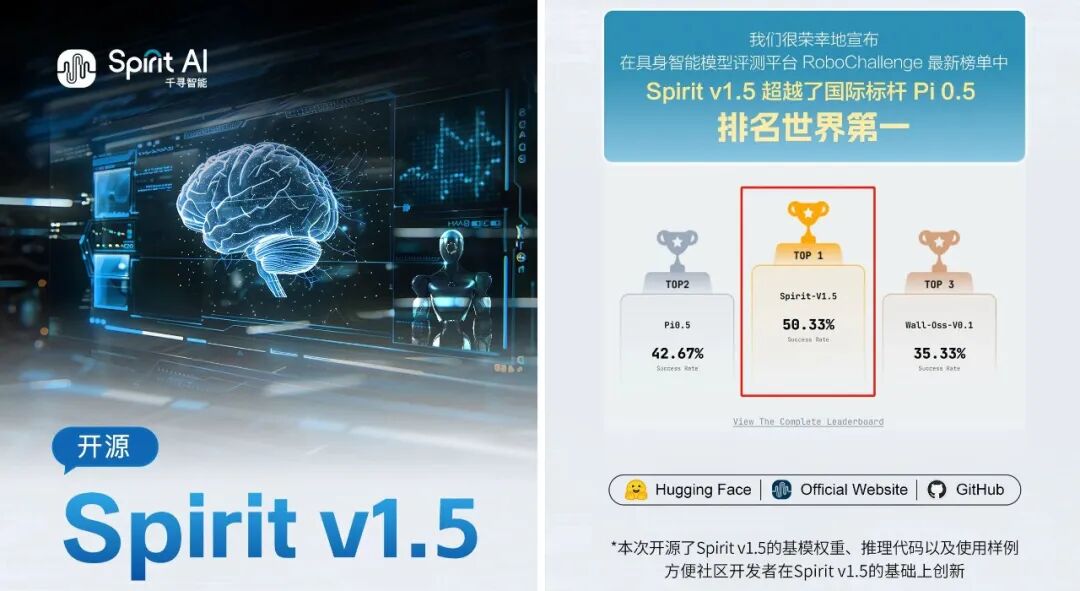
Group 1 - The core viewpoint of the article highlights the emergence of Qianxun Intelligent as a significant player in the embodied intelligence sector, achieving a valuation exceeding 10 billion yuan after recent funding rounds totaling nearly 2 billion yuan [1][2]. - The company was co-founded by Han Fengtao, who has extensive experience in the industrial robotics field, and aims to enable 10% of the global population to own their own robots within ten years [2][3]. - Qianxun Intelligent's team consists of members from top universities, focusing on core areas such as multimodal large models and reinforcement learning, and has developed the "Mozi Robot" for complex tasks in production lines [2][5]. Group 2 - In July of the previous year, Qianxun completed a Pre A+ round of financing, led by JD.com, to explore commercial applications of their robots in retail environments [3][5]. - The company achieved a significant milestone by surpassing a 50.33% success rate with its open-source Spirit v1.5 model, ranking first globally among embodied intelligence models [5][6]. - The primary goal post-funding is to enhance the performance of their embodied models, aiming to accumulate 1 million hours of effective data, with a revenue target of 100 million yuan [6].

手握20个品牌 200亿中国鞋王卖爆了
2 1 Shi Ji Jing Ji Bao Dao· 2026-02-24 16:11
Core Viewpoint - Belle International is undergoing a brand transformation, shifting focus from traditional brands to its own brand Mirabell and expanding into the high-growth sports and leisure segment [2][6]. Brand Transition - A significant number of Hush Puppies stores are being replaced by the new brand Mirabell, with the design and product teams remaining unchanged [3][8]. - The transition is part of a broader strategy to phase out non-core brands and focus on high-potential segments [6][10]. Leadership and Strategy - The current CEO, Sheng Fang, has increased the number of brands under Belle International to 20, with a focus on internal brand support and external brand acquisition [4][5]. - The company has opted not to renew the Hush Puppies franchise, which has been under its management since 2008, and is instead focusing on its own brand Mirabell [7][8]. Market Position and Performance - Belle International has secured the rights to operate Allbirds in China for a 10-year period, aiming to revitalize the brand in a competitive market [11]. - The company has diversified its portfolio, with nearly 70% of its revenue now coming from brands other than its original women's shoe brand, Belle [12]. Brand Development and Innovation - The company has successfully revitalized the Champion brand in China, achieving significant growth through strategic marketing and product innovation [15][16]. - Champion's revenue from footwear and accessories has increased to over 30% of its total sales, aided by a robust omnichannel sales network [15][16]. Financial Overview - Belle International's revenue for the period from March to November 2023 was 16.1 billion yuan, with a net profit of 2.058 billion yuan, projecting an annual revenue of over 20 billion yuan [18]. - The company plans to submit an IPO application in March 2024 to raise funds for debt repayment and digital transformation [18]. Future Outlook - The management aims to return to the Hong Kong stock market, although challenges remain [19].
60岁南京医药大佬 一把狂揽70亿
2 1 Shi Ji Jing Ji Bao Dao· 2026-02-24 16:08
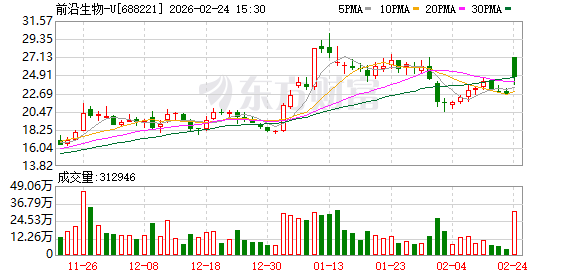
Core Viewpoint - The company Frontline Bio has entered into a significant exclusive licensing agreement with GlaxoSmithKline (GSK) to co-develop two small nucleic acid drugs, with a total deal value exceeding $1 billion, which will help improve its cash flow and financial structure [2][5]. Group 1: Licensing Agreement Details - The agreement includes an upfront payment of $40 million and a milestone payment of $13 million, with potential future payments up to approximately RMB 6.55 billion based on successful development and commercialization [2]. - The collaboration will allow Frontline Bio to focus on early development of the drugs, while GSK will handle global clinical development and commercialization [5]. Group 2: Company Background and Financial Situation - Frontline Bio, founded by CEO Xie Dong in 2013, has faced financial difficulties, accumulating losses of over RMB 1.5 billion in the past five years, with cash reserves declining from RMB 527 million in 2023 to RMB 249 million in 2024 [6][11]. - The company’s flagship product, Aikening, has struggled with sales growth despite being the first long-acting HIV-1 fusion inhibitor approved in China [8][11]. Group 3: Focus on Small Nucleic Acid Drugs - Xie Dong has shifted the company’s strategy to focus on small nucleic acid drugs, which are seen as a promising area in the pharmaceutical industry, expanding from rare diseases to chronic conditions [3]. - The company is developing multiple products targeting various conditions, including IgA nephropathy and hyperuricemia, with most projects still in early stages [3][4]. Group 4: Market Context and Competition - The small nucleic acid drug market is becoming increasingly competitive, with nearly 20 approved products globally and several domestic companies also pursuing this area [14]. - Frontline Bio's pipeline is primarily in preclinical development, and the timeline for clinical trials could extend 7-8 years, creating uncertainty regarding future milestone payments [14].


道指大涨超400点,芯片股拉升,AMD飙涨7%,黄金白银急速下跌,特朗普或对六大行业加征关税
2 1 Shi Ji Jing Ji Bao Dao· 2026-02-24 15:42
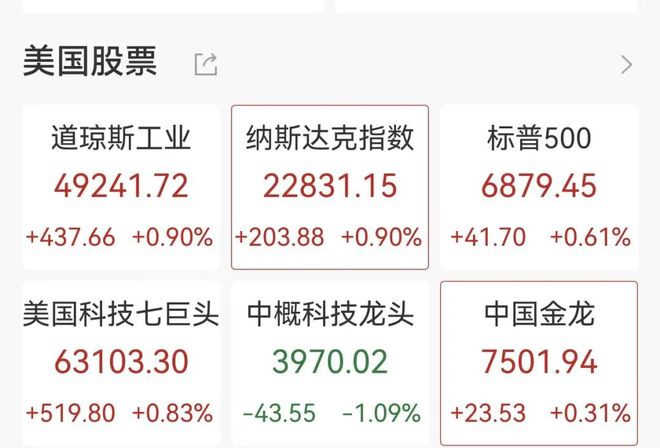
Market Overview - The US stock market opened slightly higher, with the Dow Jones up nearly 1%, gaining over 400 points, the Nasdaq up 0.9%, and the S&P 500 up 0.61% [2] Technology Sector - Major tech stocks showed mixed performance, with the "Big Seven" tech companies mostly rising, including Apple which rose nearly 3%, while Google and Meta fell over 1% [3] - AMD saw a significant increase of over 7%, while TSMC and Micron Technology rose by more than 3% and 2% respectively [3] - Meta is reportedly planning to enter the stablecoin market later this year and has signed a substantial chip agreement with AMD, estimated to be worth hundreds of billions over at least four years [3] Automotive Sector - Automotive stocks rose, with Ford gaining over 4% and General Motors up over 3% [4] Lithium Sector - Lithium-related stocks experienced gains, with Lithium Argentina up over 7%, US Lithium up 5.3%, and Lithium Americas up 4.4% [4] Chinese Stocks - Chinese stocks showed mixed results, with Century Internet rising over 11% and NIO up over 7%, while Tencent Music and Bilibili fell over 2% [5] Precious Metals - Spot gold continued to decline, dropping 2.45% during the session and falling below $5,100, with a current drop of 1.89% [7] - Spot silver also decreased by 1.33% [7] Cryptocurrency Market - Bitcoin continued its downward trend, falling over 3.6% within 24 hours and briefly dropping below the $63,000 mark, while Ethereum fell nearly 4% [8]


韩寒“经济学”:他正打开男性电影市场
2 1 Shi Ji Jing Ji Bao Dao· 2026-02-24 15:15
Core Viewpoint - Han Han emerges as the biggest winner of the 2026 Spring Festival film season, with his film "Fast Life 3" grossing 29.27 billion yuan, significantly outperforming the second-place film [1] Group 1: Financial Performance - The total box office for the 2026 Spring Festival reached 57.52 billion yuan, with 120 million viewers [1] - Han Han's company, Tingdong Film, reported a revenue of 1.17 billion yuan and a net profit of 35.18 million yuan in 2025, while in 2024, it had a revenue of 861 million yuan and a net profit of 149 million yuan [2] - In contrast, Bona Film is projected to incur losses between 1.26 billion to 1.48 billion yuan in 2025 [2] Group 2: Market Trends - The male audience's share in the Spring Festival film market decreased from 48.1% in 2019 to 36.5% in 2025, but this trend reversed in 2026, with male viewers accounting for 40.9% [12][13] - The success of "Fast Life 3" and "Biao Ren: Wind Rises in the Desert" indicates a potential resurgence in the male market segment [13] Group 3: Industry Impact - Han Han's exploration of hard-core themes is attracting more male audiences back to cinemas, which is a challenging task [11] - The "Fast Life" series has grossed over 8 billion yuan in total, with the third installment contributing significantly to this figure [8] - Han Han is systematically building the "Fast Life" universe, which reflects the ongoing potential in the film industry despite market fluctuations [14][15]
从“造产品”到“做服务” 粤企闯出新蓝海
2 1 Shi Ji Jing Ji Bao Dao· 2026-02-24 15:10
Core Viewpoint - The Guangdong Provincial High-Quality Development Conference emphasizes the collaborative development of manufacturing and service industries as essential for the province's high-quality growth and modernization [1][2]. Group 1: Manufacturing and Service Industry Collaboration - Guangdong aims to leverage its strong manufacturing base to enhance service industry capabilities, creating a modern industrial system that supports high-quality development [1][5]. - The province's manufacturing sector accounts for approximately 1/8 of the national total, with 160 types of industrial products leading in output [5]. - The "Two Industries Collaboration" is seen as a necessary trend for industrial development, with a focus on integrating manufacturing and service sectors to enhance competitiveness [4][6]. Group 2: Transformation of Manufacturing Enterprises - Many Guangdong manufacturing companies are transitioning from product-centric models to service-oriented approaches, seeking to overcome development bottlenecks and enhance value [2][3]. - The integration of advanced technologies, such as AI and robotics, is being showcased at events to demonstrate the capabilities of Guangdong's manufacturing sector [2][4]. - Companies like Zhiyuan and XAG are developing innovative solutions that combine manufacturing with service applications, enhancing operational efficiency and market reach [3][4]. Group 3: Economic and Trade Growth - Guangdong's service trade is projected to double during the 14th Five-Year Plan, reaching $262.58 billion by 2025, with digital trade expected to contribute significantly [7]. - The province's enterprises are increasingly focusing on a full value chain approach, moving from product export to comprehensive service offerings, thereby enhancing brand loyalty and competitive advantage [8][9]. - The establishment of a robust supply chain ecosystem in the Guangdong-Hong Kong-Macao Greater Bay Area supports this transition, facilitating rapid innovation and cost-effective production [10][11]. Group 4: Digital Trade and Data Utilization - The Greater Bay Area's unique regulatory environment and comprehensive manufacturing capabilities provide a fertile ground for digital trade innovations [11]. - The region's ability to generate vast amounts of supply chain and consumer data is crucial for developing new digital trade models [11].
韩寒“经济学”:他正打开男性电影市场丨小贺说
2 1 Shi Ji Jing Ji Bao Dao· 2026-02-24 15:08
21世纪经济报道记者 贺泓源 韩寒成为今年电影春节档的最大赢家。 2月24日,据国家电影局数据,2026年春节档票房为57.52亿元,观影人次为1.20亿。其中,韩寒编剧并 执导的《飞驰人生3》以29.27亿元票房位居档期冠军,远远超出第二名《惊蛰无声》的8.68亿元票房成 绩。 也要看到,韩寒还是《飞驰人生3》的主要投资方。他作为大股东的亭东影业,为该片第一出品方。天 眼查显示,亭东影业股东方面,韩寒持股57.26%,博纳影业持股9.55%,阿里旗下大麦娱乐持股 9.13%,知名出版人路金波个人持股6.59%。 这意味着,韩寒将享有《飞驰人生3》的高额利润分成。 "痛苦和骄傲,这一生都要拥有。" 这是《飞驰人生3》主题曲中的一句歌词,反映了该片的一些内核。聚焦赛车主题的《飞驰人生》系 列,由沈腾、尹正主演。在第三部里,沈腾饰演的张弛经历了更多中年人的落魄与被动,但他依旧保持 纯粹并获得了最终赛事胜利。 某种程度上,该片像是一种更贴近当下的成人童话,带有很强的励志色彩。 事实上,亭东影业盈利一直不错。博纳影业公告显示,2025年,亭东影业营收1.17亿元,净利润3518.68 万元。2024年,亭东影业营收为 ...