
2 1 Shi Ji Jing Ji Bao Dao

Search documents
刘强东宣布投资50亿进军游艇行业
2 1 Shi Ji Jing Ji Bao Dao· 2026-02-24 15:04
Group 1 - Liu Qiangdong's newly established yacht brand Sea Expandary signed strategic cooperation agreements with governments in Shenzhen and Zhuhai on the first day of work after the Spring Festival [1] - Liu Qiangdong emphasized his personal connection to boats, citing a family history of over a century as boatmen and expressing a lifelong dream of becoming a captain [1] - Sea Expandary's investment is set at 5 billion yuan, significantly higher than the typical investment in domestic yacht manufacturing, which rarely exceeds 10 million yuan [1] Group 2 - Sea Expandary will focus on new energy and intelligent yachts, aiming to achieve a "leapfrog" in the green and smart manufacturing sector in China, addressing a gap in the civil ship sector [2] - Liu Qiangdong has received five orders for large yachts, specifically 72-meter catamarans, with an average selling price of 60 million euros each [2] - The manufacturing industry differs from the internet sector, requiring a longer time frame of ten to twenty years to gain global consumer recognition through quality, technology, and environmental sustainability [2]
腾讯天美被曝关闭蒙特利尔研发工作室
2 1 Shi Ji Jing Ji Bao Dao· 2026-02-24 14:26
Group 1 - Tencent's Montreal studio has ceased operations, confirmed by multiple former employees on social media [1] - The studio was established in 2021, led by Ashraf Ismail, and was Tencent's third North American development base [1][3] - Initially, the studio aimed to develop AAA quality, open-world games with cross-platform capabilities, but no completed projects were announced in five years [3] Group 2 - Tencent and NetEase are adjusting their overseas development strategies, with NetEase closing several studios in the U.S. and Canada [4] - The closure of Tencent's Team Kaiju studio in Los Angeles in 2023 reflects a broader trend of reducing overseas operations [4] - Rising overseas development costs and the preference for acquiring IP rights or developing original products domestically are driving these strategic adjustments [4]


800亿光伏龙头拟并购行业独角兽,明起停牌
2 1 Shi Ji Jing Ji Bao Dao· 2026-02-24 14:25
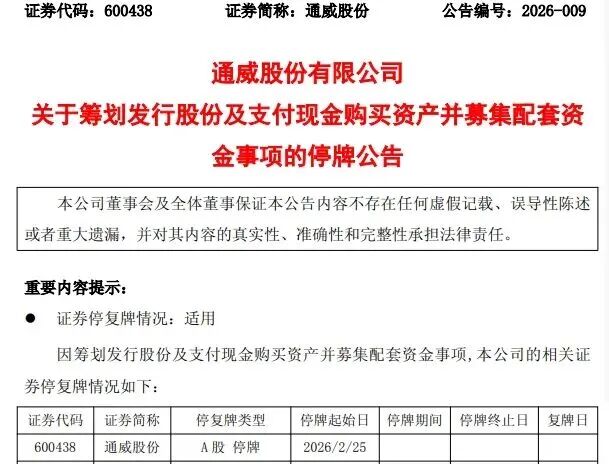
Core Viewpoint - Tongwei Co., Ltd. is planning to acquire 100% equity of Qinghai Lihua Qingneng Co., Ltd. through a combination of share issuance and cash payment, while also raising supporting funds [1][3]. Group 1: Acquisition Details - The acquisition is still in the planning stage, and there are uncertainties regarding the transaction [3]. - Tongwei's stock will be suspended from trading starting February 25, 2026, for a period not exceeding 10 trading days to ensure fair information disclosure [3]. - Lihua Qingneng specializes in the research, production, and sales of photovoltaic-grade high-purity silicon and electronic-grade polysilicon, and is a key investment project in Qinghai Province [3]. Group 2: Company Background - Lihua Qingneng has operations in both Qinghai and Sichuan, with a total planned investment of 20 billion CNY to establish a production capacity of 200,000 tons of photovoltaic-grade high-purity silicon and 2,000 tons of electronic-grade high-purity silicon [3]. - The company has also established a wholly-owned subsidiary in Yibin, Sichuan, to invest in a project with a production capacity of 200,000 tons of photovoltaic-grade high-purity silicon, 5,000 tons of electronic-grade high-purity silicon, and 250,000 tons of industrial silicon [3]. Group 3: Financial Performance - Tongwei Co., Ltd. is projected to report a loss of 9 billion to 10 billion CNY for the year 2025, making it the "loss leader" among disclosed photovoltaic companies [5]. - The company attributes the expected loss to a slowdown in the growth of new photovoltaic installations, ongoing supply surplus issues, and rising prices of core raw materials [5]. - Tongwei has also indicated that it will recognize long-term asset impairments totaling approximately 1.5 billion to 2 billion CNY, an increase of about 700 million to 1.2 billion CNY year-on-year [5].

吴晓敏:广东新春第一会,点燃广货新动能
2 1 Shi Ji Jing Ji Bao Dao· 2026-02-24 14:16
Group 1 - The Guangdong Province High-Quality Development Conference has been convened, signaling a strong push for high-quality development in the new year [1] - The conference emphasizes the collaborative development of manufacturing and service industries, providing clear direction for industrial upgrades [1] - The current surge in live-streaming e-commerce in Guangzhou and the continuous demand for Guangdong products exemplify the province's high-quality development in both consumption and industry [1] Group 2 - The "Guangdong Products Go Global" initiative is integrating high-quality resources from industries such as manufacturing, culture, tourism, and agriculture, while collaborating with major e-commerce platforms [1] - This initiative aims to address the channel challenges faced by small and medium-sized enterprises and to build public market infrastructure, injecting new momentum into the construction of a strong manufacturing province [1] - The initiative is viewed as a systematic project rather than a simple regional promotional effort, focusing on the efficient transformation from "high-quality production" to "widespread recognition" [1]
国家发展改革委刘泉红:推进两业协同,四大方向破解结构性矛盾
2 1 Shi Ji Jing Ji Bao Dao· 2026-02-24 14:16
Core Viewpoint - The integration of advanced manufacturing and modern service industries is a crucial strategic direction for accelerating the construction of a modern industrial system and fostering new productive forces for high-quality development [1][2]. Group 1: Industry Integration - Modern service and advanced manufacturing industries are no longer isolated but are deeply intertwined, with services empowering manufacturing and manufacturing driving service upgrades [2]. - The essence of industrial integration combines the optimization of existing resources and technologies with new innovations, leading to the emergence of new industries, business models, and value chains [2][3]. - Internationally, promoting industrial integration and developing service-oriented manufacturing are key measures for enhancing the core competitiveness of industries, as evidenced by historical examples from the United States [2]. Group 2: Policy and Practice - China has placed significant emphasis on industrial integration, with policies such as the "Implementation Opinions on Promoting the Deep Integration of Advanced Manufacturing and Modern Service Industries" outlining a path that centers on manufacturing as the core driver supported by services [3]. - Various regions are actively pursuing integration, with Guangdong leveraging its Bay Area advantages, Zhejiang promoting "manufacturing + platform" transformations, and Yunnan accelerating industrial internet projects [3]. - Companies like Shanghai Electric and Shan Gu are transitioning towards comprehensive solution providers, while industrial parks are creating "manufacturing + service" complexes to enhance efficiency [3]. Group 3: Challenges - The integration process faces three structural contradictions: insufficient depth of collaboration, with many companies remaining at the "manufacturing + simple after-sales" stage; homogenization of service models, leading to a lack of precise alignment; and outdated standard systems that hinder cross-industry integration [3]. Group 4: Recommendations - Enhance the supply capacity of high-end services by developing productive services, promoting domestic industrial software, and supporting leading enterprises in resource integration [4]. - Strengthen the role of enterprises as innovation subjects by focusing on key technologies and fostering a public service platform for manufacturing companies [4]. - Improve the standards and rules system by addressing standard gaps in key industries and promoting a unified national market to lower integration costs [4][5]. - Optimize the institutional environment for integration by creating benchmark scenarios in key industries and simplifying processes to enhance efficiency [5].
广深双机场破纪录 大湾区交通枢纽效应释放
2 1 Shi Ji Jing Ji Bao Dao· 2026-02-24 14:14
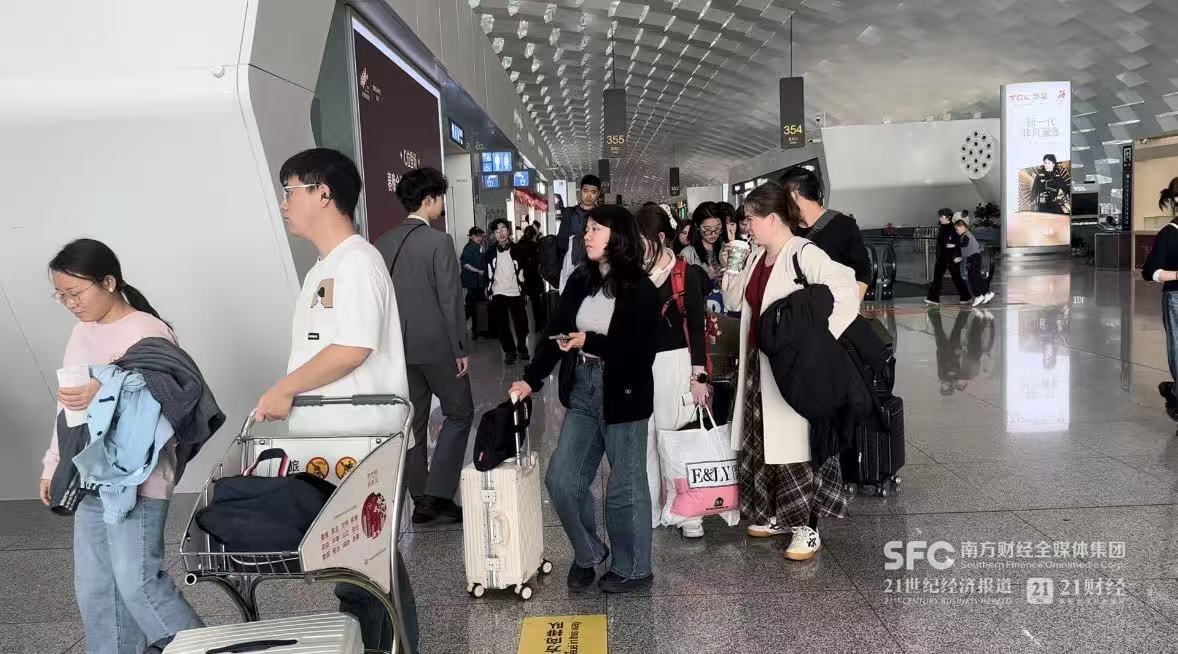
Core Insights - The Greater Bay Area's two major airports, Shenzhen Bao'an International Airport and Guangzhou Baiyun International Airport, have set new passenger traffic records during the Spring Festival holiday, indicating a strong recovery in air travel demand [1][3][5]. Group 1: Passenger Traffic Records - Shenzhen Bao'an International Airport recorded a single-day passenger flow of 214,000 on February 23, marking the fourth consecutive day of exceeding 210,000 passengers [1][3]. - Guangzhou Baiyun International Airport achieved a historic milestone with a single-day passenger throughput of 283,400 on February 22, becoming the first airport in the country to surpass 5 million passengers during the Spring Festival period [3][4]. Group 2: Factors Driving Growth - The extended Spring Festival holiday (9 days) significantly boosted travel demand for family visits, tourism, and business, contributing to a national total of 22.05 million passengers during the holiday, a 7.7% year-on-year increase [5][6]. - Infrastructure upgrades, such as the new T3 terminal at Baiyun Airport and the third runway at Shenzhen Airport, have enhanced operational capacity, allowing for better handling of peak travel periods [5][6]. Group 3: International Travel Trends - The trend of "dual-direction Spring Festival travel" has emerged, with a notable increase in inbound travelers due to visa policy optimizations, leading to a 61.2% year-on-year increase in inbound Chinese citizens at Baiyun Airport during the holiday [5][6]. - The influx of foreign visitors also rose significantly, with over 34,000 foreigners entering China through Baiyun Airport during the holiday, reflecting a growing interest in experiencing the Chinese New Year [5][6]. Group 4: Economic Implications - The high passenger volumes at these airports not only demonstrate the resilience of the Greater Bay Area's economy but also highlight the importance of upgraded transportation infrastructure in meeting travel demand [6].
国常会重磅部署银发经济,养老服务全面升级,守护老年人钱袋子
2 1 Shi Ji Jing Ji Bao Dao· 2026-02-24 14:14
(文章来源:21世纪经济报道) 国常会研究推进银发经济和养老服务发展有关工作。会议指出,我国银发经济潜力很大,要完善支持举 措、强化政策落实,促进养老事业和养老产业发展,为应对人口老龄化提供有力支撑。要进一步释放银 发消费需求,提升消费能力,发挥消费补贴等政策牵引作用,打造一批银发消费新场景新业态。要推动 普惠养老服务供给提质扩面,健全分级分类、普惠可及、覆盖城乡、持续发展的养老服务体系,更好保 障老有所养。要加强养老机构安全管理,及时排查化解风险隐患,严厉打击虚假宣传、非法集资和养老 诈骗等行为,切实维护老年群体合法权益。 ...
三七互娱郭平详解AI破圈:从自用到赋能 兼顾社会与经济价值
2 1 Shi Ji Jing Ji Bao Dao· 2026-02-24 13:48
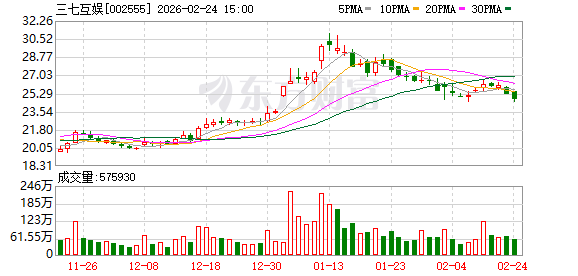
Core Viewpoint - The company aims to enhance its AI research and development, deepen cultural integration and innovation, and expand its overseas market presence, positioning itself as a leader in Guangdong's gaming industry and contributing to the integration of digital economy and new trade formats [2] Group 1: AI Development and Integration - AI technology is identified as the core engine for the company's high-quality development, with a focus on creating an "internal and external linked" AI ecosystem that permeates the entire research and operation chain [2] - The company has developed its proprietary industry model, "Xiao Qi Model," which achieved over 90% AI coverage across its operations and became one of the first gaming vertical models registered with the National Cyberspace Administration of China in 2025 [2] Group 2: AI Application in Advertising and R&D - In advertising, AI-driven ad placements account for over 70%, with AI outperforming human operators in monitoring, optimization, and stability [3] - The penetration rate of AI in the art development phase reaches 65%, significantly reducing costs for 2D and 3D art production [3] Group 3: Cultural and Social Value of Gaming - The gaming industry serves as a digital carrier for cultural dissemination and a key form of new trade formats, enhancing the commercial value of cultural IP through collaboration with the manufacturing sector [3] - The company is promoting AI technology from "enterprise use" to "industry sharing," exemplified by its first commercial AI product, "Ling Chacha," which helps businesses efficiently identify potential infringement and manage abnormal content [3] Group 4: Broader Impact of AI Technology - The company emphasizes the social value of AI technology, aiming to empower societal operations and promote positive values through functional games and applications in public events and urban cultural tourism [4] - The company has achieved two significant breakthroughs: expanding from internal use to industry empowerment and balancing economic and social value [4]

双核引领强引擎 工商并举挑大梁!天河高质量发展大会26日启幕
2 1 Shi Ji Jing Ji Bao Dao· 2026-02-24 13:46
Core Insights - The Guangzhou Tianhe District is set to hold a high-quality development conference on February 26, focusing on the theme of "dual-core leadership, industrial and commercial synergy, and major district responsibilities" to kickstart the year with momentum [1][2] - Tianhe aims to leverage its position as a leading area in Guangzhou, contributing nearly 22% to the city's economic output, with a GDP target of over 700 billion by 2025 [3] Group 1: Conference Overview - The conference will showcase the achievements of Tianhe's high-quality development through a presentation titled "Leading the Bay Area Towards the Future" [2] - Key areas of focus will include the Guangzhou International Financial City, Guotang Science and Technology City, and Olympic Sports City, highlighting future development plans and investment opportunities [2] - Various experts and business leaders will participate, sharing insights on innovation, manufacturing empowerment, consumption stimulation, and urban renewal [2] Group 2: Economic Performance - Tianhe District has maintained its position as the top contributor to Guangzhou's economy for 19 consecutive years, with significant growth in core economic indicators [3] - The district has seen a surge in quality industrial projects and investments from Fortune 500 companies, with record numbers of technology enterprises and "little giant" companies recognized [3] - The digital economy and artificial intelligence sectors are leading the city, establishing Tianhe as a key innovation hub in the Greater Bay Area [3] Group 3: Development Strategy - Tianhe is focusing on spatial restructuring to drive industrial upgrades, enhancing the central business district and accelerating the development of the central science and technology area [3] - The district is also improving urban infrastructure, including transportation networks, to support industrial growth and land use for innovation and manufacturing [3][4] - The "Tianhe Model" emphasizes the synergy between modern service industries and advanced manufacturing, with a strong foundation in finance and software sectors [4]
当美国关税政策坐上“过山车”:谁在承受不确定性之痛?
2 1 Shi Ji Jing Ji Bao Dao· 2026-02-24 13:28
Core Viewpoint - The recent U.S. tariff policy changes, triggered by a Supreme Court ruling, reflect a significant shift in global trade dynamics, moving away from established norms and creating uncertainty in international trade relationships [2][9]. Group 1: Tariff Policy Changes - The U.S. Supreme Court ruled that the large-scale tariff policy implemented under the International Emergency Economic Powers Act (IEEPA) was illegal, leading to the announcement of a new 10% global import tariff for 150 days, which was later increased to 15% [1][8]. - The U.S. government is considering imposing new tariffs on approximately six industries under the guise of "national security," which may include large batteries, iron castings, plastic pipes, industrial chemicals, and telecommunications equipment [1][3]. Group 2: Impact on International Relations - The new tariff measures have significantly strained relationships with traditional allies such as the EU, Japan, and the UK, as these countries face increased average tariff rates due to the new 15% tariffs being added on top of existing agreements [4][10]. - The European Parliament has paused the approval of trade agreements with the U.S. until there is legal clarity regarding the new tariffs [3][4]. Group 3: Market Reactions - The uncertainty surrounding U.S. tariffs has led to a surge in gold prices, with spot gold surpassing $5,200, while U.S. stock markets experienced significant declines, with major indices dropping over 1% [6][7]. - The market is currently characterized by a "gold up, stocks down, dollar weak" trend, indicating investor fear of policy unpredictability rather than the tax rates themselves [6][7]. Group 4: Future Outlook - The U.S. tariff policy is expected to enter a prolonged phase of legal and legislative battles, with the current 15% tariff set to expire on July 24, 2026, unless extended by Congress [9][10]. - Analysts predict that the U.S. may shift towards more targeted tariffs under the Section 301 and Section 232 provisions, focusing on specific industries and countries, which could lead to a more institutionalized and long-term tariff framework [10][11].