
Jing Ji Guan Cha Bao

Search documents
可持续发展开发区“浙江样本”亮相湖州安吉
Jing Ji Guan Cha Bao· 2025-09-13 04:08
经济观察网 据央广网,9月12日,可持续发展开发区创新体系发布会暨浙江开发区绿色产业招商对接会 在浙江省湖州市安吉县举行。 (原标题:可持续发展开发区"浙江样本"亮相湖州安吉) 同时,可持续发展开发区智库基地在安吉经济开发区设立,将为可持续发展研究与实践推进提供长期保 障,安吉经济开发区等浙江省内开发区代表还现场分享了可持续发展经验。 会上,《浙江省可持续发展开发区团体标准》正式发布。据介绍,该标准不仅为浙江开发区可持续发展 差异化提升提供精准指引,更填补国内省级行政区域层面全类型开发区可持续发展团体标准空白,为全 国其他省份开发区提供可借鉴的"浙江样本"。 据悉,作为"两山"理念践行的典型代表,安吉经济开发区近年来通过"加、减、乘"法推进绿色发展,成 效显著。"减法"上,压低项目准入能耗门槛至0.35吨标准煤/万元,近三年关停、收储、腾换高能耗及低 产出企业1600余家;"加法"上,亩均税收入园门槛提升至80万元/亩,2024年园区亩均税收达50.3万元/ 亩,培育优势企业与新兴产业,现有国内外主板上市公司21家,国家级专精特新、重点小巨人、单项冠 军企业共23家,新兴产业项目引进成果丰硕;"乘法"上,通过 ...
为什么以前的孩子天天挨骂、挨打,却不容易出现心理问题?
Jing Ji Guan Cha Bao· 2025-09-13 04:08
Core Viewpoint - The rising incidence of depression among adolescents is attributed to various factors, leading to the perception that today's children are more fragile compared to previous generations [1]. Group 1: Reasons for Perceived Fragility - Increased attention on children due to smaller family sizes results in heightened scrutiny of their behavior, limiting their personal space and autonomy [2]. - Limited physical activity and outdoor playtime restrict emotional regulation, as exercise is known to release endorphins that improve mood [3]. - Emotional issues are often passed down through generations, with previous generations not addressing psychological problems, leading to a hidden transmission of these issues [4][5][7]. Group 2: Suggestions for Raising Psychologically Healthy Children - Avoid making academic performance the sole source of a child's self-worth, as excessive pressure can lead to psychological issues [9][10][11][12]. - Do not control children under the guise of love, as this can create chronic stress and emotional pain [14][16][17]. - Foster empathy by recognizing children as individuals with their own emotions and needs, allowing for open communication and emotional support [18][19].
财政部部长蓝佛安:财政政策始终留有后手 未来财政政策发力空间依然充足
Jing Ji Guan Cha Bao· 2025-09-13 03:17
Core Viewpoint - The Chinese Ministry of Finance emphasizes that fiscal policy will continue to have ample room for maneuvering, balancing risk prevention and development promotion, while maintaining a proactive stance to support economic stability and growth [1][2]. Group 1: Fiscal Policy Characteristics - The fiscal policy during the "14th Five-Year Plan" period has four main characteristics: 1. Increased intensity, with the deficit ratio rising from 2.7% to 3.8%, and further to 4% this year, alongside a new local government special bond quota of 19.4 trillion yuan and over 1 trillion yuan in tax reductions and deferrals [2][3]. 2. Enhanced tools, utilizing government bonds, tax policies, fiscal subsidies, and special funds to amplify policy effects, including the innovative issuance of ultra-long special bonds to support domestic demand [2]. 3. More precise efforts, focusing on economic bottlenecks and challenges, such as a one-time arrangement of 6 trillion yuan for debt replacement to alleviate local debt pressure and free up resources for public welfare and development [3]. 4. Greater flexibility in timing, ensuring policies are implemented promptly to maximize their effectiveness [3]. Group 2: Policy Coordination and Impact - The Ministry of Finance highlights the importance of coordinating fiscal policy with monetary policy to create a synergistic effect, including the issuance of 500 billion yuan in special government bonds to inject capital into major commercial banks, which is expected to leverage approximately 6 trillion yuan in credit [2].
Timberland官宣徐明浩为全新亚太区代言人
Jing Ji Guan Cha Bao· 2025-09-13 02:32
近日,Timberland正式宣布徐明浩成为其全新亚太区代言人。双方将以自由的姿态和真诚的表达,共同 演绎新世代的"踢不烂"故事,传递坚韧不拔、勇敢无畏、真实独立的精神内核。随着代言人的官宣, Timberland还发布了一支全新的"踢不烂的你"主题广告片,以辽阔无垠的沙漠为背景,正式拉开了合作 序幕。在广告片中,徐明浩身着品牌经典的大黄靴,在沙漠中稳步前行,他的身影与一群充满活力的青 年群像交织在一起:有人毅然追逐梦想,有人勇敢地改变自我,还有人在孤独中坚守热爱。 为了进一 步深化合作,Timberland特别推出了Timberland x 徐明浩THE8定制款黄靴。这款鞋以品牌标志性的经典 大黄靴为设计基础,融入了徐明浩的个人风格与创意巧思。联名款限量208双,仅在中国大陆发售,每 一双都独一无二。这款鞋不仅延续了Timberland的经典风格,也承载了年轻一代的个性表达。 (原标题:Timberland官宣徐明浩为全新亚太区代言人) ...
阿迪达斯与奥迪F1车队建立全新服装合作伙伴关系
Jing Ji Guan Cha Bao· 2025-09-13 02:32
Group 1 - Adidas has announced a new apparel partnership with Audi F1 team, set to officially begin in the 2026 season [1] - The collaboration will cover Audi drivers Nico Hülkenberg and Gabriel Bortoleto, as well as engineers, mechanics, and other team members [1] - Adidas will develop custom high-performance apparel emphasizing functionality and track performance [1] Group 2 - A co-branded collection featuring Audi F1 team and Adidas will be launched before the 2026 season, including clothing, footwear, and accessories for the global market [1]

江南史前考古的地标:访苏州草鞋山遗址|访古
Jing Ji Guan Cha Bao· 2025-09-13 01:02
Core Insights - The article highlights the significance of the Caoxieshan site in Suzhou, which is a crucial archaeological site representing the Neolithic culture in the Yangtze River Delta region [9][10][13] Summary by Sections Discovery and Historical Context - The Caoxieshan site was discovered in 1956 by Zhao Qingfang during a cultural relic survey organized by the Jiangsu Provincial Cultural Relics Management Committee [2] - The site covers an area of approximately 10,000 square meters and features a cultural layer thickness of about 15.5 meters, with significant archaeological findings [2][3] Archaeological Excavations - The site has undergone eight major excavations since its discovery, with the first excavation occurring from September 1972 to July 1973, revealing three overlapping cultural layers [3][4] - Subsequent excavations from 1992 to 1995 uncovered ancient rice paddy remains, providing direct evidence of rice cultivation origins [3][4] Cultural Layers and Findings - The site consists of ten cultural layers representing four cultural types, including the Majiabang culture, Songze culture, Liangzhu culture, and Wu-Yue culture from the Spring and Autumn period [5][10] - As of the end of 2021, 239 Neolithic tombs and 115 rice paddy remains have been discovered, along with over 1,800 artifacts [5][10] Significance of the Site - The Caoxieshan site is recognized for its complete cultural sequence, which is rare among ancient sites, and serves as a benchmark for studying prehistoric cultures in the Taihu region [10][11] - It is noted for the discovery of the earliest known artificial irrigation system in ancient rice paddies, marking it as a significant site for the study of rice agriculture origins [11][12] - The site also yielded the earliest known textile artifacts made from wild kudzu, showcasing advanced weaving techniques [12][13] Cultural Impact - The findings at Caoxieshan have profound implications for understanding the aesthetic values, craftsmanship, and cultural evolution in the Jiangnan region, reflecting the enduring charm of Chinese civilization [13]
2025北京服贸会 | 全球总部经济面临数字转型压力
Jing Ji Guan Cha Bao· 2025-09-13 01:02
Group 1 - The 2025 Global Headquarters Economy Conference and China Building Economy Forum focuses on opportunities and challenges in the development of headquarters and building economies from a global perspective [1] - Beijing is enhancing its headquarters economy by fostering new productive forces, optimizing the business environment, and supporting specific economic zones like CBD and Lize [1] - The conference aims to build a "city-headquarters-building" industrial community, linking headquarters enterprises with city governments and investment operators to promote high-quality development [3] Group 2 - Global headquarters economy faces challenges in balancing regional layout and global collaboration, while building economy is under pressure from supply-demand imbalance and digital transformation [2] - Digital technologies are reshaping the headquarters and building economies, with remote collaboration making headquarters layouts more flexible and IoT and AI improving building operations [2] - The establishment of the first "Headquarters Economy Innovation Development Practice Zone" in Shenzhen and the launch of Beijing CBD's second global reception hall signify advancements in the headquarters economy [3]
广发银行遭6670万元巨额罚单 折射信贷管理与数据治理双重短板
Jing Ji Guan Cha Bao· 2025-09-13 01:02
Core Viewpoint - The recent regulatory penalties imposed on multiple financial institutions, particularly the significant fine on Guangfa Bank, highlight the urgent need for improved risk management and compliance within the banking sector in China [1][3]. Group 1: Regulatory Actions - The National Financial Supervision Administration disclosed a series of administrative penalties affecting numerous financial institutions, with Guangfa Bank receiving the highest fine of 66.7 million yuan due to multiple management failures and regulatory reporting violations [1][3]. - Guangfa Bank's violations included imprudent management of loans, bills, and factoring businesses, as well as non-compliance in regulatory data reporting, indicating a significant lapse in their risk control systems [1][2]. Group 2: Implications for Guangfa Bank - The hefty fine will pressure Guangfa Bank's capital, directly impacting its core Tier 1 capital adequacy ratio, and may damage its brand reputation and public trust in its risk management capabilities [4]. - The incident may lead to stricter regulatory scrutiny on Guangfa Bank's business expansion, particularly in areas like peer collaboration and innovative business approvals [4]. Group 3: Industry-Wide Impact - The penalties serve as a warning to the entire banking industry, emphasizing the importance of compliance and risk management in the face of challenges such as narrowing interest margins and the need for business model transformation [4]. - The regulatory environment is becoming increasingly stringent, with a clear message that any growth achieved at the expense of compliance is unsustainable [4].

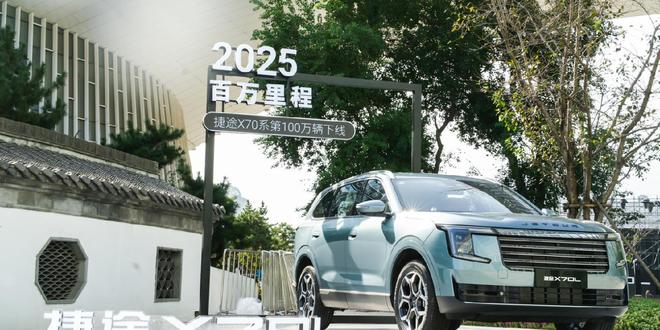
捷途X70L进入10万级燃油车市场,以“增配不增价”策略巩固品牌基盘
Jing Ji Guan Cha Bao· 2025-09-12 17:27
Core Insights - Jietu Motors has launched the new model Jietu X70L with a starting pre-sale price of 109,900 yuan, adopting a "more features without increasing price" strategy in response to the competitive fuel vehicle market [2] - The Jietu X70L features high-end specifications such as the Qualcomm 8155 chip and a 15.6-inch central control screen, which were previously exclusive to models priced above 150,000 yuan [2] - The vehicle offers two engine options: a 1.5T engine with a maximum power of 184 horsepower and a 2.0T engine with a maximum power of 254 horsepower, along with CDC electromagnetic suspension for improved ride comfort [2] Sales Performance - In the first eight months of 2025, Jietu Motors sold 402,900 vehicles, marking a year-on-year increase of 27.3%, with total sales surpassing 1.93 million units [3] - The Jietu X70 series has sold over 970,000 units globally, serving as a key sales pillar for the company [3] Product Strategy - Jietu Motors is pursuing a "fuel + hybrid + luxury" product strategy to balance its transition to new energy vehicles while maintaining its fuel vehicle base [3] - The company has developed a "Travel +" ecosystem strategy, which differentiates it in a competitive market by focusing on travel-related product offerings [3] Distribution Network - Jietu Motors has over 500 sales service outlets nationwide and plans to establish more than 600 experience centers and 1,200 city showrooms and direct sales stores, leading among domestic brands in channel density [3] - The expansion of the product matrix across fuel, hybrid, and luxury lines presents a challenge for efficient allocation of channel resources [3]
财务承压、估值波动,金晟新能负重闯关IPO
Jing Ji Guan Cha Bao· 2025-09-12 14:07
Core Viewpoint - The company, Guangdong Jingsheng New Energy Co., Ltd., is attempting to list on the Hong Kong Stock Exchange for the second time after its initial application lapsed in December 2024, amid significant financial losses and market volatility in the lithium battery recycling sector [1]. Financial Performance - The company has experienced a "roller coaster" financial performance, with revenues declining from 29.05 billion yuan in 2022 to 9.37 billion yuan in the first half of 2025, indicating a continuous downward trend [2]. - The company reported a profit of 1.51 billion yuan in 2022 but has since incurred losses of 4.71 billion yuan in 2023, 3.44 billion yuan in 2024, and 1.44 billion yuan in the first half of 2025, totaling over 10 billion yuan in losses over the past three and a half years [2]. Market Conditions - The core reason for the company's losses is attributed to the drastic decline in prices of lithium carbonate, nickel, and cobalt, leading to a situation where product prices are lower than production costs [2]. - The average price of lithium carbonate plummeted from 426,900 yuan per ton in 2022 to 62,300 yuan per ton in the first half of 2025, representing a cumulative decline of over 80% [4]. Customer Concentration - The company's sales are heavily reliant on a few major clients, with revenue from the top five customers accounting for 52.7% to 67.3% of total revenue during the reporting period, indicating increasing customer concentration [2]. - The largest single customer contributed 13.9% to 45.2% of total revenue over the same period, raising concerns about the company's dependency on a limited customer base [2]. Accounts Receivable - The turnover days for trade receivables increased from 38 days in 2022 to 56 days in the first half of 2025, a nearly 50% rise, which is significantly higher than the industry average [3]. - The high customer concentration and low collection efficiency create a negative feedback loop, where major clients demand extended payment terms, increasing the risk of bad debts for the company [3]. Valuation and Ownership - The company was founded by the Li brothers in 2010 and has undergone multiple rounds of financing, with its valuation fluctuating significantly, peaking at 12 billion yuan in March 2023 and dropping to 6.2 billion yuan in July 2024 before recovering to 7.6 billion yuan in November 2024 [5]. - The current valuation has decreased by over 30% from its peak, reflecting the volatility in the industry [5]. Strategic Direction - In response to industry fluctuations, the company aims to establish a closed-loop industry model from "recycling to regeneration" to mitigate reliance on market conditions for profitability [5].