
Zheng Quan Shi Bao

Search documents
重大突发!国务院批准:中国石化、中国航油重组
Zheng Quan Shi Bao· 2026-01-08 22:59
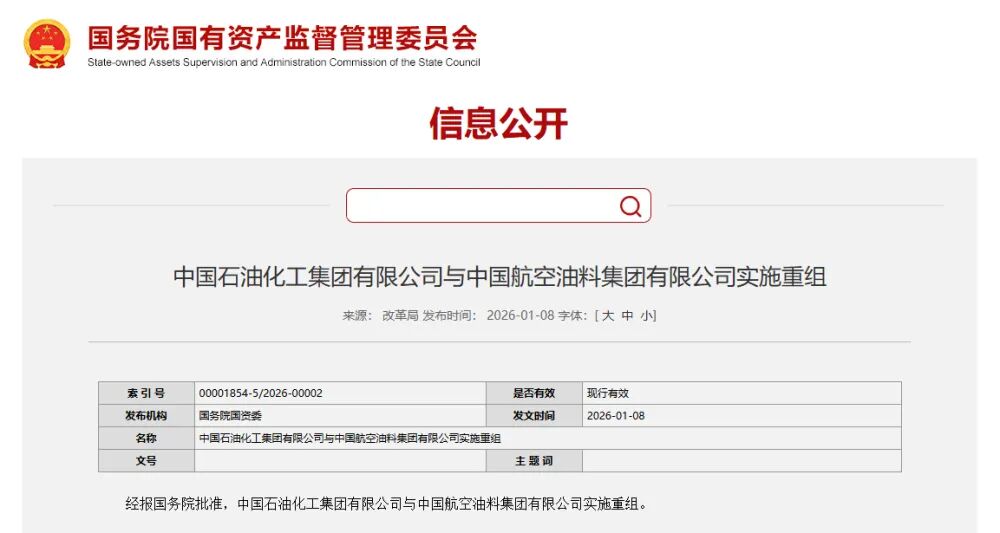
中国石化和中国航油将重组。 据新华社,经报国务院批准,中国石油化工集团有限公司与中国航空油料集团有限公司实施重组。 据了解,中国航油是亚洲最大的集航空油品采购、运输、储存、检测、销售、加注于一体的航空运输服务保障企业,主营业务主要涉及航油、 石油、物流、国际和通航五大板块。中国石化是全球第一大炼油公司和我国第一大航油生产商。 截至今日收盘,中国石化股价报6.07元/股,最新市值6898亿元。 ...


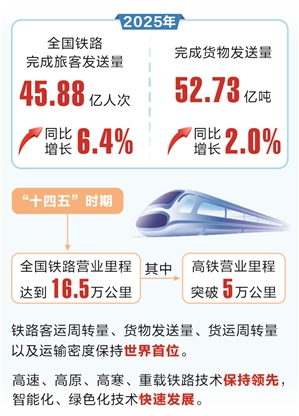
时报数说 2025年全国铁路旅客 发送量超45亿人次
Zheng Quan Shi Bao· 2026-01-08 22:53
Core Insights - The article highlights that by 2025, the national railway passenger volume in China is expected to exceed 4.5 billion trips, indicating significant growth in the railway sector [1] Industry Overview - The railway industry is projected to experience a substantial increase in passenger traffic, with a target of over 4.5 billion trips by 2025, reflecting a robust demand for rail transport [1]
特朗普一句话,军工股深夜集体飙涨
Zheng Quan Shi Bao· 2026-01-08 22:53
美国总统特朗普提高军费预算的言论刺激美股军工板块大幅上涨。特朗普还要求国防企业加大生产和研 发投入,停止股票回购和派息。 提高军费预算 特朗普是在其社交媒体发布相关言论。他呼吁到2027年将美国国防开支大幅增长50%,把军费预算提高 至1.5万亿美元。而当前美国年度军费已达到创纪录的9010亿美元。他声称这笔巨额开支将通过关税收 入来承担,此举旨在打造一支"梦想军队"。 特朗普当天还表示,在军工企业响应其"更快、更可靠地生产军事装备"的号召之前,他将"禁止"这些企 业进行股票回购和分红。 此外,特朗普炮轰军工企业高管薪酬、股票期权以及其他各种形式的收入高得离谱,但装备生产速度却 不够快,就算生产出来,维护保养也不够及时妥善。 "从现在开始,这些高管必须建设全新的现代化生产工厂,用于交付和维护这些重要装备,并生产未来 最新型号的军事装备!在此之前,任何高管的年薪都不应超过500万美元——尽管这个数字听起来很 高,但仅仅是他们目前收入的一小部分。此外,已售装备的维护和维修速度也太慢,必须立即改进。作 为总统,我要求维护工作必须做到精准及时。" 在当天另一条帖文中,特朗普把矛头对准雷神公司(RTX.N)。他指责雷神 ...
央企“巨无霸”重组启幕!超2000亿元航空燃油市场或将重构
Zheng Quan Shi Bao· 2026-01-08 22:53
Group 1 - The core viewpoint of the news is the restructuring of Sinopec and China Aviation Oil, which is expected to reshape the trillion-level energy and chemical market and enhance the competitiveness of state-owned enterprises [1][4][5] - The restructuring is seen as a response to the historical turning point in China's refined oil consumption, driven by the rapid development of the new energy vehicle industry and the electrification of end-use energy [2][3] - Sinopec's integration with China Aviation Oil aims to create a vertically integrated supply chain from refinery to wing, enhancing operational resilience and market competitiveness [4][6][7] Group 2 - The aviation fuel market is projected to grow, with China expected to consume approximately 40 million tons of aviation fuel in 2024, reflecting a 13% year-on-year increase [3] - The restructuring may lead to a redistribution of market share among major energy state-owned enterprises in the aviation fuel segment, providing Sinopec with new growth opportunities [3][6] - The integration is anticipated to improve the stability of aviation fuel supply for airlines, potentially reducing transaction costs and maximizing efficiency [6][9] Group 3 - The restructuring is part of a broader trend of state-owned enterprise consolidation aimed at optimizing the layout of state-owned economies and enhancing operational efficiency [5][8] - There are concerns among airlines regarding the potential impact on their bargaining power and cost control due to the consolidation of aviation fuel supply [9][10] - The restructuring may prompt a reevaluation of market strategies among airlines, especially if it leads to a dominant player in the aviation fuel market [9][10]
中概股深夜爆发、美股突变!大幅降息?美联储大消息
Zheng Quan Shi Bao· 2026-01-08 22:46
晚间(1月8日),美国三大股指集体下跌,纳指更是在开盘后跳水,截至收盘,道指收盘上涨270.03 点,涨幅为0.55%,报49266.11点;纳指跌104.26点,跌幅为0.44%,报23480.02点;标普500指数涨0.52 点,涨幅为0.01%,报6921.45点。 中概股方面,纳斯达克中国金龙指数在低开后爆发,截至收盘,热门中概股多数上涨,纳斯达克中国金 龙指数涨1.09%。哔哩哔哩涨逾6%,腾讯音乐、阿里巴巴涨超5%,金山云、小鹏汽车等涨超3%,京 东、唯品会等涨超2%,中通快递、富途控股等涨超1%。 另外值得注意的是黄金与白银,截至发稿,现货黄金跌超0.6%,白银更是暴跌逾5%。 世界黄金协会发布公告称,黄金在2025年12月份录得4%的涨幅,推动全年同比增长率达67%,创下数 十年来的最高年度回报纪录。2025年12月贵金属(包括白银和铂金)的飙升以及大宗商品指数再平衡, 可能在短期内引发市场波动。 据报道,美国财长贝森特表示,当前经济若要进一步走强,唯一欠缺的因素是美联储更大幅度的降息。 美联储理事米兰表示,他期望2026年降息150个基点,以提振劳动力市场。米兰在描述货币政策具有限 制性时表 ...
香港举办论坛 助力中医药国际化发展
Zheng Quan Shi Bao· 2026-01-08 22:41
香港投资推广署8日举办中医药发展论坛,围绕科研转化、临床实践及标准制定进行深入交流,展示香 港在推动中医药企业走向国际的优势,吸引逾150位业界持份者参与。 特区政府医务卫生局中医药发展专员钟志豪表示,《中医药发展蓝图》是香港首份中医药系统性政策文 件,为中医药迈向高质量发展提供明确方向。特区政府将持续与业界携手,建设香港成为中医中药走向 世界的桥头堡。 香港中医医院作为旗舰机构,正积极发挥临床、科研及教学的带动作用。香港中医医院行政总监卞兆祥 说,该院将善用香港国际窗口优势,已与多家内地中医医院和国际机构建立战略合作,推动培训、应用 及中成药开发。 随着特区政府公布首份《中医药发展蓝图》及香港首间中医医院正式启用,业界对中医药现代化与国际 发展的关注持续增加。此次论坛旨在激发业界对中医药的讨论,积极吸引和协助中医药企业在港发展, 通过提供一站式支援服务,协助企业借香港开拓海外市场、完成国际认证及建立地区总部。 香港投资推广署署长刘凯旋表示,香港的优势在于既能依托祖国雄厚的中医药实力,同时拥有国际化的 制度和标准。凭借"一国两制"优势,香港将致力成为中医药企业连通内地与世界的超级平台。投资推广 署将继续协助业 ...
资本狂热卡位商业航天:“绝不错过2026年大热门”
Zheng Quan Shi Bao· 2026-01-08 22:33
Core Viewpoint - The commercial space industry in China is experiencing significant momentum, with several companies, referred to as the "Chinese version of SpaceX," aiming to become the first publicly listed commercial rocket company, all achieving valuations exceeding 10 billion yuan [1] Group 1: Market Dynamics - The recent surge in interest from investment institutions, even those previously uninvolved in the space sector, indicates a strong belief in the potential of the commercial space market, particularly looking towards 2026 as a pivotal investment year [2][3] - Existing shareholders are reluctant to sell their stakes, especially in companies valued at over 10 billion yuan, as they anticipate substantial market growth post-IPO [3] - The commercial space sector is characterized by a long and broad market landscape, with opportunities for stake transfers in segments like commercial radar satellites, which have shown signs of mergers and acquisitions [3] Group 2: Investment Trends - The investment landscape for commercial space has evolved since 2014, with a notable increase in capital influx around 2018-2019, although initial enthusiasm waned due to slow commercial progress [6] - Recent years have seen a resurgence in investment interest, driven by the profitability of companies like SpaceX and the increasing demand for low-orbit satellite launches, with projections indicating a significant number of satellites planned for deployment [6][7] - The introduction of favorable policies, such as the new listing standards for commercial space companies, has bolstered investor confidence and created a more favorable exit environment for capital [7] Group 3: Valuation and Growth Potential - Current valuations in the commercial space sector have risen significantly, with leading companies achieving valuations above 10 billion yuan, although there are concerns about the sustainability of these valuations relative to actual revenue growth [8] - The industry is transitioning from technology validation to large-scale commercialization, suggesting substantial future growth potential as reusable rocket technology matures and satellite networks expand [8] - Investment opportunities remain in critical supply chain segments, including aerospace chips, specialized batteries, and satellite control services, as well as in emerging areas like space computing [9][10] Group 4: Technological Advancements - The focus on cost reduction through reusable rocket technology is crucial for the industry's future, with only a few companies currently possessing the necessary capabilities [10] - The competitive landscape is shifting towards the acquisition of space-based computing power, with major tech companies vying for dominance in this new frontier [10]
决胜“十四五” 擘画“十五五”·地方资本市场高质量发展之内蒙古篇: 夯实资本市场“天骏方阵” 护航北疆战略产业安全
Zheng Quan Shi Bao· 2026-01-08 22:17
Group 1 - The core viewpoint of the article highlights the significant progress made in the Inner Mongolia capital market during the "14th Five-Year Plan" period, with a focus on enhancing the service efficiency of the capital market and supporting the transformation of the regional economy [1][9] - Inner Mongolia added 12 new listed companies during the "14th Five-Year Plan," with the total market capitalization of A-share listed companies exceeding 1 trillion yuan, marking a 68% increase since the end of 2020 [2][3] - The region has established a multi-tiered enterprise listing cultivation system, with 112 companies in the listing reserve pool and 9 companies signing cultivation agreements, focusing on specialized and innovative enterprises [2][3] Group 2 - The quality and market value of listed companies in Inner Mongolia have improved, with significant developments in industrial clusters and resource optimization through mergers and acquisitions [3][4] - Inner Mongolia's listed companies distributed approximately 930.26 billion yuan in cash dividends, doubling the amount from the previous five-year period, indicating enhanced investor returns [4] - The region's capital market has developed a multi-faceted financial system that integrates stocks, bonds, funds, and futures, supporting the new ecological model of industry-finance integration [6][9] Group 3 - The Inner Mongolia Securities Regulatory Bureau has implemented strict regulatory measures to ensure market stability, including the smooth delisting of underperforming companies and increased scrutiny of financial misconduct [8] - The region has successfully launched various financial instruments, including the first public REITs in the northwest, which provide a market-based model for energy companies to optimize their assets [6][7] - Looking ahead to the "15th Five-Year Plan," the focus will be on cultivating new productive forces and enhancing the collaborative efficiency of the capital market to support key industries such as new energy and rare earth materials [9]




资本狂热卡位商业航天:“绝不错过2026年大热门” 产业链上下游投资空间广阔,“太空算力”争夺战一触即发
Zheng Quan Shi Bao· 2026-01-08 22:05
Core Insights - The commercial space sector in China is experiencing significant momentum, with companies like Blue Arrow Aerospace, Tianbing Technology, Xinghe Power, Interstellar Glory, and CAS Space aiming to become the "first commercial rocket stock" with valuations exceeding 10 billion yuan [1] - In the U.S., SpaceX is advancing its IPO plans with a valuation potentially reaching $1.5 trillion, indicating a competitive race for space resources [1] - The market is witnessing increased activity as investors rush to secure shares in promising projects, leading to rising valuations and a shrinking investment window [1] Investment Trends - Existing shareholders are reluctant to sell their stakes in the booming commercial space sector, with many investors actively seeking to acquire shares from early investors [2][3] - The demand for shares in leading companies is high, with many firms focusing on secondary market listings rather than new financing [2][3] - The commercial space sector is broad, with opportunities for share transfers in areas like commercial radar satellites and communication satellites facing restructuring challenges [3] Market Dynamics - The commercial space industry in China began to gain traction after 2014, but significant investment interest did not materialize until 2018-2019 [5] - Recent years have seen a surge in investment from both dollar and yuan funds, with local government funds also participating [6] - The profitability of SpaceX's Starlink has been a pivotal turning point, driving investor confidence and interest in the sector [6] Policy and Regulatory Environment - The introduction of the "1+6" reform policy for the Sci-Tech Innovation Board has improved investor confidence by establishing clear listing standards for commercial space companies [7] - The competitive landscape between the U.S. and China in the space sector is intensifying, with policies supporting the growth of commercial space in China [7] Valuation and Growth Potential - The valuation of commercial space companies has significantly increased, with leading firms now valued over 10 billion yuan [8] - The industry is transitioning from technology validation to large-scale commercialization, indicating substantial future growth potential [8] - Some companies have seen their valuations rise sharply without corresponding revenue growth, highlighting a potential disconnect between valuation and actual performance [8] Emerging Opportunities - Beyond leading companies, there are investment opportunities in critical supply chain segments such as aerospace chips, specialized batteries, and satellite control services [9] - The new "space computing" sector is emerging as a significant area for investment, with major tech companies vying for dominance [9] - The focus on cost reduction through reusable rocket technology is crucial for achieving frequent and scalable launches, with significant investment opportunities remaining in the supply chain [10]
赤峰黄金借A+H平台 增强全球市场竞争力
Zheng Quan Shi Bao· 2026-01-08 22:00
Core Viewpoint - Chifeng Jilong Gold Mining Co., Ltd. successfully listed on the Hong Kong Stock Exchange in 2025, becoming the first "A+H" listed company in Inner Mongolia, marking a significant milestone in its development journey [1] Group 1: Company Development - The company went public on the Shanghai Stock Exchange in 2012 through a major asset restructuring, adopting a "merger-acquisition-integration-development" model to enhance its gold resource volume and production capacity [1] - The successful H-share listing in March 2025 is seen as a major achievement in the company's development during the 14th Five-Year Plan period [1] Group 2: Future Outlook - The company aims to focus on its core gold business, enhancing its development foundation and expanding growth opportunities during the 15th Five-Year Plan [1] - Plans include increasing exploration efforts for its own mining resources, expanding resource volume and reserves, and accelerating the construction and production of key projects both domestically and internationally [1] Group 3: Financial Strategy - The company intends to leverage the financing potential of its A+H dual listing to upgrade capital operation efficiency, injecting strong financial momentum for sustainable development [2] - It aims to capture global acquisition opportunities and expand its industrial footprint by targeting quality resource assets [2] - The company will deepen cost management and ESG system construction to solidify its core competitiveness of "high efficiency, low cost," aligning with international capital market standards [2]
