
Xin Hua Cai Jing

Search documents
商务部:四方面深化“一带一路”经贸合作
Xin Hua Cai Jing· 2026-01-26 12:49
Core Viewpoint - The Chinese government aims to deepen "Belt and Road" economic and trade cooperation through four key areas: enhancing trade efficiency, optimizing investment, expanding emerging cooperation fields, and developing quality cooperation projects [1][2][3] Group 1: Trade Cooperation - The goal is to enhance trade efficiency by signing free trade agreements with more willing partner countries and establishing a trade facilitation working group [1] - By 2025, the trade volume between China and partner countries is expected to reach 23.6 trillion yuan, a year-on-year increase of 6.3%, outpacing the overall trade growth rate by 2.5 percentage points [2] - The structure of trade shows strong growth in exports of electronic components and machinery to partner countries, as well as imports of computers and components [2] Group 2: Investment Cooperation - The initiative will focus on attracting more investments from partner countries into China and guiding cross-border supply chain layouts [1] - By 2025, China's non-financial direct investment in partner countries is projected to reach 283.36 billion yuan, an increase of 18%, while direct investment from partner countries into China is expected to grow by 1.9% to 116.81 billion yuan [2] Group 3: Project Development - The government plans to advance both landmark projects and smaller, community-focused projects to improve infrastructure and living conditions in partner countries [1] - By 2025, the revenue from contracted projects in partner countries is anticipated to reach 1.1 trillion yuan, reflecting a growth of 9.6% [3] - Over 700 aid projects, including significant and smaller community projects, are set to be implemented [3]
机构称日美联合干预日元门槛较高 短期内不太可能发生
Xin Hua Cai Jing· 2026-01-26 12:48
Core Viewpoint - The New York Fed's recent currency check signals close cooperation between U.S. and Japanese authorities to curb yen depreciation, raising market vigilance for potential intervention [1] Group 1: Market Analysis - Analysts suggest that direct coordinated intervention may not occur as quickly as anticipated, despite the recent currency check [1] - Historical context indicates that coordinated interventions have only happened in rare circumstances, highlighting the distance between a currency check and actual intervention [1] Group 2: Expert Opinions - Morgan Stanley's forex strategist notes that the U.S. may be reluctant to buy a currency that has depreciated for five consecutive years, indicating that any intervention might be limited in scale [1] - Concerns arise that continued Japanese intervention could necessitate selling U.S. Treasury holdings, potentially increasing U.S. bond yields, which is an undesirable outcome for the U.S. [1] - Analysts express skepticism about the U.S. engaging in actions that would lead to a sell-off of the dollar amid global de-dollarization concerns [1]
新疆开行全国首趟棉花快速班列
Xin Hua Cai Jing· 2026-01-26 12:43
Core Viewpoint - The launch of the first rapid cotton train from Aksu, Xinjiang, marks a significant advancement in the logistics support for the cotton and yarn industry in Xinjiang, enhancing its overall competitiveness [1]. Group 1: Logistics and Transportation - The rapid train operates at a speed of 120 kilometers per hour and utilizes a "consolidation" transportation model, reducing the collection cycle by over 60% compared to previous methods [1]. - The railway department employs well-maintained high-speed vehicles for transportation and implements a "one warehouse, one plan" strategy to ensure careful loading and establish a green channel for cotton transport [1]. Group 2: Industry Impact - The opening of the rapid cotton train is considered an important development in the logistics of Xinjiang cotton, with plans to increase the frequency of train services and expand routes to cities like Zhengzhou and Shanghai, further lowering logistics costs in the industry [1][2].
天津航运指数2026年第4周累计下跌1.34%
Xin Hua Cai Jing· 2026-01-26 12:43
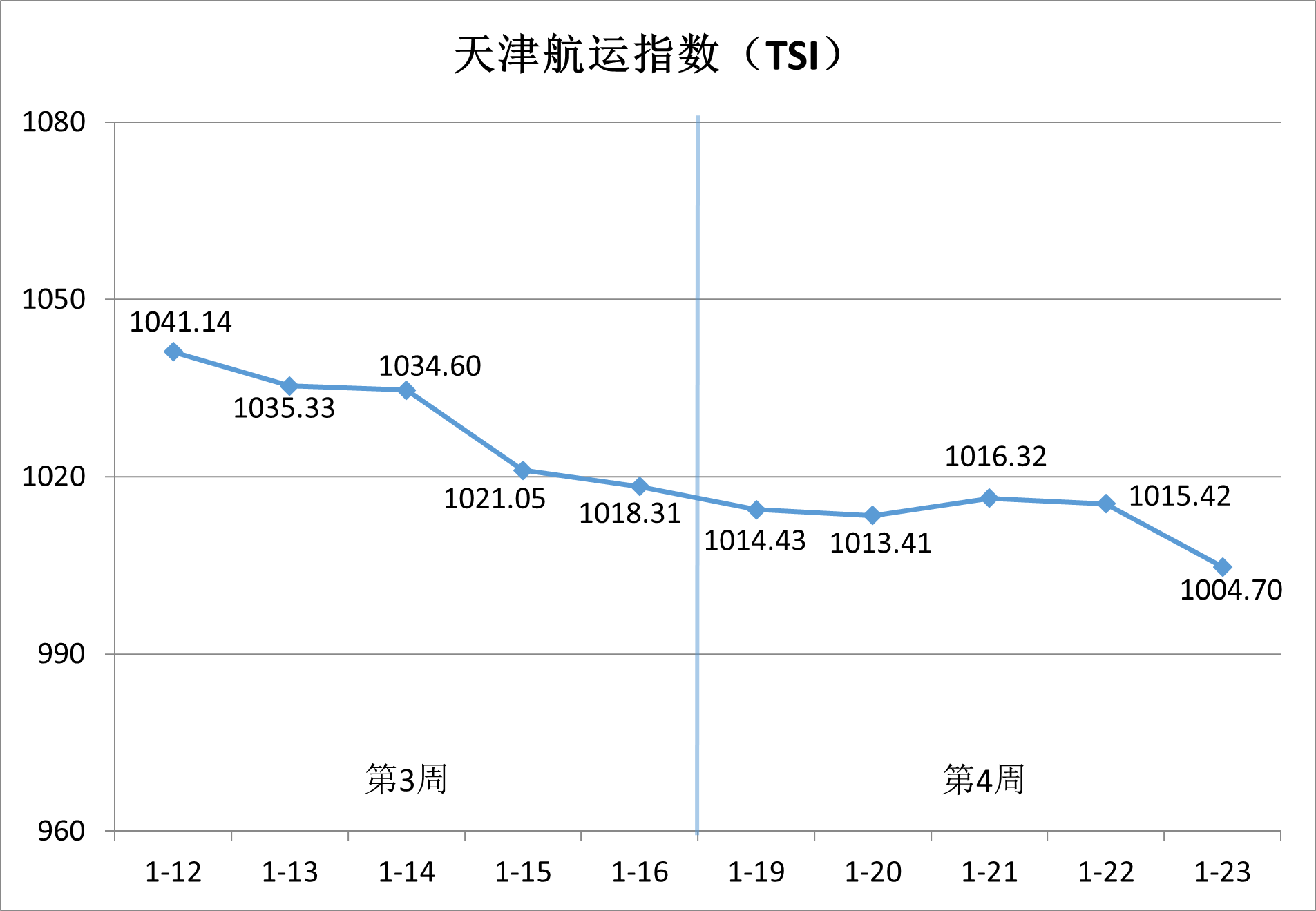
新华财经天津1月26日电(记者李亭)记者从天津国际贸易与航运服务中心获悉,2026年第4周(1月19日-23日),中国北方内外贸海运价格的风向标——天 津航运指数震荡下行,最终收于1004.70点,相比1月16日(第3周最后一个发布日)累计下跌13.61点,累计跌幅为1.34%。 北方国际干散货运价指数先涨后跌。粮食市场运价进一步走高,累计涨幅为2.73。煤炭市场运价累计跌幅为0.82%。金属矿石运价指数累计涨幅为0.97%,其 中,远程矿成交明显向好,巴西至天津航线运价指数累计上涨4.72%。TBI最终收于1020.82点,相比1月16日(第3周最后一个发布日)累计上涨0.99%。 沿海集装箱运价指数微弱下跌。其中,出港运价指数微幅盘整,累计下跌0.45%。进港运价指数微弱回落,累计下跌0.89%。TDI收于1055.11点,相比1月16 日累计下跌0.68%。 天津航运指数由天津国际贸易与航运服务中心发布,发布时间为每个工作日,指数样本范围覆盖27条连接天津港、青岛港、曹妃甸港与世界港口的国际航 线,也包括天津港和中国主要港口的内贸海运航线。该指数以2010年7月16日为基期,基期指数为1000点。 (文 ...

浙江2025年融资总量平稳增长 社融同比多增2552亿元
Xin Hua Cai Jing· 2026-01-26 12:29
Core Insights - The financial environment in Zhejiang province is projected to remain stable with a total financing growth of 8% year-on-year by 2025, surpassing the national average by 1.8 percentage points [1] - The People's Bank of China Zhejiang Branch is enhancing financial services to support high-quality economic development through a comprehensive policy framework and monitoring mechanisms [1] Group 1: Financial Growth - By the end of November 2025, the balance of loans in Zhejiang province is expected to reach 25.69 trillion yuan, with a year-on-year increase of 8% [1] - The province's social financing scale is projected to increase by 2.90 trillion yuan, which is 255.2 billion yuan more than the previous year, placing it among the top in the country [1] Group 2: Technological Financial Services - The balance of technology loans and loans for strategic emerging industries in Zhejiang has grown by 13.7% and 14.9% respectively, significantly outpacing the overall loan growth [2] - The province is promoting a full lifecycle technology financial service system, including the introduction of specific products like "concept verification loans" and "pilot loans" to support early-stage enterprises [1] Group 3: Cross-Border Financial Services - Zhejiang province is focusing on stabilizing foreign trade and investment by enhancing cross-border RMB services, with a cross-border RMB settlement volume exceeding 2.65 trillion yuan, a year-on-year growth of 9.5% [2] - The settlement volume for bulk commodities and new trade formats in cross-border RMB transactions has increased by 23.1% and 30.6% respectively [2]
浙江:2025年末民营企业贷款余额10.3万亿元
Xin Hua Cai Jing· 2026-01-26 12:29
Core Insights - The private economy is a significant characteristic and advantage of Zhejiang province, with a focus on enhancing financial support for high-quality development [1] Group 1: Financial Support for Private Enterprises - By the end of 2025, the loan balance for private enterprises in Zhejiang is expected to reach 10.3 trillion yuan, ranking second in the country [1] - Zhejiang leads the nation in the number and volume of bond issuance projects supporting private enterprises [1] - The province is implementing structural monetary policy tools to achieve historical highs in funding for agriculture, small enterprises, technological innovation, and carbon reduction by 2025 [1] Group 2: Cross-Border Trade and Financing - Zhejiang is expanding the inclusion of private market entities in high-level pilot programs for cross-border trade and investment facilitation, enhancing the convenience of foreign exchange receipts and payments for private enterprises [1] - The province has recorded a high number of registered enterprises, with nearly 90% being private enterprises [1] Group 3: Financing and Risk Management - The province has utilized a national credit information sharing platform to empower financing for private enterprises, serving over 150,000 entities [1] - Efforts are being made to reduce exchange rate hedging fees, making it easier for private and small enterprises to obtain support for exchange rate risk management [1] - By 2025, the foreign exchange hedging rate in Zhejiang is projected to increase by 8.7 percentage points compared to the previous year [1] Group 4: Future Financial Services Optimization - In 2026, Zhejiang will continue to optimize financial services for the private economy, utilizing structural monetary policy tools to enhance the financing environment for small and micro enterprises [2] - The province plans to improve the financial policy system by introducing documents to support key areas of the private economy, including pensions, digital economy, rural development, and marine economy [2]
珂玛科技2025年第四季度净利润料同比变动-51.18%至7.23%
Xin Hua Cai Jing· 2026-01-26 12:25
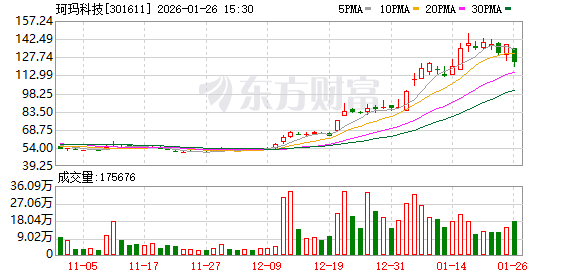
Core Viewpoint - Kema Technology forecasts a revenue of 1.06 billion to 1.08 billion yuan for 2025, representing a year-on-year growth of 23.63% to 25.96%, while net profit is expected to range from 286.1 million to 335.85 million yuan, with a year-on-year change of -8.00% to 8.00% [2] Revenue Summary - The growth in revenue is attributed to the large-scale production and delivery of the core product, the "function-structure" modular product [3] - The company has completed the relocation of its ceramic heater production line and is enhancing related facilities to gradually release production capacity within the year [3] - The ceramic heaters are primarily supplied to domestic semiconductor wafer manufacturers and mainstream equipment manufacturers, with some products already in mass production for wafer film deposition processes [3] Profit Summary - The lower growth rate of net profit compared to revenue is due to changes in the revenue structure, driven by strong market demand for ceramic structural components, which have a lower gross margin than modular products [4] - The overall gross margin for 2025 is expected to decline compared to 2024 due to the increased revenue share of lower-margin ceramic structural components [4] - The company is increasing R&D investment to ensure delivery capabilities and strengthen market competitiveness, including new R&D projects and the acquisition of Suzhou Kaixin Semiconductor Technology Co., Ltd. [4] Stock Performance - Kema Technology's stock price fell by 10.97% on January 26, 2026, closing at 123.22 yuan per share, with a market capitalization of approximately 53.72 billion yuan [4] - The stock price increased by 179.0% over the 40 trading days from November 24, 2025, to January 20, 2026 [4]
恒生指数上涨0.06% 恒生科技指数下跌1.24%
Xin Hua Cai Jing· 2026-01-26 11:30
成交额前三的个股中,阿里巴巴跌1.96%,成交超112亿港元;腾讯控股涨0.76%,成交超104亿港元; 紫金矿业涨4.35%,成交超57亿港元。 整体来看,多数板块下跌,黄金、有色金属、光通讯、石油与天然气、高铁基建等股多为上涨,科网、 银行、券商、房地产、电信等股有涨有跌,百货业、风电、生物医药、新能源车企、芯片、新消费、商 业航天等股多有下跌。 个股方面,小米集团跌2.81%,泡泡玛特跌0.91%,中芯国际跌3.27%,中国海洋石油涨4.01%,美团跌 0.46%,老铺黄金涨7.80%,快手跌3.26%,长飞光纤光缆涨17.82%,国泰君安国际涨3.33%,智谱涨 13.02%,建设银行涨0.66%,小鹏汽车跌4.17%,长和涨3.50%,中国石油股份涨3.68%。 新华财经香港1月26日电(记者林迎楠)26日,港股主要指数高开后震荡整理,截至收盘,恒生指数上 涨0.06%至26765.52点,恒生科技指数下跌1.24%至5725.99点,国企指数下跌0.15%至9147.21点。 当日恒指高开94.53点,开报26844.04点,指数早盘期间宽幅震荡,午后窄幅整理,最终恒指涨16.01 点,主板成交超 ...
每日机构分析:1月26日
Xin Hua Cai Jing· 2026-01-26 11:30
·金价或继续受益于美元走弱 ·穆迪:澳大利亚2025年12月消费者通胀有望放缓 ·无头条催化下的避险潮凸显市场深层避险需求 ·摩根士丹利:英国受AI影响最深岗位流失速度达国际平均水平两倍 ·大和证券:日元若跌破159关口可能触发干预 ·瑞联银行:联合干预预期将削弱日元空头吸引力 ·瑞穗:日本最新汇率干预措施或更具效力 ·大和证券分析师木内英二表示,若美元兑日元升破159关口,日本政府可能干预外汇市场以阻止日元快 速走弱。他补充称,下一个警戒线在164水平。投资者此前认为美国会反对汇率干预,因为任何买入日 元、卖出美元的操作都会在日本方面出售美债筹集资金时推高美国国债收益率。然而,两位知情人士透 露,纽约联邦储备银行代表美国财政部,向多家银行询问了将日元兑换成美元的成本。这一不寻常的举 动被市场参与者解读为美国容忍此类行动的信号。 【机构分析】 ·瑞讯银行分析师Ipek Ozkardeskay表示,投资者涌入贵金属是一个明确的信号,表明尽管上周美欧紧张 局势部分缓和,但风险偏好并未回归。白银和黄金创下新高,值得注意的是,这次对避险资产的追捧并 非由重大的地缘政治头条新闻引发。Ozkardeskay表示,除了美国 ...
上海三大先导产业母基金公示第三批17只子基金:拟投资金额共47.1亿元
Xin Hua Cai Jing· 2026-01-26 11:29
Core Insights - Shanghai's three leading industry mother fund has announced the selection results for its third batch of sub-funds, comprising 17 selected sub-funds with a total proposed investment amount of 4.71 billion yuan and a total fund size of 22.89 billion yuan, achieving a leverage ratio of 4.86 times [1] Group 1: Integrated Circuit Industry - Four sub-funds were selected in the integrated circuit sector, with a total proposed investment of 1.4 billion yuan and a leverage ratio of 5 times [2] - The selected funds have strong support from major industry players, including CVC investments from ChipLink Capital and Shixi Capital, and a fund initiated by local chip design leader, Lanke Technology [2] - The funds collectively provide 41 investment projects in Shanghai, with a total proposed investment exceeding 3 billion yuan, covering areas such as storage, AI chips, core components, and advanced packaging [2] Group 2: Biopharmaceutical Industry - Seven sub-funds were selected in the biopharmaceutical sector, with a total proposed investment of 1.74 billion yuan and a leverage ratio of 3.9 times [3] - The funds are characterized by white horse funds represented by Defu Capital and Bencao Capital, and large industry collaboration funds that leverage strong industry resources for investment and exit strategies [3] - The funds collectively provide nearly 30 investment projects in Shanghai, with a total proposed investment exceeding 1 billion yuan, covering areas such as gene cell therapy and synthetic biology [3] Group 3: Artificial Intelligence Industry - Six sub-funds were selected in the artificial intelligence sector, with a total proposed investment of approximately 1.57 billion yuan and an overall leverage ratio of about 5.8 times [4] - The selected funds include CVC funds led by industry chain leaders and early-stage cultivation funds focusing on embodied intelligence and AI applications [4] - The funds collectively provide 44 investment projects in Shanghai, covering key areas such as foundational models, robotics, and AI applications, contributing to Shanghai's position in the national AI industry [4]