Guan Cha Zhe Wang

Search documents
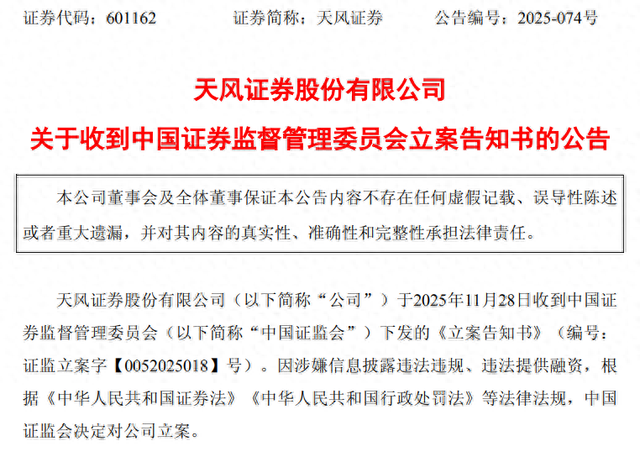
天风证券低开近9%,上周因信披违规违法、违法提供融资被证监会立案
Guan Cha Zhe Wang· 2025-12-01 03:47
Group 1 - Tianfeng Securities opened nearly 9% lower on December 1, with a decline of nearly 7% by the time of reporting, following the announcement of a formal investigation by the China Securities Regulatory Commission (CSRC) for suspected violations of information disclosure and illegal financing [1][4] - The investigation is linked to the 2022 annual report, which disclosed that the former major shareholder, Wuhan Dongdai Technology Industry Group Co., Ltd., had occupied company funds through third parties, with all funds and interest returned by the end of 2022 [4] - The investigation marks a complete severance of historical issues between Tianfeng Securities and the former major shareholder, as Hubei Guozhi Hongtai Group officially took control of Tianfeng Securities in 2023, holding 28.33% of the shares [4] Group 2 - Tianfeng Securities, established in 2000 and headquartered in Wuhan, is the only provincial-level securities company in Hubei, with a registered capital of 10.074 billion yuan [4] - For the first three quarters of 2023, Tianfeng Securities reported an operating income of 2.112 billion yuan, a year-on-year increase of 57.53%, and a net profit attributable to shareholders of 153 million yuan [4] - Former chairman Yu Lei is under investigation for allegedly transferring significant benefits to the former Secretary of the Hubei Provincial Committee, Jiang Chaoliang, during the company's listing period [5]


共创+改装,零跑正在塑造电动化时代的“新飞度”?
Guan Cha Zhe Wang· 2025-12-01 03:37
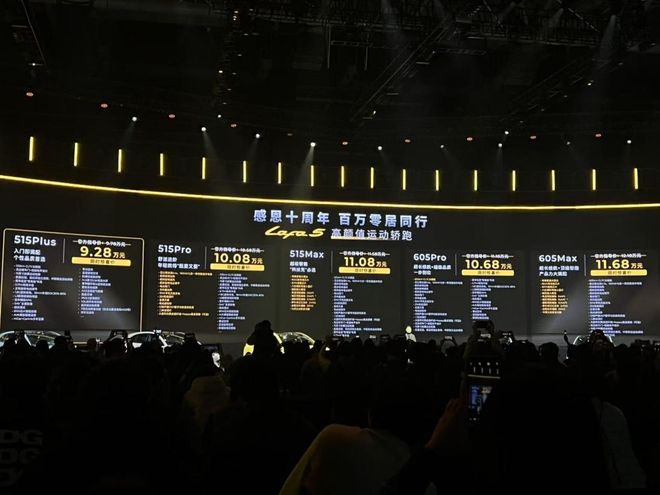
Core Viewpoint - Leap Motor has officially launched its first product under a new personalized strategy, the Lafa5, priced between 92,800 and 116,800 yuan, targeting the 100,000 yuan pure electric sedan market [1][3]. Group 1: Product Features and Market Positioning - The Lafa5 represents a significant product breakthrough for Leap Motor, moving beyond its previous naming conventions and aiming to reshape the perception of the first car for young users with high value density, strong playability, and high customization potential [3][5]. - The vehicle aims to fill a gap in the current market, which often presents a dilemma of "good looks but poor performance" or "intelligent but low quality" in the 100,000 yuan electric vehicle segment [5][11]. - The Lafa5 boasts impressive specifications, including a range of 605 km, Qualcomm 8295P cockpit chip, end-to-end lidar-assisted driving, and a drag coefficient of 0.256, all while maintaining a competitive price point [5][12]. Group 2: Strategic Goals and Global Expansion - Leap Motor's "Million Co-Creation Plan" emphasizes the vehicle's modification potential, aiming to create an ecosystem that encourages young users to engage beyond mere ownership, similar to the cultural impact of the Honda Fit in the fuel vehicle era [7][9]. - The Lafa5 is designed with a global market in mind, having been developed to meet international standards from the outset, and is positioned to compete with established models like the Golf GTI and Renault Megane in Europe [9][11]. - Leap Motor has entered 35 countries and achieved overseas sales of 44,000 units this year, becoming a leader in exports among new energy vehicle manufacturers [9][11]. Group 3: Market Challenges and Future Outlook - The launch of the Lafa5 coincides with Leap Motor's ambitious goal of reaching 1 million vehicle sales, with the model expected to play a crucial role in achieving this target, particularly in the competitive 100,000 yuan market [11][12]. - The vehicle faces significant competition in both domestic and international markets, where it must balance aesthetic appeal with practicality to avoid being perceived as a niche product [12][11]. - The success of the Lafa5 will depend on Leap Motor's ability to maintain a balance between scalability and personalization, ensuring robust supply chain management and continuous innovation [12].

智能早报丨国家航天局设立商业航天司;机构预测存储芯片半年内将再涨价50%
Guan Cha Zhe Wang· 2025-12-01 02:58
Group 1: Commercial Space Industry - The establishment of the Commercial Space Administration by the National Space Administration marks a transition to a dedicated management body for the commercial space industry in China, providing a solid institutional guarantee for high-quality development [1] - The newly released "Action Plan for Promoting High-Quality and Safe Development of Commercial Space (2025-2027)" aims to integrate commercial space into the national space development framework, focusing on cultivating new productive forces in the space sector [1] - By 2027, the plan targets four breakthroughs in the commercial space industry: efficient collaboration in the industrial ecosystem, doubling the current industry scale, significant improvement in resource utilization, and a more refined governance system [1] Group 2: Battery Industry - The Ministry of Industry and Information Technology (MIIT) is set to introduce targeted policies to address irrational competition in the power and energy storage battery industry, aiming to safeguard the global competitiveness of China's battery sector [3] - The domestic energy storage battery production is projected to reach 550 GWh by 2025, more than doubling from the previous year, while power battery production is expected to approach 1000 GWh [3] - Despite rapid growth, issues of "involution" have emerged, with nearly one-third of energy storage system integrators reportedly taking orders below cost, raising concerns about quality [3] Group 3: Semiconductor Industry - The global shortage of storage chips is intensifying due to explosive demand from AI infrastructure, with prices expected to rise by approximately 50% by the second quarter of 2026 [4] - Major tech companies like Dell and HP have indicated potential price increases due to chip shortages, with Dell's COO noting unprecedented cost increases [4] - The shortage is attributed to AI demand prioritizing production capacity for high-end products, leading to tight supplies of standard DRAM and NAND flash memory [5] Group 4: AI and 3D Modeling - Tencent's Hunyuan 3D Studio 1.1 has been launched, featuring AI-generated 3D models that can be directly used in game and animation production, significantly reducing production costs [6][7] - The new version introduces a groundbreaking native quadrilateral topology generation technology, improving model quality and structure integrity [6] - The upgraded model supports ultra-high-definition modeling with a threefold increase in detail density and modeling precision compared to the previous generation [6]

“力量平衡变了,中国AI愈发成为硅谷技术基石”
Guan Cha Zhe Wang· 2025-12-01 00:19
Core Viewpoint - The article discusses the increasing adoption of Chinese open-source AI models by Silicon Valley startups, highlighting their competitive advantages over traditional closed-source models from American companies like OpenAI and Anthropic. This shift raises questions about the sustainability of the closed-source model approach in the U.S. AI industry [1][4][10]. Group 1: Adoption of Chinese AI Models - Many U.S. AI startups are increasingly utilizing Chinese open-source AI models due to their lower costs, higher customization, and strong privacy protection, with some models performing comparably to leading American models [1][4][6]. - Reflection AI, a startup founded by Misha Laskin, aims to provide American alternatives to these high-performance Chinese models, reflecting a growing trend in the industry [2][4]. - The acceptance of Chinese models is seen as a potential challenge to the U.S. AI industry, as investors have heavily backed American companies, raising doubts about the actual advantages of U.S. models [4][10]. Group 2: Performance and Cost Efficiency - Chinese models like DeepSeek and Alibaba's Tongyi Qianwen have made significant technological advancements, closing the performance gap with American closed-source models [5][9]. - Companies like Exa have reported that running Chinese models on their own hardware can be faster and cheaper than using models from OpenAI or Google [4][5]. - The cost-effectiveness of open-source models is crucial for startups, with some users preferring local processing for privacy reasons, further driving the adoption of Chinese models [6][7]. Group 3: Ecosystem and Community Support - The growing ecosystem around Chinese open-source models is attracting more developers, as these models are often accompanied by extensive training resources and community support [7][8]. - Platforms like Kilo Code show a preference for Chinese models among developers, indicating a shift in the default starting point for model customization [8][9]. - The rapid release cycle of Chinese models, with Alibaba launching new models approximately every 20 days, contrasts with the slower pace of American companies, highlighting a competitive edge [9][10]. Group 4: U.S. Response and Future Outlook - The U.S. government has recognized the need to encourage the development of open-source AI models, as evidenced by the release of the AI Action Plan and new open-source initiatives from companies like OpenAI and the Allen Institute [12][13]. - The ATOM initiative aims to reclaim the U.S. leadership position in open-source models, emphasizing the importance of maintaining a competitive edge in the AI landscape [13].

高鑫零售官宣换帅,原盒马CMO李卫平接任首席执行官
Guan Cha Zhe Wang· 2025-11-30 14:27
Core Viewpoint - Gao Xin Retail announced the appointment of Li Weiping as Executive Director and CEO, effective December 1, 2025, following the resignation of Shen Hui due to family reasons. The board recognized Shen's contributions to the company's strategic implementation and business upgrades [1] Group 1: Leadership Changes - Li Weiping has 26 years of experience in the retail industry and previously held significant positions at Hema, where she led the team to profitability and managed national operations [1][2] - Shen Hui's tenure focused on returning to the essence of retail, enhancing brand competitiveness, and exploring the "China Supermarket Model" for expansion and growth [1] Group 2: Strategic Vision - Li Weiping's strategy for Gao Xin Retail will focus on three dimensions: - Product: Enhancing product quality to meet new customer standards, optimizing efficiency through strategic supplier collaboration, and achieving a threefold advantage in quality, differentiation, and cost-effectiveness [2] - Organization: Reviving the entrepreneurial spirit and execution capabilities, establishing agile decision-making processes, and creating a clear career development path [2] - Business Model: Empowering consumer experience through cultural care, accelerating store upgrades, and promoting deep integration of online and offline channels to expand user base and brand influence [2] Group 3: Current Operations - Gao Xin Retail operates three main brands: RT-Mart, RT-Mart Super, and M Membership Stores, with over 500 stores across 205 cities in 29 provinces and regions [2] - The online platform, including RT-Mart Fresh, has reached 100 million users [2]
赦免前总统、威胁断援助,特朗普图谋干预洪都拉斯大选
Guan Cha Zhe Wang· 2025-11-30 13:50
【文/观察者网 陈思佳】最近,美国总统特朗普盯上了洪都拉斯,试图干预这个中美洲国家今天举行的 总统选举。据美国有线电视新闻网(CNN)11月29日报道,特朗普28日宣布将赦免在美服刑的洪都拉 斯前总统胡安·奥兰多·埃尔南德斯。特朗普还扬言,如果他支持的候选人没有当选,美国将切断援助。 特朗普28日在"真相社交"上发文称:"我将完全、彻底地赦免洪都拉斯前总统胡安·奥兰多·埃尔南德斯。 据许多我非常尊敬的人说,他受到了非常严厉且不公正的待遇。" 埃尔南德斯曾在2014年至2022年担任洪德拉斯总统,去年因涉嫌协助向美国运送毒品及非法持有武器 等,在美被判处45年监禁并罚款800万美元。美国检察官指控埃尔南德斯在任期间与贩毒集团合谋,帮 助贩毒集团向美国运送超过400吨可卡因。 检察官称,埃尔南德斯曾利用总统权力"使其核心圈子中的毒贩获益",同时将某些"威胁其权力"的毒贩 引渡到美国。他收受了数百万美元贿赂,利用这些资金在政坛站稳脚跟。 埃尔南德斯否认这些指控,在特朗普宣布赦免决定后,埃尔南德斯的律师发表声明称:"我们非常感谢 特朗普总统以及所有支持埃尔南德斯的人。我们相信他是'法律战'和政治性起诉的受害者。巨大的 ...

网红主播的争议言论,不该“连坐”无辜企业
Guan Cha Zhe Wang· 2025-11-30 13:28
更值得警惕的是,在这场舆论风暴中,事实与逻辑往往让位于情绪与立场。当米哈游被扣上"物化女 性"的帽子,网易云因平台用户的一条热评被曲解,vivo被张冠李戴出"不需要女用户"的言论。在这场 舆论风暴中,企业不仅失去了辩解的空间,甚至失去了被理性对待的权利。如果任由"谁闹谁有理"的不 良风气发展,网络公共空间将逐渐失去理性讨论的基础。 网络空间不是法外之地,这句话不仅适用于内容创作者,同样适用于每一位参与者。任何个体都应当为 自己的言论负责,但这并不意味着可以无限扩大责任的边界。法治社会的基本原则是责任自负,这意味 着网红应当为自己的言论承担后果,而企业则应当为其产品、服务及官方行为负责。将两者混为一谈, 是对法治精神的背离。 对于企业而言,这次事件也提供了一个重要的警示。在选择合作对象时,除了商业价值的考量,也需要 更加审慎地评估合作方的公众形象与言论风险。同时,当遭遇不合理的舆论冲击时,企业应当勇于依据 事实和法律维护自身权益,而非在压力面前轻易妥协。只有坚守原则立场,才能避免陷入"谁闹谁有 理"的恶性循环。 就在11月28日,中央政治局第二十三次集体学习还强调,网络生态治理是网络强国建设的重要任务,事 关国 ...

华为Mate 80系列再现“一机难求”
Guan Cha Zhe Wang· 2025-11-30 11:34
Core Insights - The Huawei Mate 80 series has seen significant popularity since its launch on November 28, with high consumer engagement and social media buzz [1][7] - The series features multiple innovative technologies, including a 14-day extreme battery life mode and a peak brightness of 8000 nits, establishing it as a flagship smartphone benchmark [3][9] - The HarmonyOS ecosystem has matured, with over 300,000 applications and services, and more than 27 million devices equipped with HarmonyOS 5 and 6, indicating strong user adoption [3][12] Product Features - The Mate 80 series introduces a full metal body design and a dual-layer OLED screen, achieving significant advancements in brightness, power consumption, and lifespan [9] - It supports an outdoor exploration mode with 14-day battery life and emergency communication capabilities, showcasing its utility in extreme conditions [9] - The series is equipped with HarmonyOS 6, enhancing user experience through features like AI assistance and improved security measures [9][10] Market Response - The initial sales of the Mate 80 series exceeded expectations, with many configurations selling out online and high foot traffic in physical stores [7] - Celebrity endorsements and social media discussions have contributed to the product's visibility and popularity [7] Ecosystem Development - HarmonyOS has achieved a high compatibility rate of over 95%, with a growing number of developers contributing to its ecosystem [3][12] - The ecosystem's growth is supported by a collaborative effort among developers and partners, emphasizing a collective approach to innovation [13][19] Future Outlook - The success of the Mate 80 series and the HarmonyOS ecosystem reflects a broader trend of technological advancement and user-centric design in the Chinese tech industry [20][22] - The ongoing development of HarmonyOS is positioned as a significant step towards establishing a competitive alternative to existing operating systems [20][22]
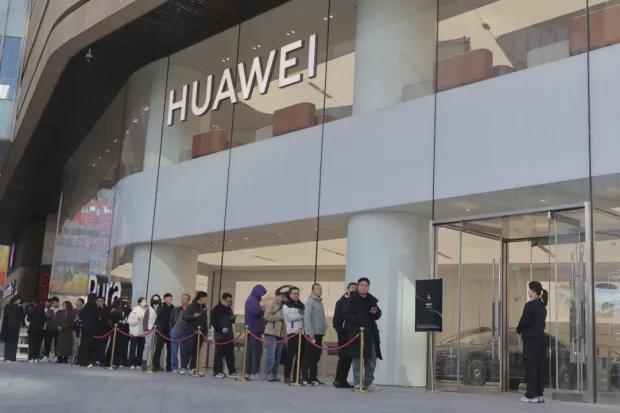
鸿蒙生态从突破到成熟,华为Mate 80系列再现“一机难求”
Guan Cha Zhe Wang· 2025-11-30 09:28
Core Insights - Huawei's Mate 80 series has seen significant success since its launch on November 28, with high consumer interest and engagement across various platforms [1][6] - The series features multiple innovative technologies, including a 14-day extreme battery life mode and a peak brightness of 8000 nits, establishing it as a flagship smartphone benchmark [3][8] - The HarmonyOS ecosystem has matured, with over 300,000 applications and services, and more than 27 million devices equipped with HarmonyOS 5 and 6, indicating strong user adoption [3][12] Group 1: Product Features and Innovations - The Mate 80 series introduces several "black technologies," such as a full metal body design and a dual-layer OLED screen, enhancing both aesthetics and performance [8] - The outdoor exploration mode supports 14 days of extreme battery life and emergency communication capabilities, showcasing Huawei's commitment to practical innovation [8] - The integration of HarmonyOS 6 enhances user experience through features like AI assistance and improved security measures, creating a unique competitive edge [8][10] Group 2: Market Reception and Ecosystem Growth - The initial sales of the Mate 80 series exceeded expectations, with rapid sell-outs online and significant foot traffic in physical stores, indicating strong market demand [6][19] - The HarmonyOS ecosystem has achieved a remarkable growth trajectory, with a rapid increase in registered developers and applications, reflecting a collaborative effort in building a robust digital environment [12][21] - The success of the Mate 80 series is seen as a direct endorsement of Huawei's technological innovations and the maturity of the HarmonyOS ecosystem [19][21]
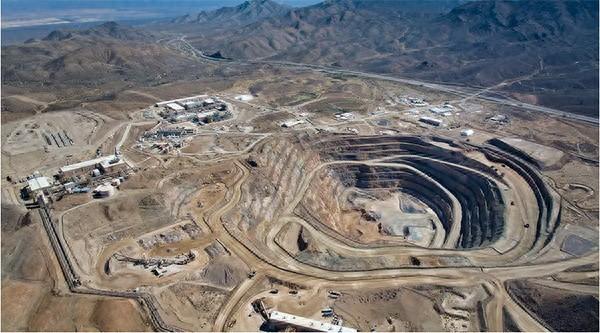
美媒:想要跟中国竞争稀土,我们得搞定官僚习气
Guan Cha Zhe Wang· 2025-11-30 06:28
Core Viewpoint - The article argues that China's dominance in the rare earth sector is largely a result of bureaucratic inefficiencies in the U.S., and it emphasizes the urgent need for the U.S. to reform its approval processes to achieve self-sufficiency in rare earth production [1]. Group 1: China's Dominance - China controls over 90% of global rare earth processing capacity, having maintained a dominant position for decades while U.S. producers and policymakers have been negligent [1]. - The article highlights that China's recent export controls on critical minerals essential for U.S. defense systems demonstrate Beijing's leverage over U.S. defense production [1]. Group 2: Regulatory Challenges - The article identifies regulatory uncertainty, particularly under the National Environmental Policy Act (NEPA), as a significant barrier to U.S. rare earth production, with environmental impact assessments often taking over two years [2]. - It notes that the lengthy and unpredictable regulatory processes can deter investment and delay the establishment of processing capabilities in the U.S. [2][5]. Group 3: Strategic Implications - The article discusses the strategic vulnerabilities that arise from the U.S. reliance on China for rare earth processing, particularly in the context of potential conflicts in the Indo-Pacific region [4]. - It emphasizes that the ability to maintain supply chains for defense systems is crucial, as the capacity to replace and sustain these systems over time is more critical than initial technological superiority [4]. Group 4: Recommendations for Improvement - The article suggests that predictable regulatory processes are essential for companies to invest in rare earth processing facilities, recommending simultaneous environmental assessments by federal, state, and local agencies [5]. - It advocates for legislative measures to ensure that projects are not subject to re-evaluation with changes in government, thereby stabilizing the policy environment for rare earth production [5]. Group 5: Investment and Economic Considerations - The article points out that significant upfront investments in rare earth processing facilities require assurance of sustained demand and stable prices for critical minerals [6]. - It calls for the U.S. Department of Defense to implement long-term procurement plans that include critical minerals in national defense reserves to encourage investment [6]. Group 6: Historical Context and Long-term Strategy - The article notes that the U.S. has transitioned from self-sufficiency in rare earths to complete reliance on imports over the past 15 years, highlighting a long-standing concern that transcends political administrations [7]. - It emphasizes that the U.S. has made some progress in strengthening rare earth supply chains, but the complexity of rebuilding the entire ecosystem from mining to processing remains a significant challenge [7][8]. Group 7: Comparative Analysis - The article compares the U.S. mining and processing timelines unfavorably with countries like Canada and Australia, where permitting processes are significantly shorter, contributing to the U.S.'s increasing import dependency [10]. - It highlights that the average time for U.S. mining projects to go from exploration to production is around 29 years, which is among the slowest globally [8][10].