Guan Cha Zhe Wang

Search documents
心脏球囊、取石耗材大降价!第六批国采落地
Guan Cha Zhe Wang· 2026-01-15 10:29
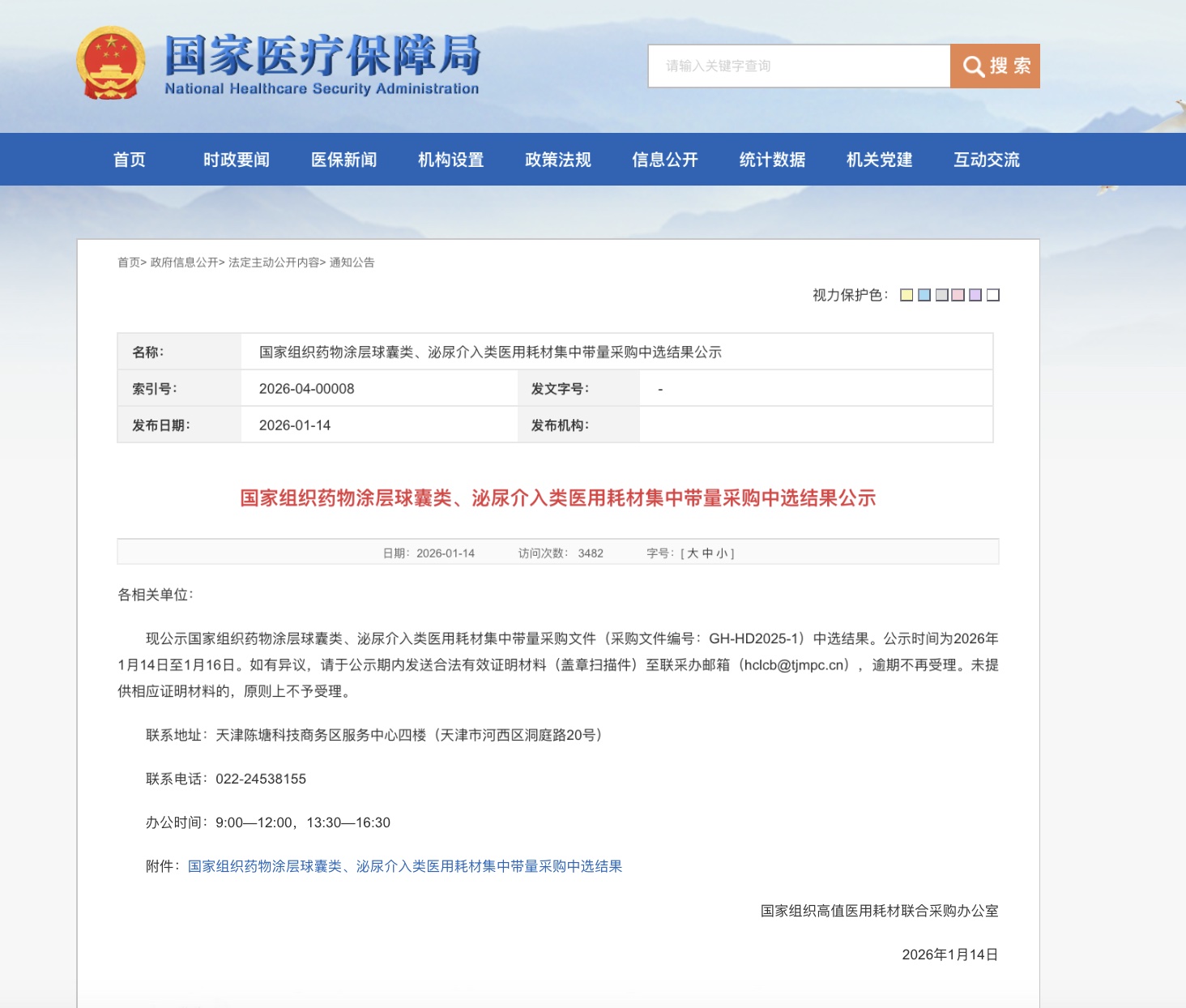
Core Viewpoint - The sixth batch of national centralized procurement for high-value medical consumables was held in Tianjin, marking a significant event in the medical supply industry with a total market scale of approximately 11 billion yuan and an annual procurement demand exceeding 3.7 million sets [1][2]. Group 1: Procurement Details - The procurement included 12 types of medical consumables across two categories: drug-coated balloons and urological intervention products, with a selection rate of about 89%, setting a new record for the scale of national procurement [1][2]. - The introduction of the "anchor price" mechanism and multiple "revival" rules aimed to stabilize clinical use, ensure quality, prevent excessive competition, and avoid collusion [1][2][3]. - In the drug-coated balloon category, all 32 participating companies' products were selected, achieving a "zero elimination" outcome [3]. Group 2: Market Impact - The price of drug-coated balloons has significantly decreased from around 13,000 yuan to approximately 700 yuan, reflecting a drop of over 90% since the first batch of procurement in 2020 [2][9]. - The sixth batch of procurement is expected to further solidify the price range of drug-coated balloons to between 2,000 and 3,000 yuan, following previous reductions [9][10]. - The inclusion of urological intervention products in the national procurement marks a new opportunity for domestic companies, with 170 out of 195 participating companies successfully selected [7][10]. Group 3: Company Performance - Companies like Lepu Medical, Xinmai Medical, and Weili Medical have successfully had their products selected, which is expected to enhance their market share and accelerate the domestic substitution process [1][6][7]. - Lepu Medical announced that all its products were selected in this procurement, with prices significantly lower than previous provincial procurement averages, indicating a moderate price drop compared to earlier expectations [4][10]. - Following the announcement of the procurement results, Lepu Medical's stock price rose, reflecting positive market sentiment regarding the company's future performance [10].


当美国AI还在“内循环”,中国AI已经进入“办事时代”
Guan Cha Zhe Wang· 2026-01-15 10:27
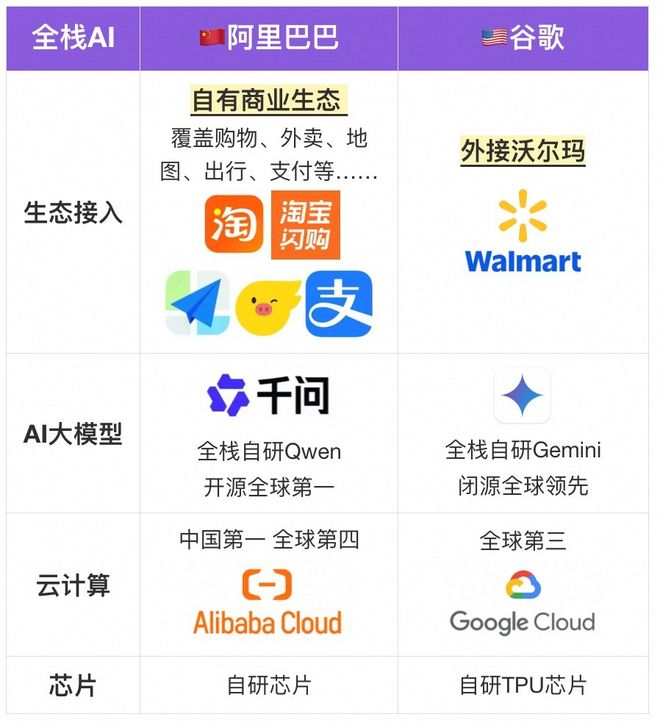
(文/刘媛媛 编辑/周远方) 当全球AI竞赛仍沉醉于参数与算力的数字游戏时,一场静默却深刻的变革正在中国发生。 近期,美国零售与科技巨头频繁联手:沃尔玛宣布将谷歌的AI聊天机器人Gemini整合进购物流程,以 提升商品发现与购买体验;亚马逊则被传拟向OpenAI投资至少100亿美元,旨在强化云服务与自研芯片 的生态布局。 这些合作固然耀眼,却仍未脱离"技术驱动、商业闭环"的固有逻辑,AI的价值似乎仍停留在提升效率、 优化体验的工具层面。 而在大洋彼岸,中国AI正走向一条更贴近大地、更深入生活的道路。以阿里巴巴为例,1月15日,千问 App一口气上线了400多项新功能,不仅可以点外卖、订机票,还能办签证、查询公积金,甚至具备类 人化的多步骤规划能力,成为能办事的"任务助理"。 这意味着,中国不仅诞生了全球第一个可以购物的AI,还引领AI行业从"聊天对话"迈入"办事时代",嵌 入人们生活、工作的毛细血管。 当美国科技巨头仍聚焦于模型性能与生态壁垒的竞赛时,中国AI已经率先跨越"炫技"的阶段,步入以解 决实际问题、服务社会民生为核心的"实干时代"。 中美AI分野:从"参数竞赛"到"应用为先" 当前全球AI竞争,本质 ...
国产硅片厂商冲刺IPO:300mm全球份额不到2%、亏损近40亿
Guan Cha Zhe Wang· 2026-01-15 10:27
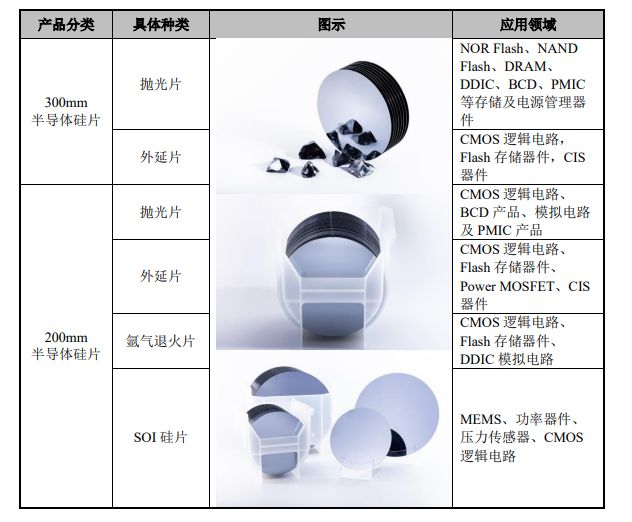
Core Viewpoint - The semiconductor industry in China is rapidly evolving, with companies like Shanghai Super Silicon Semiconductor Co., Ltd. (Shanghai Super Silicon) making strides towards an IPO on the Sci-Tech Innovation Board, highlighting the growing importance of the silicon wafer sector in the semiconductor supply chain [1] Company Overview - Shanghai Super Silicon was established in July 2008 and transitioned to a joint-stock company in May 2021, focusing on the R&D, production, and sales of 300mm and 200mm semiconductor silicon wafers, along with providing silicon wafer regeneration and processing services [1] - The company has completed eight rounds of financing since 2014, with a latest valuation of approximately 20 billion yuan [1] Market Dynamics - The global semiconductor silicon wafer market is shifting towards larger sizes, with 200mm and 300mm wafers being the mainstream specifications. The 300mm wafers are particularly significant for logic and memory chip markets, offering higher profit margins [2] - The 200mm wafers have a mature process system and are primarily used in automotive electronics and IoT, while the 300mm wafers are more advanced and profitable [2] Financial Performance - For the reporting periods of 2022 to 2025 (first half), the company's revenue figures were 921 million yuan, 928 million yuan, 1.327 billion yuan, and 756 million yuan, respectively. The net profits attributable to shareholders were -803 million yuan, -1.044 billion yuan, -1.299 billion yuan, and -736 million yuan, leading to a cumulative loss of 3.882 billion yuan [4] - The gross profit margins for the main business were -12.47%, -7.61%, -3.72%, and -3.27%, significantly lower than the industry average [4] Production Capacity and Challenges - Shanghai Super Silicon has invested over 16 billion yuan in its production lines for 300mm and 200mm wafers, with a designed capacity of 800,000 wafers per month for 300mm and 400,000 for 200mm. However, actual production as of June 2025 was only 320,000 and 387,600 wafers, respectively [7] - The company faces challenges in achieving profitability due to high production costs, significant R&D and management expenses, and inventory write-downs leading to over 1 billion yuan in losses [10][11] Future Outlook - Shanghai Super Silicon anticipates achieving profitability by 2029, contingent on meeting specific production and sales targets for its wafer products [10] - The company plans to raise 4.965 billion yuan through its IPO to fund expansion projects and supplement working capital, although there are concerns regarding the feasibility of this expansion given current operational challenges [11] Competitive Landscape - In the 300mm wafer market, the top five global manufacturers hold 82.65% of the market share, with Shanghai Super Silicon's share at approximately 1.36%, ranking it tenth globally [12] - The company claims to have competitive technology levels comparable to the top five manufacturers, but still faces challenges in yield and technology node coverage [12]
国产硅片厂商上海超硅冲刺IPO:300mm全球份额不到2%、亏损近40亿
Guan Cha Zhe Wang· 2026-01-15 10:25
Core Viewpoint - The semiconductor industry, particularly the silicon wafer sector, is gaining attention as domestic companies like Shanghai ChaoSilicon Semiconductor Co., Ltd. pursue IPOs amid a push for self-sufficiency in semiconductor manufacturing [1] Company Overview - Shanghai ChaoSilicon was established in July 2008 and transitioned to a joint-stock company in May 2021, focusing on the R&D, production, and sales of 300mm and 200mm semiconductor silicon wafers, along with related processing services [1] - The company has completed eight rounds of financing since 2014, with a current valuation of approximately 20 billion yuan [1] Market Context - The global semiconductor silicon wafer market is shifting towards larger sizes, with 200mm and 300mm wafers being the mainstream specifications, where larger wafers reduce edge loss and improve efficiency [2] - 200mm wafers are mature and widely used in automotive electronics and IoT, while 300mm wafers are more technically demanding and profitable, primarily serving logic and memory chip markets [2] Financial Performance - Revenue for the years 2022, 2023, 2024, and the first half of 2025 is reported as 921 million yuan, 928 million yuan, 1.327 billion yuan, and 756 million yuan respectively, with net losses of 803 million yuan, 1.044 billion yuan, 1.299 billion yuan, and 736 million yuan [4] - Cumulative losses over three and a half years amount to 3.882 billion yuan, with retained earnings as of mid-2025 at -4.708 billion yuan [4] Profitability Analysis - The company's gross margins for its main business are negative, with figures of -12.47%, -7.61%, -3.72%, and -3.27% for the respective periods, significantly lower than industry averages [4] - Specific gross margins for 300mm wafers are -42.91%, -24.16%, and -8.50%, while 200mm wafers show margins of 5.22%, -0.59%, and -2.80% [4] Pricing Trends - The average price of 300mm silicon wafers decreased from 388.03 yuan per piece in 2022 to 328.4 yuan in the first half of 2025, while 200mm wafers dropped from 204.19 yuan to 172.54 yuan [5] Challenges and Explanations for Losses - The company attributes its ongoing losses to several factors, including rising costs during capacity ramp-up, high R&D and management expenses, increased borrowing costs, and significant inventory write-downs [6] - Cumulative investments in 300mm and 200mm wafer production lines exceed 16 billion yuan, with actual production capacities falling short of designed capacities [6] Future Outlook - Shanghai ChaoSilicon anticipates achieving profitability by 2029, contingent on meeting specific production and sales targets for its silicon wafers [9] - The company acknowledges that delays in production line development or slower industry recovery could postpone profitability [9]

印度市场接受不了昂贵的特斯拉?
Guan Cha Zhe Wang· 2026-01-15 10:10
Core Insights - Tesla is facing weak demand in India, leading to discounts on unsold Model Y vehicles to clear inventory [1][2] - The company exported approximately 300 Model Y vehicles to India four months ago, with around 100 units still unsold [1] - Discounts of up to 200,000 INR (approximately 15,500 CNY) are being offered on specific inventory models, although these promotions are not officially advertised [1] Group 1: Sales Performance - Tesla has only registered 227 vehicles in India for the entire year of 2025, significantly lower than the initial order intentions [3] - The company had received about 600 Model Y orders, but many did not convert into delivery orders [2] - The high price point of the Model Y, which is close to $70,000 (approximately 489,300 CNY) after tariffs, is a barrier to consumer acceptance [1] Group 2: Competitive Landscape - Potential customers are opting for lower-priced alternatives like BMW's iX1 and BYD's Sealion 7, which have starting prices below the Model Y [2] - BMW's sales in India grew nearly 200% year-on-year, reaching around 3,700 units, driven by local assembly of the iX1 [3] - BYD has emerged as one of the top five electric vehicle manufacturers in India, with sales increasing nearly 80% year-on-year to 5,121 units [3]

4.56个小目标!方大炭素竞得上海建国西路独栋洋房
Guan Cha Zhe Wang· 2026-01-15 09:32
Core Viewpoint - The article discusses the acquisition of a property located at 319 Jianguo West Road in Shanghai by Fangda Carbon, highlighting the financial struggles of the previous owner, Huadong (China), and the strategic asset allocation by Fangda Carbon in a challenging real estate market [1][2][4]. Group 1: Property Acquisition - Fangda Carbon's subsidiary, Shanghai Fangda Investment Management Co., won the auction for the property at a base price of 456 million yuan, with a total area of 2,997.83 square meters [1]. - The property is located in a core area of Shanghai's historical district and is considered a scarce resource due to its classification as part of a "never-widening street" [1]. Group 2: Previous Owner's Financial Struggles - The previous owner, Huadong (China), faced a debt crisis leading to the bankruptcy of its subsidiary, Verona Real Estate, which resulted in the judicial auction of the property [2][3]. - Huadong (China) was once recognized as a top real estate developer but has suffered from declining performance due to the downturn in the real estate market and tightening financing conditions [2][3]. Group 3: Fangda Carbon's Business Profile - Fangda Carbon is a leading global producer of carbon products and new materials, focusing on graphite electrodes and carbon bricks, with significant market share and technological advantages [5]. - The company does not have a large-scale real estate business, indicating that the acquisition is more of a short-term asset allocation decision rather than a long-term strategic move into real estate [5]. Group 4: Parent Company Expansion - Fangda Carbon's parent company, Liaoning Fangda Group, has a diversified business strategy that includes real estate and healthcare, indicating potential future developments in these sectors [5][6]. - Liaoning Fangda Group has made significant investments in real estate, including acquiring land for healthcare projects, showcasing its broader strategic ambitions [6].


增长乏力开店受阻 钱大妈顶巨亏冲击港交所IPO
Guan Cha Zhe Wang· 2026-01-15 09:13
Core Viewpoint - The company, Qian Dama, is facing significant challenges in revenue growth and profitability as it prepares for its IPO in Hong Kong, highlighting a stark contrast between its past success and current struggles [1][4]. Group 1: Financial Performance - Revenue growth for Qian Dama has stagnated, with a reported decline of approximately 4.2% year-on-year in the first nine months of 2025 [2]. - The company recorded a net loss of 288 million yuan in the first three quarters of 2025, raising concerns about its ability to generate sustainable profits [2]. - The total number of stores has decreased from over 3,700 at its peak to less than 3,000, indicating significant challenges in expansion [2]. Group 2: Market Competition - The fresh food retail sector has become highly competitive, with Qian Dama facing intense pressure from various players, including Dingdong Maicai and Hema, which are capturing market share with faster delivery and higher quality products [3]. - Qian Dama's traditional "community-to-store" model is perceived as outdated and passive compared to the aggressive strategies of its competitors [3]. - The company's unique "daily fresh" model, while initially successful, has led to financial strain on franchisees, creating a cycle of losses that undermines its expansion strategy [3]. Group 3: Strategic Challenges - The upcoming IPO is seen as a critical moment for Qian Dama, as it seeks to secure funding for supply chain improvements and digital upgrades in a nearly saturated market [4]. - The company must navigate its current vulnerabilities while attempting to leverage capital for future growth, raising questions about its long-term viability [4].
华盛锂电欲赴港上市 股价去年底大涨5倍 限售股迎来大规模解禁
Guan Cha Zhe Wang· 2026-01-15 09:13
Group 1 - The company, Huasheng Lithium Battery, is planning to issue H-shares and list on the Hong Kong Stock Exchange to enhance its international strategy and financing capabilities [1] - Huasheng Lithium Battery is a leading supplier of lithium battery electrolyte additives, with key products including vinylene carbonate (VC) and fluoroethylene carbonate (FEC) [1] - The company has maintained a high capacity utilization rate and is experiencing strong demand for its products, which are used in various sectors including electric vehicles and renewable energy [1] Group 2 - The company reported significant losses in its net profit attributable to shareholders, with losses of 23.91 million yuan, 174.7 million yuan, and 103 million yuan for the first three quarters of 2023, 2024, and 2025 respectively, totaling over 300 million yuan in cumulative losses [2] - Despite the losses, the company's stock price surged to 155 yuan per share on November 15, 2025, with a market capitalization exceeding 20 billion yuan, reflecting a nearly fivefold increase in one month [2] - The company has a concentrated ownership structure, with the controlling shareholders being Shen Jinliang and Shen Ming, who together hold 14.63% of the shares [2]

成本为家用充电近7倍,英国拟降低汽车公共充电费用
Guan Cha Zhe Wang· 2026-01-15 08:57
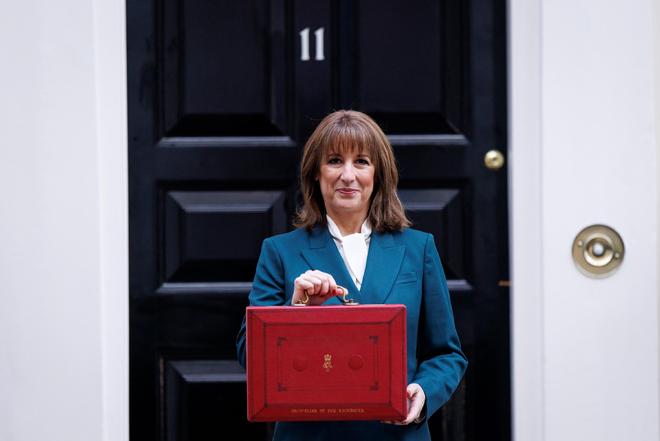
【文/观察者网 潘昱辰 编辑/高莘】据英国《每日电讯报》日前报道,英国财政大臣蕾切尔·里夫斯 (Rachel Reeves)正着手降低电动汽车车主的充电费用。 数据显示,英国家用充电成本约为每千瓦时8便士(约合人民币0.75元),而公共慢充桩的充电价格价 格则高达每千瓦时54便士(约合人民币5元),为前者的近7倍。 此举源于政府担心即将实施的按里程征税政策会严重抑制市场需求。此前于去年11月,英国财政部计划 从2028年起对电动汽车征收每英里3便士(约合人民币0.28元)的税费。 因此,英国政府计划从2025—2026财年开始对电动汽车征收道路使用费,税率预计为燃油车等效税率的 50%。据英国预算责任办公室预测,政策实施的首年仅轿车和货车就能为财政部增加11亿英镑(约合人 民币103.1亿元)收入,到2026—2027年将增至25亿英镑(约合人民币234.3亿元)。 英国财政大臣蕾切尔·里夫斯 东方IC 两难的税收政策 英国电动汽车公共充电成本已成为阻碍普及的关键因素。对于依赖公共充电桩的车主而言,高昂成本直 接转化为经济负担。以目前的成本计算,频繁使用公共快充的电动车车主,年度充电费用将比燃油车高 出约10 ...
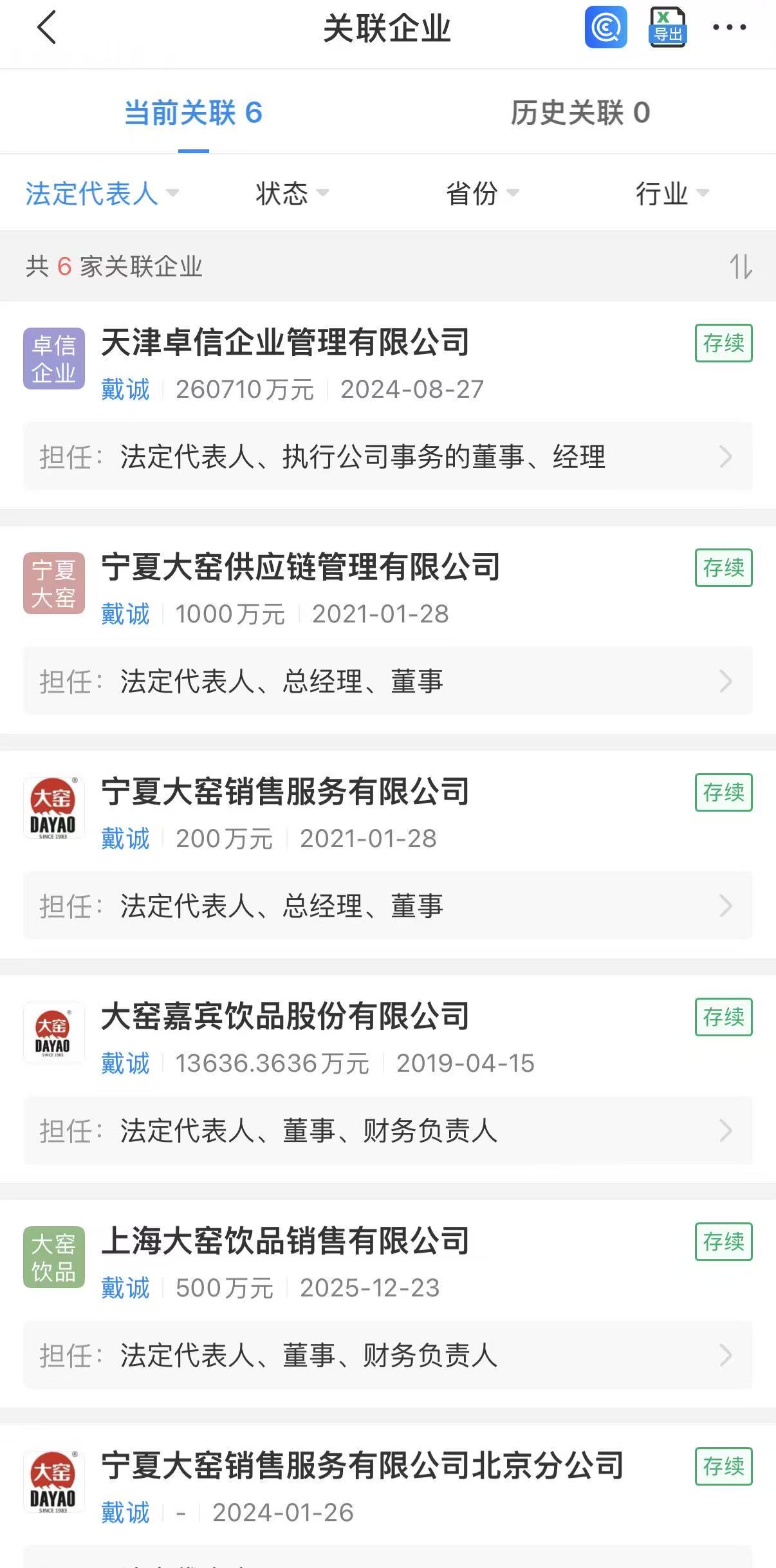
“国民汽水”大窑迎新帅:KKR入局后的资本棋局
Guan Cha Zhe Wang· 2026-01-15 08:56
Core Viewpoint - The company Dayaoshu is undergoing a significant transformation with the appointment of Sun Yinan as CEO, marking a new phase in its development after being acquired by KKR. This change aims to enhance market expansion and brand upgrading, indicating a dual transformation in capital and management [1][5]. Group 1: Management Changes - Sun Yinan, with extensive experience in companies like Coca-Cola and Nestlé, has been appointed as CEO to lead Dayaoshu's market expansion and brand upgrade [1][7]. - KKR's representative Dai Cheng has replaced the founder Wang Qingdong as the legal representative and chairman, indicating a shift in management control [1][5]. - Dai Cheng, who also serves as the financial head, will focus on optimizing supply chain management and financial systems to improve overall profitability [5]. Group 2: Strategic Initiatives - Dayaoshu has initiated the process of deregistering its core subsidiary, Inner Mongolia Dayaoshu Beverage Co., Ltd., signaling a focus on core assets and improving overall asset quality [5]. - KKR's investment strategy typically involves deep operational restructuring post-acquisition, aiming to enhance enterprise value and eventually facilitate an IPO or other forms of capital exit [5][9]. - The company is recognized for its strong position in the restaurant sector, with annual revenue already supporting the potential for an IPO, although there is still room for improvement in brand recognition and product innovation [5][9]. Group 3: Market Position and Future Outlook - Sun Yinan's experience in transforming product lines and leading successful IPOs is seen as crucial for Dayaoshu's transition from a regional player to a national beverage brand [8]. - The combination of Dai Cheng's financial acumen and Sun Yinan's operational expertise is expected to be pivotal in navigating the competitive beverage market and validating KKR's investment model in the consumer sector [9]. - With Sun Yinan's arrival, the countdown to Dayaoshu's IPO has begun, as the company aims to enhance its brand, channels, and product offerings [9].