Guan Cha Zhe Wang

Search documents
出行观|宝马2026年第一天的官降,是为新世代车型清场?
Guan Cha Zhe Wang· 2026-01-03 04:57
Core Viewpoint - BMW is adjusting the suggested retail prices of 31 key models in China, with reductions ranging from 4% to 24%, in preparation for the launch of its "new generation" vehicles in 2026 [1][4]. Group 1: Price Adjustments - The number of models priced below 300,000 yuan has increased from 3 to 10, indicating BMW's strategy to compete for market share traditionally held by joint venture brands and mainstream domestic electric vehicle manufacturers [2]. - The price of the 225L M Sport version has dropped to 208,000 yuan, positioning it competitively against high-end models from Chinese brands [2]. - Electric vehicles are seeing the most significant price cuts, with the iX1 eDrive25L experiencing a 24% reduction, and the i7 M70L seeing a price drop of 301,000 yuan [2]. Group 2: Market Strategy - The price reductions for the X1 and iX1 models, with fuel versions dropping by 18-19% and electric versions by 24%, reflect the intense competition in the 200,000 to 300,000 yuan SUV market [2]. - The flagship models 735Li and 740Li have been repositioned to the 800,000 to 900,000 yuan range, indicating a response to the pressure from domestic luxury brands [3]. - BMW's price adjustments are seen as a move to clarify and standardize dealer discounts, enhancing transparency in pricing [3][5]. Group 3: Future Positioning - The price cuts are intended to clear out inventory of older technology platforms and create mental space for consumers ahead of the new generation models, which will feature advanced sixth-generation electric drive technology [4][6]. - By lowering the price floor for electric vehicles, BMW aims to maintain market share and visibility in China, ensuring that consumers continue to consider BMW when making purchasing decisions [6]. - The adjustments reflect a shift from a focus on brand premium to a product-driven strategy, emphasizing long-term growth over short-term profits in the evolving Chinese market [6].
马斯克当年嘲讽比亚迪,现在还笑得出来吗?
Guan Cha Zhe Wang· 2026-01-03 04:48
《商业内幕》评价说,这家总部位于深圳的车企完成了一次堪称"火箭式"的崛起,让马斯克的公司只能 为守住电动车领域的领先地位而苦苦应战。报道还翻出马斯克2011年与美国彭博社的采访称,当时马斯 克曾轻视比亚迪,现在却不得不更加认真对待这个竞争对手。 在2011年的采访中,马斯克被问及比亚迪是否可能成为特斯拉的竞争对手,他得意地笑着反问说:"你 见过他们的车吗?" 2011年马斯克接 受彭博社采访片段 视频截图 【文/观察者网 王一】还记得当年马斯克怎么嘲笑比亚迪吗?随着比亚迪超过特斯拉成为全球最大的电 动汽车销售商,美媒也开始翻旧账来嘲讽马斯克。 美国《商业内幕》当地时间1月2日在报道中称,这位特斯拉创始人曾在公开场合对比亚迪的崛起嗤之以 鼻,认为这家中国汽车制造商不可能成为特斯拉的竞争对手。但如今,他再也笑不出来了。 特斯拉2日公布的数据显示,公司2025年全球交付汽车163.6万辆,同比下降约8.6%,连续第二年交付量 下滑。而在此之前的1日,比亚迪数据显示,2025年交付了460万辆汽车,较2024年增长7.7%。其中, 电动汽车销量增长28%,达225万辆。 美国消费者新闻与商业频道(CNBC)2日指出, ...




港股迎“国产GPU第一股”:上半年营收0.6亿,市值740亿
Guan Cha Zhe Wang· 2026-01-03 01:55
Core Viewpoint - Wall Street Technology officially listed on the Hong Kong Stock Exchange on January 2, becoming the first "domestic GPU stock" in the market and the first stock to be listed in Hong Kong in 2026 [1] Group 1: IPO Details - The opening price of Wall Street Technology surged by 82.14% to HKD 35.70, reaching a peak increase of over 118% at HKD 42.88 per share before closing at a 75.82% increase, with a total market capitalization of approximately HKD 82.5 billion (around RMB 74 billion) [1] - The company issued shares at an initial price of HKD 19.6, totaling 285 million shares, raising a total of HKD 5.583 billion [1] - The public offering was oversubscribed by 2,347.53 times, while the international placement was oversubscribed by 25.95 times [1] Group 2: Fund Utilization - The funds raised from the IPO will primarily be used for research and development of intelligent computing solutions, including the development of smart computing hardware, software platform upgrades, commercialization of solutions, and advancing the development of next-generation GPGPU chips like BR20X and BR30X [1] - Approximately 85% of the net proceeds will be allocated to R&D, 5% for commercialization expansion, and 10% for working capital and general corporate purposes [1] Group 3: Financial Performance - Wall Street Technology is still in the early stages of commercialization, having reported strong revenue growth over the past three years but has not yet achieved profitability [4] - Revenue figures for the years 2022, 2023, 2024, and the first half of 2025 were HKD 499,000, HKD 62.03 million, HKD 337 million, and HKD 59 million, respectively, with net losses of HKD 1.474 billion, HKD 1.744 billion, HKD 1.538 billion, and HKD 1.601 billion [4] - Cumulatively, the company has incurred over HKD 6.3 billion in net losses from 2022 to June 2025, with gross margins decreasing from 100% in 2022 to 31.9% in the first half of 2025 [4] Group 4: Investment Landscape - Wall Street Technology's implied post-investment valuation reached RMB 20.915 billion in August 2025, with a multi-tiered capital structure supported by various state-owned and private investment platforms [5] - The domestic GPU industry is accelerating its IPO processes, with Wall Street Technology, Moer Technology, Muxi Co., and Tensu Zhixin often referred to as the "four little dragons of domestic GPUs" [5] - Following Wall Street Technology's listing, Tensu Zhixin is set to be listed on January 8, and Baidu's AI chip company Kunlun has submitted a confidential application to the Hong Kong Stock Exchange [5]
港股迎“国产GPU第一股”壁仞科技,股价首日涨76%
Guan Cha Zhe Wang· 2026-01-03 01:52
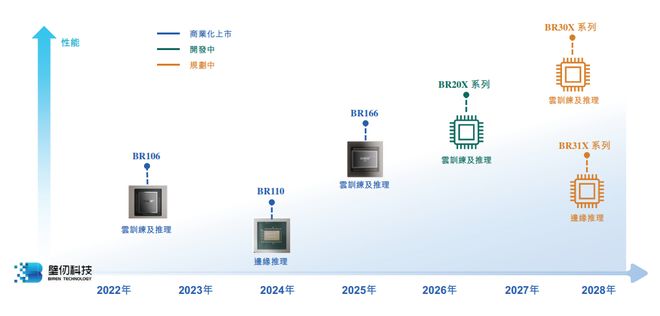
Core Viewpoint - Wall Street's first domestic GPU company, Birun Technology, officially listed on the Hong Kong Stock Exchange on January 2, 2026, marking a significant milestone in the domestic GPU industry [1] Group 1: IPO and Market Performance - Birun Technology's opening price surged by 82.14% to HKD 35.70, reaching a peak increase of over 118% at HKD 42.88 before closing at a 75.82% gain, with a total market capitalization of approximately HKD 82.5 billion [1] - The company issued shares at an initial price of HKD 19.6, raising a total of HKD 5.583 billion through the issuance of 285 million shares, with a subscription rate of 2347.53 times in the public offering phase and 25.95 times in the international placement phase [1] Group 2: Use of Proceeds - The funds raised from the IPO will primarily be allocated to research and development of intelligent computing solutions, including the development of next-generation GPGPU chips such as BR20X and BR30X, with approximately 85% of the net proceeds dedicated to R&D [1] Group 3: Financial Performance - Birun Technology has not yet achieved profitability, reporting revenues of CNY 499,000, CNY 62.03 million, CNY 337 million, and CNY 59 million for the years 2022, 2023, 2024, and the first half of 2025, respectively, with net losses of CNY 1.474 billion, CNY 1.744 billion, CNY 1.538 billion, and CNY 1.601 billion during the same periods [4] - The cumulative net loss exceeded CNY 6.3 billion from 2022 to June 2025, with gross margins declining from 100% in 2022 to 31.9% in the first half of 2025 [4] Group 4: Industry Context - Birun Technology is part of a growing trend in the domestic GPU industry, often referred to as the "Four Little Dragons of Domestic GPUs," alongside companies like Moer Thread and Muxi Co., which have also recently gone public [5] - The company has established a multi-tiered capital system with notable investors, including state-owned platforms and venture capital firms, indicating strong backing in the competitive landscape of AI and semiconductor investments [5]

国家大基金,大比例增持中芯国际H股
Guan Cha Zhe Wang· 2026-01-03 01:31
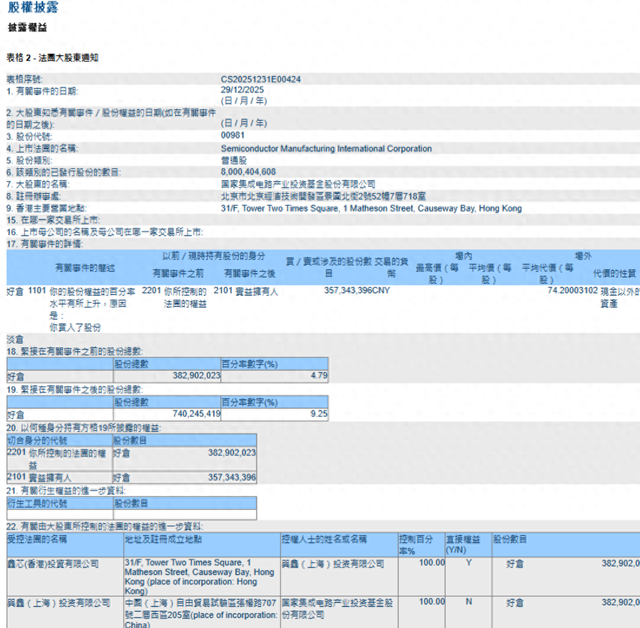
Core Viewpoint - The National Integrated Circuit Industry Investment Fund has increased its stake in Semiconductor Manufacturing International Corporation (SMIC) from 4.79% to 9.25% as of December 29, 2025, indicating a significant investment in the semiconductor industry [1]. Group 1: Shareholding Changes - The National Integrated Circuit Industry Investment Fund now holds 740,245,419 shares in SMIC, representing 9.25% of the total share capital [1]. - Prior to this increase, the fund held 382,902,023 shares, which accounted for 4.79% of the total share capital [1]. - After the transaction, the fund's A-share holdings amount to 357,343,396 shares, representing 14.03% of SMIC's A-share total and 4.18% of the overall share capital [3]. Group 2: Acquisition Details - SMIC plans to acquire a 49% stake in SMIC North from several entities, including the National Integrated Circuit Industry Investment Fund, for a total price of 40.601 billion CNY [2][5]. - The acquisition will make SMIC North a wholly-owned subsidiary of SMIC, enhancing the company's asset quality and business synergy [5]. Group 3: Financial Performance - SMIC North reported a revenue of 12.979 billion CNY and a net profit of 1.682 billion CNY for the year 2024, reflecting year-on-year growth of 12% and 187%, respectively [5]. - The transaction is expected to promote the long-term development of SMIC without altering its main business scope [5]. Group 4: Future Investments - SMIC is set to receive a total of approximately 7.778 billion USD (over 50 billion CNY) in cash injections from new investors, including the National Integrated Circuit Fund Phase III and the Leading Integrated Circuit Fund [5]. - Following the capital increase, SMIC's registered capital will rise significantly from 6.5 billion USD to 10.0773 billion USD [5][6].

重新定义智能手表,华为花了十年“笨功夫”
Guan Cha Zhe Wang· 2026-01-03 01:27
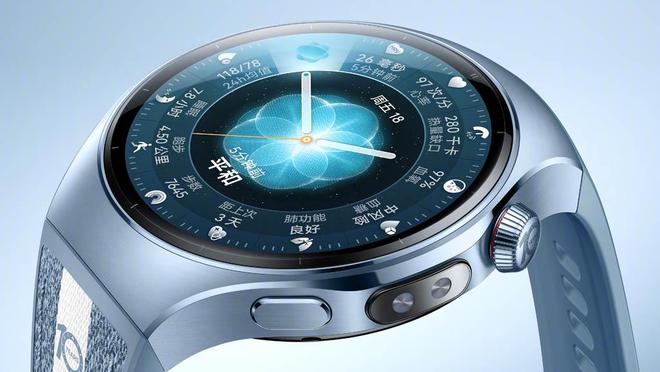
Core Insights - The article discusses the transformation of smartwatches from mere smartphone accessories to independent health management devices, highlighting the increasing adoption of these devices for monitoring health metrics like heart rate and sleep analysis [1][2]. Company Overview - Huawei is identified as a key player driving the evolution of the smartwatch industry, with its focus on health management and user experience since the launch of its first HUAWEI WATCH in 2015 [2][10]. - The company has integrated advanced health monitoring features into its devices, such as ECG heart analysis and blood pressure measurement, showcasing its commitment to merging professional medical capabilities with consumer technology [2][8]. Product Development - Huawei has introduced innovative features like the X-TAP smart sensing window for rapid blood oxygen detection, which reflects the company's dedication to refining user experience through technology [3]. - The latest HUAWEI WATCH 10th Anniversary model includes a health dashboard that presents 12 health metrics visually, making it easier for users to track their health [6][8]. User Experience - The company acknowledges the challenge of complex functionalities in smartwatches and aims to simplify user interaction by presenting advanced features in an accessible manner [5][10]. - The upgraded AI assistant, "腕上小艺," enhances user engagement by providing personalized health insights and support during activities, transforming the smartwatch into a more interactive companion [9]. Market Trends - The article notes a growing consumer preference for mid to high-end smartwatches, with an increasing focus on health-related functionalities, indicating a shift in market demand [10]. - Huawei's approach to integrating AI-driven health analysis into its products is seen as a validation of its strategic direction in the competitive smartwatch landscape [10].
首次超越特斯拉,比亚迪首次成为全球最大电动车销售商
Guan Cha Zhe Wang· 2026-01-03 00:11
据美国消费者新闻与商业频道(CNBC)报道,当地时间1月2日,美国电动汽车制造商特斯拉公司公布 的数据显示,该公司2025年全年电动汽车销量首次被中国汽车制造商比亚迪超越,比亚迪已成为全球最 大的电动汽车销售商。 彭博社指出,市场观察人士认为,比亚迪比其他汽车品牌更能应对竞争挑战。分析师估计,比亚迪2026 年总销量有望增长至530万辆。德意志银行分析师预计,该公司将推出新产品,并推出技术平台,进一 步提升公司的竞争力。这可能使比亚迪扩大对特斯拉的领先优势。 本文系观察者网独家稿件,未经授权,不得转载。 特斯拉数据显示,该公司2025年全球交付汽车163.6万辆,同比下降约8.6%,这也是特斯拉连续第二年 交付量下滑。1月1日,比亚迪公布的数据显示,该公司2025年交付了460万辆汽车,较2024年增长 7.7%。其中,电动汽车销量增长28%,达225万辆。 报道提到,2011年10月,马斯克在接受彭博电视台采访时,提到比亚迪曾嘲讽称"并不认为比亚迪是特 斯拉的竞争对手",还表示"我觉得他们的产品算不上出色"。 ...
比亚迪正式超越特斯拉,登顶全球电动车榜首
Guan Cha Zhe Wang· 2026-01-02 23:57
报道提到,2011年10月,马斯克在接受彭博电视台采访时,提到比亚迪曾嘲讽称"并不认为比亚迪是特 斯拉的竞争对手",还表示"我觉得他们的产品算不上出色"。 据美国消费者新闻与商业频道(CNBC)报道,当地时间1月2日,美国电动汽车制造商特斯拉公司公布 的数据显示,该公司2025年全年电动汽车销量首次被中国汽车制造商比亚迪超越,比亚迪已成为全球最 大的电动汽车销售商。 彭博社指出,市场观察人士认为,比亚迪比其他汽车品牌更能应对竞争挑战。分析师估计,比亚迪2026 年总销量有望增长至530万辆。德意志银行分析师预计,该公司将推出新产品,并推出技术平台,进一 步提升公司的竞争力。这可能使比亚迪扩大对特斯拉的领先优势。 特斯拉数据显示,该公司2025年全球交付汽车163.6万辆,同比下降约8.6%,这也是特斯拉连续第二年 交付量下滑。1月1日,比亚迪公布的数据显示,该公司2025年交付了460万辆汽车,较2024年增长 7.7%。其中,电动汽车销量增长28%,达225万辆。 本文系观察者网独家稿件,未经授权,不得转载。 ...
“中国点名安全风险之际,星链宣布重大调整”
Guan Cha Zhe Wang· 2026-01-02 14:20
"星链"工程副总裁迈克尔·尼科尔斯(Michael Nicolls)当天在社交媒体X平台写道:"'星链'正在对其卫 星星座进行重大重组,重点是提高太空安全。" 1月2日,香港《南华早报》报道称,SpaceX此举旨在将卫星重新部署到太空碎片和其他计划中的卫星 星座较少的轨道区域,从而降低发生碰撞风险,并使卫星能够更快地脱离轨道。与此同时,就在几天 前,中方代表在联合国安理会一场会议上发言时表示,个别国家的商业卫星星座肆意扩张,缺乏有效监 管,带来显著安全挑战,并点名称,"星链"卫星曾两次迫近中国空间站致紧急避碰。 去年12月,"星链"一颗卫星因故障在太空产生碎片,曾引发广泛关注。路透社去年12月19日报道, SpaceX当天"罕见披露",其旗下"星链"的一颗在轨卫星12月17日突发故障,在约418公里高度与地面失 去通信联系,并宣称产生了"少量"太空碎片。 【文/观察者网 熊超然】当地时间1月1日,美国太空探索技术公司(SpaceX)宣布将在2026年对其"星 链"(Starlink)互联网卫星星座进行重组,降低4400多颗卫星的轨道高度。 "'星链'卫星具有极高的可靠性,在超过9000颗在轨运行卫星中,仅有两 ...

中国AI软件如何走出自己的“范式”路线?
Guan Cha Zhe Wang· 2026-01-02 05:56
Core Insights - The article highlights a significant divergence in the global AI software sector, contrasting standardized SaaS giants like Salesforce with customized solution providers like Palantir, which has accelerated revenue growth and stock revaluation amid the AI wave [1][3]. Group 1: Palantir's Business Model and Success - Palantir, originally focused on government and intelligence data analysis, has expanded its capabilities to various industries, integrating data and processes into a "decision operating system" [3][5]. - The company has secured substantial contracts, including a long-term agreement with the U.S. Army worth up to $10 billion, which positions its platform as a central operational hub, leading to significant long-term revenue and high switching costs [3][5]. - Palantir's approach differs fundamentally from Salesforce's standardized model; it embeds AI deeply into clients' operations, making it difficult for clients to switch providers once integrated [5][12]. Group 2: Fourth Paradigm's Position in China - Fourth Paradigm, established in 2014, serves large organizations in sectors like banking and energy, focusing on embedding AI models into specific business scenarios rather than offering general applications [7][12]. - The company has transitioned from project-based delivery to developing a platform called "Prophet," which standardizes and automates the AI deployment process, similar to Palantir's evolution [8][11]. - In the Chinese market, Fourth Paradigm faces unique challenges, such as concentrated budgets on hardware, necessitating a "soft and hard integration" approach to deliver AI solutions effectively [9][12]. Group 3: Market Positioning and Strategy - Fourth Paradigm is positioned as an "organizational-level AI infrastructure provider," distinct from traditional SaaS or IT outsourcing firms, focusing on embedding AI into critical decision-making processes [15][16]. - The company emphasizes the importance of a platform-based approach and partnerships to scale its operations, which is crucial for reducing marginal costs and achieving efficiency [16][17]. - The article suggests that the true competitive advantage lies in how extensively AI is utilized within client operations, rather than just the algorithms themselves [16][17].