
Guan Cha Zhe Wang

Search documents
美媒回顾中国六十年稀土发展历程,“注意:重点保密单位”
Guan Cha Zhe Wang· 2026-01-01 04:52
Core Viewpoint - The article discusses the efforts of the West, particularly the U.S., to establish a domestic rare earth industry to reduce dependence on China, acknowledging the complexity and time required for such a transition [1]. Group 1: China's Dominance in Rare Earths - China accounts for over 60% of global rare earth production and holds a staggering 92% of the processing stage, indicating a near-monopoly in the global rare earth processing sector [1][5]. - The U.S. Geological Survey reported that from 2020 to 2023, 70% of rare earth compounds and metals imported by the U.S. came from China [1]. - The article emphasizes that China's core position in the rare earth sector is the result of decades of strategic planning and investment [1]. Group 2: Historical Development of China's Rare Earth Industry - The origin of China's dominance in rare earths dates back to April 1964, when the largest rare earth deposit was discovered in the Bayan Obo mine, leading to significant government attention [3]. - In the 1970s, Chinese chemists successfully broke the monopoly of France, the U.S., and Japan in the international rare earth market, transitioning China from a resource-rich country to a major producer and exporter [6]. - By the 1980s, China had established numerous rare earth refining plants, becoming the largest producer globally, despite initial technological lag [7]. Group 3: Strategic Moves and Technological Advancements - In 2010, China halted rare earth exports to Japan for two months, causing panic in Japan's automotive industry, which was heavily reliant on Chinese supplies [8]. - Currently, China is enhancing its refining technology and has increased control over rare earth mining and production enterprises [11]. - The sale of an 86% stake in the Wuxi refining plant to a Chinese state-owned enterprise highlights China's ongoing efforts to secure its position in the rare earth supply chain [11].


中方采购最新数据披露,“美国人乐坏了”
Guan Cha Zhe Wang· 2026-01-01 01:46
Core Viewpoint - Chinese buyers are resuming purchases of U.S. soybeans, with commitments to buy at least 8 million tons by 2025, which is positive news for U.S. exporters [1][7] Group 1: Purchase Commitments - Chinese buyers have started placing orders for U.S. soybeans since October, maintaining a steady purchasing rhythm [1] - By December, Chinese buyers continued to place orders, with most shipments expected between December and March [1] - The U.S. AgResource Company predicts that China may aim for a "soft target" of 10 million tons of U.S. soybeans by 2025, with an additional 2 million tons in January [1] Group 2: Market Dynamics - Despite the positive news, there is uncertainty regarding the actual volume of U.S. soybean purchases due to the lack of a formal agreement between the U.S. and China [2] - Brazilian soybean exports to China have increased significantly, with nearly 80% of Brazil's soybean exports going to China, marking a 16% increase compared to the previous year [1] - The shift in market dynamics has seen Brazil's share of China's soybean imports rise from 2% thirty years ago to approximately 71% today [4] Group 3: Trade Relations and Future Outlook - The U.S. government has indicated that China agreed to purchase 12 million tons of U.S. soybeans by January, with a commitment to buy at least 25 million tons annually over the next three years [7] - Analysts suggest that China's strategy to reduce reliance on U.S. soybeans is part of a broader effort to enhance food self-sufficiency, potentially decreasing import dependence from 90% to below 30% in the next decade [8] - The trade relationship between the U.S. and China regarding soybeans has evolved, with China now holding more leverage in the purchasing process [8]

红姑娘:古巴革命胜利67周年,聊聊格瓦拉、“司令”和他们的五星帽徽
Guan Cha Zhe Wang· 2026-01-01 01:39
Core Viewpoint - The article discusses the historical significance and evolution of the "Commander" rank in the context of the Cuban Revolution, particularly focusing on the symbolism of Che Guevara's star insignia and its implications for the military culture in Cuba [5][6][12]. Group 1: Historical Context - The "Commander" insignia, represented by a gold star, originated from the military rank system in Cuba during the 1940s and 1950s, specifically denoting the rank of "Comandante" [6][9]. - The Cuban Revolution, which culminated on January 1, 1959, saw the overthrow of the Batista regime, with the "Commander" rank reflecting the military culture and characteristics of the early revolutionary period [5][12]. Group 2: Military Structure and Evolution - The early Cuban revolutionary army was organized at a battalion level, with the "Commander" rank being the highest, often leading to a situation where multiple individuals held the same rank without a clear hierarchical distinction [44]. - By the end of 1958, the revolutionary army had expanded to approximately 4,000 members, but the rank of "Commander" was widely distributed, leading to a flattening of the military hierarchy [44]. Group 3: Cultural Significance - The term "El Comandante" has become synonymous with Fidel Castro, reflecting the cultural and political legacy of the Cuban Revolution, where the military and revolutionary ideals are deeply intertwined [27][49]. - The article highlights the unique position of the Cuban military in governance, where military leaders often transitioned into civilian roles, influencing various sectors of the economy and governance [47][49].

台积电也“松一口气”
Guan Cha Zhe Wang· 2026-01-01 01:38
Core Viewpoint - TSMC has received an "annual license" from the U.S. government, allowing it to export chip manufacturing equipment to its factory in China by 2026, joining Samsung and SK Hynix in this temporary relief from previous restrictions [1][3]. Group 1: License and Export Regulations - The U.S. government previously revoked the indefinite licenses for TSMC, Samsung, and SK Hynix, requiring them to apply for individual approvals for exporting chip manufacturing equipment to their factories in China [3][4]. - The newly granted annual export license allows TSMC to supply its Nanjing factory without needing individual supplier licenses, ensuring uninterrupted operations and product delivery [1][3]. Group 2: Background and Implications - The Trump administration viewed the "Verified End User" (VEU) system as a loophole, expressing concerns over potential technology leaks or equipment transfers to Chinese companies [4]. - The annual approval mechanism proposed by the U.S. government could lead to significant administrative burdens, requiring companies to process an additional 1,000 licenses annually, complicating their operations [4]. - China has expressed strong opposition to the U.S. export controls, emphasizing the globalized nature of the semiconductor industry and the potential negative impact on the stability of the global supply chain [4][5].

2026,中国航天将在“狂飙”与“悬念”中挺进深空
Guan Cha Zhe Wang· 2026-01-01 00:40
Core Insights - The global space industry experienced significant activity in 2025, with a total of 327 orbital launches, achieving a success rate of 97% [1] - China conducted 92 orbital launches, with 90 successful missions, highlighting its growing capabilities in space exploration [1] Group 1: Launch Successes and Failures - The Falcon 9 rocket achieved 165 successful launches out of 165 attempts, maintaining its position as the world's leading launch vehicle [3] - The Starship-Superheavy program faced multiple failures in 2025, including three significant incidents that resulted in explosions during test flights [3][4][5] - Blue Origin's New Glenn rocket successfully completed its second flight, marking it as the second company to recover an orbital-class rocket [9] Group 2: Challenges in Space Exploration - The Starship-Superheavy system's delays and reliability issues have raised concerns about its role in NASA's Artemis program, with critics suggesting it may require 20 to 40 launches to support a crewed lunar landing [7] - Russia's space program faced operational challenges, including the inability to launch crewed missions due to platform damage, raising questions about its future capabilities [11] - India's GSLV rocket faced a significant failure with the NVS-02 satellite, which was left in an unusable orbit due to a technical oversight [13][14] Group 3: Developments in Chinese Space Programs - China's space program made strides with the successful first flights of the Zhuque-3 and Long March 12 rockets, although both faced challenges during recovery attempts [16][21] - The Chinese manned space program is advancing towards lunar missions, with significant infrastructure developments nearing completion [21] - The Chinese space station encountered a major crisis when a spacecraft window was damaged, leading to an emergency rescue mission [22] Group 4: Future Prospects - The upcoming year, 2026, is anticipated to be another significant year for space exploration, with multiple planned launches and missions, including the Chang'e 7 lunar mission [29][30]

有关部门再次回应《燕云十六声》时装争议:游戏内未发现违规内容
Guan Cha Zhe Wang· 2025-12-31 15:09
Core Viewpoint - The game "Yan Yun Shi Liu Sheng" by NetEase faced public criticism due to the anniversary costume "Fei Bai Cheng Shi," but regulatory authorities found no violations of relevant laws and regulations in the game's content [1][2]. Group 1 - The controversy originated from the launch of the "Fei Bai Cheng Shi" costume during the anniversary event on December 23, 2025, which some players found uncomfortable [2]. - On December 26, the game announced that the dyeing issue of the "Fei Bai Cheng Shi" appearance was addressed with the first batch of fixes completed by the early hours of December 25, restoring the dyeing function for the female version, while the male version is still under urgent repair [3]. - The game plans to enhance the quality and performance of the dyeing materials to resolve issues related to highlights and oily textures, and will introduce two additional crafting options for both male and female costumes in future updates to meet diverse player preferences [3].


观网网友选出20大新闻:2025,触摸临界点
Guan Cha Zhe Wang· 2025-12-31 14:46
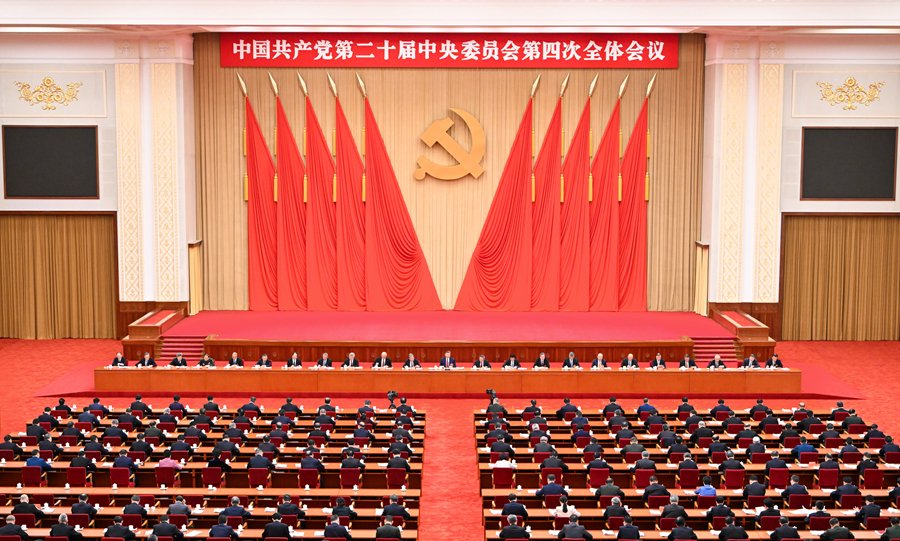
2025年即将落幕,这一年既有国内发展的铿锵步伐,亦有国际舞台的风云变幻。 "十四五"规划收官,"十五五"规划谋篇布局,中国制造交出惊艳答卷;特朗普招数不断,却越来越举步维艰,黄金等重金属暴涨,美元地位滑坡;俄乌战场 形势日渐明朗,和谈却阻力重重…… 1月,决定成立党的二十届四中全会文件起草组。3月,来自全国各地、各行各业的人大代表、政协委员齐聚北京,见证民意的汇聚和民声的传递。4月,召 开部分省区市"十五五"时期经济社会发展座谈会……10月20日至23日,二十届四中全会召开,审议通过"十五五"规划建议。随后各地开始制定地方的"十五 五"规划建议。12月10日至11日,中央经济工作会议在北京举行,号召万众一心、砥砺前行,奋力实现明年经济社会发展目标任务,确保"十五五"开好局、 起好步。 在跨度达大半年的起草工作中,中央深入调研考察,广泛听取意见建议,充分体现了中国决策机制坚持实事求是原则,充分吸取各方智慧的特点。这是发扬 党内民主和全过程人民民主的又一次生动实践。 世界在许多方面,仿佛都来到了临界点。 在这一不寻常的年份,观察者网借助广大网友的力量,结合投票与跟评,评选出"20大新闻",标记我们共同度过的这一 ...
追火箭、探隧道、访工厂,抖音创作者让“大国重器”燃起来了
Guan Cha Zhe Wang· 2025-12-31 14:32
Core Viewpoint - The article highlights the emergence of Douyin creators as key figures in bridging the gap between advanced technology and public understanding, showcasing China's major engineering projects and innovations through immersive storytelling and relatable content [5][10][20]. Group 1: Douyin Creators and Their Impact - Douyin creators are gaining access to previously restricted engineering sites, allowing them to document and share the stories behind China's major infrastructure projects, such as the world's longest underwater high-speed rail tunnel [5][10]. - The creators utilize a first-person narrative style to make complex engineering concepts relatable, transforming abstract ideas into tangible stories that resonate with the audience [10][12]. - The content produced by these creators has garnered significant engagement, with videos on topics like the underwater tunnel and wind energy achieving millions of views and likes, indicating a strong public interest in these subjects [23]. Group 2: Technological and Engineering Highlights - The article discusses various engineering feats, including the construction of the underwater tunnel and the development of China's first reusable commercial rocket, emphasizing the technical challenges and innovations involved [7][9]. - Creators explain complex technologies in simple terms, such as comparing wind energy generation to a "super-sized electric fan," making it easier for the public to grasp the significance of these advancements [12][16]. - The narrative also includes personal stories from engineers and workers, highlighting their dedication and the human element behind these technological achievements, which fosters a sense of national pride [18][20]. Group 3: Platform Support and Community Engagement - Douyin has launched initiatives like "Burning Up! Major National Equipment" to support creators in showcasing China's technological innovations, providing them with resources and access to critical sites [21][23]. - The platform's support has led to a significant increase in the visibility of these creators' content, with over 36.7 billion views on related topics, demonstrating the effectiveness of this approach in engaging the public [23]. - The creators' work not only informs but also inspires viewers, enhancing national confidence and encouraging interest in science and technology among younger audiences [23][25].


上海星闪开放实验室揭牌:美的主导,上海海思等共同建设
Guan Cha Zhe Wang· 2025-12-31 14:24
Core Insights - The "Shanghai Star Flash Open Laboratory" was officially inaugurated on December 31, led by Midea Group in collaboration with various partners, marking the establishment of China's first open innovation platform focused on the application of Star Flash technology in smart home sectors [1][2] - Midea is recognized as a pioneer in the home appliance industry, having made significant investments and achievements in the Star Flash Alliance, which is part of its broader strategy to enhance home intelligence through a comprehensive smart home infrastructure [2] Group 1 - The laboratory received full support from the Qingpu District government in terms of policy, space, and industrial resources, integrating three core functions: technology research and development, testing certification, and ecological incubation [1] - The laboratory aims to create a complete "technology-product-scene-ecology" closed loop, facilitating protocol optimization for home and building scenarios, providing compatibility and safety certifications, and promoting resource sharing across the entire industry chain [1][2] Group 2 - Midea has been actively pursuing a "technology-leading" strategy, increasing investments in foundational innovation areas such as AIoT, chips, and connectivity technologies, positioning itself as a leader in global smart living and green technology [2] - The company has successfully developed and launched the "integrated sensing and computing" Star Flash module, addressing common industry challenges such as multi-connection interference and enhancing perception accuracy and stability [2][3] Group 3 - Midea's AI Research Institute has made significant advancements in integrating Star Flash technology with artificial intelligence, overcoming limitations in computing power and memory resources through innovative algorithms [3] - The laboratory will focus on three core objectives: becoming a center for Star Flash technology innovation, a center for industry implementation, and a hub for gathering industry partners to promote standards and solutions [3]

破防了?罗永浩与豆包吵架上热搜:能吵出心流来
Guan Cha Zhe Wang· 2025-12-31 11:47
Core Viewpoint - The debate between Luo Yonghao and the AI model "Doubao" highlights the ongoing discussion about the strengths and weaknesses of Smartisan Technology's products, particularly the Smartisan phone, despite its market failure and brand exit [1][2]. Group 1: Product Innovation and Market Performance - Luo Yonghao emphasized that Smartisan Technology's innovations in human-computer interaction were industry-leading at the time, with several features later adopted by other manufacturers, asserting that the product's intrinsic value should not be dismissed due to commercial setbacks [2]. - Doubao countered by pointing out significant hardware quality control issues with Smartisan phones, including poor battery life and overheating, which were frequently mentioned in user feedback [2]. Group 2: Historical Context and Public Perception - The debate referenced the early reviews from Zealer, a tech review platform, which highlighted both the design and various shortcomings of the Smartisan T1, leading to a significant drop in its ratings compared to competitors like Xiaomi [4][6]. - The historical conflict between Luo Yonghao and Wang Ziru, the founder of Zealer, is noted as a pivotal moment that amplified the perception of Smartisan's quality control issues, which continue to affect its reputation [8][9]. Group 3: Impact on Industry and Future Implications - The mention of Zealer in the current debate illustrates the lasting impact of past controversies in the tech industry, suggesting that the narrative surrounding Smartisan's product quality remains a significant part of its identity [9]. - The evolution of Zealer's business model and Wang Ziru's shift away from independent reviews reflect broader changes in the tech review landscape, influenced by past events and public perception [8].