Hua Xia Shi Bao

Search documents
股价较历史高点跌近90%!康泰生物上半年净利暴跌77%,医药板块大涨31%它为何“掉队”
Hua Xia Shi Bao· 2025-09-23 08:46
Core Viewpoint - The company, Kangtai Biological, is facing its most challenging period since its listing, with significant declines in net profit and profitability despite a revenue increase [2][3]. Financial Performance - In the first half of 2025, Kangtai Biological reported total revenue of 1.392 billion yuan, a year-on-year increase of 15.81% [3]. - The net profit attributable to shareholders was only 37.53 million yuan, a dramatic decline of 77.30% compared to the previous year [3]. - The company's non-recurring net profit was 18 million yuan, down 84.85% year-on-year [2][3]. - The gross profit margin decreased by 7.83 percentage points to 75.95%, while the net profit margin fell from 13.76% to 2.70% [3]. - This performance marks the lowest half-year net profit since the company went public [3]. Stock Performance - As of September 19, 2025, Kangtai Biological's stock price plummeted nearly 90% from 149.64 yuan per share on August 4, 2020, to 17.17 yuan per share [5]. - Despite a general rise in the pharmaceutical industry, Kangtai's stock price only increased by 0.74% from the beginning of the year to September 20, while the Wind Pharmaceutical Index rose by 31.5% [5]. Market Challenges - The company faces multiple challenges, including market saturation and intensified competition for its core products, which hinder market share growth [7]. - Operational inefficiencies, such as suboptimal production processes and poor cost control, are impacting profitability and operational efficiency [8]. - Strategic misalignments in market positioning and product development may have prevented the company from adapting to market changes [8]. Industry Factors - The decline in birth rates has significantly affected the vaccine market, reducing the potential vaccination population [9]. - The waning demand for COVID-19 vaccines has led to excess production capacity and declining performance for many vaccine companies, including Kangtai [9]. - Price reduction policies in the industry have compressed profit margins, making it increasingly difficult for companies to maintain profitability [9]. Product Performance - Kangtai's first-class vaccines (immunization planning vaccines) saw a revenue increase of 92% to 51.65 million yuan, but the gross margin plummeted by 37.5 percentage points to -5.01% [11]. - The decline in profitability for first-class vaccines is attributed to price reductions from centralized procurement policies and rising production costs [11][12]. - The second-class vaccines (non-immunization planning vaccines) experienced a revenue increase of 1.3 billion yuan, but the gross margin fell by 5.48 percentage points to 80.32%, indicating a "revenue increase without profit increase" scenario [15]. Competitive Landscape - The market for the 13-valent pneumonia vaccine has become highly competitive, with Kangtai's sales volume declining by 44.31% in the first half of 2025 [17]. - The company faces challenges from new entrants and established competitors, which have intensified price competition [18].


天辰生物勇闯IPO:产品未“出道”,研发支出已占亏损比例超70%|创新药观察
Hua Xia Shi Bao· 2025-09-23 08:45
Core Viewpoint - Tianchen Biopharmaceuticals has submitted an IPO application to the Hong Kong Stock Exchange, facing challenges from industry giants and financial pressures, with a focus on antibody drugs for autoimmune and inflammatory diseases [2][3]. Financing and Valuation - Since its establishment in December 2020, Tianchen Biopharmaceuticals has completed seven rounds of financing, raising approximately 522 million RMB, with the latest round being a Series C funding of 208 million RMB in May 2025, valuing the company at 2.008 billion RMB [3][4]. - The company has attracted investments from notable institutions such as Honghui Fund and Shiyao Group [3]. Financial Performance - The company has reported no revenue for the years 2023, 2024, and the first half of 2025, with net losses of 95.78 million RMB, 137.32 million RMB, and 94.21 million RMB respectively, totaling a loss of 327 million RMB over two and a half years [4][5]. - Research and development costs have consistently accounted for over 70% of total losses, reflecting the high capital requirements typical of biotech startups [4][6]. Cash Flow and Operational Status - The cash flow from operating activities has been negative, with figures of -60.87 million RMB, -104 million RMB, and -47.67 million RMB for the respective periods [6]. - As of June 30, 2025, the company had cash and cash equivalents of only 136 million RMB, which is projected to cover 125% of its costs for the next 12 months [6]. Management and Governance - The company was co-founded by two overseas returnees, Liu Heng and Sun Naichao, with Liu Heng serving as the current leader responsible for overall strategy and operations [7][8]. - Concerns have been raised regarding the age structure of the management team and succession planning, particularly with Sun Naichao being 89 years old [9]. Legal Issues - Tianchen Biopharmaceuticals is involved in a technology development contract dispute, with court hearings scheduled between 2023 and 2024 [9].
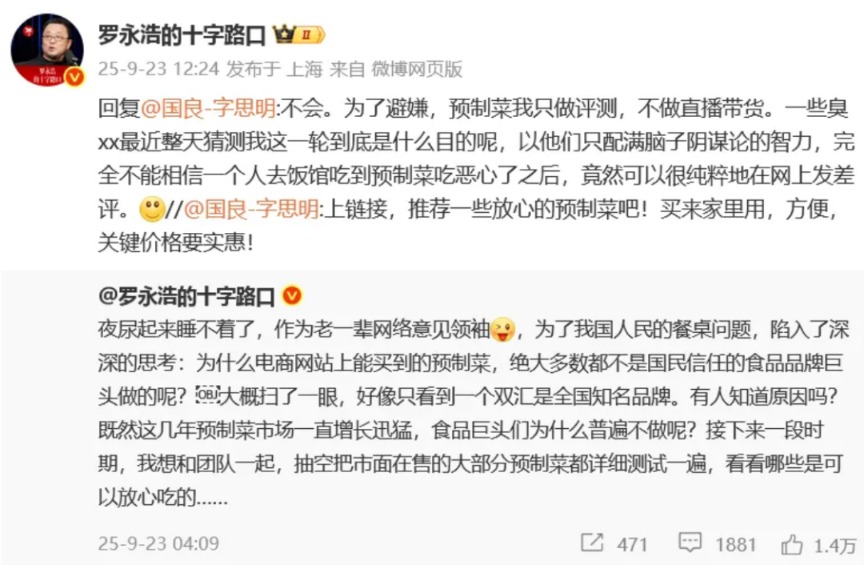
最新!罗永浩宣布将测评在售预制菜 强调为了避嫌只做评测 不会直播带货
Hua Xia Shi Bao· 2025-09-23 07:48
Core Viewpoint - Luo Yonghao plans to test various ready-to-eat meals available in the market to identify which ones are safe for consumption, while explicitly stating he will not engage in live-streaming sales of these products [1][3]. Group 1: Company Debt and Legal Issues - Luo Yonghao clarified that he repaid all legally mandated personal debts five years ago and has since voluntarily repaid company debts that he was not legally obligated to pay [3]. - Smartisan Technology (Chengdu) Co., Ltd. has recently been listed as a dishonest executor due to failing to fulfill legal obligations, with a total execution amount of 21.4286 million yuan related to loan disputes with Suzhou Zhihui Shengwang Venture Capital [3][4]. - The company stated that the 15 million yuan borrowed from Zhihui Venture Capital is a corporate debt, not a personal one, and Luo Yonghao had previously expressed willingness to repay this debt personally, but decided to delay due to ongoing defamation from the venture capital's management [4]. Group 2: Public Perception and Controversies - Luo Yonghao faced criticism from the founder of Xibei for his comments on the use of ready-to-eat meals without consumer disclosure, leading to a lawsuit for defamation [5]. - Speculations arose regarding Luo Yonghao's whereabouts when his IP address changed to locations outside of China, but he later confirmed he was on a business trip and returned to Shanghai [5][7]. - In response to public comments, Luo Yonghao shared his dining experiences, contrasting fresh meals with ready-to-eat options, and emphasized the importance of quality in food service [7].
脑机接口术语标准发布,产业规范化破茧加速跑
Hua Xia Shi Bao· 2025-09-23 07:36
Core Insights - The National Medical Products Administration has approved a new industry standard for medical devices using brain-computer interface (BCI) technology, which will take effect on January 1, 2026, aiming to unify terminology and support high-quality industry development [2][3] - A series of supportive policies have been introduced in China to facilitate the application of BCI technology in the medical field, including pricing guidelines for invasive and non-invasive BCI services [3][4] - The BCI sector has seen a significant increase in investment activity, with 13 financing events totaling 923 million yuan in 2025 alone, compared to only 6 events totaling 201 million yuan in 2024 [3][4] Policy Framework - The National Healthcare Security Administration has issued guidelines for pricing BCI medical services, including specific fees for invasive and non-invasive procedures [3] - Local governments, such as Zhejiang Province, have also established pricing for BCI services and included non-invasive BCI adaptation fees in basic medical insurance coverage [3] - A joint opinion from multiple government departments has outlined a comprehensive development blueprint for the BCI industry [3] Investment Trends - In the first three months of 2025, the total public financing in the BCI sector exceeded 430 million yuan, surpassing the total for the entire year of 2024 [4] - Shanghai Ladder Medical completed a record-breaking 350 million yuan Series B financing in February 2025 [4] - The BCI industry is experiencing a surge in investment enthusiasm, with a total of 48 financing events since 2018, although this represents a small fraction of the overall healthcare sector [6] Industry Development - The number of BCI companies in China has surpassed 200, with significant concentration in regions like Guangdong, Beijing, and the Yangtze River Delta [5] - As of August 27, 2025, there are 42 A-share listed companies in the BCI sector, with over 80% established in the last decade [5] - The industry is characterized by a "small but specialized" approach, with companies focusing on various applications such as medical-grade semi-invasive interfaces and consumer-grade EEG devices [5] Market Potential - The global market for BCI medical applications is projected to reach $40 billion by 2030 and $145 billion by 2040, with significant growth expected in both serious medical and consumer healthcare segments [6] - The Chinese market is anticipated to reach 5.58 billion yuan by 2027, growing at an annual rate of 20% [6] Societal Impact - BCI technology holds promise for over 3 billion people suffering from neurological disorders, potentially restoring communication and mobility for many patients [7] - As technology matures and costs decrease, BCI applications are expected to expand beyond healthcare into education, entertainment, and military sectors [7]

财务压力凸显!帝科股份深陷买卖合同纠纷,并购股权到手次日就质押
Hua Xia Shi Bao· 2025-09-23 05:18
Core Viewpoint - Wuxi Dike Electronic Materials Co., Ltd. (Dike Co.) has disclosed its litigation and arbitration situations, raising market concerns due to a total involved amount of approximately 213.62 million yuan, accounting for 12.76% of the company's latest audited net assets [3][5]. Financial Performance - Dike Co. reported a significant decline in net profit by 70.03%, with a revenue of 8.34 billion yuan, a 9.93% increase year-on-year, while the core business of photovoltaic conductive paste accounted for 74.86% of revenue [6][5]. - The sales volume of photovoltaic conductive paste decreased by 22.28% year-on-year, and the gross margin for this product fell to 8.73%, down 3.08% year-on-year, indicating a shrinking profit margin [6][5]. Debt and Receivables - The company's accounts receivable have increased significantly, from 960 million yuan in 2020 to over 5.4 billion yuan by mid-2025, representing 42.7% of total assets [7]. - Dike Co.'s debt has escalated from 784 million yuan in 2020 to 6.154 billion yuan in 2024, with a further increase to 7.438 billion yuan in the first half of 2025, maintaining a high debt-to-asset ratio around 80% [7][8]. Recent Transactions - Dike Co. acquired 60% of Zhejiang Suote Materials Technology Co., Ltd. for 696 million yuan, with a market value of the target company at 1.16 billion yuan, resulting in a 74% premium [9][10]. - Immediately after the acquisition, Dike Co. pledged the 60% stake in Zhejiang Suote for a loan of up to 400 million yuan to optimize its financing structure, indicating potential short-term funding pressures [10].

4家农商银行又“解散”,四川资阳、自贡即将成立市级统一法人农商行
Hua Xia Shi Bao· 2025-09-23 04:39
本报(chinatimes.net.cn)记者卢梦雪 北京报道 四川市级统一法人农商银行即将再添两家。 9月22日,四川金融监管局发布批复,同意资阳农商行、自贡农商行两家市级农商行分别吸收合并旗下 两家县级农商行。 近年来,四川省农信社改革持续深化。随着省、市、县三级改革进程的推进,四川农商联合银行已经挂 牌开业,四川县级层面的法人机构也已经全部改制成为农商行。如今,组建地市级统一法人农商行成为 四川农信系统的主要动作。 据《华夏时报》记者不完全统计,当前四川省内21个地级行政区中,已有15个地市公布了组建市级统一 法人农商银行的进展,其中10家已经揭牌成立。而未透露相关进展的其余6个地区,记者咨询相关工作 人员得知,其县域农商行均已归市级农商行管理,当前以市级农商行分支机构的形式存在。 县域机构加速"洗牌" 9月22日,四川金融监管局发布两则批复,同意资阳农商行获批吸收合并四川安岳农商行、四川乐至农 商行,同意自贡农商行获批吸收合并四川荣县农商行、四川富顺农商行。 其中,资阳农商行、自贡农商行均为资阳、自贡当地的市级农商行,而被吸收合并的4家银行则为当地 的县域农商行。根据监管批复,资阳农商行、自贡农商行将 ...

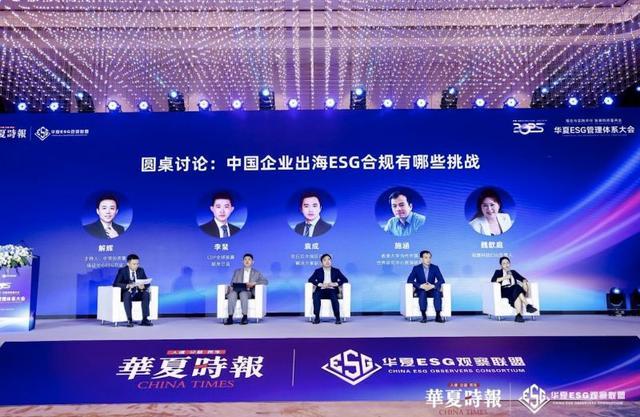
直击中企出海ESG合规痛点与应对之道,以透明度赢未来|2025华夏ESG管理体系大会
Hua Xia Shi Bao· 2025-09-23 04:06
Core Insights - The article discusses the increasing importance of ESG (Environmental, Social, and Governance) compliance for Chinese companies expanding overseas, highlighting it as a key variable for sustainable business operations [2][3] - The 2025 Huaxia ESG Management System Conference was held in Beijing, focusing on the challenges of ESG compliance for Chinese enterprises venturing abroad [2][3] Group 1: ESG Compliance Challenges - Chinese companies face significant challenges in ESG compliance when expanding internationally, including the complexity of global ESG disclosure policies and the structural power imbalances within supply chains [4][5] - The fragmentation of regulations across different markets poses a major challenge, as seen in the European Union where member states do not uniformly implement EU regulations [5][6] - Experts suggest that companies should adopt a long-term strategic perspective, emphasizing talent development and compliance capabilities to navigate the complexities of international regulations [5][6] Group 2: Balancing Sustainability and Economic Growth - Achieving a balance between sustainable development goals and economic profitability is a critical challenge for companies going abroad [6] - Companies are encouraged to invest gradually in ESG compliance from the outset, as early low-level investments in information transparency can reduce future compliance costs [6] - Data indicates that investments in environmental management can yield significant economic returns, often exceeding the initial costs, thus highlighting the financial benefits of proactive ESG strategies [6][7]
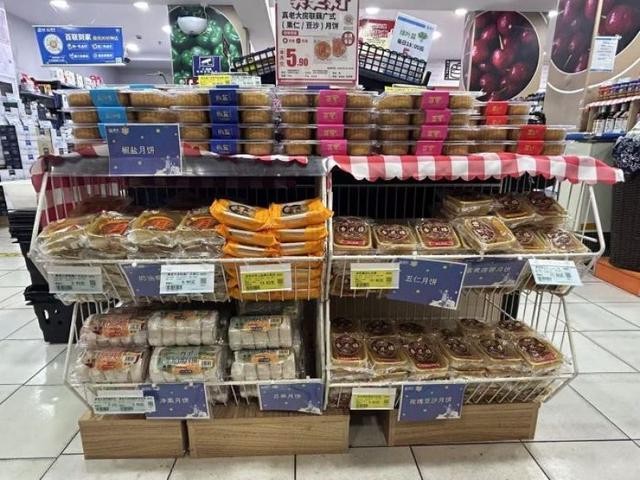
中秋节月饼市场调查:健康化、年轻化成主流,头部企业开始“卷品质”
Hua Xia Shi Bao· 2025-09-23 04:06
Core Insights - The mooncake market is experiencing a sales peak ahead of the National Day and Mid-Autumn Festival, with a blend of traditional and innovative products, as well as online and offline collaboration among brands [2][3] - Consumer preferences are shifting towards cost-effective and quality products, with mainstream mooncake prices ranging from 120 to 180 yuan due to macroeconomic uncertainties [2][4] - The market is seeing a rise in health-conscious options, with low-sugar and no-sugar mooncakes gaining popularity, reflecting a broader trend towards healthier eating [4][5][6] Market Trends - The mooncake market is characterized by a diverse range of offerings, including traditional flavors and innovative collaborations, with a focus on affordability and quality [3][4] - The trend of freshly baked mooncakes remains strong, with many brands adopting a "front store, back factory" model to ensure freshness [4] - The demand for low-sugar mooncakes has surged, with some products experiencing over 40% growth since their launch [5][6] Consumer Behavior - Consumers are increasingly seeking mooncakes that are not only visually appealing but also healthy, indicating a shift from traditional gifting to personal enjoyment [6][9] - The emotional value of products is becoming a key driver for sales, particularly among younger consumers who prioritize health and novelty [7][9] Competitive Landscape - The mooncake market is becoming saturated, prompting companies to explore new growth areas, such as the broader snack market, which is significantly larger than the mooncake segment [7] - Brands are innovating with health-focused ingredients and cross-industry collaborations to attract a diverse consumer base [7][8] - Companies that focus on technological innovation, product quality, and enhanced customer experience are likely to thrive in this competitive environment [9]
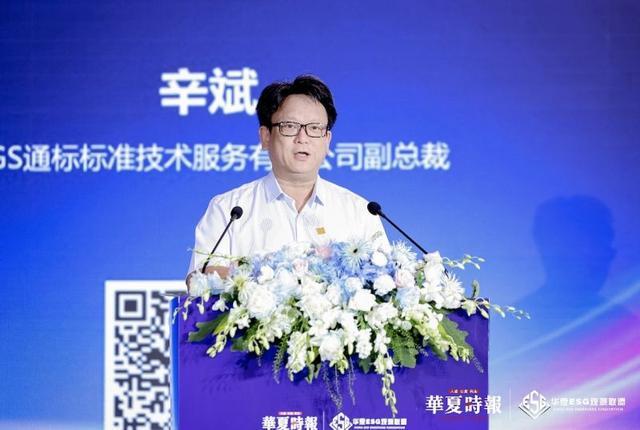
SGS通标标准技术服务有限公司副总裁辛斌:如何真正提升企业的ESG绩效,不是写出来而是要做出来|2025华夏ESG管理体系大会
Hua Xia Shi Bao· 2025-09-23 04:00
Core Insights - The conference on ESG management emphasized that ESG information disclosure is a mandatory requirement for companies, driven by regulatory, stakeholder, and strategic pressures [3][4][5] Group 1: ESG Disclosure Trends - The percentage of A-share listed companies in China that are mandated to disclose ESG information has increased from 88% in 2022 to 95% currently [4] - The number of voluntarily disclosing companies has risen from over 1,400 in 2022 to over 2,000 this year, yet only about 46% of A-share listed companies disclose ESG information [4] - Less than 10% of these companies undergo third-party verification, contrasting with Europe where the verification rate increased from 54% in 2019 to 75% in 2022 [4] Group 2: Challenges in ESG Reporting - Current issues in ESG information disclosure include selective reporting, lack of quantitative metrics, and insufficient assessment of report relevance [6][7] - Many companies disclose only favorable information while omitting negative aspects, and often fail to provide specific data on energy consumption and carbon reduction [6] Group 3: Improving ESG Reporting Quality - To enhance the quality of ESG reports, companies should adhere to best practices and principles such as accuracy, balance, clarity, comparability, and completeness [6][7] - Establishing a governance structure, improving data management, and conducting materiality assessments are essential for companies to strengthen their ESG performance [7]
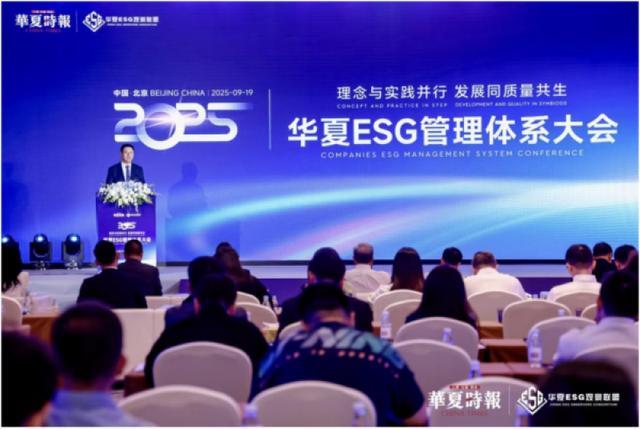
共议核心竞争力,2025华夏ESG管理体系大会在京召开
Hua Xia Shi Bao· 2025-09-23 01:55
Core Insights - The 2025 Huaxia ESG Management System Conference emphasizes the importance of ESG as a key metric for assessing non-financial performance and long-term value of enterprises in the context of expanding global sustainable investment and improving regulatory policies [2][4] Group 1: Conference Overview - The conference, themed "Coexistence of Ideas and Practices, Symbiosis of Development and Quality," aims to help enterprises prepare for the mandatory disclosure requirements set for 2026, addressing issues like "greenwashing" and providing reusable methodologies for integrating ESG into corporate DNA [2] - The event gathered representatives from government, enterprises, academic institutions, and international organizations, with over 80 companies from various sectors including finance, new energy, automotive, manufacturing, and fast-moving consumer goods in attendance [2] Group 2: Key Speeches and Insights - Chen Cungen, President of the China Social Work Federation, highlighted that ESG aligns closely with China's new development philosophy and is crucial for achieving carbon neutrality goals and enhancing corporate governance and international competitiveness [2] - Feng Huijun, President of Huaxia Times, stated that ESG is no longer optional but essential for long-term corporate value and sustainable economic development, emphasizing the need for companies to demonstrate social responsibility [4] - Wu Xiaoqiu, Dean of the National Financial Research Institute at Renmin University, discussed recent reforms in the A-share market aimed at protecting investor interests, suggesting that these reforms have laid a solid foundation for long-term market improvement [6][7] - He Keng, Vice Chairman of the Financial and Economic Committee of the National People's Congress, pointed out the need for improved legislation in the ESG field to ensure the effective implementation of ESG principles [7] - Liu Xuexin, Dean of the Business School at Capital University of Economics and Business, noted that the retreat of U.S. ESG policies presents a strategic opportunity for China to enhance its international influence in ESG [9] - Leng Bing, a board member of the International Sustainability Standards Board (ISSB), reported that 37 countries and regions have adopted ISSB standards, covering 60% of global GDP, and emphasized the importance of sustainable information disclosure for investment decisions [11] - Luo Nan, head of PRI China, addressed challenges in sustainable investment practices, including insufficient incentives and an imperfect capital market, and presented ten sustainable investment financial tools [13] - Xin Bin, Vice President of SGS, discussed the varying quality of sustainable information disclosure and the need for collaboration among enterprises, verification agencies, and regulatory bodies to enhance credibility [15] - Jin Weiping, Director of the Macroeconomic Research Department at Tsinghua University, highlighted China's early adoption of the "Artificial Intelligence +" strategy and the need to accelerate the integration of AI with the economy [16] Group 3: Discussions and Reports - The conference featured roundtable discussions on challenges in ESG compliance for Chinese enterprises, pathways for ESG-driven corporate value reconstruction, and effective strategies for enhancing brand value through ESG [17] - The "2025 Corporate ESG Practice Observation Report," including exemplary ESG practices for 2025, was also released during the conference [17]