Zhong Guo Jing Ying Bao

Search documents
上市公司全面废除监事会 审计委员会接棒治理新时代
Zhong Guo Jing Ying Bao· 2025-12-31 15:15
Core Viewpoint - The transition from a supervisory board system to an audit committee structure in listed companies is set to enhance governance, improve information disclosure quality, and strengthen internal controls and audit communication as of January 1, 2026 [1][2]. Group 1: Regulatory Changes - The new Company Law effective from July 1, 2024, allows companies to establish an audit committee within the board of directors, replacing the supervisory board [2]. - By December 31, 2025, all A-share listed companies are required to amend their articles of association to reflect this change [1][2]. Group 2: Pain Points Addressed - The reform aims to address three main issues: the formalization and marginalization of the supervisory board, the disconnection between supervision and decision-making, and the inefficiency and cost of governance [3]. - The supervisory board often intervenes post-factum, while the audit committee will be involved in key processes such as financial disclosures and external audits, thus enhancing the timeliness and effectiveness of oversight [3]. Group 3: Advantages of Audit Committees - Audit committees, primarily composed of independent directors with relevant expertise, are expected to provide more effective oversight compared to supervisory boards [4]. - The direct accountability of audit committees to the board enhances the efficiency of communication regarding oversight findings and necessary management actions [4]. Group 4: Market Impact - The reform is anticipated to increase board seats, potentially unlocking additional capital allocation opportunities in the market [5]. - Current statistics indicate that the average number of board members in listed banks is around 14, with the potential for an increase of approximately one seat per bank due to the reform [5][6]. - If each bank releases one board seat, it could attract an estimated 456.2 billion yuan in capital to the A-share banking sector [6].

微短剧2025年:新的定量、变量与增量
Zhong Guo Jing Ying Bao· 2025-12-31 15:14
Core Insights - The micro-short drama industry has transitioned from rapid growth to a new competitive phase by the end of 2025, while the emergence of comic dramas has introduced new market opportunities and challenges [1] - Copyright disputes have become a focal point in the micro-short drama sector, indicating a shift from chaotic growth to a more structured industry [1] Market Dynamics - As of November 2025, the monthly active users of Hongguo free short dramas reached approximately 234 million, surpassing Bilibili and becoming the second-largest platform after Tencent Video, iQIYI, and Mango TV [2] - The growth of Hongguo is attributed to ByteDance's resource support and a deep understanding of user habits, alongside a profit-sharing model that incentivizes quality content creation [2][3] Content Creation and Monetization - Hongguo's short drama copyright center has introduced various support policies for quality content, including high guaranteed incentives and clear revenue-sharing models [3] - A new revenue-sharing model based on the entire lifecycle of a work has been launched, allowing creators to earn long-term returns linked to market performance [4] Emerging Trends - The comic drama segment has gained traction, with platforms like Hongguo and iQIYI launching dedicated channels, and Baidu planning to release a standalone comic drama app [6] - The market for comic dramas is projected to grow rapidly, with a market size of 18.98 billion yuan in 2025, reflecting a year-on-year growth of 276.3% [8] Technological Advancements - AI advancements have significantly reduced the production cycle of comic dramas, enabling single individuals to create episodes in a matter of days rather than months [7] - The cost of producing comic dramas has decreased, with some estimates suggesting production costs dropping below 1,000 yuan per minute [7] Challenges and Issues - The micro-short drama industry is facing increasing copyright disputes, with several high-profile cases highlighting the risks associated with content duplication and plagiarism [9][10] - The rapid turnover of content in the micro-short drama sector has led to concerns about audience fatigue and the sustainability of creative ideas [10]
健康消费的进击与融合
Zhong Guo Jing Ying Bao· 2025-12-31 15:14
Core Insights - The Chinese health consumption market is undergoing a significant transformation, shifting from "wild growth" to "meticulous cultivation," with competition evolving into an ecosystem-based contest [1][2] - The health management market in China is projected to exceed 850 billion yuan in 2024, with a compound annual growth rate of 21.3%, expected to surpass 2.3 trillion yuan by 2030 [2] - The rise of rational consumption, particularly among younger consumers, emphasizes the importance of product transparency and scientific communication [3] Industry Trends - The traditional model of health services is being replaced by a comprehensive health management approach, focusing on the entire lifecycle of health rather than one-time services [4] - Companies are increasingly adopting integrated health solutions that combine products and services, moving away from merely selling individual items [3][4] Company Strategies - Minsheng Health is pursuing a diversified expansion strategy, targeting various segments within the health sector, including nutritional supplements and medical aesthetics [6] - In contrast, Meinian Health is focusing on deep specialization in preventive medicine, establishing a clear brand hierarchy to serve different market segments [6] - Both companies are building health management ecosystems, with Meinian leveraging its extensive health data for AI development and personalized health management [7] - Minsheng Health emphasizes collaboration across the supply chain, particularly in the probiotics sector, to enhance product quality and technological competitiveness [8]

怡园酒业复牌一度飙升160% 杨陵江F2B2C蓝图获“认知溢价”
Zhong Guo Jing Ying Bao· 2025-12-31 15:14
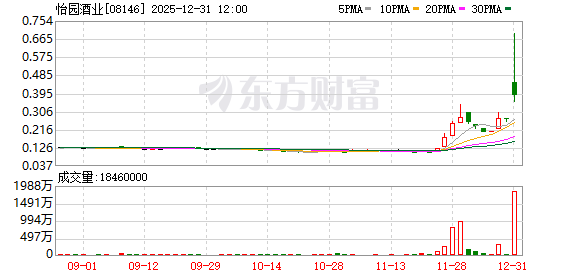
Group 1 - Yiyuan Wine Industry (08146.HK) saw its stock price surge by 160% after resuming trading, closing at HKD 0.385, with a market capitalization of HKD 308 million [2] - Yang Lingjiang acquired 73.63% of Yiyuan Wine Industry, becoming the largest shareholder and actual controller, paying approximately HKD 73.63 million, equivalent to HKD 0.12491 per share [2] - Yang Lingjiang is the founder of 1919 Group, a leader in the domestic liquor instant retail sector, and views this investment as a recognition of Yiyuan Wine Industry's growth potential and the long-term value of the liquor industry [2] Group 2 - 1919 Group reported a transaction scale increase from RMB 11.579 billion in 2023 to RMB 12.089 billion in 2024, with a projected scale of RMB 14 billion for 2025 due to strategic adjustments and partnerships [3] - The net profit for 1919 Group was RMB 51.35 million in 2023 and RMB 48.12 million in 2024, indicating stable earnings from core operations [3] - Yang Lingjiang significantly optimized 1919 Group's equity structure, increasing his stake to 92.87% and reducing the debt ratio from a peak of 92% to below 20% [3] Group 3 - Yang Lingjiang aims to create an open ecological platform for the liquor industry, connecting upstream brands, channels, and consumers through a unified operational system [4] - Industry experts highlight the need for a "new infrastructure" to address challenges such as channel fragmentation and changing consumer scenarios in the liquor industry [4] - Yang Lingjiang's investment in Yiyuan Wine Industry represents a critical exploration of this open "F2B2C liquor business operating system," promoting collaboration among various industry participants [4] Group 4 - 1919 Group plans to establish 500 flagship restaurants, 5,000 direct supply stores, and 100,000 restaurant liquor front warehouses to create strong channel barriers [5] - Experts suggest that Yang Lingjiang's leadership of Yiyuan Wine Industry positions it as a key player in the entire production, distribution, retail, and experience chain, with potential for significant growth in the liquor market [5] - The 160% surge in the Hong Kong stock market reflects early pricing of this strategic logic [5]

白银,大幅下跌!
Zhong Guo Jing Ying Bao· 2025-12-31 12:39
Price Decline - Recent sharp decline in London silver spot prices, with a drop of approximately 9% on December 29 and over 7% on December 31 [1][2] - The price peaked at $83.97 per ounce on December 29 before falling to $70.85 per ounce by December 31 [2] - Increased margin requirements by exchanges triggered forced liquidations among leveraged traders, contributing to the price drop [2][3] Market Dynamics - The silver market is experiencing high volatility characterized by "sharp rises and falls," influenced by regulatory tightening and liquidity changes [2] - The CME raised silver futures margin requirements on December 29, leading to a rapid decline in prices due to forced selling [2] - Domestic exchanges have also adjusted trading limits to curb excessive speculation, which has resulted in a disconnect between futures and spot markets [2] Technical Analysis - The rapid price decline is attributed to technical sell-offs, changes in market liquidity, and a reversal in market sentiment [3] - Key technical indicators, such as the Relative Strength Index (RSI), indicated an "overbought" condition, suggesting a need for a technical correction [3] - The smaller scale and depth of the silver market compared to gold exacerbate price volatility during significant sell-offs [3] Future Outlook - Future silver price movements will depend on technical recovery, macroeconomic conditions, and its industrial demand [4] - The market is expected to enter a high-volatility consolidation phase as it digests recent sell-offs [4] - Key factors influencing silver prices include actual interest rates, the U.S. dollar index, and industrial demand from sectors like solar energy and 5G [5] Investment Considerations - The current gold-silver ratio is at a historical low, with silver speculation levels exceeding 90% [5] - A reversal in macroeconomic sentiment could lead to greater downward pressure on silver compared to gold [5] - Market participants are advised to reduce positions and enhance risk management strategies amid year-end volatility [5]
月供减少!存量公积金贷款利率下调
Zhong Guo Jing Ying Bao· 2025-12-31 12:39
Core Viewpoint - The housing provident fund loan interest rates in multiple regions will be lowered starting January 1, 2026, which will reduce monthly payments for eligible borrowers [1][2]. Group 1: Interest Rate Adjustments - Since December 26, 2025, various housing provident fund management centers, including those in Zhengzhou, Jiaxing, Yan'an, and Hangzhou, have announced automatic adjustments to the loan interest rates for eligible borrowers [2]. - The interest rates for personal housing provident fund loans issued before May 8, 2025, will be uniformly adjusted to the new lower rates without requiring any action from borrowers [2][3]. - The new interest rates effective from May 8, 2025, are set at 2.1% for loans of 5 years or less and 2.6% for loans over 5 years for the first home, while the second home rates are 2.525% and 3.075% respectively [2]. Group 2: Financial Impact - For a loan of 850,000 yuan over 30 years, the interest savings for first-time homebuyers will be approximately 40,446.08 yuan, while for second-time buyers, the savings will be around 41,840.82 yuan due to the rate adjustments [3]. - The current difference between commercial loan rates and provident fund rates is minimal, with some commercial rates in Beijing dropping to around 3.20%, indicating a supportive stance towards the real estate market [3]. Group 3: Future Policy Directions - Since 2025, over 270 policy changes related to the housing provident fund have been implemented nationwide, including increasing loan limits and reducing down payment ratios [4]. - There is potential for further interest rate reductions, although not urgent, as the overall interest rate environment remains relatively low [4]. - The Central Economic Work Conference highlighted the need to stabilize the real estate market and promote the construction of quality housing, indicating that further reforms to the housing provident fund system may be forthcoming to support healthy development in the real estate sector [4].
房地产告别“旧周期” 锚定“新坐标”
Zhong Guo Jing Ying Bao· 2025-12-31 12:39
Core Insights - The real estate industry is undergoing a structural transformation in 2025, moving away from large-scale expansion to a focus on "quality improvement" and "functional regeneration" [1][2] - The shift is characterized by a significant decline in traditional housing development, with a 15.9% drop in real estate development investment and a 7.8% decrease in commodity housing sales area in the first 11 months of the year [1][4] - Urban renewal is emerging as a key driver for industry stability and future growth, with investments in this area expected to exceed 9 trillion yuan by 2029 [4][5] Group 1: Industry Transition - The year 2025 marks a critical point for the transition from old to new models in the real estate sector, with the focus shifting to new operational models as risks from previous expansions are addressed [2][3] - The central government has recognized the significant changes in supply-demand dynamics within the real estate market, setting the stage for a new development model [2][4] Group 2: Urban Renewal - Urban renewal is increasingly recognized as a mainstream approach, moving from marginal exploration to a central strategy for stabilizing investment and expanding domestic demand [4][5] - The focus of urban renewal has shifted from maximizing land value through large-scale demolition to enhancing the functionality of existing buildings and spaces [5][6] Group 3: Investment and Market Dynamics - In the first 11 months of 2025, total real estate development investment reached 7.86 trillion yuan, reflecting a 15.9% year-on-year decline, while urban renewal investments continue to grow [4][9] - The market is experiencing a divergence, with second-hand housing prices dropping by 7.46% across 100 cities, while first-tier cities see price increases, indicating a complex landscape for real estate investment [9][10] Group 4: Business Model Evolution - Real estate companies are shifting from a "development-driven" model to a dual focus on "development and operation," with leading firms increasing their revenue from property management and services [10][11] - Companies are encouraged to adopt a mindset of asset management and urban operation, moving away from high-turnover development strategies to long-term value extraction [11]

董宇辉直播间沙发引“代工”争议 顾家家居回应称系公司自制
Zhong Guo Jing Ying Bao· 2025-12-31 12:33
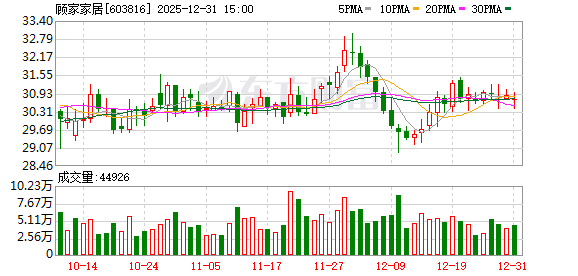
Core Viewpoint - The recent sales record of 3.56 billion yuan achieved by the live streaming of Dong Yuhui has sparked controversy regarding the production authenticity of a sofa sold by Gujia Home Furnishing Co., Ltd, with claims of it being an OEM product [2][4]. Group 1: Sales Performance - Dong Yuhui's live stream set a record with a single sales event generating 3.56 billion yuan, with a specific Gujia sofa exceeding 100 million yuan in sales [3][4]. - The sofa, referred to as the "Gujia Big Black Bear Sofa," was sold at a promotional price of 3,471.4 yuan during the live stream, while its current price on the official store is 7,719 yuan, indicating a significant price increase post-event [3][5]. Group 2: Production Controversy - There are allegations that the sofa sold during the live stream is an OEM product, but Gujia Home Furnishing has stated that the sofa is produced in-house [4][6]. - Gujia Home Furnishing's customer service confirmed that the sofa is manufactured at their four production bases and emphasized that most products have a delivery period of 30 days [5][6]. Group 3: Business Strategy and Investment - Gujia Home Furnishing has a significant focus on sofa products, which are projected to account for 57.56% of its main business revenue in 2024 [6][7]. - The company is increasing its investment in sofa production, with a recent fundraising plan of 19.97 billion yuan aimed at enhancing production capabilities, including the expansion of a functional frame production line [6][7]. Group 4: Market Position - Gujia Home Furnishing has been recognized as the top brand in global sofa sales in China for three consecutive years, highlighting its strong market position [6][7]. - The company aims to enhance its production and supply chain management through the expansion of its functional frame production line, which is crucial for the quality and stability of its functional sofas [7].

2025年上证指数全年上涨18.41% 创6年最佳
Zhong Guo Jing Ying Bao· 2025-12-31 08:42
Core Viewpoint - The A-share market experienced significant activity in 2025, with daily trading exceeding 1 trillion yuan becoming the norm, and a structural "technology bull" market prevailing throughout the year [1] Group 1: Market Performance - The Shanghai Composite Index closed at 3968.84 points, marking an annual increase of 18.41%, the best performance in nearly six years since 2020 [1] - The Shenzhen Component Index and the ChiNext Index saw annual increases of 29.87% and 49.57%, respectively [1] - The Northern Stock 50 Index and the Sci-Tech Innovation Index recorded annual increases of 39.78% and 46.30%, respectively [1]
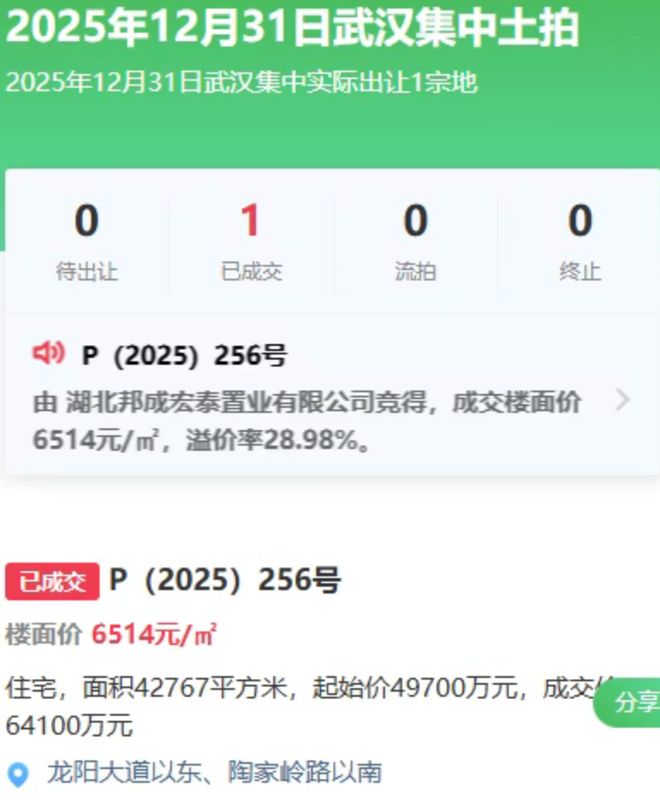
武汉迎2025年土拍收官战:邦泰集团再度高溢价押注豪赌
Zhong Guo Jing Ying Bao· 2025-12-31 08:42
Core Insights - Wuhan's land auction for 2025 concluded with significant transactions, including a notable acquisition by Hubei Bangcheng Hongtai Real Estate Co., Ltd. for a residential plot at a premium price [1][4]. Group 1: Auction Overview - From December 24 to 31, 2025, Wuhan launched 5 rounds of land auctions, resulting in over 40 plots sold and a total transaction amount nearing 250 billion yuan [4]. - On December 24, 19 plots were sold for 46.64 billion yuan; on December 25, 8 core residential plots in the main urban area were sold for 143.53 billion yuan, setting a record for the highest single-day revenue in 2025 [5]. - The auction on December 26 saw 14 plots sold for 34.71 billion yuan, and on December 30, 4 plots were sold for 17.5 billion yuan, culminating in a total of 46 plots sold within a short timeframe [5]. Group 2: Company Profile - Hubei Bangcheng Hongtai Real Estate Co., Ltd. is a subsidiary of Sichuan Bangtai Investment Group Co., Ltd., which holds a 92.59% stake in its parent company [5]. - This is not the first instance of Bangtai Group acquiring land at high premiums in Wuhan; previously, on March 28, 2025, they acquired a plot for 8.42 billion yuan with a premium rate of 34.29% [5]. Group 3: Project Details - The project associated with Wuhan Bangcheng Shengtai Real Estate Co., Ltd. involves a residential area with a planned construction of 8 buildings, totaling 73,400 square meters, aimed at the improvement housing market [7]. - There are concerns regarding the legality of the construction, as the company allegedly began work without the necessary permits, indicating a case of "unauthorized construction" [9].