
Zhong Guo Qing Nian Bao

Search documents
高原作战“探路先锋”
Zhong Guo Qing Nian Bao· 2025-07-22 04:40
Core Viewpoint - The article highlights the exemplary dedication and achievements of Zhang Zanshan, a soldier in the Chinese army, showcasing his commitment to military training and innovation in modern warfare tactics [1][2][3]. Group 1: Achievements and Contributions - Zhang Zanshan has been recognized for his leadership in overcoming technical challenges during military training, successfully demonstrating new artillery techniques that resulted in precise strikes [5][6]. - Under his guidance, the unit has developed a "smart+" unmanned training model, which is now being promoted across the military [7]. - Zhang has led his team to solve over ten training challenges, fostering a new generation of capable soldiers [7]. Group 2: Training and Innovation - Zhang Zanshan has actively engaged in modernizing military training by integrating new combat tactics and equipment, including the adaptation of drones for combat scenarios [6][7]. - He has initiated collaborations with experts from educational institutions and manufacturers to enhance tactical training and innovation [6][7]. - The unit has successfully modified drones for stealth operations, demonstrating a proactive approach to addressing equipment shortages and enhancing operational capabilities [6][7]. Group 3: Personal Journey and Philosophy - Zhang's military journey began 23 years ago, driven by a desire to embody the spirit of the Red Army and tackle challenges head-on [2][3]. - His philosophy emphasizes that a leader's authority is earned through competence, which has guided his continuous pursuit of knowledge in military tactics and equipment [2][3]. - Zhang's relentless training regimen and commitment to excellence have established him as a role model within the military [2][3].
上半年出口增长7.2% 彰显外贸韧性
Zhong Guo Qing Nian Bao· 2025-07-22 02:23
Group 1: Export Performance - In the first half of the year, China's exports exceeded expectations, with private enterprises being the main contributors, showing a 7.0% growth compared to state-owned and foreign-invested enterprises at 3.2% and 4.7% respectively [1][4] - The overall trade volume increased by 2.9% year-on-year, with exports growing by 7.2%, indicating a recovery from the previous month's decline [1][3] - High-tech product exports rose by 9.2%, with significant growth in sectors like high-end machinery and marine engineering equipment, which saw over 20% growth [3] Group 2: Economic Resilience - China's economy demonstrated strong resilience amid external pressures, with macro policies and proactive responses from businesses playing a crucial role [2] - The industrial added value growth rate increased from 5.8% in May to 6.8% in June, marking the highest rate in three months [1] - The net export of goods and services contributed 1.7 percentage points to economic growth, highlighting its importance in the recovery [3] Group 3: Challenges and Outlook - Experts noted that the economic outlook remains uncertain, with potential challenges including export decline, policy effects, real estate adjustments, and low price levels [6] - The supply side indicators are outpacing demand indicators, indicating an imbalance in the economy [6] - Recommendations include enhancing domestic demand, particularly in consumption, and implementing structural reforms to balance supply and demand [6][7] Group 4: Policy Recommendations - Emphasis on ensuring that fiscal policy growth outpaces nominal economic growth, with a focus on effective implementation [7] - The need for a balanced approach in policy design, including growth-oriented, reform-oriented, and stability-oriented measures [8] - Suggestions for increasing support for employment and social security to maintain social stability and harmony [8]
中国地标农产品加速“出海”
Zhong Guo Qing Nian Bao· 2025-07-22 01:42
Core Viewpoint - Geographic indication products are becoming a key to opening international markets, accelerating the global expansion of China's high-quality agricultural products [2][3]. Group 1: Geographic Indication Products - As of the end of 2024, China has recognized a total of 2,544 geographic indication products, with a direct output value exceeding 960 billion yuan [1]. - The core competitiveness of geographic indication products lies in their inherent uniqueness and high added value, which is essential for agricultural exports [3][4]. - The total agricultural trade volume in China increased from 175.6 billion USD in 2012 to 336.1 billion USD in 2023, with an average annual growth rate of 6.7% [3]. Group 2: Export Performance - In the first five months of 2023, China's agricultural exports reached 41.21 billion USD, a year-on-year increase of 3.5% [3]. - Exports to countries involved in the Belt and Road Initiative showed remarkable performance, growing by 8.3% to 20.81 billion USD, accounting for approximately 50.5% of total agricultural exports [4]. Group 3: Market Trends and Opportunities - The increasing public awareness of health and food safety is driving international market interest in geographic indication products [4]. - The signing of the China-EU Geographic Indication Protection and Cooperation Agreement supports the technical standards and brand reputation of geographic indication products [7]. Group 4: Challenges and Strategic Recommendations - Current challenges include low industrial concentration, weak international brand reputation, and an incomplete industrial chain [8][9]. - A comprehensive approach involving local governments, enterprises, and industry associations is necessary to address these challenges and enhance the competitiveness of geographic indication products [9].

一场聚焦AI“前世今生与未来”的对话
Zhong Guo Qing Nian Bao· 2025-07-21 23:14
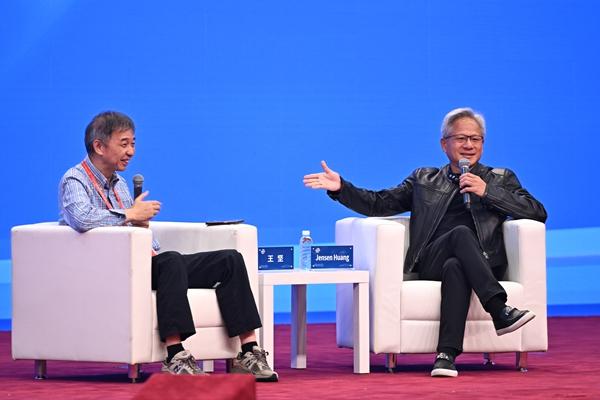
Core Insights - The third China International Supply Chain Promotion Expo featured a significant dialogue on AI, highlighting the importance of AI in modern technology and its rapid evolution [4][5][9] Group 1: AI Development and Trends - Huang Renxun emphasized that AI has transitioned from relying on manual programming to utilizing machine learning on vast datasets, marking a significant technological breakthrough since 2012 [4][5] - The focus of AI technology is shifting towards reasoning intelligence, enabling AI to understand, decompose, and solve problems similarly to humans [4][5] - Huang introduced the concept of Physical AI, which integrates AI capabilities into the physical world, particularly in robotics and autonomous vehicles [5] Group 2: The Role of Computing Power - Wang Jian highlighted that computing power is the foundation of AI, asserting that advancements in computing capabilities have transformed the landscape of AI technology [7] - Huang revealed that NVIDIA's computing power has increased by 100,000 times over the past decade, allowing for more effective machine learning [7] Group 3: Open Source and Collaboration - Huang noted that China leads in the number of AI research papers published globally, with researchers collaborating on open-source projects to advance AI technology [8] - He stressed the importance of open-source engineering, which allows contributions from individuals and organizations, thereby accelerating innovation in the AI ecosystem [8] Group 4: AI's Impact on Science and Society - AI is poised to reshape scientific paradigms, with applications in drug design and climate modeling, showcasing its potential to revolutionize various fields [9] - Huang provided advice to young people, encouraging them to embrace AI and understand its foundational principles, as it presents significant opportunities for future generations [9]


在中国造好物创未来
Zhong Guo Qing Nian Bao· 2025-07-21 23:09
Core Viewpoint - Advanced manufacturing in China is leveraging resilience and innovation to navigate global supply chain challenges and technological revolutions, particularly through the integration of artificial intelligence (AI) [1][2]. Group 1: Resilience in Supply Chains - The concept of "resilient supply chains" is emphasized as essential for advanced manufacturing to withstand economic cycles and global disruptions [2][3]. - Chinese supply chains are characterized by their comprehensive nature, stability, and responsiveness, making them indispensable for companies like Honeywell [3][5]. - Airbus highlights the importance of localizing supply chains in China, stating that many components of their aircraft are manufactured locally, which enhances their operational efficiency [2][3]. Group 2: Innovation and AI Integration - Siemens has introduced 18 new products for the Chinese market, with 16 developed locally in just nine months, showcasing the speed and creativity of "Chinese-style innovation" [1][5]. - AI is recognized as a transformative force in manufacturing, reshaping the industry's core capabilities and driving new productivity [6][8]. - Schneider Electric is integrating AI with automation solutions to meet the growing demands for smart and sustainable manufacturing [6][8]. Group 3: Collaborative Ecosystems - The construction of collaborative ecosystems is vital for enhancing supply chain resilience, with companies focusing on integrating value elements and fostering cooperation among various stakeholders [5][6]. - The concept of "ecological circles" is introduced, where companies act as "weavers" to connect upstream and downstream partners, facilitating dialogue and collaboration [5][6]. - The need for standardization and long-term symbiosis among companies is highlighted as a pathway to achieving mutual benefits in the supply chain [5][6]. Group 4: Future Manufacturing Trends - The shift towards "smart factories" is illustrated by the development of automated systems that reduce reliance on manual labor, enhancing safety and efficiency [7][8]. - Companies like Wacker are investing in digital twin technologies to optimize manufacturing processes before physical implementation, thereby reducing costs and time [7][8]. - The ultimate goal for traditional manufacturers is to evolve into "native digital enterprises," leveraging digital assets to enhance production capabilities [8][9].
跨越科技成果转化的“死亡之谷” 创新链如何让技术奔向生产线
Zhong Guo Qing Nian Bao· 2025-07-21 22:24
Group 1 - The core idea of the news is the emphasis on the importance of collaboration within the industrial chain to drive innovation and the successful transformation of scientific research into marketable products [1][2][3][4][5] - Dalian KOTIAN New Materials Co., Ltd. successfully industrialized a high-strength corrosion-resistant aluminum alloy plate using its proprietary "ceramic aluminum crystal seed engineering preparation technology," which originated from a doctoral thesis [1] - The third China International Supply Chain Promotion Expo showcased the innovation chain, highlighting the full process of technology transfer from basic research to market application, with participation from 14 institutions [2][4] Group 2 - The collaboration between upstream and downstream partners is crucial for the success of companies, as demonstrated by Dalian KOTIAN's products developed in partnership with downstream collaborators [1] - The mechanism established by the Ministry of Industry and Information Technology focuses on engineering and industrialization, forming collaborative application unions that have expanded to 113 directions and involved over 1,600 companies [2] - The Shanghai Technology Exchange has developed a technology pricing mechanism based on industry big data and historical transaction data, enhancing transparency and efficiency in technology transactions [3]
AI焕新工业“潮”
Zhong Guo Qing Nian Bao· 2025-07-21 16:53
Core Insights - The integration of AI technology is becoming a core driver for industrial transformation, with significant opportunities estimated in the trillions [1][2] - The application of 5G technology is accelerating in various sectors, contributing to the digital transformation of industries [3] Group 1: AI and Industrial Transformation - A large-scale industrial model has produced 25,000 industrial models and empowered over 75 million 5G factories, showcasing the extensive application of AI [1] - AI-native applications have surpassed 270 million monthly active users, and devices with AI capabilities have exceeded 1.4 billion [1][2] - The "AI Full Integration" business incubation center was launched, indicating a strategic focus on AI as a foundational element in IT infrastructure [1][2] Group 2: 5G Technology and Manufacturing - 5G technology has been integrated into 86 out of 97 categories of the national economy, facilitating digital transformation across various industries [3] - The industrial internet sector has reached a scale of 1.5 trillion yuan, with over 18,500 industrial 5G projects established nationwide [3] - In the aircraft manufacturing sector, 5G has improved equipment utilization rates to 90% and reduced inspection times by 80% [2] Group 3: Collaborative Innovation and Research - A joint innovation platform was established to focus on areas such as network security, AI, and quantum technology, promoting collaborative research and application [3] - The Fudan University team has developed a new tactile sensor with a high density of sensing units, enhancing robotic capabilities [4]
一汽红旗柳长庆:红旗天工要与年轻一代共同驶向绿色智慧的未来
Zhong Guo Qing Nian Bao· 2025-07-21 09:17
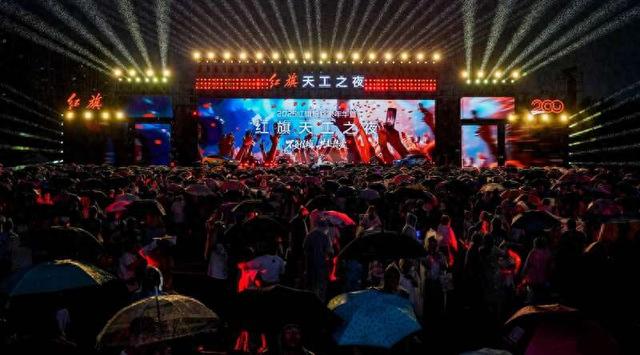
Core Insights - Hongqi brand has become the first Chinese luxury car brand to reach 2 million users, marking a significant milestone in its growth [2][9][12] - The event "2025 Hongqi Fan Family Gala" serves as a platform for the brand to connect with younger consumers, emphasizing its commitment to innovation and safety [4][6][10] Group 1: User Engagement and Market Position - The event highlighted the importance of young consumers, who represent 65.1% of the total user base in the new energy vehicle market [4] - Hongqi's sales from January to June 2023 exceeded 225,000 units, reflecting an 11.8% year-on-year growth, with the Tian Gong family series seeing a 60.9% month-on-month increase in June [6][9] - The brand's focus on safety and quality has established a strong foundation for the success of its new models [6][9] Group 2: Brand Image and Community Engagement - The Tian Gong family has successfully resonated with mainstream young consumers, aligning with their values and preferences [9] - The event featured various activities appealing to young people, such as music festivals and outdoor camping, fostering a vibrant community atmosphere [9][10] - Hongqi has engaged in multiple community initiatives, reinforcing its commitment to social responsibility and connection with consumers [9][12]

“Young·绒——2025中国创新创意设计大赛” 颁奖典礼及成果展举办
Zhong Guo Qing Nian Bao· 2025-07-21 08:46
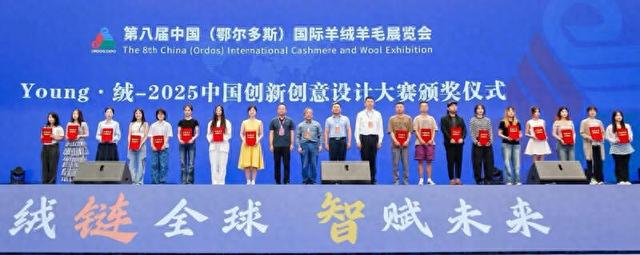
Group 1 - The "Young·Rong - 2025 China Innovation and Creative Design Competition" aims to explore the potential of cashmere fibers and promote the integration of the cashmere industry with modern design and art [3] - The competition received over 1,400 creative and commercially viable submissions across three categories: clothing, home cultural products, and public art, with 73 finalists selected [3] - Tsinghua University’s Academy of Fine Arts is actively promoting the social transformation of its teaching resources and achievements, exploring new models of collaboration between universities and cities, youth and industry, and design and materials [5] Group 2 - The award-winning works showcase how young designers apply innovative concepts, advanced craftsmanship, and environmental considerations to modernize traditional cashmere materials [5] - Tsinghua University plans to continue deepening resource connections with enterprises to facilitate the implementation of award-winning artistic works [5]
超九成受访大学生认同考证关键是内化知识技能
Zhong Guo Qing Nian Bao· 2025-07-21 02:47
Core Viewpoint - The trend of obtaining various certifications among university students is becoming increasingly popular, driven by the need for competitive advantages in the job market and the influence of peers and societal expectations [1][2][3]. Group 1: Certification Trends - A significant majority of university students, 95.52%, have experience in obtaining certifications, indicating a widespread trend [1]. - The survey reveals that 84.09% of respondents pursue general skill certifications, while 63.12% seek certifications related to their field of study or career [2]. - There is a notable increase in the demand for technology-oriented certifications, particularly in AI and big data, driven by industry needs [3]. Group 2: Motivations for Certification - Key motivations for students to pursue certifications include enhancing employment competitiveness (84.65%), addressing knowledge gaps (62.89%), and expanding personal interests (49.93%) [3]. - The recognition and value of certifications in the job market are critical factors influencing students' decisions, with 69.37% considering industry recognition as a primary criterion [6]. Group 3: Practical Application and Balance - Students are encouraged to balance their academic responsibilities with certification pursuits to avoid negative impacts on their core studies [5][6]. - The importance of practical experience is emphasized, with many students recognizing that real-world application of skills is more valuable than merely holding certifications [9][10]. Group 4: Guidance and Support - There is a demand for universities to provide career planning and certification guidance, with 68.82% of respondents expressing the need for such support [10]. - The role of mentors and alumni in providing insights into the real value of certifications is highlighted as essential for students navigating their career paths [11].