Zhong Guo Hua Gong Bao

Search documents
“十四五”行业节能节水降碳成效显著
Zhong Guo Hua Gong Bao· 2025-11-25 02:39
Core Insights - The petroleum and chemical industry is actively promoting energy conservation and water-saving technologies, achieving significant results in energy efficiency and low-carbon development since the start of the 14th Five-Year Plan [2][3] Group 1: Energy Efficiency - The industry has steadily improved energy efficiency levels, focusing on technological upgrades and optimizing key installations [3] - The "Energy Efficiency Leader" program has expanded its coverage from 10 key products in 2011 to 24 currently, serving as a benchmark for energy efficiency [3] Group 2: Water Conservation - The water consumption per unit of industrial added value has continuously decreased, with a notable increase in water resource reuse rates [3] - A number of enterprises have established tiered water resource utilization systems and promoted advanced technologies for water recycling, contributing to the industry's water-saving transformation [3] Group 3: Carbon Reduction - The industry is actively implementing national "dual carbon" policies and accelerating the transition to green and low-carbon practices [3] - The energy conservation and water-saving standards system is being continuously improved, with 37 key product energy consumption limits and various water-saving standards being established [3] Group 4: Best Practices and Standards - Companies such as Yunnan Tianan Chemical and Xinjiang Zhongtai Mining have shared their innovative practices in energy conservation and green manufacturing [4] - Experts from various associations provided detailed interpretations of mandatory national standards for energy consumption limits in sectors like fertilizers and refining, aiding companies in compliance and benchmarking [4]
专家为行业“十五五”绿色发展划重点
Zhong Guo Hua Gong Bao· 2025-11-25 02:30
Core Insights - The "14th Five-Year Plan" period is crucial for achieving carbon peak and transitioning from energy consumption control to carbon emission control in China's oil and chemical industry [1][2] - The industry is expected to accelerate the formation of a green development model focused on energy conservation and low carbon emissions [2] Group 1: Energy Conservation and Carbon Reduction Strategies - The National Development and Reform Commission emphasizes the need for comprehensive planning, responsibility evaluation, and management of key energy-consuming sectors to enhance energy efficiency [1] - The industry is encouraged to establish a benchmark for energy efficiency, aiming for a culture of "learning from and surpassing advanced standards" [2] - Key enterprises are targeted to achieve a water reuse rate of over 95% through strict water quota management and the promotion of advanced water-saving technologies [2] Group 2: Management and Standards Improvement - There is a call for the improvement of management systems to enhance data management related to energy, water, and carbon emissions [2] - The establishment of a comprehensive green low-carbon standard system is essential, including the acceleration of carbon accounting and product carbon footprint standards [2] - Constructive suggestions were made during discussions on policy implementation, technological innovation, and mechanism improvement for the industry's green transformation [2]
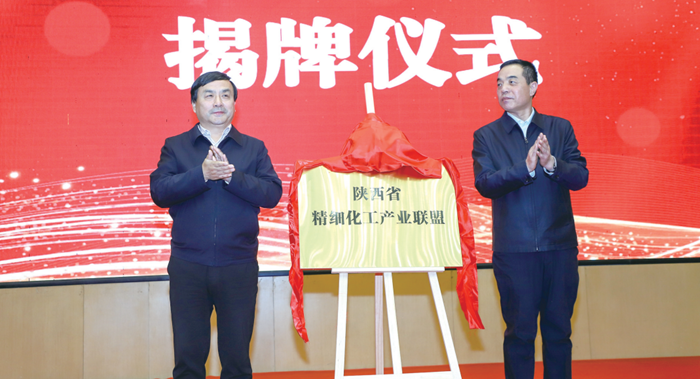
陕西省精细化工产业联盟成立
Zhong Guo Hua Gong Bao· 2025-11-25 02:30
Core Viewpoint - The establishment of the Shaanxi Fine Chemical Industry Alliance aims to promote technological innovation, resource sharing, and industry transformation towards high-end, green, and intelligent development in the fine chemical sector in Shaanxi province [1][2]. Group 1: Alliance Formation - The Shaanxi Fine Chemical Industry Alliance was founded in Xi'an, with Zhang Ligang as the chairman and ten vice-chairmen including Fan Daidi from Northwest University [1]. - The alliance is an open, non-profit organization initiated by the Shaanxi Economic Federation and the Shaanxi Petroleum and Chemical Industry Association, involving local chemical enterprises, universities, research institutes, and parks [1]. Group 2: Objectives and Strategies - The alliance focuses on innovation-driven development, leveraging the role of enterprises and collaborating with universities to address key technological challenges and promote seamless integration of innovation and industry chains [2]. - It aims to establish a cooperative system for information sharing, resource coordination, and benefit sharing among member units, fostering a collaborative industrial ecosystem [2]. - The alliance will enhance standard-setting to improve market competitiveness and influence of regional fine chemical products, while promoting low-carbon and circular economy technologies [2].

动力电池:生态协同方能行稳致远
Zhong Guo Hua Gong Bao· 2025-11-25 02:12
Core Insights - The 10th International Summit on Power Battery Applications (CBIS 2025) held in Shanghai focused on the theme of "The New Era of Global Supply Chain Regionalization," attracting major industry players like Yiwei Lithium Energy, Ganfeng Lithium, and others [1] - Innovation is identified as the core driving force for the development of the new energy battery industry, with ongoing breakthroughs in solid-state battery technology and a focus on addressing resource constraints, safety challenges, and cost pressures [2] Industry Challenges - The power battery industry faces multiple challenges including performance, cost, safety, and environmental concerns [2] - The high lifecycle cost of power batteries in electric vehicles is a significant issue, necessitating continuous cost reduction for healthy industry development [2] - The ultimate safety concerns, particularly regarding thermal runaway incidents, are critical pain points that need to be addressed [2] Solid-State Battery Development - The release of the "2025 China Solid-State Battery Industry Development White Paper" indicates a stable growth trend in global solid-state battery shipments, projected to reach 6.8 GWh in 2024, a year-on-year increase of over 280% [3] - Breakthroughs in material technology are essential for the development of solid-state batteries, with significant advancements in sulfide electrolyte materials already achieved [3] - Ganfeng Lithium has established pilot lines for solid-state batteries, targeting energy densities above 450 Wh for applications in high-end sectors [3] Manufacturing and Ecosystem Collaboration - The transition of solid-state batteries from laboratory to production is challenging, requiring stable systems and advanced manufacturing processes [4] - Experts emphasize the importance of ecological collaboration alongside technological breakthroughs, as the industry evolves from single automotive applications to multi-scenario energy carriers [5] - Continuous micro-innovations in safety, cost reduction, and efficiency improvements are deemed more critical than the hype surrounding solid-state batteries [5] Global Market Position - Chinese battery companies have transitioned from being followers to strong competitors in the global market, with a shift in focus from cost and speed to product quality, supply chain resilience, and carbon footprint management [6] - The overall capacity of the new energy battery industry is increasing, leading downstream customers to prioritize cost and quality, making lean manufacturing a focal point [6]
俄炼厂遭袭 中国成品油出口与硫黄市场迎机遇
Zhong Guo Hua Gong Bao· 2025-11-24 12:06
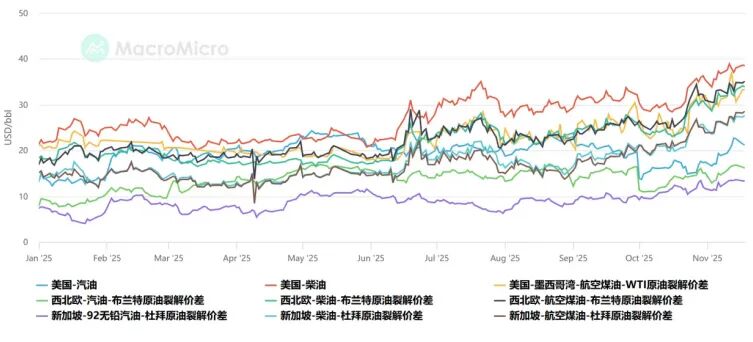
Core Viewpoint - The ongoing drone attacks by Ukraine on Russian energy infrastructure have significantly impacted Russia's refining capacity, leading to a surge in global oil product prices and creating new opportunities for China's oil product exports and sulfur industry [1][4][10]. Group 1: Impact on Russian Refining Capacity - Since November 2025, Ukraine has conducted multiple drone strikes targeting key Russian refineries, including Ryazan, Samara, and Volgograd, resulting in a 6% decrease in overall Russian refining output [1]. - The Ryazan refinery, one of Russia's four major refineries with an annual processing capacity of 13.1 million tons (340,000 barrels per day), suffered damage to its distillation units and fuel storage tanks [1]. - The Volgograd refinery, with an annual capacity of 15.7 million tons, has faced multiple shutdowns due to these attacks, further exacerbating the decline in Russian refining capacity [1]. Group 2: Global Oil Product Price Surge - The reduction in Russian refining capacity has led to a significant increase in overseas oil product crack spreads, with the 3-2-1 crack spread reaching $32.13 per barrel, the highest level since March 2024, reflecting a more than 30% increase from October's average [2]. - Diesel prices have seen the most substantial rise among oil products, indicating a high-profit cycle for the refining industry [2]. Group 3: Sulfur Market Dynamics - The attacks have also disrupted sulfur production, as Russia is the second-largest sulfur producer globally, accounting for 15%-20% of the world's supply [4]. - Domestic sulfur prices have surged, with the port spot index reaching 3,990 yuan per ton in late November, marking an increase of over 1,000 yuan per ton in just over a month and a rise of approximately 2,500 yuan per ton since the beginning of the year [4]. - Forecasts suggest that sulfur prices may exceed 5,000 yuan per ton in 2026 due to a tight supply-demand balance [4]. Group 4: Opportunities for Chinese Companies - The international supply gap has created a favorable window for China's oil product exports, with a total export quota of 40.195 million tons for 2025 [7]. - Major state-owned enterprises dominate China's oil product export market, with Sinopec and PetroChina holding significant shares [7]. - The sulfur industry in China is experiencing a dual benefit of rising prices and increasing demand, particularly due to the growth in the new energy sector and solid-state battery technology [7][8]. Group 5: Market Position of Leading Companies - China's total sulfur production capacity is approximately 16.8 million tons per year, with Sinopec, PetroChina, and Rongsheng Petrochemical being the top three producers, collectively holding over 70% of the market share [8][10]. - A price increase of 100 yuan in sulfur can lead to significant profit gains for leading companies, indicating a positive outlook for profitability in the current high-demand environment [8].



千亿级化工大并购,即将完成!
Zhong Guo Hua Gong Bao· 2025-11-24 07:11
Group 1 - The acquisition of Covestro by XRG has received final regulatory approval from the German Federal Ministry of Economics and Energy, with the transaction expected to close in the coming days [1] - The acquisition deal is valued at approximately €14.7 billion, which includes €11.7 billion for the shares and €3 billion in debt, alongside a capital injection of €1.17 billion from ADX [1] - Covestro aims to enhance its focus on circular economy goals and digital transformation through advanced technologies such as artificial intelligence and quantum computing, supported by XRG as a long-term strategic shareholder [1] Group 2 - Covestro will maintain its operational independence under the leadership of CEO Dr. Markus Steilemann, with the existing company structure and governance standards remaining intact post-transaction [2] - XRG, an international investment company valued at $150 billion, focuses on scalable energy solutions for natural gas and chemicals, and is fully owned by the Abu Dhabi National Oil Company (ADNOC) [2] - Covestro, a chemical producer based in Germany, was spun off from Bayer Group in 2015 and is projected to achieve sales of €14.2 billion in 2024, operating 46 production sites globally with approximately 17,500 employees [2]
低温热耦合甲醇精馏装置通过考核
Zhong Guo Hua Gong Bao· 2025-11-24 03:33
Core Viewpoint - The low-temperature heat-coupled methanol distillation technology developed by Longyu Coal Chemical Company has demonstrated significant savings in low-pressure steam and circulating water, achieving a steam consumption of less than 0.2 tons of steam per ton of refined methanol during a 72-hour continuous operation assessment [2][3]. Group 1: Technology and Innovation - The low-temperature heat-coupled methanol distillation technology is innovative and has been recognized for its effectiveness in reducing resource consumption [2][3]. - The technology was developed in collaboration with Guangdong University of Technology and Tianjin Huasail Heat Transfer Equipment Co., Ltd., and is applicable in various fields such as coal chemical and petrochemical industries [2][3]. - The research team modified the connection mode of the pressurized and atmospheric towers from series to parallel, incorporating a decompression tower and adjusting process parameters to reduce steam consumption [2][3]. Group 2: Operational Efficiency - The methanol distillation unit achieved a load of 105.5%, with steam consumption reduced from 1.08 tons to below 0.2 tons per ton of refined methanol, saving approximately 60 tons of low-pressure steam per hour [3]. - Circulating water consumption was reduced by about 5,000 tons per hour, with specific reductions of 3,000 tons per hour in the acetic acid unit and 2,000 tons per hour in steam condensate cooling [3]. - The refined methanol product's ethanol content was reduced to below 50 ppm, with an annualized production of over 100,000 tons of ultra-refined methanol [3]. Group 3: Future Directions - Longyu Coal Chemical Company aims to focus on high-end, green, and low-carbon development, emphasizing the research and application of new technologies, processes, and equipment to enhance the company's growth potential [4].
新方法降服“油老虎”
Zhong Guo Hua Gong Bao· 2025-11-24 03:33
Core Viewpoint - The company successfully addressed a significant operational challenge, referred to as the "oil tiger," by implementing innovative solutions that improved wastewater management and enhanced product quality [1][2]. Group 1: Operational Challenges - The "oil tiger" posed a serious issue during the cold coke discharge phase, leading to the generation of large amounts of wastewater and severe oil-water emulsification, which traditional methods could not effectively manage [1]. - The company faced difficulties in maintaining coke quality due to the persistent presence of oil in the coke pool, necessitating manual oil removal [1]. Group 2: Innovative Solutions - The team developed a new approach by adding a diesel washing line to the gas phase of the discharge tower, using diesel as an extraction agent to remove oil from emulsified water [1]. - The precise injection of diesel was critical, requiring careful calibration to avoid waste while ensuring effective oil removal [1]. Group 3: Team Collaboration and Results - The team combined the experience of senior employees with the analytical skills of younger staff to refine their methods, transforming a traditional approach into a more precise and effective process [2]. - As a result of these efforts, the wastewater quality improved significantly, with the chemical oxygen demand (COD) stabilizing and monthly wastewater discharge volumes decreasing substantially [2].
斯伯乐MTO水洗水用分散剂获专利
Zhong Guo Hua Gong Bao· 2025-11-24 03:33
Core Viewpoint - The Beijing Sberle Scientific Research Institute, in collaboration with Shenyang University of Chemical Technology and Beijing University of Chemical Technology, has received national invention patent authorization for a dispersant used in the methanol-to-olefins (MTO) process, aimed at addressing scaling issues in water washing towers [1] Group 1 - The multifunctional composite dispersant is designed to solve scaling problems in water washing towers [1] - The dispersant is safe, environmentally friendly, and easily biodegradable, with good compatibility with system materials [1] - It meets the operational requirements for MTO units, ensuring safe, stable, long-term, and full-load operation [1] Group 2 - The dispersant effectively inhibits scaling of catalysts with polymethylbenzene substances in the water washing tower, preventing tray blockage [1] - It improves the quality of washing water and enhances the solubility of polymethylbenzene substances in water [1] - The dispersant prevents the aggregation and deposition of various suspended substances and heavy oil components in water, increasing the dirt-carrying capacity of washing water and has a stripping and dispersing effect on already formed dirt [1]
仪征化纤两项目获江苏科创协会奖
Zhong Guo Hua Gong Bao· 2025-11-24 03:33
Core Viewpoint - Yizheng Chemical Fiber has received two awards for its technological innovations in PBT and biodegradable polyester, highlighting its contributions to reducing plastic pollution and promoting green agricultural development [1] Group 1: Technological Innovations - The project on PBT and biodegradable high-performance polyester plays a significant role in reducing plastic pollution and advancing green agricultural development [1] - The PBT-based products were showcased at the Beijing Winter Olympics in 2022, supporting the "Green Olympics" initiative [1] - In 2024, the promotion of biodegradable PBT products is set to expand in regions such as Inner Mongolia and Liaoning [1] Group 2: Product Applications - The development of aramid fiber blended flame-retardant and anti-static clothing represents a new application of aramid fibers in protective gear [1] - The flame-retardant clothing, branded as Yites, has achieved industrial production and is being sold to multiple enterprises, noted for its excellent protection and comfort [1]