Qian Zhan Wang

Search documents
【最全】2025年果汁行业上市公司全方位对比(附业务布局汇总、业绩对比、业务规划等)
Qian Zhan Wang· 2025-09-02 06:13
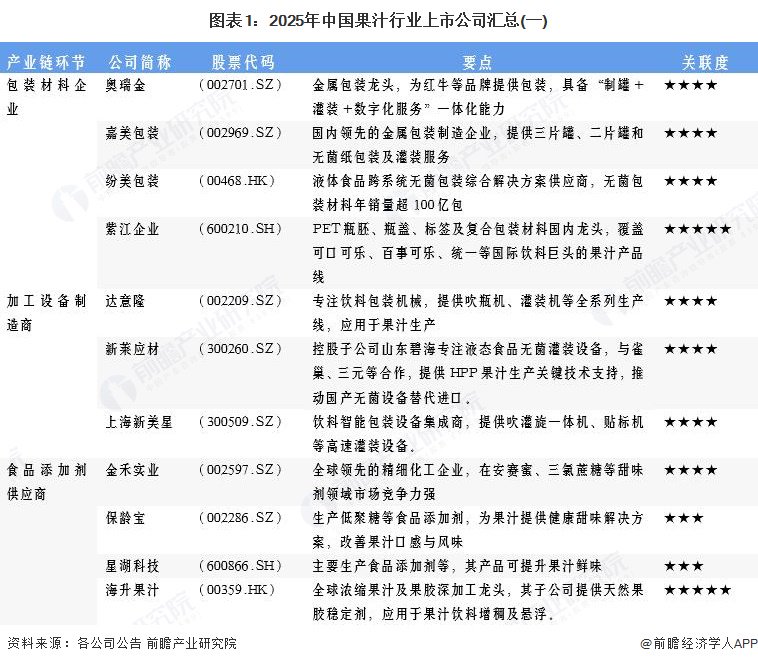
Group 1 - The juice industry is a significant direction for consumption upgrade in China's food and beverage sector, driving the integration of technologies such as deep processing of fruits and vegetables, cold chain logistics, and smart packaging [2][8] - Major listed companies in the juice industry include Nongfu Spring, Master Kong, and Uni-President, with a focus on concentrated juice, beverage OEM, and packaging [2][5] - The highest revenue in the juice production and processing segment for 2024 is expected to be from Master Kong, reaching 80.651 billion yuan [5][12] Group 2 - The juice industry listed companies are primarily distributed in Taiwan and Guangdong, with notable companies like Wei Chuan and Uni-President in Taiwan, and Aorijin and Jiamei Packaging in Guangdong [8][11] - The company with the most registered capital is Alibaba, while Wei Chuan is the oldest, established in 1953 [11][12] - Uni-President has the highest number of bidding information, totaling 405 entries [11][14] Group 3 - Nongfu Spring, Uni-President, and Master Kong have the broadest business layouts, covering various market levels and product types, while other companies focus on specific segments [16][20] - Nongfu Spring plans to expand its high-end NFC juice capacity and enhance smart management of raw material bases, aiming to become a global benchmark for healthy juice [20] - Master Kong aims to deepen market penetration in lower-tier cities and explore cross-category innovations between juice and tea beverages [20]




预见2025:《2025年中国潮玩盲盒行业全景图谱》(附市场现状和发展趋势等)
Qian Zhan Wang· 2025-09-02 03:39
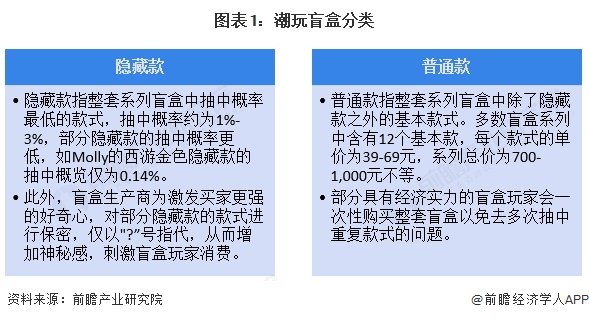
Core Viewpoint - The Chinese潮玩盲盒 (trendy blind box) industry is experiencing rapid growth, driven by a young consumer base and diverse product offerings, with a projected market size of approximately 280 billion yuan by 2024 [25][36]. Industry Overview -潮玩盲盒 are defined as designer original cartoon figures and artistic dolls, featuring various styles and often linked to popular IPs, enhancing their appeal [2][5]. - The潮玩盲盒 industry is segmented into ordinary and hidden款 (hidden versions) [3]. Industry Chain Analysis - The潮玩盲盒 industry chain includes upstream (raw materials, production equipment, packaging, and IP), midstream (design and manufacturing), and downstream (various sales channels) [5][7]. - Key players in the upstream include suppliers of raw materials like金发科技 and packaging suppliers like万华化学, while midstream players include泡泡玛特 and 52TOYS [7]. Industry Development History - The潮玩盲盒 industry has evolved through three stages: the萌芽阶段 (nascent stage),缓慢发展阶段 (slow development stage), and快速发展阶段 (rapid development stage) [10][12]. - The rapid development phase began in 2015, with泡泡玛特 focusing on IP creation and blind box production, leading to increased popularity [12]. Industry Policy Background - The current policy landscape emphasizes both regulation and innovation, with guidelines established to protect consumers and promote cultural integration [13]. - A notable initiative includes a 10 billion yuan fund to support潮玩 IP's global expansion, aiming for over 30% of revenue from overseas by 2030 [13]. Current Industry Status - Major潮玩盲盒 brands include泡泡玛特, 52TOYS, and TOP TOY, each with unique IP strategies [16][18]. - The consumer demographic is predominantly young, with 75% of buyers being female and the largest age group being 18-24 years old [22]. Market Size - The潮玩盲盒 market was valued at approximately 97 billion yuan in 2021, with projections indicating it could reach around 280 billion yuan by 2024 [25]. Competitive Landscape - The潮玩盲盒 industry is characterized by a tiered structure, with泡泡玛特 leading the market, followed by名创优品 and other companies like奥飞娱乐 and高乐股份 [26][28]. - The majority of潮玩盲盒 companies are concentrated in Guangdong, Hainan, and Shandong provinces [29]. Future Development Trends - The潮玩盲盒 industry is expected to see deeper market penetration, ecological operation models, and technological innovations such as AI and AR [31][36]. - The market is projected to grow to 576 billion yuan by 2030, with a compound annual growth rate of approximately 12.5% [36].



前瞻全球产业早报:美海关开始征收小额包裹关税
Qian Zhan Wang· 2025-09-01 14:55
Group 1: State-Owned Enterprises Performance - In the first seven months of the year, state-owned enterprises reported total profits of 24,786.4 billion yuan, a year-on-year decrease of 3.3% [2] - The total operating revenue for state-owned enterprises was 473,110.9 billion yuan, remaining flat compared to the same period last year [2] Group 2: Support for Artificial Intelligence Development - The National Development and Reform Commission announced multiple measures to support the development of artificial intelligence, including the issuance of computing power vouchers to reduce R&D costs for innovation entities [3] - The initiative aims to integrate hard investments and soft construction to promote AI development [3] Group 3: Brain-Computer Interface Development - Various provinces are drafting implementation plans to promote the development of brain-computer interfaces, with Zhejiang province focusing on creating an industrial ecosystem centered around this technology [4] - The plans include building a key enterprise database and supporting specialized development in the brain-computer interface sector [4] Group 4: Financial Performance of Companies - Huawei reported a revenue of 427 billion yuan for the first half of the year, marking a year-on-year increase of 3.94%, while net profit fell by 32% to 37.1 billion yuan [6] - Dell's second-quarter revenue reached 29.8 billion USD, a 19% year-on-year increase, with AI solutions shipments valued at 10 billion USD in the first half of the fiscal year [13] Group 5: Market Developments - The Apple Store officially launched its flagship store on Douyin, allowing users to purchase Apple products and accessories directly [7] - Pinduoduo is preparing to produce its own short dramas and is actively recruiting talent for this initiative [8] Group 6: Regulatory Changes - Starting August 29, the U.S. Customs began imposing tariffs on small packages valued at 800 USD and below, affecting over 4 million packages daily and impacting global postal networks and cross-border e-commerce [9] - Former President Trump threatened to impose significant tariffs on countries that implement digital taxes, following discussions with Meta Platforms CEO Mark Zuckerberg regarding this issue [10] Group 7: Investment and Financing - Commonwealth Fusion Systems secured 863 million USD in funding, led by Nvidia and Google, bringing its total financing to approximately 3 billion USD since its inception [11] - Several companies, including Hefei Tianyao and Lingmou Intelligent, announced successful funding rounds, indicating a growing interest in semiconductor materials and AI technologies [14]






【最全】2025年中国功能性护肤品行业上市公司全方位对比(附业务布局、业绩对比、业务规划等)
Qian Zhan Wang· 2025-08-31 02:10
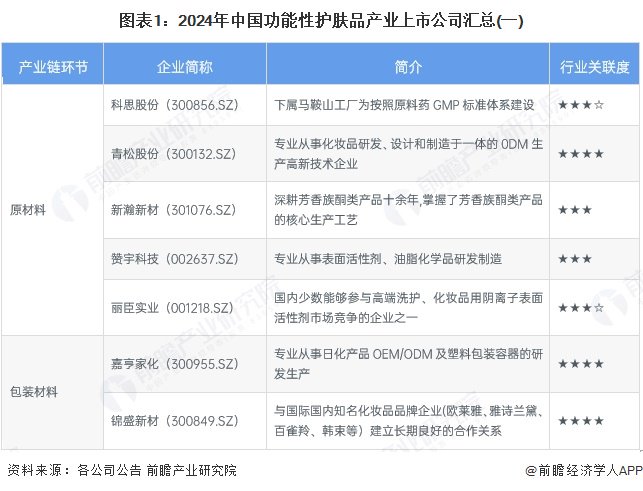
Core Viewpoint - The functional skincare industry in China is experiencing a rise of domestic brands, with various listed companies involved across the supply chain, including raw materials, packaging, and sales channels [1][2]. Group 1: Industry Overview - Functional skincare products are designed to address specific skin issues and possess certain pharmacological effects, indicating a growing market for targeted skincare solutions [1]. - The industry is characterized by a diverse range of companies, from raw material suppliers to online and offline sales channels [2]. Group 2: Company Distribution - Key companies in the raw materials segment include Kesheng Co., Qingsong Co., and Xinhang New Materials, while packaging material companies include Jiaheng Household and Jinsong New Materials [2][3]. - Major players in the functional skincare segment include Betaini, Huaxi Biological, Shanghai Jahwa, and Chuang'er Biological, with significant online sales channels represented by Alibaba, JD.com, and Pinduoduo [2][4]. Group 3: Financial Performance - Betaini leads the industry with a revenue of 57.36 billion yuan in 2024, followed by Huaxi Biological with 53.71 billion yuan and Shanghai Jahwa with 56.79 billion yuan [6][18]. - The gross profit margins for most companies in the functional skincare sector range from 70% to 85%, with Juzhi Biological achieving the highest margin at 82.09% [17][18]. Group 4: Business Strategies - Companies are focusing on R&D innovation, brand enhancement, and channel optimization to capture more market share and adapt to competitive pressures [19]. - Betaini plans to enhance its product offerings in the baby skincare segment and expand its online and offline presence, while Huaxi Biological is shifting towards anti-aging strategies and enhancing its technological capabilities [20][19]. Group 5: Market Positioning - Betaini has a dominant market position with 99.49% of its business in functional skincare, primarily targeting the Chinese market [16]. - Huaxi Biological and Shanghai Jahwa have also established strong brand identities with competitive product lines, while Chuang'er Biological focuses on collagen products [14][16].


预见2025:《2025年中国光电芯片行业全景图谱》(附市场现状、竞争格局和发展趋势等)
Qian Zhan Wang· 2025-08-30 16:39
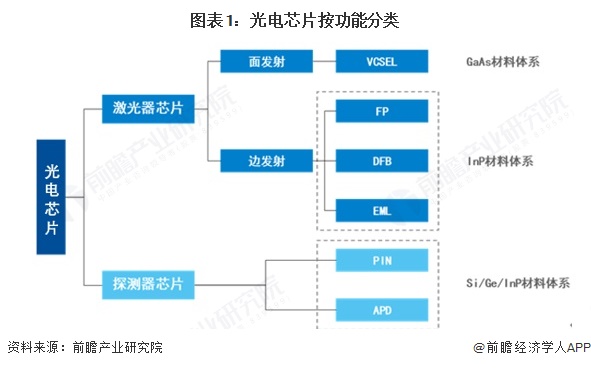
Industry Overview - The optical chip industry, also known as photonic chips, is categorized into laser chips and detector chips, with laser chips converting electrical signals to optical signals and detector chips converting optical signals back to electrical signals [1][4] - The industry chain consists of upstream material and equipment suppliers, midstream chip design and production, and downstream optical device manufacturers and end customers [1][4] Industry Development Stages - The development of China's optical chip industry has gone through three stages: initial exploration from the late 1980s to 2000, technology accumulation from 2000 to 2017, and rapid breakthroughs since 2017 with accelerated domestic substitution [8][10] Policy Background - National policies are promoting the development of the optical chip industry through technology research, standard establishment, and ecosystem construction, aiming to enhance competitiveness and application levels across various fields [10][11] Investment Trends - Investment activity in the optical chip industry has seen a decline, with 50 financing events in 2022, but only 15 events with approximately 1.7 billion yuan in funding from early 2025 to July 2025 [13] Market Size and Growth - The market size of China's optical chip industry is projected to reach approximately 15.2 billion yuan in 2024, with a compound annual growth rate of about 10% from 2020 to 2024 [14] Domestic Production Levels - The domestic production levels of optical chips vary by speed and type, with higher levels of localization in lower-speed chips, while high-speed chips still show significant reliance on imports [15][19] Application Areas - The primary application of optical chips is in telecommunications, where they serve as core components in fiber optic communication systems [20] Competitive Landscape - High-end optical chip products are heavily reliant on foreign suppliers, with leading companies in the high-speed optical chip market being from Europe, the US, and Japan, while Chinese companies dominate the mid-to-low-speed chip market [22] Regional Distribution - The midstream optical chip manufacturing industry is concentrated in central and southeastern coastal regions of China, with Hubei province having the highest concentration of companies [24] Future Market Predictions - The optical chip manufacturing industry is expected to approach a market size of 35 billion yuan by 2030, driven by significant demand in telecommunications, consumer electronics, and automotive sectors [27] Industry Trends - The industry is witnessing trends such as expanding application scenarios into smart computing, autonomous driving, and medical sensing, along with a focus on high integration and energy efficiency in technology [30]



【干货】连接器产业链全景梳理及区域热力地图
Qian Zhan Wang· 2025-08-30 07:08
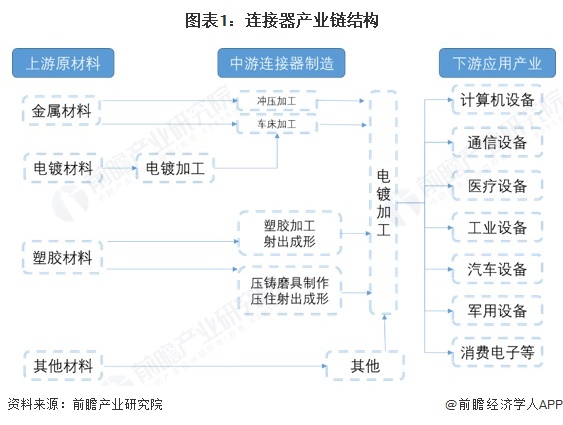
Core Insights - The connector manufacturing industry is crucial in the electronics sector, with a diverse range of applications across various fields, including automotive, telecommunications, and AI data centers [1][10]. Industry Overview - The connector industry is divided into three segments: upstream (raw materials), midstream (connector manufacturing), and downstream (end-user applications) [1]. - The upstream market includes metal and non-metal raw materials, while the midstream is dominated by manufacturing companies that process these materials into finished connectors [1]. Market Dynamics - The connector manufacturing sector is primarily concentrated in the eastern and southeastern coastal regions of China, with Guangdong province hosting the highest number of midstream enterprises [5]. - In 2024, the overall production and sales rate for listed companies in the connector sector is around 100%, with some companies like Ruikeda and Dingtong Technology reporting rates below 90% [8]. Company Performance - Companies such as AVIC Optoelectronics and Aerospace Electric have reported high gross profit margins of 36.54% and 38.68%, respectively [8]. - AVIC Optoelectronics produced 78,793,000 connectors and sold 80,540,000, achieving a production-to-sales ratio of 102.22% [9]. - Ruikeda's revenue surged by 55.29% in 2024, reaching 2.415 billion yuan, with 90.2% of its income coming from new energy vehicle connectors [11]. Recent Developments - Lixun Precision's automotive business revenue grew by 48.69% to 13.758 billion yuan in 2024, driven by acquisitions and partnerships with major automotive manufacturers [11]. - Changying Precision's revenue from new energy business reached 5.214 billion yuan, a 47.29% increase, with significant growth in the consumer electronics sector [11]. - Aerospace Electric's revenue decreased by 19.08% due to a slowdown in defense demand, but it improved its gross margin by 11.89 percentage points to 47.52% [11].



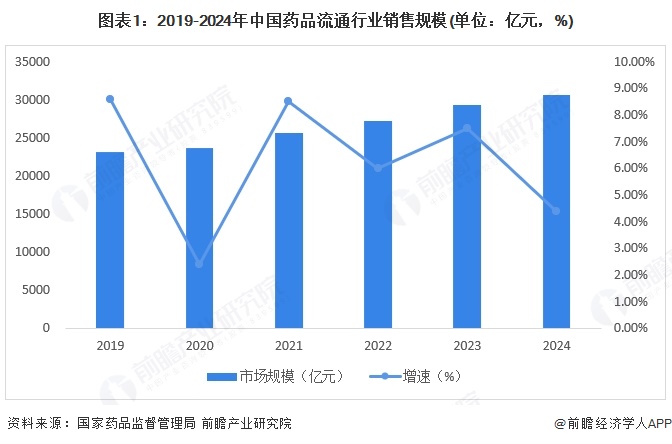
2025年中国医药流通行业销售现状 医药流通销售收入超过3万亿元,同比增长4%
Qian Zhan Wang· 2025-08-29 09:05
Core Insights - The pharmaceutical distribution market in China has shown steady growth, with a total sales scale exceeding 30 trillion yuan from 2019 to 2023, reflecting a year-on-year increase of 7.5% after excluding non-comparable factors [1][3]. Market Structure - The wholesale market dominates the pharmaceutical distribution sector, accounting for approximately 78% of the market share, while the retail market holds a 22% share [3]. Revenue Growth - The revenue of direct reporting pharmaceutical distribution enterprises reached 22,362 billion yuan in 2023, marking an 8% year-on-year increase after excluding non-comparable factors [5]. Accounts Receivable - The average accounts receivable days for pharmaceutical wholesale enterprises exceeded 150 days in 2023, with a reported average of 152 days, which is an increase of 2 days compared to 2022 [7]. Product Composition - Western medicine is the primary category in pharmaceutical sales, representing 68.7% of total sales, followed by traditional Chinese medicine at 15.5% and Chinese medicinal materials at 2.4%, collectively accounting for 86.6% of the market [9].






6G里程碑式突破!我国科学家研发超宽带光电融合集成系统,首次实现全频段高速无线通信【附6G行业市场分析】
Qian Zhan Wang· 2025-08-29 06:56
Core Viewpoint - The development of 6G technology is becoming a focal point in global technological competition, with significant advancements made by Chinese researchers in the field of wireless communication, particularly through the development of a broadband optoelectronic integrated system that supports high-speed wireless communication across a wide frequency range [2][11]. Group 1: Technological Advancements - Chinese scientists have achieved a breakthrough in 6G communication with a system that allows seamless reconfiguration across a frequency range of 0.5GHz to 115GHz, surpassing traditional electronic hardware limitations [2]. - The new system can dynamically switch frequency bands to avoid interference and supports wireless transmission rates of up to 100Gbps, capable of transmitting 1000 8K ultra-high-definition videos simultaneously [2][11]. - 6G technology is expected to enhance key performance indicators such as peak rate, user experience rate, and latency by at least ten times compared to 5G [6][8]. Group 2: Comparative Metrics - Key metrics for 5G and 6G include: - Peak Rate: 5G (10-20Gbps) vs. 6G (100Gbps-1Tbps) - User Experience Rate: 5G (0.1Gbps) vs. 6G (1Gbps) - Latency: 5G (1ms) vs. 6G (0.1ms) - Traffic Capacity: 5G (10Tbps/sq km) vs. 6G (100-10000Tbps/sq km) - Connection Density: 5G (1 million/sq km) vs. 6G (up to 100 million/sq km) [8]. Group 3: Strategic Importance - China has been at the forefront of 6G research since 2018, with government initiatives and strategic plans emphasizing the importance of developing 6G technology as a national priority [10]. - The establishment of various working groups and the inclusion of 6G in national development plans highlight the commitment to advancing this technology [10][11]. - The first small-scale 6G trial network was launched by China Mobile in July 2025, achieving data transmission speeds of 280Gbps, which is 14 times faster than the theoretical peak of 5G [11].


最高降20基点!多家中小银行宣布下调人民币存款利率,专家:未来长期下行趋势或持续【附银行业存款业务分析】
Qian Zhan Wang· 2025-08-29 06:54
Core Viewpoint - Several small and medium-sized banks in China have announced a reduction in RMB deposit rates, with cuts ranging from 10 to 20 basis points [2][3]. Group 1: Deposit Rate Adjustments - Jiangsu Bank and Nanjing Bank have adjusted their three-year fixed deposit rates, with Nanjing Bank's rate decreasing from 1.85% to 1.75% [3]. - Jilin Longtan Huayi Village Bank has lowered its current deposit rate from 0.2% to 0.15% and reduced fixed deposit rates across various terms by 10 to 20 basis points [3]. - Shandong Gaomi Huimin Village Bank has also cut its fixed deposit rates by 10 basis points for 6-month, 1-year, and 2-year terms, and by 20 basis points for 3-year and 5-year terms [3]. - Other banks, including Zhejiang Shengzhou Ruifeng Village Bank and Jilin Baishan Hunjing Hengtai Village Bank, have similarly reduced deposit rates by 10 to 20 basis points [3]. Group 2: Banking Sector Performance - As of the end of Q2, China's commercial banks reported a net interest margin of 1.42%, a decrease of 0.01 percentage points from the end of Q1, indicating pressure on bank profitability [3]. - The reduction in deposit rates is a strategy for banks to cope with the declining net interest margin, allowing them to maintain competitiveness in short-term deposits while lowering long-term funding costs [3]. Group 3: Historical Context and Market Trends - In May, six major banks collectively lowered deposit rates by up to 25 basis points, setting a benchmark for market rates [4]. - From 2017 to 2022, the deposit scale of major Chinese banks grew from 79.31 trillion yuan to 119.24 trillion yuan, with a compound annual growth rate of 8.50% [4]. - Since 1994, China's benchmark deposit rate has gradually decreased, and while the central bank's rate has not changed in seven years, market rates have continued to decline, significantly reducing actual deposit yields [6]. Group 4: Macroeconomic Effects - The reduction in deposit rates has a dual macroeconomic effect: it may stimulate consumer spending while lowering corporate financing costs [7]. - For instance, with a three-year fixed deposit rate of 1.75%, a deposit of 100,000 yuan would yield 100 yuan less annually compared to before the adjustment, potentially translating into increased consumer spending [7]. - The shift of funds towards equity markets and the real economy could facilitate structural economic transformation and upgrading [7].

【行业深度】洞察2025:中国中硼硅玻璃行业竞争格局及市场份额(附市场集中度、企业竞争力等)
Qian Zhan Wang· 2025-08-28 08:12
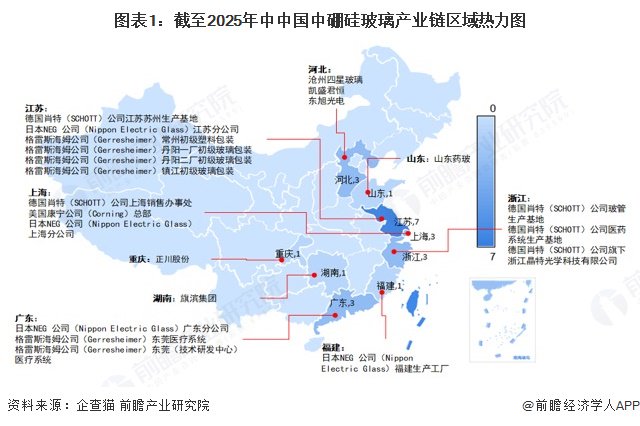
Group 1 - The core viewpoint of the article highlights the competitive landscape of the Chinese borosilicate glass industry, focusing on regional distribution and strategic clusters of competitors [1][4] - The industry is primarily concentrated in the eastern coastal regions of China, particularly in Jiangsu Province, indicating a regional competitive advantage [1] - The competitive landscape categorizes companies into four strategic clusters: leaders, challengers, followers, and niche players, with a notable number of challengers in the market [1][4] Group 2 - The first-tier companies in the borosilicate glass industry are characterized by significant market share, advanced technology, and a high number of approved associations, including Shandong Pharmaceutical Glass, Zhengchuan Co., and Linuo [4] - The second-tier companies, such as Four Star Glass and Qibin Group, lag behind the first tier in market share and influence, while the third tier includes companies like Delixi and Weigao, which have lower recognition and influence [4] - The domestic production of borosilicate glass is crucial for reducing reliance on imports and enhancing the competitiveness of the pharmaceutical packaging industry [8] Group 3 - The core raw materials for borosilicate glass, such as boron and quartz sand, have a high dependency on imports, leading to moderate bargaining power for suppliers [9] - The downstream demand is highly concentrated in the pharmaceutical packaging sector, with major clients like Qilu Pharmaceutical and Huayao Group, resulting in moderate bargaining power for buyers [9] - The production of borosilicate glass requires advanced technologies, and only a few companies have overcome technical barriers, indicating a low threat from potential new entrants [9]