Qian Zhan Wang

Search documents
中国石油近5年来首次营收净利双跌!上半年净利润840亿,下滑5.4%【附成品油行业市场分析】
Qian Zhan Wang· 2025-08-28 04:16
Group 1 - The core viewpoint of the article highlights that China National Petroleum Corporation (CNPC) reported a decline in both revenue and net profit for the first half of 2025, marking the first occurrence of "double decline" since 2020, with revenue at 1.45 trillion yuan, down 6.7%, and net profit at 84.01 billion yuan, down 5.4% [2] - The decline in performance is attributed to the global drop in oil prices, with Brent crude averaging $71.87 per barrel, down 14.5%, and WTI averaging $67.6 per barrel, down 14.4% [2] - Despite international market fluctuations, China's crude oil production showed steady growth, reaching 209 million tons from 2019 to 2023, an increase of 2.9% [2] Group 2 - The oil and gas exploration market in China is primarily dominated by major state-owned enterprises, with CNPC leading the exploration sector with a 23% market share in 2023 [3] - In response to cyclical price fluctuations and structural capacity issues, Chinese energy companies are accelerating diversification efforts, with CNPC emphasizing a dual-drive strategy of "oil and gas + new energy" [5] - The industry is focusing on balancing energy security and green transition under the "dual carbon" goals, with technological innovation and cost control being critical for progress [5]


重大突破!中国团队成功完成世界首例基因编辑猪肺移植人体手术【附基因编辑行业市场分析】
Qian Zhan Wang· 2025-08-28 03:24
Group 1 - The core viewpoint of the article highlights the advancement of xenotransplantation technology, particularly the successful transplantation of gene-edited pig lungs into a brain-dead human, which may address the global shortage of lung transplant donors [2] - The research team from Guangzhou Medical University has achieved a significant milestone by performing the world's first gene-edited pig lung transplant, with the transplanted lung maintaining ventilation and gas exchange functions for 9 days without acute rejection or infection [2] - The next steps involve optimizing gene editing strategies and anti-rejection treatment plans to extend the function of transplanted organs to months or longer, aiming to push xenogeneic lung transplantation into clinical application [2] Group 2 - The gene editing industry has rapidly developed, primarily applied in agriculture and disease treatment, with significant potential for crop breeding and livestock improvement [3] - CRISPR/Cas9 technology is identified as the most advantageous among gene editing techniques due to its high cutting efficiency and commercial potential [5] - The gene editing of the donor pig involved knocking out genes that cause human immune rejection and inserting human immune regulatory genes, creating a "humanized" pig organ model that reduces the risk of immune system attacks [8]

前瞻全球产业早报:深圳首家市内免税店正式开业
Qian Zhan Wang· 2025-08-27 11:54
Group 1: Artificial Intelligence Development - The State Council has issued opinions on the deep implementation of the "Artificial Intelligence +" initiative, aiming for AI to be widely integrated into six key areas by 2027, with a target application penetration rate of over 70% for new intelligent terminals and agents [2] - By 2030, AI is expected to fully empower high-quality development, with application penetration exceeding 90%, making the intelligent economy a significant growth driver for China's economy [2] - By 2035, China aims to enter a new stage of intelligent economy and society development, providing strong support for the realization of socialist modernization [2] Group 2: Energy Sector Participation - In the first half of the year, 10 private enterprises participated in five nuclear power projects, each holding over 10% of the shares, with the highest at 20% [3] - Private enterprises account for over 85% of the power facility construction sector, with an annual growth rate exceeding 15% [3] - The involvement of private enterprises in the energy sector's major technology equipment development projects has been significant, with half of the first four batches including private participation [3] Group 3: Technology and Innovation - The Ministry of Industry and Information Technology is set to issue the second batch of millimeter-wave private network frequency licenses, with more companies expected to receive licenses covering various verticals [4] - The first commercial operating system with a 6.6 kernel, "Yinhe Qilin V11," has been launched, achieving compatibility with major domestic CPUs and GPUs [5] - The world's first successful transplantation of gene-edited pig lungs into a human body has been reported by a Chinese research team, marking a significant milestone in the field [5] Group 4: Market Developments - Shenzhen has opened its first city duty-free shop, developed by a collaboration of several groups [6] - Alibaba Cloud has announced a reduction in the pricing of context caching for certain models, adjusting the cost of cached tokens to 20% of the previous input token price [7] - China Evergrande has officially delisted from the Hong Kong Stock Exchange, effective from August 25 [8] Group 5: Automotive Industry Changes - Nissan has announced the cessation of production for the R35 GT-R model, with a total production of approximately 48,000 units over its 18-year lifecycle [13] - German automaker Opel has abandoned its previous electric vehicle strategy, extending the supply time for fuel models due to customer demand [14]


2025年中国功能性护肤品行业销售渠道分析 线上渠道仍为主流渠道【组图】
Qian Zhan Wang· 2025-08-27 09:29
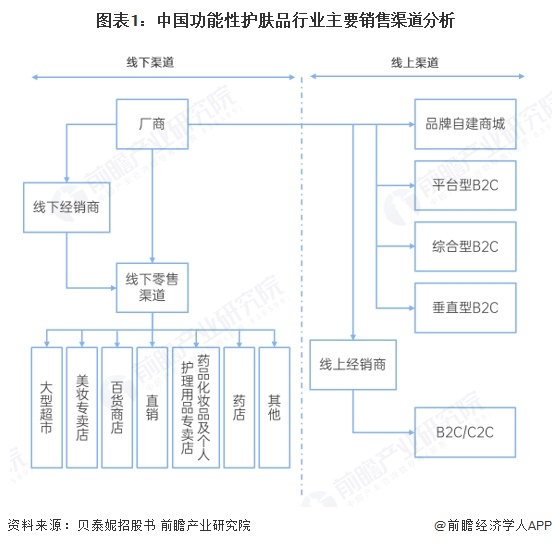
Core Insights - The functional skincare industry in China is primarily driven by online sales channels, with companies like Betaini and Huaxi Biological having established mature online sales strategies [1][5][10] - The contribution of professional channels to the sales of functional skincare products is limited, with most companies focusing on online marketing for rapid growth [2][4] Channel Analysis - **Online Channels**: - Advantages include wide reach and lower costs compared to offline channels, leading to higher profit margins [4] - Major platforms include Tmall, Douyin, Kuaishou, and JD, with private traffic channels also playing a significant role [4] - Disadvantages include rising customer acquisition costs and challenges in consumer repurchase rates [4] - **Offline Channels**: - Advantages include better control over terminal pricing and profit margins, particularly in tier-three and tier-four cities [4] - Disadvantages include higher channel costs and the complexity of entering professional channels [4] Company Strategies - Companies like Betaini and Huaxi Biological have a balanced approach with both online and offline channels, while older brands leverage established offline distribution networks [5][8] - The sales model for most companies in the functional skincare sector involves direct sales online and distribution through dealers offline [7][8] Revenue Insights - In 2024, the online revenue for the functional skincare industry is projected to be led by Proya, with online revenue reaching 9.59 billion yuan, accounting for 88.98% of its total revenue [10]

【投资视角】启示2025:中国物流地产行业投融资及兼并重组分析(附投融资事件、产业基金和兼并重组等)
Qian Zhan Wang· 2025-08-27 04:09
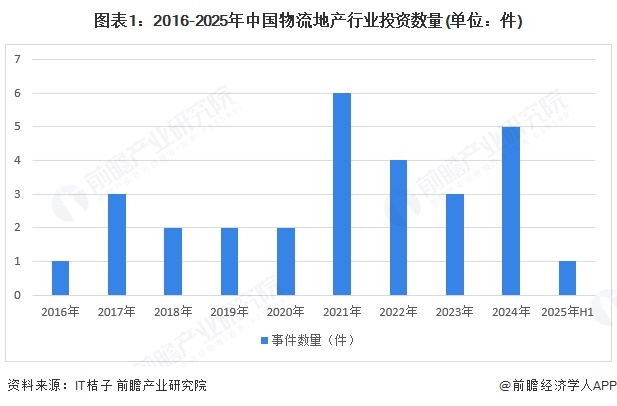
Core Insights - The logistics real estate sector has experienced fluctuations in investment activities from 2017 to 2024, with a total of 29 investment events, averaging 2-3 events per year. The peak year for investments was 2021, driven by the recovery of downstream port freight activities, which increased the attractiveness of related enterprises [1][2] - In 2024, a new wave of investment emerged, focusing on port logistics, comprehensive supply chain logistics, and international logistics warehousing [1] Investment Events Summary - Investment events involve various types of enterprises, including logistics service providers, online freight platforms, logistics facility suppliers, and property management service providers. The investment rounds include equity investments, mergers and acquisitions, and Series D funding [2] - Notable financing events include: - 运百物流 received a strategic investment of 2.84 million yuan on August 23, 2024 [4] - 亚太港口 secured a strategic investment of 267 million yuan on February 22, 2024 [4] - 万纬物流 received a strategic investment of 1.15 billion yuan on October 2, 2021 [5] Financing Rounds - Strategic investments are the primary financing round in the logistics real estate sector, accounting for 30% of all investment events, followed by Series A at 17%. There is an increasing trend in Series B to D funding rounds [6] Investment Entities - Private equity (PE) and venture capital (VC) firms account for 50% of the investment entities, indicating short-term profit opportunities in the sector. Industrial companies represent 28% of the investment entities, focusing on integrated supply chain investments [7] Investment Destinations - Investment destinations are concentrated in major cities such as Shanghai (28%), Guangdong (24%), and Jiangsu and Zhejiang (12% each). These regions are attractive due to strong project operational prospects, high order volumes, and mature logistics real estate development [8][11] Fund Management Scale - Various funds are actively investing in the logistics real estate sector, including 杭州嘉锐基金, 嘉实基金, and 顺丰产业基金. These funds are attracted by the long-term value of infrastructure and the synergy effects within the industry [12] Mergers and Acquisitions - Major mergers and acquisitions in the sector reflect vertical integration, such as 时代邻里 acquiring 科箭物业 and 京东 acquiring Chinese logistics assets. These moves aim to enhance operational specialization and scale in logistics real estate [16] Overall Summary - The logistics real estate sector is characterized by strategic financing aimed at expanding business operations and seeking new growth opportunities. The industry has a significant number of large-scale funds, with a focus on technology investments, and mergers are primarily aimed at vertical integration [17][19]
2025年中国生物医药材料中游产品市场现状——骨科关节耗材 国内厂商集采优势明显【组图】
Qian Zhan Wang· 2025-08-26 04:09
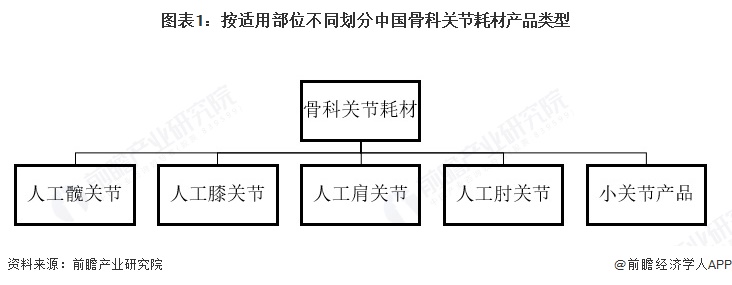
转自:前瞻产业研究院 行业主要上市公司:国瓷材料(300285.SZ)、威高骨科(688161.SH)、昊海生科(688366.SH)、乐普医疗 (300003.SZ)、蓝帆医疗(002382.SZ)、心脉医疗(688016.SH)等 本文核心数据:市场规模;集采现状 1、定义及分类 骨科关节耗材按照适用部位的不同,可以分为人工髋关节、人工膝关节、人工肩关节以及人工肘关节,此 外,还有较少的小关节产品,例如指关节、踝关节等。 2、骨科关节置换手术量逐年攀升 随着中国老龄人口数量的增加、生活压力增加等因素影响,近年来中国骨科关节相关疾病的患者数量不断增 加,骨科关节置换手术量近年来呈现快速上升趋势,2024年中国骨科关节置换手术量为244万台,同比上涨 22%。 3、2024年市场规模达到173亿元 在我国集采政策的推动下,我国骨科关节耗材价格下滑,使得消费数量不断提升;同时,随着我国老龄人口 数量的增加以及骨科疾病患者数量的上升,带动我国骨科关节耗材需求量持续上升。根据《中国医疗器械蓝 皮书》、国家医疗器械计量中心披露的数据显示,2019年中国骨科关节耗材行业市场规模为86亿元,2024年 达到173亿元,5 ...
【投资视角】启示2025:中国呼叫中心行业投融资及兼并重组分析(附投融资事件、产业基金、兼并重组等)
Qian Zhan Wang· 2025-08-26 03:42
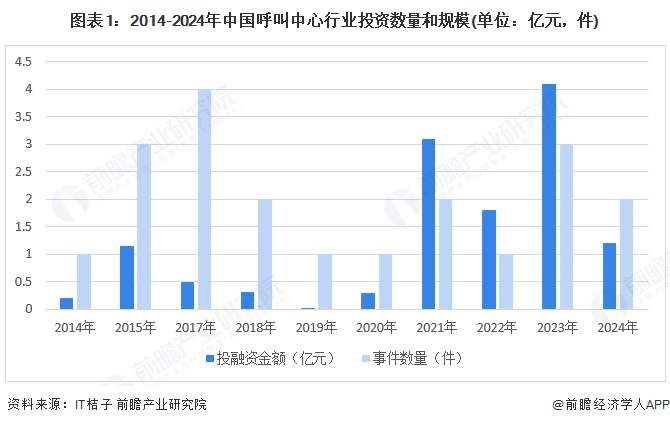
Core Insights - The call center industry has seen significant investment activity from 2014 to 2023, with a total of 20 financing events amounting to over 1.3 billion yuan, with notable peaks in 2021 and 2023 [1][14] - The focus of investments has shifted towards call center outsourcing and AI-driven solutions, indicating a trend towards automation and efficiency in customer service [4][12] Investment Trends - The years 2021 and 2023 recorded the highest investment amounts of 310 million yuan and 410 million yuan respectively, driven by significant investments in value-added services and AI technologies [1][2] - In 2024, only two investment events were recorded, indicating a potential slowdown in investment activity [1] Investment Amounts - Single investment amounts in the call center sector were generally in the millions from 2014 to 2020, with notable increases to 160 million yuan in 2021 and 140 million yuan in 2023, largely due to major investments in companies like StarNet Communication and Voice Technology [2][7] - The average single investment amount is expected to drop back to the million level in 2024, reflecting a cautious market sentiment [2] Geographic Focus - Investment is primarily concentrated in Beijing (45%) and Shanghai (22%), highlighting the urban concentration of call center operations and technology [9] - Other active provinces include Jiangsu, Hubei, Zhejiang, Guangdong, and Henan, benefiting from strong industrial foundations and supportive policies [9] Fund Activity - Several funds are actively investing in the call center industry, including the Double Hundred Fund, Shenzhen Investment Control Park Fund, and SoftBank Vision Fund, each with distinct investment strategies [12][13] - The Double Hundred Fund focuses on digital transformation projects for state-owned enterprises, while the SoftBank Vision Fund targets AI customer service solutions [12] Mergers and Acquisitions - The call center industry has seen limited M&A activity, with notable events including the acquisition of Huijie Technology by JD Technology Group in 2021, aimed at enhancing digital service capabilities [14] - A planned acquisition by Bangyan Technology of StarNet Communication was announced to be terminated in 2025 due to competitive pressures [14]
比三峡更重要!“拉直长江”的超级工程,为何冻结10年?
Qian Zhan Wang· 2025-08-26 03:18
Group 1 - The article highlights a significant wave of infrastructure development in China, particularly focusing on water transport, with major projects like the new Three Gorges waterway and the Yarlung Tsangpo River hydropower project [1][2] - The new Three Gorges waterway aims to alleviate bottlenecks in the Yangtze River's shipping capacity, with an investment of 77.6 billion yuan to enhance the throughput from 100 million tons to nearly 180 million tons [5][4] - The article discusses the long-standing issues in the Yangtze River's shipping routes, particularly the challenges faced in the Jingjiang section, which limits the navigation capacity to 3,000-5,000 ton vessels [10][8] Group 2 - The proposed Jinghan Canal project aims to create a new shipping route that would significantly reduce travel distance and time, potentially allowing 10,000 ton vessels to navigate directly from the Yangtze River mouth to Chongqing [12][22] - Despite the potential benefits, the project has faced opposition from local stakeholders in Hunan province, who fear it would negatively impact their water transport economy [15][14] - Recent developments indicate a renewed push for the Jinghan Canal, with the Hubei province planning a 236-kilometer canal with an investment of 78.4 billion yuan, which could save logistics costs by 30 billion yuan annually [21][22] Group 3 - The completion of the Jinghan Canal could lead to significant economic benefits for cities along the route, particularly for Jingzhou, which is expected to transform into a major logistics hub [24][23] - The article emphasizes the importance of integrating green technologies in the shipping industry, highlighting the trend towards electric vessels and the establishment of charging infrastructure in Jingzhou [28][30] - The overall development of the Jinghan Canal is positioned as a critical component of China's broader strategy to enhance domestic and international trade through improved waterway connectivity [32][22]
预见2025:《2025年中国AI玩具行业全景图谱》(附市场现状和发展趋势等)
Qian Zhan Wang· 2025-08-26 03:10
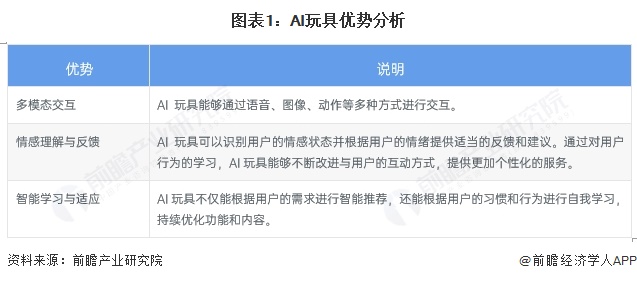
Industry Overview - AI toys are products that integrate AI technology with traditional toys, offering interactive and personalized experiences through voice recognition, image recognition, natural language processing, deep learning, and emotional analysis [1][4] - The advantages of AI toys include multimodal interaction, emotional understanding and feedback, and intelligent learning and adaptation [3] Industry Chain Analysis - The upstream of the AI toy industry chain includes raw materials (metals, textiles, plastics), hardware (chips, sensors, batteries), and software (AI technologies) [4][5] - The midstream involves the design and manufacturing of AI toy products, including smart dolls, robot toys, AI plush toys, and AI-themed merchandise [4][5] - The downstream consists of sales channels, including offline retail and online e-commerce platforms [4][5] Industry Development History - The period before 2020 was characterized as a technology exploration phase, with limited AI applications in children's educational hardware [6][10] - From 2020 to 2023, the market entered a budding phase, with the introduction of interactive products and policy support for AI education, although product functionality was often homogeneous [6][10] - Post-2024, the industry is expected to enter a rapid development phase, with multimodal interaction becoming standard and significant advancements in AI technology [6][10] Industry Policy Direction - The government is promoting the "Artificial Intelligence +" action plan, which aims to integrate AI with traditional and emerging industries, creating a conducive environment for AI toy development [11][12] Current Industry Status - The toy market in China is projected to exceed 150 billion yuan in 2024, with AI toys expected to reach a market size of approximately 246 billion yuan [14][22] - The number of registered AI toy companies has shown a fluctuating trend, with a peak in 2019 and a decline in new registrations from 2021 to 2025 due to increased technical barriers and market regulation [15] Competitive Landscape - The AI toy market features a diverse competitive landscape, including traditional toy companies, tech startups, internet tech firms, and companies with strong IP reserves [21][22] - AI toy prices vary significantly, ranging from around 300-400 yuan for basic models to over 10,000 yuan for high-end products with advanced features [17][21] Future Development Trends - The AI toy market is expected to continue expanding, with a focus on emotional connection and deep companionship, targeting not only children but also young adults and the elderly [22] - By 2030, the AI toy market in China is predicted to exceed 700 billion yuan, driven by the integration of AI technology into various toy categories [22]






大单不断!马斯克星链席卷航空Wi-Fi市场,全球顶级航司扎堆签约【附卫星互联网行业市场分析】
Qian Zhan Wang· 2025-08-25 12:05
Core Insights - SpaceX's Starlink is rapidly transforming the in-flight Wi-Fi sector, with major airlines like Alaska Airlines and Virgin Atlantic adopting its satellite internet services [2] - The Middle East is becoming a strategic focus for SpaceX, with ongoing negotiations with Emirates Airlines, which operates the largest Boeing 777 and Airbus A380 fleets [2][3] - Starlink's low Earth orbit satellite network offers seamless global internet access with latency of 20-40 milliseconds, significantly better than traditional satellite systems [2][6] Company Overview - SpaceX, founded by Elon Musk in June 2002, is a leading player in the aerospace industry, focusing on rocket launches, low Earth orbit communications, and deep space transport [3] - Starlink aims to provide high-speed, low-latency internet access globally, particularly in remote areas, and is also targeting the aviation and maritime sectors [6][8] - Starlink has established a significant presence, covering 57 countries and serving over 2 million users, positioning itself as a dominant player in the satellite internet market [6] Competitive Landscape - The satellite internet market is highly competitive, with players like OneWeb and Amazon's Project Kuiper also aiming to deploy low Earth orbit satellites for global internet services [6][8] - Starlink's first-mover advantage and scale have allowed it to maintain a leading position despite increasing competition [6] Industry Trends - The development of satellite internet is seen as a crucial next phase in internet evolution, driven by growing demands for communication capacity and coverage [8][9] - In China, low Earth orbit satellite internet construction is accelerating, with initial commercial applications expected to target industries like maritime shipping [9]