Zhong Guo Huan Jing Bao

Search documents
沈阳如何实现“蓝天逆袭”?
Zhong Guo Huan Jing Bao· 2025-10-15 01:54
Core Viewpoint - Shenyang has successfully improved its air quality over the past decade, achieving a record high of 318 days of good air quality in 2024, marking a 9.8% improvement year-on-year, and has not experienced heavy pollution during the heating season from November 2024 to March 2025 [1][2]. Group 1: Air Quality Improvement - In 2025, Shenyang recorded 245 days of good air quality in the first three quarters, an increase of 17 days compared to the previous year, with PM2.5 average concentration dropping to 31.1 micrograms per cubic meter [1]. - The city has implemented a series of measures to tackle air pollution, focusing on heating, transportation, and industrial sectors, leading to significant improvements in air quality [3][4]. Group 2: Structural Adjustments - Shenyang faced three inherent challenges in air quality management: reliance on heavy industry, high logistics vehicle concentration due to its transportation hub status, and significant coal demand during the heating season [3]. - The city has initiated a "boiler rectification campaign," removing approximately 4,000 boilers and upgrading remaining coal-fired boilers to meet stricter emission standards [4][5]. Group 3: Mobile Source Pollution Control - The city has identified that vehicle emissions are a major source of air pollution, with a significant number of older vehicles still in use, necessitating enhanced regulatory measures [6][7]. - In 2024, Shenyang successfully eliminated over 30,000 old diesel trucks and updated 82,400 vehicles to meet higher emission standards [7][8]. Group 4: Industrial Upgrades and Technological Empowerment - Shenyang is focusing on upgrading its industrial structure, with a notable increase in green factories and a commitment to reducing volatile organic compounds (VOCs) emissions through targeted strategies [9][10]. - The city has invested in advanced air quality monitoring systems, including a comprehensive pollution monitoring network and a high-tech monitoring station to provide real-time data for pollution management [10][11]. Group 5: Collaborative Governance - Shenyang is expanding its air quality management efforts beyond city limits by collaborating with surrounding cities to implement joint pollution control measures [11].
为什么要建立“水域银行”模式?怎样才能用好?
Zhong Guo Huan Jing Bao· 2025-10-15 01:48
"水域银行"这一创新模式在提高审批效率的同时,也对管理的精准性提出了更高要求。各地推行这一模 式时既要保障效率,也要坚守底线。 "水域银行"模式需严格控制新开水面的存入标准。水域等效替代是指建设项目占用水域后,通过新建或 恢复同等面积和功能的水域来平衡被占用水域的生态及防洪等功能的替代措施。因此,纳入"水域银 行"的新开水面应具备一定的生态及防洪功能。要尽量减少或禁止将公园湖泊、校园人工湖、住宅区景 观水池等以提供景观服务为主要功能的封闭或半封闭的水域纳入"水域银行"。要确保使用"水域银行"中 的新开水面对占用水域进行补偿后,市域范围内水面率不下降、防洪排涝标准不降低、主要引排河道断 面不减小、水生态功能不减弱、水域功能稳定。 近年来,随着建设项目数量持续增加,许多项目受制于地理、技术或成本因素难以实现水域占补平 衡。"水域银行"模式通过建立跨区域、可流转的平衡机制,既破解了项目落地难题,提升了审批效率, 又确保了区域水面率稳定和水生态功能维护,实现了发展与保护的有机统一。目前,常熟市已有十多个 项目借此模式顺利实施,总投资额超13.8亿元,这一创新实践为各地协调经济建设与水域保护提供了可 复制的经验。 近日 ...
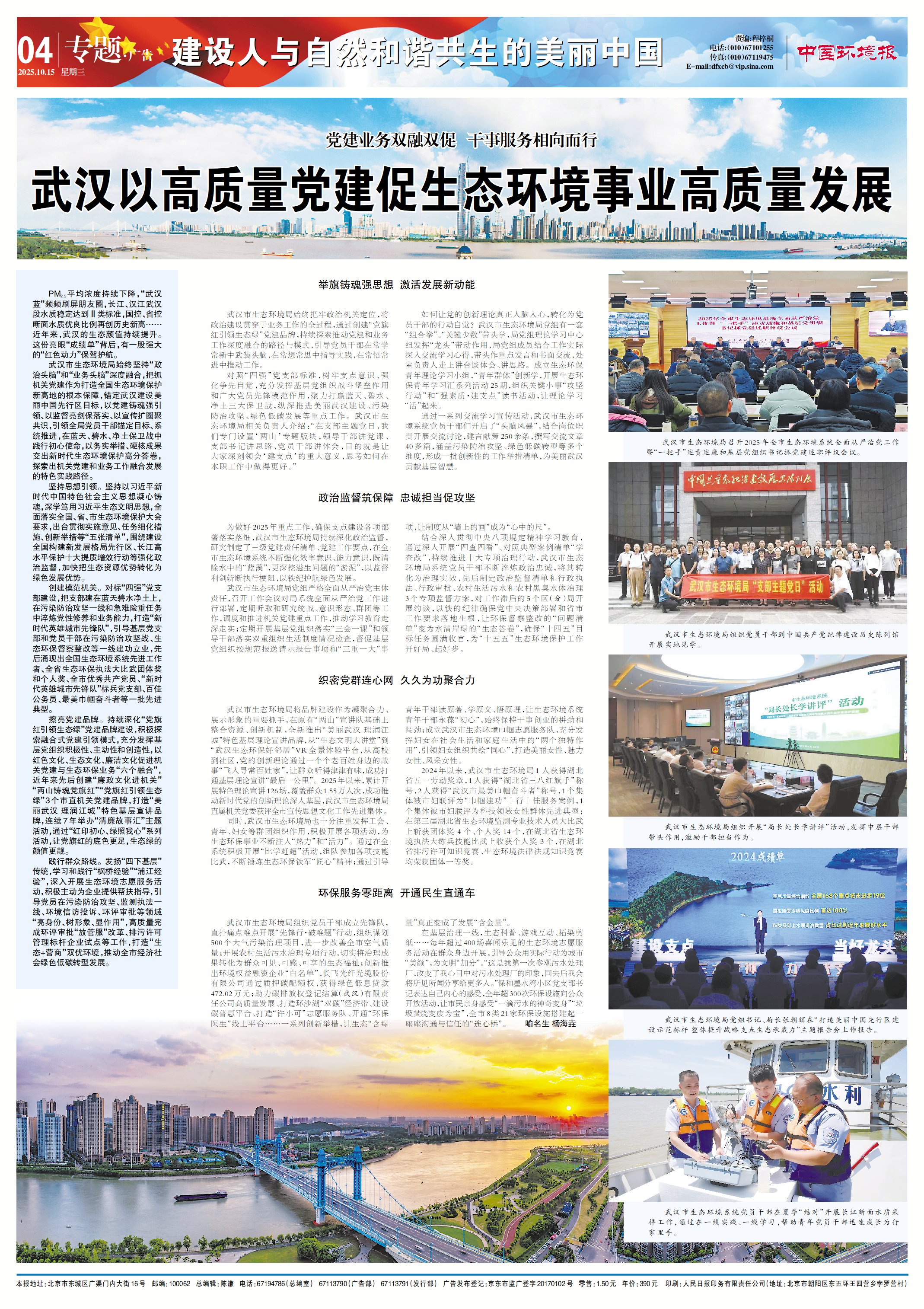
武汉以高质量党建促生态环境事业高质量发展
Zhong Guo Huan Jing Bao· 2025-10-15 01:06
Core Viewpoint - The article highlights the significant improvements in ecological conditions in Wuhan, driven by strong political and organizational support, particularly through the integration of party building and environmental protection efforts [6][8][11]. Group 1: Ecological Improvements - PM2.5 average concentration continues to decline, and water quality in the Yangtze and Han rivers has stabilized at Class II standards [6]. - The proportion of excellent water quality at national and provincial monitoring points has reached a historical high [6]. Group 2: Political and Organizational Integration - The Wuhan Ecological Environment Bureau emphasizes the integration of political and business work, using party building as a fundamental guarantee for ecological protection [8][11]. - The bureau has created a series of implementation opinions and innovative measures to enhance political supervision and accelerate the transformation of ecological resource advantages into green development advantages [8]. Group 3: Community Engagement and Education - The bureau has launched various grassroots theoretical promotion brands and activities to engage the community, including the "Beautiful Wuhan" initiative, which has reached over 15,500 people [17]. - A series of volunteer activities and skill competitions have been organized to enhance the capabilities of environmental protection personnel and engage the public in ecological initiatives [18][20]. Group 4: Achievements and Recognition - The bureau has received multiple awards for its efforts, including recognition for outstanding party members and advanced teams in ecological protection [18]. - Innovative financing solutions have been introduced, such as green low-interest loans for companies, demonstrating the economic benefits of ecological initiatives [22].

盗伐10棵柏树案例释放了哪些信号?
Zhong Guo Huan Jing Bao· 2025-10-15 00:26
近日,山西省夏县三名村民因盗伐黄河岸边山坡上的10棵柏树,被依法追究刑事责任,并承担生态修复 罚款。当地司法机关将巡回法庭设在乡村院落,检察机关同步召开听证会,邀请人大代表、政协委员及 村民代表参与评议,最终形成共识,使案件办理成为一堂生动的生态保护法治公开课。 这一案件将惩治与教育相结合,让村民亲眼见证法律威严,让基层干部深入理解生态环境法理,其效果 远超传统说教。这种司法与生态理念的深度融合,既提升了司法公信力,也潜移默化地培育了生态文明 意识,为讲好生态环保故事、推动生态环境法治建设提供了新方向。 值得关注的是,当地公检法机关并未简单"就案办案",而是将生态修复责任量化为具体赔偿,实现刑事 责任与生态环境保护责任并重。通过"两长"同庭、实地勘查、公开听证等系列举措,既确保了把案件办 成"铁案",也把司法过程转化为警示教育过程。 此案虽小,却具有标志性意义。若对盗伐10棵柏树的行为轻纵,可能引发"破窗效应",向公众传递错误 信号。司法机关通过层层剖析、情理法并重,向社会清晰传递出"生态红线是高压线"的严肃信号,让违 法者受惩处、群众受警示、执法者树权威。 ...
如何让“人工智能+”更好赋能大气污染治理?
Zhong Guo Huan Jing Bao· 2025-10-14 23:18
Core Insights - The "14th Five-Year Plan" has shown significant progress in air pollution control, with PM2.5 average concentration expected to drop to 29.3 µg/m³ by 2024, a decrease of 20.7 µg/m³ from 2015, nearing the 2035 target of below 25 µg/m³ [1] - Recent pollution events highlight the complexity and long-term nature of air quality improvement, necessitating more precise identification of issues and targeted governance measures [1] - The integration of artificial intelligence into ecological governance is emphasized as a direction for advancing precise air pollution control [1] Industry Challenges - The application of AI in air pollution prevention faces challenges, including the need for multi-source data integration and the development of operational business platforms [2] - The development costs for air pollution tracing models range from hundreds of thousands to millions, creating barriers for economically disadvantaged regions [2] - The potential for resource waste exists if similar platforms are developed independently across regions, necessitating a solution to bridge the cost gap and create accessible tools [2] Proposed Solutions - A public product supply model for "AI + air pollution governance" is needed, focusing on building a unified AI model library and algorithm platform for standardized monitoring and forecasting [2][3] - This model would allow for the reuse of technological achievements, particularly benefiting economically disadvantaged areas by providing equal access to smart governance tools [3] - Enhancements in air quality prediction and pollution source analysis capabilities are essential for effective emergency measures and environmental law enforcement [3] Collaborative Framework - The government should take a leading role in top-level design, planning, standard setting, and data platform regulation, while local governments should identify specific application scenarios [4] - Research institutions and universities should focus on model development and algorithm innovation, providing foundational technology for public products [4] - Companies should concentrate on practical applications and customized solutions for local governments, facilitating the implementation of AI technologies in air pollution governance [4]
北京顺义:补足水、护好水、善用水,潮白河重获新生
Zhong Guo Huan Jing Bao· 2025-10-14 08:13
Core Insights - The article highlights the significant ecological and water management improvements in the Chaobai River area of Beijing's Shunyi District, emphasizing the successful implementation of a comprehensive water governance strategy over the past decade [1][4]. Group 1: Water Source Management - Since 2015, Beijing has been diverting water from the South-to-North Water Diversion Project to replenish the water sources in Miyun, Huairou, and Shunyi, with a total of approximately 340 million cubic meters replenished by 2020 [2]. - The Chaobai River, which had been dry for 22 years, was fully restored and connected on May 29, 2021, following a series of ecological water replenishment efforts [2]. - From 2022 to 2024, Shunyi District implemented ecological water replenishment measures totaling over 300 million cubic meters, leading to a gradual recovery of groundwater levels [2]. Group 2: Water Quality Improvement - Shunyi District has achieved historical improvements in water quality through comprehensive measures such as pollution control, ecological restoration, and the construction of new sewage treatment facilities [3]. - The district's sewage treatment capacity has reached 424,000 cubic meters per day, with rural sewage treatment rates increasing from 77.6% in 2020 to 93.8% by 2024 [3]. - By 2024, six national and municipal monitoring sections in Shunyi are expected to achieve a 100% rate of good water quality, with no sections classified as inferior [4]. Group 3: Ecological Restoration and Biodiversity - The ecological environment along the Chaobai River has improved significantly, with the introduction of various fish species and the restoration of biodiversity, including the presence of 22 fish species and an increase in bird populations [5]. - The launch of the "Chaobai River No. 1" ferry service in August 2024 allows citizens to enjoy the scenic beauty of the river and its surrounding parks, promoting recreational activities [5]. Group 4: Future Initiatives - Shunyi District plans to continue its efforts in water protection and ecological restoration, aiming to enhance the beauty and health of its rivers and lakes [6].
建设三峡库区种质“方舟”守护物种多样性
Zhong Guo Huan Jing Bao· 2025-10-14 05:34
Core Insights - The article emphasizes the importance of safeguarding national germplasm resources for food security and ecological safety, particularly in the Three Gorges Reservoir area, which serves as a strategic gene bank with over 23,000 cultivated plant germplasm resources and 5,000 wild plant species, including 1,630 endemic species in China [1][3] Group 1: Protection and Conservation Efforts - A three-tier protection network ("Library - Nursery - Point") has been established, including 4 provincial-level germplasm resource banks, 12 specialized nurseries, and 16 district-level protection points, enhancing the conservation of rare and valuable local varieties [1][2] - Significant progress has been made in the collection and preservation of various germplasm resources, including rare plants like the Three Gorges red cedar and local breeds such as the Fuling black pig, with a digital platform for intelligent management of the germplasm resources established [1][2] Group 2: Technological Empowerment and Industry Development - The development of high-quality varieties suitable for mountainous agriculture has begun, with "Three Gorges Glutinous Rice No. 1" covering an area of 8.93 million acres and the "Zigui Navel Orange" variety significantly increasing per-acre income [2] - Multiple industry-academia-research cooperation platforms have been established, creating geographical indication product brands that promote a virtuous cycle of resource protection and economic benefits for farmers [2] Group 3: Challenges and Strategic Recommendations - The article highlights the increasing international competition for biological resources, posing new challenges to China's germplasm resource security, necessitating enhanced biosecurity governance and prevention of invasive species [3][4] - Recommendations include strengthening strategic layouts for resource protection, optimizing the three-tier protection network, and establishing a monitoring and early warning system for dynamic resource management [3][4] Group 4: Innovation and Sustainable Development - The establishment of a Three Gorges germplasm resource innovation platform is proposed to address key technological bottlenecks in resource identification, gene mining, and molecular breeding, aiming to enhance international competitiveness [4] - Collaborative protection mechanisms between Chongqing and Hubei are suggested to improve resource sharing and policy coordination, along with the implementation of differentiated compensation mechanisms linked to resource protection outcomes [4]
推进全面绿色转型,加快形成绿色生产力
Zhong Guo Huan Jing Bao· 2025-10-14 03:26
Core Viewpoint - The transition to a green and low-carbon economy is a crucial aspect of China's high-quality development and a fundamental strategy for addressing ecological issues, as emphasized in the 20th National Congress and subsequent government reports [1] Group 1: Technological Transformation - Technological transformation serves as the core driving force for the comprehensive green transition, characterized by substitution, efficiency enhancement, and creation effects [2] - Renewable energy technologies are expected to increase the share of clean energy consumption to 28.6% by 2024, with non-fossil energy consumption projected to reach around 25% by 2030 and over 30% by 2035 [2] - China's photovoltaic component production has led the world for 16 consecutive years, supplying 70% of global photovoltaic components and 60% of wind power equipment [2] Group 2: Institutional Innovation - A systematic institutional framework has been established through property rights, pricing mechanisms, and judicial collaboration [3] - The carbon emissions trading market is set to see a cumulative transaction volume of 18.9 million tons and a transaction value of 18.114 billion yuan in 2024, creating an effective mechanism for guiding high-carbon industries towards transformation [3] - The introduction of a coal power capacity pricing mechanism aims to enhance the efficiency of the electricity pricing system, significantly increasing the exit rate of high-energy-consuming industries [3] Group 3: Market System - The market system is a vital vehicle for achieving the comprehensive green transition, focusing on factor circulation, product iteration, and capital circulation [4] - As of August 2024, the national carbon emissions trading market has recorded a cumulative transaction volume of nearly 70 million tons and a transaction value of approximately 48 billion yuan [5] - The issuance of green bonds reached 681.433 billion yuan in 2024, with a custody scale of 2.09 trillion yuan, reflecting a 5.57% year-on-year growth, guiding social capital towards pollution prevention and low-carbon technology development [5] Group 4: Challenges and Future Directions - Despite significant progress in the green transition, challenges remain, including the need for independent control of key technologies and imbalances in regional development [6] - Continuous open innovation and the establishment of a fair and inclusive international cooperation mechanism for green transition are essential for China to fulfill its role as a contributor and leader in global ecological civilization [6]
“两山”理念是破解两个“中心主义”困境的“金钥匙”
Zhong Guo Huan Jing Bao· 2025-10-14 02:13
Core Concept - The "Two Mountains" concept, which emphasizes that "green mountains and clear waters are as valuable as mountains of gold and silver," serves as a key to resolving the dilemma between ecological protection and economic development, as demonstrated by the transformation of Yucun village over the past 20 years [5][12]. Group 1: Two Centralism Dilemma - The two centralism debates, "anthropocentrism" and "ecocentrism," have historically created a dichotomy between ecological protection and economic development, leading to a dilemma that hinders societal progress [3][4]. - Anthropocentrism prioritizes human interests, resulting in environmental degradation, while ecocentrism advocates for a nature-centered ethical framework, which can impede human development if taken to extremes [3][4]. Group 2: Yucun Village Transformation - Yucun village transitioned from a mining and cement production hub to an eco-friendly community by closing down polluting industries and focusing on ecological restoration, which was positively acknowledged by Xi Jinping during a visit [5][6]. - The village's commitment to ecological governance led to the establishment of new industries such as eco-tourism and organic farming, significantly improving the local economy and quality of life for residents [6][8]. Group 3: Key Insights from Yucun's Experience - The experience of Yucun illustrates that ecological protection and economic development can coexist and support each other, with the "Two Mountains" concept providing a framework for this synergy [8][12]. - Effective governance, community engagement, and the integration of ecological and economic strategies are essential for sustainable development, as demonstrated by Yucun's governance models and community participation [10][11]. Group 4: Future Directions - The "Two Mountains" concept encourages a paradigm shift in understanding the relationship between humans and nature, promoting a balanced approach that recognizes both ecological integrity and human development [12]. - Yucun's model of shared development and resource optimization among neighboring villages exemplifies a collaborative approach to rural revitalization and ecological sustainability [11].
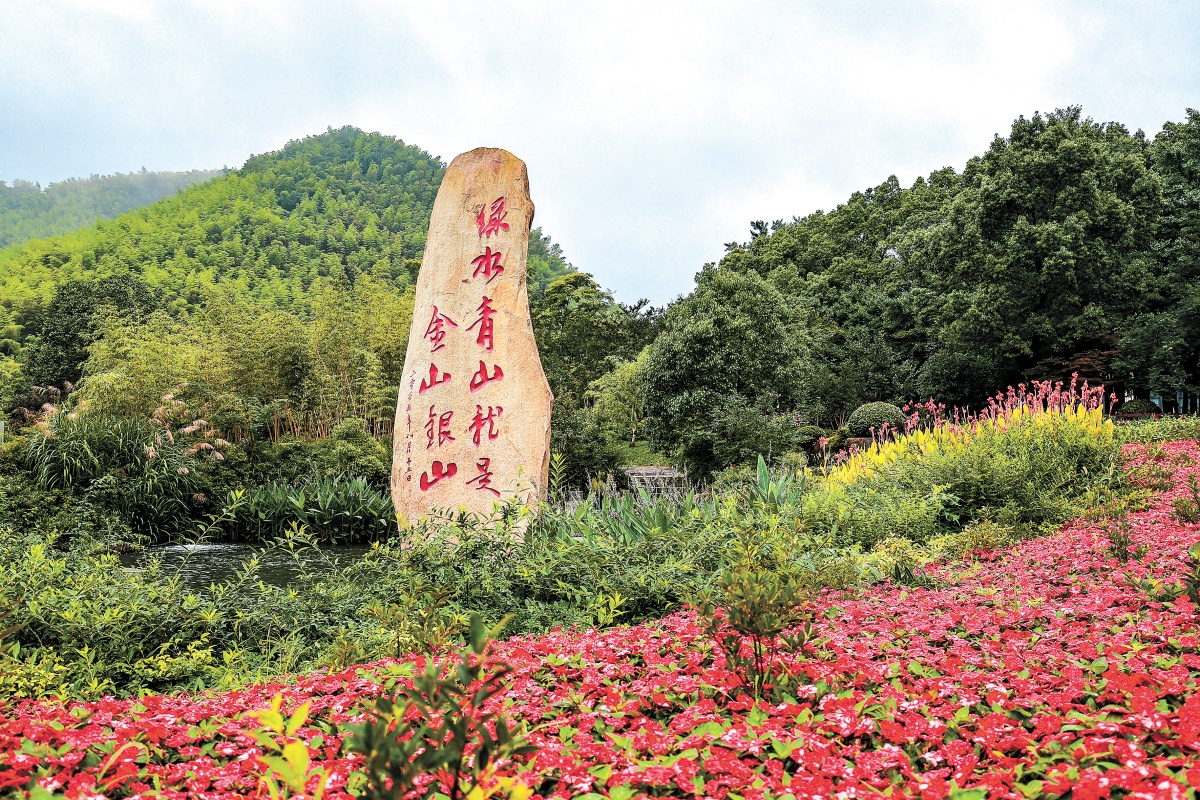
吉林省:“生态+”在白山松水间探寻“点绿成金”之道
Zhong Guo Huan Jing Bao· 2025-10-14 01:44
Core Viewpoint - Jilin Province is integrating ecological considerations into its development strategy, emphasizing that ecology is the foundation for all development rather than an additional aspect [2][14]. Ecological + Agriculture - Jilin's agricultural development leverages its natural ecological advantages, such as the high-quality water from the Changbai Mountain region, to produce premium agricultural products like "Liangshui" rice [15][16]. - The local ginseng industry has expanded from raw material supply to a comprehensive value chain, including ginseng wine and health products, showcasing the economic benefits derived from ecological advantages [16]. Ecological + Tourism - Jilin Province has developed a four-season tourism strategy around Changbai Mountain, attracting thousands of visitors daily during peak seasons, thus boosting the local tourism economy [17][19]. - The ecological restoration projects at Chagan Lake have improved water quality and created a unique winter fishing tourism experience, enhancing both the local economy and public awareness of ecological protection [19]. Ecological + Energy - The energy sector in Jilin is transitioning towards sustainable practices, with companies like Jilin Dingyun New Energy transforming traditional coal processing into a green circular economy model [20]. - The province is leveraging its natural resources for clean energy development, including significant wind and solar projects, which are essential for breaking free from fossil fuel dependency [20][21]. Ecological + Culture - Jilin's cultural heritage is deeply intertwined with its ecological environment, leading to the creation of various ecological literature that promotes environmental awareness [22][23]. - The province is actively promoting ecological culture through literature, events, and tourism, aiming to enhance public engagement in ecological protection [23]. Future Directions - Jilin Province plans to continue expanding its "Ecological +" initiatives, integrating ecology with various sectors such as sports and carbon trading, to sustain its development advantages and contribute to regional revitalization [23].