
Zhong Guo Huan Jing Bao

Search documents
悦达起亚:绿色低碳实践驱动新质生产力发展
Zhong Guo Huan Jing Bao· 2025-08-28 02:14
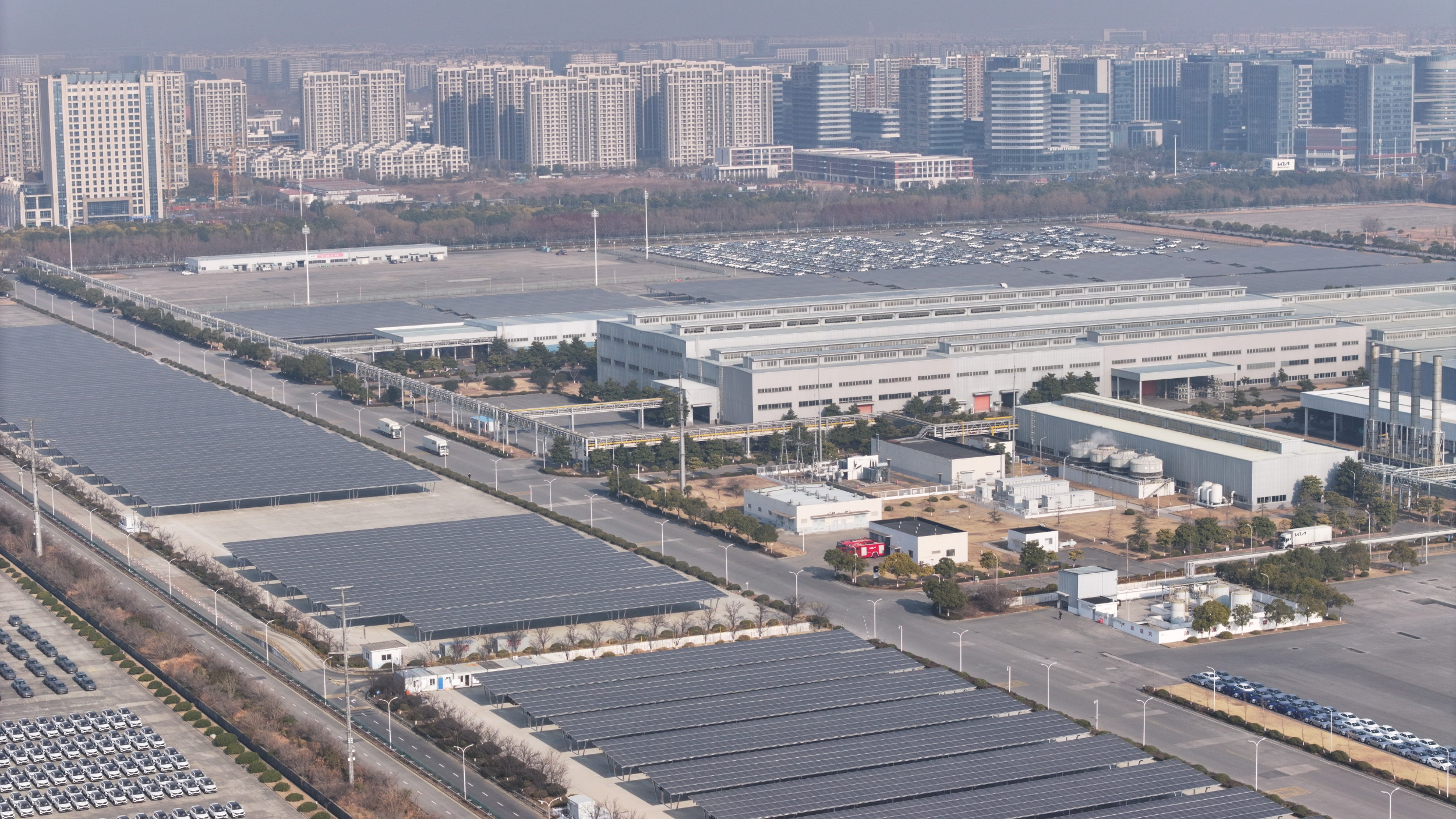
Core Viewpoint - Jiangsu Yueda Kia Automotive Co., Ltd. is committed to achieving the national "dual carbon" goals by implementing Kia's "RE100" and "Carbon Neutrality 2045" strategies, aligning with Jiangsu Province's green development roadmap and contributing to the construction of a "green manufacturing city" in Yancheng [1][4]. Group 1: Renewable Energy Initiatives - The second factory's photovoltaic project has a capacity of 23 MW, generating approximately 24 million kWh annually, saving 2.6 million yuan in electricity costs and reducing CO2 emissions by about 7,500 tons [3][4]. - The third factory's photovoltaic project has a capacity of 36 MW, generating around 44 million kWh annually, saving 3.2 million yuan in electricity costs and reducing CO2 emissions by over 10,000 tons [4]. Group 2: Green Factory Management - Yueda Kia has strengthened dynamic management of green factories, focusing on energy consumption, carbon emissions, and solid waste utilization, and aims to achieve national-level "green factory" status by 2024 [6]. - The company has received a five-star rating in the Corporate Social Responsibility Report by the Chinese Academy of Social Sciences for two consecutive years and has been recognized as an ESG pioneer for 2024 [6]. Group 3: Sustainable Materials and Recycling - The company implements clean production technologies throughout the supply chain, achieving 100% recycling of materials like steel, wood, and paper [6]. - Yueda Kia uses environmentally friendly materials in its EV5 model, including recycled polymers and bio-based materials, which reduce environmental impact and enhance passenger safety [7][9]. Group 4: Future Goals and Market Expansion - Yueda Kia plans to continue responding to the call for high-quality development in green industries, focusing on sustainable mobility, sustainable earth, and sustainable energy as primary objectives [9]. - The company aims to leverage opportunities from national industrialization initiatives and Jiangsu's carbon peak pilot cities to enhance its market presence and contribute to the high-quality development of the automotive industry in Yancheng [9].

钟寰平:进一步加强全国碳市场建设
Zhong Guo Huan Jing Bao· 2025-08-28 01:57
Core Viewpoint - The issuance of the "Opinions on Promoting Green and Low-Carbon Transition and Strengthening National Carbon Market Construction" provides a roadmap and timeline for the development of China's carbon market, aiming to enhance its effectiveness and international influence [1][2]. Group 1: National Carbon Market Development - The national carbon market has become the largest in the world in terms of emissions covered, with significant progress in establishing a voluntary greenhouse gas reduction trading market [1][2]. - The current stage of the national carbon market is still in its early development, with room for improvement in institutional frameworks, industry coverage, market functionality, and data quality management [2][3]. - Strengthening the national carbon market is essential for adapting to the new phase of ecological civilization construction, focusing on carbon reduction as a strategic direction [2][3]. Group 2: Policy and Reform Implications - The construction of the national carbon market is a critical aspect of deepening ecological civilization system reform, emphasizing the establishment of a dual control mechanism for energy consumption and carbon emissions [3][4]. - Enhancing the national carbon market reflects China's commitment to leading global climate governance, with its large market size significantly influencing global carbon pricing and trading mechanisms [3][4]. - The development of the carbon market is a complex system engineering task that requires a systematic approach, balancing market and government roles, and aligning long-term and short-term goals [4].
文山绘就绿色发展新画卷
Zhong Guo Huan Jing Bao· 2025-08-28 01:46
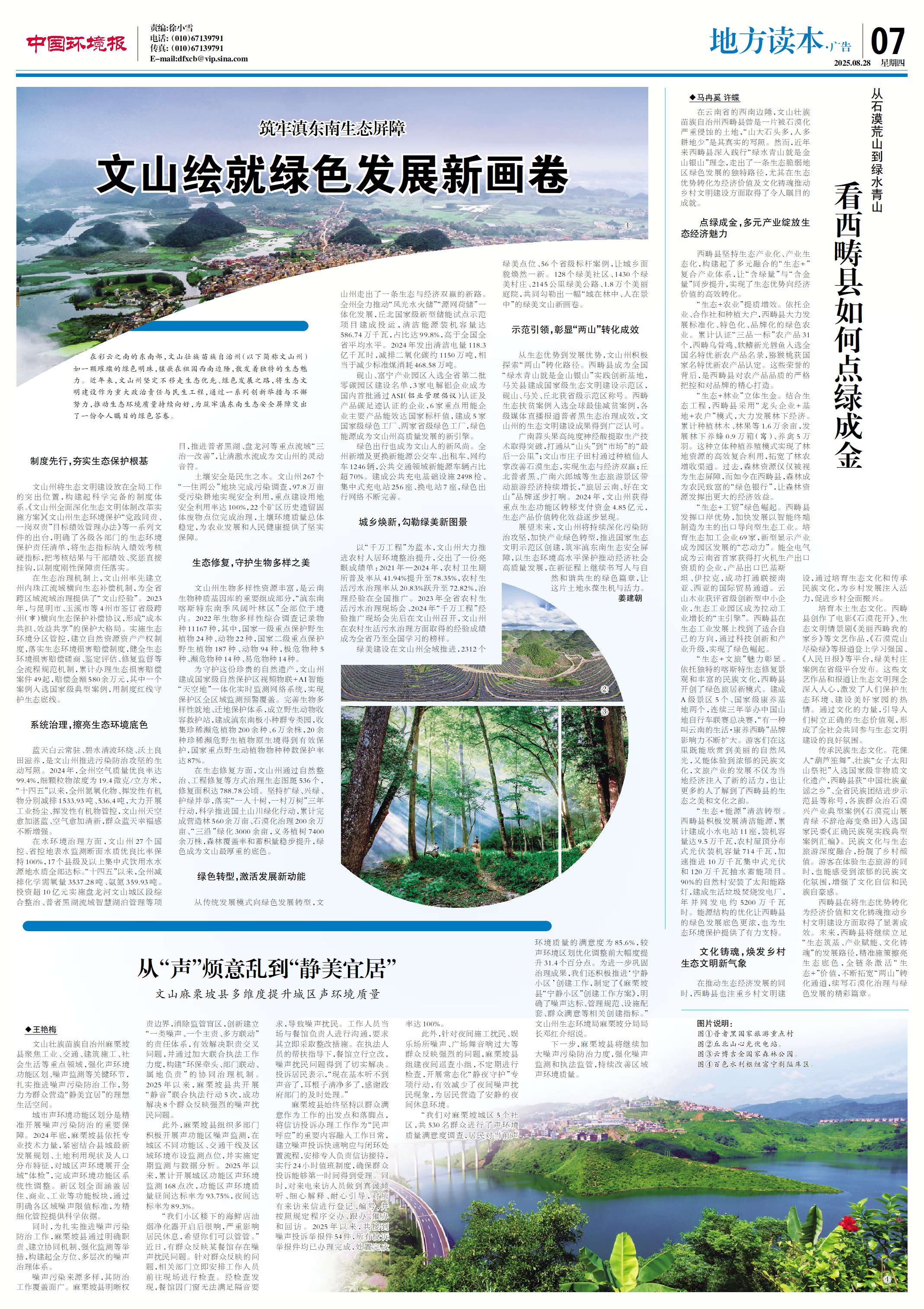
Core Viewpoint - Wenshan Prefecture is committed to ecological priority and green development, achieving significant improvements in environmental quality and establishing a robust ecological security barrier in southeastern Yunnan [2][30]. Institutional Framework - Wenshan has developed a comprehensive institutional framework for ecological civilization, including performance management methods that link ecological indicators to the performance evaluation of officials [3][16]. - The establishment of a horizontal ecological compensation mechanism within the Pearl River Basin has provided a model for cross-regional ecological governance in the province [3][18]. Environmental Protection and Restoration - The prefecture has completed pollution investigations on 267 plots, ensuring the safe utilization of 978,000 acres of contaminated farmland, with a 100% safety utilization rate for key construction land [4][22]. - Biodiversity surveys recorded 11,167 species, including numerous endangered plants and animals, highlighting the region's rich biological resources [5][23]. Pollution Control and Air Quality - In 2024, Wenshan achieved an air quality excellent rate of 99.4%, with fine particulate matter concentration at 19.4 micrograms per cubic meter [9][19]. - The prefecture has maintained a 100% excellent water quality rate for monitored water bodies and has implemented significant reductions in chemical oxygen demand and ammonia nitrogen [9][19]. Green Energy and Economic Development - Wenshan is transitioning to green development, with a clean energy installed capacity of 5.8674 million kilowatts, accounting for 99.8% of total capacity, and a projected clean electricity output of 11.83 billion kilowatt-hours in 2024 [25][28]. - The region has seen the establishment of several zero-carbon industrial parks and green factories, promoting sustainable economic growth [28][30]. Rural Environmental Improvement - The prefecture has significantly improved rural sanitation and wastewater treatment rates, with the rural sanitation rate increasing from 41.94% to 78.35% from 2021 to 2024 [7][29]. - Wenshan's green beautification efforts have resulted in numerous green community and village initiatives, enhancing the overall living environment [29][30]. Ecological Civilization and Recognition - Wenshan has been recognized for its ecological civilization initiatives, with several counties designated as national and provincial demonstration areas for ecological construction [30][32]. - The region's ecological governance achievements have gained widespread media attention, showcasing its successful practices in environmental management [30][32].
吉林天空地一体智慧监测网络织就绿水青山“守护之网”
Zhong Guo Huan Jing Bao· 2025-08-28 01:46
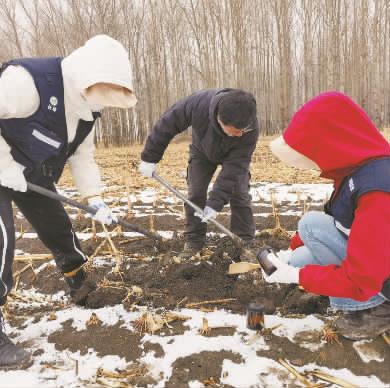
Core Viewpoint - Jilin Province is actively developing a "sky-ground integrated" ecological environment monitoring network, utilizing advanced technologies such as drones, AI, and remote sensing to enhance ecological protection efforts [1][9]. Group 1: Comprehensive Monitoring Network - Jilin has established a comprehensive sensing network covering air, water, sound, soil, and ecology, with the provincial ecological environment monitoring center as the "smart hub" [2]. - Air quality monitoring includes 126 stations, with an annual review of approximately 7.24 million air quality data points, enabling real-time monitoring of 116 volatile organic compounds and particulate matter [2]. - Water quality monitoring features 111 national control sections and 103 provincial control sections, achieving a 75.2% automatic monitoring coverage rate, with over 6.6 million data points reviewed annually [2]. - Soil and groundwater monitoring has established a scientific assessment system with 730 basic points and 66 background points, integrating groundwater monitoring into the national assessment framework [2]. Group 2: Technological Integration - The ecological remote sensing network in Changbai Mountain combines satellite remote sensing, drone patrols, and ground infrared cameras for proactive ecological risk warnings [3]. - The monitoring system operates efficiently through a collaborative mechanism among provincial, municipal, and county levels, enhancing grassroots monitoring capabilities [4]. Group 3: Data Application and Governance - Jilin Province has developed a comprehensive data application chain from collection to governance, enhancing the effectiveness of monitoring data in ecological protection [5]. - The air quality forecasting system operates 24/7 with over 90% accuracy for 72-hour forecasts, providing daily updates through an app [5]. - Pollution source monitoring includes over 13,000 enforcement monitoring data reviews and more than 400,000 self-monitoring data points from polluting units [5]. Group 4: Capacity Building and Technological Advancements - The ecological monitoring team in Jilin is enhancing its technical capabilities through a mentorship program and the introduction of advanced equipment [8]. - The team has successfully collected over 200 samples from water sources and wastewater treatment plants, demonstrating commitment and resilience in challenging conditions [8]. - Technological upgrades include the iteration of monitoring vessels and the introduction of high-precision equipment, marking significant improvements in monitoring capabilities [8].
从石漠荒山到绿水青山,看西畴县如何点绿成金
Zhong Guo Huan Jing Bao· 2025-08-28 01:46
Core Viewpoint - Xichou County has successfully transformed its ecological advantages into economic value and cultural development, achieving remarkable results in promoting rural civilization through the implementation of the concept that "lucid waters and lush mountains are invaluable assets" [1][6] Group 1: Ecological Economic Development - Xichou County has established a multi-faceted "ecological +" composite industrial system, enhancing both ecological and economic value [2] - The county has developed standardized, specialized, and branded green agriculture, certifying 31 agricultural products under the "three products and one standard" category, with notable products like Xichou black-boned chicken and kiwifruit recognized nationally [2] - A "leading enterprise + base + farmers" model has been adopted in forestry, resulting in the planting of over 16,000 acres of trees and fruits, and the development of under-forest economies, significantly increasing farmers' income [2] - The county has fostered 69 ecological processing enterprises, with a focus on smart terminal manufacturing, enhancing its industrial growth through technological innovation [3] - Xichou County has developed five A-level scenic spots and two national health bases, promoting eco-tourism and cultural experiences that attract visitors and boost the local economy [3] Group 2: Clean Energy Initiatives - The county has built 11 small hydropower stations with a total installed capacity of 95,000 kilowatts, and has initiated various solar energy projects, including 714 kilowatts of distributed photovoltaic capacity [4] - 90% of natural villages have installed solar street lights, and a waste incineration power plant has been established, generating approximately 52 million kilowatt-hours of electricity annually [4] Group 3: Cultural Development and Community Engagement - Xichou County has created cultural works such as the film "Stone Desert Flowers Bloom" and ecological civilization dramas, promoting ecological values and community participation in environmental protection [5] - The county has integrated ethnic cultural heritage into its tourism, enhancing cultural confidence and pride among local communities while attracting tourists [5] - The county aims to continue its development path of "ecological foundation, industrial empowerment, and cultural soul," focusing on activating the "ecological +" value chain and expanding the transformation channels of ecological advantages into economic benefits [6]
勇挑重担谱奉献之歌——孙柏峰
Zhong Guo Huan Jing Bao· 2025-08-28 01:46
Core Viewpoint - The article highlights the dedication and achievements of Sun Baifeng, a veteran in environmental monitoring in Changchun, who has significantly contributed to ecological protection over 21 years [1] Group 1: Professional Achievements - Sun Baifeng has authored the "14th Five-Year Plan" for rural environmental quality monitoring, providing scientific guidance for ecological monitoring in rural areas [1] - He has also led the compilation of emergency monitoring plans for sudden environmental incidents, enhancing local environmental safety [1] - His contributions to the "11th to 13th Five-Year" ecological environment quality reports have earned multiple awards, including first prize in Jilin Province and national recognition [1] Group 2: Recognitions and Honors - In 2021, Sun Baifeng was recognized as a "technical backbone" by the Ministry of Ecology and Environment [1] - He received the title of advanced worker in the ecological environment system of Jilin Province in 2023 [1] - In 2024, he was honored as one of the "Second Jilin Good People - Most Beautiful Grassroots Environmental Protectors" [1] Group 3: Commitment to Environmental Protection - Sun Baifeng's 21 years of dedication exemplify the loyalty and responsibility of the new era's ecological protection forces [1] - His work contributes to the preservation of Changchun's natural resources, symbolizing a strong commitment to environmental stewardship [1]
通化市:紧抓党建为监测注入红色动能
Zhong Guo Huan Jing Bao· 2025-08-28 01:46
Core Viewpoint - The Tonghua Ecological Environment Monitoring Center integrates party building with environmental monitoring, enhancing public awareness and participation in ecological protection efforts [1][2] Group 1: Party Building and Environmental Monitoring Integration - The center explores paths for deep integration of party building and monitoring business, establishing a solid political foundation for pollution prevention and high-quality development of regional ecological monitoring [1] - Party activities are closely linked with environmental education, utilizing events like theme party days and public service activities to innovate diverse environmental protection initiatives [1][2] Group 2: Public Engagement and Awareness - Activities such as ecological environment science lectures and open days invite the public to engage directly with monitoring processes, effectively raising awareness of ecological protection [1] - These initiatives create a "bridge" between the public and ecological protection efforts, fostering a strong consensus for environmental care and support [1] Group 3: Performance and Capability Enhancement - The center emphasizes the role of party organizations and members in driving core business capabilities, with leaders taking initiative in key assessments and challenges [2] - A "dual empowerment" cycle is formed, where party building promotes business performance, and business achievements validate the effectiveness of party initiatives, leading to improved monitoring capabilities and service efficiency [2] Group 4: Contribution to Ecological Protection - The integration of party building and business practices energizes the monitoring team, contributing significantly to the protection of natural resources and the construction of a beautiful Jilin [2]
监测战线的巾帼担当——张竹青
Zhong Guo Huan Jing Bao· 2025-08-28 01:46
Core Viewpoint - Zhang Zhuqing, Deputy Director of Jilin Provincial Ecological Environment Monitoring Center, has been recognized for her dedication to environmental protection and monitoring over 30 years, earning the title of Advanced Worker in Jilin Province [1][2] Group 1: Professional Achievements - Since graduating from Nanjing University in 1991, Zhang has focused on environmental monitoring, becoming a first-class expert in the "Three-Five Talent" program of the Ministry of Ecology and Environment [1] - She has led the establishment of over 60 organic pollutant analysis protocols, filling a significant gap in Jilin Province's environmental monitoring capabilities [1] - Zhang's team has received national recognition twice for their contributions, establishing them as a benchmark in the industry [1] Group 2: Emergency Response - Zhang has played a crucial role in nearly 20 provincial-level environmental emergency monitoring operations, including significant events like the Songhua River explosion in 2005 and the major flood in 2010 [1] - During the Songhua River flood, she worked tirelessly for nine consecutive nights, providing critical data to support decision-making, which earned her the title of Advanced Individual in Environmental Emergency Response [1] Group 3: Research and Development - Zhang has led and participated in over 20 national and provincial research projects, receiving the second prize for technological progress in Jilin Province and the second prize for natural science academic achievements [1] - She has published 12 papers, including 3 indexed by SCI, and contributed to the formulation and revision of 7 national and local industry standards, providing robust methodological support for environmental management [1]
白山市:协同发力 水质监测能力“三级跳”
Zhong Guo Huan Jing Bao· 2025-08-28 01:46
白山中心高度重视能力建设投入,截至2025年7月,累计投入资金约900万元,精准购置气相色谱—质谱 联用仪等先进仪器设备71台(套)。目前,所有设备均已完成调试并全部投入实际监测工作,显著提升 了白山中心的硬件支撑能力和工作效率,让监测工作更精准、高效。 自2020年以来,白山中心监测项目大幅拓展,从原来的88项跃升至237项,五年内新增监测能力149项, 增幅高达169%。值得一提的是,所有新增项目均高效完成扩项评审,为全面掌握白山水环境质量奠定 了坚实的技术基础,让监测范围更广、数据更全面。 白山中心通过在能力、装备、管理三个方向协同发力,推动环境监测综合实力迈上新台阶。 吉林省白山生态环境监测中心(以下简称白山中心)紧紧围绕水质全分析能力建设目标,持续发力,监 测能力取得显著突破。 为确保能力建设成果切实转化为高质量数据,白山中心在管理机制上狠下功夫。通过强化责任落实,与 相关技术人员签订工作目标与质量责任书,明确岗位职责、压实个人责任,建立起覆盖"部署、执行、 监督、考核"的全过程质量管理机制。这一机制有力保障了监测数据的真实性、准确性、全面性、及时 性和规范性。 ...
文山麻栗坡县多维度提升城区声环境质量
Zhong Guo Huan Jing Bao· 2025-08-28 01:46
Core Viewpoint - The focus of the noise pollution prevention work in Malipo County is to create a "quiet and beautiful living environment" for residents through systematic noise monitoring and management strategies [1][2][3] Group 1: Noise Pollution Prevention Measures - Malipo County is implementing a comprehensive noise pollution prevention system by defining responsibilities, establishing collaborative mechanisms, and enhancing monitoring efforts [1] - The county has developed a responsibility system for noise management that clarifies roles and eliminates regulatory blind spots, leading to effective resolution of overlapping responsibilities [1] - Since 2025, Malipo County has conducted five joint enforcement actions to address significant noise complaints from residents [1] Group 2: Monitoring and Data Analysis - The county has set up noise monitoring points across different functional areas and transportation routes, conducting regular monitoring and data analysis [2] - From 2025 onwards, a total of 168 noise monitoring sessions have been conducted, with daytime compliance rates at 93.75% and nighttime compliance rates at 89.3% [2] Group 3: Community Engagement and Satisfaction - Malipo County has established a rapid response and closed-loop process for noise complaints, ensuring that all 54 reported cases since 2025 have been resolved, achieving a 100% completion rate [2] - A satisfaction survey conducted among 530 residents revealed an 85.6% satisfaction rate regarding the current noise environment, a significant increase of 31.4 percentage points compared to before the noise zone adjustments [3] - The county is promoting the creation of "Quiet Communities" with specific indicators for noise compliance, management standards, and resident satisfaction [3]