
Qi Huo Ri Bao

Search documents
破译金属新主线:金银开门红!“大多头”难以为继?
Qi Huo Ri Bao· 2026-01-02 23:49
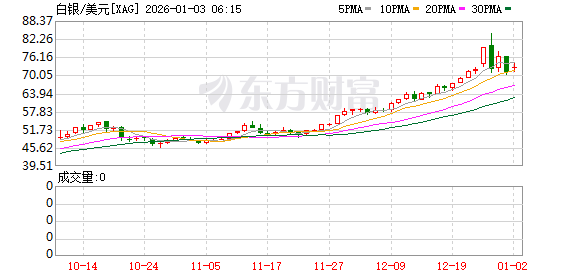
Core Viewpoint - The silver market has experienced significant volatility, with prices reaching near historical highs before a sharp decline, driven by ongoing tensions between overseas regulators and bullish investors [2] Group 1: Market Dynamics - On Monday, COMEX silver futures approached $84 per ounce before dropping over 10% in a single day, followed by further declines on Wednesday, but rebounded on Friday as the first trading day of 2026 saw gains in precious metals [2] - The recent price fluctuations are attributed to increased margin requirements imposed by overseas exchanges, which pressured bullish positions and led to profit-taking among investors [2] - Despite the volatility, the underlying structural "supply shortage" in the silver market remains unchanged, with low global deliverable silver inventories and significant financial capital entering the market [2][4] Group 2: Supply and Demand Outlook - Global silver production is not expected to see significant growth by 2025, while demand is projected to surge, particularly due to the rise of AI hardware, photovoltaics, and electric vehicles [3] - The silver market is currently in a state of structural supply shortage, with a projected supply gap exceeding 2,900 tons in 2026 [3] - Domestic silver inventories are declining, indicating strong downstream demand, while COMEX silver futures inventory remains high but with low liquidity due to long-term holders locking up large amounts of silver [4] Group 3: Future Market Strategy - Analysts suggest a cautious approach for traders, balancing optimism with tactical caution, as the structural bull market for precious metals remains intact [6] - It is recommended to reduce positions and prioritize more stable gold holdings while viewing silver as a market sentiment amplifier rather than a core investment [6] - The first quarter of 2026 is expected to see a cautious bullish outlook for silver, with recent price drops viewed as a technical correction rather than the end of a bull market [6]

金银,开门红!“大多头”难以为继?
Qi Huo Ri Bao· 2026-01-02 23:46
看向基本面,据金瑞期货贵金属研究员吴梓杰介绍,全球矿产银产量在2025年并未出现显著增长,需求则爆发 式增长。2025年被称为"AI工业化元年",人工智能硬件对银的需求激增,叠加光伏和新能源汽车对银的需求持 续放量,工业用银占比进一步提升。当前市场正处于结构性供应短缺的状态,2025年是白银连续第五年供不应 求,2026年预计供应缺口仍将超过2900吨。 顾冯达认为,白银市场供需错配的根本原因是供应难以快速增长。不过,前期推动白银价格飙涨的"大多头", 在海外交易所大举提升保证金的情况下可能面临资金成本压力,加杠杆"逼空"拉涨的模式或许在中期难以为 继,市场正从多头情绪驱动,转向对实际供需和宏观政策的敏感博弈,波动加剧将成为新常态。 "截至2025年12月31日,白银显性库存呈现'外增内减、总体偏紧'的格局。"吴梓杰说,最新数据显示,上期所 白银库存降至691.638吨。国内库存持续去化,显示出国内下游备货需求依然旺盛,现货市场供应趋紧。截至 2025年12月24日,COMEX白银期货库存约为4.51亿盎司,虽然维持高位,但注册仓单处于历史相对低位,大量 白银被长期持有者锁定,导致可用于期货交割的流动性库存实 ...

“吨亏破千”?PDH行业停工潮将至?这些品种受到影响
Qi Huo Ri Bao· 2026-01-02 00:17
Core Viewpoint - The propane dehydrogenation (PDH) industry is facing significant losses, with profits dropping to around -1400 yuan/ton, marking the lowest level in nearly six years. There are expectations of widespread shutdowns in the PDH industry this month, raising concerns about the impact on downstream products like propylene, polypropylene (PP), and liquefied petroleum gas (LPG) [1][2]. Industry Profit Trends - The PDH industry's profit trajectory showed a clear "rise and fall" pattern last year, peaking in July and August due to low raw material prices and a rebound in downstream PP prices. However, since mid-October, profits have been in decline, leading to significant losses [1]. - The main reason for the continued losses is the weakening price of PP, with supply outpacing demand as PP production capacity is expected to grow by 12% in 2025 and around 10% in 2026, while actual demand growth is only projected at 4%-5% [1][2]. Raw Material Pressure - The pressure on raw materials is increasing, with seasonal purchasing expectations in India and Japan driving up import propane prices. Domestic deep processing enterprises report high spot prices for propane, further squeezing PDH industry profit margins. Additionally, the current demand for PP is weak, limiting price recovery potential [2]. Impact on Related Products LPG - LPG demand is relatively stable, but its price is influenced by the PDH industry's demand. Since November, LPG's fundamentals have shown a "strong reality, weak expectation" pattern. If PDH operations reduce or shut down, LPG's price stability may be compromised [4]. - Long-term projections indicate that LPG production capacity in the U.S. and the Middle East will continue to increase, leading to potential downward pressure on LPG prices if PDH operations decline [4]. PP - As the core downstream product of PDH, PP prices have been declining for three consecutive months since September. While expectations of reduced PDH operations may provide short-term support for PP prices, high inventory levels and upcoming new production capacity in 2026 will likely maintain long-term supply pressure [5]. Propylene - Propylene, being a direct downstream product of PDH, will see a significant supply reduction if PDH operations shut down, potentially providing price support. However, the ongoing pressure on PP margins and reduced operating rates may limit propylene's price increase potential [6]. Trading Opportunities - Market participants should focus on the actual shutdown situation of PDH units in January. If the number of shutdowns increases, it could significantly support PP and propylene prices. Conversely, if shutdowns are fewer than expected, related products may face downward pressure [8]. - Long-term variables to monitor include domestic macro policy releases and the impact of new production capacity planned for 2026, which could affect the supply-demand balance for PP and propylene [8].
黄金 价格越跌越买? | 破译金属新主线
Qi Huo Ri Bao· 2026-01-02 00:07
编者按:近期,贵金属、铂族金属和有色金属板块大幅波动。期货日报邀请多位重磅嘉宾做客"期货大 家谈——对话首席洞见金属新主线"直播间,为大家破译金属市场新主线。 在美元信用受到挑战的背景下,全球央行购金行为从"托底需求"逐渐转变为"主动配置"。喻松称,央行 购金并非始于近期,而是自2008年金融危机后便持续进行,在2022年俄乌发生冲突后进一步加速。央行 购金已经从单纯的资产保值,转向对资产安全的战略性重视。 数据显示,2023年全球央行购金1037吨,占全球黄金需求的23.3%。值得注意的是,在美联储大幅加 息、美元利率高企的2022—2024年,金价仍稳步攀升,央行购金是重要支撑。今年以来,投资需求接棒 成为金价上涨的主力驱动,前三季度黄金投资需求超1500吨,同比大幅增长。 喻松认为,当前贵金属板块内部也存在明显分化。黄金作为货币属性最强的品种,其价格上涨更多由去 美元化趋势、央行配置需求驱动,呈现"台阶式上行"的特征,回调幅度有限。 而白银则在货币属性之外,叠加了强劲的商品属性。特别是新能源产业对白银浆料的需求持续增长,加 上全球库存持续下降、供应弹性有限,共同推动其价格快速上涨。今年白银价格涨幅超过1 ...
美军突袭!特朗普:摧毁一大型设施!刚刚 美国下调关税
Qi Huo Ri Bao· 2026-01-02 00:00
Group 1: Tariff Adjustments - The U.S. Department of Commerce has lowered the proposed tariff rates for 13 Italian pasta exporters, with Garofalo's rate reduced to 13.89%, La Molisana to 2.26%, and the remaining 11 companies to a uniform rate of 9.09% [3] - This tariff adjustment coincides with the U.S. decision to delay the increase of tariffs on certain imported furniture by one year, originally set to take effect on January 1, 2026, now postponed to January 1, 2027 [3] Group 2: Venezuelan Oil Production Decline - Venezuela's oil production in the Orinoco heavy oil belt has dropped approximately 25%, with daily output falling to 498,131 barrels as of December 29, 2025 [11] - The decline is attributed to insufficient storage capacity and slowed export rates, leading to the closure of oil wells in some fields [11] - The geopolitical tensions and U.S. sanctions have significantly impacted Venezuela's oil exports, resulting in a forced reduction of about 500,000 barrels per day [11] Group 3: Oil Market Outlook - The global oil market is facing challenges due to geopolitical conflicts and supply-demand imbalances, with WTI crude futures down about 20% and Brent crude down over 18% for the year [11] - Analysts suggest that the oil market remains weak, with potential oversupply pressures expected to increase in the first quarter of 2026, limiting the potential for price rebounds [13] - The ongoing U.S.-Venezuela conflict may lead to a structural improvement in the oil market if production cuts in Venezuela continue, with Brent crude potentially recovering to above $65 per barrel [14]

“吨亏破千”?PDH行业停工潮将至?这些品种受到影响→
Qi Huo Ri Bao· 2026-01-01 23:30
Core Viewpoint - The propane dehydrogenation (PDH) industry is experiencing significant losses, with profits dropping to around -1400 yuan/ton, marking the lowest level in nearly six years. There are expectations of widespread shutdowns in the PDH industry this month, raising concerns about the impact on downstream products like propylene, polypropylene (PP), and liquefied petroleum gas (LPG) [1][2]. Industry Profit Trends - The PDH industry's profit trajectory showed a clear "rise and fall" pattern last year, peaking in July and August due to low raw material prices and a rebound in downstream PP prices. However, since mid-October, profits have been in decline, leading to significant losses [1]. - The continuous loss in the PDH industry is primarily attributed to weakening PP prices, with supply outpacing demand as PP production capacity is expected to grow by 12% in 2025 and around 10% in 2026, while actual demand growth is only projected at 4%-5% [1][2]. Raw Material Pressure - The pressure on raw materials is increasing, with seasonal purchasing expectations in India and Japan driving up import propane prices. Domestic deep processing enterprises report high spot price discounts on propane, further squeezing PDH industry profit margins. Additionally, the current demand for PP is weak, limiting price recovery potential [2]. Impact on Related Products LPG - LPG demand is relatively stable, but its price is influenced by the PDH industry's demand. Since November, LPG's fundamentals have shown a "strong reality, weak expectation" pattern, with prices remaining firm. However, if PDH operations reduce or shut down, LPG's strong market position may weaken [4]. - Long-term projections indicate that LPG production capacity in the U.S. and the Middle East will continue to increase, leading to potential downward pressure on LPG prices if PDH operations decline [4]. PP - As the core downstream product of PDH, PP prices have been declining for three consecutive months since September due to supply pressures. While expectations of reduced PDH operations may provide short-term support for PP prices, high inventory levels and upcoming new production capacity in 2026 suggest that supply pressures will persist [5]. Propylene - Propylene, as a direct downstream product of PDH, will see a significant supply reduction if PDH operations shut down, potentially providing price support. However, the current profitability of PP powder is under pressure, which may limit propylene's price growth [6]. Trading Opportunities - Market participants should focus on the actual shutdown situation of PDH facilities in January. If the number of shutdowns increases, it could significantly support PP and propylene prices. Conversely, if shutdowns are fewer than expected, related products may face downward pressure [8]. - Long-term variables to monitor include domestic macro policy releases and the impact of new production capacity planned for 2026, which could affect the supply-demand balance for PP and propylene [8].

刚刚,暴跌了!美联储,降息生变?
Qi Huo Ri Bao· 2025-12-31 23:49
Market Overview - Silver prices experienced a significant drop, with New York silver prices falling nearly 10% during trading, while both spot silver and gold prices, as well as international oil prices, declined across the board [2] - The Nasdaq China Golden Dragon Index fell by 1.13%, with NIO down over 7%, NetEase down 2%, and Baidu down over 1% [9] - The WTI crude oil futures price decreased by 0.91%, settling at $57.42 per barrel, marking a cumulative decline of approximately 20% for 2025 [9] - COMEX gold futures prices fell by 1.24%, closing at $4,332.1 per ounce, with a cumulative increase of about 55% for 2025 [10] Chinese Stocks Performance - The China concept stock index dropped by 1.4%, with notable declines in electric vehicle manufacturers: NIO fell by 9.45%, XPeng by 5.97%, and Li Auto by 4.81% [5][7][8] - The overall performance of the A-share non-ferrous metal sector was strong, with a 94.73% increase for the year, leading all sectors [12] Copper Market Insights - Copper prices are currently at historical highs, driven by expectations of Federal Reserve interest rate cuts and safe-haven demand, despite weak domestic consumption and rising inventories [12][14] - Analysts suggest that the current high copper prices reflect optimistic future expectations, with potential catalysts for further increases linked to the appointment of a new Federal Reserve chair and anticipated interest rate cuts [14] - The copper market is characterized by a "high copper price, low profit" scenario, which may persist into the first half of 2026 [13]
广州期货深圳分公司正式开业 深耕大湾区服务实体经济
Qi Huo Ri Bao· 2025-12-31 06:58
广州期货深圳分公司的设立是深耕大湾区、服务实体经济的重要举措。未来,分公司将依托广期所创新 产品与深圳金融资源,重点为黄金珠宝、贵金属及科技等领域提供综合金融服务,助力大湾区高质量发 展。 随后,广东省黄金协会副会长叶永光在致辞中表示,广州期货落户深圳将为本地产业链发展注入新动 力。深圳麦金网络科技有限公司总经理谢江欢代表合作企业致辞,期待未来深化协同合作。深圳分公司 总经理黄锐洋则表示,将带领团队扎根深圳,为客户提供专业、稳健的金融服务。 期货日报网讯(记者 饶红浩 )2025年12月29日上午,广州期货股份有限公司深圳分公司在深圳罗湖水 贝正式开业。深圳市期货业协会副会长田西平、罗湖区东晓街道有关领导、深圳市黄金珠宝首饰行业协 会副会长林畅伟、广东省黄金协会副会长叶永光、广州期货副总经理孙文慧、总经理助理周健锐等多位 领导嘉宾出席开业仪式。 广州期货副总经理孙文慧在开业致辞中表示,深圳分公司的成立是公司产业化、机构化转型的关键一 步。她指出,深圳分公司选址罗湖水贝——这一全球黄金珠宝产业集聚区,正是为了紧抓广州期货交易 所上市铂、钯期货期权的机遇,深入产业一线,更直接地服务实体企业风险管理需求。她强调,深 ...
铂、钯价格持续回落 原因是?
Qi Huo Ri Bao· 2025-12-31 05:46
Core Viewpoint - The recent decline in platinum and palladium futures prices is seen as a correction following a previous rapid increase, with significant profit-taking pressure from long positions [3]. Group 1: Price Movements - As of December 31, platinum futures (main contract 2606) fell by 10.25% to 538 CNY per gram, while palladium futures (main contract 2606) dropped by 9.6% to 405.7 CNY per gram, returning to the price range seen on their listing day [2]. - NYMEX platinum futures approached 2007 USD per ounce, and NYMEX palladium futures neared 1556 USD per ounce [2]. Group 2: Market Analysis - Analysts attribute the price drop to a lack of new bullish drivers, with traders adopting a wait-and-see approach amid sufficient expectations for Federal Reserve rate cuts and a weaker dollar [3]. - The driving factors for platinum and palladium prices have shifted from macroeconomic narratives to liquidity and physical shortages [3]. - There is a divergence within the Federal Reserve regarding the path of interest rate cuts, which may weaken expectations for monetary easing [3]. Group 3: Future Outlook - Analysts suggest that platinum's financial attributes provide a hedge against inflation, with a significant supply gap in the industrial sector, indicating potential price increases in the medium to long term [3][4]. - Palladium's fundamentals appear weaker, with ongoing investigations into unrefined palladium imports from Russia potentially tightening supply temporarily, but overall fundamentals may exert downward pressure on prices in the long run [4][5].
港信期货捐赠助力于家官庄村面食加工厂建设
Qi Huo Ri Bao· 2025-12-31 04:14
项目建成后,预计每年可生产面粉300吨、加工面食产品350吨。值得一提的是,合作社将每年免费为本 村"幸福食堂"供应馒头,切实解决39名75周岁以上老人的日常就餐问题,实现经济效益与社会效益的双 赢。 未来,港信期货将继续以专业之力助力乡村特色产业发展,推动更多有温度、有特色的乡村品牌走向更 广阔的市场,在乡村振兴的道路上贡献坚实的金融力量。 五莲县于里镇于家官庄村近日迎来乡村振兴路上的又一份暖心支持——港信期货再次捐赠10万元,用于 村党支部领办的面食加工合作社项目建设。这已是港信期货第二年向该合作社提供帮扶,累计捐赠达20 万元,持续助力村庄特色产业发展。 为拓宽村民致富渠道,于家官庄村党支部立足本地资源,牵头成立面食加工合作社,重点发展石磨面 粉、手工馍馍等农副产品加工与销售。此次捐赠资金将主要用于购买加工设备、采购粮食原材料以及门 店装饰等方面,助力合作社实现标准化、规模化生产。目前,本地电商团队已对"于家馍馍"进行包装升 级,,未来将通过"线下门店+线上电商"双渠道同步销售,进一步打开市场。 ...