
Qi Huo Ri Bao

Search documents
大规模空袭,乌30万人停水断电!特朗普威胁!美原油库存远超预期,油价下跌,银价暴跌
Qi Huo Ri Bao· 2026-02-12 23:48
先来看海外市场表现。截至收盘,COMEX黄金期货价格收跌3.08%,报4941.4美元/盎司;COMEX白银 期货价格收跌10.62%,报75.01美元/盎司。 截至收盘,美股三大股指收盘普跌,道指跌1.33%,纳指跌2.02%,标普跌1.57%。 国际油价12日下跌。截至收盘,纽约商品交易所3月交货的轻质原油期货价格下跌1.79美元/桶,收于 62.84美元/桶,跌幅为2.77%;4月交货的伦敦布伦特原油期货价格下跌1.88美元/桶,收于67.52美元/ 桶,跌幅为2.71%。 消息面上,当地时间2月12日,纽约联邦储备银行发布报告称,美国消费者和企业承担了特朗普政府加 征关税的大部分成本,比例约为90%,与政府此前"由外国承担关税"的说法形成对比。 报告评估显示,去年美国平均关税水平从2.6%升至13%。其中,1月至8月期间,美国承担了94%的关税 冲击;9月至10月为92%;11月为86%。研究指出,在特朗普首个任期内的经验显示,外国出口商并未 显著降价,关税成本几乎"100%转嫁至美国进口价格"。 对当前的美伊局势,赵若晨认为,其为原油注入的溢价中枢在3~5美元/桶。她表示,当前地缘的定价权 重大于基 ...
美国1月非农就业数据超市场预期
Qi Huo Ri Bao· 2026-02-12 10:51
Core Viewpoint - The U.S. labor market showed stronger-than-expected performance in January, with non-farm payrolls increasing by 130,000 and the unemployment rate dropping to 4.3%, impacting market expectations for Federal Reserve interest rate decisions [1]. Group 1: Employment Data - The U.S. added 130,000 non-farm jobs in January, significantly exceeding market expectations [1]. - The unemployment rate fell to 4.3%, indicating a tightening labor market [1]. Group 2: Federal Reserve Expectations - The CME FedWatch Tool indicates a 94.6% probability that the Federal Reserve will keep interest rates unchanged in March [1]. - Market expectations for future rate cuts have shifted from June to July following the strong employment data [1]. - Federal Reserve officials have signaled a cautious approach to further rate cuts, with a preference for patience in assessing economic conditions [1]. Group 3: Economic Commentary - Cleveland Fed President Loretta Mester expressed a preference for maintaining current rates while evaluating the impact of recent rate cuts [1]. - Kansas City Fed President Esther George emphasized the need to keep rates in a "slightly restrictive" range due to inflation remaining above target levels [1]. - Moody's Chief Economist Mark Zandi warned that despite the strong employment report, the job market remains fragile and susceptible to shocks [2].
铁矿石 继续下跌空间有限
Qi Huo Ri Bao· 2026-02-12 09:20
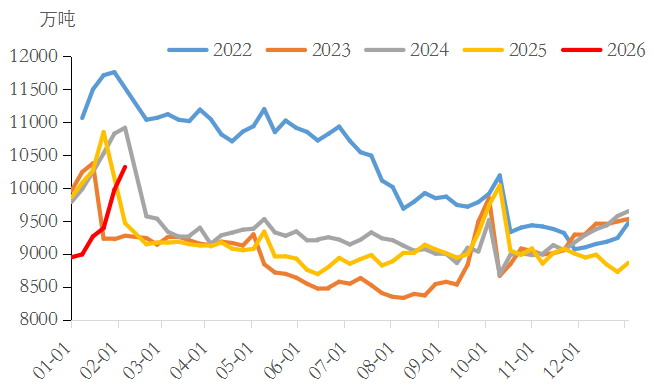
Core Viewpoint - After the recent price adjustment, iron ore valuations are at a neutral to low level, and with the dual support of steel mills' phased resumption after the holiday and expectations of macro policy strengthening, further downside is limited. However, throughout the year, iron ore is expected to enter a phase of oversupply, with price levels likely to decline further [1][10]. Group 1: Price Trends and Market Dynamics - Since the end of January, iron ore prices have declined primarily due to two reasons: changes in market expectations regarding interest rate cuts and liquidity easing after the appointment of the new Federal Reserve chairman, and cautious raw material restocking by steel mills, with iron ore inventories at 247 steel mills down by 5.2968 million tons year-on-year [2]. - As of February 11, the main iron ore futures contract closed at 762.5 yuan/ton, indicating limited further downside in the current price position [1][10]. Group 2: Production and Inventory Insights - Despite the impact of the Baosteel incident, the average daily pig iron output among 247 steel mills has remained between 2.27 million and 2.29 million tons this year, suggesting a potential for phased production increases as steel mills aim to meet annual production targets [3]. - With low iron ore inventories at steel mills, there is a high likelihood of increased restocking efforts once production resumes after the holiday [4]. Group 3: Supply and Demand Outlook - The first quarter is traditionally a low supply season for iron ore, with historical data indicating a decrease in shipments by 9.5 to 10 million tons compared to the previous quarter. However, due to fewer extreme weather events this winter and a later Spring Festival, January's global iron ore shipments remained high [6]. - The global iron ore shipment volume was 25.353 million tons in the first week of February, down by 5.593 million tons week-on-week, indicating a potential supply-demand mismatch in the weeks following the holiday [7]. Group 4: Policy and Economic Context - Expectations for policy strengthening remain, with the Central Economic Work Conference prioritizing domestic demand expansion as a key economic task for 2026. The People's Bank of China has already implemented a 0.25 percentage point reduction in structural monetary policy rates among other measures, with further policy support anticipated around the National People's Congress [8]. - The resilience of exports and gradual recovery in manufacturing demand may provide a boost to iron ore demand [8]. Group 5: Valuation and Long-term Projections - Current iron ore spot prices are around 100 USD/ton, which is near a five-year low. The profit margin for long-process rebar has widened to 126 yuan/ton compared to iron ore import profits, indicating that both absolute and relative valuations are at a neutral to low level [9]. - In the medium to long term, iron ore is expected to enter a phase of oversupply, with supply increases primarily from emerging mines and major producers. It is projected that iron ore supply will increase by 40 to 45 million tons by 2026, with a significant contribution from the Simandou project [9].

债市 进一步走强动力不足
Qi Huo Ri Bao· 2026-02-12 09:16
Group 1 - The bond market has shown a pattern of "narrow yield fluctuations, long-end leading gains, and synchronized strength in futures and spot markets" since February, supported by a reasonably ample liquidity environment and weak financing demand during the production off-season [1] - The central bank's recent actions, including a net injection of 100 billion yuan through a three-month reverse repurchase agreement and the resumption of 14-day reverse repos, have stabilized liquidity in the interbank market, providing support for the bond market [1] - The issuance of government bonds has surged in early February, while the equity market has stabilized, limiting the downward space for yields and making it difficult for the bond market to achieve a trend breakthrough [1] Group 2 - The central bank's monetary policy report indicates that the effects of the moderately accommodative monetary policy implemented in 2025 are gradually becoming evident, with significant impacts on stabilizing economic growth and financial market operations [2] - The report emphasizes the continuation of a supportive monetary policy stance, with a focus on expanding domestic demand and optimizing supply, while indicating a low probability of short-term reserve requirement ratio (RRR) cuts or interest rate reductions [2] - The central bank is expected to maintain a "protective" policy tone, avoiding abrupt changes, which will help the bond market maintain a strong oscillating pattern and prevent large fluctuations [3] Group 3 - Consumer prices (CPI) rose by 0.2% year-on-year in January, with core CPI (excluding food and energy) increasing by 0.8% year-on-year, indicating a moderate rise in service and industrial consumer goods prices [4] - The Producer Price Index (PPI) decreased by 1.4% year-on-year in January, but the decline has narrowed compared to the previous month, with a month-on-month increase of 0.4%, suggesting a bottoming out and recovery in industrial product prices [4] Group 4 - The bond market has entered a recovery phase due to multiple factors, but the recent drop in the 10-year government bond yield below 1.8% and the cooling of short-term interest rate cut expectations indicate insufficient driving forces for further declines, leading to a lack of momentum for a trend breakthrough [5]
短端利率上行
Qi Huo Ri Bao· 2026-02-12 09:15
Group 1 - The core viewpoint of the articles indicates that the short-term interest rates in the money market have shown a pattern of short-term increases and long-term decreases, driven by strong demand for funds ahead of the Spring Festival and expectations of continued accommodative monetary policy from the central bank until 2026 [1][2] - As of February 11, the Shanghai Interbank Offered Rate (Shibor) for overnight, 1-week, 2-week, and 1-month periods were reported at 1.366%, 1.523%, 1.6%, and 1.5511% respectively, reflecting increases of 4.8, 5, 1.7, and 0.11 basis points compared to February 4 [1] - The central bank has increased its reverse repurchase operations to counteract the strong demand for funds before the holiday, conducting 9029 billion yuan in reverse repos in the first three working days of the week, including 5029 billion yuan for 7-day and 4000 billion yuan for 14-day reverse repos [1] Group 2 - Post-holiday, the domestic money market interest rates are expected to be weak in the short term but stable in the long term, as the demand for funds is anticipated to decrease significantly despite a large amount of reverse repos maturing [2] - The central bank's recent commitment to continue implementing a moderately accommodative policy is likely to lead to a re-pricing of interest rates in the market, with expectations that medium- to long-term rates will stabilize after adjustments [2]
股市 稳中向好趋势没有改变
Qi Huo Ri Bao· 2026-02-12 09:15
Group 1 - The long-term trend of A-shares remains stable and positive, with a focus on "quality" over "quantity" in 2026, emphasizing new productive forces and the "anti-involution" theme as the main line for the year [1][4] - The A-share market experienced significant volatility at the end of January, with rapid sector rotation, and the volatility focused on two main lines: AI-driven technology narratives and resource allocation related to geopolitical issues [1] - The combination of AI and precious metals has seen simultaneous price increases since the second half of 2025, leading to strong closing intentions among holders of this hedging combination [2] Group 2 - The new Federal Reserve Chairman nominee, Waller, advocates for a "balance sheet reduction and interest rate cuts" policy, aiming to restore the market's interest rate discovery mechanism and optimize resource allocation [3] - Market expectations suggest two interest rate cuts of 25 basis points each after June 2026, in line with the Trump administration's efforts to alleviate fiscal deficit pressures [3] - The AI sector, particularly investments in upstream hardware related to data centers and grid facilities, is expected to drive economic growth, with supply constraints in storage, chips, and liquid cooling [4]
日本股市创历史新高 可持续性存疑
Qi Huo Ri Bao· 2026-02-12 01:30
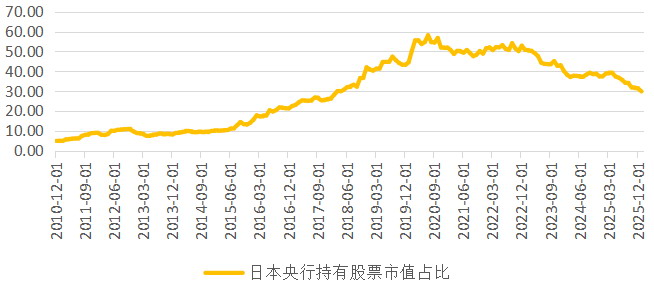
Group 1 - The recent Japanese House of Representatives election resulted in a ruling coalition led by the Liberal Democratic Party and the Japan Innovation Party securing a majority of seats, which has led to a strong rally in the Japanese stock market and a slight rebound in the yen [1][2] - The Nikkei 225 index reached a historical high of 57,960.19 points following the election, driven by expectations of policy continuity, overseas investments, yen arbitrage trading, and the Bank of Japan's asset purchase program [2][3] - The Japanese stock market's performance is not reflective of domestic economic improvement but is influenced by the government's commitment to fiscal policies, including increased spending in defense and semiconductor subsidies, and tax reductions to alleviate inflation impacts [2][3] Group 2 - Japanese companies are increasingly focusing on overseas investments, with 50% of their revenues coming from international markets, particularly in the top ten companies where this figure rises to 70% [3] - The low financing costs in Japan have facilitated yen arbitrage trading, making it an attractive tool for global capital operations, which has led to significant inflows into the Japanese stock market [3][5] - The Bank of Japan holds a substantial portion of Japanese stocks, with its holdings accounting for 29.8% of the total market capitalization, which has been a key driver of the stock market's rise [3][5] Group 3 - Long-term uncertainties include fiscal sustainability, inflation expectations, and potential geopolitical risks stemming from Japan's "Japan First" policy, which could destabilize the region and affect the yen's safe-haven status [5][6] - The expansionary fiscal policy may lead to rising inflation and increased debt levels, with the government needing to issue more bonds, which could negatively impact bond prices and yields [5][6] - If the Bank of Japan is forced to raise interest rates, it could lead to higher financing costs and a reduction in arbitrage trading, potentially causing significant issues for the stock market [6]
PTA 重新步入累库阶段
Qi Huo Ri Bao· 2026-02-12 01:30
Core Viewpoint - The PTA industry is experiencing a recovery in processing fees, leading to increased production activity and rising operating rates, which in turn is creating supply pressure [2][3][4] Group 1: Industry Supply and Demand Dynamics - PTA processing fees have rebounded to a normal level of 400 yuan/ton after hitting a historical low of 80 yuan/ton, prompting a recovery in production and a potential increase in operating rates [2] - Domestic PTA operating rates are currently at a three-year low, down 6.04 percentage points year-on-year, but the weekly production has reached 1.46 million tons due to increased capacity [2] - As of February 5, domestic PTA social inventory rose to 3.25 million tons, an increase of 3.55% from the previous week, indicating a return to a phase of inventory accumulation [3] Group 2: Impact on Downstream Industries - The polyester sector, particularly polyester filament and bottle-grade polyester, has seen some profit improvement due to the recent profit redistribution in the chemical fiber industry [4] - Despite the profit recovery, downstream polyester production rates are declining, with polyester enterprises operating at 77.93%, down 5 percentage points year-on-year, and weaving industry operating rates at 27%, down 22 percentage points year-on-year [3][4] - High inventory levels in polyester filament products compared to the previous year are creating de-inventory pressure, which may affect the pace of enterprise resumption after the Spring Festival [4] Group 3: Market Outlook - The PTA market remains in a state of oversupply, with price increases viewed as a rebound rather than a sustainable trend, as the underlying issue of supply exceeding demand persists [4] - The combination of profit recovery and raw material support has led to a rebound in PTA futures prices since November, but the accumulation of inventory alongside increased operating rates suggests a return to a weaker market position [4]
齐盛期货:焦煤节前维持震荡格局
Qi Huo Ri Bao· 2026-02-12 00:44
Core Viewpoint - The coking coal market is currently in a state of weak supply and demand, with a high probability of maintaining a fluctuating pattern before the holiday. After the holiday, there are risks of a decline due to rapid supply recovery, slow demand recovery, and seasonal destocking pressures [1][5]. Supply Side Summary - Domestic coking coal supply is experiencing a phase of contraction, with some coal mines in Shanxi and Shandong resuming production after maintenance. However, this increase is temporary and not sustainable. As the Spring Festival approaches, more local coal mines are expected to stop production, leading to a tightening supply before the holiday [2]. - The import of Mongolian coking coal has decreased significantly, with daily customs clearance numbers dropping by 200 vehicles. The border crossings will temporarily close during the holiday, further reducing import volumes. The impact of Indonesia's coal production reduction policy on domestic coking coal supply is limited, as it primarily affects thermal coal [2]. Demand Side Summary - Downstream demand remains weak, with steel mills' average daily pig iron production slightly increasing to 2.2858 million tons. However, production expansion is constrained by maintenance schedules and inventory pressures. Steel mills are cautious in their procurement strategies due to moderate profitability [3]. - Coking plants have completed their pre-holiday restocking, leading to a slowdown in procurement activities. Many traders are also reducing their market activities as the holiday approaches, resulting in decreased market liquidity [3]. Futures Market Performance - The main coking coal futures contract has shown a range-bound trading pattern, with open interest declining from 532,700 contracts to 469,100 contracts, indicating reduced trading activity. Prices have fluctuated between 1,100 and 1,200 yuan per ton, with no significant driving factors for a one-sided market trend [4]. Outlook for Post-Holiday Market - After the holiday, there are risks of a decline in coking coal prices due to the rapid recovery of supply and the slower recovery of demand. Although there is a fundamental support for coking coal from the expected increase in pig iron production, seasonal destocking pressures may lead to price corrections [5].
东海期货:铁矿石继续下跌空间有限
Qi Huo Ri Bao· 2026-02-12 00:39
Core Viewpoint - After the recent price adjustment, iron ore valuations are at a neutral to low level, and with the expected recovery of steel mills and macro policy support, further downside is limited. However, the market is expected to enter a phase of oversupply, leading to a downward shift in price levels throughout the year [1][8]. Group 1: Price Trends and Market Dynamics - Since the end of January, iron ore prices have declined due to two main reasons: changes in market expectations regarding interest rate cuts and liquidity, and cautious raw material restocking by steel mills, with iron ore inventories down by 5.2968 million tons year-on-year across 247 steel mills [2]. - As of February 11, the main iron ore futures contract closed at 762.5 yuan/ton, indicating limited further downside in the current price position [1][2]. Group 2: Production and Supply Factors - Despite a recent incident affecting production, the average daily pig iron output across 247 steel mills has remained stable between 2.27 million and 2.29 million tons. Steel mills are likely to increase production in the traditional demand season of March-April to meet annual production targets [3]. - The first quarter is typically a supply off-season for iron ore, with historical data showing a decrease in shipments by 9.5 to 10 million tons compared to the previous quarter. However, high shipment levels were maintained in January due to fewer extreme weather events [5]. Group 3: Policy and Economic Outlook - There are expectations for further macroeconomic policy support, particularly in light of the emphasis on expanding domestic demand in upcoming economic meetings. The People's Bank of China has already implemented measures to lower structural monetary policy rates [6]. - The anticipated recovery in manufacturing demand, coupled with resilient export performance, is expected to boost iron ore demand [6]. Group 4: Valuation and Future Projections - Current iron ore prices are around 100 USD/ton, which is near a five-year low. The profit margins for steel mills have improved, indicating that iron ore valuations are at a neutral to low level [7]. - In the medium to long term, the market is expected to transition into a phase of oversupply, with significant increases in supply projected from emerging mines and major producers. The expected increase in iron ore supply for 2026 is estimated to be between 40 to 45 million tons [8].