3 6 Ke

Search documents
3nm AI网络芯片来了,102.4Tbps带宽,专为Agent时代设计
3 6 Ke· 2026-02-12 04:41
Core Insights - Cisco has launched the 3nm Silicon One G300 switch chip, optimized for AI cluster networks, providing 102.4 Tbps Ethernet switching capacity per device [1] - The G300 supports 1.6T Ethernet ports and integrates Cisco's proprietary 200Gbps SerDes, enabling low power consumption, high performance, and extended transmission distances [1] - The G300 will power the new Cisco N9000 and Cisco 8000 systems, featuring innovative liquid cooling and supporting high-density optical devices [1] Intelligent Collective Network - The Silicon One G300 introduces intelligent collective network features to enhance performance and reliability for large-scale GPU clusters [2] - It includes a fully shared packet buffer of 252MB, allowing for 2.5 times higher burst traffic absorption compared to industry alternatives, preventing performance degradation [2] - Path-based load balancing directs traffic across all possible network paths, responding to congestion events 100,000 times faster than software tuning [2] - Active network telemetry provides programmable session-level diagnostics, helping customers proactively identify and resolve network issues [2] Measurable Benefits - Simulations show that the larger packet buffer increases network throughput by 33%, supporting higher GPU interconnect traffic without additional network capacity [3] - Job completion time (JCT) is reduced by 28% compared to advanced packet spraying implementations, significantly improving AI computing efficiency [3] - Integrated telemetry and visualization capabilities minimize software intervention, allowing seamless handling of diverse workloads [3] Future-Ready Infrastructure - The Silicon One G300 utilizes adaptive packet processing technology, allowing upgrades without hardware replacement, addressing financial and operational challenges of deploying new data center equipment [5] - Its programmability enables optimization for various roles, reducing hardware SKUs and simplifying inventory management [5] - New features can be introduced post-deployment, ensuring consistency in mixed-generation deployments and protecting long-term infrastructure investments [5] AI Workload Support - Cisco has expanded the Silicon One P200 product line, introducing the new Cisco 8000 and N9000 Ethernet systems to support AI networks of various scales [7] - The systems, powered by the G300, feature liquid cooling and air cooling designs, achieving nearly 70% energy efficiency improvements [7] - The introduction of 1.6T optical devices provides ultra-high bandwidth connections for AI expansion solutions [7] Unified Management Platform - Cisco is optimizing Nexus One through a unified management platform, integrating silicon, systems, optics, software, and programmable intelligence into a single solution [9] - The introduction of AI Canvas and AgenticOps facilitates easier troubleshooting and transforms complex issues into actionable solutions [9] Conclusion - Cisco's approach, including the Silicon One G300, prioritizes network efficiency and significantly reduces the total cost of ownership (TCO) for AI deployments [10] - The integrated method offers more choices, enhanced security, and deeper observability, supporting customers transitioning to AI-driven workloads [10]

负责,就是管好你自己的事
3 6 Ke· 2026-02-12 04:05
今天,想跟你探讨一个话题:负责。 究竟在公司里,什么是负责? 简单来说,负责就是管好你自己的事情。 01 公司里的指责闭环 如果一个人管不好自己的事情,往往就会去怪别人。有一位董事长提到过这样一个现象: 不仅能力差,态度也有问题,执行力不足,推一下动一下,没有任何积极性。自己安排的一点事情,他 们都做不好,能找到无数的理由和借口,认为实现不了,做不到。 中层也会强调,我需要的是能分担压力、主动解决问题的"伙伴",而不是需要我时刻监督、事事操心 的"伙计"。 企业的高层怪中层,中层怪员工,员工怪中层,中层又反过来怪高层,形成一个圈,却没有一个人真正 地负责,保质保量地做好自己的工作。 的确,很多公司都存在这样的情形。所有人都没有做好自己的事情,却在抱怨别人,相互甩锅,最后形 成了一个闭环。 1、高层怪中层 当一项战略没有成功,或者战略无法落地的时候,高层就会认为是中层的问题,会说:"我的战略很清 晰,为什么到你这里就走样了?全是中层的问题。" 高层也会责怪中层没有担当,只会向上甩锅,不敢做决策,将问题上交,他们也批评中层:"如果连决 策都不敢做,要你干嘛?" 在高层眼中,中层应该是"战略放大器",最后却成了"战 ...
天涯论坛又打复活赛,三年「复活」三次,1999元的创始会员割谁「韭菜」?
3 6 Ke· 2026-02-12 04:05
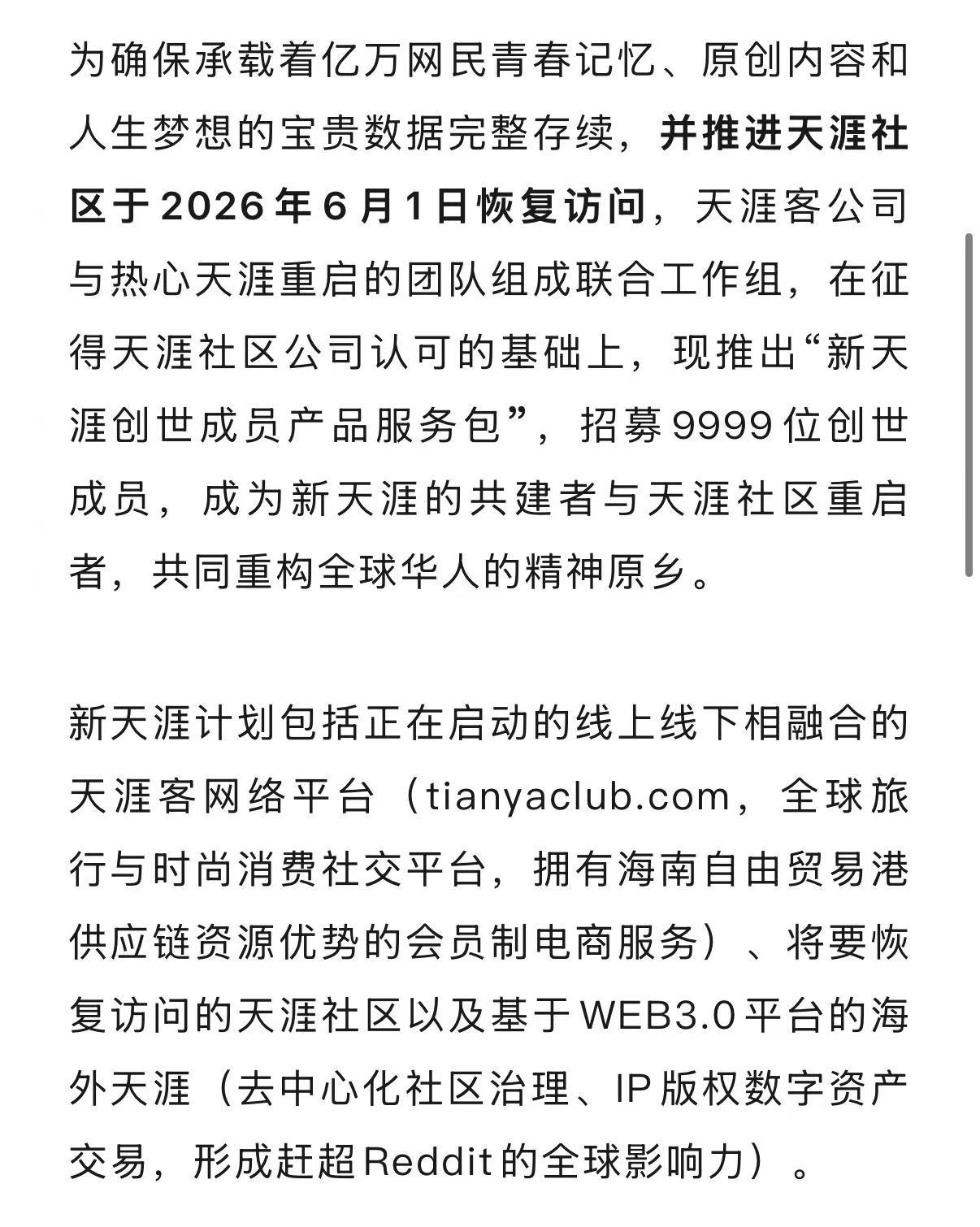
关停三年的天涯论坛,终于「复活」成功了? 近期,天涯神贴公众号发布官方消息,确认天涯论坛将于2026年6月1日恢复访问,同时启动「新天涯计划」,并宣布推出「新天涯创世成员产品服务包」, 计划招募9999位创始成员。据了解,天涯论坛在2023年因服务器欠费暂停网站浏览,期间曾多次发布「复活天涯」的众筹活动,但直至2026年才发布回归公 告。 (图源:天涯客) 作为曾经的中文互联网论坛顶流,天涯在过去二十七年时间里贡献了不少热议话题,是无数初代「网民」的集体记忆。但从这次宣布「新天涯计划」回归来 看,天涯论坛似乎与我们的青春回忆,越走越远了。 天涯,这次打赢「复活赛」了吗? 天涯论坛在2023年5月27日正式停止了网站的正常访问,更准确来说,是官方长期拖欠电信公司服务器费用,被强制关停。就在网站被关停的第二天,前天 涯社区执行总编宋铮等几位员工在社交平台开启直播,打出靠众筹复活天涯的口号。 而这场历时七天七夜的直播,最终的利润大约是20万元,距离目标的300万元,相差甚远。 事实上,天涯论坛的首次众筹复活,就已经暴露了天涯的问题。愿意为情怀真金白银支持天涯的用户并不算多,即使请了不少「天涯记忆里的熟面孔」,直 播 ...

本田怎么了?利润暴跌60%,电动化开始急刹车
3 6 Ke· 2026-02-12 03:59
Core Viewpoint - Honda, Japan's second-largest automaker, is facing significant financial challenges, with a 61.4% year-on-year drop in operating profit for the third fiscal quarter, marking the fourth consecutive quarter of decline and falling short of market expectations [1][4]. Financial Performance - For the third fiscal quarter, Honda reported an operating profit of 153.4 billion yen (approximately 987.07 million USD), down from 397.3 billion yen in the same period last year [4]. - Over the first nine months of the fiscal year ending December 31, 2025, Honda's total revenue was 15.98 trillion yen, a decrease of 2.2%, while operating profit plummeted by 48% to 591.5 billion yen [5][6]. - The net profit attributable to shareholders for the first nine months was 465.4 billion yen (about 3 billion USD), down over 42% from 805.2 billion yen in the previous year [5]. Business Segments - The motorcycle business remains a strong performer for Honda, with sales of 16.44 million units and operating profit of 546.5 billion yen, achieving a record operating margin of 18.6% [6][7]. - In contrast, the automobile business has seen a significant decline, with sales of 2.56 million units, a 9.1% year-on-year drop, and an operating loss of 166.4 billion yen [8][9]. Market Challenges - Honda's declining performance in the automotive sector is partly attributed to reduced sales in Asia, particularly in China, which has been a significant market for the company [9][11]. - The impact of U.S. tariffs on Japanese imports has been substantial, with Honda estimating a negative impact of 289.8 billion yen due to increased tariffs [14]. Strategic Adjustments - Honda plans to significantly adjust its electric vehicle strategy, focusing more on hybrid models and reducing its electric vehicle investment from 10 trillion yen to 7 trillion yen [18][20]. - The company aims to launch 13 next-generation hybrid models between 2027 and 2030, with a target to increase hybrid sales to 2.2 million units [20].


31省份人均收入排行榜:哪里的居民最有钱?
3 6 Ke· 2026-02-12 03:59
2025年,全国居民人均可支配收入43377元,比上年名义增长5.0%。这是国家统计局近日发布的统计数 据。 《财经》梳理各地统计局数据发现,上海、北京、浙江三地居民收入领跑全国。其中,上海市全年居民 人均可支配收入首次突破9万元大关,达91987元,居全国首位。北京紧随其后,达89090元;浙江首次 突破7万元,达70240元。 省份间收入梯队分明,全国31省中,共有东南沿海8省的人均可支配收入超过全国水平,23省份的居民 收入都低于全国平均水平。由于多数人的收入偏低,全国的收入中位数被拉低到36231元,仅为平均数 的83.5%。 为何高收入地区的居民收入普遍跑输GDP增速,官方统计的收入构成提供了一个观察的视角。 以北京为例,89090元的居民人均可支配收入涵盖四大项:居民人均工资性收入57376元,占比64.4%, 同比增长4.9%;人均经营净收入1109元,同比增长3.2%;人均财产净收入12287元,同比增长0.7%;人 均转移净收入18318元,同比增长4.9%。 年人均可支配收入在3万元到4.3万元之间,这是全国绝大多数省份居民所处的区间,包括内蒙古、辽 宁、重庆等22省,涵盖从东北到华中、西 ...
海淀,又诞生一波千万富豪
3 6 Ke· 2026-02-12 03:59
Core Insights - The stock price of Zhipu has surged over 70% in four days, reaching a market capitalization of over 170 billion HKD, three times its IPO valuation [1] - Zhipu's new generation base model GLM-5 was officially launched on February 12, continuing the upward trend in stock price [1] - The rapid increase in stock value has created significant wealth for employees, with many becoming millionaires due to their shareholdings [1][3] Company Background - Zhipu was founded in 2019, building on research from Tsinghua University's KEG laboratory, which started in 2006 [2] - The company went public on the Hong Kong Stock Exchange in January 2023, becoming the "first global large model stock" with an initial market cap exceeding 50 billion HKD [2] - Over 50 institutional investors backed Zhipu prior to its IPO, including major venture capital firms and tech giants like Alibaba and Tencent [2] Employee Wealth Creation - As of June 2025, Zhipu has 883 employees, with 452 holding shares, representing 51.2% of the workforce [3] - The employee stock ownership platforms, Huihui and Zhiden, were established in 2021, with significant stakes held by employees and executives [3] - The average share value for employees is estimated to exceed 14 million HKD, with some employees holding shares worth up to 200 million HKD [3] Market Dynamics - The surge in Zhipu's market value is attributed to the launch of the GLM-5 model, which has shown superior performance in programming and agent capabilities [4] - The AI sector in Haidian has seen a wave of successful IPOs, including companies like Moore Threads, which also experienced rapid stock price increases [5] - Haidian is becoming a hub for AI innovation, with a significant number of AI companies and talent concentrated in the area [8][9] Industry Growth - The AI market in Haidian is projected to reach 360 billion RMB by 2025, with over 1,900 core AI enterprises established [8] - Haidian has a strong ecosystem for AI development, including numerous research institutions and a high concentration of top AI talent [9][10] - The local government has actively supported AI companies through funding and investment initiatives, fostering a conducive environment for growth [10]
体验完智谱刚刚发布的 GLM-5,我终于明白它为什么让硅谷猜破了头
3 6 Ke· 2026-02-12 03:43
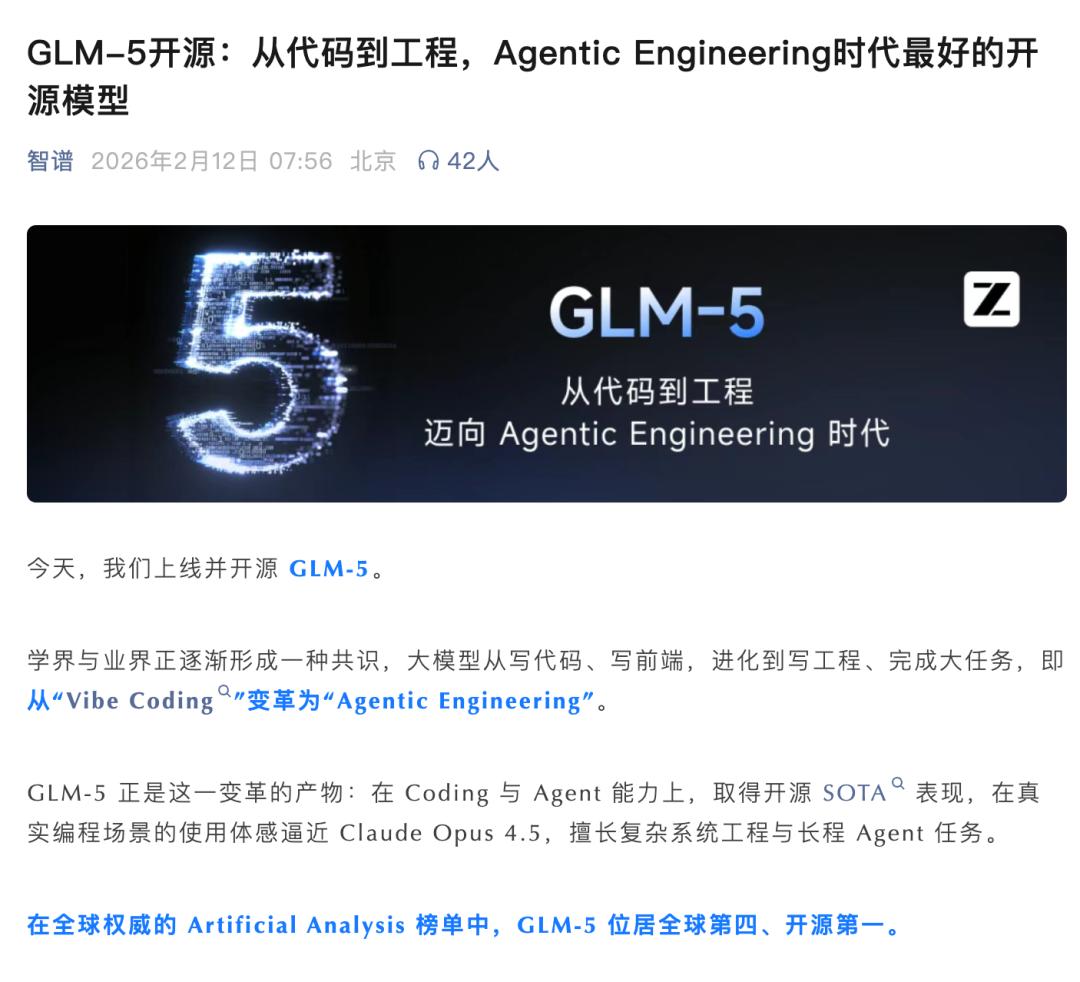
关于那个神秘的「Pony Alpha」模型的传言,已经在互联网发酵了一周。 有人说它是 Claude 5 的马甲,也有人说它是某大厂的秘密武器。就在刚刚,靴子落地,谜底揭晓:这个代号「Pony Alpha」的新模型,正是智谱 AI 的春 节大招——GLM-5。 智谱公众号截图 而且,它直接开源了。 如果说 2025 年是 AI 学会写代码的一年,那么 2026 年开年,正如特斯拉前 AI 总监 Andrej Karpathy 所预言,我们或许即将进入「智能体工程」(Agentic Engineering)时代。 只不过,比起 GPT-5.3-Codex、Claude Opus 4.6,头一个把这件事做成开源基础设施的,是国产模型 GLM-5。 附体验地址: 骗过硅谷的 Pony Alpha,竟然是智谱 GLM-5 的马甲 现在的 AI 写个贪吃蛇或者俄罗斯方块,早就不是什么新鲜事了。要测,就得测点刁钻的。 我们给 GLM-5 抛出了一个极其具体的物理模拟需求: 创建一个交互式的 HTML、CSS 和 JavaScript 卫星系统模拟程序,该程序应模拟卫星向地面接收器发送信号的过程。模拟程序应显示一颗卫星绕地 ...
炒起来的情绪刚需,AI宠物孤独解药还是致幻剂?
3 6 Ke· 2026-02-12 03:42
Core Insights - The rise of AI pets reflects a growing demand for emotional support among young people, driven by increasing loneliness in urban environments [1][3][10] - AI pets are seen as a solution to loneliness, providing companionship without the responsibilities of real pets, and are gaining popularity in the emotional economy [10][19][29] Group 1: AI Pets and Emotional Support - AI pets serve as emotional oxygen for young people, addressing the collective loneliness experienced in urban living [3][10] - The market for AI pets is projected to grow significantly, with estimates suggesting the emotional companionship market in China will reach 3.866 billion yuan by 2025 and exceed 59.5 billion yuan by 2028, with a compound annual growth rate of 148.74% [27] - AI pets offer low-cost, high-certainty emotional feedback, making them attractive to young consumers [6][10] Group 2: Market Dynamics and Product Differentiation - The AI pet market is segmented into various price tiers, with entry-level products priced around 100 yuan and high-end models exceeding 2,800 yuan, catering to different consumer needs [10][27] - The popularity of AI pets is not just about companionship; they reflect a deeper desire for connection and response from users, embodying the emotional economy [10][29] Group 3: Technological Advancements - Advances in AI technology have enabled pets to evolve from passive responders to proactive companions, capable of remembering past interactions and providing contextual support [21][24] - The shift from reactive to predictive capabilities in AI pets is driven by breakthroughs in large model technology, enhancing user engagement [24][27] Group 4: Broader Applications Beyond Young Adults - AI pets are also gaining traction among children and adolescents, serving as emotional support and facilitating communication between children and parents [11][16] - The role of AI pets is evolving from passive emotional receivers to active emotional interveners, helping children express their feelings in a safe environment [19][29]

企业个十百千万亿业绩持续增长品牌顶层设计
3 6 Ke· 2026-02-12 03:30
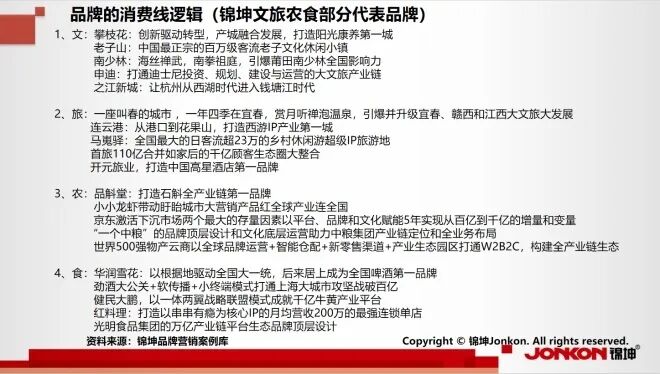
Group 1 - The core idea is that Chongqing's government aims to leverage the local noodle brand as a key driver for industrial development, with significant partnerships established to create a billion-dollar brand and trillion-dollar industry platform [1] - The case of Li Chuan illustrates the importance of having a sustainable industry; despite initial popularity, the lack of a solid industrial base led to a decline, prompting a shift to promoting "Li Chuan Tea" as a key product [1] - The success of the small lobster brand in Luyuan, despite weaker regional advantages, highlights how branding can elevate a local product to national recognition, becoming a significant industry hub [1] Group 2 - The article discusses the importance of integrating brand consumption with cultural, agricultural, and food sectors to create a comprehensive growth strategy from top-level design to bottom-level operations [5] - The brand's industrial logic emphasizes the need to connect production, urban development, and enterprise to create a cohesive support system [8] - The growth logic of enterprises varies significantly; some achieve rapid growth while others stagnate, indicating the necessity of understanding the underlying development routes and growth logic [9] Group 3 - The "Four ONE" product strategy is introduced, emphasizing the need for businesses to identify market gaps and establish themselves as leaders in niche markets [32] - The article outlines a structured approach to brand design and marketing operations, focusing on clarity in product offerings, brand messaging, and sales strategies [26][30] - The "Six Forces" operational framework is proposed to enhance marketing effectiveness, emphasizing planning, product development, brand image, service quality, promotional strategies, and management capabilities [45][49] Group 4 - The article emphasizes the importance of customer lifecycle management, categorizing it into four stages: attracting, converting, retaining, and referring customers [38] - Effective management across various operational stages is crucial for achieving sustained growth and profitability, requiring a comprehensive approach to internal and external relationships [42] - The article concludes with a roadmap for businesses to transition through different growth stages, from individual products to a comprehensive ecosystem, highlighting the need for strategic planning and execution [56]
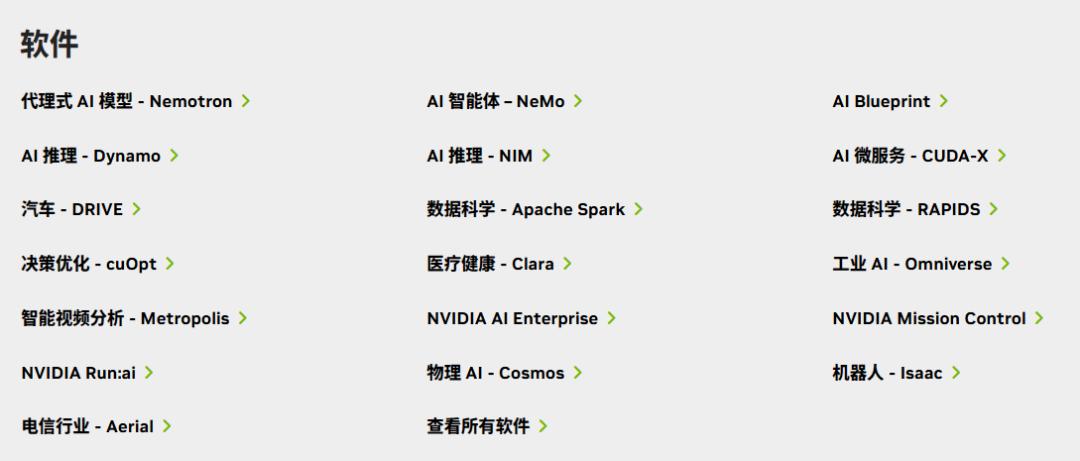
AI算力竞速(下):生态之战与国产GPU的未来价值重估
3 6 Ke· 2026-02-12 03:30
Core Insights - The article emphasizes the significant challenge of ecological barriers faced by domestic GPU companies in China, which goes beyond hardware performance and capital market achievements [1] - The current global GPU market is dominated by Nvidia and AMD, whose competitive advantage has shifted from hardware specifications to software and ecosystem development [1] - The article highlights the importance of building a robust ecosystem that requires deep understanding of developer needs, continuous improvement of the toolchain experience, and long-term community cultivation [2] Group 1: Ecological Barriers - Domestic GPU manufacturers are adopting a "compatible ecosystem" strategy to quickly enter the market, but this may lead to a long-term dependency on existing ecosystems, hindering the development of unique competitive advantages [2] - The construction of an ecosystem is a slow process that tests patience, capital, and foresight, requiring solid technical foundations and ongoing support from investors [2] Group 2: Industry Constraints and Capital Challenges - Domestic GPU companies face multiple constraints from the industry foundation, including limitations in advanced manufacturing processes, core IP self-sufficiency, and challenges in advanced packaging technologies [3] - The high investment nature of the GPU industry makes it a "capital endurance battle," with companies like Wallen Technology investing 85% of their IPO proceeds into R&D [3] - The financial performance of domestic GPU companies often shows strong revenue growth but delayed profitability, reflecting the industry's inherent characteristics [3] Group 3: Market Survival and Competition - The current growth of domestic GPUs is largely driven by policy support and specific replacement demands, but true commercial success requires navigating a fully market-driven and competitive landscape [4] - The ultimate test for domestic GPUs lies in their ability to support large-scale AI models, run top-tier games, and provide reliable services in high-precision industrial simulations and life sciences [4] Group 4: Investment Value Reevaluation - Investors are advised to maintain a rational perspective on the GPU sector, focusing on actual penetration rates, order visibility, and the quality of revenue growth [7] - Key mid-term indicators include breakthroughs in core architecture, the robustness of the software ecosystem, and clarity in profitability pathways [7] - Long-term success will depend on the ability to create a globally influential development platform and transition from a technology follower to a rule-maker [7] Group 5: Strategic Importance of GPU Development - The evolution of GPUs represents a strategic contest for control over foundational infrastructure and standards in the intelligent era, with significant implications for China's technological competitiveness [9] - The collective efforts of domestic GPU companies are seen as a crucial expedition that aligns with national expectations and industrial missions [9] - The journey towards establishing a self-sufficient GPU industry is expected to be challenging yet rewarding, with the potential to reshape the global computing landscape [10]