
Hu Xiu

Search documents
宗馥莉辞职了,又有人假装自己胜利
Hu Xiu· 2025-10-11 03:59
Core Viewpoint - The article discusses the psychological issues of some internet users regarding the resignation of a prominent figure, emphasizing the need for a deeper understanding of historical context in discussions about state-owned assets and corporate governance [2][5][30]. Group 1: Company Insights - The resignation of a key figure,宗馥莉, has sparked discussions and speculation online, reflecting a broader trend of public sentiment and reaction to corporate changes [2][5]. - The article argues that the history of companies like Wahaha is often misunderstood, with claims of state asset loss being unfounded when historical context is considered [8][10][24]. - It highlights the importance of understanding the historical background and operational context of companies to avoid misinterpretations and unfounded accusations [16][32]. Group 2: Industry Context - The discussion touches on the broader implications of corporate governance and the relationship between state-owned assets and private enterprises, suggesting a mutual benefit in economic development [26][28]. - The article critiques the lack of historical awareness among some commentators, suggesting that many do not grasp the complexities of corporate history and the evolution of state-owned enterprises [29][31]. - It emphasizes the need for a nuanced approach to analyzing corporate issues, advocating for a thorough investigation into historical practices rather than relying solely on current data [34][36].
头发的“战争”:当中学校规遇上青春期
Hu Xiu· 2025-10-11 03:27
Core Perspective - The article discusses the ongoing conflict between school regulations regarding students' hairstyles and the individual identities and self-expression of students, highlighting the emotional and psychological implications of such regulations [4][5][22]. Group 1: Parental Experiences - A mother, Lin Jing, faces challenges with her son's refusal to cut his hair according to school rules, leading to a series of conflicts that reflect broader issues of autonomy and identity in education [6][7][12]. - The situation escalates as the son is repeatedly asked to cut his hair, resulting in emotional turmoil for both the mother and the child, showcasing the tension between parental authority and school regulations [9][14][15]. - Lin Jing's experience resonates with many parents, as evidenced by the widespread responses on social media, indicating a shared struggle with similar issues [15][16]. Group 2: Student Perspectives - Students like Zhi Zhi and Li Li express frustration over hair regulations that they perceive as unfair, particularly when new students are allowed more freedom than older students [41][44]. - Zhi Zhi's experience of being forced to cut her long hair leads to feelings of insecurity and a loss of self-esteem, emphasizing the psychological impact of such regulations on young individuals [43][44]. - Li Li, who has previously complied with strict hair rules, now questions the inconsistency and rationale behind the school's standards, advocating for personal choice in hairstyle as a matter of self-identity [46][47]. Group 3: Educational Implications - The article highlights the historical context of hair regulations in Chinese schools, tracing the evolution of these rules and their implications for student autonomy and identity [3][27][28]. - Experts argue that the strict enforcement of hair regulations reflects a broader issue of educational practices that prioritize conformity over individuality, potentially stifling creativity and self-expression among students [19][30][53]. - The lack of aesthetic education and the emphasis on uniformity in schools are seen as detrimental to students' emotional and psychological development, leading to a generation that may struggle with self-identity and creativity [49][52][56]. Group 4: Alternative Approaches - Some schools are exploring more flexible approaches to hair regulations, allowing students to express their individuality while maintaining a level of decorum, which could foster a more positive learning environment [54][55]. - The article suggests that educational institutions should focus on nurturing students' unique identities rather than enforcing rigid standards, promoting a more holistic approach to education that values both academic and personal growth [56][57].
宗馥莉,危险
Hu Xiu· 2025-10-11 03:21
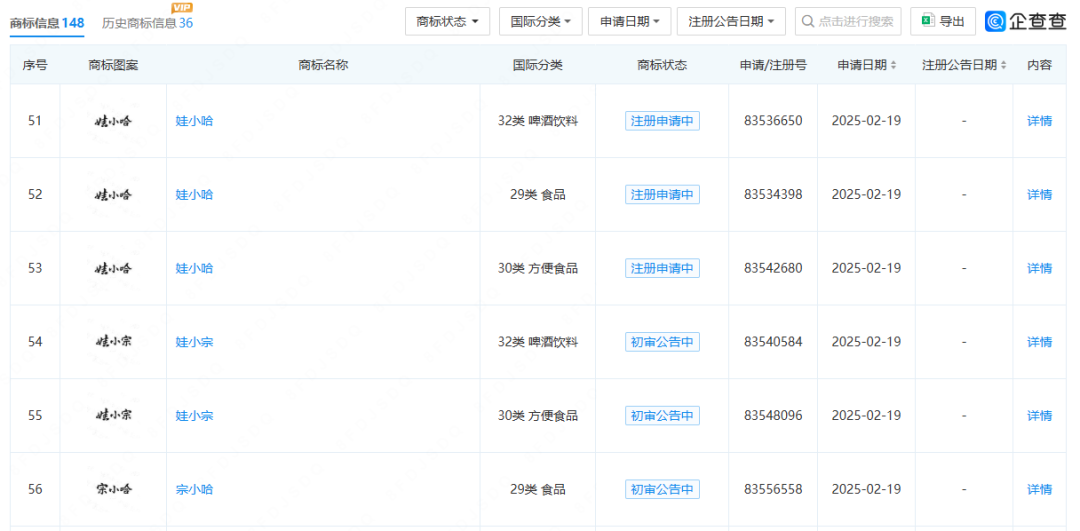
Core Viewpoint - The article discusses the transition of Wahaha from a family-owned brand to a new identity under the leadership of Zong Fuli, who plans to replace the long-standing brand with "Wah Xiaozong" starting in 2026, amidst internal family conflicts and external pressures [4][11][58]. Group 1: Brand Transition - Zong Fuli will start using the new brand "Wah Xiaozong" in 2026, replacing the nearly 40-year-old "Wahaha" brand [4]. - Multiple similar trademarks like "Wah Xiaohar" and "Zong Xiaohar" have been registered under Zong Fuli's wholly-owned Hongsheng Beverage Group [5]. - Zong Fuli has set an ambitious sales target of 30 billion yuan for "Wah Xiaozong," which is about 80% of Wahaha's current annual sales [16]. Group 2: Internal Conflicts - Key member Yan Xuefeng of Wahaha Group is under investigation for disciplinary violations, raising concerns about the internal stability of the company [8]. - The internal document revealed that unresolved historical issues are exposing the company to legal risks, indicating deeper governance problems [22][24]. - The family conflicts have escalated to a point where they are affecting public interests, prompting state-owned shareholders to intervene [56]. Group 3: Ownership Structure - Wahaha's ownership structure is complex, with the largest shareholder being a state-owned enterprise holding 46%, while Zong Fuli holds 29.4% [32][33]. - The unique ownership structure requires consensus for major decisions, making it difficult for Zong Fuli to gain absolute control over the brand [35]. - Attempts by Zong Fuli to transfer trademarks to her controlled company have been blocked due to opposition from state-owned shareholders [37]. Group 4: Market Challenges - The beverage market is highly competitive, with established players like Nongfu Spring and Master Kong posing significant challenges for the new brand [17]. - There are concerns that the brand split and asset depreciation could lead to Wahaha becoming an "empty shell," complicating future operations [58]. - The historical legacy of Wahaha, which once emphasized employee welfare, is now at risk, affecting job stability and income for employees [61].

金价暴涨刷新人类纪录,全球危机倒计时?
Hu Xiu· 2025-10-11 03:14
从年初到现在,金价涨了超50%,这数字看着像信号弹,却没带来半点庆祝的意思,反而让全球金融市 场透着股寒意。 ...
东南亚要“装不下”出海的国产服装品牌了
Hu Xiu· 2025-10-11 03:07
Core Viewpoint - The trend of A-share companies listing in Hong Kong is increasing, with 11 companies having done so this year, and over 50 more in the pipeline. The primary motivation for this move is to pursue global strategic expansion, as exemplified by the clothing brand HLA [1]. Group 1: Market Expansion - HLA has opened 50 stores in Malaysia since its first store in 2017, with a total of 78 stores across Southeast Asia as of January this year [2]. - Semir, another clothing brand, has also accelerated its overseas strategy, with 70 stores by the end of 2023 and plans to exceed 100 stores in 2024 [2][3]. - Major Chinese brands, including Anta and Li Ning, are also focusing on Southeast Asia for their international expansion, with Anta planning to establish 1,000 stores in the region over the next three years [5]. Group 2: Challenges in Overseas Markets - Despite the growth in overseas revenue for brands like HLA, the contribution to total revenue remains low, with HLA's overseas revenue accounting for only 1.76% in 2024 [7][8]. - Many traditional Chinese clothing brands struggle to achieve significant overseas market penetration, with most having less than 2% of their revenue coming from international sales [8][9]. - The slow urbanization process in Southeast Asia limits the effectiveness of the business models that have worked in China, as brands primarily target major cities, leaving smaller cities underserved [12][13]. Group 3: E-commerce and Retail Dynamics - The rise of e-commerce in Southeast Asia poses a challenge for traditional retail, as online platforms like Shopee and TikTok Shop gain traction [15][16]. - HLA has seen an increase in online sales, but overall revenue has declined, indicating difficulties in adapting to the online market [16]. - The reliance on physical stores in major cities may not be sustainable if e-commerce continues to grow, potentially impacting the profitability of brands that do not adapt [17].

珠峰东坡暴雪千人被困背后
Hu Xiu· 2025-10-11 03:01
10月国庆黄金周期间,位于西藏日喀则市定日县境内的珠峰东坡营地突降暴雪,大批游客被困无法下山,面临失温的生命危险。 不止是珠峰东坡,9月底就有违规徒步穿越甘南迭部县的益哇乡扎尕那景区未开发区域的游客,在景区内失温和死亡。10月1日,迭部县公安局、迭部县文旅 局发布了《关于迭部县未开发区域禁止徒步等活动的通告》。 9月1日,新疆特克斯县文旅局发布《关于对特克斯县乌孙古道临时关闭的公告》。据报道,因为进入雨季,山区内极端天气高发,徒步进入乌孙古道安全风 险大,多名游客被困,面临失温和食品不足的问题。 8月12日,昭苏县文旅局发布公告称,因近期天气炎热、冰雪消融、山洪增多、河床水位上涨迅猛原因,对南天山北线进山路口进行管控,禁止游客以任何 形式进入此线路。据报道,8月6日昭苏县夏塔景区一吊桥桥索断裂,5人死亡、22人受轻伤。 当徒步也成为一种时尚风潮,除了模仿与跟风,还蒙上了一层危险的阴影。 智通财经此前已报道过关于珠峰南坡的商业化攀登现象(参见《拥挤的喜马拉雅商业攀登之路》)。相较于动辄需花费三四十万登顶珠峰的商攀,平均海拔 5000米的珠峰东坡商业徒步价格更加低廉,且门槛更低。加上小红书、微博、抖音等社交媒体平 ...

扎堆、宰客还不够?为什么旅游体验总是这么差?
Hu Xiu· 2025-10-11 03:01
Core Viewpoint - The overall travel experience for domestic tourists in China is perceived as poor due to various issues such as high ticket prices, hotel price hikes, chaotic transportation and booking systems, and deceptive practices by travel agencies [1] Group 1 - Domestic tourism experiences are marred by overcrowding, which is just the beginning of the problems faced by travelers [1] - High ticket prices for attractions contribute significantly to the negative travel experience [1] - Hotels are increasing their prices, further exacerbating the dissatisfaction among tourists [1] Group 2 - The disorganization in transportation and booking processes leads to confusion and frustration for travelers [1] - Travel agencies are employing questionable tactics, which adds to the overall negative perception of the tourism industry [1]
AI赛道,还是大厂在吃肉?
Hu Xiu· 2025-10-11 02:42
Core Viewpoint - The emergence of various AI software indicates the potential arrival of the AI era, raising questions about which new players will successfully navigate the competitive landscape [1] Group 1 - The market is witnessing a surge in AI software, suggesting a transformative shift in technology [1] - The competition among new entrants in the AI sector is intensifying, with many seeking to establish themselves as leaders [1]
中国征美船舶费,皇家加勒比危矣
Hu Xiu· 2025-10-11 02:10
Core Viewpoint - The Chinese Ministry of Transport announced a special port fee for U.S. vessels as a countermeasure against the U.S. imposing port fees on Chinese ships, effective from October 14, 2025 [2][20]. Group 1: Special Port Fee Details - The special port fee will apply to any vessel with over 25% U.S. ownership or flying the U.S. flag, regardless of the registration of the shipowner or operator [3][4]. - The fee will be charged per voyage based on net tonnage, starting at 400 RMB per net ton in 2025 and increasing to 1120 RMB by 2028 [4]. - For example, the Royal Caribbean's Spectrum of the Seas, with a net tonnage of 168,000 tons, could incur a maximum fee of approximately 67.36 million RMB per voyage [6]. Group 2: Impact on Royal Caribbean - The new fee structure could lead to an additional cost of around 1000 RMB per passenger for the Spectrum of the Seas, assuming it operates at full capacity for 76 voyages in a year [8][12]. - The policy includes safeguards, limiting the maximum fee to five voyages per year for each vessel, and only charging once for multiple port calls on the same voyage [7]. - The special port fee is expected to increase by 60% after October 2026, adding further financial pressure on Royal Caribbean [14]. Group 3: Broader Industry Context - Royal Caribbean faces additional challenges from U.S. tax scrutiny, as the U.S. government is pushing for stricter tax compliance from cruise companies registered abroad [17][21]. - The company is caught in a regulatory squeeze, with significant costs from the Chinese port fee and potential tax liabilities in the U.S. [22]. - The cruise industry is experiencing a complex geopolitical landscape, with the new port fee being part of a broader trend of increasing regulatory pressures [29][43]. Group 4: Operational Challenges - Adjusting port calls in response to the new fee could be a complex process, requiring significant logistical changes and advance planning [31][33]. - The operational impact of changing ports is substantial, as it affects scheduling, customer service, and overall operational efficiency [35][37]. - The new fee structure serves as a warning to other U.S.-owned cruise lines that have not yet operated in Chinese ports, highlighting the potential for increased costs in the future [39].

宗馥莉不是大女主
Hu Xiu· 2025-10-11 01:51
本文来自微信公众号:散人懂四六,作者:王睿,题图来自:视觉中国 今早,看到宗大小姐辞职的消息,证明这篇三个月前的文章,写对了。 随着大女主剧的流行,现实中意志强大、双商在线、事业独立的女强人,也开始被称为大女主。这自然 少不了宗长公主馥莉。不过,她成过事儿吗?凭着二十多年工龄,尽管她自己的宏胜系没做过一个爆 款,肯定还是成过些事儿。 7月15日,微博大V"释不归"爆料称,宗馥莉结过婚,而且这段隐婚还是官商联姻。这篇微博立刻被若 干大V转载,第二天才被删除。这个瓜保不保真、要不要吃另说,但如没有眼前的动荡,怕不那么容易 被人看到。 老宗人设已经崩塌,小宗人设接近崩塌。然而,国民对企业家其实没那么苛刻,另觅新欢不是不行,结 婚更是情理之中。可如果搞假人设欺骗大众,被骗的昨天有多喜欢你,今天就会有多讨厌你。 但作为家族接班人最该成的事,在她手里,却变凉变臭了。啥事?当然是把娃哈哈发扬光大。这是她作 为新实控人的本分,也是她需要向父亲兑现的承诺。但继承家业后的种种表现都说明,和后妈及弟妹干 仗才是她的人生大事,成事儿在复仇面前不值一提。 宗老去世后,她有两个大动作:一是去宗室:关掉和杜建英及弟妹共同设立的18家合资公 ...