阿尔法工场研究院

Search documents
福建地产首富的坠落
阿尔法工场研究院· 2025-08-26 09:38
Core Viewpoint - The article discusses the downfall of Taihe Group and its chairman Huang Qisen, highlighting the severe consequences of financial mismanagement and regulatory scrutiny in the Chinese real estate industry [5][30]. Group 1: Company Background - Taihe Group, once a leading real estate company in China, was founded by Huang Qisen in 1992 and became known for its luxury "Courtyard" series of properties [10][13]. - The company went public in 2010 and achieved significant market success, with a peak market value exceeding 500 billion yuan [13][14]. - Huang Qisen was recognized as a prominent figure in the real estate sector, appearing on various wealth rankings [15]. Group 2: Financial Crisis - In July 2020, Taihe Group began experiencing debt defaults, becoming one of the first companies to face a liquidity crisis in the industry [16]. - Between July 6, 2020, and May 8, 2021, the company faced 13 lawsuits totaling 9.674 billion yuan, which constituted 48.21% of its audited net assets for 2020 [17]. - The company failed to disclose these significant lawsuits, leading to regulatory investigations and penalties, including a fine of 6 million yuan for Taihe Group and 3 million yuan for Huang Qisen [20]. Group 3: Regulatory Actions - Huang Qisen was previously investigated in March 2022 but returned to his position later that year. However, he was recently placed under detention by the Liaoning Provincial Supervisory Committee, indicating more serious allegations of corruption and misconduct [22][24]. - The company's assets are being rapidly liquidated, with significant properties sold at prices much lower than their original valuations, such as the Taihe Building sold for approximately 660 million yuan [26]. Group 4: Current Financial Status - As of December 31, 2024, Taihe Group had overdue borrowings totaling 734.9 billion yuan, with restricted assets valued at over 1.071 trillion yuan, representing 65.07% of its total assets [26]. - The company reported a revenue of approximately 8.04 billion yuan in 2024, a year-on-year increase of 25.78%, but suffered a net loss of about 21.3 billion yuan, a 250.94% increase in losses compared to the previous year [27]. - In August 2023, Taihe Group was delisted from the Shenzhen Stock Exchange after its stock price fell below 1 yuan for 20 consecutive trading days [28]. Group 5: Industry Implications - The case of Taihe Group reflects the broader challenges and regulatory pressures facing the Chinese real estate sector, emphasizing the consequences of reckless expansion and non-compliance with financial regulations [30][31].


特步 126 天账期 VS 李宁 14 天,特步输在了哪?
阿尔法工场研究院· 2025-08-26 09:38
号称"中国第一跑步品牌"的特步,在与主要运动品牌的竞争中,差距明显。 在运动服装市场,特步国际(1368.HK)与安踏、李宁同属知名品牌,但从2025 年中期财报及过往数据 对比来看,特步国际在多个关键领域存在明显差距,在市场竞争中的压力也逐渐增加。 早在2008年上市之初,特步国际还是国内一线运动品牌阵营的一员。董事长丁水波当年还是泉州站奥运圣 火传递的火炬手之一,那一年的特步,曾签下潘玮柏、谢霆锋、TWINS、蔡依林等多位明星代言,业绩上 也还能跟安踏、李宁"称兄道弟",但如今却差出了几个身位。 间, 李宁则维持在13天—15天左右。2025年上半年,李宁的平均应收贸易款项周转天数为14天。 按行业划分来看,快消品行业或零售业直接面向消费者或小型经销商,现销占比高,平均应收贸易款项周 转天数一般在10天—60天以内,即使目前电商渠道普遍采用以"货到付款" 或 "短账期(7-30 天)"的付 款方式,个人消费也不会超过2个月。 导语:超长账期背后,特步国际现金流下滑,毛利率比安踏低 19 个点。 超长账期 应收贸易款项周转天数反映了企业回收账款的效率。近五年数据显示,特步国际的周转天数远高于安踏和 李宁。2 ...

苹果追诉前工程师:盗取63份机密跳槽OPPO
阿尔法工场研究院· 2025-08-25 10:33
Core Viewpoint - Apple has filed a lawsuit against OPPO, accusing the company of encouraging a former high-paid employee, Chen Shi, to steal trade secrets related to Apple Watch technology before joining OPPO [2][4]. Group 1: Allegations Against Chen Shi - Chen Shi allegedly accessed confidential documents related to Apple's health sensor technology shortly before leaving the company to facilitate OPPO's development of competitive wearable devices [2]. - The lawsuit claims that Chen Shi arranged numerous one-on-one meetings with Apple Watch team members to gather research information while concealing his intention to join a direct competitor [2][3]. - In the days leading up to his departure, Chen Shi reportedly downloaded 63 files from a protected folder and transferred them to a USB drive [2]. Group 2: OPPO's Response - An OPPO representative stated that the company is aware of the lawsuit and has reviewed Apple's allegations, asserting that there is no evidence linking the claims to Chen Shi's conduct during his time at OPPO [5]. - OPPO emphasized its respect for all companies' trade secrets, including Apple's, and stated that it has never infringed upon Apple's trade secrets [5]. Group 3: Legal Implications - Apple argues that if Chen Shi and OPPO's actions go unpunished, it would undermine Apple's commitment to innovation and the significant investments made in technologies like Apple Watch, while also providing unfair advantages to competitors [6]. - The case is being heard in the U.S. District Court for the Northern District of California, with the case number 5:25-cv-7105 [7].


蓝月亮真听劝:降费减亏后,洗衣液少卖了1个亿
阿尔法工场研究院· 2025-08-25 10:33
Core Viewpoint - Blue Moon, a leading brand in clothing care, is experiencing significant challenges with a loss of over 1 billion HKD in its main product line, prompting a rapid adjustment in marketing strategies to control costs while still facing uncertainty in achieving profitability [2][3]. Marketing Strategy and Financial Performance - In 2024, Blue Moon's marketing expenses reached nearly 60% of its revenue, nearly doubling since 2020, leading to a loss of 749 million HKD despite a revenue increase of 16.8% [5][13]. - The company has reduced its sales and distribution expenses to 19.1 billion HKD in the first half of 2025, down from approximately 22.01 billion HKD in the same period last year, marking a 13.2% decrease [6]. - Advertising expenses in 2024 were 2.12 billion HKD, 3.87 times that of 2020, while promotional expenses surged to 25.49 billion HKD, a 156% increase from 2023 [7][13]. Revenue and Market Share - Blue Moon's online channel revenue exceeded 5.1 billion HKD in 2024, accounting for 59.7% of total revenue, breaking a previous stagnation between 3.7 billion HKD and 3.8 billion HKD [8]. - However, the company reported a decline in key financial metrics, with cash reserves decreasing by 17.3% to approximately 4.36 billion HKD and gross profit dropping by 3.9% to about 1.765 billion HKD [15]. - The core product line, clothing care products, saw a sales decline of 1.26 billion HKD in the first half of 2025 compared to the same period in 2024, contributing to an overall revenue drop of about 3% [16][17]. Competitive Landscape - The domestic clothing care market is highly competitive, with Blue Moon's market share fluctuating between 24.4% and 27.9% from 2020 to 2024, while facing challenges from emerging brands and private labels [20]. - New product categories such as laundry pods and specialized detergents are rapidly growing, with the pod market expanding from 1.4 billion HKD to 6.985 billion HKD between 2020 and 2024, indicating a shift in consumer preferences [20]. Future Outlook - Despite the challenges, Blue Moon's operational loss decreased by 43.9% to approximately 526 million HKD in the first half of 2025, suggesting potential for a turnaround if cost control measures continue [21].

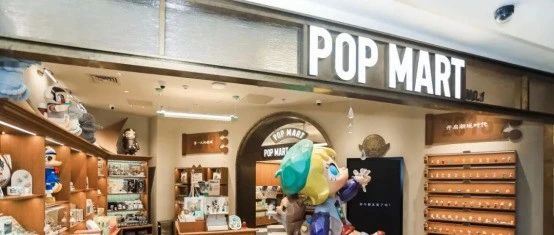
泡泡玛特,审美的胜利
阿尔法工场研究院· 2025-08-25 10:33
Core Viewpoint - The essence of Pop Mart is to position itself as an art company, transforming toys into emotional art pieces, which justifies their high pricing [1][2]. Group 1: Business Performance - Pop Mart's gross margin increased to 70.3%, driven by a rise in overseas sales, which accounted for over 40% of total revenue [2][3]. - The company reported a nearly fourfold increase in net profit year-on-year, with revenue growing over twofold to 13.88 billion yuan [2][3]. - The company was included in the Hang Seng Index for the first time, indicating growing recognition in the capital market [3]. Group 2: Market Dynamics - The current "involution" in many industries is a natural phase as markets mature, similar to the evolution seen in personal computers and other sectors [5]. - The manufacturing efficiency has limits, and products with only practical functions are more susceptible to price competition [5][6]. - Pop Mart's overall gross margin of 70.3% demonstrates that creativity and emotional connection can maintain high value despite material costs [5][6]. Group 3: IP Development Strategy - Pop Mart's business model focuses on creating new IPs, emphasizing long-term value over mass production [8][19]. - The company nurtures its IPs carefully, avoiding rapid commercialization to ensure sustainable growth [17][22]. - Successful IPs like LABUBU and DIMOO have shown that value comes from time and continuous innovation rather than quick replication [20][22]. Group 4: Cultural Impact and Future Trends - Pop Mart's IPs, such as MOLLY and LABUBU, thrive without traditional narrative support, indicating a shift in how IPs can be developed and monetized [24][25]. - The company's approach to aesthetics and emotional connection positions it as a modern art symbol, appealing to both domestic and international markets [25][26]. - The future of industries may increasingly rely on beauty and design, as consumer preferences shift towards emotional and aesthetic values [26].
口子窖在安徽老家都卖不动了?
阿尔法工场研究院· 2025-08-25 10:33
Core Viewpoint - The article highlights the significant decline in the performance of Kuozi Jiao, a leading brand in the Chinese liquor industry, particularly in the context of a deep adjustment period for the liquor sector, which has led to challenges in achieving its strategic goals and maintaining market position [4][6]. Financial Performance - In the first half of 2025, Kuozi Jiao reported revenue of 2.531 billion, a year-on-year decrease of 20.07%, and a net profit attributable to shareholders of 715 million, down 24.63% [5][6]. - This marks the first time in three years that Kuozi Jiao has experienced a simultaneous decline in both revenue and net profit, with declines exceeding 20% [5][6]. Quarterly Analysis - The second quarter of 2025 was particularly challenging, with revenue dropping to 721 million, a staggering 48.48% year-on-year decline, and net profit falling to 105 million, a 70.91% decrease, marking the largest quarterly drop since the company went public [6][7]. Product Performance - High-end product sales, which account for 96% of total revenue, saw a 19.8% decline, indicating a failure of Kuozi Jiao's "Jian Series" strategy to break through market barriers [7][9]. - Mid-range and low-end products also experienced declines, with mid-range sales down 10.82% and low-end sales down 2.59%, reflecting a broader contraction in consumer spending across all price segments [7][9]. Channel Performance - Revenue from wholesale and agency channels, which contribute 95% of total revenue, fell by 21.26%, significantly outpacing the overall revenue decline [8][9]. - Despite a 44.57% increase in direct sales, this only amounted to 133 million, which is minimal compared to the total revenue of 25.31 billion [8][9]. Market Challenges - Kuozi Jiao's home market in Anhui saw a revenue decline of 19.31%, indicating difficulties in expanding its core market [8][9]. - The company faces challenges in expanding outside its home province, with a reliance on a large distributor model that lacks refined operations, resulting in low product penetration [9][11]. Industry Context - The liquor industry is experiencing a significant downturn, with a 7.2% year-on-year decline in production among large enterprises and an average inventory turnover period of 900 days, which has increased by 10% [11][12]. - Kuozi Jiao's inventory as of June was valued at 6.159 billion, representing 45.9% of total assets, with a substantial portion of base liquor inventory that could support sales for nearly nine years based on production capacity [11][12].


农行流通市值反超工行,反腐是市值管理的“核动力”?
阿尔法工场研究院· 2025-08-25 10:33
Core Viewpoint - The article discusses the recent rise of Agricultural Bank of China (ABC) in market capitalization, highlighting the impact of anti-corruption measures on the bank's stock performance and overall market perception [4][5][14]. Market Capitalization Dynamics - As of August 20, 2025, ABC's market capitalization reached 22,634 billion, surpassing Industrial and Commercial Bank of China (ICBC) at 20,464 billion [4]. - ABC became the new market leader among state-owned banks, a significant shift given its historical position as the "fourth oldest" bank [5]. Financial Performance - In Q1 2025, ABC reported a net profit of 719.3 billion, marking a 2.2% year-on-year growth, the only major bank to achieve positive growth during this period [6]. - ABC's stock price increased nearly 33% this year, driven not only by financial performance but also by a broader market sentiment influenced by anti-corruption efforts [6]. Anti-Corruption Measures - The anti-corruption campaign began in May 2024 with the investigation of senior executives, leading to a series of high-profile dismissals [7]. - By March 2024, ABC had initiated 847 cases, resulting in 789 disciplinary actions and 36 criminal cases against employees, including eight senior executives [12]. - The campaign has focused on financial risk areas, particularly in credit approval and asset disposal, revealing previously hidden bad debts [12][14]. Market Reactions - The market perceives the exposure of corrupt practices as a positive development, as it allows for the identification and resolution of "invisible bad debts" [10]. - ABC's stock price recovery from a low of 2.8 to over 7 reflects investor confidence in the bank's governance improvements and compliance measures [8][14]. Regulatory Environment - The regulatory scrutiny of ABC has intensified, evolving from individual penalties to comprehensive sector-wide reforms targeting compliance and governance [13]. - Key focus areas for regulatory action include credit compliance, data governance, and financial services for agriculture [13]. Conclusion - The rise in ABC's market value raises questions about the underlying productivity of banks when anti-corruption becomes a primary driver of market performance [15].


腾讯又做LP了
阿尔法工场研究院· 2025-08-22 00:00
Core Viewpoint - Tencent has invested in Meituan Longzhu, marking its continued active participation in the venture capital space, especially during a challenging fundraising environment for RMB funds [4][5][6]. Group 1: Investment Details - Chengdu Longzhu Equity Investment Fund was established in 2022 with a capital contribution of 2.303 billion yuan, focusing on private equity investments and asset management [6]. - The largest contributor to Chengdu Longzhu is Tianjin San快科技 Co., Ltd. (Meituan), indicating that this fund is a RMB fund based in Chengdu [6]. - Recently, Chengdu Longzhu added four new partners, including Tencent's Shenzhen Industrial Investment Fund, marking Tencent as the fifth largest shareholder with a contribution of 100 million yuan [7]. Group 2: Recent Investments - Chengdu Longzhu's latest investment was in Xinghaitu (Beijing) Artificial Intelligence Technology Co., Ltd., a humanoid robot startup with a Tsinghua University background, which has completed four rounds of financing this year [8]. - Tencent's involvement as a limited partner (LP) signifies a collaboration between two major internet giants in the venture capital field [9]. Group 3: Market Activity - Tencent has been particularly active in the primary market this year, with notable investments in various funds and companies, including a significant investment in the healthcare sector through Anze Capital [11]. - The company has also participated in other funds, such as Shanghai Lilan Private Investment Fund, further expanding its investment footprint [12]. - The current fundraising difficulties in the primary market highlight the importance of market-oriented LPs like Tencent, which can provide much-needed liquidity to VC/PE firms [13].

告别人工智能泡沫,准备迎接崩盘
阿尔法工场研究院· 2025-08-22 00:00
Core Viewpoint - The release of GPT-5 by OpenAI has been disappointing, revealing that it is harder to use and performs worse than its predecessors, leading to skepticism about the AI industry's promises [2][3][6] Group 1: AI Industry Performance - AI companies are currently propping up the U.S. economy, but this situation resembles a bubble, with significant investments made without any AI lab achieving profitability [4][6] - The hype surrounding AI is reminiscent of the dot-com bubble, where companies falsely claimed to be "internet companies" to boost stock prices [4][6] - Nvidia, a key chip manufacturer for AI research, is compared to Intel in the 1990s, as it plays a leading role in supporting the current stock market rally [5] Group 2: Public Perception and Expectations - The disappointing launch of GPT-5 has led to a realization of the extent to which the AI industry relies on hype, with users expressing frustration over the model's performance [7][8] - Despite the setbacks, the hype machine continues to operate, with organizations predicting significant AI advancements by 2027, which may be overly optimistic [9][10] - The belief in "scaling up" AI technology to achieve breakthroughs is challenged by GPT-5's performance, raising concerns about the massive capital investments required for data and processing capabilities [10] Group 3: Economic Implications - If AI's promises turn out to be illusory, investors may face significant losses, as the current situation mirrors past market bubbles [6][10] - Predictions of AI leading to substantial productivity gains have not materialized, with some economists forecasting minimal growth contributions from AI in the coming decade [13] - The marketing of AI as a transformative technology is critiqued, emphasizing that it is more of a buzzword than a scientific or engineering term, which could mislead investors and the public [13]

徽商银行“政商难题”
阿尔法工场研究院· 2025-08-22 00:00
Core Viewpoint - The governance issues at Huishang Bank have become a critical topic due to the history of corruption among its past chairpersons, leading to questions about the relationship between personnel changes and governance [4][6]. Group 1: Leadership Changes - Huishang Bank announced the resignation of Chairman Yan Chen due to "work adjustment," along with the relinquishment of several key positions [4]. - The new leadership is expected to continue the trend of appointing individuals from the political sphere in Anhui [5]. Group 2: Historical Context - Since its establishment in 2005, Huishang Bank has been characterized by strong ties between politics and business, leveraging local government support for rapid growth [6]. - The bank became the first Anhui city commercial bank to list on the Hong Kong Stock Exchange in 2013, but its growth has been marred by political influences [6]. Group 3: Corruption Cases - Over its 20-year history, five chairpersons have led Huishang Bank, with three ultimately facing corruption charges, a notable statistic among city commercial banks [7]. - The first chairperson, Dai Hedi, was sentenced to 12 years for accepting bribes related to loan approvals [7]. - The fourth chairperson, Wu Xueming, was expelled from the party and investigated for severe violations, including bribery, during a critical phase for the bank [7]. - The third chairperson, Li Hongming, was sentenced to 14 years and 6 months for bribery and abuse of power, with illegal gains exceeding tens of millions [7]. Group 4: Governance and Operational Issues - The recurring theme of corruption among leadership reflects a broader issue of governance within the bank, where external political influences overshadow market-driven governance [8]. - High-level corruption has also been reported among other executives, indicating systemic issues within the bank's operational structure [10]. - The bank's ongoing efforts to return to the A-share market have been hindered by governance deficiencies, shareholder disputes, and compliance issues [11]. Group 5: Financial Performance - Despite governance challenges, Huishang Bank has achieved significant asset growth, reaching a scale of 2 trillion yuan, with projected revenues of 37.1 billion yuan and net profits of 15.9 billion yuan for 2024 [11]. - However, without strengthening governance, the potential benefits of growth may be undermined by non-performing assets and compliance risks [12].