阿尔法工场研究院

Search documents
涨幅超1000%,“人形机器人第一股”要来了?
阿尔法工场研究院· 2025-07-30 00:57
Core Viewpoint - The article discusses the rapid rise of robot-related stocks in the A-share market, particularly focusing on the strong performance of Shangwei New Materials and the implications of its upcoming control change to Zhiyuan Robotics [2][3][4]. Group 1: Stock Performance - Shangwei New Materials (688585.SH) has seen a significant stock price increase, with a year-to-date rise of 1095.11%, making it the first tenfold stock in A-shares this year [3]. - As of July 28, 2023, the stock price reached 79.27 CNY per share, and the company has experienced a series of trading halts due to abnormal price fluctuations [3][5]. - The stock's performance is part of a broader trend, with the Wind Robotics Index (884126.WI) rising 24.05% this year, surpassing last year's total increase of 10.44% [6]. Group 2: Corporate Developments - Zhiyuan Robotics, established in February 2023, plans to acquire control of Shangwei New Materials through a share transfer and tender offer, potentially changing the controlling shareholder to Zhiyuan Robotics and its core team [4]. - The acquisition involves approximately 270 million shares, representing 66.99% of the total share capital, at a price of 7.78 CNY per share, totaling around 2.1 billion CNY [4]. - If the acquisition is successful, the value of the shares at the current market price would amount to approximately 21.4 billion CNY, resulting in a potential profit of about 19.3 billion CNY [5]. Group 3: Industry Trends - The article highlights that 136 companies in the A-share market have doubled their stock prices in the first half of 2025, with a significant number from the machinery sector, particularly related to robotics [8]. - In the automotive sector, 15 companies, primarily in auto parts rather than complete vehicles, have also seen substantial stock price increases linked to robotics [9]. - The current phase of humanoid robots is characterized as being in the early stages of industrial development, with applications primarily in factories and public spaces, indicating potential for future growth as technology advances [10].



保险出海的焦虑:太保香港押注“链上”
阿尔法工场研究院· 2025-07-29 00:04
Core Viewpoint - China Pacific Insurance's Hong Kong asset management arm is strategically pivoting towards Real-World Asset (RWA) tokenization to carve out a niche in the competitive asset management landscape of Hong Kong, aiming for a "curve overtaking" in the industry [1][5][20]. Group 1: RWA Strategy and Developments - In March 2025, China Pacific Asset Management Hong Kong launched the first on-chain money market fund in Hong Kong, "eStable MMF," with a size of USD 100 million [4]. - The company signed a memorandum of cooperation with GCL-Poly Energy Holdings to tokenize its renewable energy assets, facilitating transactions with stablecoins and DeFi ecosystems [4][6]. - RWA involves converting real-world assets into digital tokens via blockchain technology, enhancing liquidity and trading efficiency, akin to traditional asset securitization [5][20]. Group 2: Market Context and Challenges - Chinese asset management firms in Hong Kong face a "zero presence" dilemma, relying heavily on domestic QDII configurations and struggling to expand third-party business due to late entry and weak distribution networks [8][11]. - China Pacific Asset Management Hong Kong has seen slow growth since its establishment in 2010, with total managed assets exceeding HKD 75 billion by the end of 2024, of which approximately HKD 60 billion is from the group's own funds [11][12]. Group 3: Regulatory Environment and Opportunities - The 2024 "New Ten Measures" from the State Council encourages Chinese insurance firms to expand overseas, providing a favorable policy environment for innovation in asset management [12][20]. - The current market conditions and regulatory support create a window for China Pacific to explore RWA as a new growth avenue, potentially positioning itself as a leader in this emerging ecosystem [14][20]. Group 4: Risks and Market Sentiment - Despite positive official narratives around RWA projects, skepticism exists regarding their actual investment value, with concerns about potential speculative behaviors and lack of genuine demand for tokenized assets [16][19]. - The success of RWA initiatives hinges on the underlying asset's real investment value and market demand, as mere tokenization without solid economic fundamentals may lead to speculative bubbles [19][20].
又创记录了,上千家公司涌入迪拜金融中心
阿尔法工场研究院· 2025-07-29 00:04
Group 1 - The Dubai International Financial Centre (DIFC) reported a historic high in company registrations in the first half of 2025, with a 32% increase year-on-year, totaling 1,081 new companies [1] - The number of hedge funds operating in DIFC rose from 50 to 85, while wealth and asset management companies increased from 370 to 440, indicating a strong influx of financial institutions [1] - Notable new entrants include Bluecrest Capital, PIMCO, and TransAmerica Life Bermuda, highlighting DIFC's appeal to major financial players [1] Group 2 - The rising popularity of Dubai has led to increased living costs and pressure on infrastructure, with DIFC employing nearly 48,000 staff, a 9% increase year-on-year [2] - DIFC is developing over 1.6 million square feet of space to accommodate growing demand [2] - Abu Dhabi is also experiencing rapid growth, supported by its $1.7 trillion sovereign wealth fund, with a 33% increase in managed assets in the first quarter of 2025 [2]

“家居首富”离奇去世,“蛇吞象交易”惹的祸?
阿尔法工场研究院· 2025-07-29 00:04
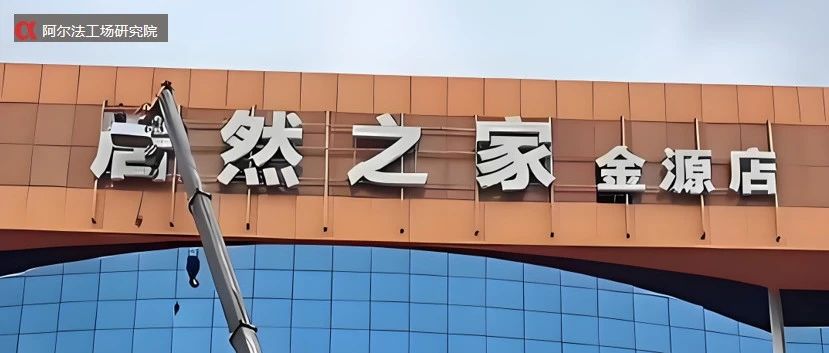
Core Viewpoint - The sudden death of Wang Linpeng, the actual controller and chairman of Juran Smart Home, raises concerns about the company's future and the implications of his leadership style and financial maneuvers [1][3][20] Group 1: Background and Personal History - Wang Linpeng, once the "richest man in the home furnishing industry," had a peak net worth of 350 billion yuan and was ranked 23rd among Hubei's wealthy in 2025 [3][5] - He transitioned from a government accountant to the president of Juran Holdings, showcasing a significant career transformation [5][6] - Wang's connections in Hubei, particularly in his hometown of Huanggang, played a crucial role in his business success and the establishment of Juran Smart Home [7][9] Group 2: Controversial Business Practices - The reverse acquisition of Juran Smart Home through Wuhan Zhongshang in 2019 has been criticized for potential state asset loss, with the transaction valued at 356.5 billion yuan while Wuhan Zhongshang's market value was only 15 billion yuan [9][10] - Wang Linpeng's financial strategies included significant cash dividends to shareholders, with total cash dividends from 2020 to 2023 exceeding 3 billion yuan, despite a decline in net profit [11][14] Group 3: Company Performance and Challenges - Juran Smart Home operates over 400 stores across 30 provinces, with a revenue scale of 12.97 billion yuan in 2024, but has faced stagnation in growth and declining cash flow [17][18] - The company has experienced negative cash flow from financing activities for four consecutive years, indicating increasing difficulties in securing funding [17] Group 4: Leadership Transition - Following Wang Linpeng's death, Wang Ning, a long-time associate, has been appointed to temporarily lead the company, raising questions about the future direction of Juran Smart Home [18][20] - Wang Ning has been involved in strategic initiatives aimed at digital transformation and market expansion, indicating a potential shift in company strategy [19]

思格新能源IPO倒计时:前有“同门”围剿,后有华为伏兵
阿尔法工场研究院· 2025-07-29 00:04
Core Viewpoint - The article discusses the challenges and opportunities faced by Sig Energy, a company focused on distributed photovoltaic energy storage solutions, as it approaches its IPO deadline. The company is experiencing rapid growth but also significant financial pressures, making its successful IPO critical for its future expansion and survival [3][4][13]. Group 1: Company Overview - Sig Energy specializes in innovative distributed photovoltaic energy storage solutions, with its core product being a stackable energy storage system. It holds a 24.3% market share in the global market for such systems as of Q3 2024, ranking first [4]. - Founded less than three years ago, Sig Energy submitted its prospectus for an IPO on February 21, 2025, aiming to list on the Hong Kong Stock Exchange [5]. Group 2: Financial Performance - From May 2022 to September 2024, the net cash flow used in operating activities totaled approximately 606 million RMB, while cash flow from financing activities exceeded 1 billion RMB, indicating a reliance on financing for operations [9]. - The company reported a cumulative loss of 503 million RMB from 2022 to Q3 2024, despite revenue soaring from zero in 2022 to 700 million RMB in the first three quarters of 2024 [16]. Group 3: IPO Challenges - The China Securities Regulatory Commission raised compliance questions regarding Sig Energy's equity holding, tax and debt disputes, and data security, which could delay the IPO process [6][8]. - If the IPO is unsuccessful, Sig Energy may face significant challenges in its global expansion strategy and potential liquidity issues [14]. Group 4: Competitive Landscape - Sig Energy faces intense competition in the distributed energy storage market, particularly from rivals like Mova Energy, founded by a former Huawei executive, which poses a direct threat in the European market [32]. - Domestic competitors, such as Airo Energy, are also vying for market share, emphasizing the need for Sig Energy to maintain its competitive edge [34]. Group 5: Growth Strategy - The company has adopted an aggressive global expansion strategy, increasing its distributor network from zero to 99 across over 60 countries from 2022 to Q3 2024 [19]. - Sig Energy's sales incentive policies, such as reward points for distributors based on installation volumes, have proven effective in boosting sales and market presence [22]. Group 6: Future Outlook - The success of the IPO is crucial for Sig Energy to secure the necessary capital for continued growth and to address its high operational costs [30]. - The impending IPO deadline of August 21, 2025, represents a significant test for the company, as it must navigate both financial pressures and competitive threats [40].
建筑大佬“跨界”创新疫苗,近9亿借款现还债危机
阿尔法工场研究院· 2025-07-27 08:37
Core Viewpoint - The article discusses the rapid growth and competitive landscape of the domestic vaccine industry in China, highlighting the IPO attempt of Zhonghui Yuantong Biotechnology Co., Ltd. as a critical move to overcome liquidity issues and establish a sustainable business model [1][2][4]. Group 1: Company Overview - Zhonghui Yuantong is the first company in China to receive approval for a quadrivalent influenza virus subunit vaccine, "Hui Er Kang Xin," achieving commercial success [2][10]. - The company has two core products: the quadrivalent influenza virus subunit vaccine and an in-development freeze-dried human rabies vaccine, along with 11 other vaccines in the pipeline [10][21]. - Since its establishment in 2015, it took Zhonghui Yuantong eight years to launch its first vaccine, with significant revenue growth from 52.2 million yuan in 2023 to 260 million yuan in 2024, although it still reported a loss of approximately 260 million yuan [11][2]. Group 2: Financial Situation - The company has faced liquidity challenges, with cash on hand insufficient to cover short-term debts, leading to the necessity of the IPO to alleviate cash flow issues [2][4][7]. - Zhonghui Yuantong has raised approximately 999.5 million yuan through three rounds of financing before the IPO, but these funds have been largely consumed in operational costs, leaving a significant debt burden of about 944 million yuan as of March 31, 2025 [4][6][7]. - The company’s bank loans reached approximately 810 million yuan in 2024, a 221% increase from 2023, primarily for the construction of new production facilities [6][7]. Group 3: Market Position and Competition - The Chinese vaccine market is projected to grow from 535 billion yuan in 2019 to 961 billion yuan in 2024, with a compound annual growth rate of 12.4%, driven by the introduction of innovative vaccines [19]. - Despite having a technological edge with its quadrivalent influenza vaccine, Zhonghui Yuantong faces stiff competition from established players like Hualan Biological Engineering and Beijing Kexing, which dominate the market with their own products [21][22]. - The company is also under pressure in other vaccine segments, such as the freeze-dried human rabies vaccine, where competitors have already launched products, while Zhonghui Yuantong's product is still in development [22]. Group 4: Future Prospects - The IPO is seen as a crucial step for Zhonghui Yuantong to improve its financial situation and support ongoing development and commercialization efforts [2][7]. - The company is expanding its production capacity with new facilities, including a second and third production park, aimed at increasing output for its vaccines [13][15]. - The success of the IPO and subsequent financial stability will be vital for Zhonghui Yuantong to navigate the competitive landscape and achieve its growth objectives in the innovative vaccine sector [2][23].

艾塑菲大战:二虎相争,三败俱伤
阿尔法工场研究院· 2025-07-27 08:37
Core Viewpoint - The dispute between Aimeike and Jiangsu Wuzhong has severely impacted the AestheFill brand, potentially driving consumers towards competitors like Aivilan and Su Yan Cui [1] Group 1: Background of the Dispute - On July 21, Jiangsu Wuzhong announced that its subsidiary, Datou Medical, received a termination notice from Korean company Regen, ending their exclusive agency agreement for AestheFill products in mainland China [3] - The day before, Regen announced a new Chinese trademark "Zhen Ai · Su Fei" for AestheFill, indicating a public split from Jiangsu Wuzhong [4][7] - The conflict stems from Aimeike's acquisition of Regen in March, where Aimeike paid $190 million (approximately 1.386 billion RMB) for controlling interest in Regen, thereby gaining ownership of the AestheFill brand [8] Group 2: Financial Implications - AestheFill's success in China is significant, with estimated sales of 85,000 units in its first year, contributing approximately 326 million RMB in revenue to Jiangsu Wuzhong [16] - Aimeike's acquisition of 85% of Regen's shares came with a premium of about 1344.12%, and as of Q3 2024, Aimeike's cash reserves were only 1.6 billion RMB [16] - The loss of exclusive sales rights for AestheFill poses a severe financial threat to Jiangsu Wuzhong, which has already faced scrutiny from the regulatory body for financial misreporting [21] Group 3: Market Dynamics and Brand Impact - The introduction of the new brand name "Zhen Ai · Su Fei" could lead to confusion among consumers, potentially driving them towards more stable competitors [19] - The medical aesthetics market is highly competitive, with the lifecycle of products typically lasting only 8 to 12 months, making the timing of brand transitions critical [17] - The previous success of AestheFill may be undermined by the brand confusion, requiring significant marketing investment to rebuild consumer recognition [20] Group 4: Legal and Ethical Considerations - Jiangsu Wuzhong has indicated plans to pursue legal action to protect its interests following the termination of the agency agreement [24] - The reasons for the termination cited by Regen include alleged unauthorized transfer of exclusive distribution rights by Datou Medical [25] - The ongoing legal disputes and the potential for significant compensation claims could further complicate the situation for both Aimeike and Jiangsu Wuzhong [27]



港股IPO重回全球第1,香港再次“牛”起来了
阿尔法工场研究院· 2025-07-27 08:37
Core Viewpoint - Hong Kong is experiencing a significant resurgence as an international financial hub, marked by a record IPO financing amount and a strong influx of companies seeking to list, indicating a bullish market trend [2][4][85]. Group 1: IPO and Market Dynamics - In the first half of 2025, Hong Kong Stock Exchange (HKEX) achieved an IPO financing amount of 107.1 billion HKD, surpassing Nasdaq's 71.3 billion HKD and representing an increase of nearly 8 times compared to 13.5 billion HKD in the same period last year [4][5]. - A total of 44 new stocks were listed in Hong Kong, with over 200 companies having submitted applications to list, covering various industries [6]. - Major A-share leaders, Chinese concept stocks, and overseas companies are entering the market, with companies like CATL contributing nearly 70% of the IPO fundraising amount [7]. Group 2: Financial Center Status - Recent data from the Z/Yen Group shows that Hong Kong has regained its position as the third global financial center and the top in the Asia-Pacific region, countering perceptions of its decline [9]. - The relationship between Hong Kong and mainland China is characterized by mutual support and economic interdependence, which has historically positioned Hong Kong as a critical financial hub for the mainland [12][25]. Group 3: Financial Innovations and Regulations - HKEX has implemented significant reforms to its listing rules, introducing a diversified listing standard system and special chapters for emerging industries, which has attracted numerous biotech and tech companies [47][51]. - The introduction of the "Specialized Technology Company Route" allows companies to submit listing applications confidentially, facilitating a quicker and more flexible listing process [52][54]. - The reduction of the stock transfer tax rate from 0.13% to 0.1% aims to enhance investment liquidity, alongside policies to attract global family offices to operate in Hong Kong [57]. Group 4: Digital Currency and Global Governance - Hong Kong has established a regulatory framework for stablecoins, positioning itself as a leader in the digital currency space and allowing the issuance of stablecoins pegged to various fiat currencies [61][62]. - The establishment of the International Mediation Institute in Hong Kong marks its evolution from a financial center to a global governance center, providing a new institutional choice for resolving international disputes [66][72]. Group 5: Future Outlook - The capital market environment in Hong Kong is becoming increasingly favorable, with significant growth in cross-border wealth management projected, reaching 231 billion USD with a 9.6% annual increase [80][81]. - The overall market sentiment is bullish, with the Hang Seng Index and Hang Seng Tech Index rising over 45% compared to early 2024, reflecting strong investor confidence [82][83].
日本政坛剧烈变化,投资者谨慎评估
阿尔法工场研究院· 2025-07-27 08:37
Core Viewpoint - The ruling Liberal Democratic Party (LDP) in Japan is losing its long-standing advantage over opposition parties due to rising inflation and dissatisfaction among young voters, leading to a significant political shift [1][2]. Political Landscape - The recent Senate elections revealed a decline in support for the LDP, with opposition parties gaining traction, particularly the right-wing populist Sanseito party, which has raised concerns among investors due to its radical proposals [1][2]. - The LDP has not maintained a majority in both houses of parliament for the first time since its establishment in 1955, prompting calls within the party for a shift towards a more nationalist stance [2][3]. Economic Concerns - Japan's inflation rate has reached its highest level in over 20 years, with a 4.3% increase noted in early 2023, causing public discontent as wages fail to keep pace with rising living costs [5][6]. - The political fragmentation and calls for increased government spending have raised investor concerns about Japan's ability to manage its significant debt burden, leading to a rise in long-term bond yields [3][7]. Market Reactions - The 10-year government bond yield surged to its highest level since 2008, reflecting investor anxiety over the government's fiscal situation and the potential for increased spending commitments [3][7]. - Despite political uncertainty, Japanese stock prices remain high, supported by foreign investment and corporate initiatives to enhance shareholder value [7][8]. Future Implications - The rise of the Sanseito party and its proposals, such as the phased abolition of the consumption tax, could significantly impact Japan's fiscal revenue, potentially reducing it by approximately 25 trillion yen, or over 4% of GDP [7][10]. - The political landscape may further divide into factions advocating for expanded government functions versus those promoting streamlined governance through tax reductions [11][12]. Geopolitical Context - Japan's increasing fiscal challenges and the economic pressures from tariffs imposed by former U.S. President Trump may hinder its ability to meet U.S. defense spending requirements, prompting a reevaluation of its foreign policy and alliances [12][13].

药价比欧洲贵5-10倍,美国“天价药”背后“操盘手”是谁?
阿尔法工场研究院· 2025-07-27 08:37
Core Viewpoint - The article discusses the complexities behind the high drug prices in the United States, exploring the interplay between government, pharmaceutical companies, and insurance providers, as well as the philosophical and systemic issues that contribute to this phenomenon [2][5]. Group 1: Trump's Executive Order and Its Implications - Trump's executive order aimed to reduce drug prices by 30%-80%, but it lacked a clear implementation plan, leading to confusion and a rise in pharmaceutical stock prices instead of a decline [9][10]. - The historical context reveals that U.S. law prohibits the government from negotiating drug prices directly with pharmaceutical companies, reflecting a philosophical stance that separates government intervention from market operations [12][13]. - The political influence of pharmaceutical companies on Congress complicates efforts to reform drug pricing, as many lawmakers are reluctant to impose price controls due to concerns about stifling innovation [20][21]. Group 2: Drug Pricing Mechanisms - Drug pricing in the U.S. is influenced by various channels, including government insurance (Medicare) and commercial insurance, each with different pricing strategies and negotiation dynamics [22][23]. - Pharmaceutical companies set initial list prices based on historical pricing of similar drugs, perceived value, and market competition, leading to a significant gap between list prices and actual prices paid by patients [27][28]. - The negotiation process for drug prices is complex, with discounts varying widely across different channels, making it difficult to ascertain the true cost of drugs [34][35]. Group 3: Global Drug Price Comparisons - Drug prices in the U.S. are significantly higher than in Europe, with some drugs costing 5-10 times more in the U.S. compared to European countries [52][53]. - The article highlights that while U.S. drug prices are high, European countries have their own pricing philosophies that can lead to lower prices for certain medications, particularly for life-threatening conditions [58][59]. - China's approach to drug pricing has evolved, with recent reforms allowing for more aggressive negotiations that have led to lower prices for some drugs, reflecting a shift towards a more competitive market [66][67]. Group 4: Industry Dynamics and Future Outlook - The pharmaceutical industry faces a delicate balance between maintaining high prices to recoup R&D costs and the need for affordable access to medications for patients [73][74]. - Recent legislative changes in the U.S. may allow for some negotiation of drug prices, potentially aligning more closely with practices seen in other countries [71][72]. - The industry's long-term sustainability hinges on finding a balance between innovation incentives and patient access, as well as adapting to evolving regulatory environments [90][91].