36氪

Search documents
猛涨6000亿,矿业巨头又拿下4座金山
36氪· 2026-02-03 09:18
以下文章来源于财经天下WEEKLY ,作者财经天下 财经天下WEEKLY . 《财经天下》周刊官方账号,提供有品质的深度报道,讲述中国企业在时代浪潮中的精彩故事。 在国际金价屡创历史新高之时,资本市场正经历一场有趣的分化:有人急于套现离场,有人却大举加码。近日,一笔超280亿元的跨境并购让紫金矿业这家从闽西山 区走出的企业,再次成为市场焦点。如果此次收购顺利完成,紫金矿业的矿产金年产量将突破100吨,加快迈向"世界级矿业巨头"的步伐。 文 | 周遐观 编辑 | 朗明 来源| 财经天下WEEKLY(ID:cjtxweekly) 封面来源 | unsplash 280亿元撬动4座金山 1月26日晚间,A股万亿矿业巨头紫金矿业一纸公告刷屏资本市场——其控股子公司紫金黄金国际有限公司(以下简称"紫金黄金国际")拟出资55亿加元 (约合280亿元人民币),全资收购在多伦多、纽约两地上市的黄金矿业公司"联合黄金"的全部股权,并将后者旗下的4座金矿收入囊中。 若该项交易能够最终完成,这将是紫金矿业史上最大规模的并购案。 消息一出,紫金矿业股价强势上涨。1月27日至29日,公司A股股价累计上涨10%。在此之前,2025年1月 ...


补偿N+4,德国巨头博世在华启动人员优化,燃油汽车项目成「重灾区」
36氪· 2026-02-03 09:18
Core Viewpoint - Bosch is facing significant challenges in its traditional fuel vehicle business, leading to layoffs and a decline in market competitiveness against emerging Chinese companies like Huawei and BYD [5][6][11]. Group 1: Layoffs and Business Performance - Bosch China has initiated layoffs affecting nearly 200 employees, primarily in its fuel vehicle and hydrogen fuel cell projects, with compensation packages reported to be generous [5][8]. - The company has acknowledged a decline in its workforce in China, with employee numbers dropping from approximately 58,000 in 2023 to 56,000 in 2024 [6]. - Bosch's sales in China showed a growth of 5.2% in 2023, reaching about 139 billion RMB, but this growth is expected to slow to 2.7% in 2024, with projected sales of 142.7 billion RMB [10]. Group 2: Market Competition and Challenges - Bosch's market share in the ADAS (Advanced Driver Assistance Systems) segment has been declining, with its installation volume dropping from 22.5% in the first half of 2024 to 15.2% in the first half of 2025 [12][15]. - Competitors like BYD have significantly increased their market share, with BYD's ADAS installation volume rising from 6.1% to 12.7% within a year [15]. - The company is struggling with a profit margin of approximately 2%, which is below expectations, and is facing pressures from rising costs and a challenging economic environment [9][10]. Group 3: Strategic Adjustments and Future Outlook - Bosch's leadership has indicated the need for organizational restructuring to enhance long-term competitiveness and investment capacity, citing the necessity to adapt to a rapidly changing market [9][17]. - The company is focusing on local investments and innovation in China, despite the competitive landscape becoming increasingly challenging due to the rise of domestic players [10][17]. - Analysts suggest that Bosch's reliance on traditional fuel vehicle technologies is hindering its ability to compete effectively in the electric vehicle market, leading to a potential further decline in market share [17].

人形机器人公司逐际动力完成2亿美元新融资,海外头部基金参与,上汽、蔚来加注丨36氪独家
36氪· 2026-02-03 09:18
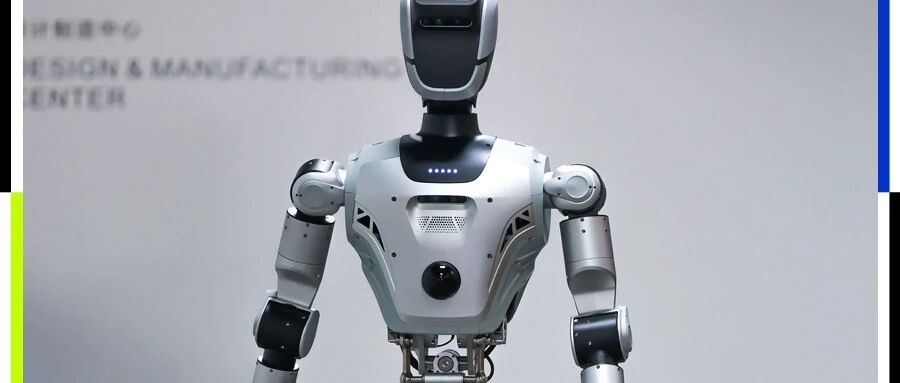
Core Viewpoint - The article discusses the recent $200 million Series B funding round for humanoid robot company LimX Dynamics, highlighting the importance of embodied intelligence in robotics and the company's innovative solutions to overcome traditional barriers in the industry [6][16]. Group 1: Funding and Investment - LimX Dynamics has successfully completed a $200 million Series B financing round, with investors including Stone Venture, Dongfang Fuhai, and several strategic industry investors such as JD.com and SAIC Group [6]. - Existing shareholders, including SAIC Group's Shangqi Capital and NIO Capital, have also increased their investments in the company [6]. Group 2: Technological Innovations - LimX Dynamics has introduced two key technologies: the TRON 2 multi-modal embodied robot and the LimX COSA embodied intelligence operating system, which aim to address the challenges of integrating robotics into real-world applications [6][7]. - The TRON 2 features a modular architecture that allows for flexible reconfiguration into various forms, enabling it to adapt to different operational needs, such as fine manipulation or navigating complex terrains [7][10]. Group 3: Operational Efficiency - The modular design of TRON 2 reduces costs and increases efficiency by allowing enterprises to use a single robot for multiple tasks, thus improving hardware utilization and return on investment [10]. - The system serves as a standardized validation platform, enabling companies to conduct algorithm testing and commercial validation at a lower cost and faster pace before mass production [10]. Group 4: Intelligent Systems - The LimX COSA operating system aims to enhance the robot's cognitive capabilities, allowing it to prioritize tasks and autonomously plan actions in dynamic environments [11][13]. - The integration of TRON 2, the humanoid robot Oli, and the COSA system creates a reusable embodied intelligence production capability, streamlining the development process for engineers and developers [13][14]. Group 5: Market Focus and Strategy - LimX Dynamics targets applications that require high adaptability and interaction, initially focusing on B2B services and expanding into B2C home services [16]. - The company plans to leverage the advantages of the Chinese supply chain for rapid iteration and cost control while establishing a localized ecosystem for developers, customers, and channels [16].
健康戒指卷生卷死,这个95后却做了一枚「听话」的戒指
36氪· 2026-02-03 00:37
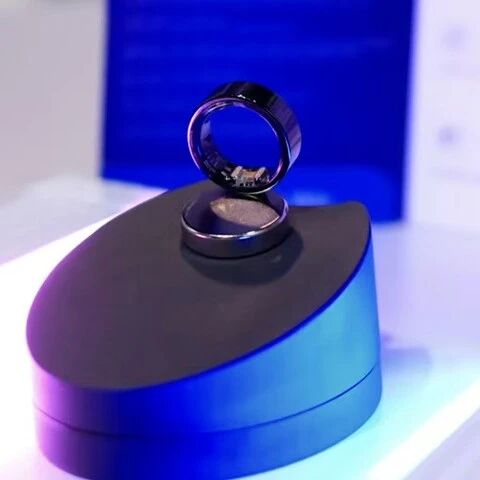
Core Viewpoint - The article discusses the journey of Tang Chang and his innovative AI ring, Spark Ring, which aims to redefine wearable technology by focusing on voice interaction rather than traditional health monitoring features [5][11][12]. Group 1: Product Development and Features - The initial model of the Spark Ring was a bulky prototype with a camera, which faced criticism from investors for its design [9][10]. - The new version of the Spark Ring is a sleek, ceramic design that supports up to 8 hours of continuous audio recording and integrates with a mobile app for task management and voice recognition [11][12]. - Tang Chang envisions the AI ring as a "catcher of information," moving away from the conventional perception of wearable devices as mere health monitors [13][36]. Group 2: Market Reception and User Feedback - At CES, the Spark Ring attracted significant attention, particularly for its unique voice recording capabilities, which impressed international users [22][24]. - There is a notable difference in user concerns between domestic and international markets; international users prioritize practical value and experience, while domestic users focus on theoretical aspects [25][26]. - The product's target audience includes high-level professionals and lifelong learners who value innovative technology [26]. Group 3: Entrepreneurial Challenges and Insights - Tang Chang faced numerous challenges in securing funding, with many investors expressing skepticism about the product's viability [15][51][53]. - The article highlights the importance of confidence and adaptability in entrepreneurship, as Tang learned to pivot his strategy based on market feedback [17][29][64]. - The narrative emphasizes the "innovator's dilemma," where larger companies often overlook smaller, innovative products until they gain market traction [32][38]. Group 4: Future Outlook and Vision - Tang believes that every individual will eventually own a personal AI device, and that the nature of human thought will evolve alongside advancements in AI technology [74]. - The company plans to launch the Spark Ring in the U.S. in March, aiming to validate product-market fit before expanding to domestic sales [72].
今年过年新趋势:不抢车票,抢短租房
36氪· 2026-02-03 00:37
以下文章来源于十点人物志 ,作者元枝、灯灯 十点人物志 . 在这里,遇见每一个值得被记录的人 为逃避人情债,他们选择过年在异乡租房。 作者 | 元枝 编辑 | 灯灯 野格 来源| 十点人物志(ID:sdrenwu) 封面来源 | pexels 临近春节,当大多数人在为一张返乡车票奔波时,一股"逆向过年"的风潮开始在社交媒体上悄悄浮现——有相当一部分在大城市打工的年轻人,正在到处寻 找春节期间的短租房源,反常的需求,搅动了年底本应冷清的租房市场。 36岁的王楚,在东莞做了十余年房产中介,主要打理城中村的低端房源,客户多是附近的工厂工人。他从未见过这样的景象:往年一进腊月就无人问津的短 租房,今年咨询量翻了几番,他的手机从早响到晚,和同行们一交流,发现大家普遍有同感,一波意料之外的业务高峰,在行业的传统淡季降临。 据他观察,这些急于短租的年轻人,平时大多挤在工厂宿舍或与人合租,空间局促。如今,他们不惜花平时租金的数倍,只为租下一个能开火做饭、容纳家 人的临时小"家",把父母从老家接来团圆。 而背后的原因往往相似,那就是为了躲避老家高昂的"人情债"。回不起家,成了当下许多年轻人的难言之隐。 这些年轻人看透了某些人情 ...

想做制药届的AGI,「深度智耀」再获6000万美元融资丨早起看早期
36氪· 2026-02-03 00:37
智能体可在执行任务过程中模仿人的思维工作过程,进行自我反思、学习和改进,也是深度智耀技术平台的一大亮点。 深度智耀的过往合作案例中,由AI撰写的临床试验方案已实现一次性通过监管部门审批。 文 | 胡香赟 编辑 | 海若镜 封面来源 | IC Photo 36氪获悉,AI制药独角兽企业深度智耀近期已完成6000万美元新一轮融资。本轮融资的新投资方包括信宸资本、金镒资本、凯泰 资本,老股东鼎晖百孚、新鼎资本持续追加,指数资本继续担任独家财务顾问。募集资金将主要用于核心技术体系升级。 值得一提的是,去年12月,深度智耀刚刚官宣一笔5000万美元的D轮融资。短短两月内,公司累计已拿到超一亿美元的融资。 当前,受限于技术能力等影响,大部分企业仍主要把AI应用于新药研发过程中的临床前阶段。相较之下,深度智耀则能为全球药 企提供从药物临床前研究、注册申报、临床试验到上市后研究的全栈式智能解决方案。据深度智耀方面介绍,过往合作案例中, 公司为客户提供的由AI"大脑"撰写临床试验方案已实现"零返修",一次性通过监管部门的审批。 在制药行业,过去,市场往往更愿意为有确定性价值的管线资产买单,对单纯的技术平台抱有更审慎的态度。深度 ...

8点1氪:“杰我睿”后,水贝又一黄金平台现兑付异常;马斯克否认上过爱泼斯坦私人小岛;SpaceX宣布收购人工智能企业xAI
36氪· 2026-02-03 00:37
Group 1 - The article discusses the financial difficulties faced by the Shenzhen-based gold trading platform "Yun Dian Dang," which has encountered issues similar to those of "Jie Wo Rui," leading to significant cash flow problems due to difficulties in recovering funds from hedging operations [3][5] - Users have reported that they are unable to withdraw their gold assets and balances from the platform, prompting the company to announce a registration process for users to choose a repayment plan [3] - The company has stated that the cash flow issues are exacerbated by industry panic, resulting in a concentrated run on withdrawals [3] Group 2 - The article mentions that the trading model of "Yun Dian Dang" is similar to that of "Jie Wo Rui," utilizing a price recovery mechanism and allowing for high leverage trading, which poses risks associated with low margin and speculative trading [5] - The article highlights the recent appointment of Li Qiangqing as the general manager of Kweichow Moutai's sales company, indicating a significant leadership change in a major player in the liquor industry [6] - It notes that Kweichow Moutai's sales revenue is projected to exceed 1.459 billion yuan and 1.105 billion yuan in the first three quarters of 2024 and 2025, respectively [6]

22点至8点严禁催收、电话最多6次/天,消费贷催收新规划重点
36氪· 2026-02-02 13:35
Core Viewpoint - The article discusses new regulations on personal consumer loan collection practices in China, focusing on the prohibition of aggressive collection tactics, particularly during late-night hours, to protect consumer rights and ensure fair practices in the financial industry [4][6]. Summary by Sections New Regulations Overview - The China Banking Association has released guidelines aimed at regulating the collection practices of financial institutions and third-party agencies, specifically addressing issues like late-night calls and excessive contact frequency [4][6]. Key Provisions of the Guidelines - The guidelines prohibit collection calls from 10 PM to 8 AM and limit the number of calls to a debtor to no more than six times per day on the same contact number [7][8]. - The guidelines emphasize the need for industry self-regulation and the protection of both creditors' and debtors' rights [10][14]. Consumer Complaints and Industry Response - There has been a significant increase in complaints related to aggressive collection practices, with nearly 25,000 complaints found on third-party platforms regarding harassment and threats from collectors [6][10]. - The guidelines aim to address these issues by establishing clear rules for acceptable collection practices and protecting consumer privacy [9][11]. Prohibited Collection Practices - The guidelines outline eight specific prohibited practices, including impersonating government officials, using threats or intimidation, and unauthorized sharing of personal information [12][13]. - Financial institutions are also prohibited from outsourcing collection tasks to third parties without proper oversight [14]. Information Protection Measures - The guidelines stress the importance of protecting personal information and outline acceptable sources for obtaining debtor contact information [11][12]. - Collection agencies must adhere to strict confidentiality and cannot disclose debtor information to unrelated third parties [10][11].

不爱看电视的年轻人,也开始抛弃投影仪了
36氪· 2026-02-02 13:35
Core Viewpoint - The traditional television and projector markets in China are experiencing significant declines in sales, with domestic brands dominating the market but struggling to find new growth opportunities as consumer preferences shift towards smaller screens and alternative entertainment formats [5][10][30]. Group 1: Television Market Trends - The domestic television market is projected to see a shipment volume of 32.895 million units in 2025, a year-on-year decline of 8.5%, marking the lowest level in nearly 16 years [5][12]. - Major domestic brands such as Hisense, TCL, Xiaomi, and Skyworth accounted for approximately 25.6 million units shipped, holding a market share of 77.8%, despite a 9.2% decline in sales [12]. - Foreign brands like Samsung, Sony, Philips, and Sharp have seen their combined shipments drop below 1 million units in 2025, leading to strategic exits from the market, such as Panasonic's plan to sell its TV business [13]. Group 2: Projector Market Trends - The projector market faced a total annual sales volume of 5.203 million units in 2025, down 13.9% year-on-year, with sales revenue of 8.36 billion yuan, a decline of 16.5% [14]. - Despite government subsidies aimed at boosting sales, the projector market continued to decline due to diminishing effects of these subsidies and preemptive consumer demand [16][17]. - Among leading brands, only the brand XGIMI saw a 12% increase in sales, while others like JmGO and Dangbei experienced declines [17]. Group 3: Changing Consumer Preferences - The rise of micro-short dramas and short videos has shifted consumer entertainment preferences towards smaller screens, with the micro-short drama market reaching a value of 100 billion yuan in 2025, nearly double that of the national film box office [22][23]. - The user base for micro-short dramas reached 696 million by mid-2025, accounting for nearly 70% of internet users, indicating a significant shift in viewing habits [24]. - New products like "girlfriend machines," which are large tablets on wheels, have shown a 45.4% increase in sales, suggesting a growing demand for portable and versatile entertainment devices [28]. Group 4: Future Market Outlook - Predictions indicate that the television market will see shipments drop to 30.12 million units in 2026, a decline of 8.4%, while the projector market is expected to decrease by about 2% to 5.089 million units [30]. - The upcoming 2026 World Cup may provide a temporary boost to large screen usage, as past events have shown significant marketing success for brands like Hisense [31]. - Despite domestic market challenges, Chinese brands are gaining ground internationally, with a combined global market share of 31.3% for TCL, Hisense, and Xiaomi, surpassing South Korean competitors [33].

30多年前,温州就出了个马斯克
36氪· 2026-02-02 13:35
Core Viewpoint - The article narrates the entrepreneurial journey of Ye Wengui, a pioneer in electric vehicle development in China, highlighting his innovative spirit and the challenges he faced in realizing his dream of creating a Chinese automotive brand [3][4][5]. Group 1: Early Life and Entrepreneurial Spirit - Ye Wengui, originally from Wenzhou, became a successful entrepreneur in Qitaihe, Heilongjiang, after innovating in the production of shovel handles, significantly increasing output through technological improvements [10][14][18]. - His ventures included establishing an aluminum rolling factory and a high-frequency heat sealing machine factory, which were highly successful and contributed to his wealth [22][25][31]. Group 2: Transition to Automotive Industry - In the late 1980s, Ye Wengui shifted his focus to the automotive industry, motivated by the lack of Chinese brands and the potential of electric vehicles [45][46]. - He successfully developed the "Yefeng No. 1," an electric vehicle that could travel 200 kilometers on an eight-hour charge, showcasing his innovative capabilities [51][52]. Group 3: Challenges and Setbacks - Despite initial success, Ye faced significant challenges, including funding shortages and missed partnership opportunities, which ultimately hindered the commercialization of his electric vehicles [61][70][75]. - By 1995, after investing over 40 million yuan and developing multiple prototypes, Ye Wengui had to cease operations due to financial constraints and lack of support [76][78]. Group 4: Legacy and Recognition - Ye Wengui's story is seen as a representation of the entrepreneurial spirit in Wenzhou during the 1980s, and he is remembered for his contributions to the industry despite the eventual failure of his automotive ventures [85][88]. - His legacy continues to inspire, as he is recognized in the Zhejiang Merchants Museum, symbolizing the resilience and innovation of private entrepreneurs in China [87][88].