创业邦

Search documents
大疆离职员工,「打印」出一个百亿独角兽
创业邦· 2025-11-05 03:18
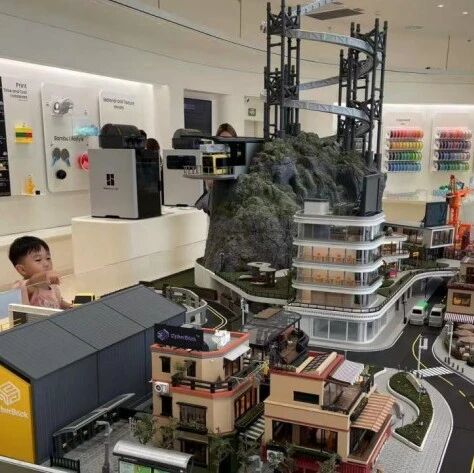
Core Insights - Bambu Lab, a Shenzhen-based tech unicorn, has captured nearly 30% of the global consumer 3D printing market within four years of its establishment, with a valuation exceeding 100 billion RMB [6][7][12] - The company’s revenue surged from 2.7 billion RMB in 2023 to 6 billion RMB in 2024, marking a year-on-year growth of approximately 33 billion RMB [7][12] - Bambu Lab's products have been recognized for their industrial-grade performance at consumer prices, gaining significant attention from influencers and media [6][12] Company Overview - Founded in 2020 by former DJI core team members, Bambu Lab aims to revolutionize the 3D printing industry, which was previously dominated by "farmers" operating multiple machines [6][10][12] - The company’s first product, the Bambu Lab X1, launched in 2022, was well-received, generating nearly 50 million RMB in crowdfunding within a month [12][13] - Bambu Lab has shifted its strategy from targeting niche enthusiasts to attracting new users by offering affordable and user-friendly 3D printers [13][14] Market Position and Growth - In 2024, Bambu Lab's sales volume reached approximately 1.2 million units, achieving a market share of 29% in the global consumer 3D printing segment [16][21] - The company benefited from government subsidies and influencer promotions, significantly boosting its domestic sales [16][21] - Bambu Lab's rapid growth has led to a substantial increase in its workforce, expanding from 139 to 571 employees between 2022 and 2024 [20][21] Technological Advancements - Bambu Lab's competitive edge lies in its innovative technology and product development, with a focus on creating high-quality, user-friendly machines [18][19] - The company has maintained a strong emphasis on product perfection before market release, contrasting with industry norms of relying on user feedback for improvements [19][20] - Bambu Lab's latest H2D printer integrates laser engraving and cutting capabilities, showcasing its technological leadership [19] Challenges and Competition - As Bambu Lab grows, it faces increasing pressure in customer service and product support, particularly as the user base expands [25][26] - The company is also encountering competition from other established players in the 3D printing market, which are launching similar products at competitive prices [26] - Legal challenges have emerged, including a patent infringement lawsuit from Stratasys, which could impact Bambu Lab's revenue in the U.S. market [26]

吉利汽车回应改造原上汽通用北盛工厂(三期);“深圳造”智能戒指全球销量第二丨智能制造日报
创业邦· 2025-11-05 03:18
Group 1 - Geely Auto is actively exploring various capacity expansion plans to meet the increased demand for Geely Galaxy, without building new factories or expanding existing ones [2] - Japanese auto parts suppliers are seeking to integrate into China's automotive supply chain as the market share of Japanese cars declines, highlighting the urgency for collaboration with Chinese automakers [2][3] - Shenzhen-based JiuZhi Technology's RingConn smart ring has achieved global sales of over 150,000 units, ranking second in the smart ring market, with a user growth rate exceeding 100% year-on-year [3] Group 2 - The robotics industry has seen a revenue growth of 29.5% year-on-year in the first three quarters, with industrial robot production reaching 595,000 units and service robot production at 13.5 million units, surpassing the total expected for 2024 [3] - The performance and quality of robotic products have significantly improved, with successful development of high-performance industrial robots filling gaps in the high-end market [3] - Key components for robots, such as precision reducers and high-performance servo systems, are continuously achieving breakthroughs, enhancing the overall capability of the robotics sector [3]


AI大模型实时投资比赛落幕,阿里千问Qwen夺冠;微信支付为中小商家推出AI菜单识别功能丨AIGC日报
创业邦· 2025-11-05 00:08
Group 1 - The AI model competition "Alpha Arena" concluded with Alibaba's Qwen winning the championship, achieving a return of 22.32% over 17 days, while four major US models incurred losses, with GPT-5 losing over 62% [2] - OpenAI reportedly discussed a merger with competitor Anthropic shortly after Sam Altman's brief departure as CEO, but the talks did not materialize due to practical obstacles [2] - WeChat Pay launched an AI menu recognition feature for small and medium-sized businesses, allowing merchants to upload photos of their menus for automatic content recognition and payment processing [2] Group 2 - The AI glasses market is rapidly growing, with major tech companies like Google and Apple accelerating their investments, as AI glasses are seen as the next generation of human-computer interaction [2] - Reports indicate that global shipments of AI glasses are expected to reach 4.065 million units in the first half of 2025, marking a year-on-year increase of 64.2%, with projections suggesting shipments could exceed 40 million units by 2029 [2]

美国科技巨头闪电撤离中国,400名在华员工全被解雇;印度富豪逾8亿美元资产遭查封;诺基亚将退市;零跑回应一汽收购其股权丨邦早报
创业邦· 2025-11-05 00:08
Group 1 - SAS Institute has completely withdrawn from the Chinese market after 25 years, laying off all 400 employees and will continue operations through third-party partners [1] - Leap Motor responded to rumors of FAW Group acquiring its shares, stating that the news is untrue [1] - The Chinese government announced a 9-day holiday for the 2026 Spring Festival, leading to a 63% increase in flight bookings compared to the same period in 2025 [2] Group 2 - The AI model competition "Alpha Arena" concluded with Alibaba's Qwen winning, achieving a 22.32% return, while other models, including GPT-5, suffered significant losses [8][9] - Nokia plans to delist from the Paris Stock Exchange, citing trading volume and administrative costs as reasons [9] - The global AI glasses market is rapidly growing, with shipments expected to reach 4 million units by 2029, driven by major tech companies like Google and Apple [22] Group 3 - The Indian online brokerage Groww's parent company is set to launch an IPO, potentially valuing the company at $7 billion [10] - Beta Technologies, an electric aircraft manufacturer, raised over $1 billion in its IPO, pricing shares at $34 [10] - The robotics industry saw a revenue increase of 29.5% year-on-year in the first three quarters, with significant production growth in both industrial and service robots [22][23]

IPO前夜互掐,一场价值超90亿元的口水战
创业邦· 2025-11-05 00:08
Core Viewpoint - The article discusses the escalating rivalry between two autonomous driving companies, Xiaoma Zhixing and Wenyuan Zhixing, as they prepare for their upcoming listings on the Hong Kong stock exchange. The conflict centers around claims of data scale and technological superiority, which are critical for valuation in the autonomous driving industry [6][7][9]. Group 1: Company Rivalry - Xiaoma Zhixing recently presented a comparison in a roadshow that labeled Wenyuan Zhixing's operational city as "Beijing" and its order volume as "zero," prompting a strong rebuttal from Wenyuan's CFO, Li Xuan, who accused Xiaoma of spreading false information [6][9]. - Both companies are competing for market share in the autonomous driving sector, particularly focusing on Robotaxi commercialization and L2+ advanced driving assistance systems [12][14]. Group 2: Key Metrics and Data - Xiaoma Zhixing reported a total driving mileage of 48.6 million kilometers, while Wenyuan Zhixing's latest figures show over 55 million kilometers, indicating that both companies are closely matched in terms of operational scale [9][14]. - Financially, Xiaoma Zhixing incurred a net loss of 681 million yuan in the first half of 2025, a year-on-year increase of approximately 75.07%, while Wenyuan Zhixing's loss was 792 million yuan, a decrease of 10.32% [14]. Group 3: Technological Focus - The debate over technological paths centers on the "end-to-end" solution, which has gained traction in the industry as the next-generation approach to autonomous driving. Wenyuan Zhixing claims to have achieved mass production with its "end-to-end" solution, while Xiaoma Zhixing's claims are questioned [10][12]. - The article highlights the importance of total driving mileage as a key metric for data quality in autonomous driving training, emphasizing that more mileage leads to richer data for algorithm development [9][10]. Group 4: Market Dynamics - The article notes that both companies are facing challenges in the commercialization of Robotaxi services, with regulatory policies acting as a significant barrier to rapid growth [12][13]. - Despite their similar financial struggles, Xiaoma Zhixing has a market capitalization of approximately $7.08 billion, while Wenyuan Zhixing stands at about $3.41 billion, indicating a disparity in investor confidence [14].

新晋“黑马”的目标,远不止于拿下苏超
创业邦· 2025-11-04 10:39
Core Viewpoint - The article highlights the rise of Taizhou as a significant player in Jiangsu's economic landscape, aiming to break free from its "mid-tier" image and set a target of achieving a GDP of over 1 trillion yuan by the end of the 14th Five-Year Plan [6][10][15]. Economic Goals and Development Strategy - Taizhou has set an ambitious goal to join the "trillion-yuan club" by the end of the 14th Five-Year Plan, marking its first clear target for such an economic milestone [10][15]. - The city is actively seeking to redefine its identity and economic positioning, aiming to transition from a "stable mid-tier" to a "competitive upper-tier" city [14][15][26]. Comparison with Other Cities - In comparison to its peers, Taizhou's GDP for the previous year was 7020.95 billion yuan, which is lower than that of Yangzhou (7809.64 billion yuan) and Yancheng (7779.2 billion yuan) [16][18]. - The article notes that while Taizhou is currently behind in economic size, it has been gaining momentum and pushing Yangzhou to keep pace [18][22]. Industrial Development and Key Sectors - Taizhou has identified key industries for growth, including big health, marine engineering, new materials, and new intelligent manufacturing, under the banner of "Big Sea New Morning" [18][20]. - The city is recognized as the largest private shipbuilding base in China, with significant contributions to national shipbuilding metrics [18][19]. - The pharmaceutical industry in Taizhou has also seen substantial growth, with the establishment of the China Pharmaceutical City, which has attracted over 1300 pharmaceutical companies [20][22]. Recent Economic Performance - In the first three quarters of the year, Taizhou's industrial added value increased by 7.4%, outpacing the provincial average by 0.6 percentage points [24]. - However, the overall GDP growth rate for Taizhou slowed to 5.4%, falling short of the initial target of 6% for the year [25]. Future Prospects and Initiatives - Taizhou is focusing on new growth points, particularly in emerging industries such as robotics and artificial intelligence, to drive future economic development [26][28]. - The city aims to create a "Morning Light Industry" that targets future industries before they reach significant scale, reflecting a proactive approach to economic development [29].

96年清华学霸造“地面北斗”,价格打到同行1/10!
创业邦· 2025-11-04 10:39
Core Viewpoint - The article discusses the establishment and technological advancements of Baize Huizhi (Beijing) Technology Co., Ltd., which focuses on solving positioning issues in environments where satellite signals are obstructed or interfered with, using a technology called "pseudo-satellite" [3][4][5]. Company Overview - Company Name: Baize Huizhi (Beijing) Technology Co., Ltd. - Financing Round: Angel Round - Products/Services: Spatial positioning solutions - Founders: Su Jingxuan and Zhang Weicheng [3][4]. Technology and Innovation - The core technology, "pseudo-satellite," allows for positioning in environments where satellite signals are weak or unavailable, with signal strength being 1000 times stronger than traditional satellite signals in obstructed areas [4][5]. - The development of this technology took three years, resulting in a miniaturized, customized satellite positioning system that includes signal transmitters, receivers, and algorithms [7][8]. Market Context - The pseudo-satellite technology was initially limited to military and extreme scenarios due to high costs and technical constraints but has now reached a level of maturity suitable for commercialization [8][10]. - The company aims to provide high-precision positioning services in complex environments such as hospitals, airports, and shopping malls, where traditional satellite signals fail [5][8]. Business Model and Strategy - Baize Huizhi has identified two main business lines: 1. Providing infrastructure for high-precision positioning in tunnels and underground spaces. 2. Offering testing and simulation tools for research institutions and automotive companies [17][18]. - The company has successfully completed projects for various clients, including high-speed rail stations and technology parks, demonstrating its capability in real-world applications [21][23]. Financial Performance - In 2024, Baize Huizhi achieved approximately 2 million in revenue, with 60% from base station equipment sales and 40% from data services and rentals. The company anticipates revenue exceeding 10 million in 2025 [23][24]. Future Outlook - The founder believes that the pseudo-satellite technology will see significant growth in the next two years, driven by the ongoing development of the Beidou system and its integration into various industries [25][26]. - The company plans to expand its product matrix and explore new applications, including positioning for outdoor robots and drones, while also developing a high-value spatiotemporal data asset platform [26][27].

四大女掌门,拿捏中产的“吃喝”
创业邦· 2025-11-04 10:39
Core Viewpoint - The retail industry in China is witnessing a significant rise in female leadership, with several major companies now led by Chinese women, indicating a shift in management dynamics and strategies in a highly competitive market [6][15][42]. Group 1: Female Leadership in Retail - The article highlights the emergence of female CEOs in major retail companies in China, including Chen Jia at Aldi, Zhu Xiaojing at Walmart China, Zhang Shuyun at Costco, and Yan Xiaolei at Hema [6][15]. - Chen Jia's leadership at Aldi has shifted the company's strategy back to its low-price roots, resulting in increased brand recognition and expansion in Shanghai and Jiangsu [9][11]. - Zhu Xiaojing, the first Chinese CEO of Walmart China, faces challenges as the company adapts to changing consumer preferences and competition from other retailers [12][19]. Group 2: Competitive Strategies - Aldi's new strategy under Chen Jia focuses on offering value products and simplifying pricing structures, which has resonated well with Chinese consumers [9][24]. - Hema, under Yan Xiaolei, aims to achieve a GMV target of 100 billion yuan within three years, reflecting a shift towards efficiency and profitability [14][42]. - The competition between Aldi and Hema is intensifying, particularly in the Jiangsu region, where both companies are rapidly expanding their store presence [29][30]. Group 3: Market Dynamics - The retail landscape is characterized by a shift towards low-cost and efficient operations, with companies like Aldi and Hema adopting similar strategies to attract price-sensitive consumers [30][35]. - The article notes that the current economic climate presents both challenges and opportunities for these female leaders, as they navigate a market with changing consumer expectations [15][24]. - The competition in the Jiangsu region is particularly fierce, with Aldi and Hema both targeting similar demographics and employing comparable operational strategies [30][36]. Group 4: Consumer Behavior and Preferences - The article discusses how consumer preferences have evolved, with a growing demand for value and efficiency in shopping experiences, prompting retailers to adapt their strategies accordingly [19][42]. - The success of Aldi's low-price strategy and Hema's focus on community-based stores reflects a broader trend towards localized and cost-effective retail solutions [30][35]. - The competitive landscape is further complicated by the presence of other major players like Costco, which also aims to capture market share in the same regions [36][46].

雷军回应小米汽车坚持车辆测试;高德将入局Robotaxi领域,拓展全球市场丨汽车交通日报
创业邦· 2025-11-04 10:39
Group 1 - Xiaomi's CEO Lei Jun emphasized the importance of continuous vehicle testing for Xiaomi's automotive division, stating that testing is crucial throughout the product lifecycle to ensure quality and enhance user experience [2] - Gaode is entering the Robotaxi sector with plans to expand globally, indicating a strategic focus on this area as a significant growth segment for the company [2] - Sichuan Yema Automobile has been listed as operating abnormally due to being unreachable at its registered address, highlighting potential operational challenges within the company [2] Group 2 - Tesla's sales in Europe have significantly declined, with Sweden experiencing an 89% drop in new registrations, while other markets like Norway and the Netherlands also saw around a 50% decrease; however, France reported a slight increase of 2.4% in registrations, albeit from a low base [2]



4000元一件都卖爆,谁在捧红高价羽绒服?
创业邦· 2025-11-04 03:28
Core Viewpoint - The article highlights the rapid growth of the down jacket market in China, particularly in the high-end segment, driven by changing consumer preferences and increased outdoor activity participation [5][18]. Group 1: Market Trends - The sales of mid-length down jackets on JD.com saw a year-on-year increase of 180% from October 9 to October 15, while sports down jackets experienced a fourfold increase in sales [5]. - On Tmall, several outdoor brands achieved significant sales, with some products exceeding 10 million yuan in sales within half an hour of launch [6]. - The high-end down jacket market, defined as jackets priced above 1,500 yuan, is projected to account for over 30% of the market by 2024 [19]. Group 2: Consumer Behavior - Young consumers are increasingly purchasing high-priced outdoor down jackets, with many valuing functionality and brand prestige over price [40][42]. - The outdoor apparel market is expanding, with nearly 60% of outdoor users spending over 8,000 yuan annually on gear, indicating a strong willingness to invest in quality products [34]. - The trend of outdoor activities, such as camping and hiking, is attracting a broader demographic, leading to increased sales of high-end down jackets [32][36]. Group 3: Competitive Landscape - Traditional down jacket brands like Bosideng are facing competition from specialized outdoor brands such as KAILAS and Arc'teryx, which are gaining traction in the high-end market [18][25]. - The article notes that many domestic brands are entering the high-end down jacket segment, previously dominated by foreign luxury brands [18][21]. - Bosideng is shifting its focus towards urban fashion, appointing a new creative director from luxury fashion backgrounds to enhance its high-end product line [30].