半导体芯闻

Search documents
LG铜柱基板技术,将革命手机
半导体芯闻· 2025-07-11 10:29
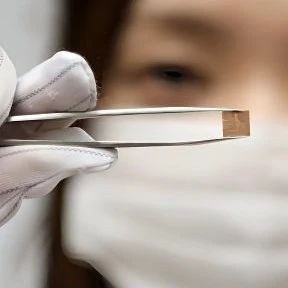
Core Viewpoint - LG Innotek has successfully developed the world's first copper post (Cu-Post) technology for mobile semiconductor substrates, which enhances smartphone performance and reduces thickness by replacing traditional solder balls with copper posts [1][2]. Group 1: Technology Development - The Cu-Post technology allows for a 20% reduction in spacing between solder balls, increasing packaging density compared to traditional methods [1]. - Copper's higher melting point compared to solder ensures structural stability during high-temperature processes, preventing deformation or displacement of solder balls [1]. - The thermal conductivity of copper is approximately seven times greater than that of traditional solder, facilitating faster heat dissipation [1]. Group 2: Business Strategy and Goals - LG Innotek aims to focus on high-value products such as FC-BGA and RF-SiP substrates, as well as vehicle AP modules, with a target of exceeding $2.2 billion in annual revenue by 2030 [2]. - The company has secured around 40 patents related to its Cu-Post technology and plans to apply it to RF-SiP and FC-CSP substrates [1][2]. Group 3: Challenges and Considerations - The microstructure manufacturing process requires extremely high precision, making chip integration and production yield management challenging [2]. - The cost of copper is higher than that of solder, necessitating careful evaluation of return on investment in the industry [2].

芯片人注意!还有1天!ICDIA 2025创芯展即将盛大开幕
半导体芯闻· 2025-07-10 10:33
Group 1 - The ICDIA 2025 event will take place on July 11-12 at the Suzhou Jinji Lake International Conference Center, featuring the second third meeting of the China Integrated Circuit Design Alliance Council to summarize and discuss the main work of the alliance and industry development issues [1] - The event will include various forums such as the IC Design Forum, AI Developer Forum, and Automotive Chip Forum, highlighting the participation of distinguished guests [1] - A white paper on the application areas of automotive safety chips will be released during the conference [1]

印度首家晶圆厂,动工
半导体芯闻· 2025-07-10 10:33
Core Viewpoint - The establishment of India's first semiconductor manufacturing plant in Gujarat marks a significant step towards self-reliance in semiconductor production, reducing dependence on foreign suppliers and enhancing the local electronics industry [1][3]. Group 1: Semiconductor Plant Overview - The semiconductor plant, a collaboration between Tata Electronics and Taiwan's PSMC, will begin production in December 2026 [1]. - The plant will produce various semiconductor chips, including 14nm, 28nm, 40nm, 55nm, and 65nm, catering to multiple applications [6][7]. Group 2: Benefits to India - The plant will help India achieve self-sufficiency in semiconductor supply, mitigating supply chain risks highlighted during the COVID-19 pandemic [3]. - It supports the "Make in India" and "Digital India" initiatives, positioning India as a producer rather than just a consumer of semiconductors [3]. - The project is expected to create over 20,000 direct and indirect jobs, benefiting engineers, technicians, and support staff [3]. Group 3: Tata's Plans and Infrastructure Development - Tata is committed to ensuring the project's success, having sent over 200 employees to Taiwan for advanced training in semiconductor manufacturing [9]. - The Gujarat government is constructing 1,500 residential units, schools, hospitals, and a desalination plant to support Tata's workforce and suppliers [9]. - Additionally, Tata is building a second OSAT plant in Assam, valued at ₹270 billion, which will create 27,000 jobs and is expected to be operational by mid-2025 [9]. Group 4: Global Context - Taiwan currently dominates the global semiconductor market, accounting for 60% of manufacturing capacity, with TSMC alone producing nearly half of the world's semiconductors [10].
英伟达的阉割版GPU,要来了
半导体芯闻· 2025-07-10 10:33
Core Viewpoint - Nvidia plans to launch a simplified AI chip designed specifically for the Chinese market in September, adapting to U.S. export controls while still relying on its software ecosystem [1][2] Group 1: Nvidia's Market Strategy - The new chip, Blackwell RTX Pro 6000, lacks high bandwidth memory and NVLink, making it a limited-functionality product for Chinese consumers [1] - Nvidia's CEO Jensen Huang aims to gain support from Chinese business leaders during his visit to Beijing, emphasizing the company's commitment to the Chinese market [1] - Despite U.S. pressures, Nvidia's market capitalization recently surpassed $4 trillion, buoyed by the growth of artificial intelligence and improving U.S.-China relations [1] Group 2: Challenges and Competition - Nvidia's market share in China has decreased from 95% to 50% due to U.S. export controls, but the Chinese AI market is projected to reach $50 billion soon [2] - The company has delayed the chip's shipping until September, awaiting full approval from Washington to avoid repeating the $5.5 billion asset write-down from the H20 chip incident [2] - Chinese tech giants like Alibaba, ByteDance, and Tencent are exploring in-house chip development while still collaborating with Nvidia [2] Group 3: Financial Performance - In fiscal year 2025, Nvidia generated $17.1 billion in revenue from China, accounting for 13% of total sales [3] - Nvidia's spokesperson highlighted the importance of the Chinese developer community in creating widely used open-source models and applications [3]

台积电,压力大增
半导体芯闻· 2025-07-10 10:33
Core Viewpoint - The article discusses the increasing anxiety within Taiwan's semiconductor ecosystem, particularly around TSMC, due to ongoing tariff threats from the Trump administration, prompting significant investment plans to mitigate these impacts [1][2]. Group 1: TSMC's Investment Strategy - TSMC has announced plans to invest over $100 billion (approximately 137 trillion KRW) to address the tariff policies introduced by the Trump administration [1]. - Since 2020, TSMC's total investment in the U.S. has reached $165 billion (around 240 trillion KRW), with an initial commitment of $65 billion (about 94 trillion KRW) for three factories in Arizona, later increasing this by an additional $100 billion for production facilities [2]. Group 2: Industry Response and Concerns - The Taiwanese manufacturing sector, including TSMC's supply chain partners, is formulating strategies to cope with U.S. tariffs, expressing concerns about potential adverse effects on their operations [1]. - There is a growing sentiment of dissatisfaction among industry players regarding the ongoing tariff situation, with fears that excessive tax rates could severely impact their competitiveness [1]. - Samsung Electronics and SK Hynix are also developing strategies in response to the tariff threats, with Samsung building a foundry in Texas and SK Hynix planning a semiconductor packaging facility in Indiana, although they have not disclosed specific investment plans related to memory semiconductor production [2][3].

DISCO,创纪录
半导体芯闻· 2025-07-10 10:33
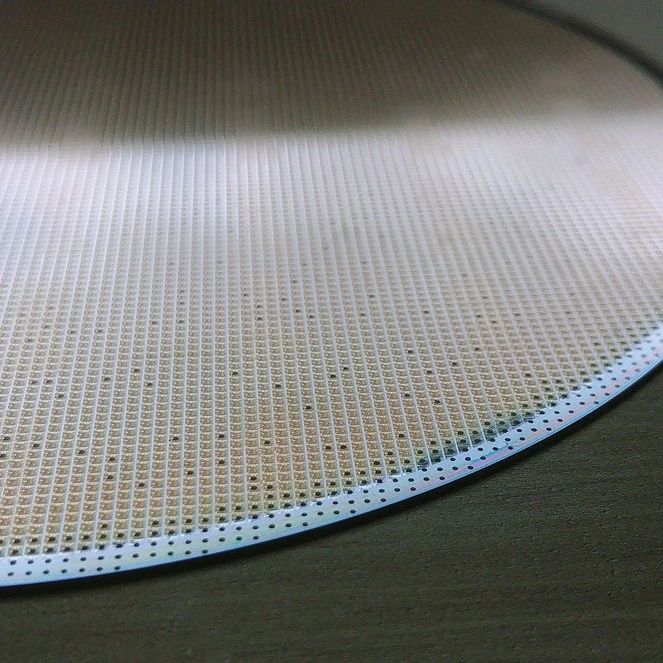
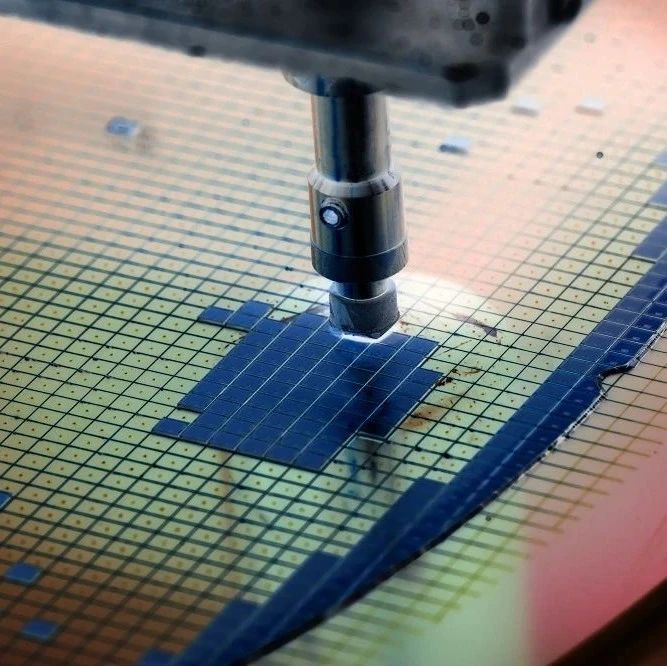
Core Viewpoint - The demand for AI is driving significant growth for DISCO, a leading manufacturer of wafer cutting machines in Japan, leading to upward revisions in their financial forecasts for the first quarter of 2025, with net profit expected to reach a historical high [1][2]. Group 1: Financial Forecast Revisions - DISCO revised its consolidated revenue forecast for Q1 2025 from 75 billion JPY (a 9% year-over-year decrease) to 89.914 billion JPY (a 9% year-over-year increase) [1]. - The consolidated operating profit was adjusted from 23.8 billion JPY (a 29% year-over-year decrease) to 34.48 billion JPY (a 3% year-over-year increase) [1]. - The consolidated net profit forecast was raised from 16.7 billion JPY (a 30% year-over-year decrease) to 23.767 billion JPY (a 0.2% year-over-year increase), marking a historical high for the same period [1]. Group 2: Market Dynamics and Demand Drivers - The upward revision in DISCO's financial outlook is attributed to strong demand for high-performance semiconductors driven by generative AI, which has boosted sales of manufacturing equipment [1]. - The depreciation of the Japanese yen against the dollar also contributed to the improved financial outlook, with the average exchange rate during the period being 144.5 JPY per USD, compared to the previously set benchmark of 135 JPY per USD [1]. - DISCO's individual shipment value for Q1 2025 reached 93 billion JPY, an 8.5% increase year-over-year, marking the fifth consecutive quarter of growth and surpassing the previous record of 90.8 billion JPY set in Q3 2024 [2]. Group 3: Industry Trends - The Japan Semiconductor Equipment Association (SEAJ) reported an upward revision in the sales forecast for semiconductor manufacturing equipment in Japan for the fiscal year 2025, increasing from 4.659 trillion JPY to 4.8634 trillion JPY, representing a 2% increase compared to the previous year [2]. - This growth is driven by increased investments in advanced semiconductor technologies, including the production of 2nm chips by TSMC and rising investments in DRAM and HBM by South Korean manufacturers [2].
AI芯片公司,估值60亿美元
半导体芯闻· 2025-07-10 10:33
Core Viewpoint - Groq, a semiconductor startup, is seeking to raise $300 million to $500 million, with a post-investment valuation of $6 billion, to fulfill a recent contract with Saudi Arabia that is expected to generate approximately $500 million in revenue this year [1][2][3]. Group 1: Funding and Valuation - Groq is in discussions with investors to raise between $300 million and $500 million, aiming for a valuation of $6 billion post-funding [1]. - In August of the previous year, Groq raised $640 million in a Series D funding round led by Cisco, Samsung Catalyst Fund, and BlackRock Private Equity Partners, achieving a valuation of $2.8 billion [4]. Group 2: Product and Market Position - Groq is known for producing AI inference chips designed to optimize speed and execute pre-trained model commands, specifically a chip called Language Processing Unit (LPU) [5]. - The company is expanding internationally by establishing its first data center in Helsinki, Finland, to meet the growing demand for AI services in Europe [5]. - Groq's LPU is intended for inference rather than training, which involves interpreting real-time data using pre-trained AI models [5]. Group 3: Competitive Landscape - While NVIDIA dominates the market for chips required to train large AI models, numerous startups, including SambaNova, Ampere, Cerebras, and Fractile, are competing in the AI inference space [5]. - The concept of "sovereign AI" is being promoted in Europe, emphasizing the need for data centers to be located closer to users to enhance service speed [6]. Group 4: Infrastructure and Partnerships - Groq's LPU will be installed in Equinix data centers, which connect various cloud service providers, facilitating easier access for businesses to Groq's inference capabilities [6]. - Groq currently operates data centers utilizing its technology in the United States, Canada, and Saudi Arabia [6].

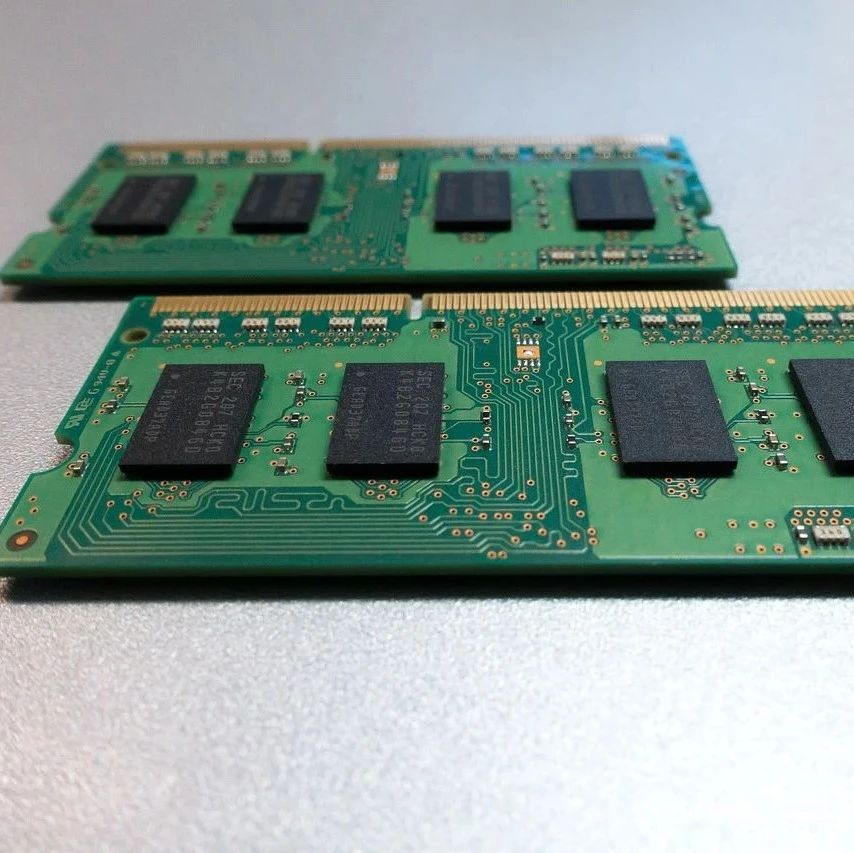
LPDDR6,正式发布
半导体芯闻· 2025-07-10 10:33
Core Viewpoint - The release of the new LPDDR6 standard by JEDEC represents a significant advancement in memory technology, aimed at enhancing speed, efficiency, and security for mobile devices and artificial intelligence applications [1][5]. Performance Enhancements - LPDDR6 features a dual-channel architecture that maintains a 32-byte access granularity while allowing flexible operations, optimizing channel performance with two sub-channels per chip, each having 12 data signal lines [3][4]. - The standard includes dynamic write non-target on-die termination (NT-ODT) to improve signal integrity based on workload demands [3]. Power Efficiency - LPDDR6 operates at a lower voltage and power consumption compared to LPDDR5, utilizing two VDD2 power supplies to meet increasing power efficiency demands [3]. - Additional energy-saving features include low-power dynamic voltage frequency scaling (DVFSL) and support for partial self-refresh and active refresh to reduce refresh power [4]. Security and Reliability - The standard incorporates features such as command/address (CA) parity checking, error clearing, and built-in self-test (MBIST) to enhance error detection and system reliability [5]. - The Carve-out Meta mode allocates specific memory areas for critical tasks, improving overall system reliability [4]. Industry Support and Impact - Industry leaders, including Qualcomm and MediaTek, express confidence that LPDDR6 will significantly impact mobile applications, edge AI computing, data centers, and automotive sectors [5][6][7]. - The standard is expected to meet the growing demands for AI inference, providing the necessary speed, bandwidth, and capacity while maintaining cost, efficiency, and reliability [5][8].

全球首家4万亿芯片公司
半导体芯闻· 2025-07-10 10:33
Core Viewpoint - Nvidia has become the first company to reach a market valuation of $4 trillion, surpassing Apple's previous record of $3.9 trillion, highlighting the significant growth and demand for AI-related technologies and infrastructure [2][10]. Group 1: Market Performance - Nvidia's stock price has surged over 70% since its low on April 4, driven by strong demand for AI chips and infrastructure [3][5]. - The company's revenue for the first quarter of 2025 increased by approximately 70%, reaching over $44 billion, with expectations for further growth to $45 billion in the current quarter [5][7]. - Nvidia's stock has risen nearly 20% this year and 1500% over the past five years, making it the highest-valued public company as of mid-June [5][6]. Group 2: Industry Context - Major tech companies like OpenAI, Amazon, and Microsoft are investing heavily in AI infrastructure, with projected capital expenditures rising from $310 billion to $350 billion over the next few fiscal years, contributing over 40% of Nvidia's revenue [4]. - Nvidia's market valuation has dramatically increased from $500 billion two years ago to over $3 trillion recently, showcasing its rapid growth trajectory [6]. Group 3: Challenges and Risks - Despite its success, Nvidia faces challenges, including potential losses of up to $5.5 billion due to U.S. government export restrictions to China [6][7]. - The company reported a quarterly profit of $18.8 billion, with earnings per share of $0.76, which would have been $0.96 without the export restriction costs [7]. Group 4: Analyst Sentiment - Analysts remain optimistic about Nvidia, with nearly 90% rating it as a "buy," and an average target price suggesting a potential increase of over 6% in the next 12 months [9]. - The upcoming earnings season is anticipated to be a catalyst for further stock price increases, as the company is expected to exceed expectations and raise its performance guidance [9].

NAND价格,大涨
半导体芯闻· 2025-07-09 10:07
Group 1 - The NAND Flash market has seen significant improvement in supply-demand balance due to production cuts and inventory reduction in the first half of 2025, with expectations of a 5% to 10% increase in average contract prices for the third quarter [1] - The client SSD market is expected to grow by 3% to 8% in the third quarter, driven by better-than-expected inventory reduction by OEM/ODM, a wave of upgrades due to Windows 10 support cessation, and demand from new CPU launches [1][2] - The enterprise SSD demand is anticipated to continue growing in the third quarter, supported by increasing orders from North American general server demand and strong orders from first-tier Chinese customers, with contract prices expected to rise by 5% to 10% [2] Group 2 - The mobile device segment, particularly eMMC, is expected to see flat demand in the third quarter due to previously satisfied consumer needs and reduced purchasing power, with contract prices projected to increase by 0% to 5% [2] - UFS market demand remains uncertain, with supply limited due to a focus on high-margin products, leading to a forecasted contract price increase of 0% to 5% in the third quarter [2] - The overall NAND Flash output is declining, and manufacturers are prioritizing high-margin products, which is expected to result in wafer prices increasing by 8% to 13% in the third quarter [3]