半导体芯闻

Search documents
新思收购Ansys获批,附加条件曝光
半导体芯闻· 2025-07-14 10:48
Core Viewpoint - The acquisition of Ansys by Synopsys has been approved with restrictive conditions due to potential anti-competitive effects in various software markets, including optical software, photonic software, and certain EDA software markets [1][39]. Group 1: Case Background - Acquirer: Synopsys, established in 1986 in the USA, listed on NASDAQ, primarily engaged in EDA software and design IP business [2]. - Target: Ansys, founded in 1970 in the USA, also listed on NASDAQ, focuses on developing and selling simulation and analysis software [2]. - The agreement for acquisition was signed on January 15, 2024, with Synopsys acquiring all outstanding shares of Ansys [2]. Group 2: Relevant Markets - The relevant markets identified include optical software, photonic software, certain EDA software, and design IP markets, with horizontal overlaps between Synopsys and Ansys in these areas [4][5][6][15]. - Optical software and photonic software are defined as separate markets due to their distinct applications and technological complexities [5][6]. - The EDA software market is highly specialized, with various functions that do not allow for easy substitution among different software tools [7][8][9]. Group 3: Competition Analysis - The merger is expected to significantly increase market concentration in the optical software market, with combined market shares of 65-70% and a substantial increase in the HHI index [19]. - Similar concerns exist for the photonic software market, where the combined market share is also 65-70%, indicating a potential reduction in competition [20]. - The RTL power analysis software market shows a combined share of 70-75%, with a significant increase in market concentration post-merger [22]. - The transaction is likely to enhance Synopsys's market power in several EDA software markets, potentially limiting competition and innovation [37]. Group 4: Restrictive Conditions - The approval of the acquisition comes with several conditions, including the divestiture of optical solutions and power analysis software businesses to mitigate anti-competitive effects [39][40]. - Synopsys is required to maintain existing customer contracts and ensure fair access to its products without discrimination [40]. - The company must also uphold interoperability agreements with third-party EDA vendors to promote competition and innovation in the market [41].


马来西亚,限制AI芯片
半导体芯闻· 2025-07-14 10:48
Core Viewpoint - Malaysia is implementing a licensing system for the export and transit of high-performance AI chips from the US, aiming to prevent sensitive chips from being resold to regions like China [1]. Group 1: Export Regulations - The Malaysian Ministry of Investment, Trade and Industry announced that individuals or companies must notify authorities at least 30 days prior to exporting, transiting, or passing through high-performance AI chips if they suspect misuse [1]. - This policy is effective immediately and aims to address existing regulatory loopholes [1]. - The Malaysian government is reviewing whether to include US-origin high-performance AI chips in the Strategic Trade Act's list of strategic items [1]. Group 2: US Export Controls - The US government is preparing new export control rules to strengthen restrictions on exporting advanced AI GPUs from NVIDIA to Malaysia and Thailand, preventing these chips from being re-exported to China [1]. - The preliminary draft from the US Department of Commerce requires companies to obtain export licenses before shipping AI GPUs to Malaysia and Thailand [1]. Group 3: Trade Relations - The Malaysian Ministry of Investment, Trade and Industry emphasized the importance of a long-standing trade relationship with the US and the significance of open and fair trade for job creation and economic growth [2]. - Malaysia is committed to ongoing dialogue with the US to resolve existing issues and clarify the scope and impact of new tariffs, aiming for a balanced and mutually beneficial trade agreement [2].


ASIC重塑HBM供应链
半导体芯闻· 2025-07-14 10:48
Core Viewpoint - The demand for custom AI semiconductors is rapidly increasing, leading to a shift in the customer base for high bandwidth memory (HBM) from traditional GPU manufacturers like Nvidia and AMD to tech giants such as Amazon, Google, and Meta, who are designing their own ASICs [1][2]. Group 1: Market Dynamics - The shift in demand is prompting memory chip manufacturers like Samsung, SK Hynix, and Micron to adjust their supply strategies and increase production capacity for HBM targeted at ASIC developers [1]. - Micron has identified ASIC platform companies alongside Nvidia and AMD as its four major HBM customers, indicating the growing influence of this sector [1]. - Analysts predict that by 2026, global shipments of AI ASICs will surpass those of Nvidia's AI chips, with the global ASIC AI market expected to reach $30 billion this year, growing at over 30% annually [1]. Group 2: HBM Supply and Technology - The demand for HBM is increasing as it is crucial for handling high-speed data in AI workloads, with SK Hynix supplying significant volumes to Amazon, Google, and Broadcom [2]. - Samsung is delivering its fifth-generation HBM3E to Broadcom and other ASIC customers, while the upcoming sixth-generation HBM4 technology is expected to bring further changes, allowing for customized logic chips [2]. - Samsung and SK Hynix are accelerating investments in HBM4 production to meet the rising demand, with Micron also providing samples of 12-layer HBM4 chips for quality verification [2]. Group 3: Future Agreements - HBM orders typically require a year of advance booking, and it is anticipated that the three major suppliers will finalize sample agreements with ASIC customers by the end of the year [3].


英伟达,主宰800V时代
半导体芯闻· 2025-07-11 10:29
Core Insights - Nvidia is redefining the characteristics and functionalities of future power electronic devices, particularly for AI data centers, by designing a new powertrain architecture [1][4] - The shift towards 800V high voltage direct current (HVDC) data center infrastructure is being supported by various semiconductor suppliers and power system component manufacturers [1][5] Group 1: Nvidia's Influence on Power Electronics - Nvidia's push for AI data centers is creating momentum for Gallium Nitride (GaN) technology, similar to the impact of Silicon Carbide (SiC) during Tesla's rise [2] - Nvidia is collaborating with multiple partners, including Infineon, MPS, Navitas, and others, to transition to 800V HVDC systems [1][4] Group 2: Technical Requirements and Innovations - The new 800V HVDC architecture will necessitate a range of new power devices and semiconductors to meet the demands of AI data centers [5] - Infineon is developing converters to demonstrate the advantages of 800V to lower voltages, focusing on power density and efficiency [6][8] Group 3: Competitive Landscape - Other companies, such as Navitas Semiconductor, are also capitalizing on Nvidia's drive for AI data centers by leveraging their expertise in GaN technology [13] - The competition is intensifying as companies like Infineon and Navitas seek to provide solutions for Nvidia's evolving power infrastructure needs [13][14] Group 4: Market Predictions - Yole Group predicts that GaN will experience faster growth than SiC in the AI data center market, with GaN devices having higher voltage potential [16] - The shift in Nvidia's power infrastructure strategy may render existing open computing projects obsolete, leading to a fragmented market [15]

GaN,内卷加剧
半导体芯闻· 2025-07-11 10:29
Core Viewpoint - The GaN market is experiencing significant changes, with TSMC announcing its exit from GaN foundry services within two years, while other companies like Powerchip and Infineon are ramping up their GaN production capabilities. This shift indicates a competitive landscape where GaN is poised for growth, particularly in high-efficiency applications like electric vehicles and fast charging [1][4][15]. Group 1: TSMC's Exit and Market Dynamics - TSMC will gradually phase out its GaN semiconductor foundry business due to profit margin pressures from Chinese competitors, halting the development of 200mm wafer production [1][2]. - Navitas Semiconductor plans to transition its production from TSMC to Powerchip, with expectations to produce GaN products rated from 100V to 650V by mid-2026 [2]. - The exit of TSMC opens opportunities for other players like Powerchip and Infineon to fill the production gap and capture market share [1][4]. Group 2: Competitor Strategies - Infineon is advancing its 12-inch GaN production, with plans to release customer samples by Q4 2025, leveraging its IDM model for scalable production [4]. - Renesas Electronics has shifted focus from SiC to GaN, suspending its SiC projects due to market saturation and is preparing to enhance its GaN capabilities following its acquisition of Transphorm [5][6]. - ROHM is committed to deepening its collaboration with TSMC to address market demands and explore future production frameworks [3]. Group 3: Market Growth and Challenges - The GaN semiconductor market is projected to grow significantly, with a compound annual growth rate (CAGR) of 98.5% from 2024 to 2028, potentially exceeding $6.8 billion by 2028 [15]. - The main drivers for GaN market growth include consumer electronics and electric vehicles, with expectations for GaN applications in fast chargers and adapters to grow at a CAGR of 71.1% [15]. - Transitioning GaN from peripheral applications to core power systems in electric vehicles presents challenges, including reliability and ecosystem maturity [16][17]. Group 4: Strategic Partnerships and Investments - STMicroelectronics has extended its lock-up period for its investment in Innoscience, signaling confidence in the latter's future and the broader GaN market [9][11]. - The partnership between ST and Innoscience aims to leverage each other's manufacturing capabilities to enhance GaN product development and production [12]. - Innoscience has emerged as a key player in the GaN market, achieving significant revenue growth and expanding its wafer production capacity [14].


马来西亚芯片公司,暂停投资计划
半导体芯闻· 2025-07-11 10:29
如果您希望可以时常见面,欢迎标星收藏哦~ 来 源: 内容来自 彭博社 。 据马来西亚半导体行业协会主席王寿海透露,马来西亚的芯片公司正在暂缓投资和扩张,以等待美 国关税政策的明朗化。 他指出:"马来西亚公司将不得不通过人工智能、自动化、机器人技术来提高生产力,并增强全球 竞争力。" 他指出:"如果情况明朗,我认为投资就会继续。每个人都在等待事态的发展。" 特朗普曾表示,他正在考虑对包括半导体在内的特定行业征收更多关税。周一,他宣布,除非马来 西亚与美国政府达成协议,否则马来西亚将从8月1日起面临25%的关税,这"独立于部门关税"。马 来西亚最初在4月份被征收24%的关税,随后美国宣布暂停90天,将商品关税水平降至10%,以促 进谈判。 美国是马来西亚半导体出口的第三大市场。马来西亚封装了全球约十分之一的半导体,而电气和电 子产品占其出口的近五分之二。 成本上升与行业应对 王寿海表示,自马来西亚从7月1日起扩大销售和服务税后,行业已经看到经营成本略有增加,一 些公司受到的影响比其他公司更大。虽然他无法量化具体影响,但他表示这是公司必须承受的。 王寿海在接受彭博电视台 Haslinda Amin 采访时表示,这些 ...

AI芯片初创公司Groq,发展迅猛
半导体芯闻· 2025-07-11 10:29
Core Insights - Groq, an AI semiconductor startup, has established its first data center in Europe to meet the growing global demand for AI services and products, aiming for exponential growth in the region [1] - The company has received investment support from leading global firms like Cisco and Samsung, and is collaborating with Equinix to build the data center in Helsinki, Finland, which is favored for its cool climate and access to renewable energy [1][2] - Groq's valuation stands at $2.8 billion, and it has designed a chip called the Language Processing Unit (LPU) that focuses on inference rather than training AI models, similar to the responses provided by chatbots [2] Company Developments - Groq currently operates data centers in the US, Canada, and Saudi Arabia, and plans to leverage its partnership with Equinix to enhance access to its inference products through Equinix's data center platform [2] - The political environment in Europe has shifted towards the concept of "sovereign AI," emphasizing the need for data centers to be located close to users to improve service speed [2] Market Context - While NVIDIA remains a leader in chip and GPU production, emerging startups like SambaNova, Ampere, and Cerebras are also entering the AI inference chip market, indicating a competitive landscape [2]

7nm以下先进制程,大增!
半导体芯闻· 2025-07-11 10:29
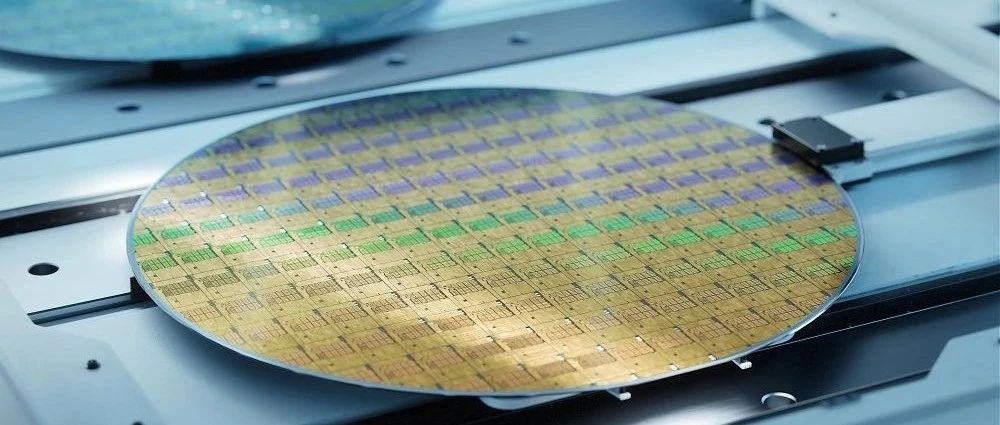
Group 1 - The semiconductor industry is significantly expanding production capacity to meet the growing demand for artificial intelligence (AI) applications [1] - According to SEMI's report, global wafer capacity is expected to grow at an annual rate of 7% from the end of last year to 2028, reaching a record monthly capacity of 11.1 million wafers by 2028 [1] - Advanced process capacity below 7nm is projected to increase by approximately 69% from last year's monthly capacity of 850,000 wafers to 1.4 million wafers by 2028 [1] Group 2 - The capacity for processes below 2nm is expected to expand significantly, with this year's capacity being less than 200,000 wafers, projected to exceed 500,000 wafers by 2028 [1] - Investment in advanced process equipment is expected to exceed $50 billion by 2028, up from $26 billion last year [1] - Investment in 2nm and below wafer equipment is projected to more than double from $19 billion last year to $43 billion by 2028, representing a 120% increase [1]

前ASML工程师,因窃密被判入狱三年
半导体芯闻· 2025-07-11 10:29
Core Viewpoint - A former engineer from ASML and NXP Semiconductor was sentenced to three years in prison for stealing proprietary chip technology and sharing it with Russia, violating EU sanctions [1][2]. Group 1: Incident Details - The unnamed 43-year-old defendant was convicted of computer hacking and illegal technology assistance to Russia [1]. - The engineer reportedly profited €40,000 (approximately $44,000) from the intellectual property of the chip manufacturers [1]. - The court documents revealed that from May 2023 to August 2024, the defendant shared files related to semiconductor manufacturing equipment and processes with a Russian contact via Signal, Telegram, and Google Drive [1]. Group 2: Legal Proceedings - The defendant admitted to stealing company data from ASML and NXP, stating he saved files for personal use and sent them to a Russian contact without inquiring about the legality [2]. - He was acquitted of charges related to a proposal for establishing a microchip production line, as he did not provide such technical assistance [2]. Group 3: Company Responses - ASML declined to comment on the legal proceedings [3]. - NXP Semiconductor expressed a zero-tolerance policy towards data theft and stated their satisfaction with the court's ruling, emphasizing their cooperation with the prosecution [3].


台积电最年轻副总,离职
半导体芯闻· 2025-07-11 10:29
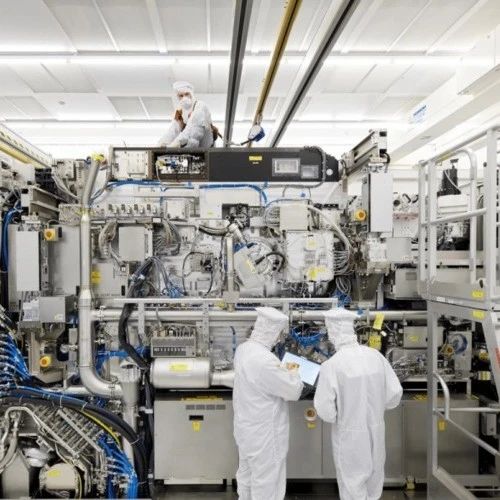
Group 1 - TSMC's Vice President of Material Management, Li Wenru, has resigned due to personal reasons and will leave the company on July 13, 2025 [1] - Li Wenru joined TSMC in 2022 and was promoted to Vice President of Material Management in August 2022, where he established a comprehensive work model and system for demand forecasting and monitoring supplier delivery status [1] - The role of Material Management will be taken over by senior Vice President and co-COO, Hou Yongqing, who has been with TSMC since 1997 and is also the chairman of the Taiwan Semiconductor Industry Association [2] Group 2 - TSMC is currently in an expansion phase, focusing on the construction of its facility in Arizona, USA [1] - The company is managing a significant number of suppliers, which indicates a heavy organizational responsibility [1]