国家能源局

Search documents
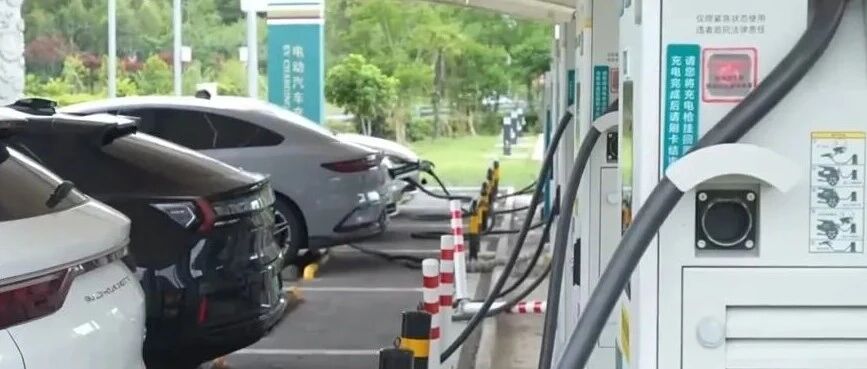
央视新闻丨新能源汽车充电量历史同期新高 “充电地图”持续更新
国家能源局· 2025-10-05 09:17
Core Viewpoint - The article highlights the significant increase in electric vehicle (EV) charging during the recent National Day and Mid-Autumn Festival holidays, driven by enhanced charging infrastructure and public demand for EVs [2][4]. Charging Infrastructure Development - The National Energy Administration reported that from October 1 to October 3, the national highway charging volume reached 43.81 million kilowatt-hours, a year-on-year increase of 51.33%, with an average daily charging volume 2.54 times higher than usual [4]. - Various regions are intensifying the construction of charging stations and supercharging stations to ensure smooth travel for EV owners, such as the installation of four liquid-cooled supercharging stations in Weihai, which can fully charge an EV in just 10 minutes [6][8]. - By the end of August, the number of charging stations equipped with high-power charging devices reached 13,379, with over 100,000 high-power charging guns available nationwide [13]. Enhanced Charging Efficiency - The liquid-cooled supercharging stations can achieve a maximum charging power of 480 kilowatts, making them eight times more efficient than standard charging stations [8]. - In the Dongtai service area of the Shenhai Expressway, the transformer capacity was increased from 1,120 kilowatts to 4,000 kilowatts, and 24 new charging stations were added, improving charging efficiency by over three times compared to the previous year [10]. Expansion of Charging Network - The charging network is becoming denser, making it more convenient for EV users. For instance, in Guangzhou, there are now 4,588 public charging stations and 54,500 public charging piles, including 324 supercharging stations [17]. - In Taizhou, the Linghu Scenic Area saw a daily charging volume exceeding 8,000 kilowatt-hours during the holiday, with five new charging stations added before the holiday [19]. - In Guiyang, over 2,800 public charging piles have been established, ensuring that charging is accessible within a 10-minute reach in rural areas [22].

能源高质量发展专家谈丨从用电大国到电力强国的历史性跨越
国家能源局· 2025-10-05 05:16
Core Viewpoint - China's energy transition is marked by a significant shift from coal-dominated energy consumption to a diversified clean energy system, achieving remarkable milestones in renewable energy capacity and consumption [2][3][12]. Group 1: Structural Changes in Energy System - The proportion of coal consumption has decreased to 53.2%, while the share of non-fossil energy consumption is expected to rise to 19.8% by 2024, indicating a substantial energy revolution [3]. - By July 2025, China's renewable energy installed capacity is projected to reach 2.17 billion kilowatts, with wind power at 570 million kilowatts and solar power exceeding 1.1 billion kilowatts, doubling from the end of the 13th Five-Year Plan [3]. - Non-fossil energy installed capacity has historically surpassed 60%, with renewable energy generation capacity officially exceeding coal power, becoming the core of electricity supply [3]. Group 2: Strengthening the Power Grid - On July 17, 2025, the national electricity load reached a historical peak of 1.508 billion kilowatts, showcasing the robustness of China's power grid infrastructure [6]. - The State Grid's new energy cloud platform optimally guides the layout of wind and solar power, achieving millisecond-level responses across numerous substations and renewable energy stations [6]. - The integration of digital technology with the power system has successfully stabilized fluctuating renewable energy sources, enhancing the overall efficiency of the grid [6][7]. Group 3: Innovations in Energy Storage - By mid-2025, new energy storage installations are expected to reach 95 million kilowatts, accounting for over 40% of the global total, marking a significant advancement in energy production capabilities [8]. - China Huadian has accelerated the development of strategic emerging industries, mastering key technologies in hydrogen production and energy management systems [9]. Group 4: Economic and Social Transformation - The energy revolution has led to an 11.6% reduction in energy consumption per unit of GDP over four years, equivalent to a reduction of 1.1 billion tons of carbon dioxide emissions [10]. - The number of new energy vehicles is projected to reach 31.4 million by 2024, a more than fivefold increase from the end of the 13th Five-Year Plan, supported by a comprehensive charging network [11]. - China's photovoltaic industry dominates the global market, with significant reductions in costs and advancements in technology, contributing to sustainable development worldwide [11].

《关于推进能源装备高质量发展的指导意见》解读︱创新驱动 应势而行 加快推进煤炭装备高质量发展
国家能源局· 2025-10-04 02:07
Core Viewpoint - The article emphasizes the strategic importance of high-quality development in coal equipment for ensuring national energy security and promoting industrial transformation, as outlined in the recent "Guiding Opinions" issued by the National Energy Administration and other departments [3][4]. Group 1: Strategic Positioning and Mission - In 2024, China's raw coal production is projected to reach 4.78 billion tons, accounting for 63.9% of total primary energy production, with coal consumption still representing 53.2% of total energy consumption [4]. - The development of coal equipment is crucial for enhancing the resilience of the energy supply chain and addressing energy security risks, especially in the context of extreme weather and geopolitical conflicts [4]. - The "14th Five-Year Plan" period has seen significant advancements in coal equipment, including integrated drilling and anchoring equipment and large-scale mining trucks, positioning China among the leaders in coal mining efficiency and safety [4][5]. Group 2: Development Pathways for High-Quality Coal Equipment - The "Guiding Opinions" focus on energy security and transition, aiming to establish a self-reliant supply chain for key energy equipment, with a clear path towards high-end, intelligent, and green development [6]. - The document outlines a comprehensive approach to tackle key challenges in coal equipment, emphasizing the need for autonomous, integrated, high-end, intelligent, and green development [6][7]. - Specific technological advancements are targeted, including high-hardness rock cutting materials and high-power density explosion-proof transmission systems, to achieve self-sufficiency in core components and algorithms [6][8]. Group 3: Innovation Ecosystem and Support Mechanisms - The "Guiding Opinions" aim to optimize the innovation ecosystem by enhancing corporate innovation incentives and expanding market access for private enterprises [9]. - A national-level coal equipment testing and verification platform will be established to facilitate the transition of technological achievements into engineering applications [9]. - Policies will be implemented to support the procurement of first sets of equipment and encourage innovative financing models for manufacturing enterprises, thereby stimulating market vitality [9][10].

“十四五”能源成就企业谈丨深入落实现代能源体系规划 服务构建开放共赢能源国际合作新格局
国家能源局· 2025-10-03 02:59
Core Viewpoint - China Power Construction Group (China Power) actively implements the "Four Revolutions and One Cooperation" energy security strategy, contributing significantly to global energy governance and green low-carbon transformation during the "14th Five-Year Plan" period [3][4]. Group 1: Energy Cooperation and Projects - China Power has signed energy investment and contracting projects with over 100 countries, involving a total installed capacity of 92 GW during the "14th Five-Year Plan" period [5]. - Key projects include the first comprehensive planning and investment project in Laos, which has delivered over 12 billion kWh of clean energy, and the largest solar power station in South America in Argentina [5]. - The company has also achieved a Guinness World Record for the highest capacity off-grid battery storage project in Saudi Arabia [5]. Group 2: Participation in Global Energy Governance - China Power enhances its international influence by participating in global energy governance mechanisms and leading projects like the China-Pakistan Economic Corridor [6]. - The company has contributed to the development of international standards and has translated nearly 300 Chinese standards into foreign languages, with some results presented at significant international forums [6]. Group 3: ESG Practices and Social Responsibility - China Power is among the first central enterprises to establish an ESG management system, receiving an A- rating from China Business Green ESG and a Level 2 rating from Fitch Ratings [7]. - The company has created over 200,000 jobs in host countries and emphasizes local employment and community engagement through various initiatives [7]. Group 4: Green Transformation and Innovation - China Power integrates green development into all phases of energy projects, supporting the construction of a clean, low-carbon, and efficient energy system [8]. - The company has established itself as a leader in overseas strategic emerging industries, launching several "firsts" in international projects, including solar thermal and offshore wind projects [9]. Group 5: Future Directions and Goals - Looking ahead, China Power aims to enhance global energy cooperation and contribute to the green low-carbon transition by participating in bilateral and multilateral renewable energy cooperation mechanisms [10]. - The company plans to strengthen technical innovation and improve energy accessibility, particularly in underdeveloped countries, by focusing on small-scale, community-benefiting energy solutions [11].

“十一”国庆节当日高速公路新能源汽车充电量达1748万千瓦时,创历史新高
国家能源局· 2025-10-02 04:08
Core Viewpoint - The National Energy Administration is actively promoting the construction of high-power charging facilities and enhancing the monitoring and scheduling of charging infrastructure to meet the charging needs of electric vehicle users during the National Day holiday [2] Group 1: Charging Infrastructure Development - The National Energy Administration has deployed measures to improve the efficiency of charging facilities in highway service areas, ensuring adequate charging support for electric vehicle travel during the holiday [2] - A total of 48,400 highway charging facilities were monitored, with charging volume on October 1 reaching 17.4858 million kilowatt-hours, representing a year-on-year increase of 41.95%, marking a historical high [2] Group 2: Future Plans - The National Energy Administration will collaborate with relevant parties to implement the directives of the Central Committee and the State Council, further ensuring the charging needs for electric vehicle travel during holidays are met [2]
能源高质量发展专家谈丨以高质效投融资赋能能源行业高质量发展
国家能源局· 2025-10-02 02:22
Core Viewpoint - The article emphasizes the robust growth and structural optimization of energy investment and financing during the "14th Five-Year Plan" period, highlighting the transition towards green and innovative energy solutions as a key driver for high-quality development in the energy sector [2][3][7]. Group 1: Energy Investment Trends - Energy investment has shown a rapid increase, with total annual investments surpassing 4 trillion, 5 trillion, and 6 trillion yuan, accounting for nearly 10% of total fixed asset investments in society, particularly in electricity and heat production, which saw investment growth exceeding 20% [3][4]. - The investment structure is continuously optimizing, with traditional energy investments focusing on supply security and efficiency, while renewable energy projects are projected to account for over 80% of power investment in 2024 [3][4]. - The vitality of investment has significantly increased, with private enterprises participating deeply in national energy technology projects, and their investment in key energy projects maintaining double-digit growth [4]. Group 2: Energy Financing Trends - The financing landscape has evolved towards a more comprehensive system characterized by improved policies, diverse tools, and a multi-faceted structure, transitioning from policy-driven to market-led financing models [5][6]. - Various financing tools have emerged, including green funds, green insurance, and carbon finance, which are essential for supporting energy projects and promoting green low-carbon development [5][6]. - A balanced financing structure has developed, with state-owned capital dominating long-term, strategic projects, while private capital plays a crucial role in economically driven projects like charging infrastructure and distributed renewable energy [6]. Group 3: Future Outlook for Energy Investment and Financing - The energy investment landscape is expected to remain vigorous during the "15th Five-Year Plan," providing critical support for energy transition and green development, while also contributing to economic stability [7]. - Green finance is anticipated to become a key mechanism for matching supply and demand in energy investment, necessitating a broader expansion of green financial tools to support renewable energy and efficiency improvements [7][8]. - Innovations in technology and financing models are expected to enhance the efficiency and reliability of energy systems, requiring the integration of digital technologies and new low-carbon solutions [8][9]. Group 4: Recommendations for Energy Investment and Financing System - Strengthening top-level design and optimizing resource allocation is recommended, with a focus on enhancing fiscal support for national energy projects and encouraging social capital participation [10]. - Emphasizing efficiency and effectiveness, increased investment in technological innovation and new productive forces is crucial to enhance the competitiveness of energy enterprises [10][11]. - Expanding multi-layered green finance and developing innovative financial products are essential for supporting the clean and efficient use of traditional energy and facilitating the transition to a low-carbon economy [11][12].

《关于推进能源装备高质量发展的指导意见》解读︱强化科技引领 加速电力装备高端化、智能化、绿色化发展
国家能源局· 2025-10-01 02:12
Core Viewpoint - The article emphasizes the need for high-quality development in the power equipment industry, focusing on the transition towards advanced, intelligent, and green technologies in response to the evolving energy landscape and national strategies [3][10]. Group 1: Historical Development - China's power equipment industry has transitioned from "following" to "keeping pace" and now "leading" in various fields, achieving significant advancements through independent innovation and technology absorption [4]. - Key projects such as the 630℃ supercritical thermal power demonstration project and the Baihetan hydropower station have set world records, showcasing China's leading position in power equipment technology [4]. Group 2: Current Challenges - The industry faces three main challenges: a gap in high-end equipment technology to meet green energy transition needs, reliance on imports for certain core components, and insufficient digital intelligence capabilities [5]. Group 3: Future Directions - The "Guiding Opinions" outline a roadmap for the power equipment sector, focusing on enhancing equipment quality, promoting large-scale application of energy storage, advancing digital intelligence upgrades, and fostering green high-end development [6][7][8][9]. - Specific actions include improving the performance of energy conversion equipment, developing energy storage technologies, and establishing a comprehensive green lifecycle management system [6][7][9]. Group 4: Implementation Strategies - To realize the goals set forth in the "Guiding Opinions," the industry must strengthen innovation ecosystems, enhance corporate responsibility in innovation, and establish self-regulatory mechanisms to avoid unhealthy competition [10].

庆祝中华人民共和国成立76周年招待会在京举行 习近平发表重要讲话
国家能源局· 2025-10-01 01:35
Core Points - The 76th anniversary of the founding of the People's Republic of China was celebrated with a reception in Beijing, emphasizing the importance of national unity and progress towards modernization [3][5][9] - Xi Jinping delivered a significant speech highlighting the achievements of the past 76 years and the need for continued efforts towards national rejuvenation and high-quality development [6][7] Summary by Sections Event Overview - The reception took place on the evening of September 30 at the Great Hall of the People, attended by around 800 guests, including both domestic and international figures [3][9] - The atmosphere was festive, with the national anthem sung and a warm welcome for the leaders [4][6] Key Messages from Xi Jinping - Xi Jinping expressed gratitude to various groups, including the military, ethnic minorities, and international friends, for their contributions to China's development [6][7] - He reflected on the historical journey of the Chinese nation from near collapse to great rejuvenation, emphasizing the importance of learning from history to build a better future [6][7] Future Directions - The speech outlined the commitment to deepening reforms and ensuring high-quality development while addressing social welfare [7] - Xi emphasized the importance of the "One Country, Two Systems" policy and the need for cooperation across the Taiwan Strait, as well as the defense of national sovereignty [7] - He called for promoting global cooperation and shared values, aiming to build a community with a shared future for mankind [7]

政策解读丨落实《能源规划管理办法》助推能源高质量发展
国家能源局· 2025-09-30 13:15
Core Viewpoint - The article emphasizes the importance of the newly issued "Energy Planning Management Measures" in enhancing the systematic, authoritative, scientific, and adaptive nature of energy planning, thereby promoting high-quality energy development in China [2][10]. Group 1: Systematic Enhancement of Energy Planning - The "Management Measures" clarify the scope of energy planning, which includes national comprehensive energy planning, sector-specific energy planning, regional energy planning, and provincial energy planning [4][5]. - It establishes a unified energy planning system by defining the relationships among various levels of energy planning, ensuring that they complement each other and adhere to national economic and social development plans [5][6]. Group 2: Authoritative Enhancement of Energy Planning - The "Management Measures" specify the entities responsible for energy planning and the approval processes, reinforcing the authority and seriousness of energy planning [6][7]. - It mandates that only approved provincial comprehensive energy plans can serve as the basis for energy development, ensuring consistency and coordination across different levels of planning [7][8]. Group 3: Scientific Enhancement of Energy Planning - The article highlights the need for scientific research in energy planning, advocating for a comprehensive approach that considers energy security and green transition [9]. - It stresses the importance of aligning energy planning with ecological and carbon emission policies, ensuring that projects meet legal and regulatory requirements [9][10]. Group 4: Adaptive Enhancement of Energy Planning - The "Management Measures" outline the need for dynamic monitoring and evaluation of energy planning implementation, allowing for timely adjustments based on changing external conditions [10][11]. - It emphasizes that any adjustments to energy plans must follow a formal approval process, maintaining the authority and integrity of the planning system [11].

国家能源局有关负责同志就《能源规划管理办法》答记者问
国家能源局· 2025-09-30 11:02
Core Viewpoint - The newly issued "Energy Planning Management Measures" aims to strengthen energy planning management, standardize planning compilation, and ensure effective implementation in response to evolving development situations and requirements [3][4]. Group 1: Background and Purpose - The "Measures" were developed to enhance the guiding role of energy planning in energy development, addressing new situations and requirements that have emerged in recent years [3]. - The issuance aligns with the strategic planning system established by the 20th National Congress and the provisions of the Energy Law, which emphasizes the importance of energy planning [3]. Group 2: Main Content - The "Measures" consist of 6 chapters and 26 articles, covering general principles, planning compilation, approval processes, implementation, evaluation, and adjustments [4]. - It specifies the management of planning compilation directories, procedures, and requirements for project inclusion in the planning [5][6]. Group 3: Standardization of Energy Planning System - The "Measures" regulate the entire cycle of energy planning management, including compilation, implementation, evaluation, and adjustments [5]. - It emphasizes strict management of compilation directories, stating that plans not included in the directory should not be compiled [5]. - The planning compilation process must include various essential elements such as development goals and major tasks [5]. Group 4: Scientific and Normative Planning - To enhance the scientific and normative level of planning, the "Measures" propose three key requirements: conducting comprehensive research, widely soliciting opinions, and ensuring proper coordination and validation among various plans [8][9]. - The planning process should integrate feedback from relevant departments, enterprises, and experts to reflect diverse perspectives [9]. Group 5: Implementation and Adjustment Mechanisms - The "Measures" establish a comprehensive mechanism for planning implementation, emphasizing the importance of maintaining the authority and seriousness of the plans [10]. - It clarifies that energy planning serves as a critical basis for guiding energy development and resource allocation [10]. - Adjustments to energy planning must follow specific procedures and receive approval from the original approving authority [11].