日经中文网

Search documents
爱德万测试市值20年来首超Tokyo Electron
日经中文网· 2025-09-11 03:09
Core Viewpoint - The valuation of semiconductor equipment manufacturers is changing due to advancements in manufacturing technology and the rise of generative AI, leading to increased investment in companies like Advantest, which has recently surpassed Tokyo Electron in market capitalization for the first time in 20 years [2][4]. Group 1: Market Dynamics - Advantest's market capitalization exceeded 10 trillion yen for the first time, reaching approximately 10.0556 trillion yen, surpassing Tokyo Electron's 9.975 trillion yen [4]. - The shift in focus from "front-end" to "back-end" processes in semiconductor manufacturing is influencing investor preferences, with Advantest benefiting from this trend [6]. - The demand for testing equipment is increasing as semiconductor manufacturing becomes more complex, making yield improvement crucial for manufacturers [7]. Group 2: Company Performance - Advantest's stock price has surged, increasing 2.7 times from the end of 2023, while Tokyo Electron has faced challenges, including a significant 18% downward revision of its net profit forecast for fiscal year 2025 [8]. - Advantest has captured a 58% market share in the testing equipment market, while Tokyo Electron's market share in other segments is only 20-30% [8]. - Concerns over Tokyo Electron's relationship with TSMC due to a former employee's alleged misconduct have added pressure to its stock price [8]. Group 3: Future Outlook - Analysts believe Advantest's stock price advantage will continue, with a projected price-to-earnings ratio (PER) of around 43, which is considered reasonable given the expected expansion of the AI market [9]. - Comparatively, global leaders like ASML and Applied Materials have significantly higher market capitalizations, indicating that Advantest must continue to enhance its performance to close the gap [9].



日本3家化工企业整合日本国内通用树脂业务
日经中文网· 2025-09-11 03:09
Core Viewpoint - Three companies, Mitsui Chemicals, Idemitsu Kosan, and Sumitomo Chemical, have reached a basic agreement to integrate their general resin businesses in Japan, aiming to enhance production and logistics efficiency amid a challenging market environment influenced by excess capacity in China [2][4]. Group 1: Integration Details - The integration will involve Mitsui Chemicals holding a 65% stake and Idemitsu holding a 35% stake in the joint venture, Prime Polymer, which produces polyolefins, along with Sumitomo Chemical's polyolefin business [4]. - The integration is scheduled to be completed by April 2026, with combined sales revenue projected to reach 387.3 billion yen in the fiscal year 2024 [4]. - Post-integration, the ownership structure will be Mitsui Chemicals at 52%, Idemitsu at 28%, and Sumitomo at 20%, with discussions ongoing regarding the incorporation of Sumitomo's polyolefin business into Prime Polymer [4]. Group 2: Industry Context - The Japanese petrochemical industry has previously seen state-led consolidation efforts, but large-scale restructuring has not progressed significantly [5]. - The current market conditions, characterized by excess capacity in China and declining domestic demand in Japan, have made industry rationalization restructuring unavoidable [5].
中国车在高关税下仍席卷欧洲市场
日经中文网· 2025-09-11 03:09
Core Viewpoint - Chinese automotive sales in Europe have surged, with a 1.9-fold increase in July, reaching 59,363 units, despite impending high tariffs on electric vehicles (EVs) from the EU in October 2024 [2][5]. Group 1: BYD's European Strategy - BYD plans to establish over 1,000 stores across 32 European countries by the end of 2025, aiming to double this number to 2,000 by 2026 [4]. - BYD's sales in Europe for the first half of 2025 are projected to reach 70,500 units, a 3.1-fold increase compared to the same period last year [4]. Group 2: Overall Chinese Automotive Performance - In July, the overall sales of Chinese automobiles in Europe increased by 1.9 times year-on-year, with 116 Chinese automotive and parts suppliers participating in the Munich International Motor Show, a 1.5-fold increase from two years ago [5][7]. - The share of plug-in hybrid vehicles (PHVs) in total sales reached a record high of 9.7% in July, driven by a shift in export focus to vehicles not subject to the new tariffs [7]. Group 3: EU Tariff Impact and Market Dynamics - The EU plans to impose an additional tariff of up to 35.3% on Chinese pure electric vehicles starting October 2024, on top of the existing 10% tariff, with BYD facing a 27% tariff [7]. - Despite these tariffs, Chinese automotive sales continue to grow, attributed to the increased export of PHVs [7]. Group 4: Global Market Position - China's automotive exports surpassed those of the U.S. in 2021, Germany in 2022, and Japan in 2023, with projections to reach 6.7 million units by 2025, double that of Germany [8]. Group 5: EU Regulatory Challenges - The EU's stringent regulations aimed at promoting electric vehicles have led to excessive investments by European automakers, negatively impacting their performance and benefiting Chinese EV manufacturers and Tesla [10]. - Concerns over potential subsidies for BYD's electric vehicle factory in Hungary have prompted the EU to initiate an investigation [10].


海外投资者远离印度股市,流向东亚
日经中文网· 2025-09-10 08:00
根据印度国家证券存管有限公司(NSDL)数据,8月海外机构投资者净卖出额达3499亿卢比(Reuters) 印度4—6月GDP大幅超出市场预期,印度还接连推出商品服务税改革、连续降息等刺激内需的政策,不 少投行上调印度GDP的增长预期,然而,海外投资者正持续撤离印度市场…… 印度经济正经历风浪。就在美国宣布自8月27日起对印度征收50%的高关税后不久,2025年4—6月季度 国内生产总值(GDP,速报值)公布,结果大幅超出市场预期。进入9月,印度政府又正式决定下调商 品服务税(GST),并自22日起开始实施。经济学家纷纷上调增长率预期,但外国投资者的身影依然远 离印度市场。 受超预期的GDP数据与商品服务税下调影响,各大证券公司纷纷上调印度的经济增长预测。新加坡星展 集团研究部(DBS Group Research)将截至2026年3月财年的增长率预期从6.3%上调至6.7%,理由是商 品服务税下调带来的实质降价效应能刺激消费,同时也肯定了税制简化的意义。 此前印度的商品服务税有4档基本税率,令零售业负担沉重。此次整合为5%和18%两档,预计"零售、 批发等业务效率提升将对本财年下半年及下年度的经济增长产生正 ...

哪些人将参选自民党新总裁?
日经中文网· 2025-09-10 08:00
Group 1 - The Japanese Liberal Democratic Party (LDP) has scheduled its presidential election for October 4, marking an active power struggle in the "post-Ishiba" era [2][4] - Candidates who participated in the previous presidential election are expected to be key players in this election, with the threshold for gathering 20 recommendations from party members raised [2][5] - The number of LDP members in the Diet has decreased, making it more challenging for candidates to secure the necessary recommendations [7][9] Group 2 - Former Economic Security Minister Takashi Saito and other potential candidates are likely to have a similar lineup in the 2025 presidential election as in 2024, given the short time frame [5] - The number of LDP members eligible to recommend candidates has dropped from 368 to 295, a reduction of about 70 members, complicating the process of gathering recommendations [7][9] - Candidates like Sanae Takaichi have seen the largest drop in potential recommendations, losing 9 supporters due to non-elected members, while others like Yoshihide Suga and Yoshihisa Inoue have also experienced declines [8][9] Group 3 - The political landscape for the LDP has changed significantly since the last presidential election, as the party is now a minority in both houses of the Diet [9] - To win the prime ministerial election, candidates must navigate the challenge of opposition parties not fielding a unified candidate [9] - There is a possibility that recommendations may shift among candidates as the election date approaches, with potential for previously secured recommendations to be redirected [9]

日经平均股指再创新高
日经中文网· 2025-09-10 08:00
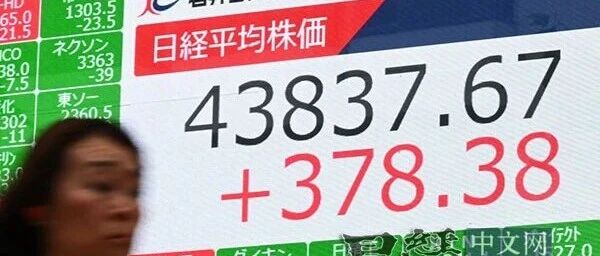
Group 1 - The Nikkei average index rebounded on September 10, closing at 43,837.67 points, an increase of 378.38 points (0.87%) from the previous trading day, marking a new historical high [2][4] - The rise in the Nikkei index was supported by the strong performance of the US stock market, where major indices, including the Dow Jones Industrial Average and the Nasdaq Composite, reached historical highs on September 9 [4] - The market sentiment was bolstered by the expectation of a potential interest rate cut in September, following the annual revision of US employment data, which provided reassurance to buyers [4]
自民党总裁选带来的日股买盘还能持续多久?
日经中文网· 2025-09-10 03:45
显示日经平均股指的屏幕(9月9日上午,东京都中央区) 在日本股市,举行自民党总裁选举是买盘的重要利好因素。原因是政治不确定性消退,市场 对大规模经济对策的期待升温。岸田文雄宣布辞职后的5个交易日上涨5%,菅义伟宣布辞职 时也上涨5%。石破茂…… 在日本股票市场上,举行自民党总裁选举是买盘的重要利好因素。原因是政治前景的不确定 性消退,市场对大规模经济对策的期待升温。而且过去出现类似倾向的经验也让人感到安 心。但目前参众两院均出现少数执政党的特殊局面,此外债券市场也对日本财政支出膨胀产 生了警惕意识,"总裁选举是买入时机"的规律显示出动摇迹象。 支撑这一行情的因素并非仅此一项。目前自民党在众参两院均处于少数派地位,新政府必须 与主要在野党中的某一方展开合作。新政府极有可能采纳在野党提出的扩张性财政政策,短 期内这会对股市形成利好。股市中"后石破"交易的势头正在增强。 9月9日,日经平均股指报收于4万3459点,较前一交易日下跌184点(跌幅0.4%),4个交 易日以来首次下跌。在截至9月8日的3个交易日内上涨超过1700点,此次是投资者对急剧上 涨的股市提高警惕引发了获利抛售。当天上午,日经平均股指一度在交易时 ...
日经Gaming精选:红牛公布了东京电玩展2025的支援内容第1弹
日经中文网· 2025-09-10 03:45
作为东京电玩展白金赞助商,红牛日本公布了此次支持内容的第 1弹。将 设 置 向国内外 传 播 TGS 最新信息等的「 Red Bull Creator Club 」, 举办 「 Red Bull 283 Academy 」的决 赛 , 举办 Tetris 国 际 大会的日本大会决 赛 「 Red Bull Tetris Japan Final 」 。 日经Gaming是2025年7月创刊的"以商业视点出发的游戏媒体"。日经BP利用在经营、技术、消费、营销各领域培养的采访力、信息发布力,从商 业角度出发,发布游戏及其周边产业的最新动向、商业模式。 以下文章来源于日经Gaming ,作者日经Gaming 日经Gaming . 日经 Gaming 是日经 BP 旗下专业游戏媒体。以商务视点出发,经营、消费、营销为切口,传递游戏及关联领域的最新动向。 编者荐语: TGS2025 红 牛 的主 概念" PRESS START " 日本 红 牛作为东 京 电 玩展 2025 ( TGS )的白金 赞 助商于 2025 年 7 月 25 日 发 表了 支持内容的第 1 弹 。主概念是" PRESS START "。除 了 ...

中国企业在摆脱业绩低迷,利润3年来转增
日经中文网· 2025-09-10 03:45
Core Viewpoint - The Chinese government's domestic demand stimulation policies have supported corporate performance, with a notable increase in net profits for listed companies in the first half of 2025, marking a return to positive growth after three years of decline [2][4]. Group 1: Corporate Performance - Approximately 5,300 companies listed in mainland China reported a total net profit of 1.6 trillion yuan in the first half of 2025, reflecting a year-on-year increase of 1% [4]. - The steel industry saw a significant profit increase, with profits rising 2.6 times, while machinery profits grew by 18% [4][5]. - Major companies like Sany Heavy Industry reported a 12% increase in overseas revenue and a 46% increase in net profit [5]. Group 2: Sector-Specific Growth - The home appliance sector benefited from government subsidies, resulting in a 13% profit increase, with Midea Group achieving a 25% profit growth [7]. - Semiconductor-related companies experienced a notable profit increase of 33%, with NAURA's revenue growing by 30% and SMIC's profit rising by 40% [7]. Group 3: Underperforming Sectors - The real estate sector faced significant challenges, with nearly half of the 100 listed companies reporting losses, including Vanke and Evergrande [9]. - The photovoltaic industry continued to struggle with losses due to oversupply, affecting major players like JinkoSolar and LONGi Green Energy [9]. - The automotive sector also saw a slight profit decrease, with companies like Guangzhou Automobile Group reporting losses and BYD's profit growth rate declining compared to the previous year [9]. Group 4: Economic Outlook - Despite some positive indicators from economic stimulus measures in the first half of 2025, signs of deceleration emerged post-July, with overall revenue for the 5,300 companies falling below the previous year [9]. - Economic growth rates for the second half of 2025 are projected to be between 4.4% and 4.6%, with expectations of a decline below 4% in 2026 [9].

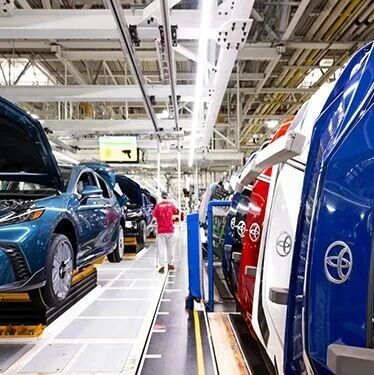
丰田调整在美生产,增产混动应对关税
日经中文网· 2025-09-10 03:45
Group 1 - Toyota is restructuring its U.S. production by reducing the number of Lexus production bases from two to one, with plans to export some Lexus models from Japan and increase local production of hybrid vehicles [2][4] - The production of the Lexus ES in Kentucky will shift to Japan for the next-generation model expected to launch in 2026, leaving Indiana as the sole production site for Lexus in the U.S. [6] - The Kentucky plant, currently producing popular hybrid models like the Camry and RAV4, will increase hybrid production after Lexus manufacturing ceases [8] Group 2 - The U.S. government imposed a 25% tariff on imported cars, which was later reduced to 15%, but still significantly higher than the previous 2.5% rate, impacting the cost structure for companies [4] - Toyota anticipates a total cost burden of 1.4 trillion yen for the fiscal year due to tariffs, prompting a shift towards increased localization of production [8] - Other Japanese automakers, such as Nissan and Mazda, are also adapting to tariff impacts by shifting production to the U.S. and raising vehicle prices [10]