量子位

Search documents
人工智能年度榜单火热报名中!五大奖项,寻找AI+时代的先锋力量
量子位· 2025-10-26 04:01
Group 1 - The article announces the launch of the "2025 Artificial Intelligence Annual Awards" to recognize outstanding contributions in the AI industry [1][2] - The awards will be evaluated across three dimensions: companies, products, and individuals, with five categories established for recognition [2][4] - The evaluation criteria for the awards include the company's registration in China, significant achievements in AI application, and market recognition [5][6] Group 2 - The "2025 AI Leading Enterprises" category will focus on companies with comprehensive strength in the AI field, including established products and significant breakthroughs in technology and market expansion [5][6] - The "2025 AI Potential Startups" category aims to identify startups with high investment value and growth potential in the AI sector [9][12] - The "2025 AI Outstanding Products" category will assess products based on business capabilities, technical capabilities, capital capabilities, and overall comprehensive abilities [11][12] Group 3 - The "2025 AI Outstanding Solutions" category will highlight innovative AI applications across various industries, focusing on their innovation, implementation, and industry impact [15][18] - The "2025 AI Focus Individuals" category will recognize individuals who have made significant contributions to AI technology and commercialization, with criteria including team leadership and industry influence [17][23] Group 4 - The registration for the awards is open until November 17, 2025, with results to be announced at the MEET2026 Intelligent Future Conference [22][25] - The MEET2026 conference will gather leaders from technology, industry, and academia to discuss transformative changes in the AI sector [25][26] - The conference aims to attract thousands of tech professionals and millions of online viewers, establishing itself as a significant event in the AI industry [26][27]


OpenAI被曝瞄准AI音乐赛道商业化,Suno首当其冲
量子位· 2025-10-26 04:01
Core Viewpoint - OpenAI is preparing to enter the AI music generation market, which poses a significant threat to existing startups like Suno, valued at $2 billion, as they may be overshadowed by OpenAI's capabilities [1][2][11]. Group 1: OpenAI's Entry into AI Music - OpenAI has been collaborating with the Juilliard School to develop a music generation model, aiming to automate and personalize music creation for content creators [7][8]. - The new music model is expected to integrate with existing OpenAI products, potentially allowing users to generate background music for videos easily [7][10]. - The competition in the AI music space is currently limited, with the top ten platforms holding only about 24% of the market share, indicating room for growth and disruption [12]. Group 2: Market Dynamics and Competitors - Suno and Udio are the two most notable players in the AI music generation market, with Suno focusing on accessibility for all users and Udio targeting professional users [12][13][14]. - Suno has reported an annual recurring revenue (ARR) of $150 million, with a nearly fourfold year-on-year growth, and a gross margin exceeding 60%, highlighting the profitability of the AI music sector [29][30][31]. - Other companies, including ByteDance, Alibaba, and Tencent, are also exploring AI music generation, indicating a growing interest in this market [16][18]. Group 3: Historical Context and Future Implications - OpenAI previously attempted to enter the music space with models like MuseNet and Jukebox but faced funding challenges that limited their progress [22][25]. - The renewed focus on music generation aligns with OpenAI's strategy to diversify its product offerings and generate revenue to offset operational costs [26][34]. - The entry of a tech giant like OpenAI into the AI music market is expected to accelerate innovation and provide consumers with more choices [20][34].

破解AI对不同上下⽂位置的敏感度不⼀致,新框架使出“解铃还须系铃人”
量子位· 2025-10-26 04:01
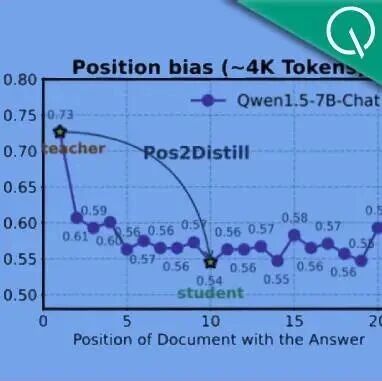
Core Insights - The article discusses the significant issue of positional bias in language models, which affects their performance in complex reasoning and long-text understanding tasks [1][8] - It introduces Pos2Distill, an innovative "position-to-position" distillation framework designed to transfer the model's strong capabilities from advantageous positions to disadvantaged ones, effectively mitigating positional bias [3][4] Summary by Sections Positional Bias Challenges - Language models exhibit inconsistent sensitivity to different contextual positions, leading to a focus on specific positions in input sequences, which hampers their performance in critical tasks [1] - When comparing two candidate answers, models often favor the first option, compromising their fairness and reliability as evaluators [2] Proposed Solution: Pos2Distill - Pos2Distill aims to leverage the model's acquired knowledge to correct its systematic biases by addressing the performance imbalance caused by positional bias [5] - The framework includes two specialized implementations: Pos2Distill-R1 for retrieval tasks and Pos2Distill-R2 for reasoning tasks, both showing improved consistency across all positions in long-text retrieval and reasoning tasks [5][29] Methodology - The article outlines the distinct behaviors of positional bias in retrieval and reasoning tasks, with retrieval bias manifesting as "token-shifting" and reasoning bias leading to "thought shifting" [10] - Pos2Distill-R1 employs Kullback-Leibler divergence loss to provide fine-grained correction signals for retrieval tasks, while Pos2Distill-R2 uses high-quality chain-of-thought responses from advantageous positions to guide reasoning trajectories [12][13] Experimental Results - Pos2Distill-R1 demonstrated robust and consistent performance, achieving an average accuracy of 56.7% across 20 positions in the WebQ dataset, comparable to the best performance at the optimal "sink position" [22][23] - Pos2Distill-R2 outperformed existing self-training methods, achieving a precise matching score of 42.8 on the MusiQue dataset and 58.3 on the HotpotQA dataset, indicating strong cross-domain generalization capabilities [27][28] Cross-Task Generalization - Both systems exhibit significant generalization capabilities across their respective tasks, with Pos2Distill-R1 enhancing contextual retrieval abilities and Pos2Distill-R2 improving contextual awareness for retrieval tasks [29][30]
P图老本事搭上了对话框,美图这AI Agent到底香不香?
量子位· 2025-10-26 04:01
Core Viewpoint - The article discusses the launch and features of RoboNeo, an AI image and video generation tool developed by Meitu, highlighting its capabilities and user experience in creating unique visual content [46][48]. Group 1: Product Features - RoboNeo allows users to generate images and videos through conversational prompts, making it user-friendly and accessible [10][12]. - The tool includes a variety of editing functions such as AI image modification, layer separation, and high-resolution enhancements, which are comparable to features found in Photoshop [17][20][43]. - It can handle vague prompts by engaging in a questioning mode to clarify user intentions, enhancing the overall interaction [15][16]. Group 2: User Experience - Users have reported a mixed experience with RoboNeo's image generation speed, noting that it can be slow at times, potentially indicating a need for premium features [44]. - The tool's video generation capabilities have shown some limitations, particularly in logical coherence and text generation, which may require further refinement [44][42]. - Overall, the user interface is designed to be intuitive, with a layout that caters to common usage patterns among Chinese users [10][9]. Group 3: Development Insights - RoboNeo was developed by a small team at Meitu within a month, emphasizing a rapid development cycle without traditional bureaucratic processes [47][48]. - The fast-paced development approach reflects the competitive landscape of AI image and video tools, where timely innovation is crucial for market relevance [48].

盲人复明!马斯克Neuralink联创实现人工视觉里程碑
量子位· 2025-10-26 04:01
Core Viewpoint - The article highlights a groundbreaking advancement in artificial vision technology, specifically the PRIMA retinal implant, which has successfully restored functional central vision in patients suffering from age-related macular degeneration (AMD) [2][10][24]. Group 1: Technology Overview - The PRIMA system is a world-first artificial vision research project that utilizes a retinal implant to restore vision by acting as a substitute for light-sensitive cells [6][25]. - The device is a small photovoltaic retinal implant (2mm x 2mm x 30μm) that works wirelessly, powered by light captured through special glasses equipped with a camera [27]. - The system has shown promising results, with 84% of participants recovering functional central vision and 80% achieving a significant improvement in visual acuity [30]. Group 2: Patient Experience - Sheila Irvine, a 70-year-old participant, regained her vision after 15 years of blindness due to AMD, fulfilling her lifelong desire to read again [5][11]. - Prior to the experiment, Sheila described her vision as severely impaired, likening her eyes to "two black discs" [11]. - After the surgery and rehabilitation, she was able to recognize small text, demonstrating the potential of the PRIMA system to significantly enhance quality of life for patients [15][30]. Group 3: Clinical Trials and Results - The clinical trial involved 38 patients across 17 clinical sites in five countries, with evaluations conducted at 6 and 12 months post-implantation [29]. - The results indicated an average improvement of 25.5 letters (approximately 5 lines) in visual acuity for participants [30]. - While some patients experienced temporary adverse reactions, 95% of these symptoms resolved within two months, and there was no significant decline in peripheral vision [32]. Group 4: Future Prospects - The PRIMA system is currently undergoing regulatory approval processes in Europe and the U.S., with plans for a commercial launch in the near future [35]. - Researchers are also developing next-generation implants and glasses to enhance visual performance, aiming for smaller pixels and color vision capabilities [38]. - The project is seen as a significant step towards making "artificial vision" a reality, akin to the advancements made with cochlear implants for hearing [49].

这个时代最缺的是「个人上下文」丨对话flomo浮墨笔记
量子位· 2025-10-26 01:21
Core Insights - The article discusses the evolution and differentiation of AI note-taking products, emphasizing the need for unique features and user trust in a competitive market [4][6]. - Flomo, a lightweight note-taking tool, focuses on fragmented knowledge management, encouraging users to record thoughts first and organize them later [7][10]. Group 1: AI Note-Taking Market - The AI note-taking market is becoming crowded with various products, including traditional note apps with AI features and native AI note apps [4]. - Differentiation in this market is crucial, especially as AI summarization and question-answering features become standard [4][10]. Group 2: Flomo's Unique Positioning - Flomo aims to help users reconnect with their personal context and thoughts, emphasizing the importance of personal records over AI-generated content [13][14]. - The primary user demographics for Flomo include those who record emotions and knowledge, with a significant portion using it for daily notes and creative content collection [15][16]. Group 3: Product Features and User Engagement - Key features of Flomo include AI voice input, daily reviews, related notes through semantic analysis, and AI insights that help users identify patterns in their thoughts [10][11]. - Flomo's design encourages users to record thoughts quickly, with features like a small input box and visual feedback to motivate recording [22][24]. Group 4: Product-Market Fit (PMF) and User Research - Flomo's approach to confirming PMF involves extensive user research and understanding the diverse needs of note-taking users [31][32]. - The company has identified that many users prefer simple, fragmented recording tools over complex note-taking systems [32][33]. Group 5: AI Integration and Future Directions - Flomo is cautious about integrating AI, focusing on features that meet genuine user needs, such as AI insights and related note matching [57][59]. - Future developments include enhancing AI capabilities, expanding context handling, and providing users with various perspectives on their notes [66][67]. Group 6: User Trust and Emotional Connection - Building user trust is essential, with Flomo prioritizing user privacy and ensuring that personal data remains secure [74][78]. - The emotional connection with users is fostered through features that allow for personal reflection and recognition of progress in their recorded thoughts [75].

智元办机器人挑战赛:清华&上海AILab夺冠,华南理工“单人成团”拿亚军
量子位· 2025-10-25 10:30
Core Insights - The AGIBOT World Challenge, organized by Zhiyuan Robotics and OpenDriveLab, concluded successfully in Hangzhou during IROS, showcasing intense competition among top global teams in various physical tasks [2][4][48] - The AIR-DREAM team from Tsinghua University and Shanghai AI Lab won the championship, while South China University of Technology and the University of Hong Kong secured the second and third places respectively [4][10][50] Competition Overview - The competition featured 11 elite teams from around the world, competing in six real-world physical tasks such as object manipulation, dynamic sorting, and kitchen operations [4][6][19] - The event aimed to test the operational precision and generalization capabilities of embodied intelligent systems [6][19] Task Details - Each team performed 10 attempts per task, with scores averaged for the final results, using the UniVLA baseline model [20] - The six tasks included: - **Pack groceries**: Teams had 90 seconds to grab three snacks and place them in a bag, with a maximum score of 6 points [22][24] - **Pack items from conveyor**: In 90 seconds, teams needed to identify and grab items from a moving conveyor, also scoring up to 6 points [26][29] - **Fold short sleeves**: Teams had 150 seconds to fold clothing, with a maximum score of 4 points [30][32] - **Microwave the food**: This task involved a series of steps to operate a microwave within 150 seconds, scoring up to 6 points [35][37] - **Restock the hanging area**: Teams had 60 seconds to place items on shelves, scoring up to 2 points [39][41] - **Pour water**: In 60 seconds, teams had to pour a specified amount of water, with a maximum score of 4 points [43][45] Technical Insights - The AIR-DREAM team introduced the X-VLA model, a scalable and simplified visual-language-action model that addresses challenges in heterogeneous robot data [11][13] - The second-place team shared strategies for achieving high success rates with limited computational resources, focusing on quick fine-tuning of pre-trained models [15] - The third-place team utilized a pre-trained model and a simulation platform for data generation and parallel reinforcement learning, achieving efficient technical solutions in a short timeframe [17] Event Highlights - The AGIBOT World Challenge featured a total prize pool of $560,000, with the manipulation track offering $60,000, and the champion team receiving $10,000 [48][51] - The event also highlighted the launch of the new "archery" robot, the Spirit G2, which was showcased for the first time at IROS [53]

AI产品先发优势在于用户迁移成本高,持续为用户提供价值是保持竞争优势的关键 | 对话AI智能电子衣橱工具搭搭
量子位· 2025-10-25 10:30
Core Insights - The article discusses the emerging field of AI smart wardrobes, which aims to transform consumers' existing clothing resources into personalized styling services using AI technology [3][4]. - The current market for AI smart wardrobe products is relatively sparse, with existing functionalities primarily focused on clothing uploading, categorization, and outfit suggestions [4]. - The competitive landscape is less intense compared to other AI sectors, but challenges remain in user acquisition, feature optimization, and value creation [5][6]. Group 1: Product Features and User Engagement - The AI smart wardrobe product "Dada" has reached 2 million users, offering features such as AI storage, wardrobe management, and smart outfit recommendations [8]. - Users can upload clothing through various methods, including photo uploads and smart recognition, and the system categorizes items based on multiple tags [8]. - The platform emphasizes user engagement through DIY outfit creation and community sharing, which enhances the overall user experience [15][19]. Group 2: Market Potential and Strategic Insights - The founder of Dada, Guo Liangbing, highlights the significant market potential in the clothing sector, driven by a growing demand for fashion and aesthetics [21][22]. - The initial focus on electronic wardrobe tools is seen as a starting point, with plans to integrate AI capabilities for broader wardrobe management services [23]. - The company aims to differentiate itself by focusing on maximizing the utility of existing clothing rather than promoting new purchases, positioning itself as a "wardrobe manager" [44][45]. Group 3: User Acquisition and Growth Strategy - Dada's user growth strategy capitalized on the traffic benefits from platforms like Douyin, achieving a low customer acquisition cost of around 0.1 to 0.3 yuan [66]. - The company utilized a "probability" strategy by engaging "ordinary" users to create content, which proved effective in driving user engagement and conversion [66][67]. - The app's features, such as outfit diaries and community sharing, encourage users to actively participate and promote the product organically [68][70]. Group 4: AI Integration and Future Development - AI technology plays a crucial role in automating clothing recognition and outfit generation, significantly reducing the manual workload for users [41][42]. - The company plans to enhance its AI capabilities further, focusing on personalized recommendations and visualizing how clothes will look on users through AR technology [88][90]. - Continuous iteration and user feedback are central to the product development process, ensuring that new features align with user needs and preferences [52][56].

量子计算摆脱GPU!IBM一句话AMD市值暴涨2000亿元:用FPGA芯片即可
量子位· 2025-10-25 08:30
Core Insights - IBM has made significant progress in the commercialization of quantum computing by successfully running a key quantum error correction algorithm on existing AMD chips, achieving a speed that is ten times faster than required [2][4] - This breakthrough allows quantum error correction to be implemented without the need for expensive GPU clusters, utilizing FPGA chips instead, which enhances scalability and cost-effectiveness [2][4] Company Impact - Following the announcement, AMD's stock price rose by 7.63%, increasing its market capitalization by $29 billion to $410 billion, which is approximately 1/11th of Nvidia's market cap [5] - IBM also experienced a market cap increase of $20.9 billion, bringing its total to $286.4 billion [7] Quantum Computing Challenges - The algorithm addresses one of the core challenges in quantum computing: the fragility and high error rates of quantum bits (qubits) [10] - Quantum bits are highly unstable and can lose their quantum properties due to environmental factors, a process known as "decoherence" [11][12] Quantum Error Correction Mechanism - To overcome the challenges of qubit instability, quantum error correction codes (QECC) are employed, which use multiple unstable physical qubits to encode a stable logical qubit [14] - The process involves auxiliary qubits performing "ancillary measurements" to detect errors without destroying the quantum information encoded in the logical qubit [15] - The measurement results are sent to a classical processor that runs a decoding algorithm to identify and correct errors, which must be completed within tens of microseconds to prevent loss of quantum information [16][17] FPGA Advantage - The use of FPGA chips is crucial as they can respond in nanoseconds, making them thousands of times faster than traditional software decoding methods [18] - IBM's original plan to develop the Starling quantum computer by 2029 has been accelerated to 2028 due to this breakthrough [19]



马斯克盛赞朱雀三号:能够击败SpaceX猎鹰9号
量子位· 2025-10-25 08:30
Core Viewpoint - The article discusses the potential of China's reusable rocket, Zhuque-3, to surpass SpaceX's Falcon 9 in the near future, highlighting advancements in China's aerospace technology [1][2][3]. Group 1: Zhuque-3 Overview - Zhuque-3 is expected to be China's first truly reusable launch vehicle, with its maiden flight scheduled for November [7][9]. - The rocket features a stainless steel structure, a diameter of 4.5 meters, a length of 66.1 meters, and a launch mass of approximately 570 tons [11]. - It is equipped with nine Tianque-12A liquid oxygen-methane engines, providing a thrust of over 750 tons [11]. Group 2: Technological Advancements - Zhuque-3 utilizes a liquid oxygen-methane fuel combination, which offers advantages such as cleanliness, reusability, and cost-effectiveness compared to traditional fuels [12]. - The rocket is designed for high-precision autonomous return and soft landing for reuse after missions, embodying the concept of "fly, recover, and fly again" [12]. Group 3: Cost Competitiveness - Zhuque-3 aims to reduce launch costs to below 20,000 yuan per kilogram, making it competitive with Falcon 9, which costs approximately 3,000 USD per kilogram [13].