高工锂电

Search documents
公大激光600μJ/500W脉冲光纤绿光激光器,锂电激光“利器升级”
高工锂电· 2025-08-11 12:09
进入 2025年,全球制造业正加速迈向更高精度、更高效率的智能制造时代。 在 锂电生产 中 , 激光技术 演进速度 更是 前所未有。 高工 产研( GGII ) 曾有数据 预计 , 预计 2025年锂电激光设备需求有望达到220亿元。 其中,高功率脉冲光纤绿光激光器凭借对铜、金等高反材料在 5 32 nm 波段吸收率的天然优势,已成为新能源、消费电子、半导体等前沿赛道不可或 缺的核心光源。市场对于更高功率、更优光束质量、更紧凑体积的绿光激光器需求日益旺盛。 为此,公大激光基于自研的高精度集成器件和全新倍频输出头空间优化方案,正式推出 500 W 级大能量纳秒脉冲光纤绿光激光器,并将单脉冲能量一 举推高至 600 μJ。新一代输出头体积仅为常规方案的 50 %,重量同步减半,尺寸已逼近主流红外激光器输出头,可直接兼容现有红外模切设备的光 路接口,实现"原位升级"。 六 维度 性能 全面 进阶 该激光器最高平均功率大于 500W。同时, 其 稳定性 极高 , 24小时功率波动(RMS)小于0.27%。在高能量方面,其最大单脉冲能量可达 600μJ。此外,该激光器拥有高光束质量,具有近1.1的M²和95%以上的光斑 ...


三大锂电前段设备商集中上市“背后”
高工锂电· 2025-08-10 10:24
Core Viewpoint - The Chinese lithium battery industry is experiencing a resurgence after a downturn, with significant capital market activities indicating a renewed expansion cycle and competitive landscape in the upstream equipment sector [3][4][5]. Group 1: Market Dynamics - Key leading indicators, such as capital expenditures from major battery manufacturers like CATL, have shown strong recovery signals, with quarterly capital expenditures returning to over 10 billion RMB [4]. - Total capital expenditures in the lithium battery sector have rapidly rebounded since Q2 2024, driven by a recovery in downstream demand, particularly in the energy storage battery market [5]. - The Chinese lithium battery equipment market is projected to recover from 66 billion RMB in 2024 to 85 billion RMB by 2027, with the global slurry feeding equipment market expected to grow at a compound annual growth rate of approximately 26% from 2025 to 2027, reaching 9 billion RMB [5]. Group 2: Competitive Landscape - The market concentration in the slurry feeding equipment sector has increased significantly, with the top three companies' market share rising from less than 60% to over 70% within a year [5]. - Liqi Intelligent has achieved a market share of 43% in the lithium battery slurry feeding system market, leading the industry [6]. - Honggong Technology and Shangshui Intelligent hold approximately 15% and 13% market shares, respectively, indicating a trend where downstream battery manufacturers prefer suppliers with strong technical capabilities and stable product performance [6]. Group 3: Strategic Differentiation - Liqi Intelligent focuses on "extreme specialization" in the slurry mixing process, gaining recognition from global clients such as CATL and BYD [7]. - Honggong Technology adopts a strategy of "upstream integration," extending its business to the production of anode and cathode materials to build integrated advantages [7]. - Shangshui Intelligent is pursuing a "downstream extension" strategy, expanding its product line to include subsequent processes like coating and rolling, providing a more comprehensive solution [7]. Group 4: Future Outlook - The recent wave of IPOs among these companies is driven by the need to secure funding for the next generation of battery technologies, particularly solid-state batteries [8][9]. - The transition from traditional wet processes to new dry processes presents significant technical challenges, and the companies are investing heavily in these areas to maintain competitive advantages [8]. - The reliance on a concentrated customer base, particularly major players like CATL and BYD, poses potential risks to business stability [8].
疆煤外运如何撬动新一轮电动重卡需求?
高工锂电· 2025-08-10 10:24
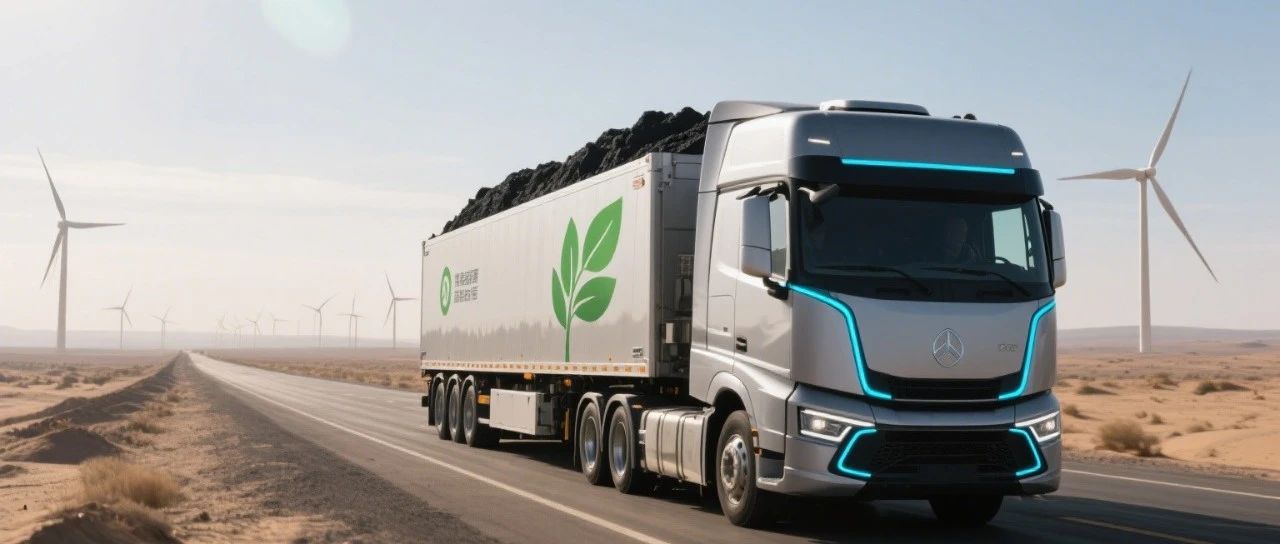
Group 1 - The article discusses the growing demand for electric heavy trucks driven by a national energy strategy, particularly in Xinjiang, which has significant coal production and reserves [2][3][5] - In 2024, Xinjiang's coal production is projected to be approximately 540 million tons, accounting for about 13.5% of the national total, with reserves reaching 2.19 trillion tons, the highest in the country [2] - The transportation of coal from Xinjiang is primarily conducted via rail, with road transport accounting for about 25.8%, predominantly using fuel heavy trucks, which are high-emission vehicles [3] Group 2 - The penetration rate of electric heavy trucks in Xinjiang is currently low due to insufficient charging infrastructure, but advancements in charging technology and battery capacity are expected to boost sales [4][5] - In the first half of 2025, nationwide sales of electric heavy trucks reached 79,000 units, with Xinjiang's sales exceeding 4,000 units, marking a year-on-year growth of over 200% [4][6] - Xinjiang has the highest market share for battery-swapping heavy trucks in the country, exceeding 50%, indicating a strong shift towards electric solutions in the region [5] Group 3 - The article highlights the diverse energy replenishment methods being adopted, including battery swapping and ultra-fast charging networks, to support the logistics of coal transportation [7][9] - The demand for heavy truck batteries is expected to rise significantly, with an estimated 31.7 GWh of battery installations in the first half of 2025, reflecting a year-on-year increase of 230% [6] - Companies are actively establishing dedicated battery-swapping stations and ultra-fast charging stations to facilitate the transition to electric heavy trucks in Xinjiang [10][11] Group 4 - The deployment of ultra-fast charging stations is accelerating in Xinjiang, with significant projects already underway, including those by Huawei and Shenghong [13][17] - The article notes that the integration of solar energy and storage solutions is being explored to mitigate the impact of high-power charging on the electrical grid [15][17] - Predictions indicate that Xinjiang's sales of new energy heavy trucks could reach 6,000 units in 2025, further driving the development of supporting infrastructure [17]
2025H1全球磷酸铁锂动力电池装机占比55.1%
高工锂电· 2025-08-09 09:52
Core Viewpoint - The article highlights the significant growth and market dominance of lithium iron phosphate (LFP) batteries in the global electric vehicle (EV) sector, emphasizing their increasing adoption and export potential, particularly in the first half of 2025 [3][4][6]. Group 1: Market Performance - In the first half of 2025, global sales of new energy vehicles reached 877.6 million units, a year-on-year increase of 29%, driving the global power battery installation volume to approximately 465.9 GWh, up 35% year-on-year [4]. - LFP batteries accounted for 256.6 GWh of installations, marking a 64% year-on-year increase and capturing a market share of 55.1%, up from 50.3% in 2024 [4][5]. - In China, LFP battery installations reached 223.1 GWh in the first half of 2025, reflecting a 71% year-on-year growth and a market share of 77.4% [5]. Group 2: Export Dynamics - China's battery exports surged, with a total of 127.3 GWh exported in the first half of 2025, a 56.8% year-on-year increase, constituting 20% of total battery sales [6]. - LFP battery exports reached 33.1 GWh in the first half of 2025, showing a remarkable 37% year-on-year growth, significantly outpacing the 20.6% growth of ternary batteries [7]. - In June 2025, LFP battery exports accounted for 42.7% of total exports, narrowing the gap with ternary batteries, which held a 56.8% share [7]. Group 3: Technological Advancements - Domestic companies are enhancing LFP competitiveness through technological iterations, with BYD and CATL launching second-generation batteries that achieve peak charging rates of 10C, addressing previous limitations in charging speed [8]. - The U.S. "Inflation Reduction Act" has created uncertainties, but it also presents growth opportunities in European and Asian markets for Chinese lithium batteries [8]. Group 4: Global Market Trends - Germany has become the largest export market for Chinese lithium batteries, with exports reaching $6.515 billion in the first half of 2025, a 11.5% year-on-year increase [9]. - Major global automakers are increasing their LFP battery installation ratios, with companies like Stellantis, Ford, and Volkswagen announcing partnerships with Chinese manufacturers [7][9]. Group 5: Future Projections - The industry anticipates that by 2028, LFP batteries will capture a 60% share of the overseas power battery market [11].


全球份额持续“失守”,日韩电池企业如何“自救”?
高工锂电· 2025-08-09 09:52
Core Viewpoint - The global battery market is witnessing a significant shift, with Japanese and South Korean battery manufacturers experiencing a decline in market share, while Chinese competitors, particularly CATL, are gaining ground rapidly [1][4][8]. Market Share Decline - LG Energy Solution's market share has fallen below 10%, while Samsung SDI has reported negative growth, leading to a combined market share of under 17% for the three major South Korean manufacturers [2][7]. - Excluding the large Chinese market, the combined share of South Korean companies in overseas markets has decreased by nearly 10 percentage points [3][8]. - The overall market share of the four major Japanese and South Korean battery manufacturers has dropped from approximately 23% to 16% year-on-year [7][8]. Financial Recovery - Despite declining market shares, the latest financial reports from Japanese and South Korean battery companies indicate a recovery in profitability [6][15]. - LG Energy Solution reported a 31.4% increase in operating profit in Q2 2025, with an operating profit margin of 8.8%, up over 5 percentage points from the previous year [15][16]. - SK On has narrowed its operating losses significantly, achieving a quarterly profit for the first time due to improved operational efficiency and external subsidies [18][20]. Strategic Shifts - Japanese and South Korean battery manufacturers are shifting focus from merely defending market share to targeting high-value segments in emerging markets [24][25]. - The global energy storage market is growing rapidly, outpacing the electric vehicle market, driven by renewable energy expansion and AI data center demands [26][27]. - LG Energy Solution has secured a $4.3 billion supply contract for LFP storage batteries with Tesla, indicating a strategic pivot towards energy storage [28]. Technological Advancements - Japanese and South Korean companies are investing in next-generation battery technologies, including high-nickel ternary batteries and solid-state batteries, to maintain competitive advantages [30][36]. - LG Energy Solution is advancing research on lithium-rich manganese-based materials, aiming for over 30% energy density improvement while keeping costs low [36][37]. Global Manufacturing Capacity - Panasonic has launched a new factory in Kansas, increasing its total annual production capacity in the U.S. to 73 GWh, highlighting the significant manufacturing footprint of Japanese and South Korean companies in North America [38][39]. - The establishment of local supply chains and production facilities in the U.S. is seen as a strategic advantage for these companies amid changing geopolitical landscapes [40][42]. Emerging Market Opportunities - Japanese and South Korean battery manufacturers have established a strong presence in Southeast Asia, with LG Energy Solution and Samsung SDI investing in local production facilities [48][49]. - The competitive landscape in emerging markets is intensifying, with traditional automotive giants like Toyota expanding their electric vehicle production in the region [47].

2025H1圆柱动力电池装机同增超50%
高工锂电· 2025-08-08 10:21
Core Insights - The article highlights the upcoming 2025 High-tech Lithium Battery Annual Conference, which will take place from November 18-20, 2025, in Shenzhen, China, celebrating its 15th anniversary and featuring the High-tech Golden Ball Awards [2][3]. Industry Overview - In the first half of 2025, China's new energy vehicle sales reached approximately 567.4 million units, marking a year-on-year increase of 33%. The installed capacity of power batteries was about 288.1 GWh, reflecting a year-on-year growth of 44% [3]. - Among battery shapes, cylindrical power batteries exhibited the highest growth rate, with a year-on-year increase of 51%, reaching an installed capacity of 6.2 GWh [4]. Market Developments - In the first half of 2025, six new models adopted cylindrical batteries, including Wuling Hongguang REEV and Lingbao BOX, with battery supply from companies like Dofluorid and Zhongbi New Energy [6]. - EVE Energy reported that the yield of its large cylindrical batteries improved from over 80% at the beginning of 2023 to 97%, addressing challenges in welding and metal debris control [6][7]. Company Highlights - EVE Energy is constructing a new factory in Hungary, planning three production lines for large cylindrical batteries, with mass production expected by the end of 2025. The company has also established a partnership with BMW Group to supply large cylindrical batteries for its new generation models, set for mass production in 2026 [7][8]. - Dofluorid's large cylindrical battery shipments reached 8.8 million units in July, a year-on-year increase of 45%, with expectations to exceed 9.5 million units in August [8][9]. - By October 2025, Dofluorid's large cylindrical battery production capacity is projected to increase from 14 GWh to 22 GWh, covering a full range of specifications [9]. Competitive Landscape - LG Energy Solution (LGES) is a key supplier of cylindrical batteries for Tesla's Model Y and Model 3, with a year-on-year increase in installed capacity of 51.4%. However, Tesla's sales in the Chinese market declined by approximately 5.4% year-on-year in the first half of 2025 [9].


超40GWh订单,楚能供应链“备战”
高工锂电· 2025-08-08 10:21
Core Viewpoint - The lithium battery industry is experiencing a trend of collaboration among various supply chain participants, driven by the need to avoid internal competition and enhance stability in product delivery and pricing [2][4]. Group 1: Company Developments - Chuangneng New Energy has established partnerships with several key suppliers, securing long-term orders that include 550,000 tons of electrolyte, 250 million structural components, 150,000 tons of lithium iron phosphate cathode materials, and 310,000 tons of lithium battery copper foil [2][4]. - The company has achieved over 40 GWh in orders from January to May 2023, surpassing the total orders for the previous year, aligning with its goal of exceeding 60 GWh in annual shipments by 2025 [2][4]. - Chuangneng's production capacity is set to reach a total of 350 GWh across three major bases in Wuhan, Xiaogan, and Yichang, with current effective capacity at 110 GWh [5][6]. Group 2: Product and Market Strategy - The company has diversified its product offerings, including energy storage batteries and systems, and has made significant strides in the electric vehicle battery market, ranking 15th in power battery shipments in 2024 [4][10]. - Chuangneng has developed a CTP 3.0 solution that supports 800V high-voltage platforms, achieving peak charging rates of 7.5C and over 80% volume utilization [12]. - The company is also expanding into the electric shipping sector, having signed a strategic cooperation agreement with Hubei Port Group to develop new energy vessels [13]. Group 3: Supply Chain and Cost Management - By securing large orders for raw materials, Chuangneng aims to mitigate future price risks and enhance its competitive edge against other players in the market [9][10]. - The collaboration with material suppliers allows for price locking and flexibility in adjusting technological routes, which is crucial for optimizing battery performance [9][10]. - The strategic focus on building a robust supply chain is essential for maintaining a competitive advantage in the rapidly evolving lithium battery industry [9].
每日速递|通用汽车将从中国进口宁德时代LFP电池
高工锂电· 2025-08-08 10:21
Group 1: Strategic Collaborations - Shuangliang Group has signed a strategic cooperation agreement with CATL's subsidiary, Times Tianyuan, to explore green energy innovation models in the zero-carbon park construction sector, contributing to carbon neutrality goals [1] - A partnership has been established between Asahi Kasei and Toyota Tsusho, where Asahi Kasei will supply wet lithium-ion battery separators to Toyota Tsusho's North American market, ensuring a stable supply chain for automotive batteries [10] Group 2: Shareholding Changes - Up to 1.9832% of shares in Funeng Technology will be reduced by Shanghang Xingyuan Equity Investment Partnership, which currently holds 24,237,028 shares, representing 1.9832% of the total share capital [2] Group 3: Product Launches - FAW Audi has launched the Q6L e-tron family, featuring a limited-time price range of 348,800 to 398,800 yuan, equipped with a 107 kWh CATL ternary lithium battery and an 800V high-voltage platform [3][4] - Lucid Motors' Air Grand Touring electric vehicle, powered by Samsung SDI's 21700 cylindrical battery, has set a Guinness World Record for the longest distance traveled on a single charge at 1205 kilometers, showcasing advanced battery technology [11][12] Group 4: International Supply Chain Developments - General Motors plans to import CATL's LFP batteries from China for its second-generation Chevrolet Bolt electric vehicle, despite tariff impacts, to fill supply chain gaps while awaiting lower-cost domestic battery production [9]

锂电金属走势分化:镍钴承压、铜铝重塑、锂价异动
高工锂电· 2025-08-08 10:21
Core Viewpoint - The article discusses the significant market fluctuations of key energy metals used in lithium batteries, highlighting the impact of national policies, regional trade tensions, and supply-demand imbalances on market dynamics [2][4][10]. Group 1: Nickel and Cobalt - Nickel prices are primarily influenced by structural oversupply, particularly due to Indonesia's expanding production capacity, with a projected oversupply of 198,000 tons by 2025 [4]. - As of August 8, nickel prices have decreased by 6.6% year-on-year, continuing a bearish trend since late 2022 [4]. - Cobalt prices have risen to around $13 per pound due to supply constraints from Congo's export policies, although high prices are suppressing downstream demand [6][7]. Group 2: Copper and Aluminum - The copper market has been significantly affected by U.S. tariff policies, leading to a dramatic price drop after the exclusion of refined copper from high tariffs [8]. - As of early August, COMEX copper inventories reached 260,000 tons, raising concerns about potential market impacts if these stocks return to the global market [8]. - The aluminum market is also influenced by U.S. tariffs, with major producers facing substantial costs, prompting a reshaping of global trade flows [9]. Group 3: Lithium - The lithium market is experiencing significant volatility due to uncertainties surrounding mining rights in Jiangxi, China, with potential supply disruptions of 7,000 to 8,000 tons of lithium carbonate equivalent per month [10][11]. - Recent auction prices for lithium concentrate have exceeded current market levels, indicating strong cost support for lithium prices [11]. - The market is highly sensitive to any potential supply disturbances, as evidenced by an 11% increase in lithium futures prices in a week [11].

特斯拉连续7月销量退潮,欧洲车市生“变”
高工锂电· 2025-08-07 10:49
Core Viewpoint - The article discusses the decline of Tesla's sales in the European market and the rise of Chinese electric vehicle brands, highlighting a significant shift in the competitive landscape of the European electric vehicle market [3][4][5]. Group 1: Tesla's Sales Decline - Tesla's sales in Europe have been declining, with July sales in Germany dropping by 55.1% year-on-year, and a cumulative decline of 57.8% in the first seven months of the year [2]. - In the UK, July registrations fell by 60%, while France and Sweden also saw significant declines of 27% and 86%, respectively [2]. - CEO Elon Musk's controversial political stance has negatively impacted consumer sentiment towards Tesla, with a 26% drop in favorability towards Musk and a 32% drop towards the Tesla brand [4]. Group 2: Market Dynamics - The European electric vehicle market has shown resilience, with a 24% year-on-year growth in the first half of 2025, increasing from 944,858 units to 1,177,051 units [3]. - Chinese electric vehicle brands have gained traction, with sales reaching 74,296 units in the first half of 2025, marking a nearly 20% increase and a market share of approximately 8% [3]. - BYD surpassed Tesla in electric vehicle sales in Europe for the first time in April 2025, with a 169% year-on-year increase in sales [3]. Group 3: Competitive Landscape - The article identifies three main competitive groups in the European electric vehicle market: - European automakers like Volkswagen and BMW are increasing their electric vehicle offerings and sales, with Volkswagen achieving over 130,000 electric vehicle sales and a 78% year-on-year growth [7]. - Chinese brands are leveraging technology and cost advantages to penetrate the market, with BYD leading in key markets [7][8]. - Japanese and Korean brands are lagging, with slight declines in sales but are still investing in new technologies [8]. Group 4: Future Outlook - The article suggests that the European market remains a fertile ground for electric vehicles, despite recent challenges faced by automakers [6][7]. - The shift in Tesla's market share presents opportunities for other manufacturers to capture market segments, depending on their product strategies and technological innovations [8].