经济观察报

Search documents
魏德圣:《赛德克‧巴莱》,重新回来|我们的四分之一世纪
经济观察报· 2025-12-22 11:33
Core Viewpoint - The film "Seediq Bale" is being re-released in mainland China on December 12 and 13, coinciding with the National Memorial Day for the Nanjing Massacre victims, presenting the complete four-and-a-half-hour version of the film that depicts the armed resistance of the Seediq people against Japanese colonial rule during the Wushe Incident in 1930 [2][3][4]. Group 1: Film Background and Significance - "Seediq Bale" first premiered in Taiwan in 2011, marking a significant moment for indigenous history and colonial violence to be presented on a mainstream platform as a commercial film [4]. - The film's return raises questions about its contemporary relevance and how it is perceived in today's context [4][21]. - The director, Wei Te-sheng, reflects on the historical context of the film and the challenges of portraying such a complex narrative without altering its original message [4][22]. Group 2: Director's Journey and Challenges - Wei Te-sheng entered the film industry during a decline in Taiwanese cinema, where many professionals shifted to television for stability, making filmmaking a high-risk endeavor [6]. - His initial experiences in the industry were marked by difficulties in assembling a competent crew, leading him to question his career path [6][7]. - A pivotal moment in his career was witnessing indigenous protests, which inspired him to explore the Wushe Incident and its historical significance [9][10]. Group 3: Script Development and Historical Context - The writing process for "Seediq Bale" was challenging due to the need to balance the brutal realities of the Wushe Incident with a nuanced understanding of the historical context [10][11]. - Wei Te-sheng aimed to present the complexities of the indigenous experience under colonial rule, avoiding simplistic moral judgments [11][12]. - The film's narrative structure was designed to gradually reveal the impact of colonial oppression, starting from cultural practices before delving into the violent conflict [12]. Group 4: Production and Market Dynamics - The production of "Seediq Bale" faced significant financial challenges, with initial funding difficulties and skepticism from investors regarding the film's commercial viability [13][14]. - Wei Te-sheng made a bold decision to invest his own money in a short prequel to demonstrate his commitment and ability to produce a successful film [14][19]. - The eventual success of "Seediq Bale" at the box office, surpassing previous records, was attributed to its ability to engage audiences and create a shared cultural experience [19][20]. Group 5: Contemporary Relevance and Impact - The re-release of "Seediq Bale" prompts a reevaluation of its themes and messages in light of current societal issues, emphasizing the role of film as a medium for reflection and action [21][22]. - Wei Te-sheng emphasizes that impactful cinema should not only evoke emotions but also inspire viewers to take action in their lives [23][24].

蓝白弹劾赖清德,美国武装赖清德
经济观察报· 2025-12-22 10:26
Group 1 - The core viewpoint of the article suggests that the Kuomintang (KMT) and the Taiwan People's Party (TPP) should take more aggressive actions against Lai Ching-te, rather than merely initiating an impeachment process that is unlikely to succeed [1][9] - The KMT and TPP have launched an impeachment procedure against Lai Ching-te in the Legislative Yuan, with over 6 million signatures collected in support from the public within 24 hours, reflecting significant public sentiment [3][4] - The impeachment process requires more than half of the Legislative Yuan members to propose it, which the KMT and TPP can achieve, but they lack the necessary two-thirds majority to pass the resolution [4][5] Group 2 - The article highlights that the impeachment process is more of a publicity campaign aimed at raising awareness of Lai Ching-te's actions and boosting the KMT and TPP's political standing, rather than a feasible legal action [7] - A significant arms sale from the U.S. to Taiwan, amounting to approximately $11.1 billion, is noted as the largest military sale to Taiwan to date, which the Lai administration has welcomed as a sign of strong U.S.-Taiwan relations [8] - The article emphasizes the importance of understanding China's potential countermeasures in response to U.S. arms sales to Taiwan, as well as the implications for cross-strait military dynamics [10][11]

从赛道王者到生态筑基者:领克汽车运动2.0时代的战略升维
经济观察报· 2025-12-22 10:26
Core Viewpoint - Lynk & Co's strategic evolution from 1.0 to 2.0 represents a significant shift in the development path of high-end Chinese brands, focusing on cultivating a complete automotive sports ecosystem in China rather than solely winning international championships [2][20]. Group 1: Brand Development through Racing - The racing track serves as a testing ground for technology and a platform for brand spirit, with winning in top competitions enhancing brand recognition and trust [4][5]. - Lynk & Co has achieved remarkable success in the WTCR/TCR series, winning nine championships in seven years, which has redefined the narrative of Chinese automotive performance on the global stage [8][10]. - The victories of Chinese driver Ma Qinghua in international events have created a complete narrative of "Chinese driver + Chinese car + Chinese track + Chinese brand," enhancing national industrial confidence [8][10]. Group 2: Strategic Shift and Resource Reallocation - Lynk & Co's decision to adjust its focus from international racing to cultivating local talent and a broader automotive culture reflects a strategic resource reallocation aimed at building a sustainable automotive sports industry in China [12][13]. - The brand aims to lower participation barriers in automotive sports, transitioning spectators into active participants through various initiatives, including driver training and racing experiences [12][13]. - Lynk & Co continues to participate in domestic racing events to maintain technical output and brand presence while fostering a pathway for amateur drivers to transition to professional racing [13]. Group 3: Mission Elevation and Performance Democratization - The 2.0 strategy signifies a shift from being a brand focused on commercial success to becoming an enabler and foundational player in the development of the Chinese automotive sports industry [15][16]. - By nurturing local talent through structured training programs, Lynk & Co aims to contribute to the industry's growth and create a sustainable ecosystem that benefits all stakeholders [16][18]. - The brand's approach to democratizing performance technology ensures that advanced racing technologies are accessible to everyday users, enhancing their driving experience [18]. Group 4: Long-term Vision and Cultural Impact - Lynk & Co's long-term strategy emphasizes the importance of building a robust automotive culture in China, moving beyond immediate marketing gains to foster deep user engagement and community building [20][22]. - The brand's initiatives, such as the establishment of the MEC and support for aspiring drivers, reflect a commitment to enriching the automotive experience for a new generation of enthusiasts [22].

鸿蒙星光盛典:致敬千行百业同行者
经济观察报· 2025-12-22 10:26
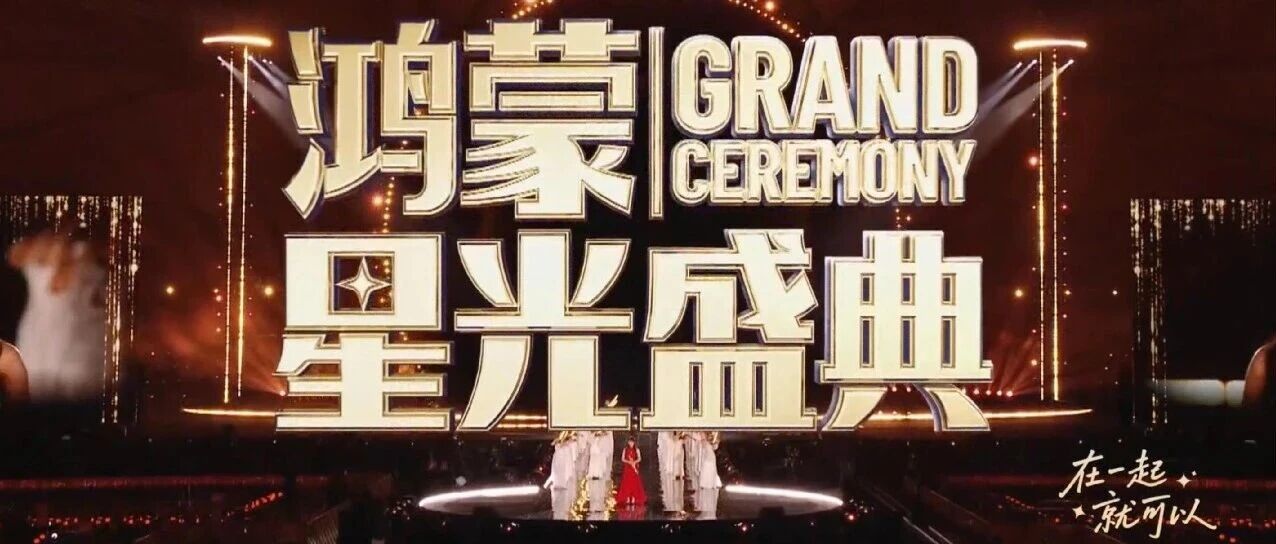
Core Viewpoint - The "Harmony Starry Night Gala" represents a collective expression of confidence in Chinese technology, highlighting the contributions of engineers, ecosystem partners, and users who trust the Harmony system [1][26]. Group 1: Event Highlights - The gala featured 40,000 light balls illuminating the night sky, symbolizing the Harmony ecosystem and its journey from inception to growth, with a focus on the theme "Together, we can" [2]. - The event was divided into four chapters: "Breakthrough," "Growth," "Belief," and "Future," each celebrating the contributions of developers and partners [2]. - The gala showcased innovative technology applications, such as the Remy app, which allows users to create 3D images with a single device, demonstrating the unique experience of the Harmony ecosystem [5][10]. Group 2: Technological Advancements - Harmony 6 introduces a new intelligent framework (HMAF) that transforms the voice assistant into a "super assistant," capable of understanding complex commands and executing cross-application tasks [10]. - The upgraded "Star Shield Security Architecture" has intercepted over 24 billion unauthorized permission requests, showcasing the system's commitment to security [10]. - Harmony's distributed architecture supports seamless experiences across devices, positioning it as a differentiated operating system in the era of "Internet of Everything" [10][11]. Group 3: Ecosystem Development - Harmony has achieved over 95% compatibility within its ecosystem, boasting more than 350,000 applications and services across various sectors [22]. - The ecosystem's growth is supported by over 10 million registered developers by 2025, reflecting a robust community contributing to its development [22]. - Harmony's strategy includes phased development to ensure coverage of the top 5,000 applications, fostering innovation with partners while allowing smaller developers more freedom [16][22]. Group 4: Community and Collaboration - The gala highlighted stories from developers, emphasizing the collaborative spirit behind Harmony's growth, with significant contributions from companies like JD and Alipay [21][22]. - The event underscored the importance of community feedback, with over 200,000 user wish lists influencing the ecosystem's evolution [11][12]. - Harmony's journey is portrayed as a collective effort, with the message that the path to success is shared among all contributors [26][27].
奥动新能源港股IPO:“报表优化”后的盈利迷雾
经济观察报· 2025-12-22 10:26
Core Viewpoint - Aodong New Energy is striving to become the "first stock in battery swapping" in Hong Kong but is facing significant profitability challenges, with a net loss of 157 million yuan in the first half of 2025 and a worsening gross loss rate from 4.4% to 8.9% [1][2] Financial Performance - Aodong New Energy reported a net loss of 157 million yuan in the first half of 2025, a 44.52% reduction from 283 million yuan in the same period of 2024, but this improvement is attributed to business scale contraction and cost-cutting rather than enhanced profitability [5] - Revenue for the first half of 2025 was only 324 million yuan, a year-on-year decline of 31.7% [5] - The gross loss rate deteriorated from 4.4% in the first half of 2024 to 8.9% in the first half of 2025, indicating that for every 100 yuan in revenue, the loss increased from 4.4 yuan to 8.9 yuan [5] Business Model Challenges - Aodong New Energy is heavily reliant on the taxi and ride-hailing market, which has seen demand saturation and tightening policies, adversely affecting business performance [8] - The company has shifted from a focus on equipment sales to a service-driven model, halting the construction of new battery swapping stations and significantly reducing operations [8][9] - The number of self-owned battery swapping stations decreased from 321 in 2023 to 267 in the first half of 2025, raising concerns about revenue generation capabilities [9] Research and Development Issues - Aodong New Energy's R&D investment from 2022 to the first half of 2025 totaled only 248 million yuan, with a 27.4% decrease in R&D spending from 37.2 million yuan in the first half of 2024 to 27 million yuan in the first half of 2025 [6] - The company has faced significant staff turnover, with many R&D personnel and executives leaving, leading to a reduced R&D team of only 68 people, accounting for 4.4% of the total workforce [6] Market Position and Future Prospects - Aodong New Energy is currently the largest independent third-party battery swapping solution provider in China but is under pressure from larger competitors like NIO and CATL, which have established a more extensive network of battery swapping stations [15][17] - The company is attempting to pivot towards heavy-duty trucks and Robotaxi battery swapping solutions, but it lacks core competencies in the heavy-duty truck sector and faces challenges in customer acquisition for this new market [12][13] - The overall battery swapping industry is struggling, with a lack of unified standards and a comprehensive support system, which poses significant risks for Aodong New Energy's future [15][17]

上过央视的汪正年,还住在1988年的木屋子里|我们的四分之一世纪
经济观察报· 2025-12-21 07:00
11月24日深夜,汪正年围在火炉旁聊起母亲时,他76岁的父 亲如同祥林嫂一样,重复地喃喃自语:"他母亲20岁就跟了 我,年轻时肩挑背扛都能做。可是还没享过福,生病半年后就 死掉喽。" 三天采访时间,聊起女儿治病、母亲因病去世、四 处求人借钱的故事时,45岁的汪正年已经拿不出太多的表情变 化。 作者:田进 封图: 迟来的新衣 编者按:2025年,经济观察报以"我们的四分之一世纪"为年终特刊主题,旨在通过数十位时代亲历者的故事,共绘一幅属于这段岁月的集体记忆图 谱。 从远离县城的方向行驶12公里,再沿着山脚的盘山公路一路蜿蜒向上,就能抵达农民工汪正年地处半山腰的家。 整个村庄都被清冷的冬季大雾笼罩。午饭时刻,村里几家由木头搭建而成的瓦房冒起炊烟。行走在村里,只能依稀看见老人在家门口洗菜或在地里耕种 的身影。村里道路两侧,随处可见散落一地的橘子、柚子。远远望去,村周围大多数梯田已被杂草覆盖。 村里不时响起的鸡叫、牛叫声,才让处于丰收季的村庄显得没那么冷清。汪正年的故事就是围绕着这座现在冷清、曾经热闹的村庄展开。 1997年的一天,像大多数村里同龄人一样,17岁的汪正年第一次逃离村庄,乘坐着大巴车摇摇晃晃近一周时间, ...

孙海洋:找回我们的孩子 | 我们的四分之一世纪
经济观察报· 2025-12-21 06:00
Core Viewpoint - The article highlights the long and arduous journey of a father, Sun Haiyang, in searching for his abducted son, Sun Zhuo, and the systemic issues surrounding child abduction in China, including the lack of effective monitoring and legal mechanisms in place during the early 2000s [4][5][6]. Group 1: Background and Initial Incident - In the early 2000s, a significant influx of rural workers into cities led to a rise in left-behind children and mobile children, making them vulnerable to abduction [4][5]. - Sun Zhuo was abducted in October 2007, prompting his father, Sun Haiyang, to embark on a 14-year search for him [4][6]. - At the time of the abduction, there was no established mechanism for reporting missing children within the first 24 hours, complicating the search efforts [5][10]. Group 2: Search Efforts and Advocacy - Sun Haiyang's search involved extensive efforts, including creating a reward poster and distributing nearly 100,000 missing person flyers [10][11]. - He discovered that many parents faced similar challenges in finding their abducted children, leading him to compile a database of over 3,000 missing children [14][16]. - The establishment of the national DNA database and the "anti-trafficking office" by the Ministry of Public Security in 2007 marked a significant step in addressing child abduction [16][18]. Group 3: Legal and Systemic Changes - Over the years, legal frameworks evolved, including the establishment of immediate criminal case registration for missing children and the introduction of the "one leader, three responsibilities" system in 2011 [17][18]. - Despite these advancements, Sun Haiyang expressed disappointment over the leniency of penalties for child traffickers, particularly in his case where the abductor received a minimal sentence [25][26]. Group 4: Reunion and Ongoing Challenges - After 14 years, Sun Zhuo was finally reunited with his family in December 2021, but the challenges of reintegration, including issues with his household registration and education, persisted [24][29]. - Sun Haiyang's experience highlighted the lack of a structured process for addressing the aftermath of child abduction, as many families struggle with legal and educational hurdles after reuniting with their children [30][31]. Group 5: Current Status and Future Outlook - Sun Haiyang has transitioned into a new business model, leveraging his story to engage in live streaming and fundraising for social causes, reflecting resilience and adaptability [32][34]. - The article concludes with a reflection on the changing landscape of child abduction cases, emphasizing the importance of technology and collaboration with law enforcement in modern search efforts [34].

2025年,消失了200多家村镇银行
经济观察报· 2025-12-21 04:15
Core Viewpoint - The article highlights the accelerated trend of mergers and acquisitions among rural banks in China, with over 200 banks being absorbed or acquired since 2025, indicating a significant increase compared to 2024 [2]. Group 1: Mergers and Acquisitions - Since 2025, more than 135 rural banks have been absorbed and over 85 have been acquired, totaling over 200, which marks a substantial rise from 2024 [2]. - By the end of 2024, the total number of rural banks in China was 1,538, a decrease of 98 from the end of 2023 [2]. - Regions such as Sichuan and Hubei have seen over 20 rural banks absorbed or acquired, while provinces like Hunan, Guangdong, Hainan, and Hebei have seen more than 10 [2]. Group 2: Reform Models - The main models for the mergers and acquisitions of rural banks are "village to branch" and "village to division," with local rural commercial banks often initiating the absorption [4]. - Notably, major state-owned banks, including ICBC and ABC, have begun participating in these acquisitions, with ICBC being the first to initiate a "village to branch" acquisition [4][5]. - ICBC's acquisition of Chongqing Bishi Rural Bank was completed in September 2025, marking a significant step for state-owned banks in this sector [4]. Group 3: Financial Health and Support - State-owned banks are currently exhibiting stable financial indicators, and their involvement in rural bank reforms is expected to have minimal impact on their operations [5]. - Regulatory authorities are likely to provide substantial policy support to state-owned banks participating in the reform of rural financial institutions [5]. Group 4: Bankruptcy Cases - The article notes that while rural banks have shown weaknesses in risk control, bankruptcies are rare, with only two rural banks reported to have gone bankrupt by 2025 [7][8]. - Dalian Jinzhou Lianfeng Rural Bank was approved for bankruptcy proceedings in July 2025, becoming the second rural bank to do so [8]. - The first rural bank to declare bankruptcy was Liaoning Taizihe Rural Bank, which suffered significant losses due to fraudulent loans [11]. Group 5: Structural Reforms - The focus for 2025 is on the orderly advancement of rural bank reforms to mitigate risks, especially in economically weaker regions where local banks face urgent challenges [13]. - The China Banking Association's report indicates that rural banks are undergoing structural reorganization through mergers, acquisitions, and dissolutions to improve quality and reduce risks [13]. - In 2024, the number of rural banks decreased by 99, accounting for nearly 50% of the total reduction in banking institutions that year [13]. Group 6: Opportunities for Initiating Banks - For initiating banks, the reform and restructuring of rural banks can present new opportunities, as seen with Changshu Bank, which has actively absorbed rural banks [15]. - The bank's chairman noted that the high-quality development of rural banks offers new growth opportunities and helps optimize resource allocation [15]. - The central economic work conference emphasized the need for small financial institutions to reduce quantity while improving quality, indicating a strategic direction for the sector [15].

丸美生物改造管理层
经济观察报· 2025-12-21 04:15
Core Viewpoint - Mumei Bio is undergoing significant management changes and operational adjustments to enhance its online sales channels and overall efficiency, amidst challenges in financial reporting and profitability [2][12][16]. Management Changes - Mumei Bio has appointed a new co-CEO, Wu Meng, who has a strong background in e-commerce and was previously a key figure at Shanghai Natural Hall Group [2][6][8]. - The company has seen notable management turnover, including the departure of key personnel such as Wang Xiweng, who was responsible for e-commerce operations [7][10]. - The founder's son, Sun Yunqi, has been appointed to the board, indicating a shift in leadership dynamics [11]. Financial Performance - Mumei Bio's revenue for the first half of 2025 is reported at 1.765 billion yuan, a year-on-year increase of 30.55%, while net profit has declined by 1.2% to 174 million yuan [2][4]. - The company experienced a revenue plateau from 2020 to 2022, but in 2023, revenue surpassed 2.2 billion yuan, with projections of 2.9 billion yuan for 2024 [3][15]. - Despite revenue growth, net profit has not kept pace, with a notable decline in 2025, marking the first drop in three years [4][15]. Operational Strategy - Mumei Bio is focusing on enhancing its direct-to-consumer (DTC) capabilities and optimizing its online sales channels, with a significant shift towards self-broadcasting on platforms like Douyin and Kuaishou [14][15]. - The company aims to balance its sales strategies between self-broadcasting and traditional e-commerce to improve profitability and reduce reliance on influencer commissions [15]. Regulatory and Compliance Issues - Prior to its Hong Kong IPO application, Mumei Bio faced scrutiny from the Guangdong Securities Regulatory Commission regarding financial reporting inaccuracies, including revenue recognition and asset valuation issues [16][17]. - The company has made corrections to its financial statements, revealing inflated revenue and profit figures, which raises concerns about its compliance and operational integrity [16][17].

宁波“小洛熙事件”追问:手术室应该有监控吗
经济观察报· 2025-12-21 04:15
手术室的监控一直是个争议话题:若是录像,有些患者担心隐 私暴露,医生感到被监视;但若不录像,一旦发生医疗纠纷, 患者难以举证,院方也难自证。 作者: 刘晓诺 张英 封图:图虫创意 手术室监控成为"宁波小洛熙事件"中网友关注的焦点之一。 11月14日,5个月大的"小洛熙"在宁波大学附属妇女儿童医院接受心脏手术后,不幸离世。"小洛 熙"父亲12月5日在微博上写道:"医院一开始说没有监控,现在说监控没有存储。" 在宁波市卫健委12月14日发布的通报中,涉事手术间有两个监控摄像头,一个是广角全景摄像 头,用于实时监控,但未配置存储介质,不能回放;另一个用于麻醉车监控,可回放。宁波市卫健 委称,上述监控摄像配置符合规定。 不过,大量网友表达了质疑。 其实,手术室是否应该安装摄像头一直是争议话题:有录像时,患者担心隐私暴露,医生感到被监 视;但若不录像,一旦发生医疗纠纷,患者难以举证,院方也难自证。 多位受访律师告诉经济观察报,中国法律并未明确规定手术室是否要安装摄像头。 山东某县医院院长王铮向经济观察报表示困惑:"我们也很纠结,不知道怎么平衡监控的利弊。" 医院管理者、律师等多位受访者希望,能建立国家层面的部门规章或行 ...