经济观察报

Search documents
对话张宗韬:现代财险是如何专营新能源网约车保险业务的?
经济观察报· 2025-12-23 11:22
Core Insights - The fundamental issue facing small and medium-sized insurance companies is a problem of strategic positioning, which is difficult to implement effectively due to poor governance conditions [1][8] Group 1: Industry Challenges - In 2024, the insurance industry in China covered 31.05 million new energy vehicles, generating premium income of 140.9 billion yuan, with a total insured amount of 106 trillion yuan, but incurred a loss of 5.7 billion yuan, indicating a continuous loss state [2] - The average claim amount and frequency of claims for new energy vehicles are higher than those for traditional fuel vehicles, leading to a persistently high overall loss ratio [3][4] Group 2: Company Strategy and Focus - Modern Insurance has shifted its focus to the new energy ride-hailing vehicle insurance sector, identifying it as a market with unmet demand and potential, despite the high risks involved [4] - The company has concentrated 99% of its auto insurance business on new energy operational vehicles, serving 375,900 new energy ride-hailing customers and generating premium income of 1.334 billion yuan, with a premium share of 96.2% [5] Group 3: Competitive Advantage - Modern Insurance's core competitive advantage lies in its self-developed algorithms and pricing models, which allow for dynamic pricing based on various risk factors, enabling more competitive pricing for different risk levels [6] - The company has established a comprehensive operational system focused on target customers, utilizing multiple touchpoints to reach clients directly and building long-term trust, which has led to increased renewal rates [7] Group 4: Strategic Implementation - The strategic transformation undertaken by Modern Insurance involved a decisive shift away from many existing businesses to focus solely on new energy operational vehicles, requiring a strong commitment to long-term value over short-term performance indicators [7] - Effective strategic positioning requires avoiding direct competition in areas dominated by industry giants and forming a long-term competitive advantage through differentiation and resource focus [9]


价值回归浪潮下,奔驰S级轿车以“质智双行”捍卫顶豪标杆
经济观察报· 2025-12-23 11:22
Core Viewpoint - The Mercedes-Benz S-Class sedan exemplifies reliability and elegance, standing out in a market that is shifting from a focus on parameters to an emphasis on user experience [1][20]. Group 1: Market Dynamics - The Chinese luxury car market is undergoing a significant value reconstruction, with a domestic luxury model achieving 18,000 orders in 175 days, signaling the rise of Chinese brands [2]. - The market is moving away from "intelligent concept competition" and "parameter stacking" towards a focus on essential needs, emphasizing mechanical quality, safety redundancy, and luxury essence [2][3]. - Predictions indicate that in three to five years, international brands will regain leadership as the differentiation advantages of new forces diminish due to the standardization of intelligent configurations [2]. Group 2: Product Strategy - The Mercedes-Benz S-Class is redefining the core essence of luxury by breaking the misconceptions that "electrification equals intelligence" and "luxury equals configuration stacking" [3][20]. - The brand's "dual fuel" strategy emphasizes that intelligence and quality are the core standards for luxury vehicles, with the S-Class showcasing this through product upgrades [8][9]. - The S-Class features a new urban and highway navigation assistance system developed in collaboration with Momenta, enhancing user experience in complex driving conditions [9]. Group 3: Technological Advancements - Mercedes-Benz has established a forward-looking and coherent approach to smart technology, investing in local autonomous driving firms and achieving significant milestones in intelligent driving systems [6][8]. - The S-Class's smart upgrades focus on user-centric, scenario-based applications, with features like a multi-screen interactive system that enhances both safety and immersion [9][10]. - The brand's commitment to quality is evident in its rigorous testing standards, ensuring that every component meets high-performance criteria [15][16]. Group 4: Competitive Advantage - The S-Class has maintained its position as the top-selling luxury car for five consecutive years, with a delivery gap of 12,000 units over the second-place competitor in 2024, reflecting consumer recognition of its long-term value [16]. - The brand's focus on quality and user experience has become a significant competitive advantage, distinguishing it from other luxury models that may serve as social symbols but lack the same depth of brand value [16]. Group 5: Future Outlook - Mercedes-Benz plans to launch multiple China-exclusive models by 2027, integrating a new software architecture to enhance the efficiency of intelligent system iterations [17]. - The company aims to continue localizing its autonomous driving technology and innovating smart cabin scenarios to align global technology with Chinese market demands [17].

定存利率跌至1.7%!银行理财下村“抢农民”
经济观察报· 2025-12-23 11:22
Core Viewpoint - The collaboration between bank wealth management subsidiaries and rural commercial banks is rapidly increasing, driven by the opportunity to capture personal deposits moving from rural areas due to declining deposit rates. This partnership aims to expand market penetration and customer coverage while stabilizing wealth management scale growth [1][4]. Group 1: Collaboration Dynamics - Since December 2025, the pace of cooperation between bank wealth management subsidiaries and rural commercial banks has noticeably accelerated, with several banks announcing new partnerships for product distribution [3][4]. - Rural commercial banks are actively seeking to partner with wealth management subsidiaries to mitigate the impact of declining self-managed wealth management business and to retain customer deposits through wealth management offerings [4][6]. Group 2: Market Conditions and Challenges - The decline in one-year deposit rates below 2% has led to significant personal deposit outflows for rural commercial banks, with some experiencing a loss of 6% of their retail deposit base [6][8]. - The average annualized yield of closed-end fixed-income wealth management products has reached 2.3% for one month and 2.73% for three months, which is crucial for rural banks to attract personal deposits [7][8]. Group 3: Product Preferences and Trends - Rural commercial banks prefer pure fixed-income wealth management products due to the low risk appetite of local residents, who prioritize stable returns [10][11]. - There is a concern that if the annualized yield of pure fixed-income products falls below 2%, it could trigger another wave of deposit outflows [10][11]. Group 4: Regulatory Environment and Compliance - The implementation of the "Measures for the Administration of Agency Sales by Commercial Banks" has introduced stricter compliance requirements for product distribution, prompting rural banks to focus on operational compliance in their partnerships [14][15]. - Rural commercial banks are adopting measures to enhance compliance, including training on sales practices and monitoring to prevent misleading sales and operational risks [15][16].

英伟达真正的对手是谁
经济观察报· 2025-12-23 11:22
Core Viewpoint - NVIDIA currently holds a near-monopoly in the AI training and inference chip market, driven by advanced technology and an unmatched ecosystem, making it the highest-valued public company globally with a market capitalization of approximately $4.5 trillion as of November 2025, and a year-over-year revenue growth of about 62% in Q3 2025 [2]. Competitive Landscape - NVIDIA faces competition from traditional chip giants like AMD and Intel, as well as tech companies like Google and Amazon with their custom chips, and emerging players like Cerebras and Groq. However, none have significantly challenged NVIDIA's leadership position so far [2]. - The AI compute chip market has two main applications: training and inference, with training being the core bottleneck in the early and mid-stages of large model development [4][5]. Training Dominance - NVIDIA's dominance in training compute stems from advanced technology and a monopolistic ecosystem. The training of large models requires massive computational power, necessitating large-scale chip clusters and a comprehensive software system to connect engineers, chips, and models [6]. - Key requirements for training chips include single-chip performance, interconnect capabilities, and software ecosystem [6]. - NVIDIA excels in single-chip performance, but competitors like AMD are closing the gap. However, this alone does not threaten NVIDIA's lead in AI training [7]. - Interconnect capabilities are crucial for large model training, with NVIDIA's proprietary NVLink and NVSwitch enabling efficient interconnectivity at a scale of tens of thousands of chips, while competitors struggle to achieve similar scales [7]. Ecosystem Advantage - NVIDIA's ecosystem advantage is primarily software-based, with CUDA being a well-established programming platform that fosters a strong developer community and extensive resources, enhancing user stickiness [8][9]. - The ecosystem's network effects mean that as more developers engage with CUDA, its value increases, creating a significant barrier to entry for competitors [10]. Inference Market Dynamics - Inference requires significantly fewer chips than training, leading to reduced interconnect demands. Consequently, NVIDIA's ecosystem advantage is less pronounced in inference compared to training [12]. - Despite this, NVIDIA still holds over 70% of the inference market share due to its competitive performance, price, and development costs [13]. Challenges to NVIDIA - Competitors must overcome both technical and ecosystem challenges to compete with NVIDIA. If they cannot avoid ecosystem disadvantages, they must achieve significant technological advancements [15]. - In the U.S., challengers are focusing on custom AI chips (ASICs), with Google's TPU showing promising results. However, the ecological disadvantage remains a significant hurdle [16]. - In China, U.S. export restrictions on advanced chips have created a protected market, limiting NVIDIA's ecosystem influence and presenting opportunities for local chip manufacturers [17][18]. Strategic Considerations - The geopolitical landscape has led to a potential rise of strong domestic competitors in China, as developers begin to adapt to local ecosystems like CANN, despite initial challenges [19]. - The U.S. government's recent policy shift allowing NVIDIA to sell advanced chips to China under specific conditions reflects a recognition of the need to maintain NVIDIA's competitive edge while managing technological disparities [19]. - A balanced approach is necessary for China to foster its AI chip industry while allowing for essential imports to support core AI projects [19].


林清峰:成为奥运冠军之后|我们的四分之一世纪
经济观察报· 2025-12-23 10:44
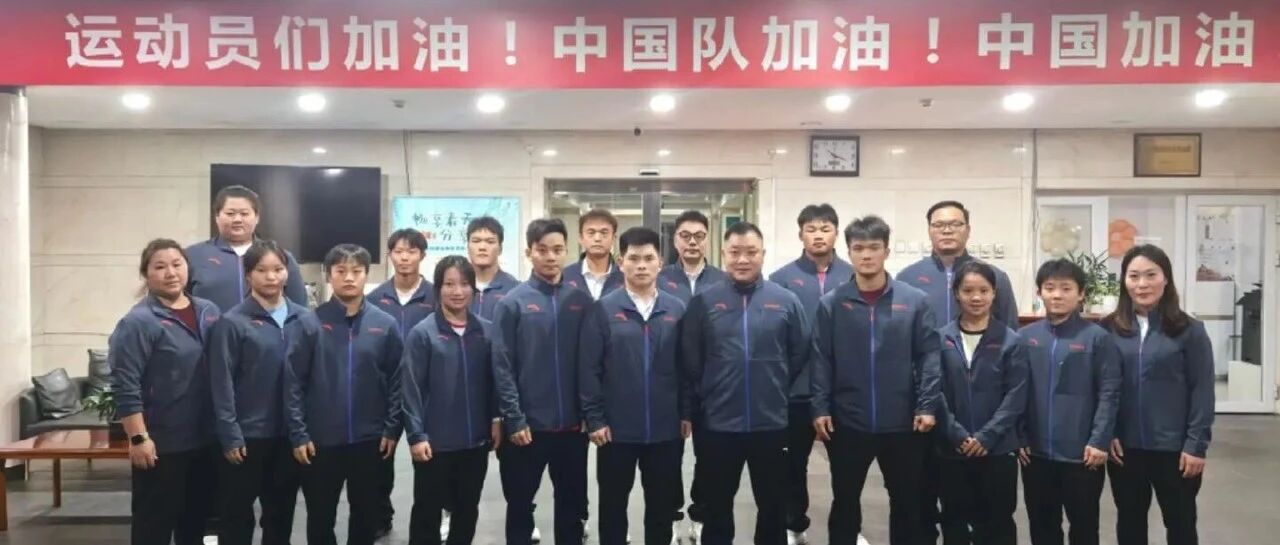
Core Viewpoint - The article highlights the journey of Lin Qingfeng, a weightlifting champion, from his struggles and setbacks to achieving Olympic glory, and his subsequent transition to coaching, emphasizing the importance of athlete education and support for their post-retirement careers [3][4][20]. Group 1: Lin Qingfeng's Athletic Journey - Lin Qingfeng won the first gold medal for China in men's weightlifting at the London Olympics in 2012, lifting 187 kg, marking a significant achievement in his career [3][4]. - His path to success was fraught with challenges, including being rejected twice by the provincial team and contemplating a career change due to financial difficulties [11][16]. - After years of rigorous training and overcoming self-doubt, he finally proved himself by winning a bronze medal at the National Games in 2009, which paved the way for his Olympic success [12][14]. Group 2: Transition to Coaching - Following his retirement in 2017 due to injuries, Lin Qingfeng took on roles in coaching, first as the leader of the Xiamen weightlifting team and later as a coach for the Fujian Sports Bureau, eventually being selected for the national team [5][21]. - His coaching role involves managing various logistical aspects and nurturing young athletes, contrasting with the singular focus of his athlete life [22][23]. - Lin Qingfeng expressed a desire for better support systems for athletes transitioning to retirement, highlighting the uncertainties they face in their post-competitive careers [20][28]. Group 3: Advocacy for Athlete Education - The article emphasizes the need for improved educational resources for athletes, as many face challenges in finding employment after their sports careers due to a lack of academic qualifications [24][27]. - Lin Qingfeng advocates for a shift in perception regarding athletes and education, stressing that a solid educational foundation can provide better opportunities for those who do not achieve competitive success [25][29]. - He calls for clearer policies to support athletes, particularly in less popular sports like weightlifting, to ensure they have viable career paths after retirement [29][30].
产科医生马良坤:生育这件小事|我们的四分之一世纪
经济观察报· 2025-12-23 08:19
马良坤理解不想生的年轻人。一方面,优秀和觉醒的女性越来 越多了,她们很难找到适合共度余生、养育爱情结晶的另一 半。另一个现象是,社会对年轻人要求越来越高,大家压力太 大了,在生存都是问题时,怎么能有意愿去生育呢? 作者: 张铃 封图:受访者供图 (马良坤 受访者供图) 其实,在诊室里教孕妇做运动、聊心情,并不是马良坤工作前二十年的工作常态。曾经,她是深夜产房的"救火队员",24小时待命,经常面对的是抢救发生 胎盘早剥、大出血、胎心骤降等产妇的危急场景。 那些年的经历,让马良坤渐渐明白,产房里的很多悲剧原本是可以避免的——前提是将焦点从抢救危重前移至管理健康,从治已病转向治未病。 十年前,马良坤开始推行孕期健康管理,帮助女性做好孕前及孕期的生活方式干预。在她的帮助下,很多高危孕妇不仅生下了健康的孩子,自己的身体也变 得更健康了。 编者按:2025年,经济观察报以"我们的四分之一世纪"为年终特刊主题,旨在通过数十位时代亲历者的故事,共绘一幅属于这段岁月的集体记忆图 谱。 与人们印象中步履匆匆、神色凝重的医生形象不同,马良坤总是在笑。 她的一天从清晨六点开始,一小时瑜伽后骑车上班,下班后又骑车赶往瑜伽馆锻炼和冥想, ...

百亿兑付危机引爆,祥源系实控人俞发祥被采取刑事强制措施
经济观察报· 2025-12-23 06:19
Core Viewpoint - The article discusses the financial crisis faced by Xiangyuan Holdings, which has led to a significant inability to repay financial asset income rights products, amounting to over 10 billion yuan, following the criminal measures taken against its actual controller, Yu Faxiang [1][2]. Group 1: Background of the Crisis - The crisis began on November 28, when multiple financial asset income rights products guaranteed by Yu Faxiang and Xiangyuan Holdings failed to meet their repayment obligations, with the total repayment amount reaching over 10 billion yuan [1][2]. - On December 22, Yu Faxiang was taken into criminal custody by the Shaoxing Public Security Bureau due to suspected criminal activities, which has raised concerns about the company's financial stability [2]. - Prior to the crisis, Yu Faxiang's shares in Xiangyuan Holdings' listed companies were judicially frozen, indicating potential financial distress [3]. Group 2: Company Expansion and Financial Performance - Yu Faxiang, born in 1971, is the chairman of Xiangyuan Holdings, which has expanded into various sectors including real estate, cultural tourism, and construction since its inception in 1992 [5]. - Xiangyuan Holdings has received accolades for its performance in the real estate sector, ranking among the top 100 real estate developers in China and the top 10 in cultural tourism real estate [6]. - Despite previous successes, the company has faced a significant decline in revenue over the past three years, with reported revenues of 136.59 billion yuan in 2022, 118.46 billion yuan in 2023, and 107.26 billion yuan in 2024, reflecting an average annual decline of 11.39% [9][10]. Group 3: Financial Challenges - As of June 2025, Xiangyuan Holdings reported total assets of approximately 600 billion yuan and liabilities of 400 billion yuan, indicating a precarious financial position exacerbated by a downturn in the real estate market [8]. - The company has experienced a substantial drop in cash flow, with net cash flow from operating activities showing negative figures over the past three years, indicating ongoing liquidity issues [10]. - The company's real estate development segment has seen a significant reduction in new construction and sales, with new construction areas dropping from 61.53 million square meters in 2022 to just 9.65 million square meters in 2024 [10]. Group 4: Response to the Crisis - A support task force was established on December 12 to assess the company's assets and liabilities, aiming to stabilize the situation and protect investor interests [12]. - Investors have expressed hope that the task force will lead to a resolution of the repayment issues, although specific repayment plans have yet to be disclosed [13]. - Following the crisis, stock prices for Xiangyuan Holdings' associated companies have seen significant declines, reflecting market concerns over the company's financial health [13].



多个直播间同时涉黄 快手急招安全岗
经济观察报· 2025-12-23 03:47
Core Viewpoint - Kuaishou faced a significant security incident on December 22, 2023, where multiple live streams displayed explicit and violent content, leading to a temporary shutdown of the live streaming feature and a subsequent drop in stock price [2][3][5]. Group 1: Incident Overview - On December 22, around 10 PM, numerous Kuaishou live streams began showing explicit and violent content, with some streams attracting over 100,000 viewers [2]. - By midnight, Kuaishou's live streaming channel was cleared, displaying a "server busy" message when users attempted to access it [3]. - The live streaming feature was restored by 8 AM on December 23, with multiple streams back online [4]. Group 2: Company Response - Kuaishou officially stated that the platform was attacked by gray and black market entities around 10 PM on December 22 and that they were in the process of urgent repairs [5]. - The company reported the incident to relevant authorities and the police, emphasizing their commitment to resisting illegal content [5]. Group 3: Security Analysis - Security expert Tan Xiaosheng noted that Kuaishou employs strict manual and AI-assisted content review systems, which failed to activate promptly during the crisis, indicating potential system vulnerabilities [5]. - The decision to take down the live streaming feature two hours after the security breach reflects Kuaishou's intent to mitigate damage and prevent further violations [5]. Group 4: Market Impact - Following the incident, Kuaishou's stock price dropped by 5.47% at the opening on December 23, with a further decline of approximately 3.5% by 11:20 AM, resulting in a market value loss of nearly 10 billion [5].


在昆明丑小鸭,观察“问题学生”和他们的家长
经济观察报· 2025-12-23 02:52
Core Viewpoint - The article discusses the unique educational approach of "Ugly Duckling School," which aims to transform "problematic children" into well-adjusted students through a supportive and autonomous environment [1][4]. Group 1: School Background and Student Demographics - "Ugly Duckling School" is located in Yiliang County, Yunnan, with a student population of over 80, primarily consisting of children labeled as "problematic" by their parents [2][3]. - Since its establishment in 2011, the school has enrolled over 3,000 students, charging approximately 40,000 yuan per semester [3][4]. Group 2: Student Experiences and Issues - Many students arrive with various issues such as rebellion, depression, and gaming addiction, often after being pressured by their parents to attend [2][6]. - A significant number of students previously attended prestigious schools but struggled with academic pressure, leading to mental health issues like depression [7][11]. Group 3: Changes in Student Issues Over Time - The nature of student problems has shifted from behavioral issues to mental health concerns, with a notable increase in depression and anxiety among students since 2020 [11][12]. - Research indicates that 16.4% of adolescents face varying degrees of depression risk, with 4.7% classified as severely depressed [11]. Group 4: Educational Philosophy and Practices - The school emphasizes autonomy, allowing students to make decisions regarding activities and fostering self-identity [15][17]. - There are no strict dress codes or regulations on hairstyles, and students engage in various activities that promote creativity and self-expression [17][18]. Group 5: Parental Expectations and School Response - Parents often express a desire for the school to "fix" their children within a short timeframe, reflecting a misunderstanding of the educational process [26][28]. - The school aims to improve students' self-identity and life skills, but acknowledges that lasting change requires parental involvement and support [26][28].
一个农民工150万次快门下的中国制造|我们的四分之一世纪
经济观察报· 2025-12-22 12:30
Core Viewpoint - The article presents a narrative of the evolution of the manufacturing industry in Dongguan, China, through the lens of a photographer who has documented the lives of migrant workers over three decades, highlighting the impact of significant events like SARS and the 2008 financial crisis on labor dynamics and industrial shifts [3][5][30]. Group 1: Historical Context and Personal Experience - The narrative begins with the personal journey of the photographer, who moved to Dongguan in 1995 and has since captured over 1.5 million images of factory life, illustrating the daily experiences of workers [3][4]. - The article emphasizes the rapid expansion of manufacturing in the Pearl River Delta, with a significant influx of migrant workers seeking opportunities in factories [4][18]. - The photographer's role as a security supervisor allowed him to observe the harsh realities of factory life, including long hours and minimal breaks, which often led to health issues among workers [8][9]. Group 2: Impact of Major Events - The SARS outbreak in 2003 disrupted factory operations, leading to layoffs and a stark realization of the precariousness of workers' job security [12][13]. - The 2008 financial crisis brought about a gradual decline in orders and a shift in labor market dynamics, transitioning from a labor shortage to a situation where factories struggled to recruit workers [16][18]. - The article notes that the labor market began to change post-financial crisis, with companies adapting their management practices to retain workers, including improving living conditions and offering better amenities [19][20]. Group 3: Structural Changes in Manufacturing - The narrative discusses the evolution of the manufacturing sector, highlighting the shift from low-cost labor to a focus on maintaining stable employment relationships and improving worker conditions [19][20]. - The implementation of the Labor Contract Law in 2008 led to increased labor costs and prompted some companies to relocate production to lower-cost regions or countries [20][22]. - The photographer documents the gradual transition of industries, with many factories either closing or relocating, reflecting broader economic shifts and the changing landscape of Chinese manufacturing [22][23]. Group 4: Long-term Observations and Reflections - The photographer emphasizes the importance of documenting the ongoing changes in the industrial landscape, noting that individual experiences and societal shifts cannot be captured by a single image [25][33]. - The article concludes with reflections on how the experiences of migrant workers have transformed over the years, influencing their understanding of the world and their place within it [30][31].