经济观察报

Search documents
子公司接连上市、增资,长安汽车在下怎样的一盘大旗?
经济观察报· 2025-12-21 04:15
Core Viewpoint - Changan Automobile's recent capital actions are not merely for financing but represent a systematic and forward-looking strategic restructuring aimed at seizing future opportunities in a rapidly changing automotive industry [2][4]. Group 1: Capital Actions - Changan Automobile's capital layout consists of three distinct actions: the independent listing of its high-end brand Avita Technology, the capital increase for its core subsidiary Deep Blue Automotive, and the significant investment in its intelligent technology arm, Changan Technology [4][5]. - Avita Technology submitted its listing application to the Hong Kong Stock Exchange, with revenue projected to rise from 28 million in 2022 to 15.195 billion in 2024, despite a cumulative loss nearing 10 billion [4]. - The capital increase for Deep Blue Automotive aims to secure its competitive position, with Changan planning to invest up to 3.122 billion, including intangible assets valued at 1.043 billion [4][5]. Group 2: Strategic Timing - The timing of these capital moves is closely related to the intense competition in the Chinese automotive market and the need for Changan to align with its development pace [7]. - The current market environment, characterized by price wars and declining profit margins, necessitates a robust financial buffer, particularly for Deep Blue Automotive, which is projected to have a revenue of 37.225 billion in 2024 but a net loss of 1.572 billion [7][8]. - Changan's capital operations are seen as a preparation for the new competitive cycle in the automotive industry, coinciding with the establishment anniversary of China Changan Automobile Group and the conclusion of the 14th Five-Year Plan [7][8]. Group 3: Future Capital Strategy - Changan Automobile's capital strategy is expected to evolve towards more sophisticated ecological operations along asset, liability, and equity lines [10][11]. - The company may explore "technology assetization" and "asset securitization," potentially packaging core technology patents for licensing to subsidiaries, thereby enhancing profitability and operational efficiency [11]. - Future plans may include optimizing capital structure and attracting diverse strategic investors to build industry alliances, with the possibility of further splitting off software subsidiaries for independent financing [11][12]. Group 4: Transformation and Challenges - Changan Automobile's capital strategy signifies a shift from traditional financing to a model that connects technology and defines ecosystems, moving valuation metrics from vehicle sales to technology licensing and ecological services [12]. - The company faces challenges in demonstrating the unique value and profitability prospects of Avita Technology's "CHN" model amidst significant losses, while also ensuring Deep Blue Automotive achieves a balanced financial position [12]. - This transformation within a state-owned enterprise not only impacts Changan's future but also serves as a case study for the broader Chinese automotive industry navigating its own transition [12].



纾困背后的秘密:华创证券与贵州前首富诉争始末
经济观察报· 2025-12-20 08:35
Core Viewpoint - The ongoing legal dispute involving Guizhou BaiLing, a leading traditional Chinese medicine company, may determine its ownership and control, stemming from a complex financial rescue plan and stock pledge initiated in late 2018 and early 2019, which has lasted for seven years [1][5]. Group 1: Financial Penalties and Fraud Allegations - Guizhou BaiLing and its chairman Jiang Wei, along with ten other responsible parties, were fined for financial fraud, with the company fined 10 million yuan and Jiang Wei fined 5 million yuan, along with a 10-year market ban [2]. - The Guizhou Securities Regulatory Bureau revealed that the annual reports from 2019 to 2021 and 2023 contained false records, with a total of 655 million yuan in profits inflated due to underreported sales expenses from 2019 to 2021, and a 459 million yuan profit reduction in 2023 due to overstated sales expenses [3]. Group 2: Control Dispute and Legal Proceedings - The major shareholder Jiang Wei and his associates are embroiled in a lawsuit initiated by Huachuang Securities, demanding the return of 1.761 billion yuan in loans, which includes 1.4 billion yuan in rescue funds and 361 million yuan in stock pledge financing [4]. - The court case, originally scheduled for December 3, 2025, has been postponed due to Jiang Wei's counterclaim, with no new court date announced [4]. Group 3: Stock Pledge and Financial Struggles - Huachuang Securities provided 1.4 billion yuan in funding through two asset management plans and an additional 361 million yuan in stock pledge loans, acquiring 161 million shares of Guizhou BaiLing, representing 11.54% of its total shares [7]. - The lawsuit claims that Jiang Wei's failure to fulfill his obligations could lead to a forced transfer of his pledged shares, potentially resulting in a change of control for Guizhou BaiLing [9]. Group 4: Background of the Rescue Plan - The rescue plan, initiated in December 2018, aimed to help Jiang Wei reduce stock pledge rates and ensure the stable operation of Guizhou BaiLing, with Huachuang Securities committing to provide no less than 1.8 billion yuan in rescue funds [12]. - The first phase of the rescue plan was completed in March 2019, with Huachuang Securities acquiring 74.54 million shares for 650 million yuan, and the second phase was completed in September 2019 for 750 million yuan [13]. Group 5: Impact of Stock Price Decline - Guizhou BaiLing's stock price has significantly declined from an initial 9 yuan per share to 5.63 yuan, resulting in a market capitalization drop from over 50 billion yuan to 7.9 billion yuan [33].


救援队长王骁宙:在上千次救援中与死神讨价还价|我们的四分之一世纪
经济观察报· 2025-12-20 07:00
身处救援领域二十余载,王骁宙从汶川地震时的一名志愿者, 到成长为参与国际救援的专业指挥者,再到组建起一支应急救 援队,以上千次逆行实践,见证并推动了民间救援力量融入国 家应急体系的完整历程。 作者:王惠 封图:受访者供图 编者按:2025年,经济观察报以"我们的四分之一世纪"为年终特刊主题,旨在通过数十位时代亲历者的故事,共绘一幅属于这段岁月的集体记忆图 谱。 2013年11月,超强台风"海燕"重创菲律宾,造成6300人死亡,1062人失踪。这场灾难发生后,中国红十字国际救援队迅速组建。作为第一梯队队员, 山东省红十字蓝天救援队队长王骁宙踏上了跨国救援的征程。 在重灾区,遇难者遗体搜寻、打捞、辨认是主要工作之一。王骁宙回忆道:"遗体经海水长时间浸泡已发生严重变形,呈现高度肿胀、肤色暗沉的状 态,处理时必须格外谨慎。" 这只是王骁宙救援生涯的一个片段。救援对于王骁宙而言,是由无数个浸满痛感、恐惧与专业的瞬间构成:有直面生死却仍往前冲的本能之勇;有上千 次实战淬炼出的过硬专业能力;有对"队伍零伤亡"近乎偏执的责任担当;还有自掏腰包200多万元、被身边人笑称"公益傻子"的执着。 这些细节戳破了救援者"超人"的滤镜, ...

三聚氰胺吹哨人简光洲:一名调查记者的转身丨我们的四分之一世纪
经济观察报· 2025-12-20 06:00
17年前爆发的"三鹿奶粉三聚氰胺事件"是中国食品安全史上 最严重的危机之一。简光洲正是该事件的吹哨人,也是中国首 批调查记者之一。 作者: 郑淯心 封图:受访者供图 简光洲如今的办公室在一所大学里,很安静。办公室没有任何装饰,书柜最显眼的位置摆放着中国新闻奖的奖杯。奖杯很亮,落了些灰尘。今年8月, 中华全国新闻工作者协会《历史上的名篇》点名三鹿奶粉的报道入选。但简光洲自己早已找不到当年的纸质报纸,手里只留存了电子版。 编者按:2025年,经济观察报以"我们的四分之一世纪"为年终特刊主题,旨在通过数十位时代亲历者的故事,共绘一幅属于这段岁月的集体记忆图 谱。 2008年9月11日,《东方早报》A20版以半版篇幅,刊登了简光洲的调查报道《甘肃14婴儿同患肾病 疑因喝"三鹿"奶粉所致》。由此,当时的中华人民 共和国卫生部查出三鹿奶粉里含有三聚氰胺,随之也改写了中国奶业的发展进程,推动了《中华人民共和国食品安全法》(下称《食品安全法》)的提 前出台。 12月的上海还没有入冬,简光洲穿着西装白衬衫,商务装成了他转行后的标配。在做媒体人时,他常穿的是T恤。相比做记者时,他的身材有些发 福,"各种应酬太多了,为了生活"。 ...

求解“地方财政困难”,不只是搞定钱的事
经济观察报· 2025-12-20 05:21
Core Viewpoint - The article emphasizes the urgent need to address local fiscal difficulties in China, highlighting the contradiction between limited fiscal revenue and unlimited rigid expenditures, particularly at the grassroots level, which has led to a long-term "emergency fiscal phenomenon" [1][3][4]. Group 1: Current Fiscal Challenges - Local fiscal difficulties are characterized by insufficient liquidity and a stark contrast between limited fiscal income and increasing rigid expenditures [3][4]. - The fiscal situation is particularly dire in "medium regions," where areas like Liaoning face significant challenges despite being classified as eastern provinces [4][9]. - The "three guarantees" (ensuring livelihood, wages, and operational stability) are becoming increasingly difficult to maintain, with some regions transitioning to a "five guarantees" model that includes debt repayment and clearing arrears [7][8]. Group 2: Revenue and Expenditure Dynamics - Local government revenues are under pressure due to declining tax income, reduced land transfer revenues, and limited non-tax income sources [11][16]. - For instance, a specific eastern county's tax revenue is projected to drop from 2.7 billion yuan in 2023 to 2.3 billion yuan in 2025, while expenditures related to social welfare are expected to rise by 300 million yuan during the same period [7][11]. - The reliance on land sales for revenue is diminishing, with land transfer income in 2025 expected to be 2.91 trillion yuan, a 10.7% decrease year-on-year [11]. Group 3: Debt and Financial Management - As of September 2025, the total local government debt reached 53.7 trillion yuan, with debt repayment pressures increasing [15][16]. - The article notes that the growth of debt repayment expenditures is outpacing overall expenditure growth, indicating a rising financial burden on local governments [14][15]. - The central government has initiated measures to alleviate local debt pressures, including a 500 billion yuan allocation to support local fiscal stability [17][18]. Group 4: Policy Recommendations - Experts suggest a multi-faceted approach to address local fiscal challenges, including enhancing liquidity, allowing local governments more control over fiscal resources, and implementing debt restructuring measures [18][20]. - Recommendations also include increasing transfer payments, optimizing expenditure structures, and gradually reforming the fiscal system to create stable local tax sources [20][21]. - The need for tailored solutions based on regional economic conditions is emphasized, with different strategies required for eastern, central, and western regions [20].

人民币信贷出海“疾进” 外企也来“分杯羹”
经济观察报· 2025-12-20 05:21
随着美元融资利率(4.75%)持续高于人民币融资利率(约 2%),企业基于降低融资成本的自然选择,正加速使人民币 从国际贸易结算货币与储备货币,向全球信贷融资货币进阶。 但与此同时,这条进阶之路上,充满挑战。 作者:陈植 封图:图虫创意 刚从江苏分行回到上海,胡国强又马不停蹄地赶赴浙江分行。 作为一家股份制银行跨境金融部的负责人,10月份他接到一项新工作——从多个分行里尽快挑选 一批具有潜力的员工担任环球客户经理,围绕出海企业的跨境贸易融资、海外建厂信贷等需求,提 供一站式专人负责的本外币一体化、境内外一体化和商投行一体化综合金融服务。 精通跨境人民币业务的员工,成为他的首选。 在一家城商行上海分行担任跨境业务部主管的沈涛向记者透露,其所在的银行也在扩充贸易融资团 队,以响应境外人民币信贷需求。 他们忙碌的背后,是一个正在发生的变化:央行发布的一项金融数据显示,截至2025年10月底, 金融机构境外人民币贷款约为2.5万亿元,同比增长37.5%,较境内人民币贷款增速高出约31个百 分点。 在胡国强看来,境外人民币贷款迎来新的增长点,由三重力量推动:人民币跨境贸易融资业务火热 与企业海外投资建厂使得人民币贷款需 ...

磷酸铁锂涨价潮背后,锂电产业的“反内卷”博弈
经济观察报· 2025-12-20 05:21
Core Viewpoint - The recent price surge of lithium iron phosphate (LFP) contrasts sharply with the three-year downward price trend in the lithium battery industry, raising questions about whether this increase is a temporary relief for companies or a sign of a fundamental shift in the industry [2][4]. Price Increase Drivers - The primary driver of the recent price increase in LFP is the rise in costs of upstream raw materials, including lithium salts and various auxiliary materials [3]. - Lithium carbonate, which constitutes over 40% of the cost of LFP, has seen its price rise significantly, with market prices reaching between 97,200 to 100,000 yuan per ton, marking an increase of over 50% from mid-year lows [4]. - Other chemical raw materials for LFP production have also experienced price increases, with phosphoric acid and other components rising by 6.9% to 8.5% in November [4]. Demand and Market Dynamics - The demand for LFP is primarily driven by the electric vehicle (EV) and energy storage markets, with the latter expected to see substantial growth [6][7]. - In 2025, China's energy storage lithium battery shipments are projected to reach 580 GWh, with a growth rate exceeding 75% [7]. - The Chinese automotive industry has reported significant growth in EV production and sales, with a year-on-year increase of 31.4% in production and 31.2% in sales from January to November 2025 [6]. Industry Challenges and Responses - Despite the price increases, many LFP manufacturers are still operating at a loss, with only 16.7% of companies in the sector reporting profitability [10]. - The recent price hikes provide a much-needed respite for struggling LFP manufacturers, with some companies reporting positive outcomes from negotiations with clients [10]. - The industry is also witnessing a shift towards higher-quality products, with companies focusing on high-pressure density LFP products that offer better profitability [10]. Future Outlook - Analysts predict that lithium prices may continue to rebound in 2026, driven by a tightening supply-demand balance in the lithium market [6]. - The market for LFP in the energy storage sector is expected to grow significantly, with policies supporting the expansion of new energy storage capacity [8]. - The competitive landscape is shifting, with companies needing to focus on technology, capital, and supply chain integration rather than just production capacity and pricing strategies [11].


经观社论|开放创新的生态才是“杀手锏”
经济观察报· 2025-12-20 05:21
Core Viewpoint - A healthy and open supply chain ecosystem ultimately benefits all participants, including today's market leaders, and the competitiveness of this ecosystem determines how far leading companies can go [1]. Group 1: Supply Chain Dynamics - The article discusses the "either-or" phenomenon in supply chains, particularly highlighted by the competition between DJI and Yingshi, which is not unique to the drone industry but prevalent across various sectors like consumer electronics and home appliances [2]. - The discussion emphasizes the importance of a competitive environment and innovation ecosystem to support China's transition from a manufacturing giant to an advanced manufacturing power [2]. - Leading companies seek influence over supply chains for valid business reasons, and the practice of exclusive agreements should be analyzed on a case-by-case basis [2][3]. Group 2: Risks of Over-Control - Short-term strategies that enhance control over supply chains may hinder competitors' access to resources, but long-term implications could obstruct knowledge flow and weaken innovation capabilities across the supply chain [3][4]. - The true competitiveness of Chinese manufacturing is rooted in a complete, collaborative, and resilient industrial system, supported by numerous small and medium enterprises [4]. Group 3: Recommendations for Improvement - To escape the cycle of "involution" and zero-sum competition, collaboration and restraint among regulatory bodies, leading companies, and suppliers are essential [4][5]. - Clearer rules are needed to define the boundaries of monopoly and unfair competition, protecting smaller participants while regulating market leaders to avoid endless commercial disputes [5]. - Companies should explore tiered supply chain cooperation models, maintaining openness for standardized components while protecting core proprietary technologies [5].

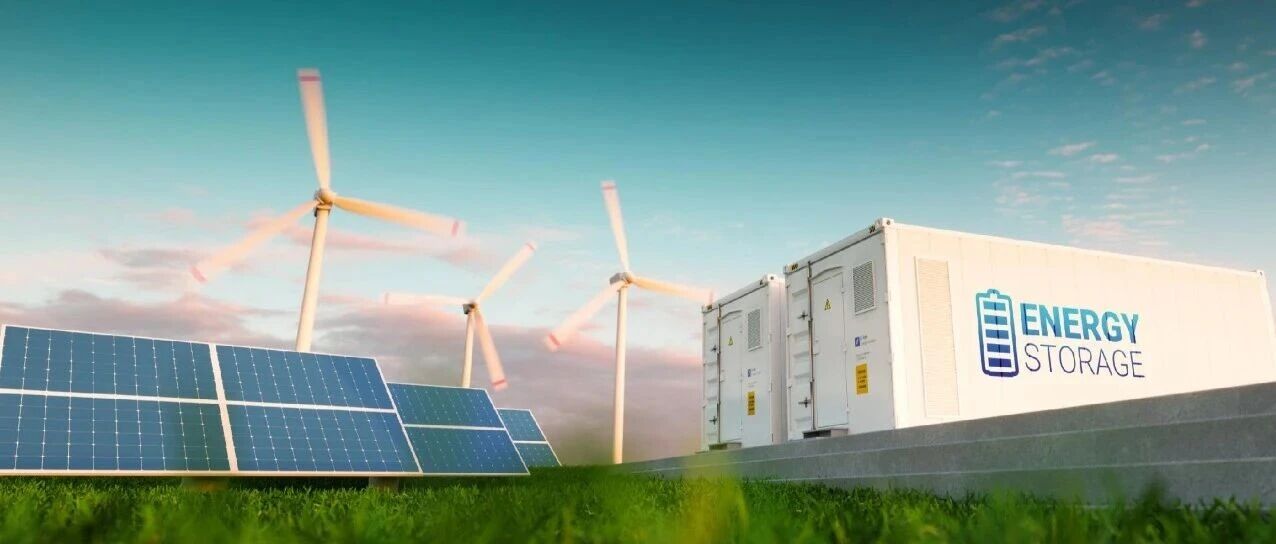
分时电价取消进行时,储能站收益转身
经济观察报· 2025-12-20 04:50
Core Viewpoint - The adjustment of time-of-use electricity pricing policies is pushing the energy storage industry to return to its role as a "flexible adjustment resource," transitioning from a passive arbitrage model to an active operation model that relies on technology and management capabilities to create diversified value [1][8]. Group 1: Electricity Market Development - The cancellation of time-of-use pricing is a significant step in the construction of the electricity spot market, shifting the price formation mechanism from government-led to market-led [3]. - As of December 2023, 28 provinces have initiated continuous spot trading, with 7 having transitioned to formal operations [2]. - The new policy primarily affects industrial and commercial users, while residential electricity pricing remains unchanged [2]. Group 2: Impact on Energy Storage - The adjustment of time-of-use pricing will primarily impact commercial energy storage stations, which have relied on peak-valley price differences for profitability [8]. - Energy storage companies are now required to enhance their electricity trading capabilities or collaborate with companies that possess strong trading abilities to adapt to the new market conditions [10]. - The cancellation of time-of-use pricing may lead to a decrease in predictable revenue for energy storage stations, necessitating a shift towards high-frequency charging and discharging strategies to improve profitability [9]. Group 3: Strategic Adjustments in the Industry - Many energy storage companies are shifting their focus from heavy asset project construction to operational service models, including providing electricity trading-related soft service products [10]. - The future role of user-side energy storage is expected to expand, with companies planning to leverage user-side storage as a core component in comprehensive energy projects and virtual power plants by 2026 [10]. - Companies like Trina Storage emphasize the importance of product safety and reliability, aiming to ensure higher cycle efficiency and faster response times to maintain profitability in a volatile revenue environment [10]. Group 4: Regional Policy Variations - Different provinces are progressing at varying speeds regarding the cancellation of time-of-use pricing, with Shaanxi being the first to implement this change [12]. - In contrast, Sichuan has opted to delay the cancellation due to its unique hydropower resources and the need for market participants to familiarize themselves with the new trading environment [12][13]. - The cancellation of time-of-use pricing may reduce profit margins for electricity sales companies, leading to a potential market exit for those with weaker trading capabilities [15].

绩差基金密集清盘 公募加速“断舍离”
经济观察报· 2025-12-20 03:31
Group 1 - The core viewpoint of the article highlights that the number of fund liquidations in 2023 has reached 274, marking the second-highest peak since 2018, only behind last year's 293 liquidations [2][8] - The article notes that the increase in fund liquidations is occurring despite an anticipated overall recovery in the A-share market by 2025, indicating persistent challenges in the fund industry [2][9] - A significant rise in the liquidation of money market funds and FOFs (funds of funds) has been observed this year, with 11 and 35 funds respectively, the latter reaching a record high since their introduction [9][10] Group 2 - The reasons for fund liquidations primarily include small fund sizes triggering mini-fund liquidation conditions and underperformance against benchmarks, with three out of four recently liquidated funds failing to meet asset value thresholds [5][6] - The performance of the liquidated funds has been poor, with some funds experiencing significant losses compared to their benchmarks, such as the Changjiang Era Select Mixed Fund, which lost 34% against a benchmark return of 23.97% [6][10] - The article discusses the intensified competition in the public fund industry, leading companies to focus resources on more competitive core products rather than maintaining underperforming "mini funds" [6][9]