私募排排网

Search documents
高毅、景林、高瓴加仓中国!但斌业绩大反弹!险资私募集中入市!5月基金大事件一览!
私募排排网· 2025-06-03 03:41
Core Viewpoint - In May, A-shares experienced a rebound after tariff shocks, with major indices showing positive growth, while significant developments occurred in the public and private fund sectors, including increased holdings in Chinese assets by major private equity firms and new regulations for public funds [2][3]. Group 1: Market Performance - In May, the Shanghai Composite Index rose by 2.09%, the Shenzhen Component Index increased by 1.42%, and the ChiNext Index gained 2.32% [2]. - Among 5,370 stocks excluding new listings, 3,847 stocks rose, 32 remained flat, and 1,491 declined, indicating a 72% increase in the number of rising stocks [2]. Group 2: Private Equity Holdings - High-profile private equity firms such as Gao Yi, Jing Lin, and Gao Ling increased their positions in Chinese assets while reducing their holdings in U.S. tech stocks [3][4]. - Gao Yi's overseas fund held 22 U.S. stocks valued at $765 million, with significant increases in holdings of Chinese companies like Huazhu Group and Boss Zhipin [4]. - Jing Lin's overseas fund had 8 out of its top 10 holdings in Chinese stocks, reflecting a strong commitment to Chinese assets [4]. Group 3: Performance of Individual Funds - Dan Bin's funds saw a significant rebound in performance due to the recovery of U.S. tech stocks, with a reported average return of ***% over the past month [6]. - Dan Bin maintained a focus on major tech stocks, including Nvidia, Apple, and Microsoft, while also utilizing leveraged ETFs to enhance returns [9][10]. Group 4: Insurance Capital Involvement - Insurance companies are increasingly establishing private equity funds to invest in the stock market, with notable initiatives from China Life and Xinhua Insurance, which set up a 200 billion yuan fund [14][15]. - The National Financial Regulatory Administration announced plans to expand the trial of long-term investment by insurance funds, aiming to inject more capital into the market [14]. Group 5: Public Fund Developments - The public fund industry reached a total scale of 33.12 trillion yuan by the end of April 2025, marking a record high [23]. - New regulations were introduced to link fund manager compensation to fund performance, promoting a shift from focusing solely on scale to prioritizing returns [17][20]. Group 6: AI Quantitative Funds - The number of quantitative private equity firms focusing on AI has increased, with 15 out of 39 billion-yuan quantitative firms making strides in AI investment [11][12]. - Notable firms like Huanfang Quantitative have achieved significant returns, leading the performance rankings among AI-focused private equity funds [12][25].



别人家的股市又在新高!这些QDII基金赢麻了!南方基金旗下混合型QDII位居双榜第1
私募排排网· 2025-06-03 03:41
Core Viewpoint - The article highlights the strong performance of QDII funds, particularly in the context of recent overseas market rebounds, with specific focus on stock and mixed-type QDII funds achieving significant returns since early April 2025 [3][4]. Summary by Category QDII Fund Performance - Since April 7, 2025, the average return of 670 QDII funds is approximately 4.40%, with stock-type QDII funds averaging 5.29% and mixed-type QDII funds averaging 6.13% [3][4]. - The German stock market has reached historical highs, and the Nasdaq index has rebounded over 20% from its lows, contributing to the strong performance of QDII funds [3]. Stock-type QDII Funds - There are 406 stock-type QDII funds with an average return of 5.29% since April 7, 2025, and an average return of 14.61% over the past year [4][5]. - The top three stock-type QDII funds over the past year include: 1. GF Fund's "Hong Kong Innovative Drug ETF" with a return of 57.48% 2. Southern Fund's "Southern Hong Kong LOF" with a return of 54.03% 3. Huaxia Fund's "Hang Seng Pharmaceutical ETF" with a return of 51.03% [5][6]. Mixed-type QDII Funds - There are 125 mixed-type QDII funds with an average return of 6.13% since April 7, 2025, and an average return of 17.15% over the past year [4][13]. - The top three mixed-type QDII funds over the past year include: 1. Southern Fund's "Southern China Emerging Economy 9-Month Holding Period Mixed (QDII) A" with a return of 72.37% 2. Huaxia Fund's "Huaxia Hong Kong Advantage Selected Mixed (QDII) A" with a return of 63.27% 3. Fortune Fund's "Fortune Global Consumer Selected Mixed (QDII) RMB A" with a return of 56.59% [13][16]. Long-term Performance - Over the past three years, stock-type QDII funds have an average return of 33.77%, with the top three funds being: 1. Tianhong Fund's "Tianhong CSI China-US Internet (QDII) A" with a return of 96.04% 2. GF Fund's "GF Global Selected Stocks (QDII) RMB A" with a return of 84.73% 3. Yifangda Fund's "SPDR Information Technology LOF" with a return of 79.49% [9][10]. - Mixed-type QDII funds have an average return of 21.36% over the past three years, with the top three being: 1. Southern Fund's "Southern China Emerging Economy 9-Month Holding Period Mixed (QDII) A" with a return of 87.15% 2. Fortune Fund's "Fortune Global Consumer Selected Mixed (QDII) RMB A" with a return of 82.17% 3. Huaxia Fund's "Huaxia Global Mobile Internet Mixed (QDII) RMB A" with a return of 78.20% [17][19].
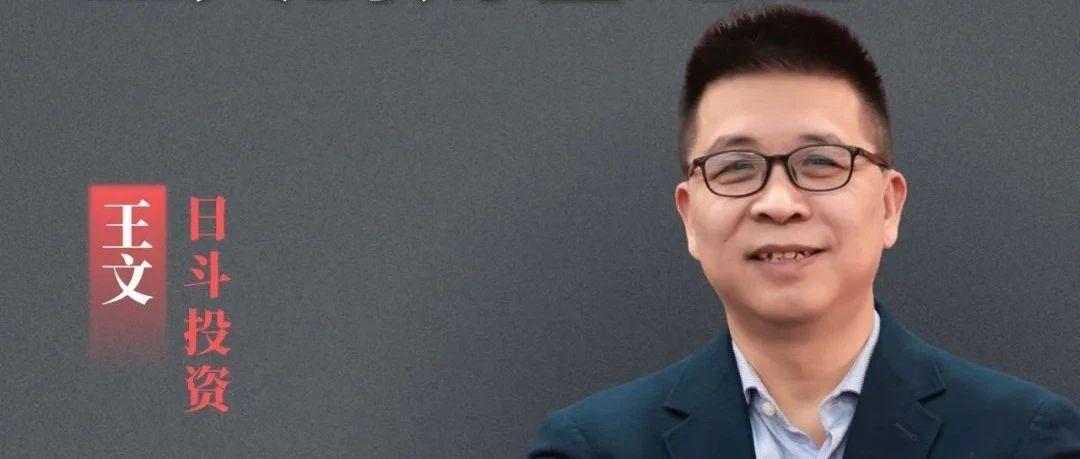
百亿私募日斗投资掌门人——王文30年的投资历程 | 基金经理人物志
私募排排网· 2025-05-30 09:51
Core Viewpoint - The article highlights the journey and investment philosophy of Wang Wen, a prominent figure in the private equity sector, emphasizing his successful investment strategies and the establishment of his firm, Rido Investment, which has achieved significant returns in the competitive market [2][19]. Group 1: Journey to Success - Wang Wen, born in a rural family, graduated from China Agricultural University in 1990, which laid a solid foundation for his understanding of economic principles [6]. - He entered the A-share market in 1993, initially facing challenges due to limited funds and experience, but gradually developed his investment acumen [6][7]. - A pivotal moment in his career was in 1995 when he transitioned into the financial industry, gaining extensive knowledge and practical experience [7]. Group 2: Key Investment Opportunities - Wang Wen's early investment in Sichuan Changhong in 1995 yielded a tenfold return, showcasing his ability to identify growth opportunities in the booming color TV industry [8]. - From 1999 to 2004, he capitalized on the B-share market, particularly investing in Guangdong Electric Power B, which resulted in a fivefold profit when B-shares were opened to domestic investors [9]. - His investment in Yitai B from 2004 to 2012, driven by insights into coal prices and market dynamics, led to a remarkable 100-fold return [10]. Group 3: Establishment of Rido Investment - In 2019, Wang Wen founded Rido Investment, focusing on deep value investing and aiming to uncover undervalued quality assets for long-term returns [19]. - Rido Investment has grown significantly, achieving a management scale of over 100 billion, positioning itself as a leading player in the private equity sector [19]. Group 4: Investment Philosophy - Wang Wen's investment strategy revolves around the principle of "high cash flow, high dividends, and low valuation," emphasizing the importance of cash flow in assessing a company's value [30]. - He advocates for concentrated positions in a few stocks rather than frequent trading, believing that substantial returns come from holding quality stocks over time [34]. - Wang Wen supports the cautious use of leverage, suggesting a range of 10%-20% while being selective about the stocks chosen for leveraging [34]. Group 5: Future Outlook - Looking ahead, Rido Investment will continue to focus on value investing, particularly in sectors like consumer goods, energy, and high-end manufacturing, which are expected to provide stable returns [36]. - The firm aims to enhance its team and research capabilities, ensuring informed investment decisions and expanding its service offerings to clients [38].
巴菲特的经验主义传统,芒格的理性主义残存!
私募排排网· 2025-05-30 07:39
Core Viewpoint - The article discusses the philosophical underpinnings of investment strategies, contrasting rationalism and empiricism, and highlights the importance of skepticism in value investing, particularly as exemplified by Warren Buffett and David Dodd's approaches [4][25][36]. Group 1: Rationalism vs. Empiricism - Rationalism emphasizes knowledge derived from reason and logical deduction, often leading to the creation of comprehensive frameworks to explain market behavior [10][16]. - Empiricism focuses on knowledge gained through experience and observation, suggesting that practical experience is more valuable than theoretical constructs in investment [20][21]. - The article suggests that while rationalism can create robust investment theories, it often fails to predict future market behavior accurately, which is a critical aspect of successful investing [17][22]. Group 2: Skepticism in Value Investing - Skepticism, as articulated by philosopher David Hume, posits that causal relationships are often illusory, which aligns with the investment philosophy of Buffett, who emphasizes understanding businesses within one's "circle of competence" [25][34]. - Buffett's investment strategy is characterized by a focus on observable business fundamentals rather than complex financial models, reflecting a skeptical approach to predictions based on theoretical frameworks [36][37]. - The principle of "margin of safety" in value investing is rooted in the acknowledgment that investors can be wrong, thus advocating for buying undervalued assets to mitigate potential losses [36]. Group 3: Investment Methodologies - The article outlines that rationalist methodologies dominate technical analysis and macroeconomic modeling, while empirical approaches are more prevalent in value investing [14][15]. - It highlights that many successful investors, including Buffett, rely on empirical observations and historical performance rather than solely on theoretical models [34][41]. - The discussion includes the evolution of investment thought from classical rationalism to a more nuanced understanding that incorporates elements of Bayesian reasoning, which aligns with empirical evidence [42].

量魁私募两度夺冠!九坤投资、君之健投资上榜!最新夏普比率20强私募产品揭晓
私募排排网· 2025-05-30 07:39
Core Viewpoint - The article discusses the performance of private equity products based on the Sharpe ratio, highlighting the top-performing products over the past year, three years, and five years, emphasizing the balance between risk and return in investment strategies [1][8][13]. Group 1: One-Year Performance - The top 20 private equity products with the highest Sharpe ratios over the past year include 12 subjective long products, 4 quantitative long products, and 4 market-neutral products [1]. - The average return for the 2569 stock strategy products in the past year was 24.84%, with 1054 products exceeding this average [1]. - The leading product, "量魁湘水麓山五号," managed by Liang Tao from 量魁私募, achieved the highest Sharpe ratio and return, although specific figures are redacted [5][6]. Group 2: Three-Year Performance - In the three-year category, there were 1627 stock strategy products, with an average return of 39.41% and 617 products surpassing this average [8]. - The top five products were managed by 积露资产, 量魁私募, 敦颐资产, and 垒昂资产, with a notable presence of market-neutral and subjective long strategies [8][9]. - The leading product, "积露11号," managed by Yang Zhongxian from 积露资产, topped the list with a high Sharpe ratio and return, specific figures are also redacted [12]. Group 3: Five-Year Performance - For the five-year performance, 763 stock strategy products were analyzed, with an average return of 86.13% and 284 products exceeding this average [13]. - The top five products included those managed by 量魁私募, 积露资产, and 九坤投资, with a majority being subjective long strategies [13][14]. - The product "量魁湘水麓山五号" again featured prominently, indicating consistent performance over multiple time frames [15].
“双十基金经理”仅剩42位!谢治宇、郑希、刘元海居前列!景顺长城、易方达上榜多位!
私募排排网· 2025-05-30 03:28
Core Insights - The article highlights the existence of only 42 fund managers, referred to as "Double Ten Fund Managers," who have achieved an annualized return of over 10% for more than 10 years, representing approximately 8% of the total 516 fund managers with over 10 years of performance data [3][4]. Group 1: Fund Manager Performance - Among the 42 "Double Ten Fund Managers," 37 are equity and stock fund managers, while 5 are flexible allocation fund managers [3]. - Notable fund managers include Liu Yuanhai from Dongwu Fund, with an annualized return of 15.14% since September 2011, and Xie Zhiyu from Xingzheng Global Fund, with an annualized return of 14.84% since December 2012 [4][6][7][8]. - The top five fund managers based on annualized returns include Liu Yuanhai, Xie Zhiyu, Zheng Xi from E Fund, Zhang Zhongwei from Invesco Great Wall Fund, and Qiao Haiying from Invesco Great Wall Fund [6][10]. Group 2: Fund Management Scale - As of the end of Q1 2025, there are 15 fund managers with a management scale exceeding 10 billion yuan, and 7 with over 20 billion yuan [4]. - Liu Yuanhai manages approximately 7.424 billion yuan, while Xie Zhiyu manages around 39.712 billion yuan, ranking them among the largest fund managers in the "Double Ten" category [7][8]. Group 3: Investment Strategies and Holdings - Liu Yuanhai focuses on technology growth stocks, emphasizing a selection strategy based on "good industry, good company, good price," with significant holdings in consumer electronics and automotive sectors [7]. - Xie Zhiyu's investment style is characterized by balanced allocation and long-term value discovery, with major holdings in technology sector leaders [8]. - Zheng Xi's portfolio includes major tech companies, with a focus on global technology trends and industry cycles [11].

低利率高波动时代,攻守兼备的“固收+”基金将迎新一轮配置机遇? | 资产配置启示录
私募排排网· 2025-05-30 03:28
募排排网"。(点击↑↑上图查看详情) 5月20日,六家国有银行和招商银行同步下调了存款挂牌利率,其中活期存款利率下调至0.05%, 1年期整存整取定期存款利率下调至0.95%,首次跌破1%。 低利率时代重塑了资产配置格局,对于个人投资者而言,纯粹靠传统的银行存款理财将面临收 益"缩水"的问题。如果把目光放到权益市场上,虽然近几年有不少的结构性机会,但是越来越高 的波动性又让许多风格较为稳定的投资者望而却步。 面对日益复杂的市场环境,"固收+"策略的公募基金受到不少投资者的关注。从规模来看,公募 排排网根据Choice整理的数据显示, 截至 2025年一季度末,受到债市调整影响,债基规模有所 下降,但"固收+"基金的规模相比2024年末增长7.14%,总规模约为1.8万亿元。 从业绩来看,在 3451只有一季度业绩展示的"固收+"公募基金(含所有份额基金)中,收益为正 的基金共有2227只,占比64.53%。 那么,"固收+"产品到底有什么特点和优势呢?现在应该布局"固收+"策略的产品吗?哪些"固收 +"产品值得投资者参与呢? 一 "固收+"基金:"进可攻退可守"的理财神器 首先需要明确的是, "固收+"不是一 ...

股指期货全面贴水该引起我们的注意吗?
私募排排网· 2025-05-29 07:52
Core Viewpoint - The significant basis management challenges in stock index futures since 2024 are attributed to the historical low basis spreads, particularly influenced by the liquidity crisis in small-cap stocks and the concentrated exercise of out-of-the-money options, indicating strong short-selling pressure from institutional traders [2]. Group 1: Basis Spread Analysis - As of May 23, the annualized basis spreads for the main stock index futures of CSI 300, CSI 500, and CSI 1000 reached 11.08%, 19.08%, and 23.43% respectively [2]. - The substantial basis spread in the CSI 50 and CSI 300 is primarily driven by seasonal dividends, with the annualized hedging costs for the current quarter being -0.27% and 2.86% respectively, suggesting limited impact from upcoming dividends [4][5]. Group 2: Small-Cap Stock Concerns - Despite the influence of dividends, the basis spreads for CSI 500 and CSI 1000 futures remain at historically low levels, indicating a declining risk appetite for small-cap indices among large institutional investors [7]. - The number of neutral strategy products has remained high, with 6,569 products registered since December 31, 2019, but only 2,326 have been liquidated early, suggesting a significant amount of capital is still engaged in stock index futures [7][8]. Group 3: Market Trends and Institutional Behavior - The market has shifted from technology stocks to large-cap blue-chip stocks, driven by macroeconomic events and policy changes, which has increased institutional demand for stable growth assets [10]. - The current high basis costs may erode the alpha portion of neutral strategies, while the potential for profit in arbitrage strategies is lower due to increased volatility and borrowing costs [11][13].
做AI的量化不止幻方!AI百亿量化私募达15家!幻方量化位居第一!
私募排排网· 2025-05-29 03:24
Core Viewpoint - The article highlights the increasing integration of AI in quantitative private equity firms in China, showcasing the significant advancements and performance improvements achieved through AI technologies in investment strategies [2][5][9]. Group 1: Company Developments - NianKong Technology has collaborated with Shanghai Jiao Tong University to submit a research paper on large language models, indicating its commitment to AI research [2]. - The company has established Shanghai QuanPin Siwei Artificial Intelligence Technology Co., Ltd. to focus on cutting-edge AI research [2]. - NianKong Technology has fully replaced traditional statistical arbitrage strategies with deep learning-based machine learning algorithms across all its stock strategy products [2]. Group 2: Performance Metrics - NianKong Technology's quantitative products have shown impressive performance, with an average return of ***% over the past year [2]. - Among the 15 billion AI quantitative private equity firms, 13 have reported products with performance data, achieving an average return of 29.91% over the past year [7]. - The average returns for these firms over three years and five years are 41.15% and 117.06%, respectively [7]. Group 3: Industry Trends - The number of billion-dollar quantitative private equity firms in China has reached 39, with 15 actively engaging in AI-related investments [3]. - The trend of integrating AI into quantitative investment strategies has been accelerated since the emergence of DeepSeek, a significant AI model in the industry [4]. - The application of AI technologies is seen as a key factor for survival and competitiveness in the quantitative investment sector [25].

年轻人的“茅台”新高不断!重仓泡泡玛特的基金赢麻了!11只基金近一年收益超50%!
私募排排网· 2025-05-29 03:24
以下文章来源于公募排排网 ,作者悟空 公募排排网 . 这是一个每天都在想尽办法为你找到好基金的良心公众号。 本文首发于公众号"公募排排网"。 (点击↑↑ 上图查看详情 ) 重仓泡泡玛特的基金赢麻了! 今年以来,新消费概念股走势强劲。港股的泡泡玛特(国内潮玩行业龙头)今年来新高不断,截至2025年5月27日, 涨幅超160%,近一年涨 幅超538%,总市值晋升3000亿港币俱乐部。 资料来源:东方财富 泡泡玛特、蜜雪集团等千亿市值的新消费龙头,被誉为年轻人们的"茅台"、新时代的"茅台",代表的是年轻一代的消费趋势。而看懂这一消费 趋势的基金经理们,则通过重仓新时代的"茅台",共享了新消费的成长红利。 其中,最受基金青睐的新消费公司当属泡泡玛特, 根据Choice数据,2025年一季度末,共有207只基金(份额基金合并计算)重仓了泡泡玛 特,持股总市值约为99.29亿元。 根据公募排排网 牛股选基 数据, 多只重仓泡泡玛特的基金在近一年业绩表现亮眼。 为了给读者提供一些参考,笔者梳理出了近一年收益居前 20的基金,上榜"门槛"超43%。 其中11只基金近一年收益超50%,2只基金近一年收益超80%。 | 基金代码 ...