美股IPO

Search documents
大摩:大合同,大目标,高预期!对甲骨文,市场“将信将疑”
美股IPO· 2025-10-19 22:59
摩根士丹利最新研报表明,对于甲骨文投资者日披露三大关键利好,包括新签大额合同、上调2030财年营收增长目标,并首次给出强劲 的每股收益复合年增长率,他们认为需持谨慎乐观态度。尽管公司提供了更多业务细节,但几个核心问题仍未得到明确答复,市场 的"将信将疑"态度或将持续。 近日,甲骨文投资者日释放数项重磅消息:包括一系列大订单,上调了本就很高的2030财年营收收入增长目标以及每股收益复合年增 长率。然而,盘后股价反应平淡,甲骨文并未能让市场完全买账。 摩根士丹利公布的研报表明, 对于甲骨文持谨慎乐观的态度 。虽然其业务增长势头强劲,但公司未明确整体利润率目标和巨额资本支 出计划,潜在不确定性是主要担忧。 财务远期目标大幅上调,但近期增长不及预期 报告指出, 甲骨文在投资者日上调的业绩预期主要体现在远期目标上 。公司将2030财年营收目标从此前的约2000亿美元大幅上调至 约2250亿美元,年复合增长率达31%(2025-2030财年),同时将非GAAP每股收益目标定为21美元,年复合增长率约28%。 从具体财年来看,2027财年营收目标为850亿美元,较市场预期高出约3.4%;2028财年为1300亿美元,领先约 ...



德银:黄金在全球“外汇黄金储备“比例已升至30%,若追平美元,金价需升至5790美元
美股IPO· 2025-10-19 03:24
据德银,黄金在全球央行"外汇+黄金"储备中的份额已从今年6月底的24%迅速上升至当前的30%。在同一时期,美元的份额则从43%下 降至40%。而若要使其份额追平美元,金价在现有持仓量不变的情况下需要升至每盎司5790美元。 报告进一步提出了一个价格推演:如果黄金要与美元在上述储备类别中平分秋色,其价格需要达到5790美元/盎司。在该情景下,假 设央行黄金持有量保持不变,黄金和美元将各自占据全球"外汇+黄金"储备的36%。 德意志银行的分析特别强调,其研究侧重于黄金在"外汇加黄金"储备中的占比,而非在央行总资产中的占比。报告认为,这是一个更 具相关性的分析维度,因为"外汇加黄金"储备是央行能够动用来捍卫本国货币的、以外币计价的资产。 全球央行对黄金的青睐并未因价格上涨而减弱,反而愈发强烈。德意志银行援引世界黄金协会在今年2月25日至5月20日进行的调查 称,计划增加自身黄金储备的央行比例已从去年的29%升至43%。 更为关键的是,市场管理者对整体趋势的判断也高度一致。调查发现,高达95%的受访储备管理者预计,全球央行的黄金总持有量将 在未来12个月内上升,这一比例远高于去年的81%。 来源:华尔街见闻 据追风交 ...


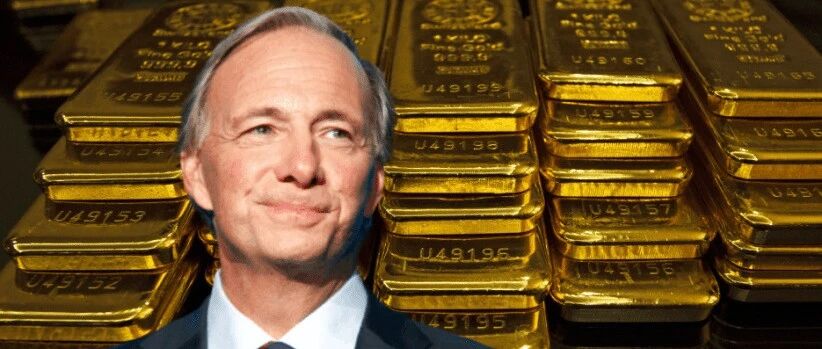
“黄金旗手”达里欧“加大火力”:黄金是唯一“不靠他人”的“永恒、普世”货币
美股IPO· 2025-10-19 03:24
Core Viewpoint - Dalio reinforces his bullish stance on gold, viewing it as the only asset that does not rely on counterparty credit, and as the most fundamental form of currency, while fiat currency is essentially debt [1][3][7] Group 1: Gold as a Core Asset - Gold is increasingly replacing U.S. Treasuries in investment portfolios, becoming a risk-free asset for investors [3][10] - Dalio suggests that investors should allocate up to 15% of their portfolios to gold, highlighting its effectiveness as a diversification tool [3][19] - The strategic value of gold is becoming more pronounced in the current financial environment [3][10] Group 2: Understanding Gold's Value - Dalio emphasizes the need to shift the mindset regarding gold, asserting that it should be viewed as money rather than merely a metal [6][7] - He argues that gold's value is intrinsic and does not depend on any counterparty's payment promise, unlike fiat currencies which are based on debt [7][13] - Historical trends show that debt-based currencies are losing value compared to gold, especially during financial crises [9][12] Group 3: Gold vs. Other Assets - Compared to other precious metals like silver and platinum, gold has a unique historical and cultural acceptance that makes it a superior store of value [15] - Inflation-protected securities (TIPS) are still government debt and may not provide the same safety as gold during significant debt crises [17] - While stocks, particularly in high-growth sectors like AI, offer high return potential, they also carry bubble risks, making gold a prudent diversification choice [17][18] Group 4: Tactical Allocation Strategy - Dalio advises a strategic asset allocation approach rather than tactical betting on gold prices, suggesting a 15% allocation for optimal risk-return balance [19][20] - He notes that the rise of gold ETFs has improved market liquidity but does not represent the primary driver of the current gold price increase [20] - If various investors allocate a suitable proportion of their assets to gold, the limited supply could lead to significantly higher gold prices [20]
2025年这场白银逼空大戏:印度大V,中国假期与伦敦挤兑
美股IPO· 2025-10-19 03:24
Core Viewpoint - The silver market is experiencing a severe crisis due to a long-standing structural imbalance, exacerbated by a surge in retail demand in India, supply disruptions from China, and depleted inventories in London [3][4][10]. Group 1: Retail Demand Surge - A social media influencer in India sparked a retail buying frenzy for silver ahead of the Diwali festival, leading to unprecedented demand and a significant price premium of over $5 per ounce [5][6]. - Traditional gold purchases during the festival shifted towards silver, causing a dramatic increase in silver demand [5]. Group 2: Supply Chain Disruptions - Concurrently, Chinese factories were closed for holidays, which redirected global supply to London, where available inventory dropped to less than 150 million ounces against a daily trading volume of approximately 250 million ounces [7]. - The overnight borrowing rate for silver surged to an annualized 200%, causing major banks to withdraw from quoting prices, leading to a widening bid-ask spread [7][8]. Group 3: Long-term Structural Imbalance - The crisis is attributed to a cumulative supply-demand gap of 678 million ounces over the past five years, primarily driven by the booming photovoltaic industry, which saw demand more than double [10]. - Concerns over potential tariffs from the Trump administration prompted traders to move over 200 million ounces of silver into New York warehouses, further straining London’s reserves [10][11]. Group 4: Market Reactions and Predictions - Analysts had warned of a liquidity crisis in the London market, predicting that the situation would lead to a price drop, which occurred with a 6.7% decline after reaching a historical high of $54 per ounce [3][11]. - As silver began to flow into London from various sources, including New York and China, further price pressures are anticipated due to complex logistics and potential customs delays [12].

德银:“4月以来最动荡一周”结束了,美股依旧上涨,但不再平静
美股IPO· 2025-10-18 08:40
Group 1 - The article highlights a significant market turmoil in the U.S. stock market, driven by renewed trade conflicts, emerging credit risks in regional banks, and concerns over inflated valuations of AI stocks, marking the most severe market fluctuations since April [1][2][5] - The S&P 500 index experienced a notable intraday increase, surpassing 2% for the first time since April, indicating a shift in market dynamics [2][3] - Despite a rebound in major U.S. stock indices, there was a substantial outflow of funds from high-yield bond funds, reflecting a growing preference for safe-haven assets like government bonds and gold [4][20] Group 2 - The VIX index surged to 28.99, the highest intraday level since late April, signaling a return of market volatility and underlying instability despite seemingly strong stock indices [18][24] - Recent failures of companies like First Brands Group and Tricolor Holdings have reignited concerns over credit losses, leading to significant declines in regional bank stocks and a broader reevaluation of credit risks [11][13][14] - Investment strategies are shifting towards credit risk defense, with fund managers reducing risk exposure and employing hedging strategies in response to perceived market vulnerabilities [26][28] Group 3 - There is a divergence in market sentiment, with some analysts suggesting that the recent volatility is an overreaction to isolated events rather than indicative of systemic issues, maintaining that the fundamentals of the credit market remain strong [29][30]

摩根大通:为AI供电的“终极方案”?详解SMR(小型模块化核反应堆技术)
美股IPO· 2025-10-18 08:40
Core Viewpoint - Morgan Stanley identifies Small Modular Reactors (SMR) as a key solution to meet the surging electricity demand from AI and data centers, highlighting their advantages in compact design and modular deployment [1][3]. SMR Technology Advantages and Market Positioning - SMR redefines nuclear energy applications through five core features: small design for flexible deployment, modular construction to reduce costs, capability for both grid-connected and off-grid installations, a fuel cycle lasting up to 30 years, and built-in passive cooling mechanisms [4][5]. - The primary developers of SMR are concentrated in the US, Canada, and Europe, with water-cooled reactors currently dominating the market [5]. - SMR's unique value lies in meeting diverse energy needs, including high-temperature gas-cooled reactors suitable for hydrogen production and industrial applications [5]. Main Technical Routes and Development Progress - SMR technology is categorized into five concepts based on coolant type: water-cooled, molten salt, gas-cooled, heat pipe, and metal-cooled [6][9]. - The light water reactor (LWR) is the most mature technology, with NuScale's designs being the only ones to receive standard design approval from the NRC [6][19]. - Kairos Power has obtained construction permits for its fourth-generation SMR, aiming for operational status by 2027 [20]. Regulatory Environment and Deployment Timeline - The regulatory process for US nuclear plants involves multiple stages of approval from the NRC, with recent reforms aimed at expediting this process [18]. - The Trump administration's regulatory reforms have significantly accelerated the approval timeline, with a target of 18 months for review [18]. Market Opportunities from Data Center Electricity Demand - Major cloud service providers like Amazon and Google are expected to support SMR projects to meet their clean energy needs, with Google already partnering with Kairos Power [22]. - The Department of Energy has included sodium-cooled fast reactors, high-temperature reactors, and molten salt reactors in its 2030 deployment watch list [22]. Commercialization Challenges - The competitive landscape due to multiple technical routes may hinder any single technology from reaching commercial scale [23]. - Supply chain readiness is uneven, with limited availability of HALEU fuel posing significant challenges for advanced SMR concepts [23]. - Economic feasibility remains to be validated, as initial costs and economies of scale are critical tests for SMR projects [23].

“黄金狂热”到逆转的时候了吗?
美股IPO· 2025-10-18 08:40
Core Viewpoint - The recent dramatic drop in gold prices after reaching a historical high raises concerns about whether the current gold bull market, driven by both safe-haven demand and speculative fervor, has reached a critical turning point [1][3][5]. Group 1: Price Movement and Market Sentiment - Gold prices experienced a significant drop of over 2% on a single day after peaking near $4,380, marking the largest single-day decline since Thanksgiving 2024, despite a nearly 5% increase for the week [3][5]. - The price of gold has shown a notable deviation from technical benchmarks, with the current price significantly above short-term moving averages, indicating potential for a correction without jeopardizing the long-term upward trend [7][19]. - Market sentiment is extremely exuberant, as reflected by the soaring Gold Volatility Index (GVZ), which indicates a panic-driven pursuit of bullish options, suggesting that a reversal in sentiment could exacerbate price declines [11][17]. Group 2: Institutional Positioning and Technical Indicators - Institutional positioning has reached extreme levels, with commodity trading advisors (CTAs) maintaining their highest long positions in gold, which could lead to amplified sell-offs if prices reverse [13][17]. - Despite a record net inflow of $34.2 billion into gold ETFs over the past 10 weeks, the incremental buying momentum is showing signs of slowing down, indicating a potential weakening in demand [15][14]. Group 3: Divergence from Traditional Drivers - The current gold bull market is characterized by a significant divergence from traditional fundamental drivers, such as real interest rates and the strength of the US dollar, leading analysts to believe that speculative forces may have overtaken fundamental support [18][19]. - The correlation between gold prices and risk assets has become unusual, as both have risen simultaneously, contradicting traditional market behavior [18][19]. - The recent rise in gold prices has occurred despite an increase in the US dollar index and stable Japanese government bond yields, challenging conventional models that typically predict a negative correlation [19][22][23]. Group 4: Diverging Opinions on Market Outlook - A divide among analysts is emerging regarding the future of gold, with bearish views suggesting that the current enthusiasm may be unsustainable, while bullish perspectives argue that strong physical demand and geopolitical uncertainties will continue to support prices [25][26][27]. - Some analysts, like those from Morgan Stanley, suggest that the disconnect between prices and interest rates can be attributed to robust physical demand, recommending investors to buy on short-term dips [26][27].

美国区域银行再陷危机,高盛直呼“太疯狂”,这是客户最关心的三个问题!
美股IPO· 2025-10-18 02:08
Core Viewpoint - The market is closely monitoring the recent loan approval processes and the emergence of three unrelated suspected fraud cases within a month, raising concerns about whether small banks have relaxed underwriting standards to stimulate loan growth [1][3][7] Group 1: Market Reactions - U.S. regional bank stocks experienced a significant drop, marking the second worst trading day since the collapse of Silicon Valley Bank in March 2023, with regional banks collectively down 7% and Zions Bancorporation's stock plummeting 13% [3][6] - Investor anxiety has spread from private credit to regional banks, leading to a sell-off in financial stocks, with Jefferies down 10.6% and Capital One down 6% due to credit exposure concerns [3][6] Group 2: Key Concerns - Investors are focused on three main issues: the approval process of the loans, the occurrence of three unrelated suspected fraud cases in a short time frame, and whether small banks have loosened underwriting standards to boost loan growth [7][8] - The recent disclosures from Zions Bancorporation regarding loan defaults and significant write-offs have heightened scrutiny on the NDFI (non-deposit financial institution) loan exposure among regional banks [5][6] Group 3: NDFI Loan Focus - NDFI loans account for approximately 15% of total loans in regional banks, with significant variations in underwriting quality among different banks, leading to concerns about the overall credit environment [8][9] - The market is particularly focused on private credit exposure within NDFI loans, indicating a shift in investor sentiment towards a more cautious outlook [8][9] Group 4: Upcoming Earnings Season - The upcoming earnings season is expected to reveal more risks related to NDFI loan exposures, as many regional banks have yet to disclose their financial results [10]


币圈大涨后暴跌,而约130个“山寨币相关ETF”正在排队报批,等待美股上市
美股IPO· 2025-10-18 02:08
Core Viewpoint - The recent market turmoil in the cryptocurrency sector has put issuers attempting to package altcoins into compliant financial products in a difficult position, as their ETF applications face scrutiny regarding the stability and liquidity of underlying assets [1][4]. Group 1: Market Dynamics - During the cryptocurrency price surge, Wall Street quickly acted, with issuers submitting a significant number of altcoin ETF applications, attempting to package these high-volatility, low-trading tokens into regulated financial products [3][5]. - As of October 18, approximately 130 ETF applications related to small cryptocurrencies are awaiting approval from the SEC, covering tokens like Polkadot, Chainlink, and meme coin Pengu [3][5]. - Recent sell-offs have led to a substantial evaporation of market value, with altcoin indices dropping by 11% to their lowest levels since April [3][4]. Group 2: Regulatory Environment - Many ETF applications were submitted months ago during a period of optimistic market sentiment, with issuers betting on the continued risk appetite of retail investors [5][6]. - The current regulatory environment, influenced by the previous administration's leniency towards digital assets, has encouraged issuers to be more aggressive in their applications [5][6]. - The SEC's recent closure due to government shutdown may delay the approval process for pending applications [6]. Group 3: Structural Vulnerabilities - Despite the appealing ETF structure, the underlying assets remain highly speculative, relying on rapid capital flows, retail rotation, and viral momentum, which have yet to be tested in fund form [7]. - Concerns have been raised about the structural fragility of these products, with many analysts doubting the sustainability of numerous ETFs launched in the current environment [7]. - The recent market collapse has heightened worries about the disconnect between regulatory approvals and investor protection, especially as retail traders face significant losses [7]. Group 4: Market Value Determination - Incorporating altcoins into a regulated ETF framework could provide retail traders with a safer avenue to access high-risk assets, offering clearer disclosures and custodial protections compared to offshore exchanges or leveraged derivatives [8]. - The ETF industry is likened to a "spaghetti cannon" strategy, where numerous products are launched to see which ones gain traction, with the market ultimately determining their value [8].

“老债王”格罗斯:黄金已成Meme资产,地区银行“蟑螂”将继续影响股债
美股IPO· 2025-10-18 02:08
Group 1 - Bill Gross warns that gold has become a "momentum/meme asset" and advises potential buyers to "wait a bit longer" [2] - Regional banks' credit issues may continue to impact stock and bond markets, with recent loan fraud cases causing market panic [3] - Gross predicts that the U.S. economy is slowing down, with growth expected to drop to 1%, and believes that the 10-year U.S. Treasury yield will not fall below 4%, likely approaching 4.5% [3] Group 2 - On the day of Gross's remarks, gold prices reached a historical high, nearing $4,380, but subsequently fell over 2% to below $4,250 following his comments [5]