美股IPO

Search documents
亚马逊欲进军AI内容市场 力争筑起出版商与AI大模型之间的价值链
美股IPO· 2026-02-10 04:36
Core Viewpoint - Amazon plans to launch an AI content marketplace, allowing publishers to sell content rights to tech companies providing AI products, enhancing its position in the AI ecosystem [1][4]. Group 1: AI Content Marketplace - The AI content marketplace will enable publishers to negotiate usage-based fees for their content, which can be used for training AI models or generating AI responses [3][6]. - Amazon aims to standardize content licensing and usage tracking mechanisms through this marketplace, providing reliable data inputs for its AI developer ecosystem [6][9]. Group 2: Strategic Positioning of AWS - The initiative is part of Amazon's strategy to create a "content + AI" bilateral market, benefiting both content providers and AI developers [4][5]. - AWS is already a leader in the cloud computing market, and this move will further solidify its role in the AI development ecosystem, reducing legal risks associated with unauthorized content [5][9]. Group 3: Financial Implications and Growth Potential - Analysts predict that Amazon's AWS revenue and operating profit could see growth rates exceeding 40% due to the surge in demand for AI applications [7][8]. - Amazon plans to invest approximately $200 billion in cloud infrastructure and AI-related projects by 2026, indicating a strong commitment to enhancing its AI capabilities [8][9].



摩根大通:中国AI大战,“百模大战”已结束,最大的利润池归属大厂,智谱和MiniMax如何突围?
美股IPO· 2026-02-10 04:36
中国AI行业的"百模大战"正在落幕,真正的玩家已缩减至10家。最刺耳的结论是,最大利润池将归掌 控分发的腾讯、阿里等大厂,而非模型公司。独立厂商中,智谱靠本地化部署守住59%高毛利, MiniMax则靠73%的海外收入和全模态产品突围。当模型不再稀缺,变现才是王道。 当模型不再稀缺,真正稀缺的,是能把模型变成现金流的能力。 2月9日,摩根大通证券(中国)发布研究报告《中国人工智能行业:全球布局与模型创新驱动新一代 领军者》,首次覆盖中国独立大模型厂商智谱与MiniMax。 在摩根大通看来,这一阶段的核心变化在于:模型能力逐步趋同;资金消耗呈指数级上升;客户开始 更关注"交付能力、稳定性与可持续性"。 这意味着, 大模型竞争的主线,正在从技术竞赛,转向商业系统的构建能力。 | 股票评级和目标价 | | | | | | | | | | --- | --- | --- | --- | --- | --- | --- | --- | --- | | | | 市值 | | 评级 | | | 目标价 | | | 公司名称 | 代码 | (百万美元) 货币 | 股价 | 新 | 日 | 新 | 截至日期 | le | | ...

CPO时代拉开帷幕! “AI超级大牛股”Lumentum牛市剧情远未完结
美股IPO· 2026-02-10 04:36
Core Viewpoint - Lumentum is positioned as a key beneficiary in the ongoing competition between Google's TPU and NVIDIA's GPU, with strong financial performance and growth prospects indicating a bullish outlook for the company [3][10]. Financial Performance - Lumentum reported a net revenue of $665.5 million for the quarter ending December 27, 2025, representing a year-over-year increase of 65.5%, exceeding market expectations [4]. - The company provided guidance for the next quarter, projecting revenue between $780 million and $830 million, which translates to an expected year-over-year growth of over 85% and a quarter-over-quarter increase of approximately 22% [4][6]. - Analysts from Morgan Stanley have raised Lumentum's future earnings forecast, predicting a compound annual growth rate (CAGR) of 158% from fiscal year 2025 to 2027 [7]. Market Position and Competitive Advantage - Lumentum specializes in manufacturing critical components for optical communication, including lasers and optical transceivers, which are essential for AI data centers and cloud networks [9][10]. - The company is uniquely positioned to benefit from both the TPU and GPU ecosystems, as both require high bandwidth, low latency, and energy-efficient interconnects [10][12]. - Lumentum's core technology advantages lie in its ability to produce foundational light sources and high-speed devices, which are integrated into various optical modules and communication systems [9][10]. Industry Trends and Future Outlook - The demand for optical circuit switching (OCS) and co-packaged optics (CPO) is expected to grow significantly, with Lumentum poised to capitalize on this trend as AI data centers expand [6][12]. - The company has received substantial incremental orders in the CPO sector, with products scheduled for delivery in the first half of 2027, indicating strong future demand [7]. - Analysts anticipate that the transition to optical interconnect technologies will become a standard infrastructure in AI data centers, further solidifying Lumentum's market position [12].

内存“超级周期”成新常态?下游利润遭持久挤压,芯片巨头红利期未见尽头
美股IPO· 2026-02-10 04:36
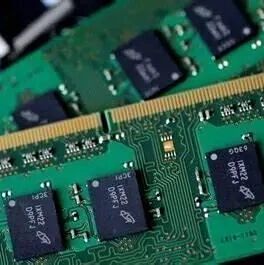
过去数月,内存芯片价格持续飙升,在股市中形成了鲜明的赢家与输家格局,且投资者普遍认为这一趋 势短期内难以逆转。从游戏机制造商任天堂、大型个人电脑品牌到苹果供应链企业,众多公司因盈利前 景承压导致股价下跌。 与此同时,内存芯片生产商的股价却飙升至历史高位,形成强烈反差。当前,基金经理与分析师 正密集评估各企业的应对能力——哪些能通过锁定长期供应协议对冲成本、哪些能通过提价转嫁 压力、哪些又能通过产品重新设计减少内存使用量,从而在这场行业变革中占据优势。 对此,市场早已为此做好准备:自去年9月底以来,彭博社编制的全球消费电子产品制造商指数 已下跌12%,而包括三星电子公司在内的内存制造商一篮子指数则飙升逾160%。问题在于,这 在多大程度上已计入价格。 图1 富达国际(Fidelity International)基金经理维维安·派(Vivian Pai)表示: "目前尚未得到充分重 视的是持续时间方面的风险——当前估值在很大程度上计入的是这样的预期,即行业混乱将在一 到两个季度内恢复正常。" 她补充道:"我们认为行业紧张状况可能会持续下去,"甚至可能持续 到今年剩余时间。 在财报和电话会议中,各公司频繁提及内存 ...

炸裂!卡住“AI供电脖子”!“燃气轮机巨头”GE Vernova股价创新高,自2024年初来已涨超500%
美股IPO· 2026-02-10 01:05
Core Viewpoint - The surge in electricity demand driven by AI data centers has led to a critical shortage of gas turbines from GE Vernova, resulting in a "booking war" where customers must pay non-refundable deposits for deliveries scheduled in 2030, highlighting the strong position of suppliers in the market [1][3][10]. Group 1: Market Dynamics - The demand for gas turbines has escalated due to the energy-intensive nature of AI data centers, which require stable and large-scale electricity supply, making gas turbines essential for supporting AI infrastructure [9]. - GE Vernova's production capacity is under unprecedented strain, with a backlog of 83 gigawatts (GW) of gas power orders expected to reach 100 GW by the end of the year, while the company's annual production capacity is only increasing to 20 GW [8]. - The shift from passive waiting to proactive booking by customers, such as Maxim Power, reflects concerns over future supply shortages, indicating a significant imbalance in supply and demand [9]. Group 2: Financial Performance - GE Vernova's stock price has surged over 500% since its split from GE Aerospace, reaching a new high, which underscores the market's confidence in the company's future [4][10]. - Wall Street has doubled its earnings expectations for GE Vernova, projecting an EBITDA of approximately $17 billion for 2030, up from around $9 billion a year ago, driven by the supply-demand imbalance [7][10]. - The company's ability to command higher prices due to increased demand is expected to enhance profitability, further solidifying its advantageous position in the industry [10].

盘后飙升15%!“光互联巨头”Credo Q3营收指引碾压预期,预计全财年增长超200%
美股IPO· 2026-02-10 01:05
Core Viewpoint - Credo has significantly raised its revenue guidance for Q3 of FY2026, expecting revenue between $404 million and $408 million, far exceeding market expectations of $341 million, driven by surging demand for AI data center products [1][4][5] Group 1: Financial Performance - The company anticipates a year-over-year revenue growth of over 200% for the current fiscal year, indicating a strong expansion phase [5] - The Q3 revenue forecast represents a 19% increase from the previous guidance midpoint of $340 million and is 22% higher than the previous lower guidance of $335 million [12] - Following the announcement, Credo's stock price surged by 15% in after-hours trading, reflecting strong market confidence [6][8] Group 2: Market Demand and Product Offering - The explosive growth in Credo's performance is attributed to the urgent demand for high-speed, energy-efficient connectivity products driven by AI data centers [15] - Credo specializes in providing innovative connectivity solutions with speeds up to 1.6T, including AEC (Active Electrical Cable) technology, which is crucial for high-speed data transmission in AI server networks [16][17] - Major clients include tech giants like Amazon, Microsoft, and xAI, indicating strong market validation for Credo's products [17] Group 3: Analyst Sentiment - Wall Street analysts maintain a positive outlook on Credo, with Needham reiterating a "buy" rating and setting a target price of $220, citing the increasing adoption of AEC technology [18] - Rosenblatt Securities adopts a more cautious stance, assigning a "neutral" rating with a target price of $170, highlighting potential valuation risks [19]

盘后大跌近4%!安森美半导体Q4营收下滑11% 业绩展望不及预期!AI数据中心“电力引擎”尚未爆发
美股IPO· 2026-02-10 01:05
面向汽车与工业领域的芯片巨头安森美半导体(ON.US)北京时间周二晨间公布最新季度业绩数据以及未来展望,数据显示,安森美半导体截至 2025年12月31日的第四季度业绩高于华尔街分析师平均预期,但是该公司对于当前季度(第一季度)的最新展望不及华尔街预期,导致该芯片 巨头的股价在美股盘后交易中一度大跌超8%。 为何安森美半导体今年以来股价大涨? 今年以来,安森美半导体股价跟随史无前例AI大浪潮所驱动的模拟芯片/数据中心电力链条相关芯片需求强劲复苏预期持续上涨,自 2026年以来的涨幅高达20%,作为对比,2025年该芯片巨头全年股价跌幅高达15%。 财报数据显示,安森美半导体第四季度总营收约15.3亿美元,意味着同比下滑11%,Non-GAAP准则下的调整后每股收益为0.64美 元,远远低于上年同期的约0.95美元,不过两项业绩数据均高于华尔街分析师们平均预期的约15.2亿美元与0.62美元。安森美半导 体Q4营业利润率约13.1%,低于上年同期的约23.7%,Non-GAAP准则下的营业利润率约19.8%,同样低于上年同期的约26.7%。 按业务部门划分,安森美第四季度电源方案部(PSG)业务营收为7.24亿 ...


大涨近10%,创9月以来最大涨幅! 甲骨文股价强劲反弹力抗“软件已死”论!
美股IPO· 2026-02-10 01:05
Crossmark Global Investments首席市场策略师Victoria Fernandez认为, AI和软件公司可以"在某种程度上共存,但问题是这些公司能保留 多少定价权" 。她补充道,对于那些经历了大幅回调但拥有强劲资产负债表的公司,投资者可以"试水"。 华尔街集中反击"末日论"叙事,称企业不会轻易放弃现有核心系统,软件巨头仍具不可替代性。D.A. Davidson分析师上调甲骨文评级,并 直言"软件并未死亡",企业将继续为甲骨文产品付费。此外,科技巨头激增的资本支出也提振了市场信心,分析认为这部分支出至少部分将 流向软件公司。 软件板块整体走强,iShares Expanded Tech-Software Sector ETF周一上涨3%,此前该ETF已较高点暴跌约28%,市场担忧AI将接管软件 传统职能并颠覆其收入模式。Wedbush Securities分析师Dan Ives称近期软件股"末日"叙事"极度夸张",并将Salesforce和ServiceNow加入 该机构AI 30榜单。 隔夜美国软件股集体反弹,华尔街分析师集中发声驳斥人工智能将颠覆软件行业的"末日论",称市场过度悲观。 ...


美股大跌后又强劲反弹,投资者更紧张了
美股IPO· 2026-02-10 01:05
Core Viewpoint - The U.S. stock market continues to rebound, with the Nasdaq 100 index surpassing the 100-day moving average, but concerns about AI investment returns persist amid weak employment data, increasing uncertainty [1][3]. Group 1: Market Performance - On Monday, the U.S. stock market extended its rebound from the previous Friday, with the S&P 500 index approaching historical highs and the Nasdaq 100 index closing up 0.8% [1]. - The Dow Jones Industrial Average surged over 1200 points last Friday, breaking the 50,000-point mark for the first time, as investors viewed last week's sell-off as an "overreaction" and a buying opportunity [3]. - The technology sector led the rebound, with significant gains in previously battered software and chip stocks, including Oracle, which soared nearly 10% [5]. Group 2: Investor Sentiment and Concerns - Despite the market rebound, fundamental concerns remain regarding whether AI investments will yield the expected profits, with notable declines in stocks like Amazon and Alphabet [3][7]. - Investors are increasingly cautious about the next potential risk point, particularly with upcoming employment reports and inflation data that could influence interest rate policies and market sentiment [3][11]. - There is a notable shift in investment strategies, with funds rotating from technology stocks to defensive sectors like consumer staples, which are perceived as safer during economic slowdowns [11][12]. Group 3: Economic Data and Implications - Recent economic data has not provided much comfort, with the U.S. Labor Department reporting a decrease of nearly 1 million job openings last year and a significant underperformance in private sector job growth for January [10][11]. - The delayed release of the January non-farm payroll report has further muddied investor judgment regarding the economy [11]. - Concerns about the heavy reliance on a few tech giants due to their substantial AI investments may overshadow broader economic weaknesses [8].

硬资产轮动!高盛:这轮商品上涨更像“资产配置冲击”,不再是单纯的供需故事
美股IPO· 2026-02-09 12:27
高盛指出,2026年初商品市场的强势,已经很难用单一的供需逻辑来解释。大宗商品的体量极其有限,即便是相对温和的资产配置资金流入,也足以在 短期内造成显著的价格冲击。美国金融资产组合中,黄金配置比例每上升1个基点,金价将被推高约1.5%。当前铜价已部分反映配置逻辑,预计2026年 四季度价格可能回落至11200美元/吨。 2026年初大宗商品在高波动中延续强势,高盛认为资产配置正成为商品价格的主导变量。 高盛在最新发布的研报中指出,这一轮行情的核心驱动力,已经明显不同于过去十年的"供需紧平衡"或"周期性复苏"叙事,而更像是一场 来自全球投资 组合的"硬资产轮动" 。 高盛认为,投资者主动配置资金流入硬资产,本身就足以在短期内显著推高商品价格,甚至令价格长期高于物理基本面所能解释的水平。**这意味着, 商品市场的定价逻辑,正在从"现货供需"转向"资产配置冲击"。 从"供需定价"转向"资产配置定价" 高盛指出,2026年初商品市场的强势,已经很难用单一的供需逻辑来解释。 在与机构客户的交流中,高盛发现,越来越多资金正在基于三类担忧重新审视资产配置:宏观政策的不确定性、地缘政治风险溢价回归、对通胀与货币 购买力的长期 ...