美股IPO

Search documents
OpenAI的下一笔1000亿美元融资可能来自哪里?
美股IPO· 2025-12-24 09:24
Core Viewpoint - OpenAI is seeking to raise an unprecedented $100 billion in a new funding round, which will test the financial capacity and willingness of the world's largest investment institutions. This funding round is expected to value the company at approximately $750 billion before the investment [3]. Funding Sources - Traditional American financial investors are expected to contribute only a small portion of the total funding, around $10 billion, due to limitations on exposure to any single company, even among large funds managing hundreds of billions in assets [3][5][6]. - Cash-rich tech giants, such as Amazon, are negotiating to invest at least $10 billion, which could help OpenAI cover part of its planned $38 billion expenditure on AWS servers over the next few years [4][9]. - Sovereign wealth funds and large banks are seen as significant potential sources of funding, with notable interest from Abu Dhabi's MGX fund and Saudi Arabia's Public Investment Fund [4][10]. Major Investors - Major banks like JPMorgan, Goldman Sachs, and Morgan Stanley have previously lent to OpenAI and are also clients of the company. JPMorgan has expressed willingness to provide equity investments of up to $10 billion to companies involved in key U.S. technologies like AI [7]. - Nvidia has committed to invest up to $100 billion in OpenAI to assist in building its data centers, although this deal is not finalized. OpenAI may also seek additional funding from Nvidia, similar to previous arrangements [9]. - Microsoft has already invested over $13 billion in OpenAI, holding a 27% stake, and may consider further investments to maintain its ownership level [9]. Sovereign Wealth Funds - Sovereign wealth funds are viewed as crucial funding sources, with the Abu Dhabi-based MGX fund potentially taking on a significant portion of the financing round. MGX has previously participated in OpenAI's funding rounds and has the capacity to invest heavily [10]. - The Saudi Arabian Public Investment Fund, with $925 billion in assets, has shown interest in collaborating with OpenAI, particularly regarding the establishment of data centers in Saudi Arabia [10].


特朗普要“确保太空优势”,美国“太空股”会成为下一个“量子科技”吗?
美股IPO· 2025-12-24 09:24
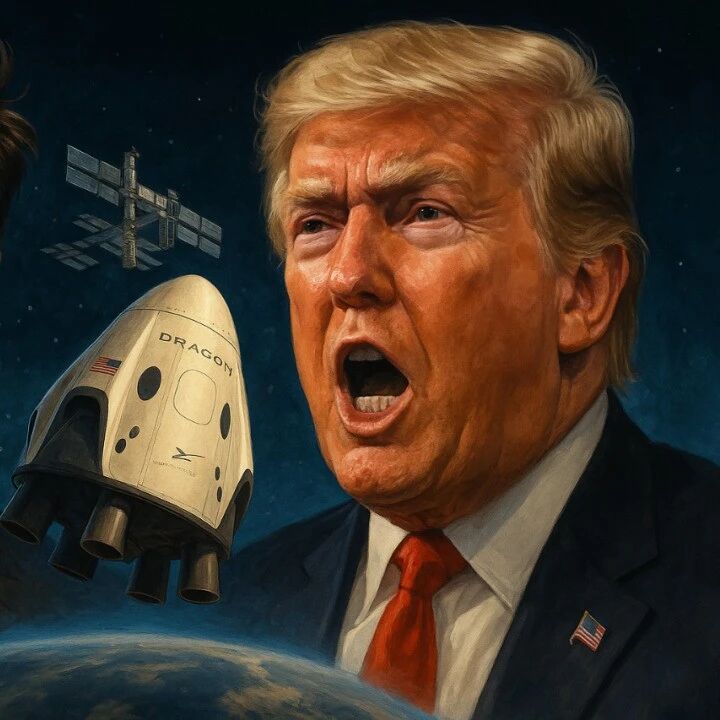
Core Viewpoint - The article discusses the significant revaluation of the U.S. space industry following President Trump's executive order aimed at establishing a lunar base strategy, alongside the appointment of Jared Isaacman as NASA Administrator, which has led to a surge in the stock prices of space-related companies [1][3]. Group 1: Executive Order and Market Impact - Trump's executive order, signed on December 18, outlines priorities for U.S. space policy, emphasizing the expansion of commercial participation to achieve national security and economic goals [5]. - The U.S. space sector has seen a collective surge in stock prices, with the total market capitalization of leading space companies nearly tripling over the past year, reaching approximately $131 billion by the end of 2025, up from $45 billion [10]. - Goldman Sachs analysts view the executive order as a significant positive for launch service providers and defense contractors, indicating a bullish outlook for the commercial space economy [3][5]. Group 2: Specific Goals and Timelines - The executive order sets a timeline for returning to the Moon and establishing a base, with plans to return astronauts by 2028 and create a permanent lunar outpost by 2030 [6]. - A target of increasing $50 billion in investments in the U.S. space market by 2028 is established, alongside promoting private sector pathways to replace the International Space Station by 2030 [7]. - The order also mandates the development of next-generation missile defense technologies by 2028 to address threats from low Earth orbit and lunar space [8]. Group 3: Key Catalysts and Future Outlook - The appointment of Jared Isaacman, a close ally of Elon Musk, as NASA Administrator is seen as a catalyst for closer collaboration between NASA and commercial space companies, reducing uncertainty about NASA's future direction [13]. - SpaceX is expected to conduct its initial public offering (IPO) next year, which is anticipated to further ignite investor interest in space assets, marking a significant event in the ongoing space investment frenzy [13].
资深科技分析师:英伟达真的很便宜
美股IPO· 2025-12-24 09:24
Core Viewpoint - Bernstein's report indicates that Nvidia's valuation has dropped to a historical low, with the expected price-to-earnings ratio falling below 25 times, representing a rare discount relative to the semiconductor industry. Despite recent stagnation in stock price, earnings continue to be revised upward, and new architectures like Blackwell are on the horizon. Analysts believe this is an excellent buying opportunity, with a target price set at $275 [1][3][6]. Group 1 - Nvidia's stock price has stagnated since July, with a year-to-date increase of approximately 30%, underperforming the Philadelphia Semiconductor Index (SOX) which rose by 38%. This stagnation, coupled with rising earnings, has led to a significant drop in the expected price-to-earnings ratio (P/FE) to below 25 times [3][5]. - Analysts from Bernstein assert that Nvidia is currently extremely "cheap" in both absolute and relative valuation terms, trading at about a 13% discount compared to the overall semiconductor industry, placing it in the first percentile of the past decade [5][6]. - Historical data shows that investors buying Nvidia when the price-to-earnings ratio is below 25 times typically see substantial returns, with an average one-year return exceeding 150%, and no negative returns during such periods [5][6]. Group 2 - Bernstein's analysis indicates that a 25 times expected price-to-earnings ratio places Nvidia's valuation in the 11th percentile of the past decade, marking it as an absolute low. Notably, there have only been 13 trading days in the past ten years where Nvidia's price relative to the SOX index was cheaper than it is now [6]. - Addressing market concerns regarding the sustainability of AI capital expenditures, analysts note that current capital expenditure intentions remain healthy, and the competitive narrative of GPUs versus ASICs is regaining momentum. Upcoming events like CES and GTC are expected to provide further catalysts, with new products based on the Rubin architecture set to launch [6]. - Bernstein reaffirms its "outperform" rating for Nvidia, setting a target price of $275, suggesting that current market expectations may be too low given the company's guidance of over $500 billion from Blackwell/Rubin [6].

盘前暴涨超37%!22亿美元!赛诺菲收购乙肝疫苗上市公司Dynavax
美股IPO· 2025-12-24 09:24
Core Viewpoint - Sanofi announced the acquisition of Dynavax Technologies Corporation for $2.2 billion, enhancing its influence in the adult immunization sector by combining Dynavax's vaccines with Sanofi's global scale and development capabilities [2][5]. Group 1: Acquisition Details - Sanofi will initiate a cash tender offer to acquire all outstanding shares of Dynavax at $15.50 per share, representing a premium of approximately 39% over Dynavax's closing price on December 23, 2025, and a 46% premium over the three-month volume-weighted average price [3][11]. - The transaction has received unanimous approval from Dynavax's board and is expected to close in the first quarter of 2026, subject to customary closing conditions [11]. Group 2: Product Portfolio and Market Opportunity - Dynavax's HEPLISAV-B, an adult hepatitis B vaccine, offers a two-dose regimen within one month, achieving high levels of seroprotection faster than traditional three-dose vaccines administered over six months [5]. - The acquisition includes Dynavax's shingles vaccine candidate (Z-1018), currently in Phase 1/2 clinical development, and other vaccine pipeline projects [5][8]. - There is a significant unmet public health need for hepatitis B and shingles vaccines, with nearly 100 million adults in the U.S. born before 1991 remaining unvaccinated, exposing them to infection risks [8]. Group 3: Financial Performance - Dynavax reported total revenues of $94.9 million in Q3 2025, an 18% increase from $80.6 million in Q3 2024, with HEPLISAV-B net product revenue rising by 13% [6]. - The company achieved a GAAP net income of $26.9 million in Q3 2025, reflecting a 53% increase compared to $17.6 million in Q3 2024 [6].


英伟达、AMD或迎中国市场新机遇 机构预测AMD营收最高增8亿美元 英伟达或增125亿美元
美股IPO· 2025-12-24 04:13
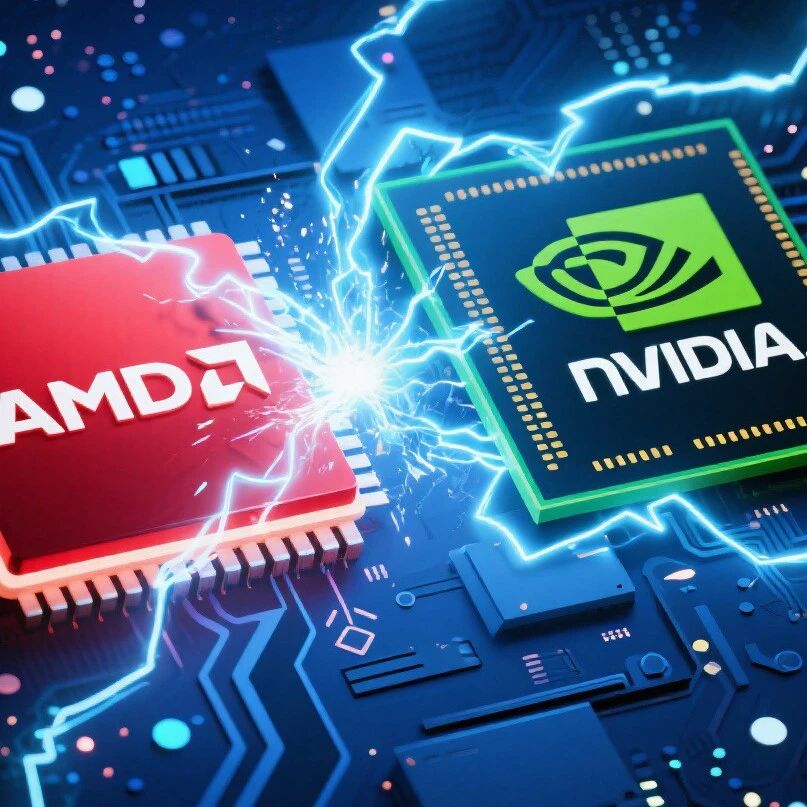
Core Viewpoint - The report highlights potential revenue increases for AMD and NVIDIA, with AMD possibly gaining an additional $500 million to $800 million and NVIDIA potentially earning $7 billion to $12.5 billion, impacting their non-GAAP earnings per share positively [2]. Group 1: NVIDIA Developments - NVIDIA plans to deliver its H200 series GPUs to the Chinese market starting mid-February next year, pending government approval, with initial shipments expected to be between 5,000 to 10,000 modules, corresponding to approximately 40,000 to 80,000 H200 chips [3]. - Following government approval, NVIDIA will expand its production capacity, with new capacity orders expected to begin in Q2 2026 [4]. - Analysts from major Wall Street firms remain optimistic about NVIDIA's growth, with Bank of America predicting continued strong performance next year due to a steady stream of new products [5]. Group 2: AMD Developments - Alibaba is reportedly considering an order for 40,000 to 50,000 AMD MI308 AI accelerators, which could generate $675 million in sales, although this revenue will be realized over multiple quarters [4]. - AMD is rated as "outperform" by analysts, indicating a positive outlook despite current market challenges for AI-related stocks [5].

贝森特暗示美联储未来方向:通胀“区间制”,取消“点阵图”,支持财政部,回归“幕后”
美股IPO· 2025-12-24 04:13
Core Viewpoint - The U.S. Treasury Secretary, Bessent, supports a reevaluation of the Federal Reserve's inflation target once inflation stabilizes at 2%, suggesting a shift to a range-based target [1][4] Group 1: Proposed Changes to Federal Reserve Policy - Bessent criticizes the current fixed inflation target and advocates for a more flexible range, such as 1.5%-2.5% or 1%-3%, arguing that economic systems are complex and nonlinear [1][4] - He suggests the potential elimination of the "dot plot" tool used for guiding market expectations on interest rates, aiming to reduce market dependency on short-term predictions [3][4] - Bessent indicates that the new Federal Reserve chair may favor a reduction in the Fed's role, moving away from being the central focus of economic policy [3][4][6] Group 2: Critique of Quantitative Easing - Bessent labels quantitative easing as an "engine of inequality," asserting that it has artificially inflated asset prices and widened the wealth gap between asset holders and wage earners [5][6] - He argues that large-scale asset purchases should be limited to emergency situations, contrasting current practices with historical norms where central banks would remit profits to the Treasury [5][6] Group 3: Coordination Between Fiscal and Monetary Policy - Bessent emphasizes the need for closer collaboration between the Federal Reserve and the Treasury, suggesting that if the Treasury demonstrates commitment to controlling deficits, the Fed should lower interest rates to support fiscal tightening [7] - He envisions a future economic landscape where Wall Street and Main Street are integrated, proposing initiatives like providing investment funds for newborns to enhance financial literacy [7]

周一大涨371%,周二暴跌59%!这只“太空概念”新股吸引所有目光,运营全球唯一商业超音速机队
美股IPO· 2025-12-24 04:13
Core Viewpoint - Starfighters Space, a newly listed aerospace company, has experienced extreme stock price volatility, with a 371% surge followed by a nearly 60% drop, attributed to low float and speculative business prospects [1][3][5] Group 1: Stock Performance - The stock price of Starfighters Space started trading at an IPO price of $3.59, reaching a high of $31.50 after a 371% increase on December 22, but then plummeting to $12.94 the following day, erasing most of the gains [3][5] - The company raised $40 million through its IPO, but its stock has been characterized by significant fluctuations, making it one of the most watched small-cap stocks in the market [5][7] Group 2: Factors Behind Volatility - The extreme stock price movements are primarily due to the company's low public float, with only 11.1 million shares available out of a total of 21.7 million shares, leading to disproportionate price changes from moderate trading volumes [7] - Financially, Starfighters Space has not recorded any revenue in the past three years and reported a loss of $7.9 million for 2024, making it a speculative investment reliant on future expectations rather than current performance [7][9] Group 3: Business Model and Market Position - Starfighters Space operates the world's only commercial supersonic fleet, consisting of seven Lockheed F-104 Starfighters, and is based at NASA's Kennedy Space Center [9] - The company's core project, "StarLaunch," aims to deploy satellites and small payloads into space using its supersonic jets, while also providing training and testing services for defense and private sectors [9] - The growing interest in aerospace investments is reflected in the market, with other space companies also seeing significant stock performance, indicating a broader trend that may benefit Starfighters Space [9]
资金流入、发行数量和成交量都创出历史新高--ETF继续横扫美国市场
美股IPO· 2025-12-24 04:13
美国上市ETF今年迄今已吸引1.4万亿美元资金流入,打破去年创下的年度流入纪录。同时,超过1000只新产品进入市场,创下历史新高。ETF市场交易 量同样创下年度新纪录。上一次三项指标同时创纪录是在2021年,次年风险资产大幅下挫,标普500指数暴跌19%。 美国ETF行业在2025年创下前所未有的三重纪录,资金流入、新产品发行数量和交易量全部刷新历史最高水平,这一万亿美元级别的资金狂潮正推动着 规模达13万亿美元的美国ETF市场进入全新发展阶段。 周三,据彭博数据显示,美国上市ETF今年迄今已吸引1.4万亿美元资金流入,打破去年创下的年度流入纪录。同时,超过1000只新产品进入市场,创 下历史新高。ETF市场交易量同样创下年度新纪录。 这一"完美表现"引发市场对ETF热潮可持续性的担忧。彭博智库高级ETF分析师Eric Balchunas表示,考虑到今年ETF表现过于完美,投资者应为明年 可能出现的市场调整做好准备。 上一次三项指标同时创纪录是在2021年,次年风险资产大幅下挫,标普500指数暴跌19%。 杠杆单股ETF热潮暗藏风险 杠杆单股ETF在过去几年中爆炸式增长,基于期权的基金占今年发行量的40%。 ...
美国第三季度GDP增长4.3%创两年来最快增速,PCE物价指数2.9%
美股IPO· 2025-12-24 00:07
Economic Growth - The U.S. economy experienced a significant growth of 4.3% in Q3, marking the fastest expansion in two years, primarily driven by strong household consumption [1][4][3] - Consumer spending, as the largest pillar of the U.S. economy, increased by 3.5% in Q3, up from 2.5% in Q2, indicating robust consumer willingness despite borrowing cost pressures [6] Investment Performance - Non-residential investment continued to grow, but the growth rate slowed from 7.3% in the previous quarter to 2.8% [6] - Residential investment declined by 5.1% in Q3, consistent with the decline in Q2, indicating a drag on overall economic performance [6] Inflation and Monetary Policy - The core Personal Consumption Expenditures (PCE) price index rose by 2.9% in Q3, aligning with expectations but remaining above the Federal Reserve's 2% target [4][9] - The Federal Reserve maintains a cautious stance, with officials hesitant to significantly lower borrowing costs due to persistent inflation concerns [9] Future Outlook - The economic report suggests that despite the challenges posed by the government shutdown and the potential impact on Q4 growth, there is cautious optimism for 2026, driven by anticipated tax refunds and possible changes in tariff policies [8] - Analysts predict a moderate rebound in the economy next year, contingent on these factors [8]

特朗普的资本重构:一场万亿美元级别的资金流向大转移
美股IPO· 2025-12-24 00:07
Group 1: Policy Changes and Economic Impact - Trump's administration is reshaping the flow of capital in the U.S. economy through aggressive policy changes, including deregulation of banks and a shift in funding from renewable energy to traditional sectors [1][3] - The "Big Beautiful" bill and subsequent regulatory adjustments signal a redirection of funds away from renewable energy projects towards pipelines, cryptocurrencies, and traditional finance [3] - The relaxation of capital rules for banks is expected to release up to $219 billion in capital for major banks, allowing them to invest more in government-backed assets [4] Group 2: Housing Market and Privatization - A controversial proposal aims to end government control over Fannie Mae and Freddie Mac, leading to significant stock price increases for these entities [6] - The privatization discussions are complicated by the Treasury's $360 billion preferred equity stake in these companies, raising concerns about potential increases in borrowing costs for consumers [8] Group 3: Cryptocurrency and Digital Assets - The Trump administration's new stance on digital assets includes the signing of the GENIUS Act, which provides a legal framework for stablecoins, potentially expanding the market from $310 billion to $4 trillion by 2030 [9] - Major banks, including JPMorgan, are actively entering the stablecoin market, while concerns arise about the potential outflow of deposits from small banks to stablecoins [9] Group 4: Energy Sector Changes - The "Big Beautiful" bill has led to the cancellation or postponement of $29.3 billion worth of clean energy projects, as the administration shifts focus towards fossil fuels and nuclear energy [10] - Companies in the clean energy sector are facing significant challenges, including layoffs and project cancellations, as federal support for renewable energy diminishes [10] Group 5: Retirement Savings and Alternative Investments - A new executive order aims to unlock $13 trillion in retirement savings by encouraging investment in alternative assets, which could significantly benefit the private equity sector [11] - This shift may lead to increased access for ordinary investors to financial products previously limited to seasoned investors, despite warnings about potential risks [11]