BTR NEW MATERIAL GROUP CO.(835185)

Search documents
芳源股份:持股5%以上股东贝特瑞减持,持股比例降至5%以下

Xin Lang Cai Jing· 2026-02-11 09:01
Core Viewpoint - The major shareholder, Betterray New Materials Group Co., Ltd., has reduced its stake in Fangyuan Co., Ltd. by selling 5,800 shares, bringing its ownership below 5% [1] Group 1 - Betterray's shareholding decreased from 25,514,408 shares to 25,508,608 shares [1] - The ownership percentage fell from 5.0011% to 5.0000%, effectively 4.99999% [1] - This reduction does not trigger a mandatory takeover bid and will not change the company's controlling shareholder or actual controller [1] Group 2 - As of the announcement date, Betterray is still within the implementation period of its reduction plan [1]
3月19-20日 常州!2026锂电关键材料及应用市场高峰论坛
鑫椤锂电· 2026-02-11 06:41
Core Viewpoint - The lithium battery industry is poised for a significant growth cycle starting in 2026, characterized by strong demand recovery, accelerated global expansion, and disruptive technological advancements, leading to a "spiral rise" in both volume and price [3]. Group 1: Market Predictions - By 2025, global lithium battery production is expected to reach 2297 GWh, with a growth rate of 34.6% in 2026. The shipment growth rate for energy storage cells is projected to be as high as 70%, driven by both domestic and international demand [5]. - There is a notable supply gap in the production capacity of battery cells and various materials, which poses a challenge for ensuring a stable and efficient supply chain [5]. Group 2: Conference Overview - The 2026 Lithium Key Materials and Application Market Summit will be held on March 19-20, 2026, in Changzhou, Jiangsu, organized by Xinluo Information [4]. - The summit will focus on two main topics: in-depth discussions on cutting-edge technologies and market supply-demand dynamics, and B2B procurement matchmaking to connect top battery manufacturers and material suppliers [6]. Group 3: Key Topics and Participants - The conference will feature specialized sessions on lithium carbonate futures, market volatility responses from lithium battery companies, and the potential of global lithium resources [7][8]. - Notable participants include leading battery companies like CATL and BYD, as well as material suppliers covering the entire supply chain, including cathode materials, anode materials, electrolytes, and separators [6]. Group 4: Strategic Importance - The lithium battery industry is expected to play a crucial role in energy transition and carbon neutrality goals as it enters a new planning phase with the end of the 14th Five-Year Plan and the beginning of the 15th [6]. - The summit aims to provide authoritative data releases, benchmark company rankings, and deep industry connections to help businesses seize growth opportunities and achieve high-quality development [6].





3月19-20日 常州!2026锂电关键材料及应用市场高峰论坛
鑫椤锂电· 2026-02-10 07:07
Core Viewpoint - The lithium battery industry is poised for a significant growth cycle in 2026, characterized by strong demand recovery, accelerated global expansion, and disruptive technological advancements, leading to a "spiral rise" in both volume and price [3]. Group 1: Market Predictions - Global lithium battery production is expected to reach 2297 GWh by 2025, with a growth rate of 34.6% in 2026. The shipment growth rate for energy storage cells is projected to be as high as 70%, driven by both domestic and international demand [5]. - There is a notable supply gap in the current effective production capacity for battery cells and various materials, making supply chain stability and efficiency crucial for capitalizing on this growth opportunity [5]. Group 2: Conference Details - The 2026 Lithium Key Materials and Applications Market Summit will be held on March 19-20, 2026, in Changzhou, Jiangsu, organized by Xinluo Information [4]. - The summit will focus on two main topics: in-depth discussions on cutting-edge technologies and market supply-demand dynamics, and B2B procurement matchmaking to connect top battery manufacturers and material suppliers [6]. Group 3: Key Topics and Participants - The conference will feature specialized sessions on lithium carbonate futures, market volatility responses, global lithium resource potential, and opportunities from solid-state battery developments, with participation from various industry experts and companies [7][8]. - Notable participants include leading battery companies like CATL, BYD, and LGES, as well as material suppliers covering the entire supply chain from cathode and anode materials to electrolytes and separators [6].


中国宝安:目前公司合计持有746591901股贝特瑞股份
Zheng Quan Ri Bao Wang· 2026-02-09 13:25
Group 1 - The company currently holds a total of 746,591,901 shares of Betterray [1]
新质生产力专题报告二:工信部倡导突破全固态电池技术,从材料端来看固态电池产业链变革与未来走向
Hua Yuan Zheng Quan· 2026-02-07 08:43
Investment Rating - The report indicates a positive outlook for the solid-state battery industry, highlighting significant growth potential and technological advancements [2]. Core Insights - The Chinese government has established the world's first national standard for solid-state batteries, emphasizing the need to accelerate breakthroughs in solid-state battery technology. The new standard categorizes batteries based on their ion transfer methods, excluding the previously mentioned "semi-solid batteries" [6][10]. - The demand for solid-state lithium batteries is projected to reach approximately 200 billion yuan by 2030, driven by their advantages in energy density, safety, and environmental impact compared to liquid lithium batteries [15][27]. - The solid-state battery industry is expected to see rapid growth, with global demand forecasted to reach 243.7 GWh by 2030, translating to a market space of nearly 200 billion yuan [25][27]. Market Dynamics - The report outlines that the solid-state battery supply chain is similar to that of liquid lithium batteries, encompassing upstream raw materials, basic materials (cathodes, anodes, electrolytes, current collectors, and auxiliary materials), and production equipment. The midstream involves cell packaging and battery module assembly, while downstream applications include electric vehicles, consumer electronics, and energy storage systems [6][10]. - The Ministry of Industry and Information Technology (MIIT) has emphasized the need to accelerate the development of solid-state batteries and advanced autonomous driving technologies [14]. Material Routes - The report identifies a short-term mainstream system for solid-state batteries consisting of high-nickel ternary cathodes, silicon-based anodes, sulfide electrolytes, and iron-based current collectors. Sulfide electrolytes are expected to dominate the market, with a projected market share of 65% in solid-state batteries by 2030 [28][33]. - The production of cathode materials in China is expected to exceed 5 million tons by 2026, while anode materials are projected to reach 288,000 tons in the same year [29][30]. Key Company Updates - Yuanhang Precision is developing precision components that may expand into the solid-state battery field, focusing on conductive connections and thermal protection [3]. - Better Energy has launched the Beian FLEX semi-solid and GUARD solid-state series, providing high-energy and high-safety material solutions for next-generation battery technologies [3]. - Liwang Co., in collaboration with Tsinghua University, is researching new high-performance lithium battery technologies to meet the needs of humanoid robots [3].
3月19-20日 常州!2026锂电关键材料及应用市场高峰论坛
鑫椤锂电· 2026-02-06 08:15
Core Viewpoint - The lithium battery industry is poised for a significant growth cycle in 2026, characterized by strong demand recovery, accelerated global expansion, and disruptive technological advancements, leading to a "spiral rise" in both volume and price [3]. Group 1: Market Predictions - Global lithium battery production is expected to reach 2297 GWh by 2025, with a growth rate of 34.6% in 2026. The shipment growth rate for energy storage cells is projected to be as high as 70%, driven by both domestic and international demand [5]. - There is a notable supply gap in the effective production capacity of battery cells and various materials, making supply chain stability and efficiency crucial for capitalizing on this growth opportunity [5]. Group 2: Conference Details - The 2026 Lithium Key Materials and Applications Market Summit will be held on March 19-20, 2026, in Changzhou, Jiangsu, organized by Xinluo Information [4]. - The summit will focus on two main topics: in-depth discussions on cutting-edge technologies and market supply-demand dynamics, and B2B procurement matchmaking to connect top battery manufacturers and material suppliers [6]. Group 3: Key Topics and Speakers - The conference will feature discussions on lithium carbonate futures and options, market volatility responses from lithium battery companies, and the potential of global lithium resources in 2026 [7][8]. - Other topics include the strategic resource competition in nickel and cobalt supply, the development opportunities presented by solid-state batteries, and the current market trends for various battery materials [8][9].

收评:沪指涨0.85%重返4100点 煤炭、光伏概念全线走强
Mei Ri Jing Ji Xin Wen· 2026-02-04 07:09
Market Overview - The market rebounded with the Shanghai Composite Index returning to 4100 points and the Shenzhen Component Index turning positive after previously dropping over 1% [1] - The total trading volume in the Shanghai and Shenzhen markets was 2.48 trillion yuan, a decrease of 633 billion yuan compared to the previous trading day [1] Sector Performance - The coal sector experienced a surge with over ten stocks hitting the daily limit, including Shaanxi Black Cat, Yanzhou Coal Mining, and China Coal Energy [1] - The space photovoltaic sector saw significant gains, with Zhonglai Co. hitting a 20% limit up and Guosheng Technology achieving two consecutive limit ups [1] - The airport and shipping sector strengthened, with China Eastern Airlines and Huaxia Airlines both hitting the daily limit [1] - The real estate sector was active, with Rong'an Real Estate, Caixin Development, and I Love My Home all reaching the daily limit [1] - The hydrogen energy sector rapidly increased, with Beijing Capital Co. and Zhiyuan New Energy hitting the daily limit [1] Declining Sectors - The AI application sector faced significant declines, with stocks like Yili Media and Tiandi Online hitting the daily limit down, and several others experiencing substantial drops [1] - Precious metals and computing hardware sectors also saw notable declines [1] Index Performance - At the close, the Shanghai Composite Index rose by 0.85%, the Shenzhen Component Index increased by 0.21%, while the ChiNext Index fell by 0.4% [1]




3月19-20日 常州!2026锂电关键材料及应用市场高峰论坛
鑫椤储能· 2026-02-04 06:25
Core Viewpoint - The lithium battery industry is expected to experience a significant growth wave in 2026, characterized by strong demand recovery, accelerated global expansion, and disruptive technological iterations, leading to a spiral growth pattern of "increased volume and price + technological leap" [3]. Group 1: Market Predictions - By 2025, global lithium battery production is projected to reach 2297 GWh, with a growth rate of 34.6% in 2026. The shipment growth rate for energy storage cells is anticipated to reach 70%, driven by both domestic and international demand [5]. - There is a notable supply gap in the effective production capacity of battery cells and various materials, making supply chain stability and efficiency crucial for capitalizing on this growth opportunity [5]. Group 2: Conference Details - The 2026 Lithium Key Materials and Application Market Summit will be held on March 19-20, 2026, in Changzhou, Jiangsu, organized by Xinluo Information [4]. - The summit will focus on two main topics: in-depth discussions on cutting-edge technologies and market supply-demand dynamics, and B2B procurement matchmaking to connect top battery manufacturers and material suppliers [6]. Group 3: Key Topics and Participants - The conference will feature specialized sessions on lithium carbonate futures, market volatility responses from lithium battery companies, and the potential of global lithium resources in 2026 [7][8]. - Notable participants include leading battery companies like CATL and BYD, as well as material suppliers covering the entire supply chain, including positive and negative materials, electrolytes, and separators [6].
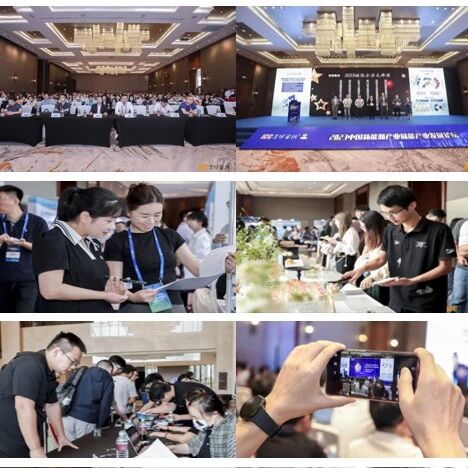
3月19-20日 常州!2026锂电关键材料及应用市场高峰论坛
鑫椤锂电· 2026-02-04 06:16
Core Viewpoint - The lithium battery industry is poised for a significant growth cycle starting in 2026, characterized by strong demand recovery, accelerated global expansion, and disruptive technological advancements, leading to a "spiral rise" in both volume and price [3]. Group 1: Market Predictions - Global lithium battery production is expected to reach 2297 GWh by 2025, with a growth rate of 34.6% in 2026. The shipment growth rate for energy storage cells is projected to be as high as 70%, driven by dual domestic and international demand [5]. - There exists a notable supply gap in battery cells and various materials, necessitating a focus on ensuring a stable and efficient supply chain to capitalize on this growth opportunity [5]. Group 2: Conference Details - The 2026 Lithium Key Materials and Applications Market Summit will be held on March 19-20, 2026, in Changzhou, Jiangsu, organized by Xinluo Information [4]. - The summit will focus on two main topics: in-depth discussions on cutting-edge technologies and market supply-demand dynamics, and B2B procurement matchmaking to connect top battery manufacturers and material suppliers [6]. Group 3: Key Topics and Participants - The conference will feature specialized sessions on lithium carbonate futures, market volatility responses from lithium battery companies, and the potential of global lithium resources [7][8]. - Notable participants include leading battery companies like CATL and BYD, as well as material suppliers covering the entire supply chain, including cathode materials, anode materials, electrolytes, and separators [6]. Group 4: Industry Trends and Strategic Insights - The lithium battery industry is expected to play a crucial role in energy transition and carbon neutrality goals as it enters a new planning phase [6]. - The summit aims to provide authoritative data releases, benchmark company rankings, and deep industry connections to facilitate high-quality development in the lithium battery sector [6].

华汇智能IPO业绩高增客户却“过冬” 财务数据异于同行四季度确认80%的收入
Xin Lang Cai Jing· 2026-02-04 02:23
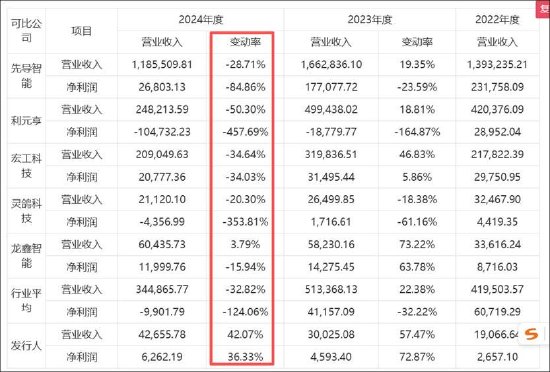
Core Viewpoint - Huahui Intelligent is preparing for its listing on the Beijing Stock Exchange, with a planned fundraising of 344 million yuan, which is a reduction of nearly 100 million yuan from the original plan of 459 million yuan, representing a decrease of over 20% [1][11]. Company Overview - Huahui Intelligent, originally established as a precision component manufacturer in June 2010, shifted its focus to the lithium-ion battery industry in 2016, developing key equipment such as sand mills and pulping machines [2][12]. - The company has successfully developed and delivered its first generation of sand mills with complete independent intellectual property rights by the end of 2020, and has since expanded its product offerings to include system solutions for lithium battery manufacturing [2][12]. - The main products include grinding systems for cathode materials, single machine equipment, and precision mechanical components, with the sand mill products praised for their small grinding particle size, good consistency, low energy consumption, and low failure rates [2][12]. Financial Performance - As of the signing date of the prospectus, Huahui Intelligent has established good cooperative relationships with leading battery material manufacturers such as Hunan Youneng and Wanrun New Energy, achieving high brand recognition and competitiveness in the lithium battery materials equipment sector [3][13]. - The company reported revenue of 300 million yuan, 427 million yuan, and 616 million yuan over the reporting period, with year-on-year growth rates of 42.07% and 44.32% respectively, while net profits were 45.93 million yuan, 62.62 million yuan, and 75.82 million yuan, with year-on-year growth rates of 36.33% and 21.08% [3][14]. - Despite the downturn in performance of its downstream clients, Huahui Intelligent achieved growth in both revenue and net profit during the reporting period [3][14]. Industry Context - The lithium iron phosphate industry has seen an influx of new entrants since 2021, leading to a significant increase in production capacity and intensified market competition [4][15]. - The price of lithium carbonate, a key raw material for lithium battery cathode materials, has sharply declined in 2023, resulting in a phase of structural oversupply in the industry [4][15]. - Major clients of Huahui Intelligent, such as Hunan Youneng and Wanrun New Energy, have reported declining performance in 2023 and 2024, contrasting with Huahui Intelligent's growth [4][15]. Revenue Recognition Issues - There are concerns regarding the timing of revenue recognition, with a significant portion of revenue being recognized in the fourth quarter, accounting for 80.98% of total revenue in 2022, which decreased to 25.65% in 2024 [7][18]. - The company has faced regulatory scrutiny over potential premature revenue recognition, particularly regarding contracts with clients like Yingtan Xurui Precision Manufacturing [9][20]. - The company attributes the uneven distribution of revenue recognition to seasonal business performance, influenced by the production and acceptance cycles of its high-value equipment [10][21].