TENCENT(00700)

Search documents
格隆汇2026“下注中国”十大核心资产之腾讯控股
格隆汇APP· 2026-01-14 07:04
Core Viewpoint - Tencent Holdings has been recognized as a core asset in the digital economy for 2026, showcasing its ability to transform into a new growth certainty in the AI era, supported by a robust social content ecosystem and consistent cash flow generation [2][38]. Group 1: Organizational Stability and Governance - Tencent maintains a "low-frequency adjustment, high stability" governance model, which contrasts with the frequent organizational changes seen in many internet companies, providing a solid foundation for long-term strategic execution [3][4]. - The management structure is clearly defined, with Ma Huateng as Chairman and CEO overseeing strategic direction, while President Liu Chiping manages overall strategy execution and capital allocation [4]. Group 2: Revenue Structure and Ecosystem - Tencent's revenue structure is balanced and stable, with three core segments: value-added services (49%), online advertising (18%), and fintech and enterprise services (32%) for 2024 [7][8]. - The social network, primarily through WeChat and QQ, serves as a foundational asset, with WeChat reaching 1.411 billion monthly active accounts by June 2025, making it the most frequently used super app in China [9][10]. Group 3: Gaming and Cash Flow - The gaming business is a key cash flow engine, with flagship products like "Honor of Kings" and "Peacekeeper Elite" maintaining strong revenue streams, achieving a record quarterly revenue of 59.5 billion yuan [12]. - Tencent's gaming strategy focuses on lifecycle management and global distribution, leveraging AI technology across the development and operational processes to enhance efficiency and cost control [12][19]. Group 4: Financial Technology and Enterprise Services - Tencent's fintech services, including WeChat Pay and QQ Wallet, penetrate high-frequency scenarios, while enterprise services encompass Tencent Cloud and WeChat Work, laying a solid foundation for future AI empowerment [16][17]. - The fintech and enterprise services segment is projected to generate 212 billion yuan in revenue for 2024, contributing to long-term stable growth [17]. Group 5: AI Empowerment and Growth Engines - AI is integrated across Tencent's core businesses, enhancing operational efficiency and user engagement through applications in advertising, gaming, and enterprise services [19][22]. - The advertising business has rebounded, achieving 121.4 billion yuan in revenue for 2024, driven by AI's ability to optimize ad placement and improve return on investment [20]. Group 6: Financial Strength and Cash Flow - Tencent's financial strength is characterized by stable and high-quality free cash flow, enabling consistent dividends, stock buybacks, and strategic investments [32][34]. - The company's approach of "steady operation + cash returns" is particularly attractive in uncertain market conditions, providing a solid valuation foundation [33][36].

半日沽空金额约180.496亿元 沽空比率11.096%
Xin Lang Cai Jing· 2026-01-14 06:06
Summary of Key Points Core Viewpoint - The Hong Kong stock market experienced a significant short-selling activity, with a total short-selling amount of approximately HKD 18.0496 billion and a short-selling ratio of 11.096% relative to the main board trading volume [1]. Group 1: Short-Selling Overview - Total short-selling shares amounted to 799, with a total of 1.3395 billion shares being short-sold [1]. - The total short-selling amount reached approximately HKD 18.0496 billion [1]. Group 2: Major Companies Involved in Short-Selling - Alibaba Group (09988) had a short-selling amount of HKD 1,949.06495 million, representing a short-selling ratio of 9.235% and accounting for 10.80% of the total short-selling amount [1]. - Tencent Holdings (00700) recorded a short-selling amount of HKD 1,242.05145 million, with a short-selling ratio of 13.739% and contributing 6.88% to the total short-selling [1]. - Meituan (03690) saw a short-selling amount of HKD 784.44677 million, with a short-selling ratio of 22.018% and making up 4.35% of the total [1]. - Xiaomi Group (01810) had a short-selling amount of HKD 721.47635 million, with a short-selling ratio of 23.606% and representing 4.00% of the total [1]. - Alibaba Health (00241) reported a short-selling amount of HKD 702.765 million, with a short-selling ratio of 22.547% and accounting for 3.89% of the total [1].



港股午评:恒指涨0.92%重回27000点、科指涨1.54%,AI应用概念股飙升,科网股普涨,银行保险股走低
Jin Rong Jie· 2026-01-14 04:12
Market Overview - The Hong Kong stock index opened slightly higher and experienced fluctuations before rising, with the Hang Seng Index up 0.92% at 27,094.31 points, the Hang Seng Tech Index up 1.54% at 5,960.07 points, and the National Enterprises Index up 0.89% at 9,367.75 points [1] - Major tech stocks saw gains, with Alibaba up 5.25%, Tencent Holdings up 1.67%, and Kuaishou up 5.48%, while Meituan fell by 2.96% [1] - AI-related stocks surged, particularly in the AI healthcare sector, with Alibaba Health rising over 16% and a cumulative increase of 50% for the month [1] - Cryptocurrency-related stocks also performed well, with Blue Ocean Interactive rising over 11% [1] - Chinese brokerage stocks generally rose, with Xingsheng International up over 8% [1] - Some sectors, including aviation, electricity, insurance, and domestic banks, saw declines [1] Company News - Q Technology (01478.HK) announced an expected net profit growth of approximately 400% to 450% for the year ending December 31, 2025 [2] - China Coal Energy (01898.HK) projected a 10.2% decrease in coal sales to approximately 256 million tons for 2025, with December sales down 23% year-on-year [2] - Zhixing Technology (01274.HK) was selected as a supplier for a Korean automotive group's driver assistance solutions for four vehicle models [2] - Country Garden (00832.HK) reported a 16.3% decrease in property contract sales to 8.467 billion yuan for 2025 [3] - Hopson Development Holdings (00754.HK) projected a total contract sales of approximately 15.607 billion yuan for 2025, down 6.15% year-on-year [4] - Chuangjie Tong (01588.HK) issued a profit warning, expecting a profit attributable to shareholders between 76 million and 85 million yuan for 2025, representing a growth of 127% to 154% [4] - Suoteng Juchuang (02498.HK) estimated laser radar product sales of approximately 912,000 units for 2025 [5] - Xiaocaiyuan (00999.HK) plans to establish a joint venture to develop an online mall and "community ready-to-eat stores" [6] - GDS Holdings Limited (09698.HK) recovered approximately 95% of the investment principal from DayOne, with an investment return rate of nearly 6.5 times [7] - China Biologic Products (01177.HK) plans to acquire 100% of Hejiya for a maximum base price of 12 million yuan to accelerate the development of its siRNA liver delivery platform [7] - Junshi Biosciences (02696.HK) received acceptance from the FDA for the Biologics License Application (BLA) for Hanbeitai® (Bevacizumab Injection) [7] - Xiaomi Group (01810.HK) repurchased 4 million shares for 152 million HKD at prices between 37.94 and 38.04 HKD [8] - Tencent Holdings (00700.HK) repurchased 1.012 million shares for 636 million HKD at prices between 623 and 638 HKD [9] - Sunny Optical Technology (02382.HK) repurchased 640,000 shares for approximately 41.788 million HKD at prices between 64.55 and 65.8 HKD [10] Institutional Insights - Dongwu Securities noted limited opportunities for the Federal Reserve to cut interest rates this year, suggesting that the rebound of Hong Kong stocks will depend on fundamental conditions [11] - The firm maintains a "barbell strategy" for overall allocation, recommending a focus on value dividends and sectors like AI technology, non-ferrous metals, and innovative pharmaceuticals [11] - China Merchants Securities highlighted that the recent lagging performance of Hong Kong stocks compared to A-shares is due to overseas liquidity dynamics, with a 95.6% probability of the Fed pausing rate cuts in January [11] - The firm anticipates that the recovery of sentiment will drive southbound capital to boost the Hong Kong tech sector [11] - Industrial Securities recommends prioritizing leading internet companies in the AI sector and suggests focusing on dividend assets in low-interest-rate environments [11] - Zheshang International expressed optimism for sectors benefiting from policy support, including new energy, innovative pharmaceuticals, and AI technology, and expects the Hong Kong market to be driven by "AI applications + PPI improvement + expanded domestic demand" in the spring of 2026 [11]
39家港股公司出手回购(1月13日)


Zheng Quan Shi Bao· 2026-01-14 01:58
证券时报•数据宝统计显示,1月13日有39家香港上市公司进行了股份回购,合计回购1751.51万股,回 购金额8.96亿港元。 腾讯控股回购数量101.20万股,回购金额6.36亿港元,回购最高价为638.000港元,最低价为623.000港 元,年内累计回购金额50.86亿港元;小米集团-W回购数量400.00万股,回购金额1.52亿港元,回购最 高价为38.040港元,最低价为37.940港元,年内累计回购金额9.42亿港元;舜宇光学科技回购数量64.00 万股,回购金额4178.78万港元,回购最高价为65.800港元,最低价为64.550港元,年内累计回购金额 2.29亿港元。 以金额进行统计,1月13日回购金额最多的是腾讯控股,回购金额为6.36亿港元;其次是小米集团-W, 回购金额为1.52亿港元;回购金额居前的还有舜宇光学科技、巨子生物等。回购数量上看,1月13日回 购股数最多的是小米集团-W,当日回购量为400.00万股;其次是捷利交易宝、碧桂园服务等,回购数 量分别为180.80万股、139.40万股。(数据宝) 1月13日港股公司回购一览 (万股) 回购金额 (万港元) 回购最高价 (港元 ...
智通港股回购统计|1月14日


智通财经网· 2026-01-14 01:41
Group 1 - The article discusses the share buybacks conducted by various companies on January 13, 2026, with Tencent Holdings (00700) having the largest buyback amount of 636 million yuan for 1.012 million shares [1][2] - Other notable companies involved in the buyback include Xiaomi Group (01810) with 4 million shares repurchased for 152 million yuan, and Sunny Optical Technology (02382) with 640,000 shares for approximately 41.79 million yuan [1][2] - The total number of shares repurchased by Tencent Holdings in the year reached 11 million, representing 1.199% of its total share capital [2] Group 2 - The buyback activities reflect a strategic move by companies to enhance shareholder value and signal confidence in their financial health [1][2] - Companies like Weigao Group (01066) and Xinli International (00732) also showed significant buyback activity, with Weigao repurchasing 27,440 shares for 1.4962 million yuan, representing 6.519% of its total share capital [2] - The data indicates a trend among companies to engage in share buybacks as a method to return capital to shareholders and potentially boost stock prices [1][2][3]
港股开盘:恒指涨0.46%、科指涨0.42%,消费股及创新药概念股走高,AI应用板块回暖,汽车股走低
Jin Rong Jie· 2026-01-14 01:30
Market Overview - The Hong Kong stock market opened higher on January 14, with the Hang Seng Index rising by 0.46% to 26,971.97 points, the Hang Seng Tech Index up by 0.42% to 5,894.63 points, the State-Owned Enterprises Index increasing by 0.46% to 9,328.05 points, and the Red Chip Index gaining 0.25% to 4,156.46 points [1] Company News - Q Technology (01478.HK) expects a net profit growth of approximately 400% to 450% for the year ending December 31, 2025 [2] - China Coal Energy (01898.HK) anticipates a 10.2% decrease in coal sales volume to approximately 256 million tons for 2025, with December sales down by 23% year-on-year to 21.88 million tons [2] - Zhixing Technology (01274.HK) has been selected as a supplier for a Korean automotive group's driver assistance solutions for four vehicle models [2] - Country Garden (00832.HK) projects a total property contract sales amount of 8.467 billion yuan for 2025, a decrease of 16.3% year-on-year [3] - Hopson Development (00754.HK) expects total contract sales of approximately 15.607 billion yuan for 2025, down 6.15% year-on-year [4] - Chuangjie Tong (01588.HK) anticipates a profit attributable to the parent company between 76 million and 85 million yuan for 2025, representing a year-on-year increase of 127% to 154% [4] - SUTENG (02498.HK) forecasts laser radar product sales of approximately 912,000 units for 2025 [5] - Xiaocaiyuan (00999.HK) plans to establish a joint venture to develop an online mall and "community ready-to-eat stores" [6] - GDS Holdings (09698.HK) has recovered approximately 95% of the investment principal from DayOne, with an investment return rate of nearly 6.5 times [7] - China Biologic Products (01177.HK) intends to acquire 100% of Hejiya for a maximum base price of 12 million yuan to accelerate the development of its siRNA liver delivery platform [7] - Innovent Biologics (02696.HK) has had its Biologics License Application for Hanbeitai® (Bevacizumab Injection) accepted by the FDA [7] - Xiaomi Group (01810.HK) repurchased 4 million shares for 152 million HKD at prices between 37.94 and 38.04 HKD [8] - Tencent Holdings (00700.HK) repurchased 1.012 million shares for 636 million HKD at prices between 623 and 638 HKD [9] - Sunny Optical Technology (02382.HK) repurchased 640,000 shares for 41.7878 million HKD at prices between 64.55 and 65.8 HKD [10] Institutional Insights - Dongwu Securities suggests that the window for the Federal Reserve to cut interest rates this year is limited, and the impact of fiscal policies on the economy is still forthcoming. If the Fed does not cut rates in the first quarter, the rebound pace of the Hong Kong stock market will depend more on fundamental factors. The overall allocation strategy for Hong Kong stocks remains a barbell strategy, recommending a controlled allocation while waiting for more news [11] - Wanlian Securities highlights that policy opinions indicate a push to accelerate the industrialization and commercialization of brain-computer interfaces. The global competitive landscape in this sector shows the U.S. leading in invasive methods while China leads in non-invasive methods, focusing on key elements such as electrodes, chips, and algorithms [11][12]

港股股票回购一览:39只个股获公司回购
Mei Ri Jing Ji Xin Wen· 2026-01-14 01:17
每经AI快讯,数据显示,1月13日,共39只港股获公司回购,4只个股回购金额超千万港元。其中,腾 讯控股、小米集团-W、舜宇光学科技回购金额最大,分别获公司回购6.36亿港元、1.52亿港元、 4178.78万港元。截至1月13日,今年已有89只港股获公司回购,4只个股年内累计回购金额超亿港元。 其中,腾讯控股、小米集团-W、吉利汽车年内累计回购金额最大,分别获公司回购50.86亿港元、9.42 亿港元、3.72亿港元。 ...

AI的入口变革与供给爆炸将重塑互联网产业逻辑
Tai Mei Ti A P P· 2026-01-14 00:43
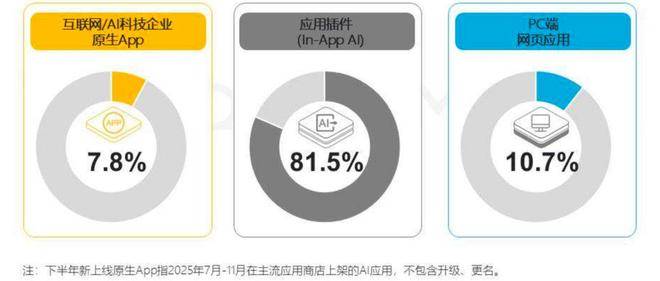
Core Insights - The internet industry is at the beginning of a structural transformation driven by AI, which will redefine interaction forms, business models, and value assessment systems by 2026 [1] - AI Agents and AIGC (AI-generated content) will collaborate to reshape the underlying logic of industries, marking a shift from traditional app-based user engagement to intent-driven interactions [2][5] Group 1: AI Agents and User Interaction - AI Agents will fundamentally change the flow distribution model, moving from traditional app matrices focused on user time consumption to efficient understanding and execution of user intent [2] - The transition from graphical user interfaces (GUI) to intent user interfaces (IUI) signifies a new era of human-computer interaction [2] - In 2025, 81.5% of newly launched AI applications will integrate as plugins within existing ecosystems, indicating a shift from plugin-based AI to system-level AI [2] Group 2: Competitive Landscape - Major tech companies are competing for the AI Agent entry point, which is expected to become an operating system-level traffic hub [4] - Google and OpenAI are enhancing their platforms to seamlessly integrate third-party services, while Alibaba, ByteDance, and Tencent are developing their own AI agents to connect various ecosystems [4][5] - The competition is fundamentally about migrating from attention economy to efficiency economy, where the most successful companies will be those that create indispensable entry points [5] Group 3: AIGC and Content Supply - AIGC is expected to lead to an explosion in content supply, lowering the production threshold for various content types to near-zero marginal costs [6] - The abundance of content will result in a devaluation of mediocre content, while high-quality, emotionally resonant, and culturally unique content will become more valuable [6] - Content consumption will evolve from passive viewing to active engagement, with new forms of interactive content emerging to fill the time saved by AI Agents [6] Group 4: Industry Impacts - In the gaming sector, AI is transitioning from a supportive tool to a core engine driving gameplay innovation, significantly enhancing asset generation efficiency [8] - The domestic gaming market is projected to reach a record revenue of 350.79 billion yuan in 2025, setting the stage for a significant year in 2026 [9] - In the film industry, competition among AI video models is intensifying, with companies focusing on industrialization and controllability to reshape the production chain [11] Group 5: Advertising and Efficiency - The transformation in the internet industry necessitates a closed-loop business model, with advertisers increasingly focusing on return on investment (ROI) [12] - Programmatic advertising platforms that leverage AI for precise matching and real-time optimization are outperforming the market [12] - Companies like AppLovin are experiencing significant revenue growth, indicating a shift in advertising from an art to a data-driven science [12] Group 6: Investment Opportunities - Investment opportunities are polarizing, with one side focusing on "entry builders" that can integrate large ecosystems and understand user intent, such as Alibaba, Tencent, and ByteDance [13] - The other side includes "supply cores" that possess scarce content and emotional connection capabilities, highlighting the value of top IPs and trusted brands [13] - Specific companies to watch include Giant Network, Century Huatong, and Kyeong Network in gaming, as well as Light Media and Huace Film in the film sector [13]

智通港股沽空统计|1月14日
智通财经网· 2026-01-14 00:38
Group 1 - Anta Sports (82020), Lenovo Group (80992), and Kuaishou (81024) have the highest short-selling ratios at 100.00%, 78.04%, and 71.83% respectively [1][2] - Alibaba (09988), Tencent Holdings (00700), and Xiaomi Group (01810) lead in short-selling amounts, with 2.968 billion, 1.700 billion, and 1.588 billion respectively [1][2] - China National Building Material (03323), Jiangsu Nanjing Highway (00177), and China Liansu (02128) have the highest deviation values at 33.68%, 31.58%, and 22.77% respectively [1][2] Group 2 - The top short-selling stocks by amount include Alibaba (09988) at 2.968 billion, Tencent Holdings (00700) at 1.700 billion, and Xiaomi Group (01810) at 1.588 billion [2] - The top short-selling ratios are led by Anta Sports (82020) at 100.00%, followed by Lenovo Group (80992) at 78.04%, and Kuaishou (81024) at 71.83% [2] - The highest deviation values are recorded for China National Building Material (03323) at 33.68%, Jiangsu Nanjing Highway (00177) at 31.58%, and China Liansu (02128) at 22.77% [2][3]



智通港股通持股解析|1月14日
智通财经网· 2026-01-14 00:36
Core Insights - The top three companies by Hong Kong Stock Connect shareholding ratios are China Telecom (71.39%), Gree Power Environmental (69.71%), and Kaisa New Energy (68.10%) [1][2] - Tencent Holdings, Xiaomi Group-W, and China Construction Bank saw the largest increases in shareholding amounts over the last five trading days, with increases of +4.302 billion, +3.564 billion, and +1.688 billion respectively [1][2] - The largest decreases in shareholding amounts over the same period were recorded by the Tracker Fund of Hong Kong (-4.857 billion), Alibaba-W (-2.314 billion), and Hang Seng China Enterprises (-2.098 billion) [1][3] Group 1: Shareholding Ratios - China Telecom (00728) has a shareholding ratio of 71.39% with 9.909 billion shares [2] - Gree Power Environmental (01330) has a shareholding ratio of 69.71% with 0.282 billion shares [2] - Kaisa New Energy (01108) has a shareholding ratio of 68.10% with 0.170 billion shares [2] - Tianjin Chuangye Environmental (01065) has a shareholding ratio of 67.45% with 0.229 billion shares [2] - China Shenhua (01088) has a shareholding ratio of 66.32% with 2.240 billion shares [2] Group 2: Recent Increases in Shareholding - Tencent Holdings (00700) increased its shareholding by +4.302 billion, with a change of +6.8552 million shares [2] - Xiaomi Group-W (01810) increased its shareholding by +3.564 billion, with a change of +9.3845 million shares [2] - China Construction Bank (00939) increased its shareholding by +1.688 billion, with a change of +21.6074 million shares [2] - China Life (02628) increased its shareholding by +0.890 billion, with a change of +2.6972 million shares [2] Group 3: Recent Decreases in Shareholding - Tracker Fund of Hong Kong (02800) decreased its shareholding by -4.857 billion, with a change of -17.962 million shares [3] - Alibaba-W (09988) decreased its shareholding by -2.314 billion, with a change of -1.4471 million shares [3] - Hang Seng China Enterprises (02828) decreased its shareholding by -2.098 billion, with a change of -2.2106 million shares [3] - China Mobile (00941) decreased its shareholding by -2.049 billion, with a change of -2.5313 million shares [3]