CHINA JINMAO(00817)

Search documents
中国金茂(00817.HK)7月取得签约销售金额84.6亿元
Ge Long Hui· 2025-08-11 12:08
Core Viewpoint - China Jinmao (00817.HK) reported a significant increase in contracted sales for July 2025, indicating strong performance in the real estate market [1] Group 1: Sales Performance - In July 2025, the company and its subsidiaries achieved a contracted sales amount of RMB 8,460 million, with a total contracted sales area of 376,634.63 square meters [1] - For the first seven months ending July 31, 2025, the group recorded a cumulative contracted sales amount of RMB 61,807 million, which includes various projects such as Changsha Meixi Lake International New City and Nanjing Qinglongshan International Eco City [1] - The cumulative contracted sales area for the same period reached 2,770,492.15 square meters [1] Group 2: Unsigned Sales - As of July 31, 2025, the group reported a total of RMB 567 million in subscribed (but unsigned) property sales [1]
中国金茂(00817) - 公告2025年7月未经审核销售数据
2025-08-11 12:00
香港交易及結算所有限公司及香港聯合交易所有限公司對本公告的內容概不負責,對其準確性 或完整性亦不發表任何聲明,並明確表示,概不對因本公告全部或任何部份內容而產生或因倚 賴該等內容而引致的任何損失承擔任何責任。 免責聲明 中國金茂控股集團有限公 司 (於香港註冊成立的有限公司) (股票代號:00817) 公告 2025年7月未經審核銷售數據 中國金茂控股集團有限公司(「本公司」)董事會(「董事會」)謹此公佈,2025年7月 份,本公司及其附屬公司(「本集團」)取得簽約銷售金額人民幣8,460百萬元,簽 約銷售建築面積376,634.63平方米。截至2025年7月31日止7個月,本集團累計取 得簽約銷售金額共計人民幣61,807百萬元(其中包含(如有)長沙梅溪湖國際新城 項目、南京青龍山國際生態新城項目、寧波生命科學城項目、嘉興上海之窗智慧 科學城項目、鄭州二七區馬寨新城項目、溫州鰲江國際新城項目、金華金茂未來 科學城項目及上海橫沔城市運營項目的成交銷售金額),以及累計簽約銷售建築面 積2,770,492.15平方米。 此外,於2025年7月31日,本集團已錄得已認購(未簽約)物業銷售金額共計人民 幣567百萬元 ...
北京楼市新政解读:力度有限,但可能是新一轮放松的开始
Guoxin Securities· 2025-08-11 11:13
Investment Rating - The investment rating for the real estate industry is "Outperform the Market" (maintained) [2][3]. Core Insights - The new policy in Beijing is seen as a limited measure but may signal the beginning of a new round of easing in the real estate market [4][12]. - The background for the new policy is the failure of Beijing's housing prices to stabilize, with prices declining since March [5][12]. - The marginal release of purchasing power from the new policy is expected to be limited, but it could initiate a new round of easing in first-tier cities [4][12]. - Investment opportunities exist despite the ongoing price decline, with specific stock recommendations including China Jinmao, Greentown China, Beike-W, and I Love My Home [14]. Summary by Sections Policy Changes - On August 8, 2025, Beijing's housing authority announced adjustments to housing purchase policies, allowing families meeting certain criteria to buy unlimited properties outside the Fifth Ring Road [4][16]. - The policy also allows single adults to follow the same purchasing limits as families [17]. Market Conditions - Since March, Beijing's housing prices have resumed their downward trend, with a month-on-month decline of -1.1% over the past two months, returning to levels seen before the "924" policy in 2024 [5][12]. - The price index for Beijing has not shown any advantage compared to other major cities since 2019, with a decline of approximately 20% from the early 2023 peak in key districts [5][12]. Future Expectations - The report anticipates that if the price decline continues for three more months, more substantial "stabilization" policies may be expected [12]. - The overall sentiment among residents regarding future price increases remains pessimistic, with only 8.9% expecting price rises in the second quarter of 2025, marking a historical low [9][10].
港股内房股普遍上涨
Mei Ri Jing Ji Xin Wen· 2025-08-11 03:03
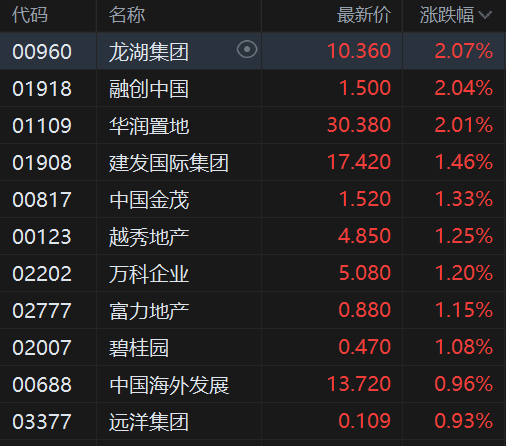
每经AI快讯,8月11日,港股内房股普遍上涨,龙湖集团、华润置地、融创中国涨2%,建发国际集团、 中国金茂、越秀地产、万科企业、碧桂园、富力地产均涨超1%。 ...




港股异动丨内房股普涨 龙湖集团、华润置地涨2% 北京五环外解除限购
Ge Long Hui· 2025-08-11 02:28
中信建投证券研报指出,北京进一步优化限购和公积金政策,京籍居民及社保或个税满2年的非京籍居 民购买五环外住房不再限制套数;同时无公积金贷款或有1次且已结清的家庭可执行首套公积金贷款政 策,且公积金二套家庭贷款额度由60万元提升至100万元。北京作为一线城市,此次出台楼市新政信号 意义重大,楼市止跌回稳态势有望持续巩固。(格隆汇) | 代码 | 名称 | 最新价 | 涨跌幅 ▽ | | --- | --- | --- | --- | | 00960 | 龙湖集团 | 10.360 | 2.07% | | 01918 | 融创中国 | 1.500 | 2.04% | | 01109 | 华润置地 | 30.380 | 2.01% | | 01908 | 建发国际集团 | 17.420 | 1.46% | | 00817 | 中国余茂 | 1.520 | 1.33% | | 00123 | 越秀地产 | 4.850 | 1.25% | | 02202 | 万科企业 | 5.080 | 1.20% | | 02777 | 富力地产 | 0.880 | 1.15% | | 02007 | 碧桂园 | 0.470 | 1 ...

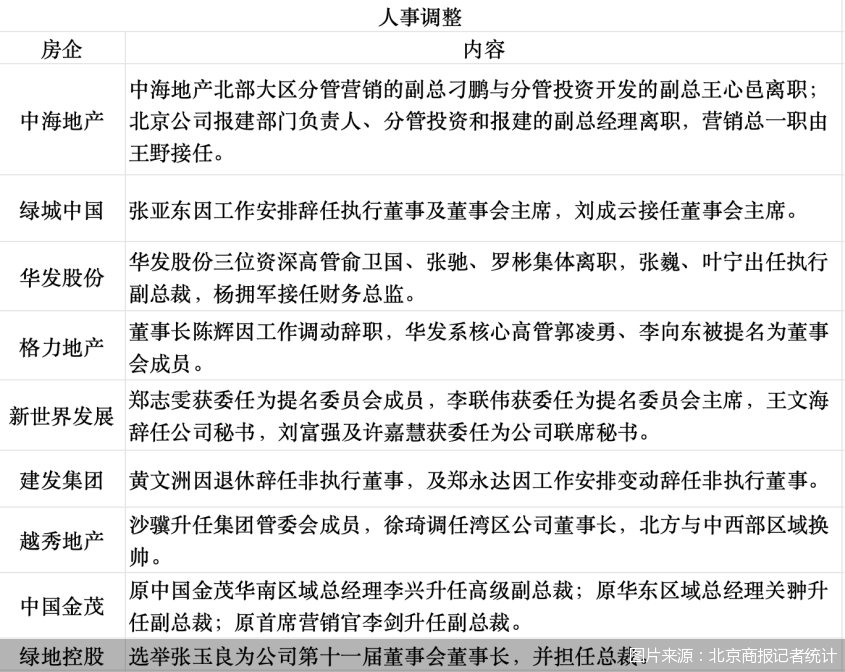
年内房企高管超50次变动,“营销总”成调整焦点
Bei Jing Shang Bao· 2025-08-10 05:59
Core Insights - The real estate industry is undergoing a transformation period, leading to significant personnel adjustments as companies adapt to a new competitive landscape [1][2][3] - From January to July 2025, over 50 executive changes occurred within real estate companies, with a notable focus on the marketing sector due to its direct impact on performance and market responsiveness [1][2][3] - Companies are increasingly hiring versatile talents who possess both product design and marketing experience to enhance the synergy between product development and marketing efforts [1][7][8] Executive Changes - Major real estate firms, including Poly Developments, China Overseas Land & Investment, and China Merchants Shekou, have experienced significant executive turnover, particularly in city management roles [2][3] - China Overseas has entered a phase of frequent executive changes, with multiple city managers being reassigned in June 2025 [2][3] - In the first half of 2025, 31 out of 65 monitored real estate companies executed 47 executive changes, with a notable increase in adjustments during the second quarter [3][4] Marketing Sector Focus - The "Chief Marketing Officer" position has seen increased turnover due to performance pressures and strategic shifts, with companies like China Jinmao and China Overseas consolidating marketing functions at headquarters [5][6] - China Overseas reported a significant decline in sales and profits, with its Northern region's sales halving from 911.2 billion to 559.4 billion yuan, prompting leadership changes [5][6] - The departure of key marketing executives often correlates with underperformance, as these roles are critical for driving revenue growth [6][7] Strategic Adjustments - Companies are streamlining their organizational structures and enhancing management capabilities to adapt to the evolving market landscape [4][7] - The integration of product and marketing functions is becoming a common practice among real estate firms to meet the rising demand for quality and differentiation in products [7][8] - The shift towards a focus on product quality is essential as the new home market transitions from a demand-driven phase to one centered on improvement needs [8]



土地市场“遇优则燃”,谁在疯狂买地?
智通财经网· 2025-08-09 12:20
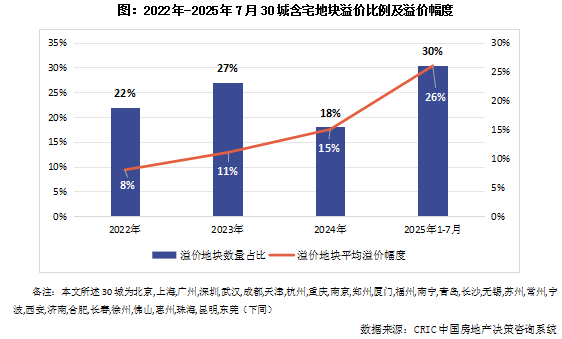
Group 1 - The core viewpoint indicates that despite the new housing market not fully stabilizing, the land market is showing signs of activity, particularly in core cities where high premium land parcels are being actively pursued by developers [1][2]. - In the first seven months of 2025, the proportion of premium land parcels in 30 key cities reached 30%, marking a three-year high and an increase of 12 percentage points compared to 2024, indicating a resurgence in land acquisition sentiment [2][3]. - The average premium rate for land parcels in the same period rose to 26%, nearly doubling compared to the past two years, reflecting heightened competition among developers [2]. Group 2 - The performance of companies in the land acquisition space remains fragmented, with many struggling to capitalize on opportunities, while leading firms are driving positive growth in investment amounts [3][5]. - In the first seven months of 2025, the top 100 real estate companies recorded a total new land reserve value of 682.8 billion yuan and an area of 5.802 million square meters, with a year-on-year increase of 33%, indicating a stabilization in investment trends [5]. - The concentration of land acquisition among the top 10 real estate companies remains high, with their new land value accounting for 70% of the total for the top 100, reflecting a trend towards market consolidation [6][7]. Group 3 - The top 10 real estate companies have a land acquisition to sales ratio of 0.41, significantly higher than the industry average of 0.3, showcasing their aggressive land acquisition strategies [7]. - Companies such as China Overseas, China Merchants, and Greentown have seen substantial increases in land acquisition amounts, with Poly Developments and China Resources maintaining steady investment speeds [8]. - High premium land acquisitions are primarily being made by state-owned enterprises and established regional players, with companies like CIFI, China Overseas, and China Merchants leading in this area [11][12]. Group 4 - The focus of investment is increasingly on high-quality land parcels in first and second-tier cities, leading to intense competition among developers, particularly state-owned enterprises [14]. - The attractiveness of premium land parcels is rising, as the market recognizes the importance of improvement projects in driving growth [14].


核心地块热度延续,“好房子”支撑结构性修复
Guolian Minsheng Securities· 2025-08-08 11:14
Investment Rating - Investment recommendation: Outperform the market (maintained) [9] Core Viewpoints - The real estate market continues to experience low-level fluctuations, with significant city-level differentiation. New home sales in 35 cities from January to July 2025 totaled 76.01 million square meters, a year-on-year decline of 10.8%. The decline has expanded by 1.4 percentage points compared to the first half of the year, with July alone seeing a year-on-year drop of 19.6% [4][10] - The second-hand housing market shows a slight increase in transaction volume, with 15 cities recording a year-on-year growth of 8.3% in the same period, although the growth rate has narrowed compared to the previous month. The average price of second-hand homes in July fell by 7.32% year-on-year [11][23] - The land market shows stabilization in transaction volume and price, with the average floor price of land transactions rising by 30.7% year-on-year. Core cities are witnessing record-high land prices, indicating sustained interest in prime locations [12][36] Sales Sector - New home sales: In the first seven months of 2025, new home transactions in 35 cities totaled 76.01 million square meters, down 10.8% year-on-year. The monthly transaction volume in July was 9.21 million square meters, a decline of 19.6% year-on-year. The market is expected to continue low-level fluctuations, with potential signs of recovery in core city projects [17][18] - Second-hand home sales: In the same period, second-hand home transactions in 15 cities reached 56.81 million square meters, up 8.3% year-on-year. However, July saw a 5.6% year-on-year decline in transaction volume, indicating a market adjustment phase [23][25] - Price trends: New home prices are showing structural growth, while second-hand home prices are declining. The average transaction price for new homes in July was 16,877 yuan per square meter, up 2.64% year-on-year, while second-hand homes averaged 13,585 yuan per square meter, down 7.32% year-on-year [28][29] Land Sector - Transaction volume and price: From January to July 2025, land supply in 300 cities was 13,006 million square meters, down 7.2% year-on-year, while total transactions reached 11,210 million square meters, up 2.3% year-on-year. The average floor price was 7,821 yuan per square meter, reflecting a 30.7% increase year-on-year [36][39] - City-level performance: In the first seven months, first-tier cities saw a 14.8% increase in land transaction volume, while second-tier cities increased by 17.5%. The average floor price in first-tier cities was 37,688 yuan per square meter, up 29.4% year-on-year [44][48] - Leading cities: Hangzhou led the land market with the highest land transfer fees and premium rates, indicating strong competition for quality land [48][50] Investment Recommendations - The report recommends focusing on leading real estate companies that are actively acquiring land in core urban areas, such as China Overseas Development, Greentown China, and others. These companies are expected to benefit from the recovery of quality projects in core cities [13][50]


《2025 年 1-7 月中国房地产企业新增货值TOP100》排行榜
克而瑞证券· 2025-08-08 01:48
Investment Rating - The report indicates a positive outlook for the real estate industry, particularly for leading companies in core cities, with expectations of increased land supply in the second half of 2025 [9][22]. Core Insights - The top 30 real estate companies acquired land worth a total of 52.9 billion yuan in July 2025, reflecting a year-on-year increase of over 50%, despite a month-on-month decrease of 16% [19][22]. - The average premium rate for land transactions reached 9.9% in July 2025, marking a new high since the second quarter of 2025, driven by the sale of multiple high-quality residential plots in major cities [10][22]. - The threshold for the top 100 companies in terms of new land value decreased by 10% year-on-year, while the thresholds for total price and area increased by 16% and 11%, respectively [14][15]. Summary by Sections New Land Value Rankings - The top three companies in terms of new land value are China Overseas Land & Investment (131.55 billion yuan), Greentown China (111.6 billion yuan), and Poly Developments (104.3 billion yuan) [1][5]. New Land Area Rankings - The leading companies in terms of new land area acquired are also led by China Overseas Land & Investment (30.31 million square meters), followed by Greentown China (27.7 million square meters) and Poly Developments (23.05 million square meters) [5][6]. Market Trends - The land market is experiencing a seasonal decline in transaction volume, but there is localized heating in core cities, with a focus on high-quality land parcels [9][10]. - The concentration of land acquisition among the top 10 companies remains high, accounting for 70% of the total new land value among the top 100 companies [18][20]. Future Outlook - The report anticipates a continued focus on core city investments, with central state-owned enterprises leading the market due to their financial strength and risk management capabilities [22].
10余家房企集体调整架构 强化风控、强化总部成共识
Bei Jing Shang Bao· 2025-08-07 15:39
Group 1 - The core viewpoint of the articles is that real estate companies are undergoing significant organizational restructuring in response to the changing market conditions, shifting from a decentralized regional management model to a more centralized headquarters-focused approach [1][2][3] - In the first seven months of this year, over 10 real estate companies, including Poly Developments and China Resources Land, have adjusted their organizational structures, indicating a trend towards flattening management layers to enhance decision-making efficiency and reduce communication costs [1][2] - The restructuring includes merging regional companies and consolidating management levels, with companies like China Jinmao and China Resources Land moving to a "strong headquarters" model, which emphasizes centralized control and resource allocation [2][3] Group 2 - The trend of organizational adjustments has become normalized since 2021, with nearly 20 adjustments made by real estate companies in that year alone, and 16 adjustments made by 11 companies in 2024 [3][4] - The necessity of regional companies has diminished as the market has shifted from rapid growth to a more cautious approach, leading to a reduction in operational costs by eliminating unnecessary middle management layers [4][5] - Companies are focusing on optimizing cash flow and reducing non-essential expenditures, with regional companies being a primary target for cost-cutting measures [5][6] Group 3 - Real estate companies are also streamlining their headquarters by eliminating redundant departments and optimizing their organizational structure, as seen with companies like China Merchants Shekou and Gemdale [6][7] - The strategic transformation of real estate companies is characterized by three main features: production based on actual market demand, investment aligned with sales performance, and a focus on core operations to stabilize cash flow [6][7] - The adjustments in organizational structure are expected to lead to lower operating costs, providing companies with greater flexibility and responsiveness to market recovery opportunities [7]