
BYD(01211)

Search documents
【乘用车1月月报】内需静待改善,出口韧性较强
东吴汽车黄细里团队· 2026-01-30 14:43
Group 1: Electric Vehicle Market Insights - In December 2025, the retail penetration rate of new energy vehicles (NEVs) reached 58.7%, with a year-on-year increase of 10.9% but a month-on-month decrease of 2.5 percentage points [2][6][14] - The retail sales of passenger vehicles in December 2025 were 2.27 million units, showing a year-on-year decline of 16% and a month-on-month increase of 14.7% [11][14] - BYD maintained a market share of 25% in the NEV sector, while Geely's market share decreased to 11% [22][6] Group 2: Global Market Performance - In December 2025, Southeast Asia's NEV penetration rate exceeded expectations, with a significant contribution from VinFast, leading to a month-on-month increase [3][35] - Chinese automakers exported 641,000 passenger vehicles in December 2025, with 245,000 being NEVs, resulting in a NEV penetration rate of 38.2% [3][7] - The market share of Chinese brands in Southeast Asia reached 14.7%, with a month-on-month increase of 0.8 percentage points [51][62] Group 3: Policy and Market Outlook - The old-for-new vehicle replacement policy is set to be implemented in January 2026, which is expected to stimulate demand in the passenger vehicle market [2][6] - The industry anticipates a recovery in passenger vehicle demand in Q1 2026, driven by the new policy and a shift in consumer sentiment [4][6] - The focus for domestic investments is on companies less sensitive to policy fluctuations, such as JAC Motors, and those expected to see growth in the high-end electric vehicle segment, including Geely and Great Wall Motors [4][6]






谁在掉队?谁在突围?2025锂电池材料出货量TOP10排行出炉
Jing Ji Guan Cha Wang· 2026-01-30 11:41
Core Insights - The lithium battery core material shipment volume is expected to achieve year-on-year growth by 2025, with a clear concentration of leading companies in the industry [2] - The lithium material industry is entering a new phase of value competition by 2026, with a focus on technological innovation and supply chain resilience [7] Positive Electrode Materials - Lithium Iron Phosphate - In 2025, China's lithium iron phosphate positive electrode material shipment volume reached 3.944 million tons, a year-on-year increase of 62.5%, accounting for 79.1% of the total positive electrode material shipment volume [3] - The top ten companies in this segment include Hunan YN, Wanrun Energy, and Defang Nano, with Hunan YN leading with over 1 million tons and a market share of approximately 29.8%-30% [3] Positive Electrode Materials - NCM - In 2025, China's NCM material shipment volume reached 786,000 tons, a year-on-year increase of 22.2% [4] - The leading companies in this segment are Nantong Ruixiang, Tianjin Bamo, and Rongzhi Technology, with Nantong Ruixiang achieving nearly 200,000 tons in shipments [4] Negative Electrode Materials - In 2025, China's negative electrode material shipment volume reached 2.922 million tons, a year-on-year increase of 38.1% [5] - The top three companies, including Better Energy, Shanghai Shanshan, and Zhongke Xingcheng, collectively hold a market share of 50.9% [5] Electrolytes - In 2025, global lithium-ion battery electrolyte shipment volume grew by 44.5% to 2.402 million tons, with China's actual shipment volume reaching 2.235 million tons, accounting for 93.05% of the global market [6] - The leading companies in this segment include Tianci Materials and BYD, with Tianci Materials achieving a shipment volume of 720,000 tons and a market share of 32.2% [6] Separators - In 2025, China's lithium-ion battery separator total shipment volume reached 32.85 billion square meters, a year-on-year increase of 44.4% [7] - The top companies in this segment include Shanghai Enjie and Hebei Jinli, with Shanghai Enjie achieving nearly 10 billion square meters in shipments and a market share exceeding 30% [7] Industry Outlook for 2026 - By 2026, global lithium-ion battery shipment volume is expected to reach 3,016.3 GWh, with a year-on-year growth of approximately 30% [7] - The industry is anticipated to see intensified competition among leading companies and accelerated exit of weaker players, driven by the expansion of the energy storage market and growth in new energy vehicle exports [7]





伯镭科技获比亚迪1亿元战略投资
Zheng Quan Ri Bao Zhi Sheng· 2026-01-30 09:42
Core Insights - Shanghai Borai Intelligent Technology Co., Ltd. has received a strategic investment of 100 million yuan from BYD Company Limited to enhance its research and development, expand intelligent production capacity, accelerate domestic and international market expansion, and deepen industrial ecosystem cooperation [1] Group 1 - The investment will leverage BYD's expertise in electric vehicles, particularly in battery and electronic control technology, combined with Borai's specialization in intelligent mining vehicles and unmanned scenarios, creating potential for collaboration in technology development and supply chain optimization [1] - Borai Technology, founded in 2015 in Shanghai, focuses on the low-carbon and unmanned transformation of global mining [1] - The company has developed a comprehensive technology loop featuring "L4 unmanned driving + unmanned battery swapping + intelligent scheduling," providing economically viable zero-carbon transformation solutions for traditional mining [1]
乘用车1月月报:内需静待改善,出口韧性较强-20260130
Soochow Securities· 2026-01-30 08:28
Investment Rating - The report maintains a positive outlook on the passenger car sector, particularly in the context of the new vehicle replacement policy and the resilience of exports [2][3]. Core Insights - The passenger car industry experienced a significant decline in retail sales in December 2025, with a year-on-year drop of 16% and a total retail volume of 227,000 units. The wholesale volume was 279,000 units, reflecting a decrease of 9.7% year-on-year [7][10]. - The penetration rate of new energy vehicles (NEVs) reached 58.7% in December 2025, showing a year-on-year increase of 10.9% [10][12]. - The report highlights the stability of the NEV market, with BYD holding a market share of 25% and Geely at 11% in December 2025 [16]. Electric Vehicle Data Tracking - The report indicates that the old-for-new vehicle replacement policy was implemented in January 2026, which is expected to stimulate demand in the passenger car market [2][3]. - In December 2025, the NEV wholesale volume was 156,300 units, with a year-on-year increase of 3.4% [12]. - The report notes a significant inventory reduction in the passenger car sector, with a total decrease of 69,000 units in December 2025, including 43,000 units for NEVs [13]. Globalization Data Tracking - The report tracks the performance of Chinese car manufacturers in international markets, noting that in December 2025, 641,000 passenger cars were exported, with 245,000 being NEVs, resulting in a penetration rate of 38.2% for NEVs [3][43]. - The report highlights the strong performance of BYD in exports, particularly in Southeast Asia, where the NEV penetration rate exceeded expectations [3][27]. - The market share of Chinese brands in various regions, including Southeast Asia and Europe, showed positive trends, with notable increases in the UK market [38][40].
【深度分析】2025年12月份全国新能源市场深度分析报告
乘联分会· 2026-01-30 08:28
Overall Market - The total market for passenger vehicles in 2025 is projected to have a production of 29.67 million units, with a retail sales figure of 23.74 million units, reflecting a year-on-year growth of 3.8% [9][10]. - The market share of new energy vehicles (NEV) is expected to reach 53.9% in 2025, up from 47.6% in 2024, indicating a significant increase in consumer adoption [10][12]. Submarket Analysis - The breakdown of the total market shows that NEVs will account for 12.81 million units in retail sales, representing a 17.6% increase compared to 2024 [10][12]. - The retail sales of fuel vehicles are projected to decline by 14.0% year-on-year, highlighting a shift in consumer preference towards NEVs [9][10]. Export Market - The export of NEVs is expected to grow significantly, with a total of 5.74 million units exported in 2025, marking a 19.7% increase from the previous year [16][17]. - The penetration rate of NEVs in the export market is projected to reach 42.2% in 2025, up from 27.1% in 2024, indicating a strong demand for Chinese NEVs abroad [20][22]. Manufacturer Performance - BYD is leading the NEV market with a wholesale volume of 414,784 units, although this represents a decline of 18.6% year-on-year [25]. - Tesla China ranks third in wholesale sales with 97,171 units, showing a modest growth of 3.6% [25]. - The top ten manufacturers collectively account for 71.5% of the NEV market share, indicating a high concentration in the industry [25][26]. Vehicle Type Segmentation - In 2025, the retail sales of sedans, MPVs, and SUVs are projected to be 12.26 million, 1.30 million, and 10.18 million units respectively, with NEVs showing a positive growth trend across all categories [30][31]. - The retail sales of fuel vehicles in the sedan category are expected to decline by 30.3%, while NEVs in the same category are projected to grow by 2.6% [30][31].



乘用车1月月报:内需静待改善,出口韧性较强
Soochow Securities· 2026-01-30 08:24
Investment Rating - The report maintains a positive outlook on the passenger car sector, particularly in the context of the new vehicle replacement policy and the resilience of exports [2][3]. Core Insights - The passenger car industry experienced a significant decline in retail sales in December 2025, with a year-on-year drop of 16% and a total retail volume of 227,000 units. The wholesale volume was 279,000 units, reflecting a decrease of 9.7% year-on-year [7][10]. - The penetration rate of new energy vehicles (NEVs) reached 58.7% in December 2025, showing a year-on-year increase of 10.9% [10][12]. - The report highlights the stability of the NEV market, with BYD holding a market share of 25% and Geely at 11% in December 2025 [16]. Electric Vehicle Data Tracking - The report indicates that the old-for-new vehicle replacement policy was implemented in January 2026, which is expected to stimulate demand in the passenger car market [2][3]. - In December 2025, the NEV wholesale volume was 156,300 units, with a year-on-year increase of 3.4% [12]. - The report notes a significant inventory reduction in the passenger car sector, with a total decrease of 69,000 units in December 2025, including 43,000 units of NEVs [13]. Globalization Data Tracking - The report tracks the performance of Chinese car manufacturers in international markets, noting that in December 2025, 641,000 passenger cars were exported, with 245,000 being NEVs, resulting in a penetration rate of 38.2% for NEVs [3][43]. - The report highlights the strong performance of BYD in exports, particularly in Southeast Asia, where the NEV penetration rate exceeded expectations [3][27]. - The market share of Chinese brands in various regions, including Southeast Asia and Europe, showed positive trends, with notable increases in the UK market [38][40].


智通AH统计|1月30日
智通财经网· 2026-01-30 08:17
Group 1 - The top three companies with the highest AH premium rates are Northeast Electric (00042) at 831.03%, Zhejiang Shibao (01057) at 339.32%, and Sinopec Oilfield Service (01033) at 323.71% [1][2] - The bottom three companies with the lowest AH premium rates are CATL (03750) at -14.62%, China Merchants Bank (03968) at -3.22%, and Hengrui Medicine (01276) at 1.77% [1][2] - Sinopec Oilfield Service (01033), Andeli Juice (02218), and Shandong Molong (00568) have the highest deviation values at 53.41%, 21.68%, and 19.01% respectively [1][2] Group 2 - The companies with the lowest deviation values include Zhejiang Shibao (01057) at -58.91%, Yangtze Optical Fibre and Cable (06869) at -49.00%, and Fudan Zhangjiang (01349) at -24.81% [1][2][4] - The top ten AH stocks by premium rate include companies like Hongye Futures (03678) and Beijing Electromechanical (00187) with premium rates of 258.91% and 257.99% respectively [2] - The bottom ten AH stocks by premium rate include Weichai Power (02338) and Midea Group (00300) with premium rates of 6.84% and 8.51% respectively [2]
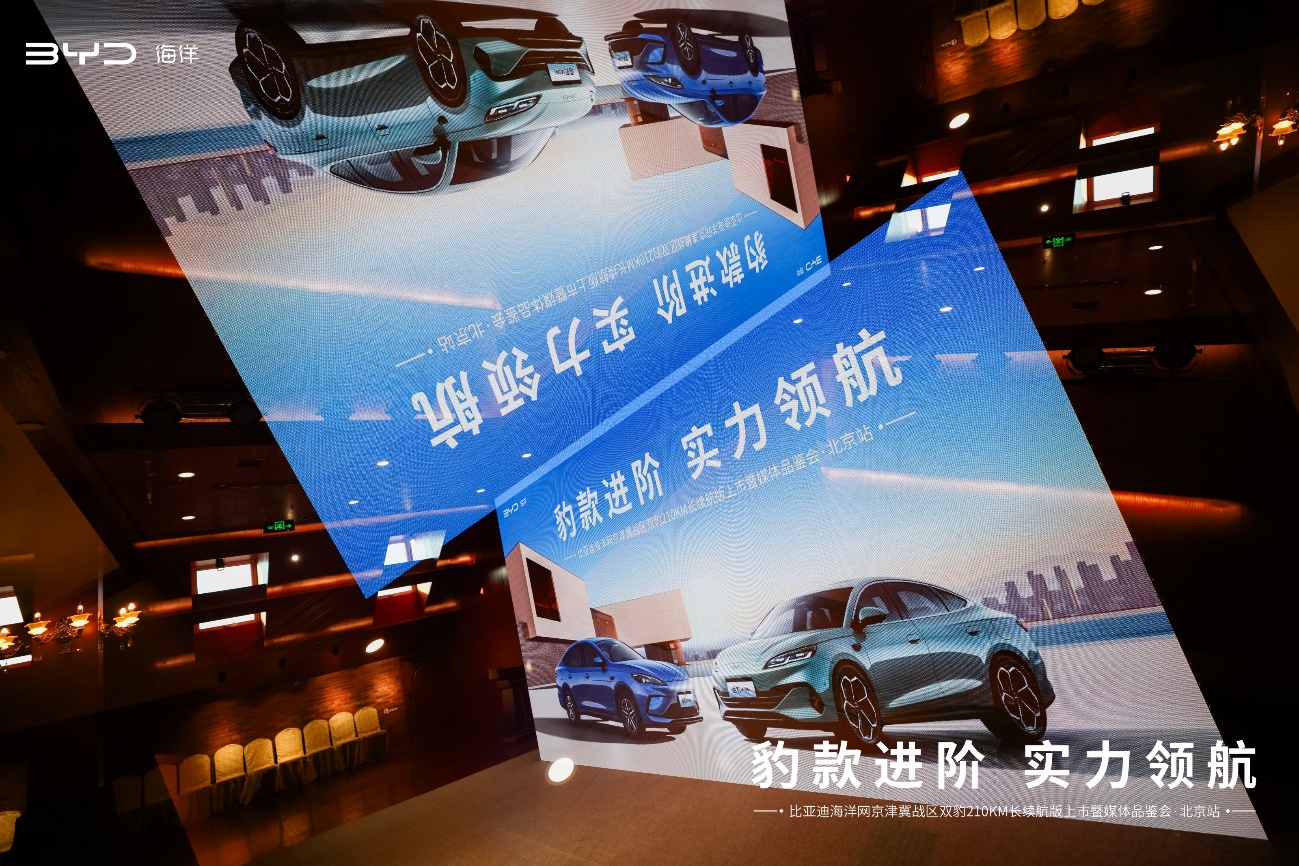
双豹升级 纯电续航210km!比亚迪海洋网2026款海豹05/06DM-i北京上市
Zhong Guo Zhi Liang Xin Wen Wang· 2026-01-30 07:51
Core Viewpoint - BYD launched the 2026 models of the Seal 05DM-i and Seal 06DM-i at a press conference in Beijing, with starting prices of 89,800 yuan and 116,800 yuan respectively, both offering a pure electric range of 210 km [1] Group 1: Product Features - The introduction of the 210 km pure electric range aims to provide users with a higher value experience, promoting "low-cost, zero-anxiety" green travel across various life scenarios [3] - The 210 km range is achieved through improvements in battery energy density and optimization of the vehicle's energy management system, alongside advancements in the safety performance of the lithium iron phosphate battery pack [5] - The "Heavenly Eye" advanced intelligent driving assistance system will be a key differentiator for high-end models, supporting over 20 functions including highway navigation and intelligent parking [5] Group 2: User Experience - BYD conducted long-distance pure electric road tests in low-temperature environments, covering various road conditions, with all test vehicles showing no significant battery depletion [7] - The "Heavenly Eye" intelligent parking experience area attracted significant attention, showcasing challenging parking scenarios where users can control the vehicle's parking process via a mobile app, enhancing convenience [9] - The system can currently recognize over 100 parking scenarios and continuously optimizes parking strategies through deep learning, aiming for "everyone can park easily" [11]
售价8.98万元起 比亚迪2026款海豹05DM-i/海豹06DM-i超享版加推长续航版本
Zhong Guo Zhi Liang Xin Wen Wang· 2026-01-30 07:49
Core Viewpoint - BYD's Ocean Network has launched two new models of its sedan series, the 2026 Seal 05DM-i and Seal 06DM-i Super Enjoy Edition, featuring a pure electric range of up to 210 km, with prices ranging from 89,800 to 126,800 yuan [1][8]. Group 1: Product Launch Details - The 2026 Seal 05DM-i introduces two new variants: the 210KM Premium and 210KM Flagship, priced at 89,800 yuan and 99,800 yuan respectively [1]. - The Seal 06DM-i Super Enjoy Edition also adds two new variants: the 210KM Enjoy and 210KM Flagship, priced at 116,800 yuan and 126,800 yuan respectively [1]. - Customers can benefit from various purchasing incentives, including zero down payment, zero interest, trade-in subsidies, and two years of free vehicle data [1]. Group 2: Intelligent Features - The new models are equipped with the Tian Shen Zhi Yan C-Auxiliary Driving system (DiPilot 100), offering over 20 functions such as high-speed navigation and intelligent parking [6]. - The 2026 Seal 05DM-i features over 100 core configurations as standard, enhancing smart, safety, and comfort aspects [6]. Group 3: Performance and Comfort Enhancements - The new models' electric range of 210 km allows for reduced charging frequency and increased electric travel for daily commutes, as well as extended travel radius for weekend trips [8]. - Interior features include split-type super sensory seats with multiple adjustments, a dual-zone climate control system, and a panoramic sunroof for an enhanced driving experience [10]. Group 4: Safety and Control Systems - The Yun Nian-C intelligent damping body control system provides millisecond-level adaptive adjustments to improve comfort and driving pleasure [11]. - Safety features include seven airbags, a W-HUD head-up display, and a tire blowout stability control system, ensuring a robust safety framework [11].

第一创业晨会纪要-20260130
First Capital Securities· 2026-01-30 03:56
Group 1: Company Performance - Shengyi Technology (生益科技) expects a net profit attributable to shareholders of 3.25 to 3.45 billion yuan for 2025, representing a year-on-year increase of 87% to 98%. Shengyi Electronics (生益电子) anticipates a net profit of approximately 1.44 to 1.51 billion yuan, a year-on-year increase of 331.03% to 355.88% [4] - Wei Ce Technology (伟测科技) forecasts a net profit of around 300 million yuan for 2025, reflecting a year-on-year increase of approximately 133.96%. The growth is driven by the penetration of AI and automotive electronics, as well as the recovery in consumer electronics [4] - Jindan Technology (金丹科技) projects a net profit of 96 to 138 million yuan for 2025, indicating a significant year-on-year growth of 156% to 268%. The growth is attributed to the successful launch of a 50,000-ton lactic acid expansion project and a decrease in procurement costs [10] - Hengfeng Paper (恒丰纸业) anticipates a net profit of 178 to 215 million yuan for 2025, a year-on-year increase of 54% to 86%. The growth is primarily due to the successful launch of a new production line and breakthroughs in overseas markets [11] - Jieya Co. (洁雅股份) expects a net profit of 72 to 88 million yuan for 2025, representing a year-on-year increase of 270% to 352%. The growth is driven by increased orders from major international clients and an improved business structure [12] Group 2: Industry Trends - The European Automobile Manufacturers Association reported that pure electric vehicle sales in the EU surged by 51% year-on-year to 217,898 units in December 2025, surpassing gasoline vehicles for the first time. The market share reached 22.6% [7] - In December, China's newly installed photovoltaic capacity was 40 GW, a year-on-year decrease of 43% but an increase of 84% month-on-month. The cumulative installed capacity for the year reached 315 GW, a year-on-year increase of 14% [8] - The snack food sector, represented by Wancheng Group (万辰集团), is expected to see a net profit of 1.23 to 1.4 billion yuan for 2025, driven by the continuous growth of the bulk snack business and an increase in store numbers to approximately 19,000 [14]


