
BYD(01211)

Search documents
真“眼红”啊!马斯克发文,感叹中国电动汽车需求强劲
Guan Cha Zhe Wang· 2026-01-30 03:45
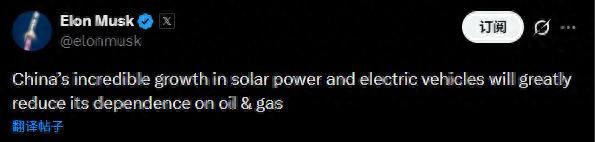
【文/观察者网 齐倩】 报告截图 产销双双突破3400万辆、产销连续17年稳居全球第一,新能源汽车新车销量占比近半、L2功能乘用车 渗透率达到64%……相较2024年,中国汽车行业去年进一步取得多方面突破。 今年1月,中国汽车工业协会公布的最新数据显示,2025年,我国汽车产销分别完成3453.1万辆和3440 万辆,同比分别增长10.4%和9.4%,高于年初预期。 1月30日,特斯拉首席执行官埃隆·马斯克在X平台转发一条2024年的推文:突发新闻——中国售出的汽 车中,电动汽车占比首次超过半数。 "中国太阳能和电动汽车的惊人增长,将大大降低其对石油和天然气的依赖。"马斯克写道。 推文提及,据中国乘用车市场信息联席会数据,2024年7月份,新能源汽车(包括电动汽车和插电式混 合动力汽车)零售销量占比达到创纪录的51.1%。"电动汽车已经明显减少了中国的石油需求:仅自 2023年以来,道路上电动汽车数量的增加就减少了约4%的交通燃料需求"。 同年8月份,英国专门研究气候变化的科学和政策网站"碳简报"(Carbon Brief)发布报告显示,中国二 氧化碳排放量在2024年第二季度下降1%,这是自疫情以来的首次季 ...



马斯克真“眼红”啊
Guan Cha Zhe Wang· 2026-01-30 03:43
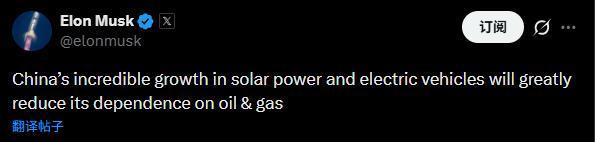
【文/观察者网 齐倩】 1月30日,特斯拉首席执行官埃隆·马斯克在X平台转发一条2024年的推文:突发新闻——中国售出的汽 车中,电动汽车占比首次超过半数。 "中国太阳能和电动汽车的惊人增长,将大大降低其对石油和天然气的依赖。"马斯克写道。 马斯克推文截图 马克龙转发的推文,将中国二氧化碳排放量下降与电动汽车需求上升联系在一起。 推文提及,据中国乘用车市场信息联席会数据,2024年7月份,新能源汽车(包括电动汽车和插电式混 合动力汽车)零售销量占比达到创纪录的51.1%。"电动汽车已经明显减少了中国的石油需求:仅自 2023年以来,道路上电动汽车数量的增加就减少了约4%的交通燃料需求"。 同年8月份,英国专门研究气候变化的科学和政策网站"碳简报"(Carbon Brief)发布报告显示,中国二 氧化碳排放量在2024年第二季度下降1%,这是自疫情以来的首次季度下降。 这份报告也指出,中国碳排放量下降,与石油产品需求持续下降相关。其中因素有很多,向电动汽车的 转型是其中之一。数据显示,过去十年,中国累计汽车销量中电动汽车的占比在2024年6月达到 11.5%,高于一年前的7.7%。"这意味着,电动汽车的增长使交 ...
加拿大给中国电车降税,是想和美国下大棋?
Sou Hu Cai Jing· 2026-01-30 03:12
Group 1 - Canada has eliminated a 100% tariff on Chinese electric vehicles (EVs), reducing the effective tariff to 6.1%, which significantly enhances the competitiveness of Chinese EVs in the Canadian market [1][2] - The tariff reduction applies only to a limited quota of vehicles, starting with 49,000 units in 2026 and increasing to 70,000 units annually thereafter, with unused quotas expiring at the end of the year [2][3] - The majority of the quota will be allocated to EVs priced below CAD 35,000 (approximately RMB 180,000), indicating a focus on affordable models [4] Group 2 - Tesla is positioned to benefit from this tariff reduction due to its established sales and service network in Canada, having previously exported models from its Shanghai factory [6][7] - Other companies like Lotus and Polestar may also gain advantages, but BYD is highlighted as having significant potential due to its range of affordable models [8][11] - The Canadian government is actively engaging with Chinese manufacturers like BYD and Chery, indicating a desire for these companies to invest in local manufacturing [11][16] Group 3 - The tariff reduction is part of a broader strategy by Canada to diversify its automotive industry and reduce reliance on the U.S. market, which has imposed punitive tariffs on Canadian exports [13][15] - Canada aims to leverage its natural resources, such as lithium and cobalt, to establish itself as a key player in the EV market, moving away from solely supporting U.S. automotive production [16][18] - The collaboration between Canada and China in the EV sector is seen as a strategic move to create leverage against U.S. trade policies, potentially stabilizing the Canadian automotive industry [18][20] Group 4 - Although the initial quota represents only about 3% of Canada's annual new car sales, it opens a significant market opportunity for Chinese EV manufacturers [20][22] - Successful entry into the Canadian market could lead to increased exports of technology and components, enhancing China's influence in the global EV supply chain [22][23]

智通港股沽空统计|1月30日
智通财经网· 2026-01-30 00:22
Group 1 - The core viewpoint of the articles highlights the short-selling activities of various companies, with specific focus on the short-selling ratios and amounts for leading firms in the market [1][2]. Group 2 - The top three companies by short-selling ratio are BYD Company Limited (95.08%), Lenovo Group Limited (85.25%), and Baidu Group (76.60%) [1]. - The highest short-selling amounts are recorded for China Ping An (1.88 billion), Xiaomi Group (1.086 billion), and Alibaba Group (1.062 billion) [2]. - The top three companies with the highest deviation values, indicating significant short-selling activity compared to their historical averages, are Baidu Group (39.38%), BYD Company Limited (35.91%), and Fuhong Hanlin (27.27%) [1][2].





密集官宣全固态电池,纯电车最后一块短板要被补齐了
Hua Er Jie Jian Wen· 2026-01-29 23:23
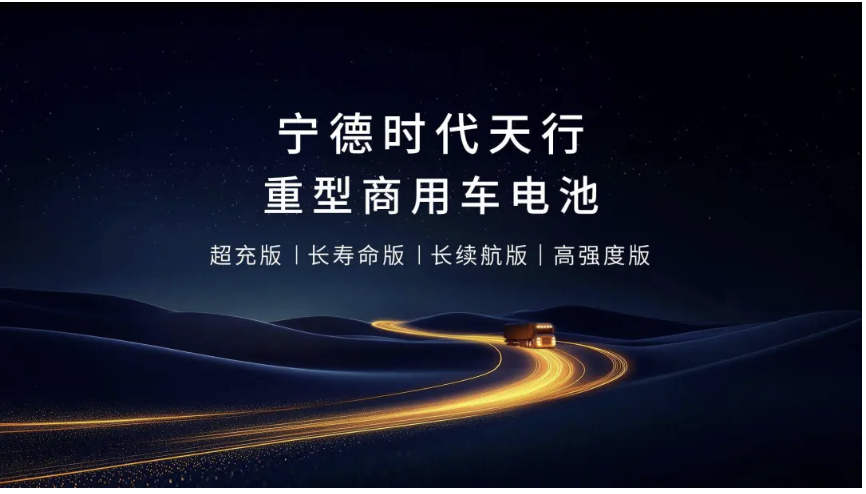
Core Viewpoint - The new energy vehicle (NEV) industry is experiencing a favorable shift due to changing geopolitical relations, with markets like Europe and Canada opening up to Chinese NEVs, which were previously hindered by tariffs and policy barriers [1][3] Group 1: Market Dynamics - European and Canadian markets are now welcoming Chinese NEVs, with the EU even suggesting price increases for these vehicles, alleviating pressure on domestic brands [1] - Concerns remain regarding the performance of Chinese NEVs in cold climates, particularly in Canada, where battery efficiency may be compromised [1][3] Group 2: Technological Advancements - CATL's "Tianxing II" sodium-ion battery, capable of maintaining 90% capacity at -40°C, represents a significant technological breakthrough for NEVs in extreme cold environments [2][3] - The market response to the "Tianxing II" battery has been muted, overshadowed by rumors of Huawei's solid-state battery, which reportedly offers a range of 3000 km and rapid charging capabilities [2][3] Group 3: Battery Technology Evolution - The NEV industry has transitioned from lithium-ion batteries, primarily led by Tesla, to lithium iron phosphate (LFP) batteries, which are cheaper and safer but have limitations in energy density [4][5] - CATL's fifth-generation LFP battery has achieved a range of nearly 1200 km, making it competitive against traditional lithium-ion technologies [5] Group 4: Future of Battery Technology - Sodium-ion batteries, like the "Tianxing II," are seen as a potential solution for extreme environments, but they do not fully address the industry's need for high-performance, cost-effective solutions [6][7] - Solid-state batteries are viewed as the next major breakthrough, with potential energy densities significantly higher than current lithium-ion technologies, promising ranges over 2000 km and rapid charging times [8][10] Group 5: Market Implications - The cost of batteries constitutes about 40% of the total cost of electric vehicles, making the development of solid-state batteries critical for competitive pricing and profit margins [10][11] - Major automotive and battery companies are racing to develop solid-state technology, with firms like Toyota and Samsung targeting commercial production by 2027 [11][12] Group 6: Challenges Ahead - Despite the promise of solid-state batteries, challenges such as high production costs, charging speed limitations, and the need for new manufacturing processes remain significant hurdles [14][15] - Experts predict that while solid-state technology may see technical advancements by 2030, widespread commercial availability may not occur until 2035 [15]

智通ADR统计 | 1月30日
智通财经网· 2026-01-29 22:41
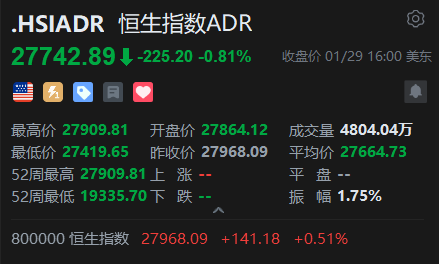
Market Overview - The Hang Seng Index (HSI) closed at 27,742.89, down by 225.20 points or 0.81% as of January 29, 16:00 Eastern Time [1] - The index reached a high of 27,909.81 and a low of 27,419.65 during the trading session, with an average price of 27,664.73 [1] - The 52-week high for the index is 27,909.81, while the 52-week low is 19,335.70 [1] Blue-Chip Stocks Performance - Most large-cap stocks experienced declines, with HSBC Holdings closing at HKD 138.219, up 0.45% compared to the Hong Kong close [2] - Tencent Holdings closed at HKD 619.286, down 0.44% from the Hong Kong close [2] Individual Stock Movements - Tencent Holdings (00700) latest price is HKD 622.000, with a slight increase of 1.000 or 0.16% [3] - Alibaba Group (09988) latest price is HKD 173.300, down by 0.200 or 0.12% [3] - HSBC Holdings (00005) latest price is HKD 137.600, up by 0.100 or 0.07% [3] - China Construction Bank (00939) latest price is HKD 8.160, up by 0.130 or 1.62% [3] - AIA Group (01299) latest price is HKD 90.950, up by 2.100 or 2.36% [3] - Xiaomi Group (01810) latest price is HKD 36.620, up by 0.300 or 0.83% [3] - NetEase (099999) latest price is HKD 206.600, down by 5.400 or 2.55% [3] - Meituan (03690) latest price is HKD 98.600, up by 0.250 or 0.25% [3] - Industrial and Commercial Bank of China (01398) latest price is HKD 6.640, up by 0.050 or 0.76% [3] - Hong Kong Exchanges and Clearing (00388) latest price is HKD 444.200, up by 5.000 or 1.14% [3] - Ping An Insurance (02318) latest price is HKD 73.300, up by 2.350 or 3.31% [3] - Baidu Group (09888) latest price is HKD 155.500, down by 0.600 or 0.38% [3] - China Bank (03988) latest price is HKD 4.760, up by 0.090 or 1.93% [3] - BYD Company (01211) latest price is HKD 101.800, down by 1.000 or 0.97% [3] - JD.com (09618) latest price is HKD 114.600, down by 1.700 or 1.46% [3] - Ctrip Group (09961) latest price is HKD 482.200, down by 13.200 or 2.66% [3]



越南汽车制造商将与中国比亚迪合作,投资1.3亿美元建设电动汽车电池工厂
Shang Wu Bu Wang Zhan· 2026-01-29 16:47
Core Insights - The core viewpoint of the article is that the Vietnamese automotive manufacturer, Thaco, is collaborating with China's BYD to invest $130 million in establishing a battery production facility for commercial electric vehicles in central Vietnam [1] Group 1: Investment and Collaboration - Thaco announced a partnership with BYD to invest $130 million in a battery factory [1] - Thaco will cover the construction costs of the facility, while BYD will provide comprehensive technical support [1] Group 2: Facility Details - The battery factory will be built on a 4.4-hectare site with an annual production capacity of 3 GWh [1] - In the second phase, the facility will expand to 10 hectares, doubling its production capacity to 6 GWh per year [1] Group 3: Market Context - The factory will produce batteries for commercial vehicles, including buses, trucks, and vans [1] - Vietnam's electric vehicle market is rapidly growing, primarily driven by leading companies like VinFast [1]
比亚迪、签约埃克森美孚
DT新材料· 2026-01-29 16:05
【DT新材料】 获悉, 1月26日, 埃克森美孚(中国)投资有限公司 (以下简称"埃克森美孚中国")在深圳 比亚迪 总部与其签署长期战略合作备忘录, 标志着 双方在新能源混动技术领域迈入全新合作阶段。 此前, 埃克森美孚中国与比亚迪联合推出了专为插电式混合动力车型打造的比亚迪美孚™混动专加系列定制发动机油,在提升燃油经济性的同时 ,兼具优异的 水分处理能力和乳化稳定性,能够应对PHEV发动机经常因低温短途运行而容易产生水分的问题,为发动机提供出色的润滑保护,保障PHEV发动机在各种工况下 的平稳运行。 基于此,双方将继续发挥在技术共研与成果转化方面的创新能力,重点围绕定制化产品研发、技术协同与标准共建、品牌联合赋能等领域深化合作, 并积极探索 新材料应用等更多协同创新可能,共同助力行业向可持续 、智能化的未来发展,实现"强强联合、共创共赢"的长期愿景。双方也将协同优化供应链流程,进一步 提升比亚迪全球供应链的韧性,从而更高效地响应市场需求,服务全球消费者。 本次签约,比亚迪集团董事长兼总裁 王传福 、比亚迪集团副总裁兼第二十一事业部总经理任林,埃克森美孚全球润滑油业务总裁 贺达威 、埃克森美孚北亚润滑 油业务 ...

未来的机会在这里!任泽平带你看前沿科技
泽平宏观· 2026-01-29 16:05
以下文章来源于泽平宏观商学 ,作者泽平宏观商学 泽平宏观商学 . 前沿科技企业实战研学 读万卷书行万里路 2025 年 12 月 用心打造最有品质的实战研学。读万卷书,行万里路。把教室搬到世界上最优秀的企业, 请最优秀的企业家和科学家讲课。顺势而为,把握机遇。正心正念,坚持做长期正确的 事! 我们期待与更多的企业家朋友们携手同行,共赴 2026 实战研学之旅! 泽 ZEP 平 INGM 宏 ACR 观 O RE 商 SEAR 学 CH 1-6月日程安排 · 2月27日 北京 国内头部智驾科技企业 人形机器人 年研学安 型成 11月4日-11日 洛杉矶、拉斯维加斯、旧金山 CES、英伟达、特斯拉 谷歌、罗宾汉、playground 斯坦福大学、伯克利大学 3月27日-28日 苏州 追觅科技、魔法原子、灵猴机器人 闭门投研会-2026 Al 的中国力量(一) 3月29日 上海 长三角校友会 4月20日-21日 香港 2026 香港 Web3 嘉年华 复星财富、HashKey、港交所 5月22日-23日 1151 11:47:50 深圳 华为、新凯来、江波龙、莫界科技 闭门投研会—2026 Al 的中国力量(二) ...



伯镭科技获比亚迪1亿元战略投资,推动矿山电动化与无人化
Guan Cha Zhe Wang· 2026-01-29 15:25
Core Insights - BYD has made a strategic investment of 100 million yuan in Berai Technology, focusing on the integration of electrification and automation in mining scenarios [1][2] - Berai Technology has developed a comprehensive technology stack featuring "L4 autonomous driving + unmanned battery swapping + intelligent scheduling," which aims to provide economically viable zero-carbon transformation solutions for traditional mining [1] - The funding will enhance R&D, expand intelligent production capacity, accelerate domestic and international market expansion, and deepen industrial ecosystem cooperation [1] Company Collaboration - BYD's expertise in electric vehicle battery, electronic control technology, and large-scale manufacturing will synergize with Berai Technology's capabilities in intelligent mining vehicles and unmanned operations [1][2] - Both companies plan to collaborate on technology R&D, supply chain optimization, and product exploration in specific scenarios to promote the application of new energy and intelligent technology in heavy industry [1] Market Expansion - BYD has a global presence, with its electric vehicles operating in over 110 countries and regions across six continents, and is establishing production bases in countries like Thailand, Uzbekistan, Brazil, and Hungary [1] - The local operational experience, supply chain resources, and brand influence of BYD will support the joint exploration of the international high-end mining equipment market [1][2] Strategic Vision - BYD's Chief Investment Officer emphasized the importance of investing in partners with strong core technologies that can create significant synergies with BYD's main business [2] - The investment in Berai Technology is seen as a recognition of its technological direction and commercial value, enhancing confidence among customers, partners, and the market [2] - Berai Technology aims to continue focusing on enhancing productivity through intelligent technology and collaborating with global industry partners to accelerate the green and intelligent transformation of mining and other heavy industrial scenarios [2]
