BYD(01211)

Search documents
从10%充至97%仅需9分钟,比亚迪发力闪充技术,背后还有\"三年倍增\"行动方案
Xuan Gu Bao· 2026-03-05 23:14
Group 1 - BYD officially launched the second-generation blade battery and megawatt fast charging technology, achieving the fastest charging speed for mass-produced vehicles globally, with a 10% to 97% charge in just 9 minutes [1] - The second-generation blade battery supports a maximum charging rate of 8C, with a peak power of 480kW and an energy density of approximately 200Wh/kg, representing a 50% improvement over the first generation [1] - BYD plans to build 20,000 fast charging stations by the end of 2026 as part of its "Fast Charging China" strategy, with a single megawatt fast charging pile reaching 1500kW, a 50% increase from the first generation [1] Group 2 - According to a report from Open Source Securities, the National Development and Reform Commission and other departments aim to establish 28 million charging facilities by the end of 2027, with a focus on high-power charging guns and V2G facilities [2] - The "Three-Year Doubling" action plan is expected to lead to a new investment cycle in charging piles, benefiting the entire supply chain including charging modules and cables [2] - Specific companies like Teruid and Tonghe Technology are positioned well within the charging infrastructure sector, with Teruid being a leading domestic charging operator and Tonghe focusing on high-power charging module development [3][4]

伊朗:无人机击中美军“林肯”号航母,已做好应对美军地面入侵的准备;道指跌近800点,美油涨超6%;比亚迪发布第二代刀片电池丨每经早参
Mei Ri Jing Ji Xin Wen· 2026-03-05 22:51
Group 1 - The Iranian military claims that the US aircraft carrier "Abraham Lincoln" was hit by an Iranian drone in the Oman Sea, prompting the carrier to retreat over 1,000 kilometers from the area [2][8][9] - The US stock market saw a collective decline, with the Dow Jones dropping by 784.67 points (1.61%), while international oil prices surged, with WTI crude oil rising by 6.71% to $79.70 per barrel [2][6] - BYD announced the launch of its second-generation blade battery and fast-charging technology, achieving a charging speed of 70% in 5 minutes and 97% in 9 minutes, along with plans to establish 20,000 fast-charging stations by the end of 2026 [2][16] Group 2 - The Chinese government set an economic growth target of 4.5% to 5% for 2026, with additional goals including a 5.5% urban unemployment rate and a 2% increase in consumer prices [4][5] - The Ministry of Industry and Information Technology highlighted that the artificial intelligence sector is expected to exceed 1.2 trillion yuan in core industry scale by 2025, with over 6,200 companies involved [6] - JD Group reported a revenue of 1.309 trillion yuan for 2025, with a net profit of 27 billion yuan, while JD Logistics achieved a revenue of 217.1 billion yuan, marking an 18.8% year-on-year growth [18][19] Group 3 - Alibaba denied rumors regarding the collective departure of its "Qianwen Model" team, asserting that the team remains stable and operations are normal [20] - OpenAI released the GPT-5.4 model, which supports a context window of up to 1 million tokens, enhancing its capabilities for complex tasks [27] - Bilibili reported a total revenue of 30.35 billion yuan for 2025, with an adjusted net profit of 2.59 billion yuan, indicating a significant improvement in profitability [28]





比亚迪唯一的对手,是人类的素质
半佛仙人· 2026-03-05 16:06
Core Viewpoint - BYD has made significant advancements in charging technology, making electric vehicle charging comparable to refueling traditional vehicles, thus addressing the anxiety around charging speed [5][6]. Group 1: Technological Advancements - BYD's charging technology is described as being on par with science fiction, showcasing remarkable progress in the realm of electric vehicle charging [5]. - The current charging speed achieved by BYD is nearly equivalent to traditional refueling, alleviating concerns about charging time for electric vehicles [6]. Group 2: Human Behavior and Charging Infrastructure - The primary issue affecting charging efficiency is not the technology itself but rather the behavior of users who occupy charging stations without actively charging their vehicles [7]. - Unlike gas stations, where human oversight ensures efficient use of space, electric vehicle charging stations suffer from users treating them as temporary parking spots, leading to inefficiencies [6][8]. - Charging stations face challenges from low-quality user behavior, which cannot be resolved by technological advancements alone [7][8].
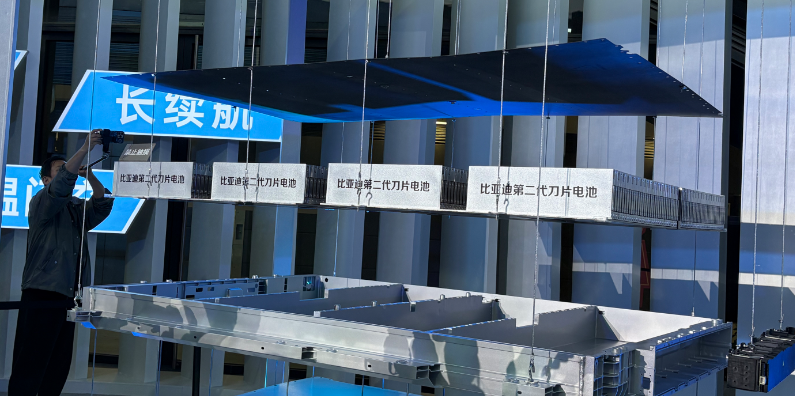
5分钟充好!比亚迪,“王炸”动力电池发布
DT新材料· 2026-03-05 16:05
Core Viewpoint - BYD has officially launched its second-generation blade battery, addressing key issues in the electric vehicle industry such as slow charging and low-temperature charging times [1]. Group 1: Charging Speed - The second-generation blade battery can charge from 10% to 70% in just 5 minutes, matching traditional refueling speeds [1]. - It takes only 9 minutes to charge from 10% to 97%, setting a record for the fastest mass-produced charging speed globally [1]. - A real-world test of the BYD Seal 07 EV showed a charging time of 8 minutes and 44 seconds from 10% to 97% [3]. Group 2: Low-Temperature Charging - The second-generation blade battery effectively resolves the issue of slow charging in low temperatures, demonstrated by a test in Harbin at -20°C, where it charged from 20% to 97% in just 12 minutes [4]. Group 3: Model Performance - Various BYD models, including the Yangwang U7, Seal 07, and Dolphin 06, achieved charging times under 11 minutes to reach 97% [6]. - Specific charging times for different models include: Yangwang U7 at 10 minutes 29 seconds, Seal 07 at 10 minutes 36 seconds, and Dolphin 06 at 10 minutes 44 seconds [7]. Group 4: Energy Efficiency - The decision to charge only up to 97% leaves a 3% buffer for regenerative braking, which helps reduce vehicle energy consumption [8]. Group 5: Charging Infrastructure - BYD plans to establish 20,000 fast-charging stations nationwide by the end of 2026, with 4,239 already built as of March 5, 2026, and an additional 1,000 fast-charging stations set to be completed by May 1, 2026 [9]. Group 6: Sales Performance - In 2025, BYD's global sales reached 4.602 million units, a year-on-year increase of 7.7%, with pure electric vehicle sales exceeding 2.25 million units, marking a 28% increase and surpassing Tesla's sales of 1.64 million units during the same period [10].

比亚迪,重要发布!
Xin Lang Cai Jing· 2026-03-05 15:43
Core Viewpoint - BYD has launched its second-generation blade battery and flash charging technology, aiming to address slow charging and low-temperature charging challenges that hinder the development of electric vehicles in China [1][5]. Group 1: Battery Technology Highlights - The second-generation blade battery can charge from 10% to 70% in approximately 5 minutes and from 10% to 97% in about 9 minutes [1][5]. - In low-temperature conditions, the battery can charge from 20% to 97% in around 12 minutes at -20 degrees Celsius [1][5]. - The energy density of the second-generation blade battery has increased by over 5% compared to the previous generation [2][5]. Group 2: Safety and Testing - The second-generation blade battery has undergone rigorous testing, including 500 flash charge cycles combined with puncture tests, thermal runaway tests with short-circuited cells, and impact tests at 10 times the new national standard [3][6]. Group 3: Infrastructure Development - BYD plans to build 20,000 flash charging stations by the end of 2026, including 18,000 "flash charging sub-stations" and 2,000 "flash charging highway stations" [3][6]. - The first batch of 1,000 flash charging highway stations is expected to be completed before the May Day holiday [3][6]. Group 4: Vehicle Models - Ten models equipped with the second-generation blade battery have been announced, including the Tang, the new Tengshi Z9GT, and the Yangwang U7 2026 model [3][6].
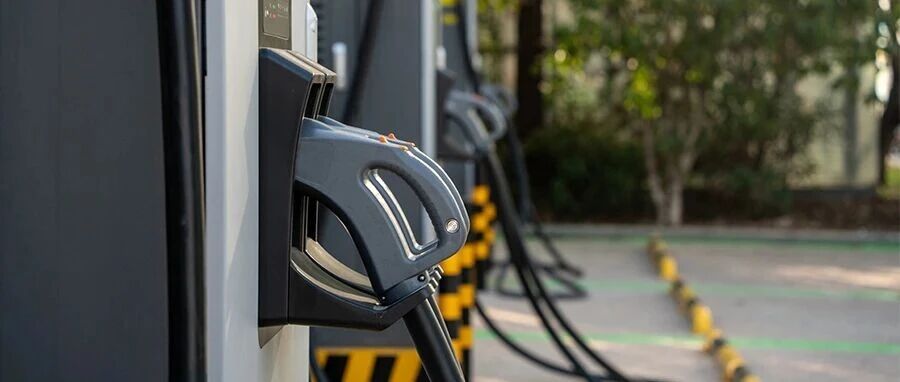
比亚迪“王炸”:5分钟充好,9分钟充饱!
证券时报· 2026-03-05 15:33
Core Viewpoint - BYD has unveiled its second-generation blade battery and flash charging technology, which significantly enhances charging speed and efficiency, marking a transformative step in electric vehicle (EV) technology [3][5]. Group 1: Battery Technology - The second-generation blade battery can charge from 10% to 70% in just 5 minutes and from 10% to 97% in 9 minutes, showcasing true flash charging capabilities [5]. - The energy density of the new battery has improved by 5% compared to the first generation, while maintaining safety and battery lifespan during fast charging [5]. - The first models equipped with the second-generation blade battery include ten different vehicles, such as the 2026 models of Yangwang U8 and Song Ultra EV [5]. Group 2: Charging Infrastructure - BYD is launching the "Dream Building Plan" for flash charging stations, with the ability to complete station construction within a week based on demand [7]. - All owners of vehicles equipped with the second-generation blade battery will receive one year of free flash charging starting from the date of delivery [7]. - As of March 5, 2026, BYD aims to establish 20,000 flash charging stations nationwide, having already built 4,239 stations, with plans for 1,000 high-speed charging stations by May 1, 2026 [10]. Group 3: Market Position and Future Outlook - According to the China Automobile Industry Association, China's automotive production and sales are projected to reach 34.53 million and 34.40 million units respectively by 2025, with BYD expected to sell 4.602 million vehicles globally, a 7.7% increase year-on-year [8]. - BYD's pure electric vehicle sales are anticipated to exceed 2.25 million units in 2025, representing a 28% year-on-year growth, significantly outpacing Tesla's expected sales of 1.64 million units [8]. - The company’s core strategies for the next three years will focus on high-end and global expansion [9].
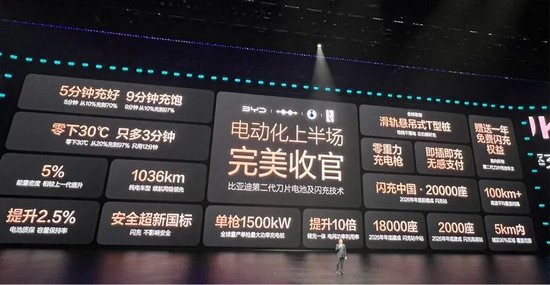
充电从10%到70%,5分钟!比亚迪刀片电池刷新充电速度记录
Guang Zhou Ri Bao· 2026-03-05 15:20
Core Insights - BYD has launched its second-generation blade battery and fast-charging technology, aiming to revolutionize the electric vehicle (EV) landscape once again [2] - The new blade battery can charge from 20% to 97% in under 12 minutes in extreme temperatures ranging from -20°C to 30°C, which is only 3 minutes longer than at room temperature [2] - The fast-charging technology significantly reduces charging times compared to industry standards, where typical fast charging takes nearly an hour and ultra-fast charging around 20 minutes [2] Charging Performance - The second-generation blade battery can achieve a charging time of less than 12 minutes for vehicles that have been frozen for 24 hours [2] - The showcased vehicles demonstrated the ability to charge from 20% to 97% in all cases within the 12-minute timeframe [2] - This advancement in charging speed positions BYD's technology as a leader in the EV market, potentially setting new benchmarks for charging efficiency [2]
BYD Launches New Fast-Charging Battery Amid Slowing Demand in China
WSJ· 2026-03-05 15:05
Core Viewpoint - The world's largest electric vehicle manufacturer has introduced a new electric vehicle battery that can be fully charged in nine minutes, aiming to tackle declining demand and decreasing market share in the industry [1] Group 1: Product Development - The new battery technology represents a significant advancement in charging speed, potentially enhancing consumer appeal and addressing concerns over charging infrastructure [1] Group 2: Market Context - The introduction of this battery comes at a time when the electric vehicle market is experiencing slowing demand and the company is facing challenges in maintaining its market share [1]
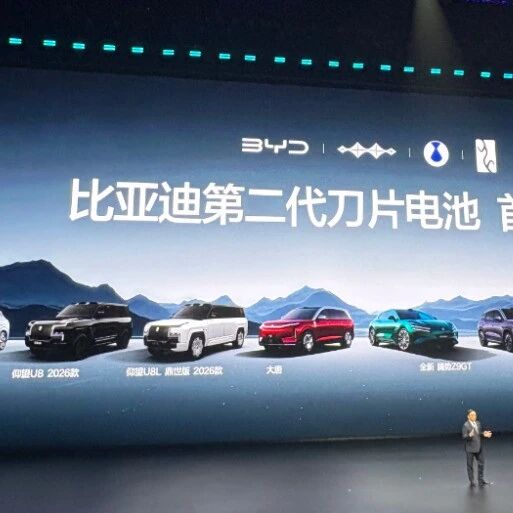
王传福:没有人比我们更懂电池!比亚迪官宣第二代刀片电池及闪充技术:10%充至97%仅9分钟,10款车率先搭载
Mei Ri Jing Ji Xin Wen· 2026-03-05 15:00
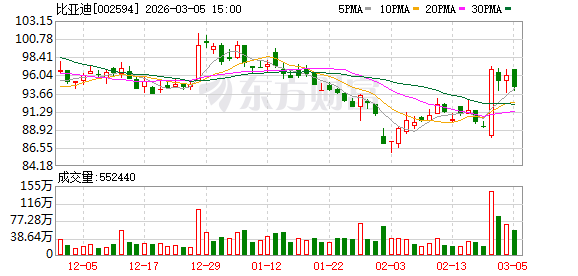
Core Viewpoint - BYD's Chairman Wang Chuanfu emphasized that the transition from fuel vehicles to electric vehicles is crucial for national energy security, marking it as a lifelong mission. The company has launched the second-generation blade battery and flash charging technology, which allows for rapid charging capabilities [2][4]. Group 1: Product Launch and Technology - The second-generation blade battery features significant upgrades, enabling charging from 10% to 70% in just 5 minutes and from 10% to 97% in 9 minutes, even in low temperatures [7][11]. - The flash charging technology enhances energy density by 5% compared to the first generation, addressing user pain points by providing consistent fast charging throughout the process [9]. - BYD introduced 10 new models equipped with the second-generation blade battery and flash charging technology, including the Song Ultra and the 2026 models of various other vehicles [9][11]. Group 2: Flash Charging Strategy - BYD announced the "Flash Charging China" strategy, aiming to build 20,000 flash charging stations by the end of 2026, including 18,000 "flash charging mid-stations" and 2,000 "flash charging highway stations" [6][12]. - The mid-stations will be constructed in existing public charging stations, allowing for rapid deployment without increasing grid capacity or land use [12]. - The highway stations will cover nearly one-third of highway service areas, with plans to establish the first 1,000 stations by the upcoming May [14]. Group 3: Market Impact and Sales Forecast - Following the announcement of the new technology, BYD's stock price surged nearly 9%, with a trading volume exceeding 13.5 billion yuan, indicating strong market interest [15]. - BYD's cumulative sales of new energy vehicles surpassed 400,000 units in the first two months of the year, with projections for 2026 sales reaching 5.12 million units, an 11% increase year-on-year [16]. - Domestic sales are expected to remain stable at 3.56 million units, while exports are projected to grow by 44% to 53%, reaching 1.5 to 1.6 million units [16].
王传福重磅发布!5分钟充好,9分钟充饱!比亚迪王炸来了!
Xin Lang Cai Jing· 2026-03-05 14:17
Core Viewpoint - BYD has unveiled its second-generation blade battery technology, which significantly enhances charging speed and efficiency, marking a transformative step in electric vehicle battery technology [1][3]. Group 1: Battery Technology - The second-generation blade battery can charge from 10% to 70% in just 5 minutes and from 10% to 97% in 9 minutes, showcasing true fast-charging capabilities [3]. - The energy density of the new battery has increased by 5% compared to the first generation, while maintaining safety and longevity during fast charging [3]. Group 2: Vehicle Integration - The first models to feature the second-generation blade battery include ten different vehicles, such as the 2026 models of Yangwang U8 and U7, and the new Tengshi Z9GT [3]. Group 3: Charging Infrastructure - BYD is launching the "Dream Building Plan" for fast charging stations, with the ability to complete station construction within a week [5]. - As of March 5, 2026, BYD has built 4,239 fast charging stations and aims to establish 20,000 by the end of 2026, including 1,000 high-speed stations by May 1, 2026 [7]. Group 4: Market Position and Future Outlook - According to the China Automobile Industry Association, BYD is projected to sell 4.602 million vehicles globally in 2025, with a 7.7% year-on-year increase, and pure electric vehicle sales expected to exceed 2.25 million, a 28% surge [6]. - BYD's strategic focus for the next three years will be on high-end and global market expansion [6].