
BYD(01211)

Search documents
比亚迪二代刀片电池+闪充“双王炸”!燃油车已死,有事烧纸!
电动车公社· 2026-03-06 01:33
Core Viewpoint - The article discusses the launch of BYD's second-generation blade battery, highlighting its significant advancements in charging speed, safety, and energy density, which are expected to revolutionize the electric vehicle (EV) market and address consumer concerns about charging anxiety [1][3][25]. Group 1: Second-Generation Blade Battery Features - The second-generation blade battery offers unprecedented charging speeds, allowing users to charge from 10% to 70% in just 5 minutes and from 10% to 97% in 9 minutes, which is a significant improvement over existing technologies [6][10]. - In extreme cold conditions, the battery can still charge from 20% to 97% in just 12 minutes, demonstrating minimal impact from low temperatures on charging performance [14][16]. - The energy density of the second-generation blade battery has increased by 5% compared to the first generation, enabling a range of over 1000 kilometers for certain models [18][20]. Group 2: Safety and Durability - BYD has enhanced the safety features of the second-generation blade battery, conducting rigorous tests that exceed national standards, including puncture tests on batteries that have undergone 500 charge cycles without failure [22][24]. - The battery's lifespan has been improved, with a 2.5% increase in the capacity retention threshold compared to the first generation, ensuring longer usability [20]. Group 3: Charging Infrastructure and Strategy - BYD is launching a new charging infrastructure initiative called "Flash Charge China," aiming to build 20,000 charging stations by the end of 2026, significantly increasing the availability of fast charging options [47][49]. - The new charging stations will feature a maximum power output of 1500 kW, making them the highest capacity charging stations globally, and will utilize energy storage systems to mitigate grid impact [38][41]. - The charging process has been simplified for users, allowing for a seamless experience with minimal steps required to initiate charging [45]. Group 4: Market Implications and Future Outlook - The introduction of the second-generation blade battery and the accompanying charging infrastructure is expected to enhance the competitiveness of BYD's electric vehicles, potentially leading to a significant market share in the EV sector [28][55]. - BYD's strategy aims to not only improve its own product offerings but also to set a new standard for the entire electric vehicle industry, pushing towards a future where electric vehicles can match or exceed the convenience of traditional fuel vehicles [36][56].


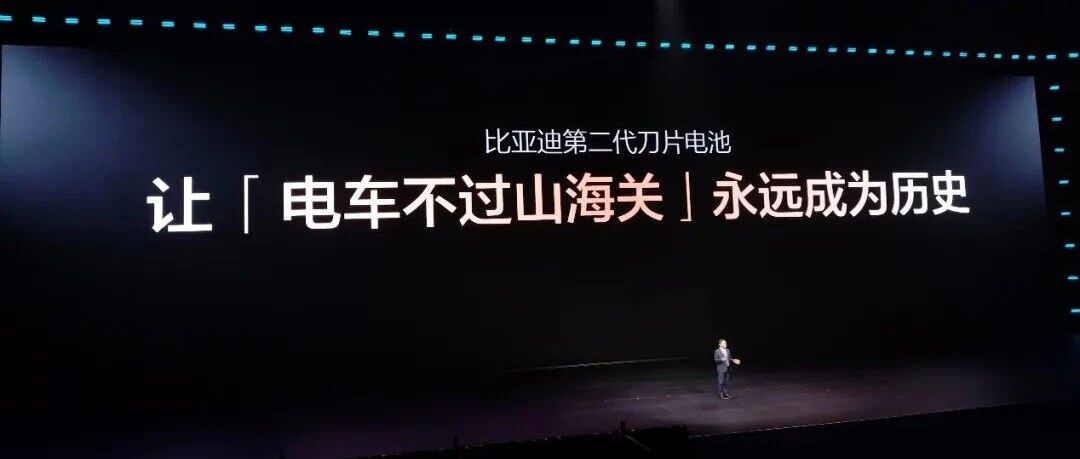
比亚迪王传福:要在不到一年时间里,把充电站数量做到中国车企第一
Guo Ji Jin Rong Bao· 2026-03-06 01:31
Group 1 - The core viewpoint of the article is that BYD aims to establish 20,000 charging stations by the end of this year, positioning itself as the leader among Chinese automotive companies in terms of charging station quantity [1] Group 2 - BYD's Chairman and President, Wang Chuanfu, announced the ambitious goal during the launch of the second-generation blade battery and fast-charging technology [1]
把油车往死里干,比亚迪王炸黑科技:满电只需5分钟,10万级也标配,建闪充就像装空调
3 6 Ke· 2026-03-06 01:26
Core Insights - BYD is focusing on enhancing its electric vehicle (EV) technology with the introduction of the second-generation blade battery and megawatt fast charging, aiming to eliminate range anxiety and charging time issues for consumers [4][10][36] - The company plans to standardize these technologies across all new models, making them accessible to a wider range of consumers, including those in the lower price segments [11][16][39] - BYD's ambitious goal for 2026 includes building 20,000 fast charging stations, significantly increasing the availability of charging infrastructure without requiring extensive upgrades to the existing power grid [22][24][27] Group 1 - BYD's strategy for 2026 emphasizes the transition from traditional fuel vehicles to electric vehicles, with a focus on rapid charging capabilities [1][4] - The second-generation blade battery increases capacity from 100 kWh to 120 kWh, allowing for a record range of 1,036 km on the latest model [8][10] - The megawatt fast charging technology can charge from 10% to 70% in just 5 minutes and from 10% to 97% in 9 minutes, addressing common consumer concerns about charging times [10][12] Group 2 - The company has tested its charging technology in extreme cold conditions, achieving full charges in under 12 minutes at temperatures as low as -30 degrees Celsius [13][14] - BYD's charging stations are designed to be low-cost and easy to install, allowing for rapid deployment and widespread accessibility [24][27] - The integration of advanced battery technology and charging infrastructure positions BYD to compete effectively against traditional fuel vehicles, potentially leading to a significant increase in EV adoption [16][36] Group 3 - BYD's new models, including the Tengshi Z9GT and the flagship SUV Datang, feature the latest battery and charging technologies, with ranges exceeding 800 km [37][39] - The company aims to achieve an annual sales target of 5.6 million vehicles, leveraging its technological advancements to regain its position as the top seller in the automotive market [36][42] - BYD's approach to democratizing advanced EV technology across various price points is expected to reshape the competitive landscape in the automotive industry [41][42]
比亚迪砍向蔚来
3 6 Ke· 2026-03-06 01:26
Core Insights - BYD has introduced a new battery technology that allows for rapid charging, significantly reducing the time needed to charge electric vehicles, which poses a challenge to NIO's battery swapping model [2][4][21] - NIO's battery swapping network, while extensive, faces pressure as BYD's advancements in fast charging diminish the time advantage of swapping batteries [6][16][20] Group 1: BYD's Advancements - BYD's new battery technology enables charging from 10% to 70% in just 5 minutes and from 20% to 97% in 12 minutes in extreme cold conditions [2][4] - The company has built a comprehensive charging infrastructure with plans to establish 20,000 fast charging stations, enhancing accessibility for users [4][5] - BYD's second-generation blade battery is attracting interest from other brands, indicating a potential for revenue generation beyond its own vehicles [15][21] Group 2: NIO's Challenges - NIO's battery swapping model, which was designed to address slow charging times, is now at risk as BYD's fast charging technology narrows the gap [3][6] - Despite achieving significant delivery numbers, NIO's reliance on a multi-brand strategy may dilute its premium brand image and affect profitability [10][14] - NIO's recent financing for its chip subsidiary aims to enhance its technological capabilities, but the core issue of charging speed remains a priority for new customers [7][8][9] Group 3: Market Dynamics - The competition between fast charging and battery swapping represents a fundamental shift in the electric vehicle market, with both companies adopting different strategies to capture market share [14][22] - NIO's future profitability hinges on transforming its battery swapping network from a cost center to a profit center, which requires achieving higher utilization rates [18][20] - The rapid evolution of charging technology poses a threat to NIO's existing business model, necessitating continuous innovation and adaptation [19][22]

王传福:比亚迪今年将在全国建成20000座闪充站
Guo Ji Jin Rong Bao· 2026-03-06 01:21
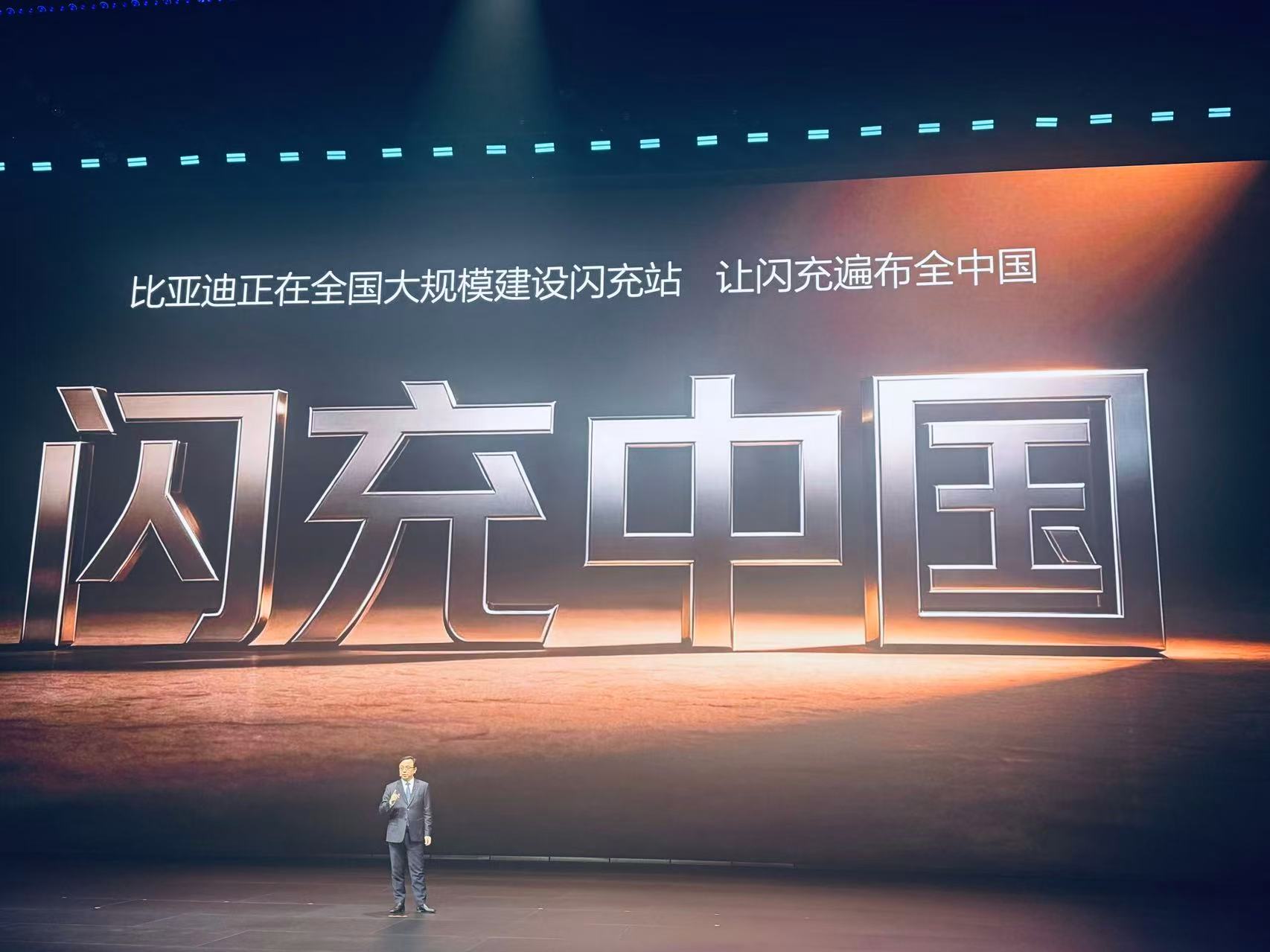
Core Insights - BYD Group's Chairman and President Wang Chuanfu announced the "Flash Charge China" strategy, focusing on the large-scale construction of flash charging stations across the country [1] Group 1: Flash Charge Strategy - BYD plans to build 20,000 charging stations by the end of this year, which includes 18,000 flash charging stations in collaboration with national charging network operators and 2,000 high-speed flash charging stations [1] - The charging stations will cover nearly one-third of the highway service areas, ensuring that there will be a BYD flash charging station every 100 kilometers on average along highways [1] Group 2: Construction Team and Progress - To accelerate the deployment of the flash charging strategy, BYD has established a dedicated construction team consisting of several thousand members [1] - Within two months, the team has already completed the construction of 4,239 flash charging stations ahead of schedule [1]
“没有人比我们更懂电池”!比亚迪发布第二代刀片电池:5分钟充好,9分钟充饱
Hua Xia Shi Bao· 2026-03-06 00:16
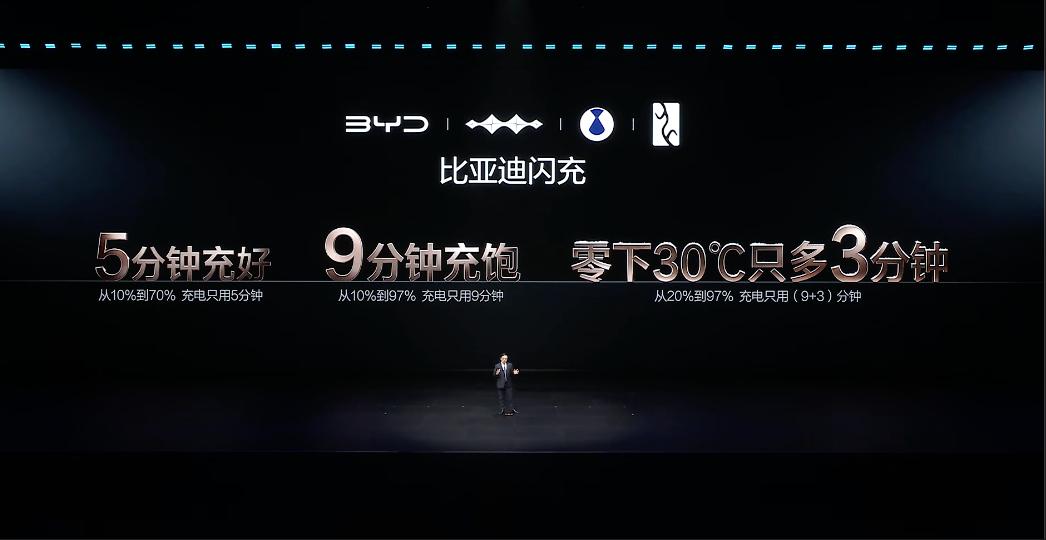
Core Viewpoint - BYD has introduced its second-generation blade battery and flash charging technology, significantly improving charging speed and energy density, aiming to enhance user experience and reduce vehicle energy consumption [2]. Group 1: Battery Technology - The second-generation blade battery can charge from 10% to 70% in just 5 minutes and from 10% to 97% in 9 minutes, even in temperatures as low as -20°C, where it can charge from 20% to 97% in under 12 minutes [2]. - The battery's design has been restructured across four levels—materials, electrodes, cells, and systems—to address the challenges of charging speed and energy density, achieving over a 5% increase in energy density compared to the first generation [2]. Group 2: Vehicle Models - At the launch event, BYD announced 10 initial vehicle models equipped with the second-generation blade battery and flash charging technology, including models like Song Ultra and 2026 Sea Lion 06EV [3]. Group 3: Charging Infrastructure - BYD has launched the "Flash Charging China" strategy, planning to build 20,000 flash charging stations nationwide by the end of 2026, with 18,000 being "flash charging sub-stations" integrated into existing public charging networks [4]. - The remaining 2,000 will be "flash charging highway stations," with the goal of having one station approximately every 100 kilometers on highways, and the first 1,000 stations are expected to be completed before the May Day holiday this year [4]. Group 4: Sales Forecast - In the first two months of this year, BYD's cumulative sales of new energy vehicles exceeded 400,000 units, with projections for 2026 indicating total sales could reach 5.12 million units, a year-on-year increase of 11% [5]. - Domestic sales are expected to remain stable at around 3.56 million units, while export volumes are projected to grow by 44% to 53%, reaching between 1.5 million and 1.6 million units [5].
3月6日早餐 | 算电协同写入政府工作报告;比亚迪发布第二代刀片电池
Xuan Gu Bao· 2026-03-05 23:59
Market Overview - US stock markets collectively declined, with the Dow Jones down 1.61%, Nasdaq down 0.26%, and S&P 500 down 0.57% [1] - Notable movements included Nvidia rising 0.16%, Microsoft up 1.35%, and Amazon increasing by 0.98%, while Tesla fell 0.10%, Google A down 0.74%, Apple down 0.85%, and Meta down 1.07% [1] Technology Sector - The US Department of Defense is seeking information on potential reserves of five critical minerals [2] - The US plans to extend AI chip export controls globally, requiring companies like Nvidia and AMD to obtain licenses for exports [3] - OpenAI released GPT-5.4 and GPT-5.4 Pro models, supporting up to 1 million tokens in context [5] - Amazon launched an AI platform aimed at automating healthcare administrative tasks [6] Energy Sector - The US Interior Secretary is considering various options to control oil prices, with President Trump indicating further measures to alleviate oil pressure [4] - A report highlighted that the wind power sector is expected to see structural growth opportunities, with a focus on building a clean, low-carbon energy system [14][16] Automotive Sector - BYD announced the launch of its second-generation blade battery, achieving a charging time from 10% to 97% in just 9 minutes, setting a record for mass-produced vehicles [12] - The National Development and Reform Commission aims to build 28 million charging facilities by the end of 2027, with a focus on high-power charging stations [12] Semiconductor Sector - Xiaomi's founder noted that the surge in AI demand has led to a significant increase in storage chip prices, impacting the company's mobile business [13] - The demand for enterprise SSDs is expected to grow at a CAGR of 54% from 2024 to 2030, driven by AI applications [13] Aerospace Sector - The US Senate approved the NASA Authorization Act for 2026, which allocates $24.7 billion for the fiscal year 2026 and $25.3 billion for 2027, marking a 2.5% increase from the previous year [16] Corporate Announcements - Samsung Medical's subsidiary signed a framework contract worth 949 million yuan with the Netherlands' Enexis for transformers [18] - Jin Chengxin secured a contract worth approximately 166 million yuan for mining operations with Jiangxi Copper Group [18] - Silver Wheel's subsidiary received a notification for a project expected to generate annual sales of about $131 million starting in Q4 2026 [18]
闪充和千公里拍上桌,比亚迪摊牌了
Hua Er Jie Jian Wen· 2026-03-05 23:55
Core Viewpoint - BYD has launched its second-generation blade battery and fast-charging technology, aiming to regain its market leadership in the competitive electric vehicle sector, particularly after losing its top position to Geely in recent months [1][10]. Group 1: Product Launch and Technology - The second-generation blade battery features a system energy density of 190–210 Wh/kg, representing a 40% improvement over the first generation [3]. - The new battery maintains a low-temperature performance with a capacity retention rate of over 85% at -20°C, significantly better than traditional ternary lithium batteries [3]. - The 2026 model Yangwang U7 will be the first to use a 150 kWh battery pack, achieving a pure electric range of 1006 kilometers, marking a significant milestone for lithium iron phosphate technology [3]. - The newly introduced megawatt fast charging technology can reach peak power levels of 1500 kW, allowing for rapid charging times, such as charging from 10% to 70% in just 5 minutes [4]. Group 2: Market Strategy and Positioning - BYD's strategy involves a comprehensive rollout of its second-generation blade battery and fast-charging technology across all brands and price segments, aiming to disrupt the market by offering high-end features at lower price points [6][11]. - The company plans to establish 20,000 fast-charging stations and 2,000 fast-charging highway stations by the end of 2026, covering nearly one-third of highway service areas [5]. - The release of 10 new models, including the Yangwang U7 and Tengshi Z9 GT, demonstrates BYD's commitment to rapid product deployment and market penetration [5]. Group 3: Competitive Landscape - The recent policy changes regarding the reduction of new energy vehicle purchase tax have impacted BYD more severely than competitors like Geely, which has maintained a balanced product structure with both electric and fuel vehicles [7][8]. - The competition in the electric vehicle market is shifting from price-based competition to a focus on technological capabilities, with companies needing to provide robust technology in mainstream price ranges [8][11]. - BYD's ability to leverage its technological advancements will be crucial in determining its future market position, especially as competitors like Geely and others continue to innovate [11][12].

特斯拉的对手,不是比亚迪、不是理想、不是小米、更不是蔚来,而是它:卖车是副业,技术才是王牌!
Xin Lang Cai Jing· 2026-03-05 23:33
Core Insights - Morgan Stanley's report highlights a significant misjudgment in the global capital markets regarding XPeng Motors, indicating that the company is shifting its focus from merely selling cars to developing a comprehensive autonomous driving "operating system" [1][3]. Group 1: Technological Advancements - XPeng's second-generation VLA (Vision-Language-Action) model, launched in March 2026, is defined as the world's first "physical world large model," achieving a 12-fold increase in inference speed and reducing response latency from 200 milliseconds to 80 milliseconds, which translates to a nearly 3-meter reduction in braking distance at 80 km/h [3]. - In comparative tests, XPeng's VLA 2.0 required only one takeover in complex driving scenarios, while Tesla's FSD needed five, indicating a significant technological leap and a shift in competitive logic [3]. Group 2: Business Strategy - In July 2023, Volkswagen invested approximately $700 million in XPeng for a 4.99% stake to co-develop two B-class electric vehicles, which has evolved into a strategic partnership where Volkswagen acts as the first external customer for XPeng's VLA 2.0 technology [5][6]. - XPeng's revenue model is tied to sales through a "technology service fee," with projections suggesting that software revenue could exceed 20 billion yuan by 2027 [6]. Group 3: Market Valuation - The current market valuation of XPeng reflects only its status as an "automaker," failing to account for its technology licensing and Robotaxi business, which are undervalued at zero [11]. - Morgan Stanley notes a "cognitive framework mismatch," as the market evaluates XPeng using manufacturing industry P/E ratios, while the company is transitioning to a high-margin, replicable software and technology licensing platform [11]. Group 4: Future Vision - XPeng's ambitions extend beyond autonomous driving, aiming to create a "physical AI ecosystem" based on the VLA model, which includes plans for Robotaxi operations, flying cars, and humanoid robots, with the goal of becoming the first company to mass-produce these technologies in the same year [12][14][15]. - The competition with Tesla is framed as a battle for defining the next generation of human-machine interaction, with XPeng positioning itself as a potential "arms dealer" for autonomous technology [8][20]. Group 5: Structural Risks - Morgan Stanley assigns a 30% valuation weight to the potential success of XPeng's technology licensing, highlighting risks if the technology does not expand beyond Volkswagen or if Robotaxi scaling faces obstacles [18]. - The company's value is described as being in a "Schrödinger's cat" state, dependent on key signals such as the emergence of a second OEM customer, Robotaxi operational metrics, and the stability of cash flow from dual-power models [18][19].


伊朗:无人机击中美军“林肯”号航母,已做好应对美军地面入侵的准备,比亚迪发布第二代刀片电池
Xin Lang Cai Jing· 2026-03-05 23:29
Group 1 - The government work report sets the economic growth target for 2026 at 4.5% to 5% [4][33] - The "14th Five-Year Plan" draft outlines 20 key indicators for economic development, innovation, and green transformation [4][33] - The Ministry of Industry and Information Technology states that artificial intelligence is becoming a strong driver for high-quality economic development, with the core industry expected to exceed 1.2 trillion yuan by 2025 [5][34] Group 2 - BYD announced the launch of its second-generation blade battery and fast-charging technology, achieving 70% charge in 5 minutes and 97% in 9 minutes [3][13] - JD Group forecasts a revenue of 1.309 trillion yuan for 2025, with JD Logistics expected to surpass 200 billion yuan in revenue [13][14] - Bilibili reported a total revenue of 30.35 billion yuan for 2025, achieving a net profit of 2.59 billion yuan [22] Group 3 - The World Gold Council reported a net inflow of 5.3 billion USD into global gold ETFs in February, marking the strongest annual start on record [11][40] - The global number of billion-dollar entrepreneurs reached a record 4,020, with China regaining the top position with 1,110 billionaires [39]



