
BYD(01211)

Search documents
比亚迪发布D级旗舰SUV大唐:纯电续航950公里,预计上半年上市
Feng Huang Wang· 2026-03-05 13:37
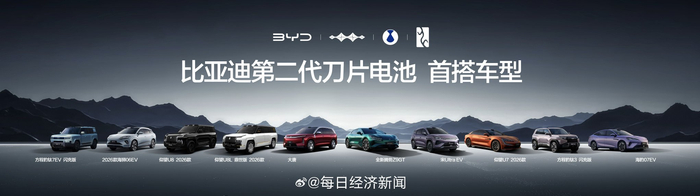
Core Viewpoint - BYD officially launched its first D-class flagship SUV, the Tang, at a technology conference, with plans for release in the first half of the year, offering both pure electric and plug-in hybrid versions [1] Group 1: Vehicle Specifications - The Tang features a body length of 5.3 meters and a wheelbase of 3130 millimeters [1] - The interior layout includes a 2+2+3 seven-seat configuration, with a dedicated screen for the front passenger and independent seats in the second row [1] - The pure electric version boasts a range of 950 kilometers, utilizing the second-generation blade battery [1] Group 2: Performance and Technology - The vehicle can accelerate from 0 to 100 km/h in as little as 3.9 seconds, with a top speed of 240 km/h [1] - It incorporates rear-wheel steering technology, achieving a minimum turning radius of 5.2 meters [1] - The Tang is equipped with the Yun Nian-A chassis system, featuring a dual-chamber air suspension and road preview capabilities [1] Group 3: Charging Technology - The pure electric version is built on a 1000V high-voltage architecture, supporting a 10C charging rate [1] - It can handle a maximum charging current of 1000A and a charging power of 1000kW, enhancing fast charging efficiency for large-capacity batteries [1]



2026汽车展望:比亚迪、奇瑞争出海「一哥」,车企抢发全车Agent,高端市场抢做「M9」
36氪· 2026-03-05 13:31
Core Viewpoint - The article discusses the evolving landscape of the Chinese automotive industry, particularly focusing on the shift towards overseas markets for growth, the competition in high-end segments, and advancements in technology such as solid-state batteries and intelligent driving systems [5][6][15]. Group 1: Overseas Market Expansion - After establishing a strong domestic presence, Chinese automotive brands are now prioritizing overseas markets as a key growth driver [6]. - BYD plans to sell 1.3 million vehicles overseas by 2026, a 25% increase, while Chery is expected to compete closely in this space [7][17]. - Other brands like Xpeng and GAC are also setting ambitious overseas sales targets, with GAC aiming for 250,000 units, a 92.3% increase [8][17]. Group 2: High-End Market Competition - The domestic market is seeing intense competition in the high-end segment, with a focus on large six-seat hybrid vehicles [9][10]. - Companies are striving to create the next big product, similar to the AITO M9, indicating a shift towards premium offerings [10][39]. - The competition is characterized by a move beyond superficial features to deeper technological advancements and user experience [38][42]. Group 3: Technological Advancements - The integration of intelligent driving and cockpit technologies is becoming a new battleground, with companies like Xpeng and Li Auto merging their teams to enhance capabilities [11][29]. - Solid-state batteries are nearing practical application, with companies like Geely and BYD announcing plans for validation by 2026, although high costs remain a significant barrier [13][45]. - Sodium batteries are gaining attention but face challenges in energy density and cost, limiting their immediate application in the market [56][63]. Group 4: Market Trends and Predictions - The article outlines six major market trends, emphasizing the fierce competition for overseas sales and the importance of technological innovation [15]. - The automotive industry is expected to face a complex landscape in 2026, requiring companies to possess strong technical capabilities and market sensitivity [14][15]. - The competition in the large six-seat hybrid market is intensifying, with multiple brands preparing to launch new models [36][38].

王传福:今年底比亚迪将建成闪充站2万座、闪充高速站2000座
Xin Lang Cai Jing· 2026-03-05 13:18
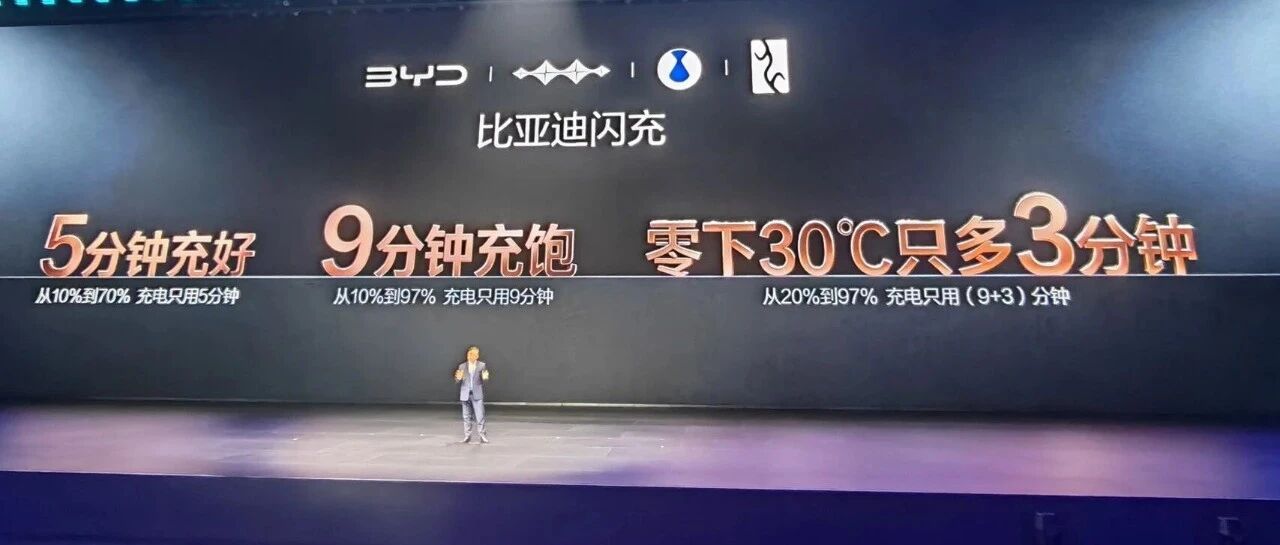
Core Viewpoint - BYD aims to address the "range anxiety" issue faced by electric vehicle users by significantly enhancing charging infrastructure and battery technology, with ambitious plans for the future [1] Group 1: Charging Infrastructure - BYD plans to establish 20,000 fast charging stations and 2,000 fast charging highway stations by the end of 2026, which will cover nearly one-third of highway service areas [1] - As of March 5, BYD has already built 4,239 fast charging stations [1] Group 2: Battery Technology - The second-generation blade battery showcased by BYD demonstrates rapid charging capabilities, taking only 5 minutes to charge from 10% to 70% and 9 minutes to charge from 10% to 97% in normal temperature conditions [1] Group 3: User Concerns - Current electric vehicles still face "range anxiety" due to slow charging speeds, leading users to spend more money and increase vehicle weight, resulting in significant resource waste [1]
比亚迪王传福:第二代刀片电池9分钟“充饱”,电量从10%充到70%仅需5分钟
新华网财经· 2026-03-05 13:01
Core Viewpoint - BYD's Chairman Wang Chuanfu announced the launch of the second-generation blade battery, emphasizing that no one understands batteries better than BYD [1]. Group 1 - The second-generation blade battery can charge from 10% to 70% in just 5 minutes, showcasing significant advancements in charging technology [3]. - The charging time from 10% to 97% is only 9 minutes, indicating a breakthrough in overcoming the challenges associated with the last 20% of battery charging [3].
比亚迪第二代刀片电池发布:9分钟10%充至97%,纯电续航超1000公里
Feng Huang Wang· 2026-03-05 12:49
Core Viewpoint - BYD has officially launched its second-generation blade battery, showcasing significant advancements in charging speed, performance in extreme cold, and safety testing results [1][2] Charging Speed - The new battery technology allows for rapid charging, achieving a charge from 10% to 70% in just 5 minutes and from 10% to 97% in 9 minutes [1] Performance in Extreme Conditions - In extreme cold conditions, the second-generation blade battery was tested at -30 degrees Celsius after being frozen for 24 hours, charging from 20% to 97% in under 12 minutes, only 3 minutes longer than in normal conditions [1] Energy Density and Range - The energy density of the new battery has improved by 5% compared to the first generation, with the first vehicles equipped with this battery, the Tengshi Z9GT and Yangwang U7, achieving a pure electric range exceeding 1000 kilometers, with a maximum of 1036 kilometers [1] Safety and Reliability Testing - The second-generation blade battery underwent extensive safety tests, exceeding current industry standards, including 500 rapid charge cycles followed by puncture tests, showing no smoke or fire [2] - In thermal runaway tests, the battery successfully triggered short circuits in 4 cells simultaneously without catching fire or exploding, surpassing the new national standard which requires only 1 cell to be triggered [2] - The battery's bottom impact test standard is 10 times higher than the new national standard, and the capacity retention rate has improved by 2.5% [2]
比亚迪2026年前建2万座闪充站,5分钟快充覆盖全国
Mei Ri Jing Ji Xin Wen· 2026-03-05 12:43
Core Insights - BYD has officially launched the "Flash Charge China" strategy, aiming to build 20,000 fast charging stations by the end of 2026, covering 90% of urban areas and ensuring stations are available every 100 kilometers on highways [1] Group 1: Charging Infrastructure - The first batch of 1,000 highway stations is planned to be operational by May 1, with charging times of 5 minutes for a quick charge and 9 minutes for a full charge, even in temperatures as low as -30°C, which only adds 3 minutes to the charging time [1] - The current number of established charging stations is 4,239, and the company aims to create the largest charging network in less than a year [1] Group 2: Battery Technology - Owners of the second-generation blade battery vehicles will enjoy one year of free charging from the date of vehicle delivery [1]
比亚迪发布“闪充中国”战略 计划到2026年底建成2万座闪充站
Di Yi Cai Jing· 2026-03-05 12:40
Group 1 - BYD has launched the "Flash Charge China" strategy, aiming to build a large number of flash charging stations nationwide [1] - The company plans to establish 20,000 flash charging stations by the end of 2026, which includes 18,000 "flash charging sub-stations" and 2,000 "flash charging express stations" [1] - As of March 5, BYD has already constructed 4,239 flash charging stations [1]
友军在撤退
Datayes· 2026-03-05 12:40
Core Viewpoint - The article discusses the recent performance of the A-share market, highlighting the impact of government policy announcements and sector-specific movements, particularly in technology and defense spending [1][6][11]. Market Performance - On March 5, the three major indices collectively rose, with the Shanghai Composite Index increasing by 0.64%, the Shenzhen Component by 1.23%, and the ChiNext by 1.66%. The total trading volume reached 24,127.85 billion yuan, an increase of 245.94 billion yuan from the previous day [17]. - The market saw over 4,000 stocks rise, with 79 stocks hitting the daily limit up, indicating strong bullish sentiment [17]. Government Work Report Highlights - The Chinese government plans to increase defense spending by 7% in 2026, with a GDP growth target set between 4.5% and 5% [6][11]. - The report anticipates a consumer price index (CPI) growth of around 2% and aims to create over 12 million new urban jobs [6][11]. - The government plans to issue 1.3 trillion yuan in ultra-long special sovereign bonds and 4.4 trillion yuan in new special local government bonds [6][11]. Sector Analysis - The article notes that the technology sector, particularly in quantum technology, brain-machine interfaces, and 6G, is expected to receive policy support, which could benefit related stocks [11][18]. - The CPO and Micro LED sectors experienced significant gains, with stocks like Lehman Optoelectronics and Ruifeng Optoelectronics hitting the daily limit up due to favorable market conditions and technological advancements [17][18]. Investment Insights - Citigroup emphasizes the importance of building a strong domestic market for social stability and economic protection amid global uncertainties [11]. - The focus on innovation and key technology breakthroughs is highlighted as a priority, with potential new policies expected to support these initiatives in 2026 [11][18]. Capital Flow - The article reports a net inflow of 355.87 billion yuan into the electronic industry, with significant investments in companies like Xinyi Technology and Shanghai Electric [36]. - Conversely, sectors such as non-ferrous metals and agriculture saw notable net outflows, indicating a shift in investor sentiment [36][43].



今年车市价格集体走高
第一财经· 2026-03-05 12:38
Core Viewpoint - The article highlights the shift in the competitive landscape of the Chinese automotive market, particularly in the high-end electric vehicle (EV) segment, with a notable increase in models priced above 150,000 yuan, indicating a trend towards premiumization among domestic brands [3][5]. Group 1: Market Trends - The competition in the automotive market is shifting from the 100,000 to 150,000 yuan price range to the 150,000 to 200,000 yuan range, with over seven new EV models launched since March priced above 150,000 yuan [3]. - The market share of vehicles priced above 150,000 yuan has increased, with 18.6% of domestic retail sales in the 200,000 to 300,000 yuan segment, reflecting a clear trend towards high-end offerings [5]. - The trend of premiumization is further supported by the introduction of new models from both domestic and joint venture brands, such as the Haobo A800 and the GAC Toyota Platinum 7, which are priced above 150,000 yuan [4][5]. Group 2: Company Strategies - BYD is focusing on high-end strategies by separating its B-end and C-end markets, launching a new brand for ride-hailing and government vehicles, and planning to release 12 new high-end models this year [3][5]. - Joint venture brands are also attempting to penetrate the high-end EV market, with GAC Toyota collaborating with Huawei for its Platinum 7 model, which is priced above 150,000 yuan [4]. - The high-end strategy is seen as a core focus for leading companies, including BYD, which aims to achieve higher marginal profits despite intense competition in the domestic market [5]. Group 3: Policy Impact - The increase in vehicle prices is partly driven by changes in the vehicle trade-in policy, which has made it easier for consumers to upgrade to higher-priced models [6]. - The trade-in market is dominated by domestic brands, with 59% of consumers trading in vehicles priced below 150,000 yuan, while 74.1% of new car buyers are opting for vehicles priced above 200,000 yuan [6]. - The implementation of the trade-in policy is expected to benefit the mid-to-high-end market, with specific subsidy thresholds set for both new energy and fuel vehicles [6].
王传福:比亚迪闪充站向社会开放共享
Xin Lang Cai Jing· 2026-03-05 12:34
Core Viewpoint - BYD has launched its second-generation blade battery and fast-charging technology, addressing global challenges of slow charging and low-temperature charging, marking a significant advancement in the electric vehicle sector [1][2]. Group 1: Product Launch - The second-generation blade battery and fast-charging technology were unveiled at a press conference [1][2]. - The fast-charging stations will be open for public sharing, enhancing accessibility for electric vehicle users [1][2]. Group 2: Industry Impact - The development of new energy vehicles is positioned as a strategic choice for the high-quality development of China's automotive industry [1][2]. - Over the past decade, stable policies and market cultivation have transformed China's new energy vehicle sector, fostering globally competitive brands [1][2]. Group 3: Customer Benefits - All owners of vehicles equipped with the second-generation blade battery will receive one year of free fast-charging benefits, covering both electricity and service fees, starting from the day of vehicle delivery [1][2].