INNOVENT BIO(01801)

Search documents
百亿美元交易未带动信达生物股价大涨,医药股对外授权交易行情结束了吗
Di Yi Cai Jing· 2025-10-22 07:37
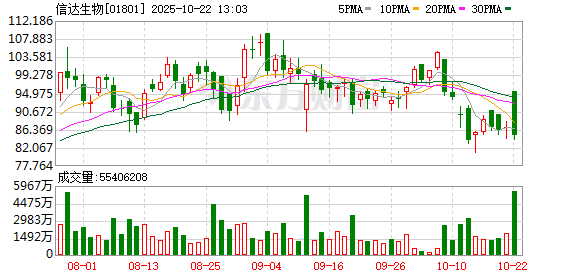
Core Viewpoint - The recent collaboration between Innovent Biologics and Takeda Pharmaceutical, valued at up to $11.4 billion, has not significantly boosted Innovent's stock price, raising questions about the sustainability of the current pharmaceutical market rally [1][6]. Group 1: Transaction Details - Innovent Biologics announced a collaboration with Takeda Pharmaceutical to jointly develop the next-generation IO therapy IBI363 and ADC therapies, with a total transaction value potentially reaching $11.4 billion, including an upfront payment of $1.2 billion [2][3]. - The agreement includes exclusive commercialization rights for IBI343 and a selection right for IBI3001 in regions outside Greater China [2][3]. - Innovent will share development costs and profits from the U.S. market with Takeda at a 40/60 ratio [5]. Group 2: Market Context - The pharmaceutical sector has seen a surge in stock prices due to numerous licensing deals, with the total licensing amount for Chinese innovative drugs exceeding $100 billion this year [6][8]. - Despite the positive market trends, Innovent's stock price fell by 2.88% on the announcement day, indicating potential market saturation or high valuation concerns [1][7]. Group 3: Company Performance and Strategy - Innovent Biologics has turned profitable in the first half of the year, distinguishing itself among domestic innovative drug companies [3]. - The company aims to establish a global presence, as indicated by its management's vision and the strategic partnership with Takeda [4][5]. - Innovent's IBI363 is positioned as an upgraded PD-1 therapy, with promising clinical data supporting its efficacy in various cancer types [4].
获最高114亿美元BD大单,信达生物与武田制药达成战略合作
Huan Qiu Lao Hu Cai Jing· 2025-10-22 07:26
Core Viewpoint - The strategic collaboration between Innovent Biologics and Takeda Pharmaceutical aims to accelerate the development of Innovent's next-generation IO and ADC therapies, with a total deal value potentially reaching $11.4 billion [1][2]. Company Summary - Innovent Biologics has entered a global strategic partnership with Takeda Pharmaceutical to co-develop IBI363, IBI343, and IBI3001, with Takeda leading the development efforts outside Greater China and the U.S. [1] - Innovent will receive an upfront payment of $1.2 billion, including a $100 million strategic equity investment, and has the potential to earn up to $10.2 billion in milestone payments [2]. - The company has 16 approved products, including 12 oncology products and 4 in other therapeutic areas, reflecting its focus on innovative drug development [2]. Financial Performance - In the first half of 2025, Innovent reported revenues of 5.953 billion yuan, a year-on-year increase of 50.6%, and a profit of 834 million yuan, marking a turnaround from losses [3]. - The revenue breakdown shows 5.234 billion yuan from pharmaceutical sales, 666 million yuan from licensing fees (up 4.7 times), and 54 million yuan from R&D service fees [3]. Industry Context - The $11.4 billion deal highlights the ongoing trend of Chinese innovative drugs entering global markets, with total contract values exceeding $100 billion in the first three quarters of the year, a 170% increase year-on-year [4]. - The industry is witnessing a surge in license-out transactions, with 135 deals reported from January 1 to October 17, 2025, totaling approximately $10.3 billion [4].
港股科技ETF(159751)盘中净申购超400万份,往后看对比红利板块科技线仍会是主线
Xin Lang Cai Jing· 2025-10-22 06:45
Group 1 - The technology sector is experiencing a pullback, but it is expected to remain a main focus until the end of the year due to its strong correlation with indices and risk appetite, particularly in AI [1] - There is a potential return of active funds that had previously exited the market, as well as institutional demands for net asset value and rankings before the assessment period at the end of November and December [1] - Market capitalization style may slightly favor small and mid-cap stocks, as many absolute return institutions are expected to operate conservatively in the next two months, limiting the market's ability to exceed a trading volume of 3 trillion [1] Group 2 - The domestic AI supply chain, AI applications, and Hong Kong internet stocks are viewed positively, especially during the performance gap in November and December, where focus will shift to economic policy expectations for December and next year's industry outlook [2] - The domestic AI supply chain is expected to have more visibility and potential for earnings upgrades compared to overseas chains, attracting institutions that previously missed out on overseas computing power [2] - In the Hong Kong tech sector, low valuations and the need for institutions to lock in profits will drive interest, especially as the market anticipates upward index movements and faces selling pressure from broad-based ETFs [2] Group 3 - As of October 22, 2025, the CSI Hong Kong Stock Connect Technology Index shows mixed performance among its constituent stocks, with notable gains from China National Pharmaceutical (4.27%) and Semiconductor Manufacturing International Corporation (0.88%) [3] - The CSI Hong Kong Stock Connect Technology Index consists of 50 large-cap, high R&D investment, and high revenue growth technology companies, reflecting the overall performance of tech leaders within the Hong Kong Stock Connect [3] - The top ten weighted stocks in the CSI Hong Kong Stock Connect Technology Index account for 66.5% of the index, including major players like Alibaba, Tencent, and Xiaomi [3]



信达生物114亿美元合作创国产创新药BD纪录,港股医药(159718.SZ)获资金积极申购
Xin Lang Cai Jing· 2025-10-22 06:27
Group 1 - The Hong Kong pharmaceutical ETF (159718.SZ) experienced a decline of 2.27% with a premium of 0.24%, despite a net subscription of 9 million during the day [1] - Among the constituent stocks, Stone Four Pharmaceutical Group (02005) led with a gain of 5.19%, while the biggest loser was Shiyao Group (01093) with a drop of 6.84% [1] Group 2 - Innovent Biologics is collaborating with Takeda Pharmaceutical to develop IBI363, with a development cost sharing of 40/60, and a maximum revenue-sharing ratio in double digits [2] - The collaboration includes an upfront payment of $1.2 billion, which consists of a $100 million strategic investment, and potential milestone payments of up to $10.2 billion [2] - The market has seen a significant adjustment in innovative drugs over the past three months, but expectations have lowered, indicating potential for future catalysts [2] Group 3 - The innovative drug sector is viewed as a long-term industry trend, with a dual cycle of international expansion and domestic revenue growth, indicating an unstoppable upward trend [3] - The Hong Kong pharmaceutical ETF is a balanced composition that includes innovative drugs, CXO, internet healthcare, and innovative medical devices, serving as a convenient standardized tool for investors [3]
重磅利好!信达生物BD首付款12亿美元却高开低走!港股通创新药ETF(159570)回调超2%再迎布局良机!机构:四季度BD集中,创新药出海节奏恢复
Sou Hu Cai Jing· 2025-10-22 06:01
Market Overview - The market opened lower and experienced low-volume fluctuations, with Hong Kong pharmaceutical stocks declining due to market sentiment despite positive news regarding overseas expansion [1] - The Hong Kong Stock Connect Innovation Drug ETF (159570) fell over 2%, with a trading volume exceeding 1.6 billion yuan during the session [1] - As of October 21, the latest scale of the Hong Kong Stock Connect Innovation Drug ETF (159570) exceeded 20.9 billion yuan, maintaining a leading position in scale and liquidity among peers [1] Strategic Collaborations - Innovent Biologics announced a global strategic partnership with Takeda Pharmaceutical to accelerate the development of its next-generation IO and ADC therapies, including two late-stage candidates and one early-stage project [3] - The collaboration includes an upfront payment of 1.2 billion USD, with potential milestone payments totaling up to 10.2 billion USD, bringing the total deal value to a maximum of 11.4 billion USD [3] Business Development (BD) Trends - A surge in business development activities was noted, with five BD announcements totaling 4.266 billion USD made on October 16 and 17 alone [4] - Major companies involved include Hansoh Pharmaceutical, Prigen, and others, with upfront payments ranging from 0.07 billion to 1.2 billion USD [4] - The Hong Kong Stock Connect Innovation Drug ETF (159570) saw mixed performance among its constituent stocks, with notable declines in several companies despite positive news for Innovent Biologics [4] Industry Insights - According to Huaxin Securities, the pace of outbound licensing for innovative drugs has resumed, with 93 transactions recorded by August 2025, accounting for 32% of global transactions [6] - The total upfront payments for these transactions reached 4.3 billion USD, exceeding the total for the previous year and expected to set a new high in nearly a decade [6] - The report indicates that multinational corporations (MNCs) continue to favor early-stage assets from China, particularly in hot areas like bispecific antibodies and ADCs [7] Future Outlook - The fourth quarter is expected to see concentrated BD activities, particularly with the ESMO conference and upcoming quarterly reports [7] - The trend of BD transactions is anticipated to continue as MNCs seek to fill revenue gaps from patent expirations of blockbuster products [7] - The performance of the Hong Kong Stock Connect Innovation Drug ETF (159570) has shown significant growth, with a year-to-date increase of over 109% [9]

创新药行业,再迎百亿美元重磅交易
2 1 Shi Ji Jing Ji Bao Dao· 2025-10-22 05:37
Core Insights - The article discusses a significant global strategic collaboration between Innovent Biologics and Takeda Pharmaceutical, focusing on the development of innovative cancer therapies, particularly in the fields of tumor immunology (IO) and antibody-drug conjugates (ADC) [3][4]. Group 1: Collaboration Details - Innovent Biologics will receive an upfront payment of $1.2 billion, including a $100 million premium for strategic equity investment, with potential milestone payments bringing the total deal value to $11.4 billion [4]. - The collaboration involves the joint development of IBI363, a novel PD-1/IL-2α-bias bispecific antibody, with Takeda leading the commercialization efforts in the U.S. and holding rights outside Greater China [3][9]. - Innovent will grant Takeda exclusive rights for IBI343 (CLDN18.2 ADC) outside Greater China and an option for IBI3001 (EGFR/B7H3 ADC) in the same regions [3][11]. Group 2: Market Context - The global oncology drug market is projected to exceed $200 billion, driven by unmet clinical needs and technological advancements, with a compound annual growth rate (CAGR) expected to surpass 20% over the next five years [6][12]. - The shift from the "PD-1 dividend period" to the "next-generation technology-driven period" is highlighted, emphasizing the importance of bispecific antibodies and ADCs in this transition [6][12]. Group 3: Product Insights - IBI363 has shown promising results in early clinical trials for various cancers, including immune-resistant lung cancer and melanoma, and is set to enter pivotal Phase III trials soon [8][10]. - IBI343 is currently undergoing Phase III trials for gastric cancer and has received breakthrough therapy designation from both the NMPA and FDA [10][11]. - IBI3001 is in Phase I trials and targets B7-H3 and EGFR, showcasing multiple anti-tumor mechanisms [11]. Group 4: Industry Trends - The article notes that multinational pharmaceutical companies are under pressure due to patent cliffs, with some facing risk exposures exceeding 20% of their revenues [14][16]. - The collaboration between Innovent and Takeda exemplifies a trend where global pharmaceutical firms seek to partner with innovative Chinese biotech companies to enhance their portfolios and maintain market share [16][17]. - The increasing number of collaborations between Chinese companies and global firms indicates a growing recognition of the value of Chinese innovation in the biopharmaceutical sector [17][18].

信达生物与武田制药就两款管线达成全球战略合作,潜在总交易额最高可达114亿美元
Cai Jing Wang· 2025-10-22 05:33
Core Insights - The collaboration between Innovent Biologics and Takeda Pharmaceutical aims to leverage Innovent's strengths in tumor immunology (IO) and antibody-drug conjugates (ADC) alongside Takeda's extensive experience in global oncology drug development to accelerate the global development of Innovent's late-stage pipeline drugs [1] Group 1: Collaboration Details - Innovent and Takeda will jointly develop the next-generation IO cornerstone therapy IBI363 (PD-1/IL-2α-bias) and will co-commercialize it in the United States, with Takeda leading the development under a collaborative governance structure [1] - Innovent grants Takeda commercialization rights for IBI363 outside Greater China and the United States [1] - Takeda receives exclusive rights for IBI343 (CLDN18.2 ADC) outside Greater China and an exclusive option for IBI3001 (EGFR/B7H3 ADC) outside Greater China [1] Group 2: Financial Terms - Innovent will receive an upfront payment of $1.2 billion, which includes a $100 million premium strategic equity investment, along with potential milestone payments, bringing the total deal value to up to $11.4 billion [1] - Innovent will also receive a share of sales from the collaboration [1]

多股直线涨停!刚刚,重磅利好来袭!
天天基金网· 2025-10-22 05:21
Core Viewpoint - The article highlights a significant surge in the innovative drug sector, driven by a strategic collaboration between Innovent Biologics and Takeda Pharmaceutical, which could lead to a total transaction value of up to $11.4 billion (approximately 81.2 billion RMB) [3][5]. Group 1: Market Performance - On October 22, A-shares and Hong Kong stocks related to innovative drugs experienced a strong rally, with several stocks like Innovent Biologics and Haisco Pharmaceutical hitting the daily limit [4]. - The global oncology drug market has surpassed $200 billion, with the expiration of PD-1 patents creating new competitive opportunities [6]. Group 2: Strategic Collaboration - Innovent Biologics announced a global strategic partnership with Takeda to accelerate the development of next-generation immuno-oncology (IO) and antibody-drug conjugate (ADC) therapies [4][6]. - The collaboration includes two late-stage therapies, IBI363 and IBI343, and an early-stage project, IBI3001, with Takeda leading the global development and commercialization efforts outside of Greater China and the U.S. [4][5]. Group 3: Financial Implications - Innovent Biologics will receive an upfront payment of $1.2 billion, including a strategic equity investment of $100 million, and could earn up to $10.2 billion in potential milestone payments [5]. - The partnership is expected to significantly enhance Takeda's oncology pipeline, which has faced challenges in recent years [6]. Group 4: Industry Trends - The trend of Chinese innovative drugs entering international markets continues, with contract values exceeding $100 billion in the first three quarters of the year, marking a 170% year-on-year increase [7]. - The fourth quarter is anticipated to see an acceleration in business development (BD) activities, with major pharmaceutical companies likely to allocate their annual budgets during this period [8].


114亿美元!中国创新药“出海”,大事件
Shang Hai Zheng Quan Bao· 2025-10-22 05:02
Core Insights - The collaboration between Innovent Biologics and Takeda Pharmaceutical marks a significant global strategic partnership aimed at accelerating the development of next-generation IO and ADC therapies for cancer treatment, with a total transaction value potentially reaching $11.4 billion [2][4]. Financial Details - Takeda will make an upfront payment of $1.2 billion to Innovent, which includes a strategic equity investment of $100 million at a subscription price of HKD 112.56 per share, representing a 20% premium over the weighted average share price of Innovent over the past 30 trading days [4]. - The total potential milestone payments for the development and sales of IBI363, IBI343, and IBI3001 could amount to approximately $10.2 billion, with the overall transaction value reaching up to $11.4 billion [4]. Drug Development and Commercialization - **IBI363**: A globally innovative PD-1/IL-2α-bias bispecific antibody fusion protein in Phase III clinical trials, showing strong anti-tumor activity. Innovent and Takeda will share development costs and profits in the U.S. on a 40/60 basis [5]. - **IBI343**: A best-in-class CLDN18.2 ADC in Phase III clinical trials, with Takeda granted exclusive global rights for development, production, and commercialization outside Greater China, focusing on first-line gastric and pancreatic cancer treatments [6]. - **IBI3001**: A pioneering EGFR/B7H3 dual antibody ADC in Phase I clinical trials, with Takeda having the option for exclusive global rights outside Greater China, contingent on payment of an exercise fee and potential milestone payments [7]. Strategic Importance - For Takeda, this collaboration is a crucial step in strengthening its oncology pipeline and positioning itself in the post-PD-1 era, with IBI363 and IBI343 identified as "disruptive cancer therapies" and key growth drivers for the company beyond 2030 [8].
China's Innovent Strikes Cancer Drug Deal With Takeda for Up to $11.4 Billion
WSJ· 2025-10-22 04:43
Group 1 - The collaboration represents a trend of partnerships between Chinese companies and international pharmaceutical firms aiming to enhance their global presence [1] - The initiative focuses on leveraging promising drug development pipelines that are emerging in China [1]