XIAOMI(01810)

Search documents
南向资金 | 石药集团获净买入9.35亿港元



Di Yi Cai Jing· 2026-01-30 10:26
Group 1 - The net inflow of southbound funds today amounted to 3.22 billion HKD [1] - The top three companies with net inflows were CSPC Pharmaceutical Group, Xiaomi Group-W, and the Tracker Fund of Hong Kong, with net purchases of 935 million HKD, 914 million HKD, and 590 million HKD respectively [1] - The companies with the highest net outflows included Zijin Mining, China Mobile, and CNOOC, with net sales of 635 million HKD, 541 million HKD, and 526 million HKD respectively [1]
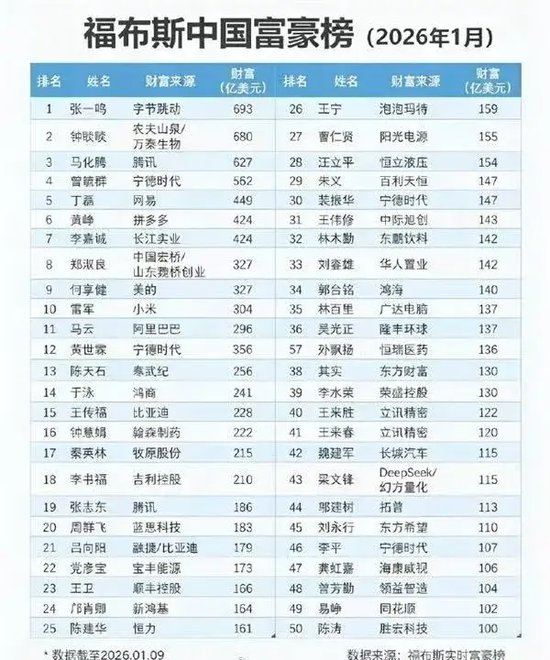
雷军身家304亿美元超马云,张一鸣693亿美元身家登顶内地富豪榜


Xin Lang Cai Jing· 2026-01-30 10:26
比亚迪的王传福(228亿美元)、顺丰王卫(166亿美元)、泡泡玛特王宁(159亿美元)、长城汽车魏 建军(115亿美元)和DeepSeek梁文峰(115亿美元)分别排名第15名、23名、26名、42名和43名。 | 排名 | 姓名 | 财富来源 | 财富 亿美元 | 排名 | 性名 | 財富来源 | 財富 亿美元) | | --- | --- | --- | --- | --- | --- | --- | --- | | 1 | 张一鸣 | 字节院动 | 693 | | 26 王宁 | 泡泡田特 | 128 | | 2 | 钟联顾 | 农夫山景/ 万秦生物 | 680 | 27 | ■仁贤 | 阳光电源 | 155 | | 3 | 马化腾 | 腾讯 | 627 | 28 | 正文平 | 恒立液压 | 154 | | 4 | 曾镀锌 | 宁德时代 | 562 | 29 | 朱义 | 自利大包 | 147 | | 5 | 丁晶 | 内方 | 440 | 30 | 装据表 | 宁德时代 | 147 | | 6 | 12 (4) | 拼多多 | 424 | 31 | 王伟修 | 中际儿创 | 143 | | 7 | ...

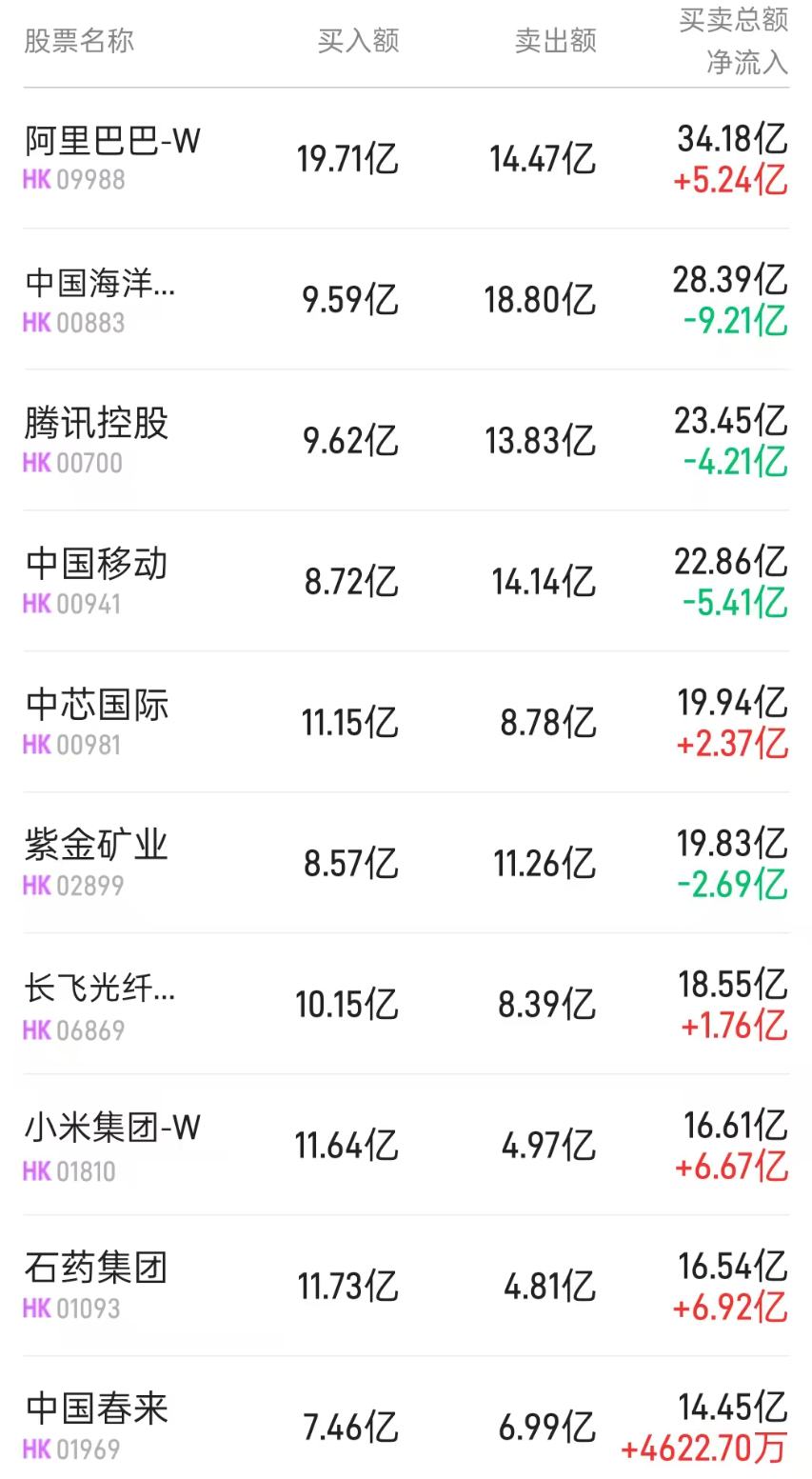
图解丨南下资金净买入石药集团、小米,净卖出紫金矿业、中国移动
Ge Long Hui· 2026-01-30 10:17
Group 1 - Southbound funds net bought Hong Kong stocks worth 32.22 billion HKD today [1] - The top net purchases included: CSPC Pharmaceutical Group at 9.34 billion HKD, Xiaomi Group-W at 9.14 billion HKD, and the Tracker Fund of Hong Kong at 5.89 billion HKD [1] - Notable net sales included: Zijin Mining at 6.35 billion HKD, China Mobile at 5.41 billion HKD, and CNOOC at 5.25 billion HKD [1] Group 2 - Southbound funds have recorded a continuous net sell of China Mobile for 20 days, totaling 159.752 billion HKD [1] - Zijin Mining has seen a net sell for 5 consecutive days, amounting to 37.8638 billion HKD [1] - Semiconductor Manufacturing International Corporation (SMIC) has also experienced a net sell for 5 consecutive days, totaling 12.2751 billion HKD [1]

北水动向|北水成交净买入32.22亿 石药集团(01093)宣布重磅BD交易 北水抢筹超9亿港元
智通财经网· 2026-01-30 10:05
Group 1: Market Overview - The Hong Kong stock market saw a net inflow of 32.22 billion HKD from northbound trading, with 20.39 billion HKD from Shanghai and 11.83 billion HKD from Shenzhen [1] - The most bought stocks included CSPC Pharmaceutical Group (01093), Xiaomi Group-W (01810), and the Tracker Fund of Hong Kong (02800) [1] - The most sold stocks were Zijin Mining (02899), China Mobile (00941), and CNOOC (00883) [1] Group 2: Notable Stock Performances - CSPC Pharmaceutical Group (01093) received a net inflow of 9.36 billion HKD, following a strategic cooperation agreement with AstraZeneca for the development of innovative long-acting peptide drugs, potentially worth up to 18.5 billion USD [4] - The Tracker Fund of Hong Kong (02800) saw a net inflow of 5.89 billion HKD, with positive market sentiment driven by earnings recovery, improved liquidity, and policy support [5] - Alibaba Group-W (09988) had a net inflow of 3.29 billion HKD, as it launched a high-end AI chip, enhancing its position in the AI sector [5] Group 3: Sector-Specific Insights - Long Fiber Optic Cable (06869) received a net inflow of 2.41 billion HKD, driven by strong demand for AI infrastructure and high-speed optical modules [5] - China Spring (01969) had a net inflow of 46.22 million HKD, with growth potential in student enrollment and tuition fee increases [6] - Gold stocks faced significant sell-offs, with Shandong Gold (01787) and Zijin Mining (02899) experiencing net outflows of 2.06 billion HKD and 6.35 billion HKD, respectively, amid volatility in the precious metals market [7]

小米汽车将出海!雷军:计划4年内英国开150家店,卖手机、汽车
Sou Hu Cai Jing· 2026-01-30 08:48
Group 1 - Xiaomi has successfully entered the overseas market, generating approximately 1 billion RMB in revenue from the UK last year and plans to open 150 stores in the UK within four years [1][3] - The company aims to introduce its entire product line, including smartphones, wearable devices, home appliances, and cars, to the UK market, with the Xiaomi car expected to launch there [3][5] - Xiaomi's automotive division plans to officially enter the European market in 2027, leveraging its existing store presence and user base in Europe, which provides a competitive advantage over other domestic car manufacturers [5][8] Group 2 - The trend of domestic car manufacturers expanding overseas is becoming more prevalent as the domestic market becomes saturated, with companies like BYD, Chery, and Geely already establishing a presence abroad [7] - Xiaomi has set an ambitious goal to become one of the top five global automotive manufacturers within 15-20 years, making international expansion a necessary step for the company [8]
小米雷军、京东刘强东等现身2026中英企业家委员会会议
Sou Hu Cai Jing· 2026-01-30 08:30
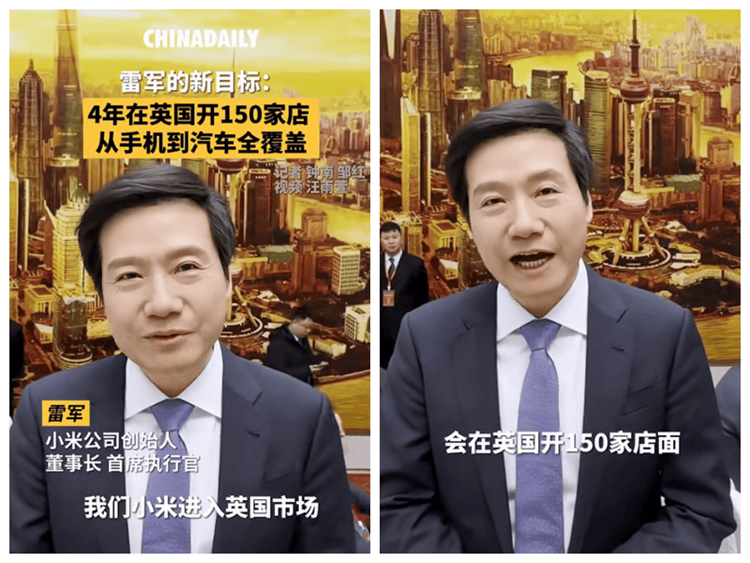
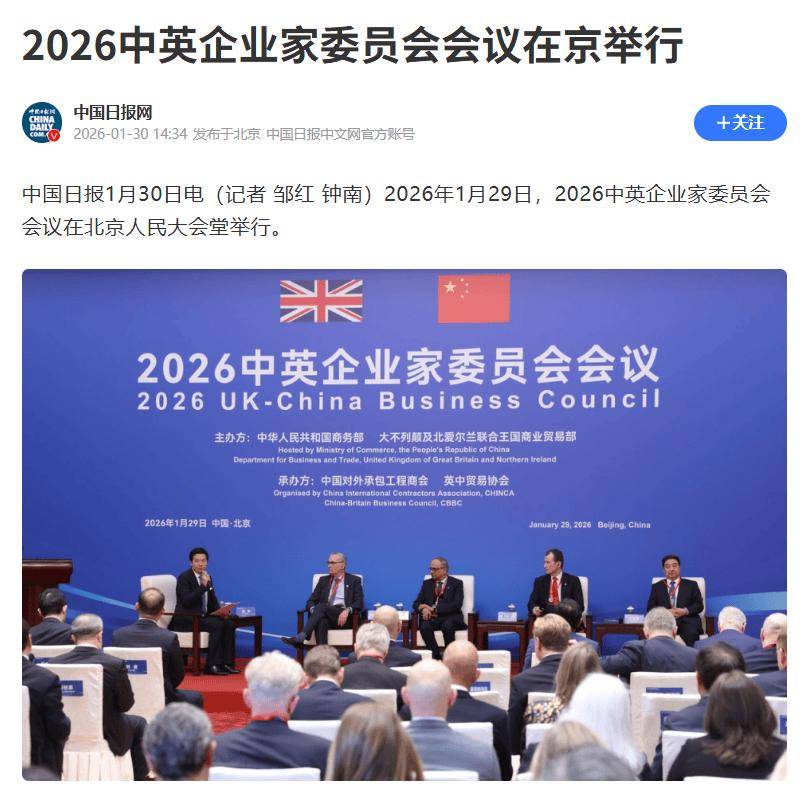
IT之家 1 月 30 日消息,据中国日报报道,2026 年 1 月 29 日,2026 中英企业家委员会会议在北京人民大会堂举行。中方企业家代表刘强东、雷军等出席 会议。 IT之家注意到,小米此前已在德国埃森和西班牙马德里等地开设了旗舰店。 值得一提的是,小米在英国的第一家授权店于 2018 年 11 月开业,位于伦敦 Westfield 购物中心。不过该店已在 2020 年关闭。 小米创办人、董事长兼 CEO 雷军接受该媒体采访时表示,小米进入英国市场已有几年时间,去年一年大概有 10 亿人民币的收入。如今小米的业务线覆盖 全面,从手机到可穿戴设备,再到家电和汽车。下一步计划加大投入,预计在四年之内在英国开 150 家店面。 ...
雷军:新一代小米SU7将有9款颜色
Zhong Guo Zhi Liang Xin Wen Wang· 2026-01-30 07:49
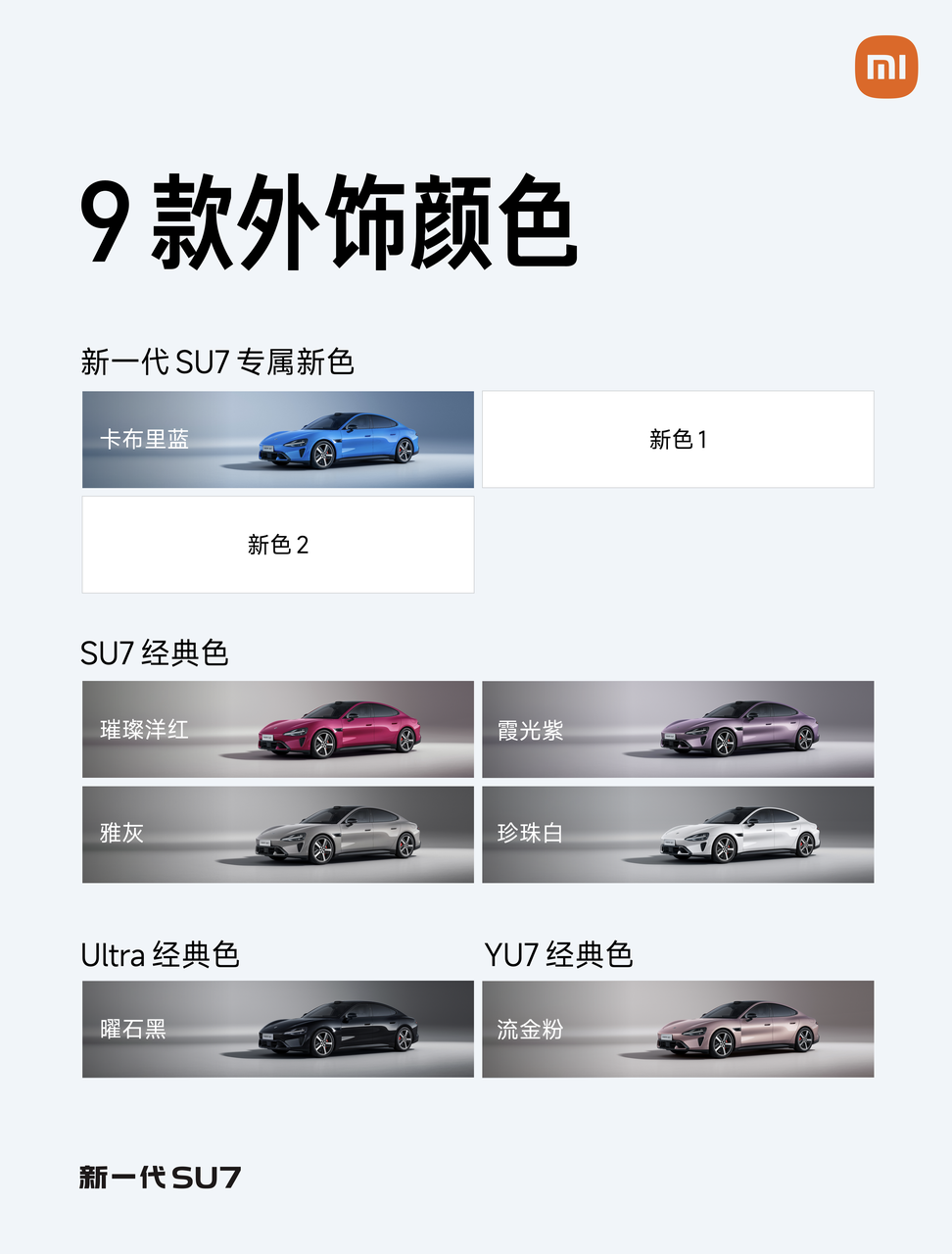
Group 1 - The new generation Xiaomi SU7 offers 9 exterior color options, including existing colors and three exclusive new colors for the updated model [4] - The new Xiaomi SU7 will feature 6 wheel designs, enhancing its sporty performance with a front narrow and rear wide wheel configuration [6] - The new generation Xiaomi SU7 is available for pre-order in three versions: Standard, Pro, and Max, with pre-sale prices set at 229,900 yuan, 259,900 yuan, and 309,900 yuan respectively, and is expected to launch in April [8]
新一代小米SU7内饰图发布 品质感大幅提升
Zhong Guo Zhi Liang Xin Wen Wang· 2026-01-30 07:48
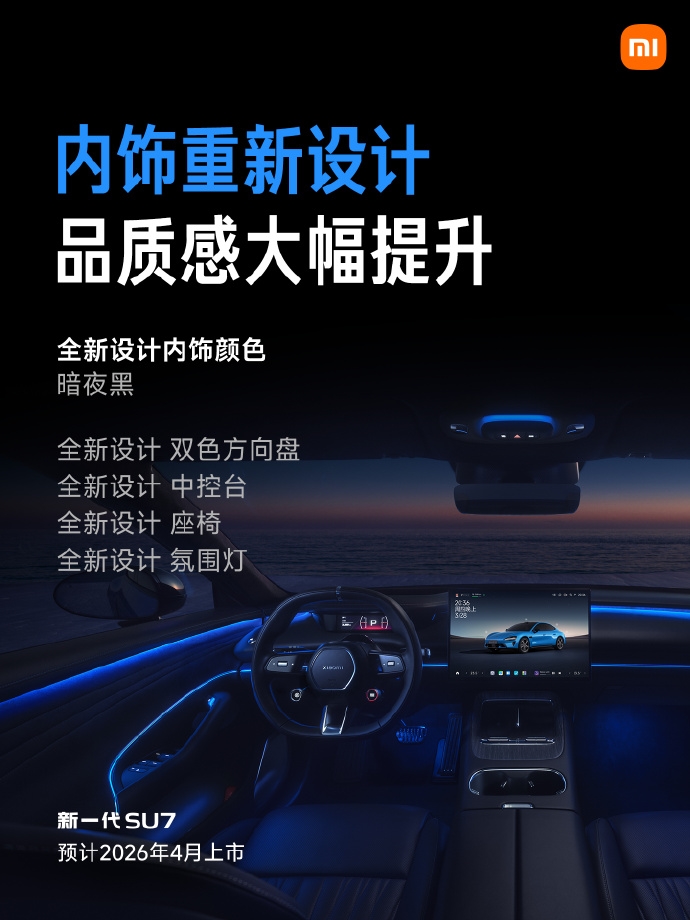
目前,新一代小米SU7已开启预订,推出标准版、Pro 版和 Max 版三个配置,预售价分别为22.99万元、25.99万元和30.99万元。 另座椅采用类似YU7全新造型,但座椅皮革纹路有所区别。后排两侧头枕也更加宽厚,将为乘客带来更舒适的乘坐体验。 新一代小米SU7新增"暗夜黑"内饰配色,双色方向盘、中控台、座椅以及氛围灯等处都采用全新设计,营造更具豪华感与科技感的驾乘环境。 新车方向盘采用类似YU7的双拼色设计,中控T字区的四个实体按键被金属拨杆所取代,手机充电位和杯架进行重新设计,杯架由竖向改为横向。 1月7日,小米汽车发布新一代小米SU7的内饰图,预计2026年4月上市。 ...
新一代小米SU7预计4月份上市 1月7日开启小订
Zhong Guo Zhi Liang Xin Wen Wang· 2026-01-30 07:48
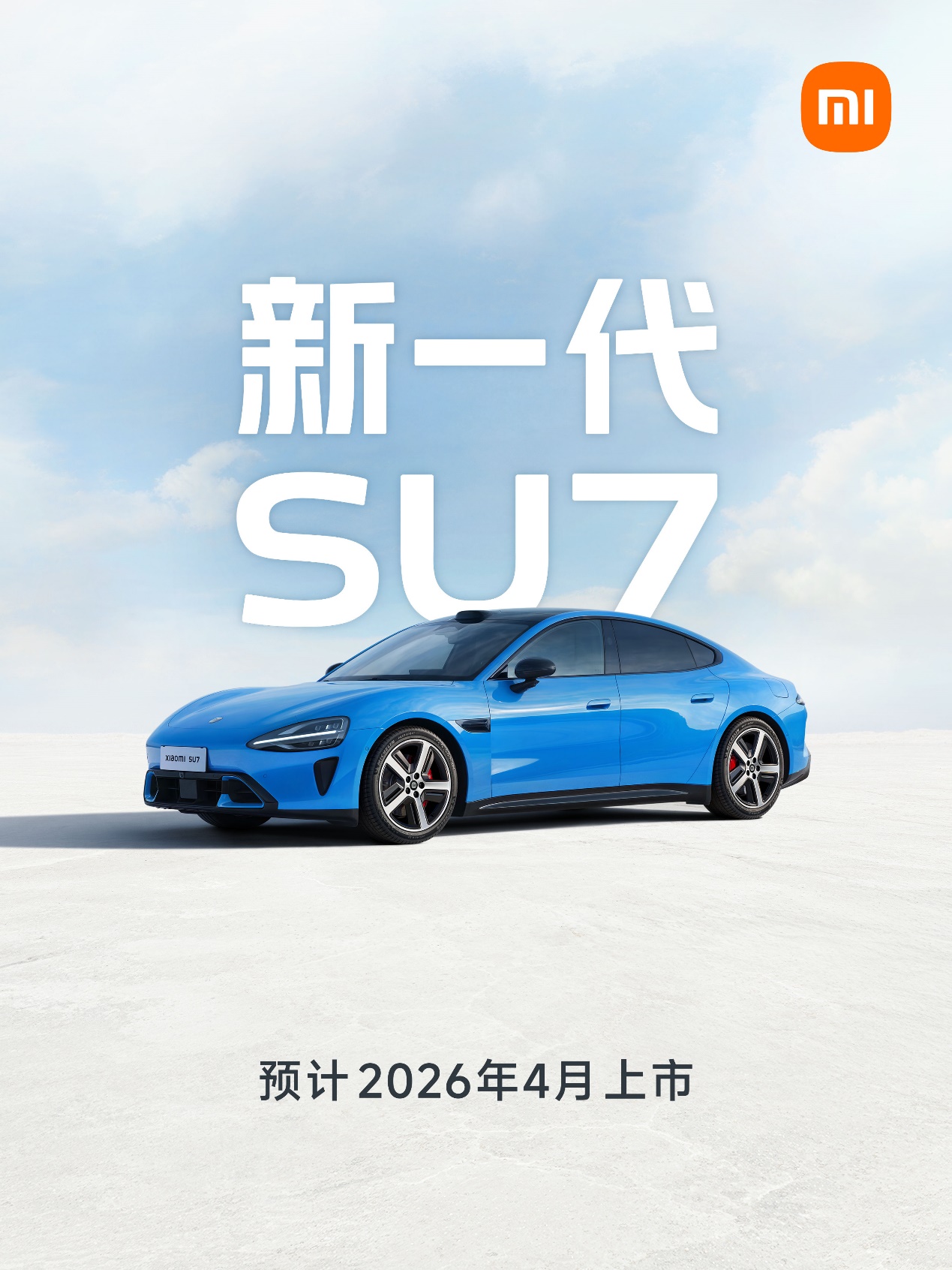
Core Viewpoint - The new generation SU7 features enhanced safety, upgraded chassis, and significant breakthroughs in battery range, along with new colors, wheels, and interior design [3] Group 1: Vehicle Features - The SU7 is equipped with a new color called "Cabriolet Blue" and has an adjusted front grille with a millimeter-wave radar positioned at the center [3] - The vehicle includes newly designed wheels with a tire specification of 245/40R20, and the brake calipers are still provided by Brembo [3] Group 2: Safety and Technology - The entire lineup of the SU7 comes standard with laser radar and driving assistance systems, indicating a focus on advanced safety features [3]
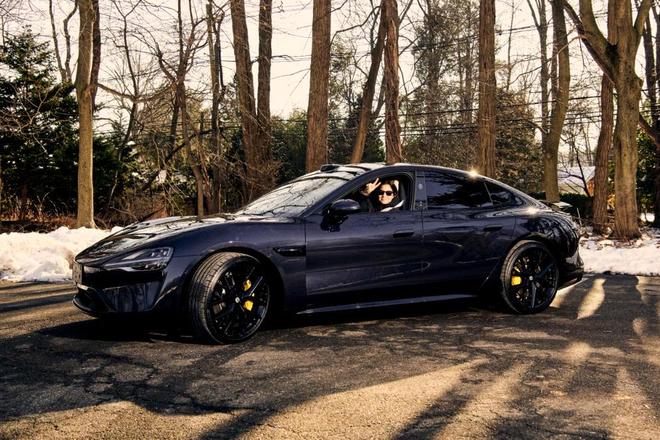
一封来自美国的“情书”:开了中国电车,再也不想美国车
Guan Cha Zhe Wang· 2026-01-30 07:38
Core Viewpoint - The article highlights the growing competitiveness of Chinese electric vehicles (EVs) in the global market, particularly emphasizing the Xiaomi SU7 Max as a standout model that impresses even American automotive experts [1][3][14]. Group 1: Performance and Features of Xiaomi SU7 Max - The Xiaomi SU7 Max is praised for its long battery range of 810 kilometers on a single charge, which exceeds expectations compared to competitors like the Ford Mustang Mach-E [12]. - The vehicle features a large 16.1-inch touchscreen running Xiaomi's HyperOS, integrating various applications and functionalities, enhancing the user experience [6][8]. - The car's driving comfort is noted to be superior, with smoother braking, steering, and acceleration compared to other models like the Ford Mustang Mach-E [11][9]. Group 2: Market Position and Competitive Landscape - Chinese EV manufacturers, including Xiaomi, BYD, and Geely, are recognized for their competitive pricing, often several thousand dollars lower than Western counterparts, and for their advanced digital integration [3][14]. - Ford's CEO acknowledges that Chinese manufacturers like Xiaomi pose a significant challenge to traditional American automakers, indicating a shift in the competitive landscape [3][14]. - There is optimism regarding the potential entry of Chinese EVs into the U.S. market, with indications that barriers such as tariffs may not last long, allowing for future production in the U.S. [14][15]. Group 3: Consumer Sentiment and Future Outlook - The article reflects a positive sentiment towards the Xiaomi SU7 Max, with experts expressing a desire for American consumers to experience the vehicle [4][15]. - Analysts suggest that once the barriers to entry are lifted, Chinese manufacturers will rapidly expand into the U.S. market, potentially within the next two years [14].