
XIAOMI(01810)

Search documents
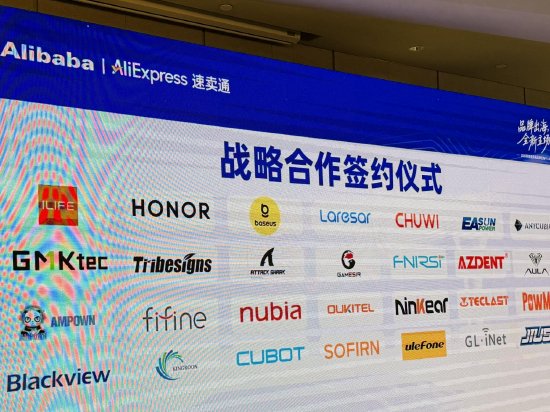
荣耀、倍思等超50家品牌集体签约阿里速卖通
Xin Lang Cai Jing· 2026-01-23 07:21
Group 1 - Xiaomi has announced AliExpress as its preferred platform for international expansion, leading to over 50 brands, including Honor, Baseus, and Nubia, signing the "Super Brand Outbound Plan" with AliExpress [1] - The brands participating in the signing event primarily focus on high-tech and high-value categories such as consumer electronics, smart hardware, and smart home appliances [1] - Notable brands involved include GameSir (top gaming controller brand), Chuwi (top laptop brand), CUBOT (top rugged phone brand), and ILIFE, which has become a national brand in Poland on AliExpress [1]



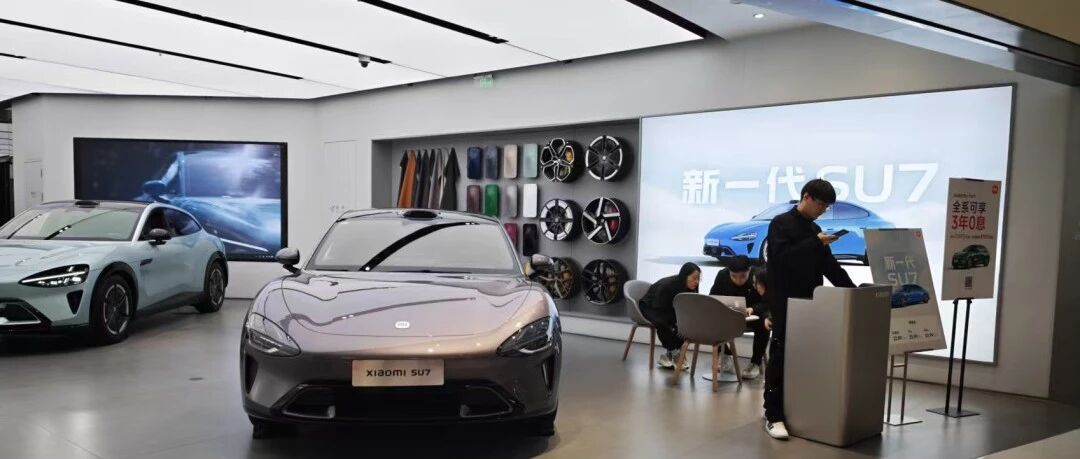
新一代小米SU7,预售半月订单近10万
财联社· 2026-01-23 06:47
Core Viewpoint - The new generation Xiaomi SU7 has generated significant market interest despite a price increase, with strong pre-order numbers indicating robust demand for the vehicle [1][4]. Group 1: Market Response - Since the pre-order launch on January 7, the new generation Xiaomi SU7 has received nearly 100,000 orders across approximately 477 stores [4]. - In Beijing, one store reported over 400 pre-orders, while another noted around 200 orders, showcasing strong customer engagement [1]. - In Shanghai and Wuhan, each store has surpassed 100 orders, with sales staff managing over 10 orders each [3]. Group 2: Production and Delivery Strategy - Xiaomi has shifted to a "current vehicle sales" model for existing SU7 models to clear inventory, while prioritizing production capacity for the new generation SU7 [4]. - The company aims to avoid the long delivery times experienced with the previous model, Xiaomi YU7, by implementing a pre-order phase to gauge demand and manage supply chain effectively [4]. Group 3: Marketing and Transparency - Xiaomi has initiated a marketing campaign three months ahead of the new generation SU7's expected launch in April, with CEO Lei Jun conducting multiple live streams to promote the vehicle [5]. - The company is committed to transparency in its marketing, simplifying promotional materials and providing clear specifications, such as specific voltage ratings for the new vehicle [5]. Group 4: Future Goals and Product Line - Xiaomi's cumulative delivery target for 2026 is set at 550,000 vehicles, with plans to introduce two new models, including the new generation SU7 and an unannounced Xiaomi YU7 ULTRA [6]. - The new generation SU7 is positioned as a key product in Xiaomi's strategy, which includes a commitment of at least 200 billion yuan for technology research and development over the next five years [5][6].
港股小米集团-W盘中涨超3%
Mei Ri Jing Ji Xin Wen· 2026-01-23 06:45
每经AI快讯,小米集团-W(01810.HK)盘中涨超3%,截至发稿,涨2.5%,报36.12港元,成交额44.56亿 港元。 ...
港股异动 | 小米集团-W(01810)盘中涨超3% 拟最高回购25亿港元股份
智通财经网· 2026-01-23 06:37
智通财经APP获悉,小米集团-W(01810)盘中涨超3%,截至发稿,涨2.5%,报36.12港元,成交额44.56 亿港元。 消息面上,1月22日,小米集团发布公告称,拟购回不超过25亿港元的公司B类普通股。购回计划将自1 月23日起,持续至2026年股东周年大会前一日、购回总额达25亿港元或协议提前终止三者中最早发生之 日。小米集团认为,实施自动股份购回计划可展示本公司对自身业务前景充满信心,符合公司及股东的 整体最佳利益。公司其后将注销自动股份购回计划下购回的股份。 ...
小米取得多面板波束协同管理能力相关专利
Jin Rong Jie· 2026-01-23 06:17
Group 1 - The core point of the article is that Beijing Xiaomi Mobile Software Co., Ltd. has obtained a patent for a method and device related to capability acquisition and reporting, with the patent announcement number CN115315901B and an application date of March 2021 [1] Group 2 - Beijing Xiaomi Mobile Software Co., Ltd. was established in 2012 and is located in Beijing, primarily engaged in software and information technology services [1] - The company has a registered capital of 148.8 million RMB [1] - According to data analysis, the company has invested in 4 enterprises, participated in 150 bidding projects, and holds 5000 patent records, along with 123 administrative licenses [1]
小米取得混合自动重传请求HARQ发送与接收方法专利
Jin Rong Jie· 2026-01-23 05:57
国家知识产权局信息显示,北京小米移动软件有限公司取得一项名为"混合自动重传请求HARQ的发送 方法、接收方法及装置"的专利,授权公告号CN116210265B,申请日期为2021年9月。 本文源自:市场资讯 作者:情报员 声明:市场有风险,投资需谨慎。本文为AI基于第三方数据生成,仅供参考,不构成个人投资建议。 天眼查资料显示,北京小米移动软件有限公司,成立于2012年,位于北京市,是一家以从事软件和信息 技术服务业为主的企业。企业注册资本148800万人民币。通过天眼查大数据分析,北京小米移动软件有 限公司共对外投资了4家企业,参与招投标项目150次,专利信息5000条,此外企业还拥有行政许可123 个。 ...
小米取得通信方法和装置专利
Jin Rong Jie· 2026-01-23 05:57
Group 1 - The core point of the article is that Beijing Xiaomi Mobile Software Co., Ltd. has obtained a patent for a "communication method and device," with the authorization announcement number CN116195278B, and the application date being December 2022 [1] Group 2 - Beijing Xiaomi Mobile Software Co., Ltd. was established in 2012 and is located in Beijing, primarily engaged in software and information technology services [1] - The company has a registered capital of 148.8 million RMB [1] - According to data analysis, the company has invested in 4 enterprises, participated in 150 bidding projects, and holds 5000 patent records, along with 123 administrative licenses [1]
小米取得终端设备、显示方法及装置专利
Jin Rong Jie· 2026-01-23 05:50
Group 1 - The core point of the article is that Beijing Xiaomi Mobile Software Co., Ltd. has obtained a patent for "terminal devices, display methods, and apparatus," with the authorization announcement number CN115118837B, and the application date was March 2021 [1] Group 2 - Beijing Xiaomi Mobile Software Co., Ltd. was established in 2012 and is located in Beijing, primarily engaged in software and information technology services [1] - The company has a registered capital of 148.8 million RMB [1] - According to data analysis, the company has invested in 4 enterprises, participated in 150 bidding projects, and holds 5000 patent information, along with 123 administrative licenses [1]
苹果进入印度手机市场前五,去年出货增长28%
Guan Cha Zhe Wang· 2026-01-23 05:42
Core Insights - The Indian smartphone market is projected to see a decline in shipments, with approximately 34.5 million units expected in Q4 2025, a 7% year-over-year decrease, and an annual total of 154.2 million units, reflecting a slight 1% decline [1][2] - Vivo maintains its leading position in both quarterly and annual shipments, with a market share of 23% in Q4 and 21% for the year, showing a growth rate of 19% [2][3] - The market is experiencing a shift towards value-driven strategies, influenced by rising component costs, cautious consumer spending, and extended upgrade cycles [1][4] Quarterly Performance - In Q4 2025, Vivo shipped approximately 7.9 million units, capturing 23% of the market share, followed by Samsung with 4.9 million units (14% share) and OPPO with 4.6 million units (13% share) [1] - The overall decline in Q4 shipments is attributed to high channel inventory, currency depreciation, and increased memory costs leading to higher product prices, which have weakened purchasing power [1][2] Annual Performance - For the full year, Vivo's total shipments reached 32.1 million units, securing a 21% market share, while Samsung and OPPO followed with 23 million and 20 million units, respectively [2] - Apple ranked fifth with a market share of approximately 10%, showing the most significant growth among the listed companies at 28% year-over-year [2] Market Dynamics - The fourth quarter is characterized as a period for inventory digestion, with brands like Vivo and OPPO achieving double-digit year-over-year growth due to strong retail execution and effective product management [2][3] - Other leading brands faced challenges, including cautious channel behavior and price adjustments, with Samsung and Xiaomi experiencing sales slowdowns despite targeted promotions [2][3] Future Outlook - The Indian smartphone market is expected to see a mid-single-digit percentage decline in 2026, driven by rising terminal prices and limited incremental value in products [3][4] - Brands are anticipated to shift focus towards value growth strategies in the entry-level market, particularly in the ₹25,000 to ₹60,000 segment, which offers better profit margins [3][4] - The high-end market above ₹60,000 will continue to be dominated by Apple, Samsung, and Vivo, with brands increasingly relying on channel leverage and localized marketing strategies to maintain market stability [4]

小米汽车前机舱加强结构相关专利获授权
Zheng Quan Shi Bao Wang· 2026-01-23 05:38
Core Viewpoint - Xiaomi Auto Technology Co., Ltd. has recently been granted a patent for a "front cabin reinforcement structure," which aims to enhance vehicle safety by absorbing collision energy through a designated energy-absorbing zone [1] Group 1: Patent Details - The patent describes a front cabin reinforcement structure that includes an energy-absorbing zone designed to deform during a collision, thereby absorbing energy and reducing the amount transmitted to the passenger compartment [1] - This innovation allows for the use of lighter and thinner materials in the front cabin reinforcement structure, which can lead to reduced costs and weight for the vehicle [1]