
BUD APAC(01876)

Search documents
啤酒上市公司年报盘点:百威亚太、华润啤酒等四家公司销量下滑,珠江、燕京逆袭增长,高端啤酒内卷加剧
Sou Hu Cai Jing· 2025-04-18 06:45
Core Viewpoint - The Chinese beer industry is facing multiple challenges in 2024, including consumption segmentation, cost pressures, and localized competition from international brands, leading to a trend of "volume decline and price increase" [2] Industry Overview - The overall revenue of the beer industry in 2024 has decreased by 5.7% year-on-year, making it the only category in the food and beverage sector to experience negative growth [2] - The performance of the six major listed beer companies—Budweiser APAC, China Resources Beer, Tsingtao Brewery, Yanjing Beer, Chongqing Beer, and Zhujiang Beer—has shown further differentiation [2][3] Company Performance - Budweiser APAC reported a revenue of 62.46 billion RMB, down 8.90%, and a net profit of 7.26 billion RMB, down 14.79% [9] - China Resources Beer achieved revenue of 38.635 billion RMB, a slight decline of 0.76%, with net profit down 8.03% to 4.739 billion RMB [9] - Tsingtao Brewery's revenue was 32.138 billion RMB, down 5.30%, but net profit increased by 1.81% to 4.345 billion RMB [9] - Chongqing Beer reported revenue of 14.645 billion RMB, down 1.15%, and net profit of 1.115 billion RMB, down 16.61% [9] - Zhujiang Beer and Yanjing Beer were the exceptions, with Zhujiang Beer achieving revenue growth of 6.56% to 5.731 billion RMB and net profit growth of 29.95% to 810 million RMB [11] - Yanjing Beer also saw revenue growth of 3.20% to 14.667 billion RMB and net profit growth of 63.74% to 1.055 billion RMB [11] Market Trends - The market is experiencing a shift towards high-end products, with Zhujiang Beer and Yanjing Beer benefiting from product structure adjustments and capturing high-end consumption scenarios [3][12] - Analysts suggest that the beer industry must continue to pursue high-end strategies and expand online channels to find new growth opportunities [3][15] - The competition in the high-end market is intensifying, prompting companies to innovate and refine operations to discover new growth points [15] Strategic Adjustments - Companies are adjusting their product structures towards high-end offerings, with Zhujiang Beer reporting that 90% of its revenue comes from mid-to-high-end products [14] - Yanjing Beer has successfully launched its flagship product, Yanjing U8, achieving a sales volume of 696,000 kiloliters, a year-on-year increase of 31.40% [14] - Budweiser APAC, despite being a high-end market leader, has seen a significant decline in sales, down 11.8%, attributed to weak consumer spending [14] - China Resources Beer reported that mid-range and above products accounted for over 50% of its sales for the first time, indicating a commitment to high-end strategies [14]





港股啤酒股持续走强,华润啤酒(00291.HK)涨超3%,青岛啤酒股份(00168.HK)涨超2%,百威亚太(01876.HK)涨超1%。
news flash· 2025-04-17 07:36
港股啤酒股持续走强,华润啤酒(00291.HK)涨超3%,青岛啤酒股份(00168.HK)涨超2%,百威亚太 (01876.HK)涨超1%。 ...
百威亚太(01876) - 2024 - 年度财报
2025-04-16 08:34
Financial Performance - In 2024, Budweiser APAC experienced a mixed year, with strong growth in South Korea and India offsetting weak performance in China, where sales were impacted by reduced consumer spending and foot traffic in on-premise channels[6]. - For 2024, Budweiser APAC reported revenue of $6,246 million, reflecting a normalized EBITDA growth of -6.3%[13]. - Total sales decreased by 8.8% to 848.11 million liters in FY2024, compared to 927.67 million liters in FY2023[22]. - Revenue fell by 7.0% to $6.246 billion in FY2024, down from $6.856 billion in FY2023[22]. - Normalized EBITDA decreased by 6.3% to $1.807 billion, with a normalized EBITDA margin of 28.9%, a decline of 21 basis points[22][24]. - In Q4 2024, total sales and revenue decreased by 12.7% and 11.0%, respectively, influenced by performance in China but partially offset by strong performance in Korea[25]. - In China, sales decreased by 18.9% in Q4 2024, with revenue down 20.1% due to inventory reduction and unfavorable channel mix[28]. - The company maintained a strong balance sheet with a net cash position of $2.9 billion, a decrease of $274 million from FY2023[25]. - The board proposed a dividend of $750 million for FY2024, representing an increase of 7% from the previous year[25]. Market Performance - In South Korea, Budweiser APAC achieved its highest market share in over a decade, with double-digit revenue growth and high single-digit revenue per hectoliter growth driven by effective revenue management and a strong brand portfolio[6]. - In India, the high-end and super premium product portfolio grew nearly 20%, solidifying the country as one of Budweiser's top four global markets[7]. - The number of distribution cities for the Budweiser brand expanded from 220 in 2023 to 235 in 2024, enhancing market presence[29]. - High-end and super high-end product revenue in India grew nearly 20% in both Q4 2024 and FY2024, solidifying its position as one of Budweiser's top four global markets[30]. - Cass Light "Zero Sugar" beer sales increased by over 30%, making it one of the top three local beers in the non-immediate consumption channel[33]. Sustainability Initiatives - The company increased its carbon-neutral breweries in China from three to six, including new facilities in Ziyang, Zhangzhou, and Jinshiba, as part of its sustainability goals[7]. - Budweiser APAC reduced its operational carbon emissions intensity by approximately 65% per hectoliter compared to 2017, and water usage per hectoliter decreased from 2.03 hectoliters in 2023 to 1.89 hectoliters in 2024, a 37% reduction from 2017[7]. - The company aims for a 25% reduction in greenhouse gas emissions per hectoliter produced by 2025 compared to 2017 levels[71]. - The company achieved a 32% reduction in carbon emissions intensity across its entire value chain compared to the 2017 baseline[71]. - 100% of the electricity purchased by the company comes from renewable sources[71]. - The company aims to achieve zero wastewater discharge in production facilities[74]. - The company collaborates with local governments and organizations to improve water resource accessibility in communities[74]. - 100% of product packaging is recyclable or contains at least 50% recycled materials, with 63.4% of packaging using recyclable materials and primarily containing recycled content[77][78]. - 100% of direct farmers are skilled, well-connected, and receive financial support, ensuring sustainable agricultural practices[79]. Leadership and Governance - The CEO, Mr. Yang, will step down on April 1, 2025, after seven years in the role, with Mr. Cheng taking over, who has extensive experience within the AB InBev Group[9]. - The new CEO, Cheng Yanjun, will take over on April 1, 2025, bringing over 40 years of experience in the beverage industry[106]. - The company has a clear succession plan, with the current CEO, Yang Ke, stepping down in 2025[103]. - The board consists of a balanced mix of executive and non-executive directors, with seven members during the reporting period[100]. - The company has established a robust governance framework to integrate sustainability principles into its operations[66]. - The board is focused on maintaining transparency and constructive communication among its members[96]. - The company emphasizes its commitment to corporate governance with various committees, including audit, risk, and compensation committees, ensuring oversight and accountability[129]. - The board's diversity policy considers factors such as gender, age, cultural background, and professional experience to enhance decision-making quality[141]. - The board includes independent directors with extensive experience in finance and corporate governance, such as Mr. Guo Peng, who has held significant positions in Swire Group and Cathay Pacific[132]. Risk Management - The risk committee evaluates the company's risk tolerance and monitors the implementation of mitigation measures[99]. - The company has a robust framework for risk management and compliance, led by experienced professionals in the finance and legal sectors[134]. - The audit and risk committee supervises the financial reporting system, internal controls, and risk management[184]. - The group plans to review its internal controls, risk management updates, and compliance with tax and legal matters[186]. Employee and Community Engagement - 100% of full-time employees have received training, averaging 47 hours of training per employee[82]. - The company promotes a culture of safety with a focus on zero-risk exposure and regular safety training sessions[83]. - The company emphasizes responsible marketing and communication standards to promote moderate drinking among consumers[85]. - The company is expanding its non-alcoholic and low-alcohol product offerings to provide consumers with more choices for moderate drinking[85]. - 23 responsible drinking projects launched in the Asia-Pacific region, with 675,210 kilograms of limes sold through the "Corona Select Lime" project in 2024[85].
白酒出清筑底,大众渐次改善
Huachuang Securities· 2025-04-15 09:45
Investment Rating - The report maintains a "Recommendation" rating for the food and beverage industry, particularly highlighting the white wine sector as it is expected to clear and stabilize, with gradual improvements in the mass market [1]. Core Insights - The white wine sector is currently in a clearing and bottoming phase, with expectations for marginal improvement in the second half of the year. The industry has seen risks transition from off-balance sheet channels to on-balance sheet for most listed companies, leading to a slight slowdown in payment and delivery progress in Q1. However, leading companies have largely completed their initial targets for the year [4][9]. - In the mass market, beer shows signs of marginal improvement, with standout performance in the snack category, particularly for konjac products. The dairy sector is expected to rebound in Q2 after a period of adjustment [19][25]. Summary by Sections White Wine Sector - The white wine sector is in a clearing and bottoming phase, with expectations for improvement in the second half of the year. Q1 saw a slowdown in payment and delivery, but leading companies have met their initial targets [4][9]. - High-end brands like Moutai and Wuliangye are expected to see revenue and profit growth of approximately 9% and 10%, and 4% and 3% respectively in Q1 [10][12]. - The mid-range segment is experiencing varied performance, with brands like Fenjiu and Gujing showing growth, while others like Yanghe are facing challenges [10][12]. Mass Market - The beer sector is showing signs of recovery, with leading brands like Qingdao and Yanjing achieving revenue growth of 4% and 6% respectively in Q1 [26][29]. - The snack segment, particularly konjac products, is performing well, with brands like Salted and Wei Long seeing significant growth [19][25]. - The dairy sector is expected to improve as inventory levels stabilize, with companies like Yili and Mengniu showing resilience [25]. Investment Recommendations - The report suggests bottom-fishing in the white wine sector, with a focus on brands like Moutai, Wuliangye, and Fenjiu, while also recommending attention to the mass market for potential turning points in beer and dairy [5][19].



百威啤酒遇“中国式困局”,换帅裁减难掩颓势 | 酒业内参
新浪财经· 2025-04-14 00:54
Core Viewpoint - Budweiser Asia Pacific is facing unprecedented challenges in the Chinese market, marked by significant revenue and profit declines, layoffs, and a leadership change aimed at revitalizing the business [2][4][5]. Financial Performance - In 2024, Budweiser Asia Pacific reported revenues of $6.246 billion, a year-on-year decrease of 7%, and net profits fell by 14.8%, with total sales down by 8.8% [2][7]. - The fourth quarter saw even steeper declines, with total sales and revenue decreasing by 12.7% and 11.0%, respectively, due to inventory destocking [7]. Workforce Reduction - The company has reduced its workforce from over 28,000 employees at the end of 2019 to approximately 21,000 by the end of 2024, representing a 25% reduction [3][14]. - Reports suggest that Budweiser Asia Pacific plans to cut operational costs by 15% by further layoffs in 2025, although the company has denied these claims [2][14]. Leadership Change - In February 2024, Budweiser Asia Pacific appointed Cheng Yanjun, the first Chinese CEO, to replace Yang Ke, who had been with the company for 23 years [4][19]. - The leadership change is perceived as a strategic move to rejuvenate the company's performance in the Chinese market [4][19]. Market Position and Strategy - Budweiser's market share in the high-end beer segment has declined to around 40%, as competition from local brands like Yanjing and craft beers increases [11][12]. - The company has attempted to stabilize prices by raising the cost of certain products by 3 to 7 yuan per case, reflecting its struggle to maintain profitability [9][10]. Challenges Ahead - Analysts predict that the demand for beer in China will not see significant improvement by 2025, and Budweiser's high-end product mix may continue to hinder sales [19]. - The company is urged to focus on product innovation, channel restructuring, and organizational changes to create higher value with fewer resources [19].
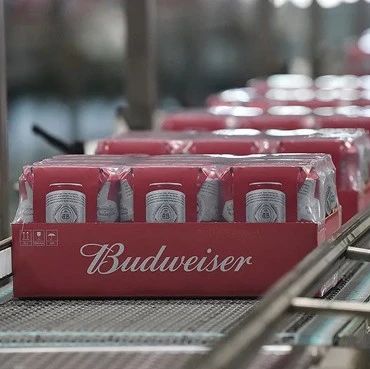
啤酒喜迎降本红利:原料、包材便宜了 吨成本普降|酒业财报观察
2 1 Shi Ji Jing Ji Bao Dao· 2025-04-03 04:48
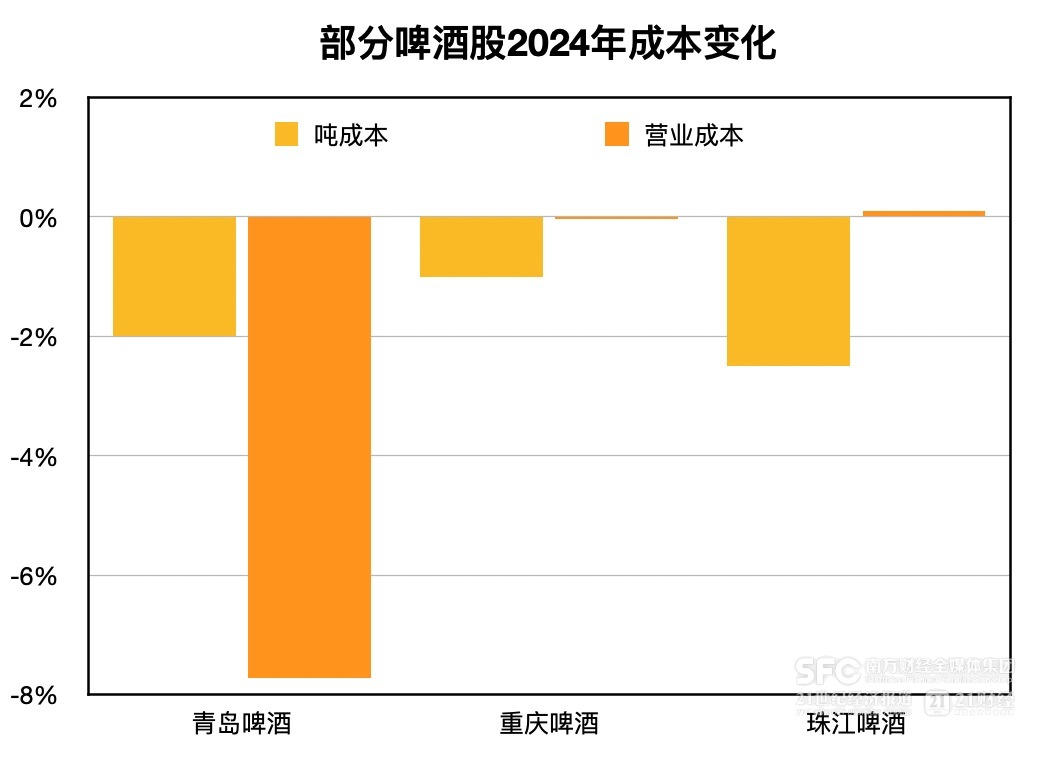
Core Viewpoint - The beer industry is experiencing a decline in sales volume, but there is a positive trend in cost optimization, particularly due to falling raw material prices and a shift towards high-end products. Group 1: Company Performance - Chongqing Beer reported a revenue of 14.645 billion yuan and a net profit of 1.222 billion yuan for 2024, with sales volume reaching 2.9749 million kiloliters [1] - High-end product sales for Chongqing Beer increased by 1.37% year-on-year, accounting for nearly 49% of total sales [1] - The proportion of canned products in Chongqing Beer’s sales rose to 26%, an increase of 3.5 percentage points [1] Group 2: Cost Optimization - Major beer companies, including China Resources Beer, Budweiser APAC, Qingdao Beer, and Chongqing Beer, have all seen reductions in operating costs [2] - Qingdao Beer’s operating costs decreased by 7.72%, while Chongqing Beer’s operating costs saw a slight reduction of 0.03% [2] - The decline in costs is attributed to lower prices for barley, packaging materials, and effective cost control measures [2][4] Group 3: Raw Material Trends - The price of imported barley in China is expected to decline by approximately 20% compared to 2023, with a 10% decrease anticipated by the end of 2024 [7] - Glass prices in China are at a relative low over the past three years, and the average market price for corrugated paper has also seen a decline [8] - The overall trend of decreasing raw material costs is expected to continue into 2025, benefiting the beer industry [8]

啤酒竞争格局生变:龙头倒退,黑马紧追
21世纪经济报道· 2025-03-31 05:49
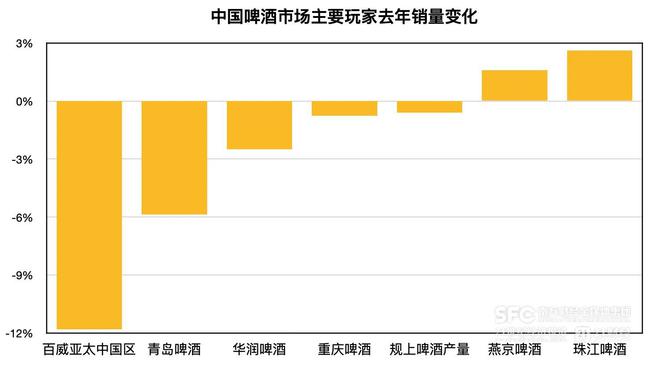
Core Viewpoint - The beer industry in China is experiencing a decline in sales volume, with major players facing challenges, while some smaller brands are showing growth in both sales and profitability [1][2][4]. Sales Performance - In 2024, major beer companies in China reported sales volume changes: Budweiser APAC down 11.8%, Qingdao Beer down 5.86%, China Resources Beer down 2.5%, Chongqing Beer down 0.75%, Yanjing Beer up 1.6%, and Zhujiang Beer up 2.62% [2][4]. - The overall beer production in China decreased by 0.6% in 2024, indicating a decline in consumer sentiment towards daily fast-moving consumer goods [2]. Market Dynamics - The gap in market share among major players has narrowed, with leading companies like China Resources, Qingdao, and Budweiser all experiencing declines in revenue and sales, while Yanjing and Zhujiang have continued to grow beyond industry levels [4]. - Zhujiang Beer saw a nearly 37% increase in net profit, while Yanjing Beer’s net profit surged by over 50% [4]. Premiumization Trends - Yanjing Beer achieved total sales exceeding 4 million kiloliters in 2024, with its flagship product Yanjing U8 selling close to 700,000 kiloliters, marking a growth rate of over 30% for two consecutive years [5]. - Zhujiang Beer reported a nearly 14% increase in sales of high-end beer products in 2024 [5]. Challenges for Leading Brands - Budweiser APAC faced a 1.4% decline in revenue per hectoliter in China, while Qingdao Beer’s sales of mid-to-high-end products dropped by 2.65% [6]. - Despite overall revenue and sales declines, leading beer companies emphasize that their premium products continue to grow, with China Resources Beer reporting that mid-range and above beer sales exceeded 50% of total sales for the first time [7]. Pricing and Profitability - The ton price for major brands in 2024 was as follows: China Resources Beer over 3,300 yuan, Qingdao Beer over 4,200 yuan, Budweiser APAC over 5,300 yuan, Chongqing Beer over 5,200 yuan, while Yanjing and Zhujiang Beer were around 3,100 yuan and 3,800 yuan respectively [9]. - Despite slight revenue declines, China Resources and Qingdao Beer still reported revenues exceeding 36 billion yuan and 32 billion yuan respectively, indicating a significant lead over smaller competitors [11]. Future Outlook - The beer industry, while facing volume declines, still has potential for slow growth if price increases can outpace volume decreases [11].
啤酒竞争格局生变:龙头倒退 黑马紧追 |酒业财报观察
2 1 Shi Ji Jing Ji Bao Dao· 2025-03-31 01:41
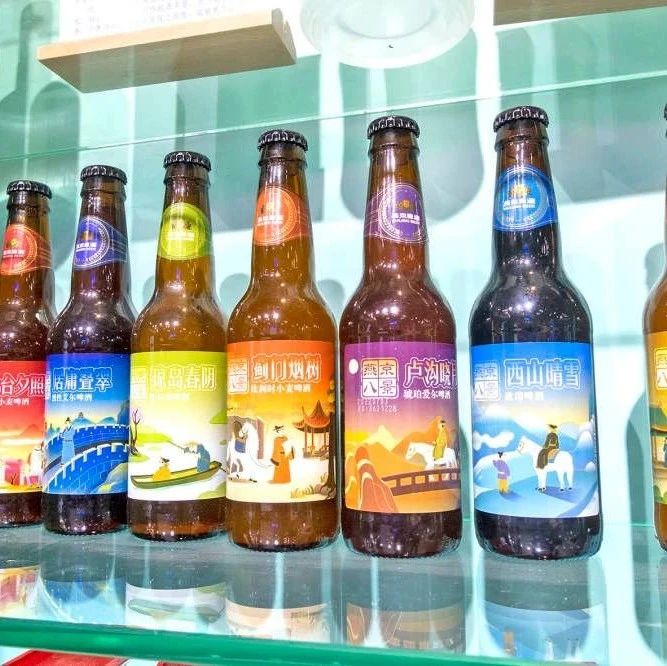
21世纪经济报道记者肖夏 重庆报道 啤酒股的业绩基本落定。 3月30日傍晚,青岛啤酒披露2024年业绩:实现营收321.38亿元,同比下滑5.3%,归母净利润43.45亿 元,同比增长1.8%,销量753.8万千升,同比下滑5.86%。 五大啤酒上市公司中,有四家去年销量出现下滑。 21世纪经济报道记者整理发现,中国市场主要啤酒公司2024年销量变化分别为:百威亚太中国区下滑 11.8%、青岛啤酒下滑5.86%、华润啤酒下滑2.5%、重庆啤酒下滑0.75%、燕京啤酒增长1.6%、珠江啤酒 增长2.62%。 要知道,2024年中国规上企业啤酒产量下滑0.6%。啤酒是日常快消品,大众消费情绪可见一斑。 (2024年啤酒企业销量变化,21记者整理) 与此同时,百威亚太、青岛啤酒的高端化则遭遇阶段性挑战。 百威亚太中国区去年每百升收入同比下滑1.4%,青岛啤酒主品牌的中高端以上产品销量同比下滑 2.65%。 虽然整体的营收、销量下行,但领先的啤酒企业强调其高端产品依然在增长。 华润啤酒称,其去年中档及以上啤酒销量占比首次超过50%,其中次高档及以上啤酒同比实现个位数增 长,老雪花、红爵增长翻倍,喜力啤酒销量增长超过两 ...
港股异动 | 啤酒股午后涨幅扩大 百威亚太(01876)涨近7% 华润啤酒(00291)涨超6%
智通财经网· 2025-03-19 05:46
中信证券此前表示,预计2025年啤酒原材料价格波动幅度小于2024年,部分原材料价格仍有下行空间如 大麦和玻璃等,但铝价近期呈现上涨趋势,或将抵消大麦等原材料价格下行所带来的成本下降空间,整 体来看,该行预计2025年啤酒成本相对稳定,大麦延续2024年的价格下行仍能带来一定的成本端缓解, 有望提升酒企的盈利水平,看好酒企在消费政策端的持续刺激、餐饮场景的恢复下实现2025年的业绩企 稳增长。 港股异动 | 啤酒股午后涨幅扩大 百威亚太(01876)涨 近7% 华润啤酒(00291)涨超6% 消息面上,华润啤酒日前发布2024年业绩报告,2024年综合营业额为386.35亿元,股东应占溢利47.39亿 元。2025年前2个月啤酒销量同比实现个位数增长。华润啤酒表示对2025年啤酒业务争取营业额增长和 利润恢复较快增长更有信心,整体表现维持审慎乐观预期。花旗指出,中国政府促进消费政策预期可于 今年第二至第三季为餐饮行业带来正面作用,强化了该行对消费板块更为正面的看法,华润啤酒管理层 亦对今年前景感到乐观,表示观察到首两个月消费者信心有所恢复,休闲餐饮场所店内消费趋于稳定。 该行强调百威亚太及华润啤酒都仍是其青睐 ...
食品饮料行业周报:两会临近,关注板块估值修复机会
Tianfeng Securities· 2025-03-04 01:16
Investment Rating - The industry rating is maintained as "Outperform" [7] Core Insights - The food and beverage sector has shown a recovery with a weekly increase of 1.77%, outperforming the Shanghai Composite Index which decreased by 2.22% [25] - The liquor segment is expected to see valuation recovery as major companies focus on channel optimization and marketing strategies ahead of the upcoming political meetings [2][13] - The beer and beverage sectors are anticipated to benefit from improved consumer demand in 2025, driven by promotional policies and a recovery in the restaurant and nightlife sectors [3][14] Summary by Sections Market Performance Review - The food and beverage sector saw a weekly increase of 1.77%, while the Shanghai Composite Index fell by 2.22%. Specific segments included: - Liquor: +1.64% - Dairy: +3.00% - Meat products: +3.52% - Pre-processed foods: +2.37% - Other alcoholic beverages: +0.59% - Beer: +2.84% - Soft drinks: +2.42% - Snacks: +4.30% [25] White Liquor Insights - The white liquor segment increased by 1.64%, with companies like Jiuziyuan and Yingjia Gongjiu showing significant gains. The current valuation is considered reasonable and low, with a PE-TTM of 19.50X [2][13] - Major liquor companies are focusing on channel management and marketing to rebuild confidence in the market, especially as the political meetings approach [2][13] Beer and Beverage Insights - The beer segment increased by 2.84%, with Budweiser Asia announcing a 7% increase in dividends and a management change. The Chinese market for Budweiser is projected to decline by 11.8% in 2024, but strategies are being implemented to enhance market share [3][15] - The beverage sector, including brands like China Red Bull, reported a slight revenue increase of 1.3% in 2024, reaching 21.09 billion yuan [3][17] Consumer Goods Insights - The snack segment led the market with a notable increase, while dairy products also performed well with a 3.00% rise. The report emphasizes three investment themes: "restaurant supply," "overseas expansion," and "raw milk turning point" [3][16] - The overall consumer goods sector is expected to benefit from lower inventory levels and seasonal demand as the market recovers [5][24] Investment Recommendations - Recommended stocks include leading liquor brands such as Moutai, Wuliangye, and Shanxi Fenjiu, as well as consumer goods companies like Yili and Mengniu in the dairy sector [5][24] - The report suggests focusing on companies with strong fundamentals and reasonable valuations, particularly in the consumer goods sector, which is expected to show strong elasticity in 2025 [5][24]


